The all electric Range Rover represents a massive shift for Land Rover's flagship luxury SUV. Built on JLR's new Modular Longitudinal Architecture (MLA-Flex) with an 800-volt battery system, this full-size electric SUV promises serious range and rapid charging capability. But owning a large-battery luxury EV means your charging setup matters enormously — both for daily convenience and for protecting a six-figure investment. This guide breaks down exactly what you need to charge the all electric Range Rover at home and on the road, with real numbers and real costs.
Range Rover EV Battery and Charging Architecture
The all electric Range Rover is expected to carry a large battery pack — early specifications and JLR's platform disclosures point toward a usable capacity in the range of 100–120 kWh, utilizing NMC (nickel manganese cobalt) chemistry for maximum energy density. The 800V architecture is the headline: it enables significantly faster DC fast charging than legacy 400V systems, reducing the time you spend at public chargers on road trips.
Understanding the distinction between kW (kilowatts — the rate of power delivery, like water flow from a hose) and kWh (kilowatt-hours — the total energy stored, like the size of the tank) is essential for every decision in this guide. Your charger's kW rating determines how fast energy flows in; your battery's kWh capacity determines how far you can drive.
Charging Levels Explained: Speeds and Range Added
Three charging levels serve EV owners, each with distinct use cases. Here's how they apply to a large-battery vehicle like the all electric Range Rover:
| Level | Voltage | Power (kW) | Miles of Range Added Per Hour | Best Use Case |
|---|---|---|---|---|
| Level 1 | 120V AC | 1.0–1.4 kW | 3–5 miles/hr | Emergency / overnight trickle only |
| Level 2 | 240V AC | 7.2–19.2 kW | 25–65 miles/hr | Daily home charging |
| DC Fast Charging | 400–800V DC | 50–350 kW | 150–400+ miles/hr (peak) | Road trips, rapid top-ups |
Level 1 (standard 120V outlet) is effectively useless as a primary strategy for a 100+ kWh battery. A full charge from empty would take over 100 hours. It's only suitable for maintaining charge if the vehicle sits unused or adding a few miles overnight in a pinch.
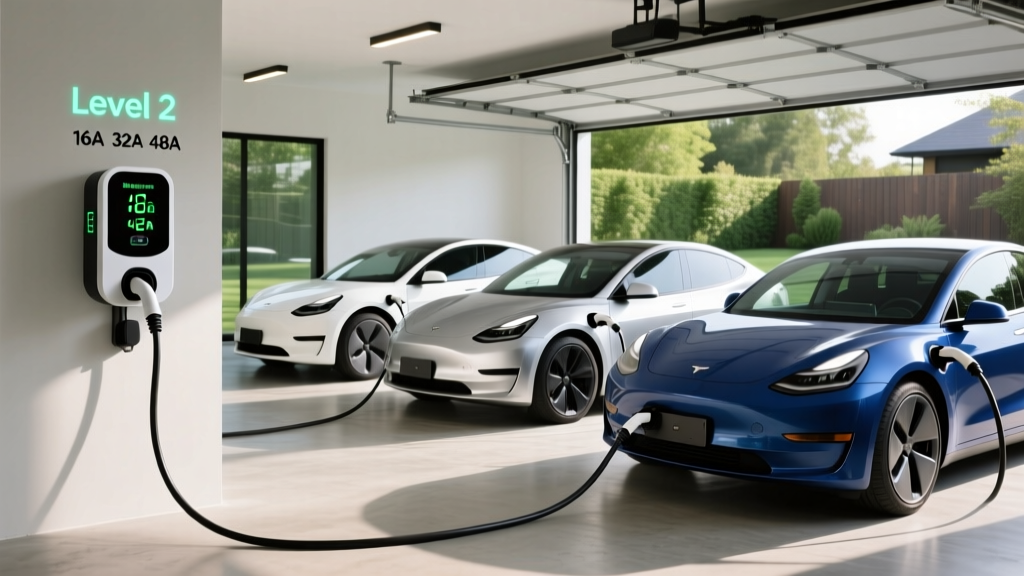
Level 2 (240V, like a dryer outlet) is where the all electric Range Rover will spend most of its charging life. At 11.5 kW (48A), a reasonable home setup, you'll recover roughly 35–40 miles of range per hour of charging. An overnight session of 8–10 hours easily replenishes 280–400 miles — more than enough for daily driving and then some.
DC Fast Charging delivers direct current at high voltage, bypassing the vehicle's onboard charger. Thanks to its 800V architecture, the all electric Range Rover should accept peak charge rates potentially exceeding 200 kW at compatible stations. Expect a 10–80% charge in approximately 20–30 minutes at a 350 kW-capable charger — though sustained speeds taper significantly above 80% State of Charge (SoC) to protect battery health.
Home Charger Installation: Requirements and Costs
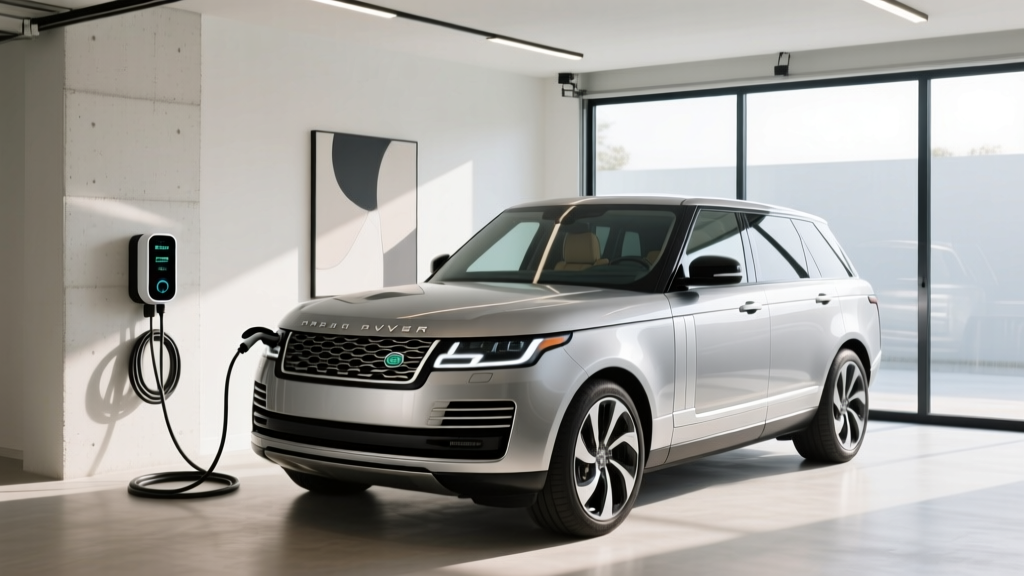
Installing a dedicated Level 2 home charger for the all electric Range Rover requires careful electrical planning. Here's what's involved:
Electrical Requirements
For optimal home charging, you'll want a 240V dedicated circuit rated for at least 48 amps (delivering up to 11.5 kW continuous). The National Electrical Code (NEC) requires circuits to be rated at 125% of continuous load, meaning a 48A charger needs a 60-amp breaker. Some homeowners opt for a 40A circuit (9.6 kW) to reduce installation complexity — this still provides roughly 30 miles of range per hour, sufficient for most daily needs.
Panel Upgrade Considerations
Many homes built before 2000 have 100-amp or 150-amp electrical panels. Adding a 60-amp EV circuit may exceed your panel's available capacity, especially if you already run electric heat, an electric oven, and a dryer. A licensed electrician will perform a load calculation to determine if your panel can handle the additional draw. If not, a panel upgrade to 200 amps typically costs $1,500–$3,000 before the charger circuit is even installed.
| Component | Low Estimate | High Estimate | Notes |
|---|---|---|---|
| Level 2 Charger (hardware) | $400 | $800 | Smart Wi-Fi chargers, 40–48A |
| Electrician labor + materials | $600 | $2,000 | Depends on panel-to-garage distance, conduit run |
| Electrical permit | $50 | $200 | Varies by municipality |
| Panel upgrade (if needed) | $1,500 | $3,000 | 100A → 200A service upgrade |
| Total (no panel upgrade) | $1,050 | $3,000 | Most straightforward installs |
| Total (with panel upgrade) | $2,550 | $6,000 | Older homes with limited capacity |
The single biggest variable is the distance from your electrical panel to the charging location. A short conduit run through an attached garage might cost $600 in labor; running wire 80+ feet through walls, attics, or underground to a detached garage can push labor costs past $2,000. Always get at least three quotes from licensed electricians, and verify they hold appropriate state licensing and insurance. Per the National Electrical Contractors Association, EV-specific installation experience matters — not all electricians are familiar with EV charger load profiles.
Connector Compatibility: NACS, CCS, and Adapters
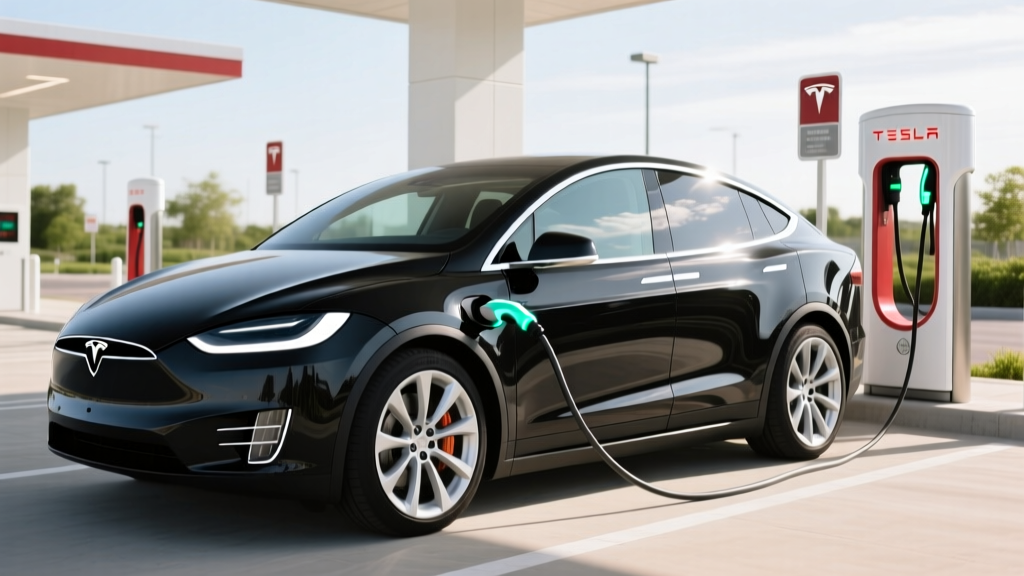
The connector landscape has shifted dramatically. As of 2025–2026, most major automakers have adopted or committed to the North American Charging Standard (NACS), originally developed by Tesla. JLR has indicated the all electric Range Rover will launch with NACS compatibility, aligning with the broader industry transition and granting access to Tesla's Supercharger network.
| Connector | Description | Range Rover EV Compatibility |
|---|---|---|
| NACS (J3400) | Tesla-origin standard, now SAE J3400. Compact, no locking pins. | Expected native — confirm at purchase |
| CCS1 (Combo) | Legacy standard on most non-Tesla EVs through 2024. Larger connector with DC pins below J1772. | Adapter likely needed for older CCS stations |
| CHAdeMO | Legacy Japanese standard (Nissan Leaf). Being phased out. | No native support; adapter availability unlikely |
| J1772 (Level 2 AC) | Standard AC connector for all non-Tesla Level 2 chargers. | NACS port accepts J1772 via included adapter |
If the all electric Range Rover ships with a NACS port (highly probable for a 2026 model year), you'll charge natively at Tesla Superchargers and at new NACS-equipped Electrify America and EVgo stations. For legacy CCS1 stations — which still comprise a large portion of the public network — JLR should provide or offer a NACS-to-CCS adapter. Always confirm adapter inclusion at purchase; aftermarket adapters from reputable brands like Lectron or A2Z typically cost $150–$250.
For home Level 2 charging, most wall-mount chargers still ship with a J1772 connector. A NACS-equipped Range Rover will include a J1772-to-NACS adapter in the vehicle, or you can purchase a NACS-terminated home charger (like the Tesla Wall Connector) for a cleaner, adapter-free experience.
Charging Time Examples: 10–80% and Full Charges
Charging a 100+ kWh battery takes time, but the 800V architecture helps significantly. Here are realistic charge-time scenarios for the all electric Range Rover:
| Charging Scenario | Power Delivered | 10–80% Time (est.) | Notes |
|---|---|---|---|
| Level 1 (120V outlet) | ~1.2 kW | Not practical (70+ hours) | Emergency use only |
| Level 2 home (48A / 11.5 kW) | ~10.5 kW (losses) | ~7–8 hours | Overnight charging, ideal daily strategy |
| Level 2 home (40A / 9.6 kW) | ~8.8 kW (losses) | ~9–10 hours | Slightly slower, still sufficient overnight |
| DC Fast (150 kW station) | ~130 kW avg | ~35–40 minutes | Common Electrify America / EVgo speed |
| DC Fast (350 kW station) | ~200+ kW avg (800V) | ~20–28 minutes | Requires capable station; 800V advantage |
A critical concept: peak charge rate is not sustained charge rate. A charger rated at 350 kW won't deliver that speed for the entire session. Lithium-ion batteries accept charge fastest at low SoC and taper significantly above 50–60%, with a steep taper above 80%. This is why manufacturers quote 10–80% times rather than 0–100%. Charging from 80–100% on DC fast charging can take nearly as long as the 10–80% session — it's also harder on battery longevity, so reserve it for when you truly need the full capacity.
For daily driving, most Range Rover EV owners will plug in at home each evening and wake to a full charge. A 40-mile daily commute requires roughly 12–15 kWh of replenishment — about 1.5 hours on a Level 2 charger.
Cost to Charge: Home vs. Public vs. Gas Comparison
One of the strongest ownership arguments for the all electric Range Rover is fuel cost savings — especially compared to the outgoing supercharged V8 and mild-hybrid Range Rover models that averaged 16–20 MPG combined.
| Scenario | Cost per kWh | Cost to Add 200 Miles | Cost per Mile |
|---|---|---|---|
| Home (off-peak utility rate) | $0.10–$0.14 | $7.00–$9.80 | $0.035–$0.049 |
| Home (standard residential rate) | $0.15–$0.20 | $10.50–$14.00 | $0.053–$0.070 |
| Public Level 2 (ChargePoint, etc.) | $0.25–$0.39 | $17.50–$27.30 | $0.088–$0.137 |
| DC Fast Charging (EA, EVgo, Tesla) | $0.35–$0.55 | $24.50–$38.50 | $0.123–$0.193 |
| Gas Range Rover (18 MPG, $3.80/gal) | $3.80/gallon | $42.22 | $0.211 |
At national average electricity rates (~$0.16/kWh per the U.S. Energy Information Administration) and assuming roughly 3.0–3.5 miles per kWh efficiency for the Range Rover EV, home charging costs approximately $0.05–$0.06 per mile. That's roughly 70–75% cheaper per mile than fueling a gas Range Rover at current prices.
Even at the most expensive DC fast charging rates ($0.48–$0.55/kWh at some Electrify America stations), the per-mile cost still undercuts premium gasoline. However, if you rely exclusively on public DC fast charging, the cost advantage narrows considerably — making home charging installation a near-mandatory investment for financial sense.
Pro tip: Many utilities offer time-of-use (TOU) rates with off-peak electricity as low as $0.06–$0.08/kWh between 10 PM and 6 AM. Programming your charger to start during these windows maximizes savings and reduces grid strain.
Recommended Home Charging Equipment
For a vehicle in the Range Rover's class, you want a reliable, high-quality Level 2 charger with smart features. Here are top picks based on power output, build quality, and connectivity:
Tesla Wall Connector (J3400/NACS)
Power: Up to 11.5 kW (48A on 60A circuit)
Cable length: 24 feet
Smart features: Wi-Fi, OTA updates, Tesla app integration, power sharing between multiple units
Price: ~$475
Best for: NACS-equipped vehicles; cleanest adapter-free experience for the Range Rover EV
ChargePoint Home Flex
Power: Up to 12 kW (50A on 60A circuit), configurable down to 16A
Cable length: 23 feet
Smart features: Wi-Fi, Alexa integration, detailed app with energy tracking, scheduled charging
Price: ~$550–$650
Best for: Flexibility across connector types (ships with J1772; NACS adapter available); excellent app
Emporia Vue Level 2 Charger
Power: Up to 11.5 kW (48A)
Cable length: 24 feet
Smart features: Wi-Fi, real-time energy monitoring, integration with Emporia whole-home energy monitor
Price: ~$400
Best for: Budget-conscious buyers who want smart features and energy visibility
Grizzl-E Smart
Power: Up to 10 kW (40A)
Cable length: 24 feet
Smart features: Wi-Fi, OCPP-compatible, adjustable amperage
Price: ~$450
Best for: Extreme durability (IP67 rated, -40°F operation); excellent for unheated garages or outdoor install
For the all electric Range Rover, the Tesla Wall Connector offers the cleanest experience if the vehicle ships with NACS. The ChargePoint Home Flex is the most versatile if you want maximum compatibility across current and future vehicles. Both support the 48A+ delivery that makes overnight charging of a large battery practical.
Safety, Code, and Installation Best Practices
EV charging involves sustained high-current draw — often 8+ hours at a time. This is not the same electrical profile as running a dryer for 45 minutes. Code compliance and safety are non-negotiable:
- Dedicated circuit: Your Level 2 charger must be on its own dedicated circuit — no sharing with other appliances. This prevents breaker trips and overheating.
- GFCI protection: NEC 2020 and later require GFCI (Ground Fault Circuit Interrupter) protection for EV charging outlets. Hardwired chargers may have GFCI built into the unit; receptacle-based installs need a GFCI breaker.
- Outdoor rating: If your charger is mounted outside or in an exposed carport, ensure it carries at minimum an NEMA 4 or IP65 rating for weather resistance. All recommended chargers above meet this standard.
- Permit and inspection: Most jurisdictions require an electrical permit for a new 240V circuit. The inspection ensures proper wire gauge, breaker sizing, grounding, and conduit. Skipping the permit risks insurance denial in the event of an electrical fire.
- Wire gauge: A 60A circuit typically requires 4 AWG copper wire (or 2 AWG aluminum). Your electrician will size wire based on the run length — longer runs may require thicker wire to minimize voltage drop.
- Hardwired vs. plug: Hardwired installations (no plug) eliminate the NEMA 14-50 receptacle as a potential failure point and are generally recommended for 48A+ chargers. Plug-in (NEMA 14-50) offers portability but limits you to 40A continuous per code.
Per NHTSA guidance and the National Fire Protection Association, always use UL-listed (or equivalent ETL-listed) charging equipment. Avoid uncertified chargers from unknown brands on marketplace sites — they may lack critical thermal protection and ground-fault safeguards.
Public Charging Networks for the Range Rover EV
On road trips, the all electric Range Rover's 800V architecture and expected NACS compatibility open up the broadest public charging network of any JLR vehicle to date:
- Tesla Supercharger network: Over 30,000 stalls across North America, many now upgraded to V4 architecture with 350 kW capability. NACS-native vehicles have seamless access.
- Electrify America: Largest non-Tesla DC fast network; stations range from 50–350 kW. Transitioning to NACS connectors alongside CCS.
- EVgo: Growing network of 350 kW-capable stations, increasingly adding NACS connectors.
- Ionity (Europe): For international Range Rover owners, Ionity's 350 kW network across Europe supports 800V charging natively.
Preconditioning your battery before arriving at a DC fast charger is essential for achieving peak charge rates. Most modern EVs, including the Range Rover EV, will automatically warm the battery when a charger is set as your navigation destination — this brings the cells to optimal temperature (roughly 77–95°F) for rapid charge acceptance. Skipping preconditioning in cold weather can cut your charge speed in half.
Frequently Asked Questions
How much does it cost to install a home EV charger for the all electric Range Rover?
Expect $1,050–$3,000 for a standard Level 2 installation (charger + electrician + permit) in a home with adequate panel capacity. If your electrical panel needs an upgrade from 100A to 200A service, total costs can reach $2,550–$6,000. Always get a load calculation from a licensed electrician before committing.
How fast will each charging level add range to the Range Rover EV?
Level 1 (120V) adds roughly 3–5 miles per hour — impractical for daily use. Level 2 (240V, 48A) adds approximately 35–40 miles per hour, easily replenishing a day's driving overnight. DC fast charging at 200+ kW can add 150–200+ miles in 15–20 minutes at peak rate, though speeds taper above 60% SoC.
Which connector is compatible with the all electric Range Rover?
The Range Rover EV is expected to feature a NACS (J3400) charge port, compatible natively with Tesla Superchargers and new NACS-equipped public stations. For legacy CCS1 stations, a NACS-to-CCS adapter (likely included or available from JLR) will be required. Confirm connector type at the time of purchase.
How much does charging the Range Rover EV cost per mile vs. gas?
Home charging at average residential rates costs approximately $0.05–$0.07 per mile — roughly 70% less than fueling a gas Range Rover at $0.18–$0.21 per mile (18 MPG, $3.80/gallon). Even public DC fast charging at $0.40–$0.55/kWh typically costs $0.12–$0.19 per mile, still below gasoline.
What electrical upgrades might I need for a Range Rover EV home charger?
The most common upgrade is a panel capacity increase if your existing panel cannot accommodate a new 60-amp circuit. Homes with 100A service almost always need an upgrade to 200A. Other potential needs: running new conduit over long distances, upgrading wire from aluminum to copper, or adding a sub-panel in a detached garage. A licensed electrician's load calculation will identify exactly what's required. Consult the IRS §30D guidelines as well — while the federal tax credit applies to the vehicle, some states and utilities offer separate rebates for home charger installation that can offset $300–$1,000 of your costs.
Should I charge to 100% every night?
No. NMC batteries (the chemistry expected in the Range Rover EV) last longest when kept between 20–80% SoC for daily use. Set your charger's charge limit to 80% for routine driving and only charge to 100% before long road trips. This practice significantly slows long-term degradation and preserves warranty-covered battery capacity.