Search for "air pollution from EV fast chargers" and you will find a surprising amount of confusion. Some forum posts claim DC fast-charging stations emit harmful particulates. Others argue that because the charger itself has no tailpipe, it is automatically zero-emission. The reality is more nuanced — and understanding it requires separating local point-source emissions (what happens at the charger site) from upstream grid emissions (what happens at the power plant supplying the electricity).
This guide breaks down exactly what happens at a DC fast-charging station from an emissions perspective, how that compares to gasoline refueling, and what the data says about local air quality near high-power charging corridors. Along the way, we will cover the practical charging information you need as an EV owner — levels, costs, connectors, and home installation — because understanding the full charging ecosystem is essential to evaluating its environmental footprint.
What Actually Emits Pollution at a DC Fast-Charging Station?
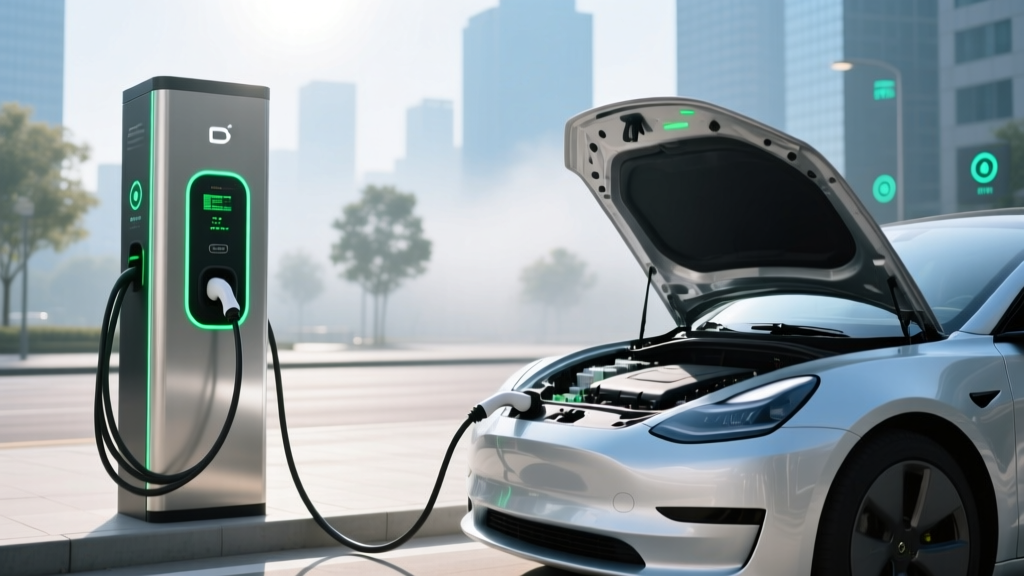
A DC fast charger (DCFC) is fundamentally an electrical cabinet that converts alternating current (AC) from the grid into direct current (DC) for your vehicle's battery. There is no combustion, no exhaust, and no fuel vapor. Here is what does and does not produce emissions at a typical charging site:
No local combustion emissions: Unlike a gas station, a DCFC produces zero carbon monoxide (CO), nitrogen oxides (NOx), volatile organic compounds (VOCs), or particulate matter (PM2.5) at the point of use. There is no fuel storage, no underground tank venting, and no evaporative emissions from refueling.
Transformer and cooling fan noise, not pollution: High-power chargers (150–350 kW) use large transformers and active cooling systems. These generate audible noise — typically 55–65 dB at the cabinet — but not air pollutants. Liquid-cooled cable systems on 350 kW units further reduce fan-generated particulates.
Brake and tire dust from vehicles: Any vehicle arriving at a charging station generates non-exhaust particulates from tire wear and brake dust. However, EVs rely heavily on regenerative braking, which reduces brake-pad wear by an estimated 50–70% compared to internal-combustion vehicles, lowering PM2.5 from brake sources.
Upstream grid emissions (the real variable): The electricity powering the charger was generated somewhere — potentially by natural gas, coal, nuclear, wind, solar, or hydroelectric facilities. This is where the emissions conversation actually lives, and it varies dramatically by region and time of day.
Charging Levels Explained: Power, Speed, and Emissions Context
Before analyzing emissions, you need to understand the three charging tiers and their power levels. Remember the critical distinction: kW (kilowatts) measures power — the rate of energy flow. kWh (kilowatt-hours) measures energy — the total amount stored in your battery. A 75 kWh battery charged at 150 kW fills faster than at 7 kW, but stores the same total energy.
| Level | Voltage | Power (kW) | Miles Added/Hour | Typical Use | Local Emissions |
|---|---|---|---|---|---|
| Level 1 | 120V AC | 1.0–1.9 kW | 3–5 mi/hr | Overnight home, PHEVs | None at point of use |
| Level 2 | 240V AC | 3.3–19.2 kW | 12–75 mi/hr | Home, workplace, retail | None at point of use |
| DC Fast (DCFC) | 200–900V DC | 50–350 kW | 150–1,200 mi/hr | Highway corridors, fleets | None at point of use |
Real-world charging time examples (10–80% SoC):
- 75 kWh battery (Tesla Model Y, Hyundai Ioniq 5): ~18–25 minutes on a 250 kW charger (peak rate tapers above ~60% SoC due to battery charge-curve physics)
- 84 kWh battery (Ford F-150 Lightning extended range): ~25–35 minutes on a 150–250 kW charger
- 40 kWh battery (older Nissan LEAF): ~30–40 minutes on a 50 kW CHAdeMO charger
The charge curve matters for both time planning and grid load: a 350 kW charger rarely sustains peak power for the full session. Most vehicles peak for 5–10 minutes, then taper progressively to protect battery health. This means the average power draw across a 20-minute session is often 40–60% of the advertised peak kW.
Upstream Emissions: The Grid Behind the Charger
The question of air pollution from EV fast chargers is really a question about the electrical grid. According to the U.S. EPA, the national average CO₂ emission rate for electricity generation in 2025 was approximately 0.77 lbs CO₂ per kWh, down from 0.92 lbs in 2020 as renewables and natural gas displaced coal.
But regional variation is enormous:
- California (CAISO grid): ~0.48 lbs CO₂/kWh — heavy solar, wind, and natural gas mix. Midday charging can drop below 0.30 lbs/kWh.
- Pacific Northwest (BPA): ~0.22 lbs CO₂/kWh — dominated by hydroelectric.
- Texas (ERCOT): ~0.85 lbs CO₂/kWh — significant wind but also natural gas peaker plants.
- Midwest (MISO): ~1.10 lbs CO₂/kWh — higher coal and natural gas share.
- France (national grid): ~0.10 lbs CO₂/kWh — predominantly nuclear. Included for international context.
What this means at a 350 kW DC fast charger: If you charge a 75 kWh battery from 10% to 80% (adding ~52 kWh), the upstream CO₂ emissions range from approximately 5 lbs (Pacific Northwest hydro) to 57 lbs (coal-heavy MISO grid). That same 52 kWh delivers roughly 175–200 miles of range depending on vehicle efficiency.
Compare this to gasoline: 175 miles at 25 MPG combined requires 7 gallons, which produces approximately 139 lbs of CO₂ at the tailpipe alone — before counting refining, transport, and evaporative emissions. Even on the dirtiest U.S. grid region, the EV charged via DCFC produces less total CO₂ per mile.
Local Air Quality: Fast Chargers vs. Gas Stations
The most important finding for people concerned about local air pollution is this: DC fast chargers produce zero criteria air pollutants at the site. Gas stations, by contrast, are documented sources of local air contamination.
Gas stations emit the following at the point of refueling:
- Benzene and VOCs: Fuel vapor displacement during tank filling releases volatile organic compounds, including known carcinogens like benzene. Stage II vapor recovery systems mitigate but do not eliminate this.
- NOx and CO from idling vehicles: Queued and idling cars at busy stations create localized pollution hotspots.
- Underground storage tank leaks: The EPA estimates that over 500,000 underground storage tank releases have been confirmed in the U.S., contaminating soil and groundwater.
- PM2.5 from fuel transport: Diesel tanker trucks delivering gasoline generate particulate emissions at the station.
A study published in Environmental Science & Technology found that gasoline refueling contributes approximately 1.5–3.0 grams of VOC emissions per refueling event, even with modern vapor recovery. DC fast charging has no equivalent emission pathway.
Bottom line for local air quality: If you live or work near a DC fast-charging corridor, the chargers themselves add no measurable pollutants to your local air. If the same corridor previously hosted a gas station, the conversion likely reduced local criteria pollutant exposure. The upstream grid emissions occur at power plants, which are typically located far from residential areas and are subject to stack-height dispersion and EPA emission controls.
Home Charging Installation: Requirements, Costs, and Electrical Upgrades
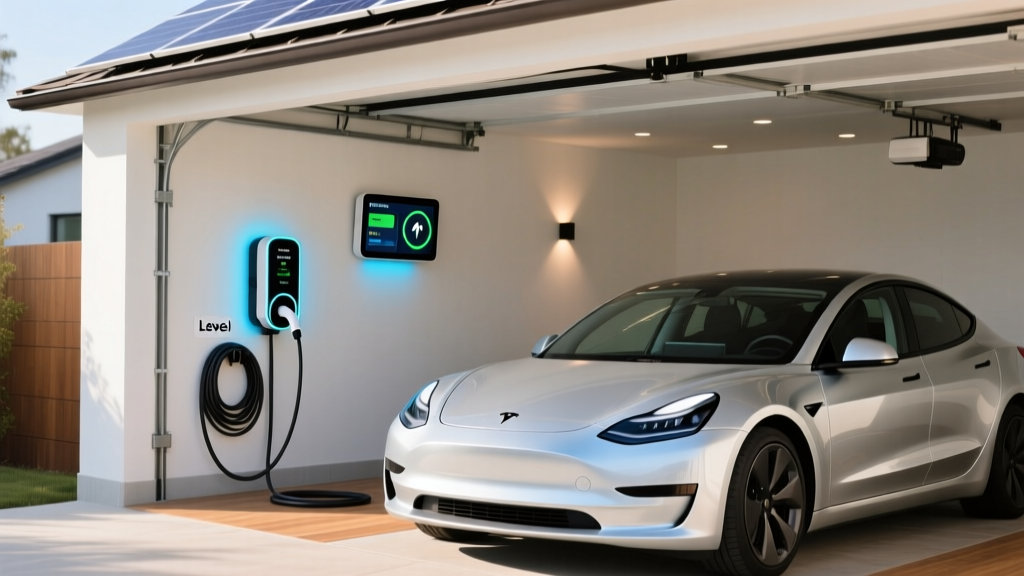
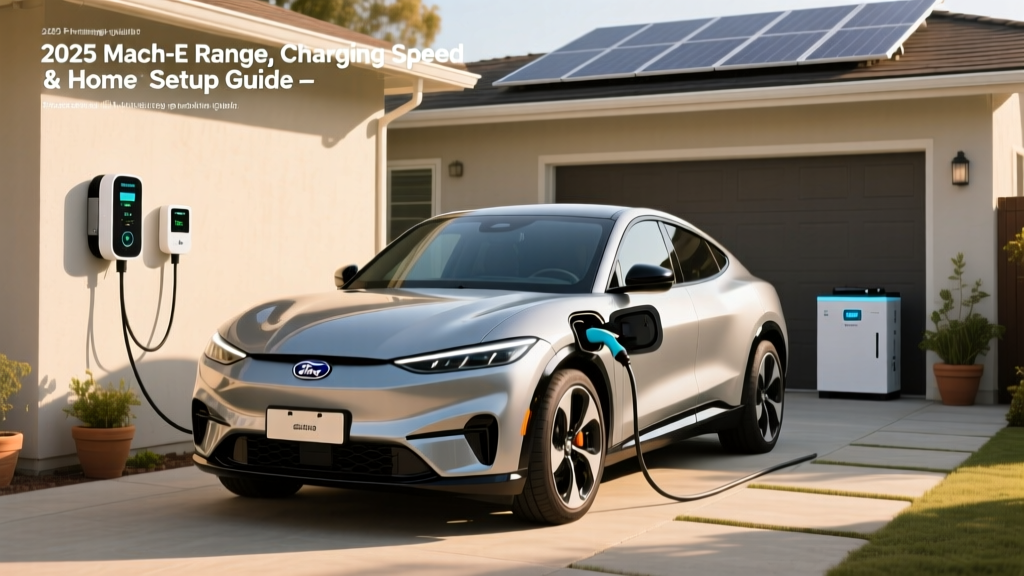
Most EV charging happens at home — roughly 80% of all charging events according to the U.S. Department of Energy. Installing a Level 2 home charger involves electrical work that varies significantly based on your home's existing infrastructure.
Electrical requirements for Level 2 charging:
- Voltage: 240V (same as a clothes dryer or electric oven)
- Amperage: 20A to 80A dedicated circuit, depending on charger power
- Circuit sizing rule (NEC 625.41): EV charging is a continuous load — the circuit breaker must be rated 125% above the charger's maximum draw. A 40A charger requires a 50A breaker; a 48A charger requires a 60A breaker.
- GFCI protection: NEC 2020 and later require GFCI protection for EV outlets (not always required for hardwired chargers — check local code)
| Component | Simple Install (Near Panel) | Complex Install (Far Run / Upgrade) |
|---|---|---|
| Level 2 Charger (Equipment) | $350 – $700 | $500 – $1,200 |
| Electrician Labor (2–8 hours) | $300 – $600 | $800 – $2,500 |
| Electrical Permit | $50 – $150 | $50 – $250 |
| Conduit, Wire, Breaker | $100 – $300 | $300 – $1,200 |
| Panel Upgrade (100A → 200A) | Not needed | $1,500 – $4,000 |
| Total Estimated Cost | $800 – $1,750 | $3,150 – $9,150 |
Panel upgrade reality check: Homes built before 1990 often have 100A or even 60A main service panels. Adding a 50A EV circuit to an already-loaded 100A panel may require a full service upgrade to 200A. This is the single largest cost variable in home EV charging — and it is non-negotiable for safety. A licensed electrician will perform a load calculation (NEC Article 220) to determine if your panel can handle the additional draw. Do not skip this step.
Federal incentive note: The IRS §30D alternative fuel vehicle refueling property credit offers up to $1,000 (30% of cost) for home charger installation, subject to income limits and census-tract eligibility. Check current-year IRS guidance at irs.gov before claiming — rules and eligible tracts change annually.
Connector Compatibility: NACS, CCS1, and CHAdeMO in 2026
The connector landscape has consolidated significantly since 2024, when Ford, GM, Rivian, Volvo, and others announced adoption of the North American Charging Standard (NACS). Here is where things stand for 2026 model-year vehicles:
| Connector | Brands Using (Native) | DC Fast Charge Power | Adapter Needed? |
|---|---|---|---|
| NACS (Tesla standard) | Tesla, Ford, GM, Rivian, Volvo, Polestar, Mercedes, Nissan (new models), Hyundai/Kia (new models) | Up to 350 kW (non-Tesla CCS-to-NACS adapters limited to ~150 kW) | CCS→NACS adapter for older CCS chargers (~$100–$200) |
| CCS1 | Legacy models: pre-2025 Hyundai/Kia, pre-2025 VW ID.4, BMW i4/iX, Stellantis | Up to 350 kW | NACS→CCS adapter for Tesla Superchargers (~$200–$250) |
| CHAdeMO | Nissan LEAF (discontinued), Mitsubishi Outlander PHEV (older) | Up to 50–100 kW | Limited adapter options; CHAdeMO infrastructure declining |
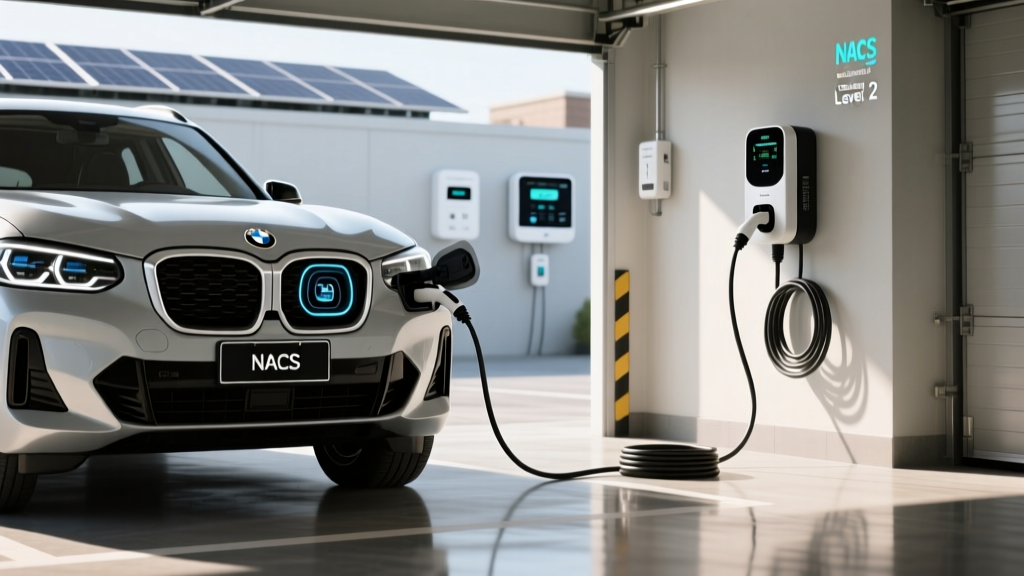
Practical advice for 2026 buyers: If you are purchasing a new EV, NACS is the dominant standard going forward. Most new public DC fast chargers installed in 2025–2026 include both NACS and CCS1 cables. For home Level 2 charging, NACS and J1772 (the legacy Level 2 connector) are interchangeable with a simple adapter, as both use the same AC charging protocol.
Cost to Charge: Home vs. Public vs. Gas — Per-Mile Comparison
Charging cost is where EV ownership economics either shine or disappoint, depending entirely on your access to home charging and local electricity rates.
| Scenario | Rate ($/kWh) | Vehicle Efficiency | Cost Per Mile | Annual Cost (12,000 mi) |
|---|---|---|---|---|
| Home, off-peak utility rate | $0.08–$0.14 | 3.0 mi/kWh | $0.027–$0.047 | $320–$560 |
| Home, standard residential rate | $0.15–$0.22 | 3.0 mi/kWh | $0.050–$0.073 | $600–$880 |
| Public Level 2 (ChargePoint, etc.) | $0.20–$0.39 | 3.0 mi/kWh | $0.067–$0.130 | $800–$1,560 |
| DC Fast Charging (EA, EVgo) | $0.32–$0.56 | 3.0 mi/kWh | $0.107–$0.187 | $1,280–$2,240 |
| Gasoline (25 MPG avg, $3.40/gal) | — | 25 mi/gal | $0.136 | $1,632 |
| Gasoline (30 MPG avg, $3.40/gal) | — | 30 mi/gal | $0.113 | $1,360 |
Key takeaway: Home charging at off-peak rates delivers the lowest cost per mile of any refueling method — roughly 75% cheaper than gasoline. However, exclusive reliance on DC fast charging at public rates ($0.40–$0.56/kWh in many markets) can actually exceed gasoline costs per mile. This is why home charging access remains the single most important factor in EV ownership economics.
From an emissions standpoint, home Level 2 charging during off-peak hours (overnight) often coincides with higher wind generation and lower grid carbon intensity in many U.S. regions, making it both the cheapest and cleanest option.
Recommended Home EV Chargers for 2026
These are proven Level 2 home chargers with verified specifications. All are UL-listed (or ETL-listed to UL standards) for safety compliance.
Emporia Vue Level 2 EV Charger
- Power Output: 48A / 11.5 kW (hardwired) or 40A / 9.6 kW (NEMA 14-50 plug)
- Connector: J1772 (NACS adapter included with 2025+ models)
- Cable Length: 24 feet
- Smart Features: Wi-Fi, app scheduling, solar integration, energy monitoring, load management
- Outdoor Rating: NEMA 4 (suitable for outdoor installation)
- Price: $399–$499
ChargePoint Home Flex
- Power Output: Configurable 16A–50A / 3.8–12 kW (NEMA 14-50 or hardwired)
- Connector: J1772 (NACS version available 2025+)
- Cable Length: 23 feet
- Smart Features: Wi-Fi, app scheduling, Alexa integration, flexible amperage settings
- Outdoor Rating: NEMA 4
- Price: $549–$699
Tesla Wall Connector (Universal)
- Power Output: 48A / 11.5 kW (hardwired, 60A circuit required)
- Connector: NACS native, built-in J1772 adapter for non-Tesla EVs
- Cable Length: 24 feet
- Smart Features: Wi-Fi, over-the-air updates, power sharing between multiple units, Tesla app
- Outdoor Rating: NEMA 3R (rain-resistant, suitable for most outdoor use)
- Price: $475–$525
Safety and code requirements for any home installation:
- Dedicated circuit: Your EV charger must have its own dedicated breaker — no sharing with other appliances.
- GFCI protection: Required for plug-in (NEMA 14-50) installations per NEC 2020+. Hardwired units may be exempt depending on local jurisdiction.
- Outdoor rating: If mounted outside, the charger must carry at minimum a NEMA 3R rating. NEMA 4 is preferred for protection against hose-directed water and ice.
- Permit and inspection: Virtually all jurisdictions require an electrical permit and final inspection for EV charger installations. Do not skip this — unpermitted work can void homeowner's insurance and create liability.
- Wire gauge: A 50A circuit requires minimum 6 AWG copper wire; a 60A circuit requires 4 AWG. Your electrician will size this based on run length and local code.
Frequently Asked Questions
Do EV fast chargers produce any local air pollution?
No. DC fast chargers produce zero combustion emissions, zero VOCs, zero NOx, and zero particulate matter at the point of use. They are electrical conversion equipment — not combustion devices. All emissions associated with EV charging occur upstream at power generation facilities, which are regulated and increasingly decarbonizing.
How much does it cost to install a home EV charger?
A straightforward Level 2 installation near your electrical panel typically costs $800–$1,750 including equipment, electrician labor, permit, and materials. If your home requires a panel upgrade from 100A to 200A service, or if the charger is located far from the panel requiring a long conduit run, costs can reach $3,150–$9,150. Always get a load calculation from a licensed electrician first.
How fast will each charging level add range?
Level 1 (120V) adds 3–5 miles per hour. Level 2 (240V) adds 12–75 miles per hour depending on amperage. DC fast charging adds 150–1,200 miles per hour at peak rates, though real sessions average lower due to the charge curve taper above 60–80% SoC. A typical 10–80% DCFC session takes 18–35 minutes for most current EVs.
Which connector is compatible with my EV?
For 2026 model-year vehicles, NACS is the dominant standard — adopted by Tesla, Ford, GM, Rivian, Volvo, Hyundai, Kia, and others. Legacy CCS1 vehicles (pre-2025 models) can use adapters at NACS chargers. CHAdeMO is effectively discontinued for new vehicles. For home Level 2 charging, NACS and J1772 are compatible via simple adapters.
How much does EV charging cost per mile compared to gasoline?
Home charging at off-peak rates costs $0.03–$0.05 per mile — roughly 75% less than gasoline at $3.40/gallon and 25 MPG. Standard residential rates yield $0.05–$0.07 per mile. Public DC fast charging at $0.40–$0.56/kWh costs $0.11–$0.19 per mile, which can exceed gasoline costs. Home charging access is the primary determinant of EV fuel savings.
What electrical upgrades might I need for a home charger?
The most common upgrade is a panel capacity increase from 100A to 200A service, which costs $1,500–$4,000 and is common in pre-1990 homes. You may also need a new dedicated circuit with appropriate wire gauge and breaker, GFCI protection (for plug-in installations), and potentially a utility meter upgrade if your service entrance is undersized. A licensed electrician's load calculation (NEC Article 220) will determine exact requirements.
Is charging an EV worse for air quality than driving a gas car?
No. Even on the most carbon-intensive U.S. grids, an EV charged from the grid produces fewer lifecycle emissions per mile than a comparable gasoline vehicle, according to lifecycle analyses by the EPA and the Union of Concerned Scientists. On cleaner grids (California, Pacific Northwest, nuclear-heavy regions), the advantage is overwhelming. And critically, EVs produce zero tailpipe NOx, CO, and VOCs — the pollutants most directly linked to respiratory illness in urban areas — regardless of grid source.