Why "AGM Charger" Searches Lead EV Owners Astray
If you've landed here searching for an AGM charger, you're likely dealing with one of two situations: you need to maintain the 12-volt auxiliary battery in your electric vehicle, or you've confused AGM (Absorbent Glass Mat) lead-acid battery chargers with the equipment needed to charge your EV's high-voltage traction battery. These are fundamentally different devices serving entirely different purposes — and using the wrong one, or misunderstanding what your EV actually needs, can lead to wasted money or a bricked vehicle.
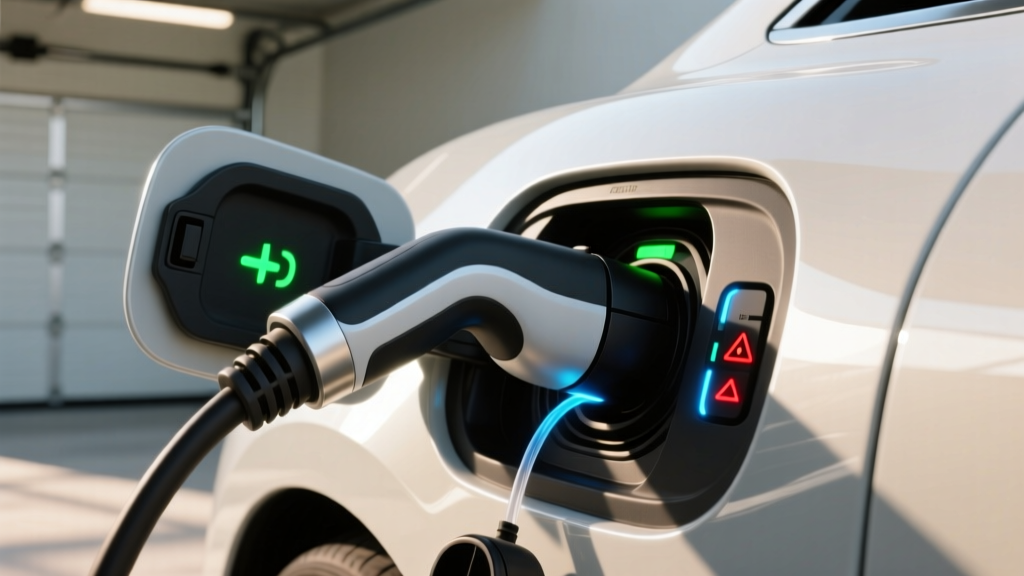
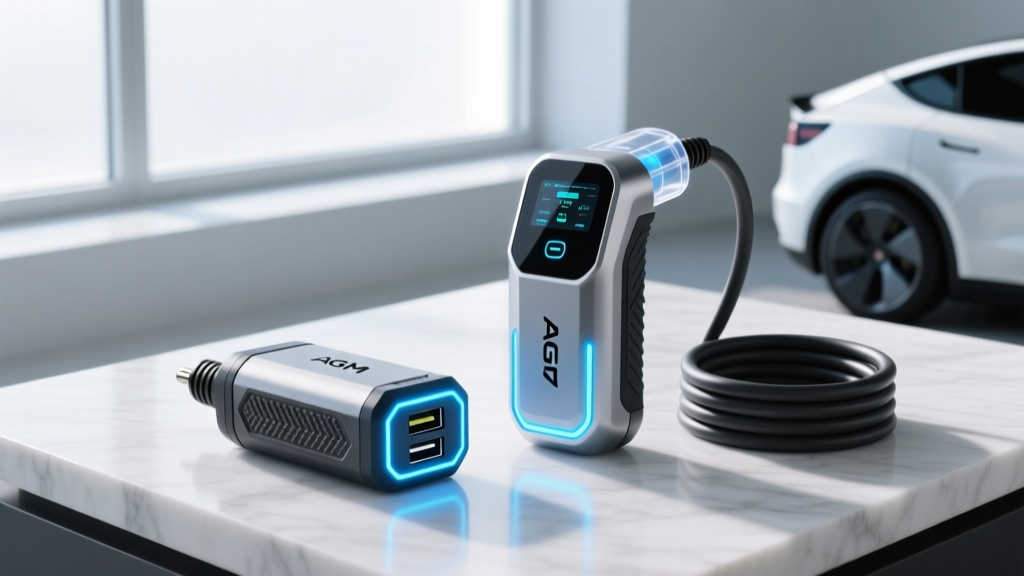
An AGM charger is a smart trickle/maintenance charger designed for 12V lead-acid batteries — the small auxiliary battery every EV still carries to run lights, infotainment, and control modules. Brands like NOCO, Battery Tender, and CTEK make excellent AGM-compatible maintainers in the $30–$80 range. But that device will do absolutely nothing to recharge the 60–100+ kWh lithium-ion or LFP pack that actually propels your car. For that, you need a dedicated EV supply equipment (EVSE) unit — a Level 1 or Level 2 charger — paired with your vehicle's onboard charger and the correct connector.
This guide clarifies the split between 12V AGM maintenance and high-voltage EV charging, then gives you the exact numbers on charging speeds, home installation costs, connector compatibility, and per-mile costs so you can set up your electrified vehicle properly.
The 12V AGM Battery in Your EV: Why It Still Matters
Every battery-electric and plug-in hybrid sold in the US still carries a conventional 12V battery — increasingly an AGM or lithium-iron-phosphate (LiFePO4) 12V unit — separate from the main traction pack. This battery powers the vehicle's computers, door locks, lights, and safety systems. If it dies, your EV won't start, even if the main pack is at 100%.
Tesla switched to a 16V lithium auxiliary battery in the refreshed Model 3 and Model Y, but most other manufacturers (Ford, Hyundai, GM, VW, Toyota) still use AGM 12V batteries. These can die from:
- Extended parking without driving (phantom drain from telematics and battery management)
- Cold weather reducing cranking amps
- A failing DC-DC converter that isn't topping up the 12V from the main pack
If you need an AGM charger for this purpose, look for a smart maintainer rated for AGM chemistry with a desulfation mode. The NOCO GENIUS5 (5A, ~$70) and CTEK MXS 5.0 (4.3A, ~$95) are reliable picks that handle AGM, gel, and flooded lead-acid profiles. Connect it to the 12V battery terminals or a 12V accessory port when your EV will sit for more than two weeks.
EV Charging Levels Explained: kW, Speed, and Real-World Range Gain
For the main traction battery, EV charging happens at three distinct levels. The critical literacy point: kW (kilowatts) measures power — the rate of energy flow. kWh (kilowatt-hours) measures energy — the total capacity of your battery. A 10 kW charger delivering power for 8 hours puts 80 kWh into the battery. Never confuse the two.
| Level | Voltage | Max Power (kW) | Miles of Range Added per Hour | Typical Use Case |
|---|---|---|---|---|
| Level 1 | 120V AC | 1.0–1.9 kW | 3–5 miles/hr | Overnight trickle; PHEVs with small packs |
| Level 2 | 240V AC | 3.3–19.2 kW | 12–75 miles/hr | Home daily charging; workplace; public AC |
| DC Fast Charging | 400–800V DC | 50–350 kW | 150–1,200+ miles/hr (peak) | Road trips; rapid top-ups; 10–80% in 15–35 min |
Real-world context: A Hyundai Ioniq 5 with its 77.4 kWh usable battery gains roughly 30 miles of range per hour on a 7.2 kW Level 2 home charger, but can add ~200 miles in 18 minutes at a 350 kW DC fast charger (10–80% SoC) thanks to its 800V architecture. Peak kW rates are never sustained — charge curves taper significantly above 80% State of Charge to protect the cells. Expect a 350 kW charger to average 150–180 kW over a 10–80% session.
Home EV Charger Installation: Electrical Requirements and True Costs
Installing a Level 2 home charger is the single most impactful upgrade an EV owner can make. You wake up every morning with a full battery, and home electricity costs a fraction of public DC fast charging. But installation costs vary wildly depending on your home's electrical panel, the distance from panel to charger location, and local permit requirements.
Electrical Requirements
Most Level 2 home chargers run on a 240V dedicated circuit, similar to an electric dryer or oven. Common configurations:
- 40A circuit / 32A continuous charge (7.7 kW) — sufficient for most EVs overnight; requires a 50A breaker
- 48A circuit / 40A continuous charge (9.6 kW) — faster; requires a 60A breaker
- 60A circuit / 48A continuous charge (11.5 kW) — ideal for large-battery trucks like the F-150 Lightning or Rivian R1T; requires an 80A breaker
- 80A circuit / 64A continuous (15.4 kW) — maximum residential; requires a 100A breaker and likely a panel upgrade
National Electrical Code (NEC) requires EV circuits to be rated at 125% of the continuous load, which is why a 48A charger needs a 60A breaker. Your charger must be on a dedicated circuit — sharing with other appliances is a code violation and a fire risk.
Panel Upgrade Reality
Many older homes have 100A or 150A main service panels already near capacity. Adding a 60A EV circuit may push total calculated load beyond the panel's rating, requiring a panel upgrade to 200A — a significant added cost. Homes built after 2005 typically have 200A service with headroom. Ask your electrician to perform a load calculation before quoting.
| Component | Simple Install (panel nearby, 200A service) | Complex Install (long run, panel upgrade needed) |
|---|---|---|
| EVSE Equipment (charger unit) | $350–$700 | $350–$700 |
| Electrical Labor (licensed electrician) | $300–$800 | $1,200–$3,000 |
| Materials (wire, conduit, breaker) | $50–$200 | $200–$600 |
| Panel Upgrade (if required) | $0 | $1,500–$4,000 |
| Permit & Inspection | $50–$200 | $100–$300 |
| Total | $750–$1,900 | $3,350–$8,600 |
The IRS §30C Alternative Fuel Vehicle Refueling Property Credit covers 30% of home charger equipment and installation costs, up to $1,000, but only if you live in an eligible census tract (non-urban, low-income, or designated energy communities). Check your eligibility before assuming the credit applies. Some utilities also offer rebates of $250–$500 for installing a smart Level 2 charger — contact your local provider.
Connector Compatibility: NACS, CCS1, and CHAdeMO in 2026
The connector landscape has consolidated significantly. As of 2026, the North American Charging Standard (NACS), developed by Tesla and adopted by nearly every major automaker, is the dominant connector for new EVs. Ford, GM, Rivian, Volvo, Polestar, Hyundai, Kia, and others now ship vehicles with native NACS ports. The legacy CCS1 (Combined Charging System) connector remains on vehicles sold through 2024–2025 and is still supported at most public DC fast stations. CHAdeMO, used primarily by the Nissan Leaf, is effectively discontinued for new vehicles.
| Connector | Brands Using It (2026) | Adapter Needed? |
|---|---|---|
| NACS (Tesla-style) | Tesla, Ford, GM, Rivian, Hyundai, Kia, Volvo, Polestar, BMW, Mercedes | NACS-to-CCS adapter for older CCS stations |
| CCS1 | VW ID.4 (prior model years), Audi e-tron (prior), some Stellantis PHEVs | CCS-to-NACS adapter for Tesla Superchargers |
| CHAdeMO | Nissan Leaf (discontinued after 2025) | No adapter available; use CHAdeMO stations only |
For Level 2 home charging, the J1772 connector (or NACS for Teslas and 2025+ adopters) handles AC charging. Most modern EVSE units now ship with NACS connectors or include a J1772-to-NACS adapter. If you buy a home charger today, choose one with the connector matching your vehicle — or buy a universal unit with a swappable plug.
Level 2 Home Charger Recommendations: Power, Features, and Price
Here are four proven Level 2 home chargers covering different budgets and needs. Every recommendation lists exact power output, connector, cable length, and smart features.
Best Overall: ChargePoint Home Flex (2026)
- Power Output: Up to 12 kW (50A) on a 60A circuit, adjustable down to 16A
- Connector: NACS (native) or J1772 (with included adapter)
- Cable Length: 23 feet
- Smart Features: Wi-Fi, app scheduling, energy tracking, Alexa integration, utility demand-response compatible
- Price: ~$550
- Best For: Most EV owners wanting a flexible, future-proof charger with robust app control
Best Value: Emporia Level 2 EV Charger
- Power Output: Up to 11.5 kW (48A) on a 60A circuit
- Connector: J1772 (NACS adapter available)
- Cable Length: 24 feet
- Smart Features: Wi-Fi, Emporia energy monitoring ecosystem integration, solar-aware scheduling
- Price: ~$350
- Best For: Budget-conscious buyers who already use Emporia home energy monitors
Best for Tesla/NACS Owners: Tesla Wall Connector
- Power Output: Up to 11.5 kW (48A) on a 60A circuit
- Connector: NACS native
- Cable Length: 24 feet
- Smart Features: Wi-Fi, power sharing (up to 6 units on one circuit), OTA updates, integrated with Tesla app
- Price: ~$475
- Best For: Tesla owners or households with multiple NACS-equipped EVs
Best for High-Power Needs: Grizzl-E Smart
- Power Output: Up to 10 kW (40A) on a 50A circuit; adjustable
- Connector: J1772 (NACS adapter included)
- Cable Length: 24 feet
- Smart Features: OCPP-compatible, Wi-Fi, durable aluminum enclosure, outdoor rated (NEMA 4)
- Price: ~$500
- Best For: Outdoor installations, Canadian/cold-climate owners, commercial-grade durability
Charging Cost Per Mile: EV vs Gas in Real Dollars
The economic case for home EV charging is overwhelming when you compare cost per mile against gasoline. Here's the math using 2026 average rates.
| Scenario | Rate | Cost per Mile (250 Wh/mi EV) | Equivalent Gas Vehicle (28 MPG, $3.40/gal) |
|---|---|---|---|
| Home off-peak (utility time-of-use) | $0.09/kWh | $0.023/mile | $0.121/mile |
| Home standard rate | $0.16/kWh | $0.040/mile | $0.121/mile |
| Public Level 2 (ChargePoint, EVgo) | $0.25–$0.40/kWh | $0.063–$0.100/mile | $0.121/mile |
| DC Fast Charging (Electrify America, Tesla Supercharger) | $0.35–$0.55/kWh | $0.088–$0.138/mile | $0.121/mile |
Key takeaway: Charging at home on off-peak rates costs roughly 5x less per mile than gasoline. Even expensive DC fast charging approaches gas parity but rarely exceeds it. A driver covering 12,000 miles per year at home standard rates spends ~$480 on electricity vs ~$1,457 on gas — a savings of nearly $1,000 annually. However, if you rely exclusively on DC fast charging at $0.50/kWh, your annual fuel cost jumps to ~$1,050, narrowing the gap significantly.
Charging Time Examples: What to Expect with Common Battery Sizes
Charge times depend on battery capacity (kWh), the charger's power output (kW), and the vehicle's onboard charger limit. Here are realistic 10–80% times for popular 2026 EVs:
- Tesla Model Y Long Range (75 kWh usable): ~8.5 hours on 7.7 kW Level 2; ~22 minutes at 250 kW Supercharger
- Hyundai Ioniq 5 (77.4 kWh): ~7.5 hours on 10.9 kW Level 2; ~18 minutes at 350 kW DC fast (800V architecture)
- Ford F-150 Lightning Extended Range (131 kWh): ~14 hours on 11.5 kW Level 2; ~40 minutes at 150 kW DC fast
- Chevrolet Equinox EV (85 kWh): ~9 hours on 11.5 kW Level 2; ~28 minutes at 150 kW DC fast
- Toyota RAV4 PHEV (18.1 kWh): ~2.5 hours on 7.2 kW Level 2; DC fast not available on most PHEVs
Remember that the last 20% (80–100%) charges dramatically slower than 10–80% — often taking as long as the first 70%. This is the charge-curve taper, a physical limitation of lithium-ion chemistry designed to prevent cell damage. For road trips, plan stops around 10–80% for the fastest throughput.
Safety, Code, and Best Practices
EV charger installation is not a DIY project unless you're a licensed electrician. Key safety and code requirements per the National Electrical Code (NEC Article 625):
- Dedicated circuit: Your EVSE must be on its own breaker — no shared circuits with outlets, lights, or appliances
- GFCI protection: Required for outdoor installations and increasingly for indoor garage installations per 2023 NEC updates; your breaker or the EVSE itself must provide ground-fault protection
- Outdoor rating: If mounted outside, the EVSE must be rated NEMA 3R or NEMA 4 (weatherproof). Indoor garage units are typically NEMA 1 or 2
- Wire gauge: A 60A circuit requires 6 AWG copper wire (THHN in conduit); a 50A circuit requires 6 AWG or 8 AWG depending on length and insulation type. Your electrician will spec this
- Permit and inspection: Virtually all jurisdictions require an electrical permit for EVSE installation. The inspection ensures the work meets code — skip it and you risk insurance denial in the event of an electrical fire
- Hardwired vs plug: Chargers above 40A (9.6 kW+) are typically hardwired (no plug), which is safer and code-compliant. Plug-in units use a NEMA 14-50 receptacle (50A) or NEMA 6-50 (50A, no neutral)
Frequently Asked Questions
How much does it cost to install a home EV charger?
A straightforward Level 2 installation with a 200A panel and short wire run costs $750–$1,900 including equipment, labor, and permit. If your home needs a panel upgrade to 200A or has a long conduit run (over 50 feet from the panel), expect $3,350–$8,600. The IRS §30C credit can offset up to $1,000 (30% of costs) if you're in an eligible census tract.
How fast will each charging level add range?
Level 1 (120V) adds 3–5 miles per hour — adequate only for PHEVs or very low daily mileage. Level 2 (240V) at 7.7 kW adds ~30 miles per hour; at 11.5 kW, ~45 miles per hour. DC fast charging at 150 kW adds ~500+ miles per hour at peak, tapering as the battery fills. For a typical 250 Wh/mile EV, divide the charger's kW by 0.25 to estimate miles per hour.
Which connector/charger is compatible with my EV?
If you drive a 2025 or newer Ford, GM, Hyundai, Kia, Rivian, Volvo, BMW, or Mercedes EV, your vehicle uses the NACS connector. Older CCS1 vehicles (2024 and earlier VW, Audi, some Stellantis) need CCS1 chargers or a CCS-to-NACS adapter for Tesla Supercharger access. Check your vehicle's charge port or owner's manual. For home Level 2, match your EVSE connector to your car's port — or use the appropriate adapter.
How much does charging cost per mile vs gas?
Home charging at the national average of $0.16/kWh costs about $0.04 per mile for a typical EV (250 Wh/mile). Gasoline at $3.40/gallon in a 28 MPG vehicle costs $0.12 per mile. Home charging saves roughly $0.08 per mile, or ~$960 per year at 12,000 miles. Public DC fast charging at $0.45/kWh costs ~$0.11/mile — close to gas parity.
What electrical upgrades might I need?
The most common upgrade is a panel upgrade from 100A or 150A to 200A service ($1,500–$4,000), required if your existing panel can't handle the additional 40–60A EV circuit. You may also need a new conduit run from the panel to the garage ($10–$30/foot for long runs), a sub-panel installation if the main panel is far from the charger, or coordination with your utility for a service drop upgrade in older neighborhoods.
Do I still need an AGM charger if I have a home EV charger?
Possibly. Your Level 2 EVSE charges the main traction battery, and the vehicle's DC-DC converter should maintain the 12V AGM battery while plugged in. However, if your EV sits unplugged for extended periods (2+ weeks), or if you've had 12V battery failures, a dedicated AGM maintainer like the NOCO GENIUS5 (~$70) is a smart $70 insurance policy. Connect it to the 12V battery terminals when the car is stored.