If you've just ordered an electric vehicle — or are trying to optimize ownership of one — the single biggest quality-of-life upgrade is reliable Level 2 home charging. AeroVironment (now branded under the AV EV Solutions line) has been manufacturing residential and commercial EV supply equipment (EVSE) for over a decade, supplying units to automakers like Nissan and Mitsubishi as OEM-branded chargers. This guide breaks down what an AeroVironment EV charger actually delivers, what your home's electrical system needs to support it, and exactly what you'll pay from panel to plug.
Charging Levels Explained: kW, Miles Per Hour, and What You Actually Need
The most common mistake new EV buyers make is confusing kW (kilowatts — the rate of power delivery, like water pressure from a hose) with kWh (kilowatt-hours — the total energy stored in your battery, like the size of the tank). An AeroVironment Level 2 charger delivers power measured in kW; your EV battery stores energy measured in kWh. Divide your battery's kWh by the charger's kW output, and you get a rough charge time.
| Level | Voltage | Max Power (kW) | Miles of Range Per Hour | Typical Use Case |
|---|---|---|---|---|
| Level 1 | 120V AC | 1.2–1.9 kW | 3–5 mi/hr | Overnight trickle; PHEV top-ups |
| Level 2 (Home) | 240V AC | 3.3–19.2 kW | 12–75 mi/hr | Daily home charging; primary EVSE |
| DC Fast Charging | 400–800V DC | 50–350 kW | 150–1,000+ mi/hr | Road trips; public stations |
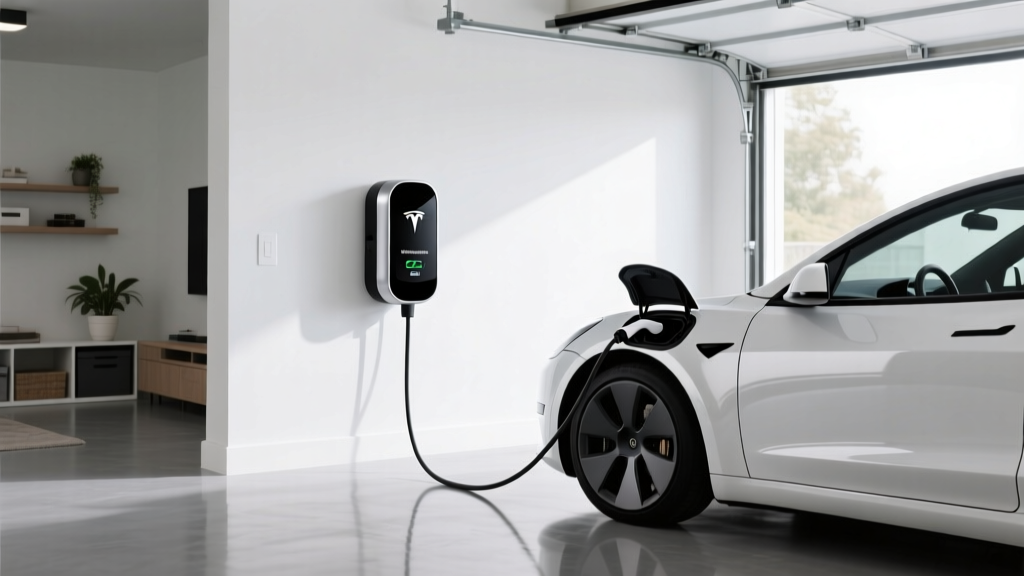
Most AeroVironment residential units — such as the AV HomeSmart and older TurboCord models — operate at Level 2, delivering between 3.3 kW and 7.7 kW on a 240V circuit. At 7.7 kW, a typical 75 kWh battery (like the one in a Ford Mustang Mach-E Extended Range) recovers roughly 30 miles of range per hour of charging. That's enough to replenish a full day's driving in 2–3 hours, or go from 20% to 80% overnight.
Home Installation: Electrical Requirements, Panel Upgrades, and Costs
The AeroVironment EV charger itself is only part of the equation. Proper installation requires a dedicated 240V circuit, and the total cost depends heavily on your home's existing electrical infrastructure. Here's what a licensed electrician will evaluate:
Electrical Requirements
- Voltage: 240V (same as a dryer or oven outlet)
- Amperage: A 7.7 kW charger draws 32 amps continuously; NEC code requires a circuit rated at 125% of continuous load, so you need a 40-amp breaker
- Wire gauge: 8 AWG copper (or 6 AWG aluminum) for a 40A circuit; 6 AWG copper for a 48A/60A circuit
- Dedicated circuit: The EVSE must be on its own breaker — no sharing with other appliances
- GFCI protection: Required by NEC 2020+ for all EVSE installations; some AeroVironment units include built-in GFCI, others rely on the breaker
Do You Need a Panel Upgrade?
This is where costs can spike. Most modern homes have a 200-amp service panel, which typically supports a 40A EV circuit without issue. But if your home has an older 100-amp panel — common in houses built before the 1990s — adding a 40A continuous load may exceed your panel's capacity, especially if you already run electric heat, a dryer, and an oven simultaneously.
A panel upgrade from 100A to 200A typically costs $1,500–$3,500 depending on your utility's requirements, local labor rates, and whether a new meter base or service drop is needed. Some utilities offer rebates that offset this cost. Always get a load calculation from your electrician before assuming you need an upgrade — many 100A panels can support a Level 2 charger if you have gas appliances rather than electric ones.
| Component | Cost Range | Notes |
|---|---|---|
| AeroVironment EVSE unit (Level 2, 32A–40A) | $350–$650 | Depends on model, cord length, smart features |
| Electrician labor (standard install) | $400–$1,200 | Short run from panel to garage: lower end; long run through walls/attic: higher |
| Electrical materials (wire, conduit, breaker) | $100–$400 | 8 AWG copper, 40A breaker, junction boxes |
| Permit and inspection | $50–$200 | Varies by municipality; some jurisdictions waive for EVSE |
| Panel upgrade (if needed) | $1,500–$3,500 | 100A to 200A service upgrade; not always required |
| Total (no panel upgrade) | $900–$2,450 | Most homeowners fall in the $1,000–$1,600 range |
| Total (with panel upgrade) | $2,400–$5,950 | Significant but adds home resale value |
Connector Compatibility: NACS, CCS, and CHAdeMO
The North American EV charging connector landscape has shifted dramatically. As of 2025–2026, the North American Charging Standard (NACS) — originally Tesla's proprietary connector — has become the dominant standard, with Ford, GM, Rivian, Volvo, Hyundai, Kia, and most other automakers adopting it for new models. The older CCS1 (Combined Charging System) connector is being phased out on new vehicles but remains on many 2021–2024 models. CHAdeMO is effectively legacy, found primarily on older Nissan Leafs.
| Connector | Brands Using It (2026) | Adapter Needed for AeroVironment (J1772)? |
|---|---|---|
| NACS (Tesla-style) | Tesla, Ford, GM, Rivian, Volvo, Polestar, Hyundai, Kia, Mercedes | Yes — J1772-to-NACS adapter (~$100–$200) or purchase NACS-terminated EVSE |
| CCS1 | Legacy 2021–2024 models (VW ID.4, older Bolt EUV, BMW i4) | Native J1772 top portion fits CCS AC inlet directly |
| CHAdeMO | Nissan Leaf (2011–2025), Mitsubishi Outlander PHEV (older) | Native J1772 fits for Level 2 AC charging |
Most AeroVironment Level 2 chargers ship with a J1772 connector, which is the legacy AC charging standard. This connector physically plugs into all CCS1 and CHAdeMO vehicles for AC charging. However, if your 2026 EV has a NACS port (increasingly likely), you'll need either a J1772-to-NACS adapter or you should purchase an AeroVironment unit that ships with a native NACS plug — some newer AV models offer this option.
Important: J1772-to-NACS adapters work perfectly for Level 2 AC charging. They do not work for DC fast charging, which uses a different pin configuration entirely.
AeroVironment EV Charger Models: Specs, Features, and Pricing
AeroVironment offers several residential Level 2 units. Here's how the current lineup compares:
AV HomeSmart (40A / 9.6 kW)
- Power Output: 9.6 kW (40A continuous on a 50A circuit)
- Connector: J1772 (NACS adapter available)
- Cable Length: 25 feet
- Smart Features: Wi-Fi connected, app-based scheduling, energy monitoring, utility demand-response compatible
- Indoor/Outdoor: NEMA 4 rated (outdoor-safe)
- Price: ~$549–$649
- Best For: EVs with large batteries (80+ kWh) that benefit from faster Level 2 recovery
AV HomeSmart (32A / 7.7 kW)
- Power Output: 7.7 kW (32A continuous on a 40A circuit)
- Connector: J1772
- Cable Length: 25 feet
- Smart Features: Wi-Fi, scheduling, load management
- Indoor/Outdoor: NEMA 4 rated
- Price: ~$449–$549
- Best For: Most EVs; ideal balance of speed and electrical requirements
AV TurboCord (16A / 3.8 kW, Dual Voltage)
- Power Output: 3.8 kW on 240V; 1.4 kW on 120V
- Connector: J1772 with integrated adapters
- Cable Length: 20 feet
- Smart Features: None (plug-and-charge, no Wi-Fi)
- Indoor/Outdoor: NEMA 4 rated, portable
- Price: ~$349–$399
- Best For: PHEV owners, renters, or as a backup/mobile charger
The 9.6 kW HomeSmart is the strongest choice for BEV owners who drive 40+ miles daily and want faster overnight recovery. The 7.7 kW version suits most drivers and requires only a 40A circuit — easier on older panels. The TurboCord is a solid secondary unit or PHEV solution but won't keep up with high-mileage BEV drivers.
Cost to Charge: Home vs. Public vs. Gas — The Per-Mile Math
The economic case for home charging is overwhelming. Here's how the costs break down per mile for a typical EV getting 3.5 miles per kWh (roughly the efficiency of a Tesla Model Y or Hyundai Ioniq 5) versus a comparable gas vehicle at 28 MPG combined.
| Scenario | Rate | Cost per kWh | Cost per Mile (EV) | Equivalent Gas Cost |
|---|---|---|---|---|
| Home, off-peak TOU rate | $0.09–$0.13/kWh | $0.11 avg | $0.031 | $0.87/gal equivalent |
| Home, standard flat rate | $0.15–$0.20/kWh | $0.17 avg | $0.049 | $1.37/gal equivalent |
| Public Level 2 (ChargePoint, etc.) | $0.25–$0.49/kWh | $0.35 avg | $0.10 | $2.80/gal equivalent |
| DC Fast Charging (Electrify America, Tesla) | $0.35–$0.58/kWh | $0.48 avg | $0.137 | $3.84/gal equivalent |
| Gasoline (28 MPG, $3.50/gal) | — | — | — | $0.125/mile |
At national average gas prices of roughly $3.50/gallon in early 2026 (per U.S. EIA), a 28 MPG gas car costs about $0.125 per mile in fuel alone. Home-charging an EV on an off-peak rate costs roughly $0.031 per mile — a 75% reduction. Even DC fast charging at highway rates roughly matches or slightly undercuts gas.
The key insight: home charging is where the economics work best. If you rely entirely on public DC fast charging, your cost advantage over gas narrows significantly. The AeroVironment Level 2 charger's value proposition is enabling that cheapest-per-mile home charging every night.
Charging Times for Common EV Battery Sizes
How long does an AeroVironment Level 2 charger actually take to fill common EV batteries? Here are real-world estimates at 7.7 kW and 9.6 kW output, accounting for roughly 90% charging efficiency (some energy is lost as heat during AC-to-DC conversion inside the vehicle).
| Vehicle (Battery Size) | 7.7 kW Charger | 9.6 kW Charger |
|---|---|---|
| Chevy Equinox EV (85 kWh) | ~7.7 hours | ~6.2 hours |
| Tesla Model Y Long Range (75 kWh) | ~6.8 hours | ~5.5 hours |
| Hyundai Ioniq 5 (77.4 kWh) | ~7.0 hours | ~5.6 hours |
| Ford Mustang Mach-E ER (91 kWh) | ~8.3 hours | ~6.6 hours |
| Toyota RAV4 Prime PHEV (18.1 kWh) | ~1.6 hours | ~1.3 hours |
For context, most EV owners plug in when they get home (typically at 30–50% state of charge) and wake up to 80–100%. A 7.7 kW AeroVironment unit handles this comfortably for any current-production EV. The 9.6 kW model shaves 1–2 hours off — meaningful if you arrive home at 50% and need a full battery by 6 AM for a long trip.
Safety, Electrical Code, and Installation Best Practices
EV chargers draw significant continuous current — often for 6–10 hours straight. This makes proper installation non-negotiable. Here's what the National Electrical Code (NEC) and common-sense safety require:
- Dedicated circuit: Your EVSE must have its own breaker — never shared with outlets, lights, or appliances. A shared circuit risks tripping the breaker or overheating wires.
- GFCI protection: NEC Article 625 requires ground-fault circuit interrupter protection for all EVSE installations. This can be a GFCI breaker in the panel or built into the EVSE itself. AeroVironment units include ground-fault protection internally on most models.
- NEMA 4 rating: If installing outdoors (driveway, exterior wall), the unit must be rated for weather resistance. AeroVironment HomeSmart units carry a NEMA 4 rating, meaning they withstand rain, splashing water, and dust.
- Cable management: A 25-foot charging cable left on the ground is a tripping hazard and degrades from UV exposure and abrasion. Use a wall-mounted cable organizer or retractable reel.
- Permit and inspection: Most jurisdictions require an electrical permit for EVSE installation. The inspection ensures wire gauge, breaker size, grounding, and GFCI are correct. Skipping the permit risks insurance claim denial if a fire occurs.
- Load management: If your panel is near capacity, consider an AeroVironment unit with built-in load management or pair it with a smart panel monitor (like a Span panel or Sense monitor) that dynamically adjusts charger amperage based on real-time household load.
Federal Tax Credit and Utility Rebates for Home Charging
The federal Alternative Fuel Vehicle Refueling Property Credit (IRC §30C) was reinstated and modified under the Inflation Reduction Act. As of 2026, it covers 30% of the cost of home EV charger equipment and installation, up to $1,000 — but only if you live in a qualifying census tract (generally rural or low-income areas as defined by the IRS). Check eligibility on the IRS §30C page.
Beyond federal credits, many utilities offer direct rebates for Level 2 charger purchases and installations — commonly $250–$500 off the equipment, and some cover the full cost of a basic installation. Utilities also offer Time-of-Use (TOU) rate plans that drop electricity to $0.07–$0.10/kWh during overnight hours (typically 11 PM – 6 AM). The AeroVironment HomeSmart's Wi-Fi scheduling feature lets you set charging windows to align with these off-peak rates automatically.
Frequently Asked Questions
How much does it cost to install an AeroVironment home EV charger?
Total installed cost typically ranges from $900 to $2,450 for a standard setup without a panel upgrade. This includes the EVSE unit ($350–$650), electrician labor ($400–$1,200), materials ($100–$400), and permit ($50–$200). If your home needs a panel upgrade from 100A to 200A service, add $1,500–$3,500 to the total. Most homes built after 1990 with 200A panels won't need an upgrade.
How fast will each charging level add range to my EV?
Level 1 (120V) adds roughly 3–5 miles per hour. Level 2 at 7.7 kW (like most AeroVironment units) adds 25–30 miles per hour. Level 2 at 9.6 kW adds 35–40 miles per hour. DC fast charging at 150+ kW can add 150–300+ miles in 20 minutes, depending on the vehicle's charge acceptance rate and battery state of charge.
Which connector is compatible with my EV?
If you drive a 2025–2026 EV from Ford, GM, Tesla, Rivian, Hyundai, Kia, or Volvo, your vehicle likely has a NACS port. AeroVironment chargers ship with a J1772 connector, so you'll need a J1772-to-NACS adapter (~$100–$200). Older CCS1 and CHAdeMO vehicles accept J1772 natively for AC Level 2 charging. Check your vehicle's charge port or owner's manual to confirm.
How much does EV charging cost per mile compared to gas?
Home charging on off-peak rates costs roughly $0.03 per mile — about 75% less than gasoline at $3.50/gallon in a 28 MPG vehicle ($0.125/mile). Standard-rate home charging runs about $0.05/mile. Public DC fast charging at $0.48/kWh averages $0.14/mile — roughly comparable to gas. The AeroVironment charger's primary financial value is enabling the cheapest home-charging scenario every night.
What electrical upgrades might I need for a Level 2 charger?
You'll need a dedicated 240V circuit with a 40A breaker (for 32A charging) or a 50A breaker (for 40A charging). If your home has a 200A panel with available capacity, the electrician simply adds a new breaker and runs wire to the charger location. If you have a 100A panel or your panel is already near capacity, you may need a panel upgrade ($1,500–$3,500) or a load management device ($200–$500) that dynamically limits charger draw when other appliances are running.
Is the AeroVironment charger Energy Star certified and eligible for utility rebates?
Most AeroVironment HomeSmart units are Energy Star certified, which is a common requirement for utility rebate programs. Check with your local utility for specific rebate availability — many offer $250–$500 toward the purchase and installation of certified Level 2 equipment, plus TOU rate plans that reduce overnight charging costs by 40–60%.