Why Acura's EV Range Demands a Smart Charging Strategy
If you're researching the Acura EV range for the ZDX — Acura's first all-electric SUV built on GM's Ultium platform — you already know the EPA sticker: up to 313 miles on the rear-wheel-drive A-Spec trim. But range is only half the ownership equation. The other half is how quickly and affordably you can replenish that 102 kWh battery pack (usable capacity) when it's depleted.
This guide walks through every charging scenario a 2026 Acura ZDX owner will face: home Level 2 installation, public DC fast charging, connector compatibility (including the ongoing NACS/CCS transition), and what you'll actually pay per mile compared to a gas-powered Acura MDX.
| EPA Range | 313 mi (RWD A-Spec) / 278 mi (AWD Type S) |
| Battery | 102 kWh usable, NMC chemistry |
| Peak DC Charge Rate | 190 kW |
| 10–80% DC Time | ~31 minutes (with preconditioning) |
| Level 2 Onboard Charger | 11.5 kW (48A) |
| Connector (2026 MY) | NACS (native Tesla Supercharger access) |
| 0–60 mph | 5.7s (RWD) / 3.8s (Type S AWD) |
| Base MSRP | $65,850 (A-Spec RWD) |
| Battery Warranty | 8 yr / 100,000 mi |
The EPA's 313-mile figure assumes mixed driving at moderate temperatures. On a 75 mph highway run in 40°F weather, expect roughly 245–265 miles before you need to plug in. Cold weather saps NMC batteries harder than LFP chemistry, and the ZDX's large cabin volume demands significant HVAC energy. Plan conservatively for road trips.
Charging Levels Explained: How Fast Will Each Level Add Range?
Before we talk equipment, let's nail down the three charging tiers. A critical distinction: kW (kilowatts) measures power — how fast energy flows into your battery. kWh (kilowatt-hours) measures energy — the total capacity of your battery. Think of kW as the width of the pipe and kWh as the size of the tank.
| Level | Voltage / Current | Max Power (kW) | Miles of Range / Hour | 0–100% Time (102 kWh) |
|---|---|---|---|---|
| Level 1 (120V outlet) | 120V / 12A | 1.4 kW | ~4–5 mi/hr | ~73 hours |
| Level 2 (240V home/public) | 240V / 48A | 11.5 kW | ~32–36 mi/hr | ~9 hours |
| DC Fast (public stations) | 400V+ / variable | 190 kW (peak) | ~200+ mi in 15 min | 10–80% in ~31 min |
For a 102 kWh battery like the ZDX's, Level 1 is an emergency trickle — not a daily strategy. Level 2 is the backbone of EV ownership: plug in overnight, wake up to a full charge. DC fast charging is your road-trip tool, but sustained speeds taper significantly above 80% State of Charge (SoC) to protect battery health.
Home Charger Installation: Costs, Electrical Requirements & Panel Upgrades
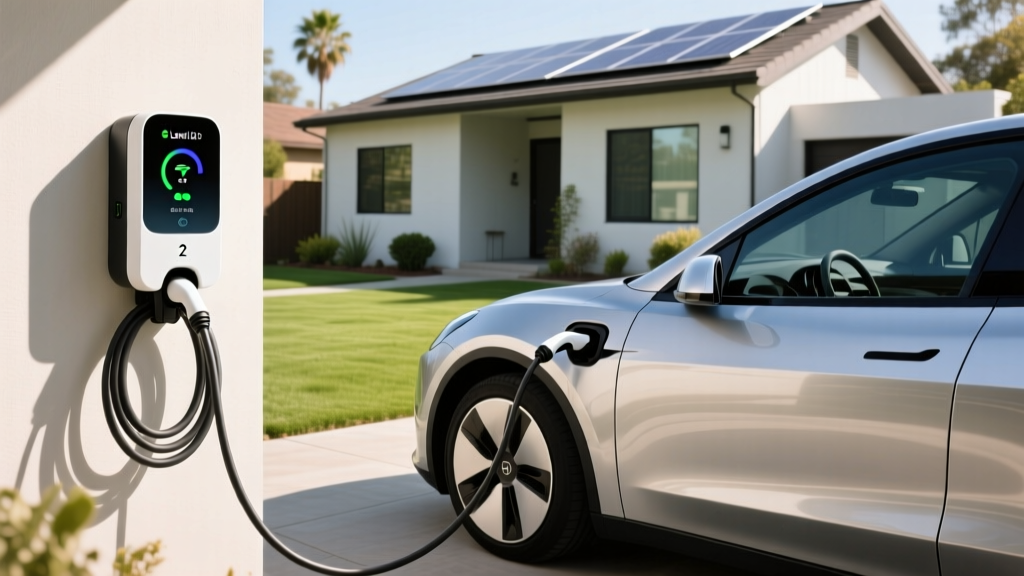
The ZDX's 11.5 kW onboard charger means you'll want a 240V / 48A hardwired Level 2 station at home to maximize charging speed. Here's what that actually requires:
Electrical Requirements
- Circuit: Dedicated 60A breaker (EVSE draws 48A continuous; NEC requires 125% headroom = 60A circuit)
- Wire: 6 AWG copper (THHN in conduit or NM-B depending on run)
- Panel capacity: Your main panel needs at least 60A of spare capacity. Many 100A panels in older homes cannot accommodate this without an upgrade to 200A service.
- GFCI protection: Required by NEC 2020+ for outdoor receptacles; hardwired units may not require a GFCI breaker in all jurisdictions — your electrician will confirm local code.
- Permit: Most municipalities require an electrical permit ($50–$200) and a post-install inspection.
Installation Cost Breakdown
| Item | Low End | High End | Notes |
|---|---|---|---|
| Level 2 EVSE (48A, hardwired) | $450 | $750 | Emporia, ChargePoint, Wallbox |
| Electrician labor (2–6 hours) | $400 | $1,500 | Varies by run length, wall type |
| Electrical permit | $50 | $200 | Municipality dependent |
| Panel upgrade (if needed) | $1,500 | $4,000 | 100A → 200A service upgrade |
| Total (no panel upgrade) | $900 | $2,450 | Most common scenario |
| Total (with panel upgrade) | $2,400 | $6,450 | Older homes with 100A service |
Always get at least two quotes from licensed electricians. Ask specifically whether your panel can handle a 60A continuous load. If you're near capacity, a load-management device (like the Emporia V2H hub) can share capacity between your EVSE and other appliances without a full panel swap.
Connector Compatibility: NACS, CCS1 & the 2026 Landscape
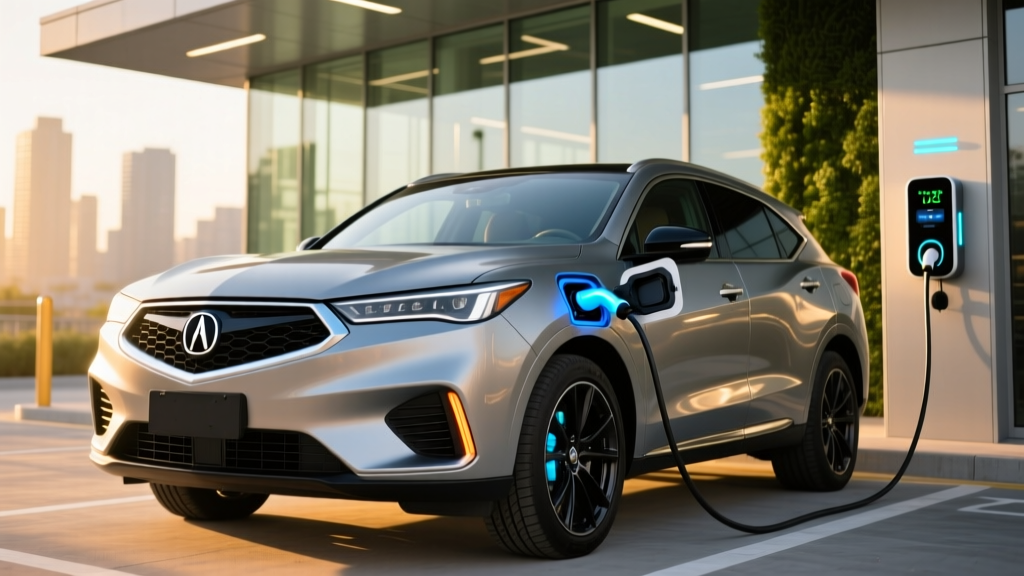
The 2026 Acura ZDX ships with a native NACS (North American Charging Standard) port — the Tesla-designed connector now adopted by nearly every major automaker. This is a significant advantage: ZDX owners can plug directly into Tesla Superchargers without an adapter, accessing the most reliable DC fast-charging network in North America.
| Connector | ZDX Native? | Adapter Needed? | Network Access |
|---|---|---|---|
| NACS | Yes (native) | None | Tesla Supercharger, Electrify America (new stations), EVgo |
| CCS1 | No | NACS-to-CCS adapter (~$150–$250) | Legacy Electrify America, ChargePoint, EVgo CCS stalls |
| CHAdeMO | No | Not available for NACS vehicles | Obsolete; skip |
| J1772 (Level 2 AC) | No | NACS-to-J1772 adapter (included with ZDX) | Public Level 2 stations, older home chargers |
Carry a NACS-to-CCS adapter in your frunk for legacy public chargers. Acura includes a J1772 adapter in the box for backward-compatible Level 2 stations. If you're installing a home charger, buy a NACS-connector unit (like the Tesla Wall Connector or Emporia V2 with NACS plug) to avoid adapter hassle every night.
Charging Cost Per Mile: ZDX vs. Gas Acura MDX
The economics of EV ownership hinge on electricity rates, which vary dramatically by region and time of day. Here's what a full charge actually costs across common scenarios, benchmarked against the 2026 Acura MDX (AWD, 21 MPG combined on premium fuel at ~$4.10/gallon national average).
| Scenario | Rate | Full Charge / Tank Cost | Cost Per Mile |
|---|---|---|---|
| Home (off-peak utility rate) | $0.12/kWh | $12.24 (102 kWh) | $0.039/mi |
| Home (national avg residential) | $0.17/kWh | $17.34 | $0.055/mi |
| Public Level 2 (ChargePoint, etc.) | $0.30/kWh | $30.60 | $0.098/mi |
| DC Fast (Electrify America/Supercharger) | $0.42/kWh | $42.84 | $0.137/mi |
| Acura MDX AWD (premium gas, 21 MPG) | $4.10/gal | $77.90 (19.5-gal tank) | $0.195/mi |
Even at the most expensive public DC fast-charging rates, the ZDX costs roughly 30% less per mile than the gas MDX. At home on off-peak rates, you're spending a fifth of what gas costs. Over 15,000 miles per year, home charging saves approximately $2,340 annually versus premium fuel.
Check whether your utility offers a dedicated EV time-of-use (TOU) rate — many providers offer $0.08–$0.12/kWh overnight, which makes charging the ZDX's large battery exceptionally cheap. The U.S. Department of Energy's EV cost calculator lets you input your local rates for a personalized estimate.
DC Fast Charging in Practice: The Charge Curve Reality
Acura quotes a peak charge rate of 190 kW for the ZDX, but no EV sustains peak speed across the full session. Here's what a typical DC fast-charge session looks like with proper battery preconditioning (activated automatically when you navigate to a charger in the ZDX's infotainment):
- 10–30% SoC: ~185–190 kW peak — roughly 2.5 minutes per 10% added
- 30–60% SoC: ~150–170 kW sustained — roughly 3 minutes per 10%
- 60–80% SoC: ~90–120 kW taper — roughly 4.5 minutes per 10%
- 80–100% SoC: ~40–50 kW trickle — avoid charging above 80% on road trips unless necessary
A 10–80% session takes approximately 31 minutes at a 350 kW-capable station. At a 150 kW station, expect roughly 38–42 minutes. Cold batteries will charge significantly slower until they warm up — preconditioning is non-negotiable in winter.
Recommended Home Chargers for the Acura ZDX (2026)
With a NACS connector and an 11.5 kW onboard charger, the ZDX pairs best with a 48A hardwired NACS station. Here are three proven options:
Tesla Wall Connector (Gen 4)
- Power: 48A / 11.5 kW (240V)
- Connector: NACS native
- Cable: 24 ft
- Smart features: Wi-Fi, OTA updates, power sharing between two units
- Price: ~$475
- Best for: Simple, reliable, no subscription needed
Emporia Vue EV Charger (V2)
- Power: 48A / 11.5 kW (240V)
- Connector: NACS (available 2025+ model) or J1772 with adapter
- Cable: 24 ft
- Smart features: Energy monitoring, solar integration, load management, utility TOU scheduling
- Price: ~$549
- Best for: Solar owners, energy-tracking enthusiasts
ChargePoint Home Flex (NACS)
- Power: Up to 50A / 12 kW (240V, configurable)
- Connector: NACS (2025+ model) or J1772
- Cable: 23 ft
- Smart features: App scheduling, Alexa integration, flexible amperage (16A–50A DIP switch)
- Price: ~$649
- Best for: Homes with limited panel capacity (dial down to 32A on a 40A circuit)
All three are NEMA 4 rated for outdoor installation. Hardwiring is strongly recommended over a NEMA 14-50 plug — it eliminates the GFCI breaker requirement in most jurisdictions and provides a cleaner, safer connection. Have your electrician confirm the correct wire gauge and breaker size for your chosen amperage.
Safety, Code & the Panel-Upgrade Gotcha
Before you order a charger, have an electrician perform a load calculation on your electrical panel. NEC Article 220 requires that your total continuous loads not exceed 80% of your panel's rated capacity. A 200A panel can handle ~160A of continuous draw; if your HVAC, water heater, dryer, and oven already consume 110A, a 60A EV circuit pushes you over the limit.
Options if your panel is maxed out:
- Upgrade to 200A or 320A service ($1,500–$4,000) — the most common fix for older homes
- Install an automatic load-management device ($300–$600) that throttles EV charging when other appliances kick on
- Downsize your EVSE to 32A on a 40A circuit — still delivers ~22 mi/hr, adequate for most daily driving
Never use an extension cord with a Level 2 charger, and never plug a portable EVSE into a standard 15A/120V outlet expecting meaningful charge times on a 102 kWh battery. For the ZDX, Level 1 adds roughly 5 miles per hour — a full charge would take over 70 hours.
Frequently Asked Questions
How much does it cost to install a home EV charger for the Acura ZDX?
Expect $900–$2,450 for a standard 48A Level 2 installation if your electrical panel has sufficient capacity. If you need a panel upgrade from 100A to 200A service, total costs can reach $2,400–$6,450. Always get quotes from at least two licensed electricians and confirm whether a permit is required in your municipality.
How fast will each charging level add range to the ZDX?
Level 1 (120V) adds about 4–5 miles per hour. Level 2 (240V, 48A) adds roughly 32–36 miles per hour, fully charging the 102 kWh battery overnight in about 9 hours. DC fast charging at 190 kW peak adds approximately 200 miles in 15 minutes, with a 10–80% session taking around 31 minutes.
Which connector is compatible with the 2026 Acura ZDX?
The 2026 ZDX uses a native NACS connector, giving it direct access to Tesla Superchargers. For legacy CCS1 stations, you'll need a NACS-to-CCS adapter (~$150–$250). Acura includes a J1772-to-NACS adapter for older public Level 2 chargers. CHAdeMO is obsolete and unsupported.
How much does charging the ZDX cost per mile compared to gas?
Charging at home on a national average rate of $0.17/kWh costs about $0.055 per mile. The gas-powered Acura MDX on premium fuel costs roughly $0.195 per mile. Even the most expensive public DC fast charging ($0.42/kWh) comes in at $0.137/mi — still 30% cheaper than gas. Annual savings at 15,000 miles: roughly $1,800–$2,340.
What electrical upgrades might I need for a Level 2 charger?
You'll need a dedicated 60A breaker with 6 AWG copper wire. The most common surprise cost is a panel upgrade: homes with 100A service typically need to upgrade to 200A ($1,500–$4,000) to safely accommodate a 48A continuous EV load alongside existing appliances. A load-management device can sometimes avoid this expense.
Does the ZDX qualify for the federal EV tax credit?
Federal §30D tax credit eligibility depends on MSRP caps (the ZDX's starting price of ~$65,850 is under the $80,000 SUV cap), buyer income limits ($150K single / $300K joint AGI), and battery critical-mineral sourcing requirements that change annually. The credit can now be transferred to the dealer at point of sale as an instant discount. Verify current-year eligibility on the IRS clean vehicle credit page and consult a tax professional before relying on the credit in your purchase decision.