Why 7-Eleven Is Betting Big on EV Charging
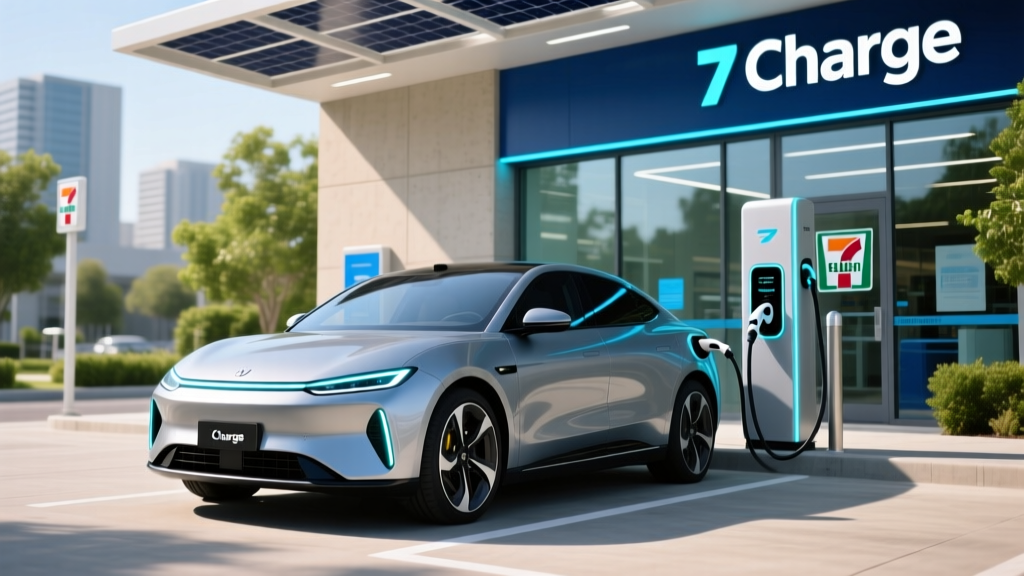
If you have driven an electric vehicle on a long highway stretch in the U.S. over the last two years, you have probably noticed a new name on the DC fast-charging map: 7Charge, the branded charging network rolling out at 7-Eleven, Speedway, and Stripes convenience stores. What started as a handful of pilot stations in 2022 has grown into one of the most visible public-charging expansions of the mid-2020s, leveraging the chain's roughly 13,000 U.S. locations to target high-traffic corridors and urban charging deserts.
The pitch is simple: pair a 15- to 30-minute fast-charge stop with a Slurpee, coffee, or hot-food grab, and you have a charging experience that actually resembles the gas-station model EV owners have been asking for. But convenience only matters if the chargers themselves are fast, reliable, and compatible with your vehicle. This guide breaks down exactly what 7-Eleven chargers deliver in 2026 — the hardware, the connectors, the real-world speeds, the cost per kWh, and how they stack up against Electrify America, EVgo, and the Tesla Supercharger network.
What Hardware Powers 7-Eleven Chargers?
7-Eleven has partnered primarily with EV charging hardware manufacturers like Tritium and ABB to deploy DC fast chargers at participating locations. The mix varies by site, but the most common configurations in 2026 include:
- 180 kW Tritium RTM chargers — the workhorse units at most urban and suburban 7-Eleven sites.
- 350 kW Tritium or ABB units — deployed at select highway-adjacent Speedway and Stripes locations for ultra-fast charging on vehicles that support it (Hyundai Ioniq 5/6, Kia EV6/EV9, Porsche Taycan, Lucid Air).
- 50 kW legacy CCS units — still present at some earlier pilot locations, primarily useful for older EVs or as a top-up option.
Most 7Charge stations offer two to four stalls per site, which is smaller than a typical Supercharger or Electrify America hub. This means wait times can be a factor at popular locations during peak travel windows (Friday evenings, holiday weekends). The upside is that 7-Eleven sites are almost always well-lit, staffed 24/7, and situated near major roadways — factors that matter more for safety and convenience than raw stall count.
Charging Levels at a Glance: Speeds That Matter
| Level | Power (kW) | Voltage | Miles of Range Added per Hour | Typical Use Case |
|---|---|---|---|---|
| Level 1 (120V AC) | 1.2–1.9 kW | 120V / 12–16A | 3–5 mi/hr | Overnight trickle, PHEV topping off |
| Level 2 (240V AC) | 7.2–19.2 kW | 240V / 30–80A | 20–60 mi/hr | Home charging, workplace, destination |
| DC Fast Charge | 50–350 kW | 200–900V DC | 150–1,200+ mi/hr (peak) | Road trips, rapid top-ups — this is what 7Charge delivers |
Note: kW (kilowatts) measures charging power — the rate at which energy flows into your battery. kWh (kilowatt-hours) measures energy capacity — the total amount your battery holds. A 77 kWh battery charged at 150 kW will not charge in 30 minutes because the charge rate tapers as the battery fills. See the charging-time section below for real 10–80% estimates.
Connector Compatibility: Will 7-Eleven Chargers Work With Your EV?
This is where the 2025–2026 connector transition matters enormously. The North American Charging Standard (NACS), developed by Tesla and now adopted by nearly every major automaker, is rapidly replacing CCS1 as the dominant DC fast-charging connector in the U.S. Here is where 7Charge stands:
- CCS1 connectors are available at all current 7Charge sites. If you drive a 2022–2025 model-year Hyundai, Kia, Volkswagen, Ford, Chevrolet, BMW, or Mercedes EV, you can plug in directly.
- NACS (Tesla-style) connectors are being added to new and refreshed 7Charge installations starting in 2025. By mid-2026, most new deployments include at least one NACS-equipped stall.
- CHAdeMO is not supported at 7Charge stations. Nissan Leaf owners will need an adapter or should plan around other networks.
Connector Compatibility Quick Reference
| Connector | Vehicles That Use It | 7Charge Availability | Adapter Needed? |
|---|---|---|---|
| CCS1 | Hyundai, Kia, VW, Ford, GM, BMW, Mercedes, Rivian (pre-2025), most 2020–2025 BEVs | All sites | No |
| NACS (Tesla) | Tesla (all), Ford (2025+), GM (2025+), Rivian (2025+), Hyundai/Kia (2026+), Volvo/Polestar (2025+) | New/refreshed sites (expanding) | CCS-to-NACS adapter for older CCS vehicles at NACS-only stalls |
| CHAdeMO | Nissan Leaf, Mitsubishi Outlander PHEV (older) | Not available | Not practical — use other networks |
Tip: Tesla's official CCS-to-NACS adapter (~$200) works at CCS-equipped 7Charge stalls for Tesla vehicles. Ford and GM owners who received a complimentary Tesla adapter with their 2025+ vehicle can also use it at CCS stalls.
Real-World Charging Speeds and Times at 7Charge
Peak power ratings tell only part of the story. What matters is the charge curve — how fast your vehicle actually absorbs energy across the session. Most EVs charge fastest between 10% and 50% State of Charge (SoC), then taper significantly above 80% to protect battery health. Here are realistic 10–80% charge times you can expect at a 7Charge station, assuming battery preconditioning is active and ambient temps are moderate (60–80°F):
| Vehicle (Battery Size) | Max Charge Rate | 180 kW Stall (10–80%) | 350 kW Stall (10–80%) |
|---|---|---|---|
| Tesla Model Y (75 kWh, NMC) | ~250 kW | ~22 min | ~18 min |
| Hyundai Ioniq 5 (77.4 kWh, NMC) | ~240 kW (800V) | ~20 min | ~18 min |
| Ford Mustang Mach-E (91 kWh, NMC) | ~150 kW | ~32 min | ~32 min (vehicle-limited) |
| Chevrolet Equinox EV (85 kWh, NMC) | ~150 kW | ~30 min | ~30 min (vehicle-limited) |
| Kia EV9 (99.8 kWh, NMC) | ~210 kW (800V) | ~25 min | ~22 min |
| BMW i4 eDrive40 (81.5 kWh, NMC) | ~200 kW | ~24 min | ~21 min |
Cold-weather reality check: In sub-40°F conditions without adequate battery preconditioning, expect 10–80% times to increase by 30–50%. Always precondition your battery via the vehicle's navigation system (route to the charger) to warm the pack before arrival. Vehicles with heat pumps and active thermal management (Tesla, Hyundai/Kia E-GMP, BMW) handle cold charging better than passively cooled packs.
How Much Does Charging at 7-Eleven Cost?
7Charge pricing varies by location and local utility rates, but the network generally falls in the mid-range of public DC fast-charging costs. Based on reported rates across multiple states in early 2026:
- Typical range: $0.31–$0.48 per kWh
- Some urban premium locations: up to $0.55/kWh
- Idle fees: ~$0.40/minute after your session ends (if you remain plugged in)
Cost per Mile: 7Charge vs. Home vs. Gas
| Charging/Fueling Scenario | Rate | Cost per Mile (at 3 mi/kWh or 28 MPG) |
|---|---|---|
| Home Level 2 (national avg electricity) | ~$0.16/kWh | ~$0.05/mi |
| Home Level 2 (off-peak TOU rate) | ~$0.09/kWh | ~$0.03/mi |
| 7Charge DC Fast (avg $0.40/kWh) | $0.40/kWh | ~$0.13/mi |
| Electrify America (avg $0.43/kWh) | $0.43/kWh | ~$0.14/mi |
| Tesla Supercharger (avg $0.30/kWh) | $0.30/kWh | ~$0.10/mi |
| Gas vehicle (28 MPG, $3.40/gal) | $3.40/gal | ~$0.12/mi |
| Gas vehicle (22 MPG, $3.40/gal) | $3.40/gal | ~$0.15/mi |
Assumes an EV efficiency of ~3 miles per kWh (roughly 110 MPGe combined), which is typical for a mid-size crossover EV like the Model Y or Ioniq 5. Source for electricity rates: U.S. EIA.
The takeaway: 7Charge pricing is competitive with Electrify America and EVgo, slightly higher than Tesla Superchargers on average, and roughly on par with or cheaper than gasoline on a per-mile basis for less-efficient gas vehicles. For maximum savings, home Level 2 charging on an off-peak time-of-use plan remains unbeatable at $0.03–$0.05/mile.
How to Find and Use 7-Eleven Chargers
Locating a 7Charge station is straightforward:
- 7Charge app or website — shows real-time stall availability, pricing, and connector types for each location.
- PlugShare and A Better Routeplanner (ABRP) — both index 7Charge stations with user-submitted reliability data and photos.
- In-vehicle navigation — many 2025–2026 EVs (Tesla, Ford, GM, Hyundai/Kia) include 7Charge stations in their built-in route planners, and will automatically precondition the battery when you navigate to one.
Payment is handled via the 7Charge app (credit card on file), RFID card, or in some cases Plug & Charge (automatic authentication when you plug in — currently supported on select Ford and GM vehicles). Most sites also accept contactless credit-card tap directly at the charger, a feature that reduces friction for first-time users.
Reliability note: Based on aggregated user reports on PlugShare through early 2026, 7Charge stations average roughly 85–90% uptime — better than some older Electrify America sites but not yet at Tesla Supercharger levels (~97%). Common issues include occasional screen/payment-terminal glitches and one stall out of service at two-stall locations. Always check real-time status in the app before making a 7Charge stop your only option on a long route.
Home Charging Setup: What You Actually Need
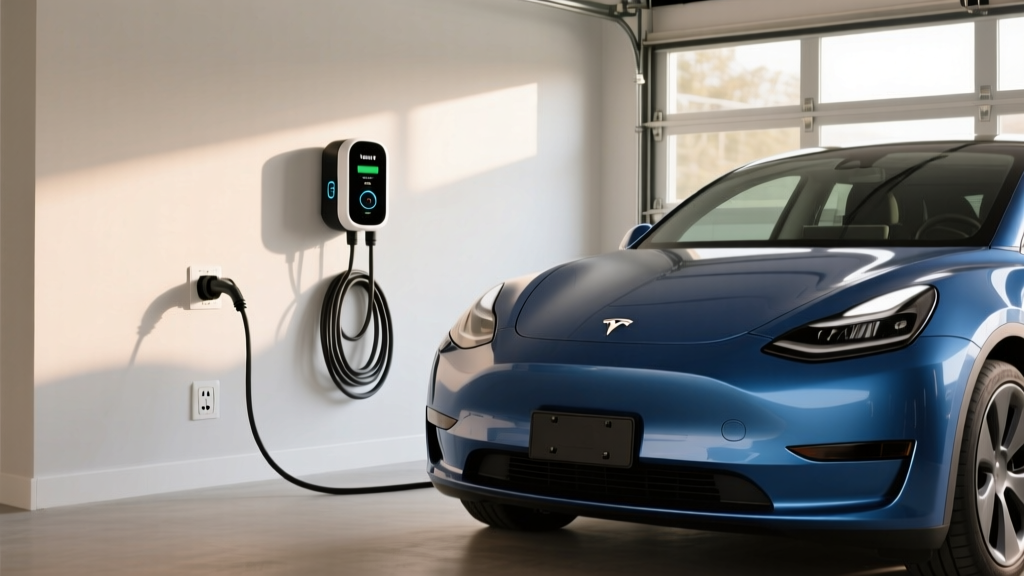
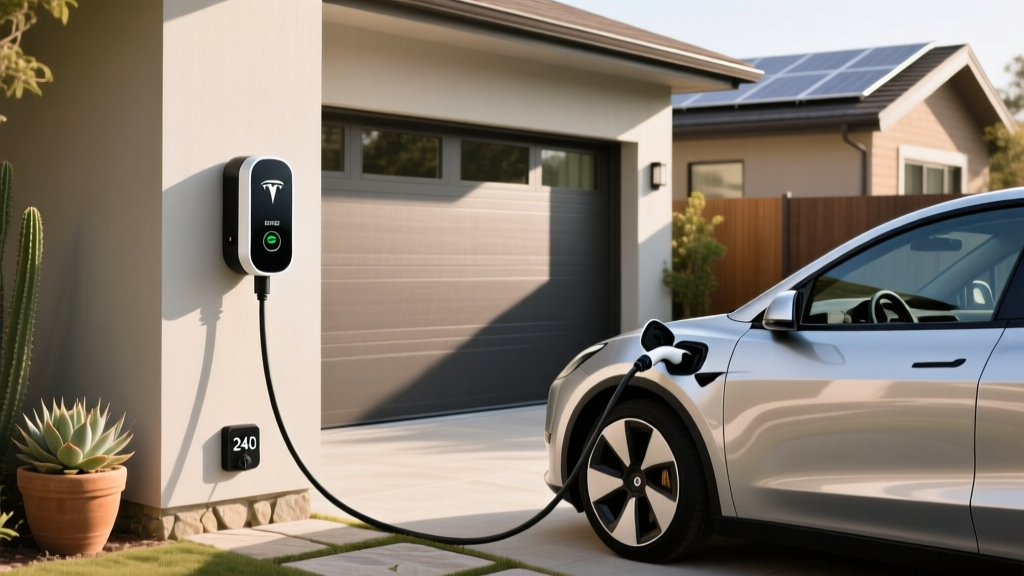
Public DC fast chargers like 7Charge are essential for road trips, but 80–90% of EV charging happens at home. Here is what a proper home Level 2 installation requires and what it costs.
Electrical Requirements
- Circuit: A dedicated 240V circuit, typically 40A to 60A, depending on the charger.
- Breaker: Sized at 125% of the charger's continuous draw — a 40A charger needs a 50A breaker; a 48A charger needs a 60A breaker.
- Panel capacity: Most modern homes with a 200A service panel have enough headroom. Older homes with 100A panels may need a panel upgrade to 200A, which adds $1,500–$3,500 to the project.
- Permit: Required in virtually all jurisdictions. Your electrician will pull the electrical permit; inspection follows after installation.
Home Level 2 Charger Installation Cost Breakdown
| Component | Cost Range | Notes |
|---|---|---|
| Level 2 charger (hardware) | $350–$700 | Smart Wi-Fi chargers; see recommendations below |
| Electrician labor (standard install) | $500–$1,500 | Varies by run length from panel to garage/driveway |
| Electrical permit | $50–$200 | Depends on municipality |
| Panel upgrade (if needed) | $1,500–$3,500 | 100A to 200A upgrade; not required in most newer homes |
| Total (no panel upgrade) | $900–$2,400 | Typical scenario for homes built after ~2000 |
| Total (with panel upgrade) | $2,400–$5,900 | Older homes or those with maxed-out panels |
Always get at least two quotes from licensed electricians. Some utilities offer rebates of $250–$500 for Level 2 installations, and the federal Alternative Fuel Vehicle Refueling Property Credit (IRS Form 8911) may cover up to 30% of home charging equipment and installation costs (up to $1,000), subject to income and census-tract eligibility. Consult a tax professional.
Safety and Code Considerations
- Dedicated circuit: Your Level 2 charger must have its own dedicated breaker — never share a circuit with other high-draw appliances.
- GFCI protection: The 2020 NEC (and later) requires GFCI protection for EV charging outlets. Many modern hardwired chargers include built-in ground-fault protection; for NEMA 14-50 receptacle installs, a GFCI breaker is required.
- Outdoor rating: If your charger is installed outside (driveway, exterior wall), ensure the unit carries a NEMA 4 or IP65 weatherproof rating. All recommended chargers below meet this standard.
- Cable management: Wall-mounted cord organizers prevent tripping hazards and cable wear.
Recommended Home Level 2 Chargers for 2026
Top Picks by Use Case
Best Overall: ChargePoint Home Flex
- Power output: Up to 12 kW (50A) on a 60A circuit; adjustable down to 16A
- Connector: J1772 (works with all non-Tesla EVs; Tesla owners use the included adapter or a J1772-to-NACS adapter)
- Cable length: 23 feet
- Smart features: Wi-Fi, ChargePoint app scheduling, Alexa/Google Home integration, energy tracking, utility TOU optimization
- Price: ~$550–$650
- UL listed, NEMA 4 rated (indoor/outdoor)
Best for Tesla/NACS Ecosystem: Tesla Wall Connector
- Power output: Up to 11.5 kW (48A) on a 60A circuit
- Connector: NACS (native Tesla plug; 2025+ Ford/GM/Rivian NACS vehicles also compatible)
- Cable length: 24 feet
- Smart features: Wi-Fi, over-the-air updates, Tesla app integration, power sharing (link two units on one circuit)
- Price: ~$475
- UL listed, NEMA 3R rated (outdoor suitable)
Best Budget Smart Charger: Emporia Level 2 EV Charger
- Power output: Up to 11.5 kW (48A) on a 60A circuit
- Connector: J1772
- Cable length: 24 feet
- Smart features: Wi-Fi, Emporia app with detailed energy monitoring, solar-integration ready, TOU scheduling
- Price: ~$350–$400
- UL listed, NEMA 4 rated
7Charge vs. the Competition: Where It Fits
7Charge occupies a distinct niche in the 2026 public-charging landscape. Here is how it compares to the three dominant networks on the metrics that matter most to EV drivers:
| Metric | 7Charge (7-Eleven) | Tesla Supercharger | Electrify America | EVgo |
|---|---|---|---|---|
| Typical max speed | 180–350 kW | 150–320 kW (V3/V4) | 150–350 kW | 50–350 kW |
| Avg pricing | $0.31–$0.48/kWh | $0.25–$0.35/kWh | $0.36–$0.52/kWh | $0.30–$0.46/kWh |
| Connectors | CCS1 + NACS (expanding) | NACS (CCS via adapter) | CCS1 + NACS (expanding) | CCS1 + CHAdeMO + NACS |
| Stall count per site | 2–4 | 8–40+ | 4–8 | 2–6 |
| Reported uptime | ~85–90% | ~95–98% | ~80–88% | ~82–90% |
| Amenities | Excellent (convenience store, food, restrooms, 24/7) | Variable (some with lounges) | Variable | Variable |
7Charge's biggest advantage is not speed or price — it is amenity quality. A well-lit 7-Eleven with a clean restroom, hot food, and cold drinks at 11 PM on a Tuesday is a meaningfully better charging stop than a dimly lit strip-mall charger with no services nearby. For solo drivers and families alike, the ability to safely exit the vehicle and grab food during a 20-minute session is a genuine quality-of-life improvement.
The trade-off is stall count and uptime. With only 2–4 chargers per site, a single out-of-service unit at a 7Charge station can mean a significant wait — or a reroute. On long road trips, it is wise to identify backup charging options within 10–15 miles of any planned 7Charge stop.
Frequently Asked Questions
How much does it cost to install a home EV charger?
A typical home Level 2 installation costs $900–$2,400 when no panel upgrade is needed (charger hardware + electrician labor + permit). If your home requires a 100A-to-200A panel upgrade, total costs range from $2,400–$5,900. The federal Alternative Fuel Vehicle Refueling Property Credit may offset up to 30% of costs (max $1,000) if you meet income and location requirements. Check IRS Form 8911 for current eligibility rules.
How fast will each charging level add range?
Level 1 (120V) adds roughly 3–5 miles per hour — fine for PHEVs with small batteries but impractical for full BEVs. Level 2 (240V) adds 20–60 miles per hour depending on the charger amperage and your vehicle's onboard charger capacity. DC fast charging (like 7Charge) adds the equivalent of 150–1,200+ miles per hour at peak rate, though the charge curve tapers significantly above 80% SoC — which is why 10–80% time is the standard metric, not 0–100%.
Which connector is compatible with my EV?
Check your vehicle's charge port. CCS1 is the standard on most 2020–2025 non-Tesla EVs. NACS is standard on all Teslas and is being adopted by Ford, GM, Rivian, Hyundai, Kia, Volvo, and others for 2025–2026+ models. CHAdeMO is found on the Nissan Leaf and older Mitsubishi PHEVs. 7Charge supports CCS1 at all locations and is adding NACS connectors to new installations. See the connector compatibility table above for specifics.
How much does EV charging cost per mile vs. gas?
At home on an average electricity rate of ~$0.16/kWh, an EV getting 3 mi/kWh costs roughly $0.05 per mile. On a 7Charge DC fast charger at ~$0.40/kWh, that rises to ~$0.13/mile. A comparable gas vehicle at 28 MPG and $3.40/gallon costs ~$0.12/mile — so DC fast charging is roughly cost-competitive with gas on road trips, while home charging is dramatically cheaper. For a 12,000-mile/year driver, home charging saves roughly $800–$1,200 annually versus gasoline.
What electrical upgrades might I need for a home charger?
The most common upgrade is a panel capacity increase from 100A to 200A, needed in older homes where the existing panel is already near capacity. Other potential needs include: running a new dedicated 240V circuit from the panel to the garage or driveway (cost depends on distance and whether walls need to be opened), upgrading the service entrance wire, or adding a sub-panel if the main panel is full. A licensed electrician can perform a load calculation during a site visit to determine whether your current panel can support a Level 2 charger without an upgrade.
Is 7Charge reliable enough to depend on for road trips?
7Charge uptime of ~85–90% is adequate but not best-in-class. For road trips, treat 7Charge as one option in your route plan rather than your sole fallback. Use PlugShare or the 7Charge app to verify real-time stall status before committing to a stop, and always have a backup charger (Electrify America, EVgo, or Tesla Supercharger open to non-Teslas) identified within 15–20 miles.
Does 7-Eleven offer free EV charging?
No. 7Charge stations are paid DC fast chargers. Pricing is per-kWh and varies by location ($0.31–$0.48/kWh typical). Occasional promotional events may offer discounted or free charging at select locations, but these are exceptions, not standard policy.