What Exactly Is a 5th Gen Charger?
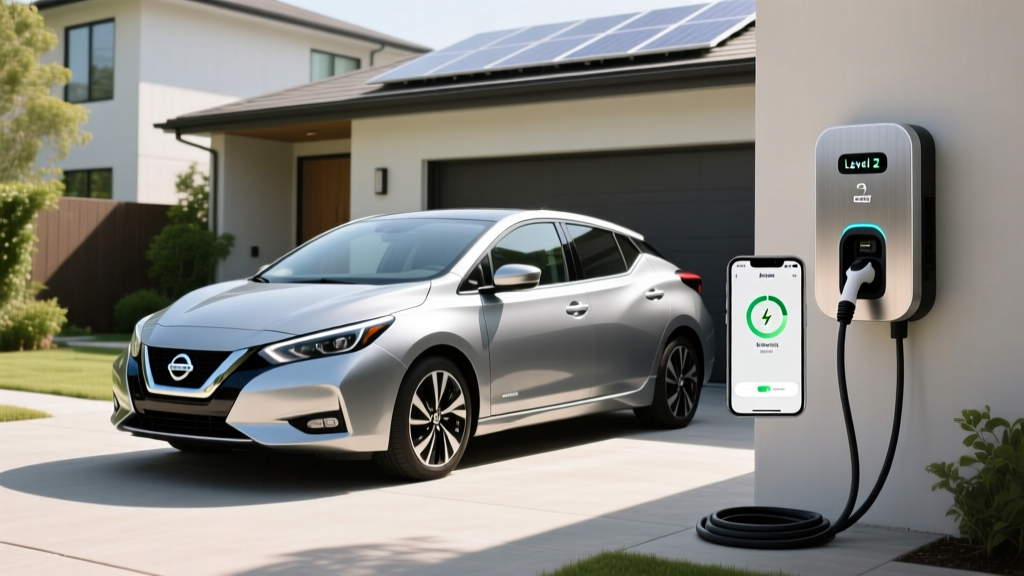
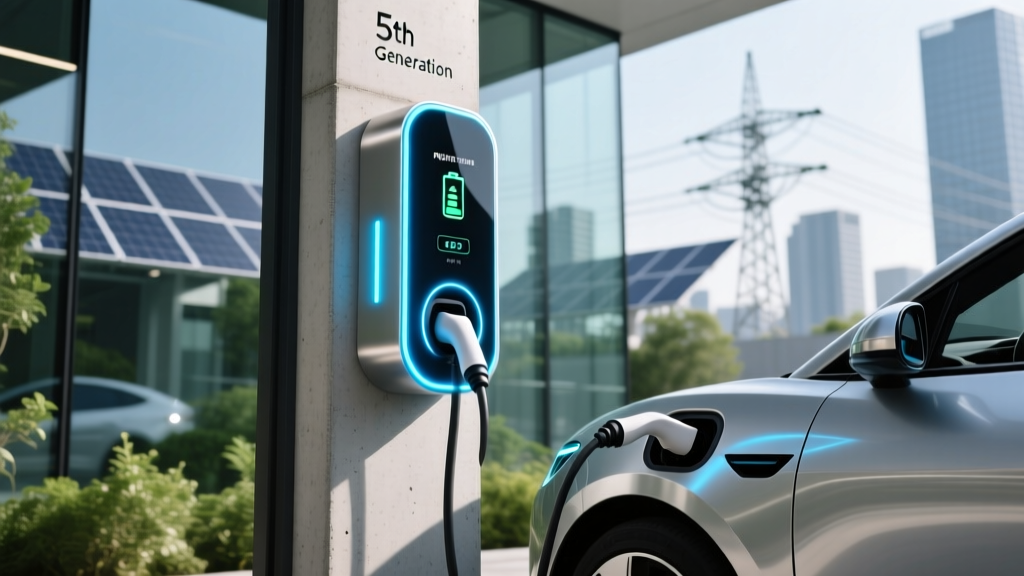
The term "5th gen charger" has surfaced across EV forums and manufacturer roadmaps in 2025-2026 to describe the latest wave of smart Level 2 home charging stations. While there is no formal industry standard defining generational charger tiers the way SAE defines automation levels, the label generally refers to chargers that combine several advancements over their predecessors: Wi-Fi-connected load management, bidirectional (V2H/V2G) readiness, native NACS (North American Charging Standard) connectors, dynamic amperage adjustment, and tighter integration with home energy systems like solar inverters and battery walls.
If you're shopping for a home EV charger today, the generational label matters less than the hard specifications: maximum power output in kW, connector type, cable length, smart features, and whether your electrical panel can support it. This guide covers everything you need to evaluate a 5th gen charger — or any modern Level 2 unit — against your home's electrical capacity, your vehicle's onboard charger limit, and your budget.
Charging Levels Explained: Speeds in kW and Miles Per Hour
Before evaluating any specific charger, understand the three charging tiers available to EV owners. Each level differs in voltage, power delivery, and practical use case.
| Level | Voltage | Max Power (kW) | Miles of Range Added Per Hour | Best For |
|---|---|---|---|---|
| Level 1 | 120V AC | 1.0–1.4 kW | 3–5 miles | Overnight top-ups, PHEVs, low-mileage drivers |
| Level 2 | 240V AC | 3.3–19.2 kW | 14–75 miles | Daily home charging, most EV owners |
| DC Fast Charge | 200–500V+ DC | 50–350+ kW | 150–1,000+ miles (theoretical) | Road trips, rapid top-ups, commercial fleets |
A typical 5th gen home charger operates at Level 2, delivering between 7.7 kW (32 amps) and 11.5 kW (48 amps) on a 240-volt circuit. Some premium units push to 19.2 kW (80 amps), but these require a 100-amp dedicated circuit and an onboard charger in your EV that can accept that rate — most 2026 EVs max out at 11.5 kW on Level 2 AC.
For real-world context: a 75 kWh battery (like the one in a Tesla Model Y or Ford Mustang Mach-E Extended Range) charging from 10% to 80% on an 11.5 kW Level 2 charger takes roughly 4.5 to 5 hours. That same session on a 150 kW DC fast charger takes about 25–35 minutes, though the charge curve tapers significantly above 80% state of charge.
Home Installation: Electrical Requirements and Real Costs
The single biggest variable in home charging setup isn't the charger itself — it's your home's electrical panel. Here's what determines your installation complexity and cost.
Electrical Requirements for a 5th Gen Level 2 Charger
- Voltage: 240V (same as a clothes dryer or electric oven)
- Amperage: 40A to 60A dedicated circuit for most 48A chargers (National Electrical Code requires circuits rated at 125% of continuous load, so a 48A charger needs a 60A breaker)
- Wire gauge: 6 AWG copper for 60A circuits; 4 AWG for longer runs
- Circuit type: Dedicated — no sharing with other appliances
- GFCI protection: Required by NEC 2020+ for EV charging outlets (many hardwired chargers have built-in GFCI, which can exempt the breaker)
Panel Capacity: The Hidden Cost Driver
Most homes built after 2000 have a 200-amp main panel, which can usually accommodate a 60A EV circuit alongside existing loads. Older homes with 100A or 150A service may need a panel upgrade — a significant additional expense. A licensed electrician will perform a load calculation (NEC Article 220) to determine if your panel has headroom.
Installation Cost Breakdown
| Component | Simple Install (panel nearby, no upgrade) | Complex Install (long run, panel at capacity) |
|---|---|---|
| Level 2 charger unit | $400–$700 | $500–$1,200 |
| Electrician labor (2–6 hours) | $300–$600 | $800–$1,500 |
| Materials (wire, conduit, breaker) | $50–$150 | $200–$500 |
| Permit & inspection | $50–$200 | $100–$300 |
| Panel upgrade (if needed) | — | $1,500–$3,500 |
| Total Estimated Cost | $800–$1,650 | $3,100–$7,000 |
Always hire a licensed electrician and pull a permit. Unpermitted EV charger installations can void homeowner insurance claims and create fire hazards. Check whether your state or utility offers rebates — many programs cover $300–$1,000 of installation costs. The federal Residential Clean Energy Credit does not cover EV chargers as of 2026 (the Alternative Fuel Vehicle Refueling Property Credit expired for most residential installations), but state incentives may apply.
Connector Compatibility: NACS, CCS1, and CHAdeMO in 2026
The connector landscape has shifted dramatically. By 2026, the NACS (North American Charging Standard, originally Tesla's proprietary connector) has become the dominant standard for new EVs sold in the United States. Here's where each connector stands:
| Connector | Status in 2026 | Vehicles Using It | Adapter Needed? |
|---|---|---|---|
| NACS (J3400) | New standard — adopted by most OEMs | Tesla (all), Ford, GM, Rivian, Volvo, Polestar, Hyundai/Kia (2025+ models), others | No for NACS-native cars; CCS-to-NACS adapters available for legacy CCS cars |
| CCS1 | Legacy — phasing out on new models | 2019–2024 VW ID.4, older Bolt EV/EUV, legacy Hyundai/Kia, BMW i4/iX | NACS-to-CCS adapter needed at Tesla Superchargers |
| CHAdeMO | Discontinued — no new vehicles | Nissan Leaf (all years), Mitsubishi Outlander PHEV (older) | Limited adapter options; CHAdeMO stations declining |
Buying advice: If your EV has a NACS port (most 2025+ models), buy a NACS-native Level 2 charger. If you drive a CCS-equipped vehicle from 2020–2024, you can either buy a CCS-connector charger or use a NACS charger with a NACS-to-CCS adapter (Tesla, Lectron, and A2Z sell these for $150–$250). CHAdeMO owners should plan for adapter limitations and declining public infrastructure.
Top 5th Gen Charger Picks for 2026
Based on power output, smart features, build quality, and connector options, here are the chargers that best represent the 5th gen category. All prices reflect 2026 retail pricing.
ChargePoint Home Flex (2nd Gen)
- Power: Up to 11.5 kW (48A) on 240V/60A circuit; adjustable down to 16A for lower-capacity panels
- Connector: NACS or CCS1 (configurable)
- Cable length: 23 feet
- Smart features: Wi-Fi, app scheduling, energy tracking, Alexa/Google Home integration, load sharing between two units
- Price: $549–$649
- Best for: Flexibility across panel capacities; dual-unit load sharing in two-car garages
Tesla Wall Connector (4th Gen / J3400)
- Power: Up to 11.5 kW (48A); supports 80A circuit for future higher-power onboard chargers
- Connector: NACS native
- Cable length: 24 feet
- Smart features: Wi-Fi, over-the-air firmware updates, Power Sharing (up to 6 units on one circuit), vehicle-charge authorization
- Price: $475
- Best for: Tesla owners and NACS-native EV buyers wanting the most integrated ecosystem
Emporia Level 2 EV Charger
- Power: Up to 11.5 kW (48A)
- Connector: NACS or J1772 (with adapter)
- Cable length: 24 feet
- Smart features: Wi-Fi, real-time energy monitoring via Emporia Vue integration, solar-aware charging, time-of-use scheduling
- Price: $399–$449
- Best for: Homes with solar panels or Emporia energy monitoring; budget-conscious buyers
Grizzl-E Smart (United Chargers)
- Power: Up to 11.5 kW (48A); dip-switch adjustable to 40A/32A/24A/16A
- Connector: NACS or J1772
- Cable length: 24 feet
- Smart features: Wi-Fi, OCPP compatibility, ruggedized aluminum enclosure (NEMA 4 outdoor rated), extreme cold rated to -40°F
- Price: $499–$569
- Best for: Outdoor installations, cold-climate owners, commercial/fleet use
Cost to Charge: Home vs. Public vs. Gas Per Mile
The economic case for home charging hinges on your local electricity rates. Here's a comparison based on a midsize EV averaging 3.5 miles per kWh (roughly 29 kWh/100mi, typical of a 2026 Tesla Model Y or Hyundai Ioniq 5).
| Scenario | Rate | Cost Per kWh | Cost Per Mile | Annual Cost (12,000 mi) |
|---|---|---|---|---|
| Home off-peak (overnight TOU) | $0.09–$0.13/kWh | $0.11 avg | $0.031 | $372 |
| Home standard rate | $0.14–$0.20/kWh | $0.17 avg | $0.049 | $588 |
| Public Level 2 (ChargePoint, etc.) | $0.20–$0.35/kWh | $0.28 avg | $0.080 | $960 |
| DC Fast Charge (Electrify America, EVgo) | $0.35–$0.55/kWh | $0.45 avg | $0.129 | $1,548 |
| Gasoline (28 MPG avg, $3.40/gal) | $3.40/gallon | — | $0.121 | $1,452 |
The takeaway is clear: home off-peak charging costs roughly one-quarter what gasoline does per mile. Even at standard residential rates, EV charging undercuts gas by about 60%. But exclusive reliance on DC fast charging can actually exceed gasoline costs — another reason a home Level 2 installation pays for itself quickly. According to fueleconomy.gov, most 2026 EVs achieve between 100 and 130 MPGe combined, translating to 25–34 kWh per 100 miles.
Charging Time Examples: 10% to 80% by Battery Size
Charging speed depends on three factors: the charger's kW output, the vehicle's onboard charger limit (for Level 2), and the battery's state of charge. Here are approximate 10%–80% times for common 2026 EV battery sizes on a 48A (11.5 kW) Level 2 charger:
- 40 kWh battery (Nissan Leaf, base PHEVs): ~2 hours — sufficient for daily driving of 120+ miles
- 62 kWh battery (Chevrolet Bolt EV/EUV equivalent): ~3.2 hours
- 75 kWh battery (Tesla Model Y, Ford Mach-E ER): ~4.5 hours — ideal overnight session
- 85–100 kWh battery (Rivian R1S, GMC Sierra EV, Tesla Model S): ~5.5–6.5 hours — still completes overnight on a standard 8-hour sleep cycle
On DC fast charging, these same batteries charge from 10%–80% in 18–35 minutes depending on peak charge rate. A 2026 Hyundai Ioniq 5 with its 800V architecture can accept up to 240 kW DC and reach 10%–80% in approximately 18 minutes at a compatible station. However, remember that DC fast charging curves taper sharply above 80% — the last 20% can take as long as the first 70%.
Safety, Code, and Smart Features to Prioritize
When selecting and installing a 5th gen charger, these safety and code requirements are non-negotiable:
- Dedicated circuit: Your EV charger must have its own breaker — never share with a dryer, HVAC, or other high-draw appliance.
- GFCI protection: NEC 2020 and later requires ground-fault protection for EV outlets. Hardwired chargers with internal GFCI may not require a GFCI breaker (confirm with your electrician and local code).
- Outdoor rating: If mounting outside, the charger must be rated NEMA 4 (weatherproof) or NEMA 4X (corrosion-resistant). All chargers recommended above meet at least NEMA 4.
- UL/ETL certification: Only buy chargers certified by UL (Underwriters Laboratories) or ETL (Intertek). Uncertified imports from online marketplaces are a fire hazard and may void insurance.
- Load management: 5th gen chargers with dynamic load balancing can automatically reduce charge rate when other home circuits draw heavy power, preventing breaker trips without a panel upgrade.
Smart features worth prioritizing include scheduled charging (to align with off-peak utility rates), energy usage reporting, over-the-air firmware updates, and — for solar-equipped homes — solar-divert mode that charges only from excess solar production.
Frequently Asked Questions
How much does it cost to install a home EV charger?
A straightforward Level 2 installation with the panel nearby and sufficient capacity runs $800–$1,650 including the charger unit, electrician labor, materials, and permit. If your panel is at capacity or located far from the garage, costs rise to $1,500–$3,500. A full panel upgrade (100A to 200A) adds $1,500–$3,500 on top, bringing complex total installations to $3,100–$7,000.
How fast will each charging level add range?
Level 1 (120V) adds 3–5 miles of range per hour. Level 2 (240V, 48A/11.5 kW) adds 30–40 miles per hour for most EVs. DC fast charging can add 150–300+ miles in 20–30 minutes, depending on the vehicle's peak charge rate and the station's output. Check your vehicle's EPA range and efficiency (kWh/100mi) on fueleconomy.gov for precise calculations.
Which connector/charger is compatible with my EV?
For 2025–2026 model-year vehicles from Tesla, Ford, GM, Rivian, Volvo, Hyundai, and Kia, the NACS connector is now standard. Older CCS-equipped EVs (2019–2024 VW ID.4, Chevrolet Bolt, etc.) need a NACS-to-CCS adapter to use NACS chargers or Tesla Superchargers. CHAdeMO vehicles (Nissan Leaf) have limited and declining infrastructure. Match your charger's connector to your car's native port to avoid adapter dependency.
How much does charging cost per mile vs gas?
At home off-peak rates (~$0.11/kWh), EV charging costs approximately $0.03 per mile — roughly one-quarter the cost of gasoline at $3.40/gallon in a 28 MPG vehicle ($0.12/mile). Even at standard residential rates ($0.17/kWh), you'll pay about $0.05/mile. However, exclusive DC fast charging at $0.45/kWh can push costs to $0.13/mile, exceeding gasoline.
What electrical upgrades might I need?
The most common upgrade is a new 60A double-pole breaker and a dedicated 240V circuit run to your garage or driveway. If your electrical panel is already near capacity (common in older homes with 100A service), you may need a panel upgrade to 200A — costing $1,500–$3,500. Some 5th gen chargers with dynamic load management can reduce their amperage draw to fit within existing panel capacity, avoiding an upgrade entirely. Always have a licensed electrician perform a load calculation before committing to a charger amperage.
Is a 5th gen charger worth it over a basic Level 2 unit?
If you have solar panels, time-of-use electricity rates, or a panel near its capacity limit, the smart features of a 5th gen charger (load balancing, solar-divert, scheduling) provide tangible value. If you simply need overnight charging on a standard rate plan, a basic UL-certified 40A charger at $300–$400 will serve you well. The premium for 5th gen features is typically $100–$250 — worth it for the energy management capabilities alone in most modern homes.