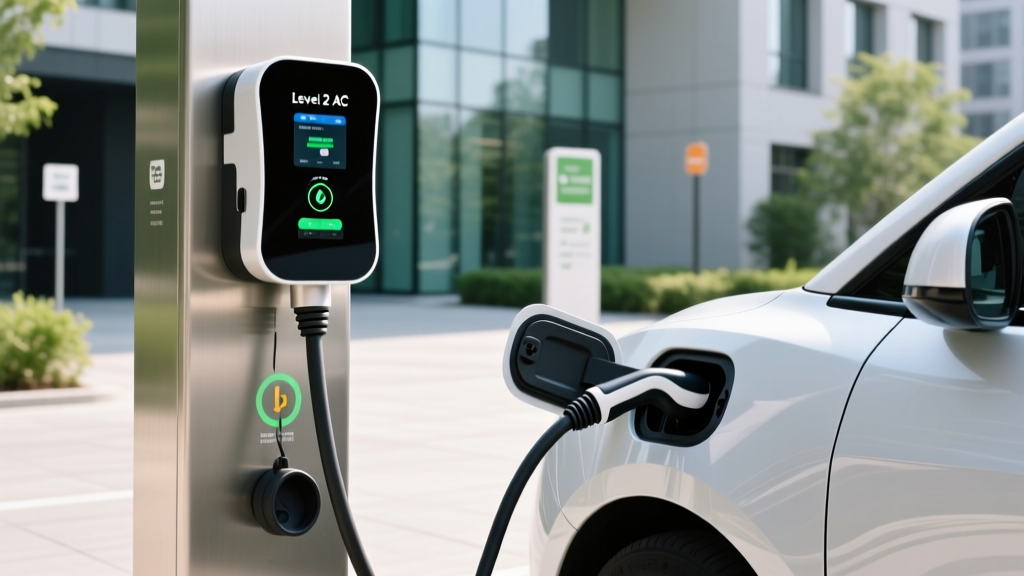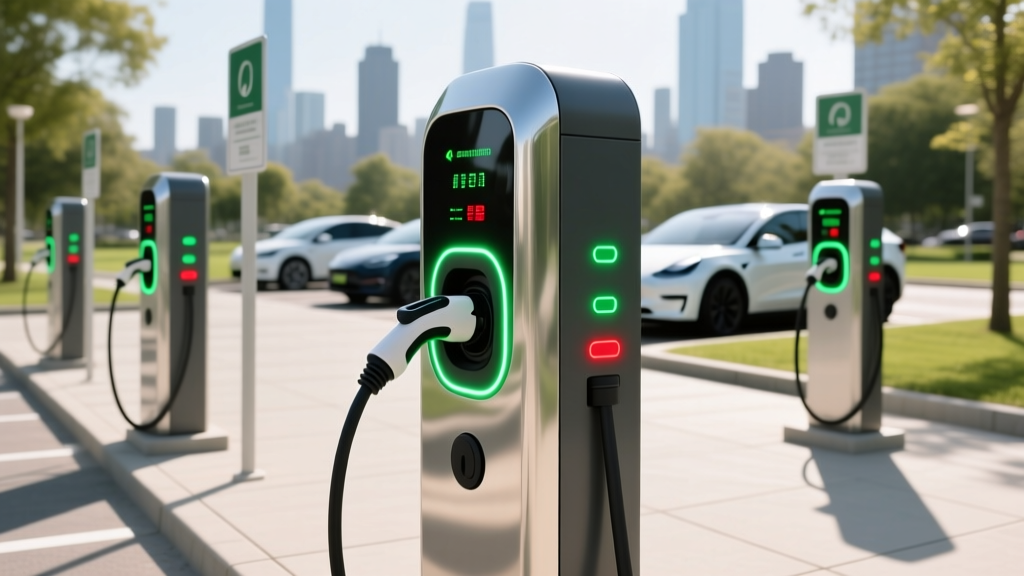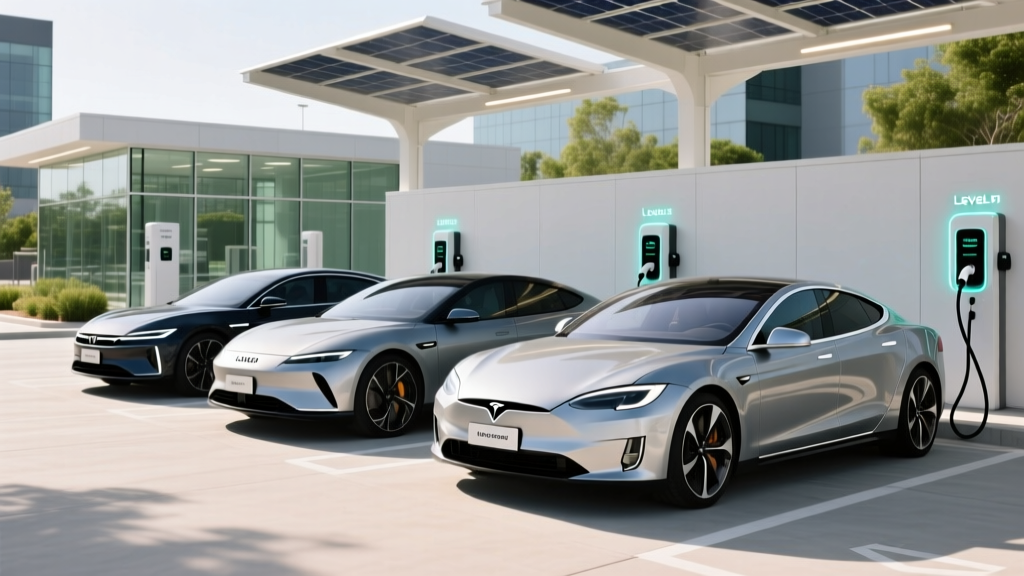
If you're shopping for one of the EVs with 400 mile range—vehicles like the Lucid Air Pure (419 mi EPA), Chevrolet Silverado EV 4WT (460 mi EPA), or the Tesla Model S Long Range (402 mi EPA)—you're not just buying a car. You're buying a massive battery that needs a serious charging strategy. A 100+ kWh pack behaves very differently at a charger than a 60 kWh battery, and your home electrical system needs to be ready for it.
This guide breaks down exactly what it takes to keep a 400-mile EV charged at home and on the road in 2026: charging speeds, installation costs, connector compatibility, and the real per-mile cost compared to gas. No fluff—just the numbers you need to plan your setup.
Why Big-Battery EVs Demand a Smarter Charging Plan
Vehicles advertising 400+ miles of EPA range typically carry battery packs between 100 kWh and 131 kWh (usable). For reference, a base Tesla Model 3 RWD uses roughly 57 kWh. That means a 400-mile EV holds nearly twice the energy of a mainstream compact EV.
Here's why that matters practically:
- Level 1 (120V) charging is essentially useless. At ~1.4 kW, adding 300 miles to a 112 kWh pack takes over 80 hours—more than three full days.
- Level 2 charging times scale up. A 48-amp, 11.5 kW home charger replenishes roughly 35–40 miles per hour. That's still 10–12 hours for a full 0–100% charge on a 131 kWh pack.
- DC fast charging peaks are impressive, but sustained rates matter more. A Lucid Air can peak at 300 kW, but the charge curve tapers significantly above 60% SoC.
Bottom line: if you're buying a 400-mile EV, a properly installed Level 2 home charger isn't optional—it's the backbone of ownership.
Charging Levels Explained: Speeds and Range Added Per Hour
Before we get into equipment, let's clarify the most common EV confusion: kW (kilowatts) measures power—the rate of charging—while kWh (kilowatt-hours) measures energy, or battery capacity. Think of kW as how fast water flows from a hose, and kWh as the size of the bucket.
| Level | Voltage | Max Power (kW) | Miles of Range Added Per Hour | 10–80% Time (Est.) |
|---|---|---|---|---|
| Level 1 (Standard Outlet) | 120V AC | 1.4 kW | 3–5 mi/hr | ~65–95 hours |
| Level 2 (Home/Public AC) | 240V AC | 7.2–19.2 kW | 22–65 mi/hr | ~7–14 hours |
| DC Fast Charging | 400–900V DC | 150–350 kW | 500–1,200 mi/hr (peak) | ~15–35 minutes |
Charging Time Examples for Popular 400-Mile EVs
| Vehicle (2025–2026 MY) | Usable Battery | Max DC Rate | 10–80% DC Time | Level 2 (11.5 kW) 0–100% |
|---|---|---|---|---|
| Lucid Air Pure | 88 kWh | 220 kW | ~25 min | ~8.5 hr |
| Tesla Model S Long Range | ~95 kWh | 250 kW | ~27 min | ~9 hr |
| Chevy Silverado EV 4WT | ~200 kWh | 350 kW | ~35 min | ~18 hr |
| Mercedes EQS 450+ | 107.8 kWh | 200 kW | ~31 min | ~10 hr |
| BMW iX xDrive50 | 105.2 kWh | 195 kW | ~34 min | ~10 hr |
Source: fueleconomy.gov and manufacturer specifications. Real-world 10–80% times vary with battery temperature, ambient conditions, and charger availability. Always precondition your battery before DC fast charging—most EVs do this automatically when you navigate to a charger.
Home Charger Installation: Requirements, Costs, and Gotchas
For a 400-mile EV, you want a Level 2 charger delivering at least 11.5 kW (48 amps on a 60-amp circuit). Here's what your home needs to support that.
Electrical Requirements
- Circuit: Dedicated 60-amp, 240V circuit (NEMA 14-60 outlet or hardwired)
- Wire gauge: 6 AWG copper (THHN in conduit or NM-B/Romex where code allows)
- Breaker: 60-amp double-pole
- Panel capacity: Your main service panel must have at least 60 amps of spare capacity. Many older homes with 100-amp service will need a panel upgrade to 200 amps—a significant added cost.
Installation Cost Breakdown
| Component | Cost Range | Notes |
|---|---|---|
| Level 2 Charger (Equipment) | $400–$750 | 48-amp smart charger, 25 ft cable |
| Electrician Labor (standard install) | $600–$1,500 | Run 6 AWG, install breaker, mount charger |
| Permit & Inspection | $50–$200 | Varies by municipality |
| Panel Upgrade (if needed) | $1,500–$3,500 | 100A → 200A service upgrade |
| Conduit / Trenching (long runs) | $200–$1,000+ | If panel is far from garage |
| Total (no panel upgrade) | $1,050–$2,450 | Most common scenario |
| Total (with panel upgrade) | $2,550–$5,950 | Older homes |
Some utilities offer rebates of $250–$500 for Level 2 charger installation, and certain states provide additional incentives. Check with your local utility and the Alternative Fuels Data Center for current programs in your area.
Connector Compatibility: NACS, CCS, and CHAdeMO
The connector landscape has shifted dramatically. As of 2026, the North American Charging Standard (NACS)—originally Tesla's proprietary connector—is now the dominant standard. Most legacy CCS1 vehicles can access Tesla Superchargers using a NACS adapter, and nearly all new 2025–2026 EVs ship with NACS ports natively.
| Vehicle | Native Connector | Adapter Needed? | DC Network Access |
|---|---|---|---|
| Tesla Model S | NACS | None | Supercharger + CCS stations (with adapter) |
| Lucid Air | CCS1 | NACS adapter for Superchargers | CCS networks + Superchargers (adapter) |
| Chevy Silverado EV | NACS | None | Supercharger + CCS stations |
| Mercedes EQS | CCS1 | NACS adapter for Superchargers | CCS networks + Superchargers (adapter) |
| BMW iX | CCS1 | NACS adapter for Superchargers | CCS networks + Superchargers (adapter) |
| Rivian R1T / R1S (Dual-Motor Max) | NACS | None | Supercharger + CCS stations |
For home Level 2 charging: Most Level 2 chargers now ship with either a NACS or J1772 connector. If your EV has a NACS port, buy a NACS-connector charger or use the J1772-to-NACS adapter that came with your vehicle. J1772 remains the standard connector for Level 2 AC charging across all EVs with an adapter.
CHAdeMO is effectively legacy in the US market—only the Nissan Leaf uses it, and no 400-mile EV uses CHAdeMO. You can safely ignore it if you're shopping in this segment.
Level 2 Home Charger Recommendations for Big-Battery EVs
With a 100+ kWh battery, you want maximum Level 2 throughput. Here are proven 2026 picks that deliver 11.5 kW or higher:
ChargePoint Home Flex (NACS or J1772)
- Power: Up to 12 kW (50 amps) on a 60-amp circuit
- Cable length: 23 feet
- Smart features: Wi-Fi, app scheduling, Alexa, energy tracking
- Price: ~$550–$650
- Best for: Flexible amperage adjustment (can dial down to 16A for older panels)
Wall Connector (Tesla, Gen 3 – NACS)
- Power: Up to 11.5 kW (48 amps) on a 60-amp circuit
- Cable length: 24 feet
- Smart features: Wi-Fi, power-sharing (daisy-chain up to 6 units), OTA updates
- Price: ~$475
- Best for: Tesla owners and NACS-native vehicles; cleanest integration
Emporia Vue Level 2 (J1772 or NACS)
- Power: Up to 11.5 kW (48 amps)
- Cable length: 24 feet
- Smart features: Wi-Fi, energy monitoring, solar integration, load management
- Price: ~$400–$500
- Best for: Budget-conscious buyers; excellent app and energy data
Grizzl-E Smart (J1772)
- Power: Up to 10 kW (40 amps) on a 50-amp circuit
- Cable length: 24 feet
- Smart features: OCPP-compatible, app control, works with many networks
- Price: ~$450
- Best for: Cold-climate durability (rated to -40°F); slightly lower power output
Pro tip: If your panel has limited spare capacity, choose a charger with adjustable amperage (like the ChargePoint Home Flex). You can set it to 32 amps (7.7 kW) on a 40-amp circuit and still add roughly 25 miles per hour—enough to fully replenish overnight for most daily driving.
Charging Cost Per Mile: Home vs. Public vs. Gas
One of the biggest ownership advantages of a 400-mile EV is fuel cost savings—especially when charging at home. Here's a realistic breakdown using a 112 kWh battery pack (representative of the Lucid Air Pure or Tesla Model S LR) and 3.0 mi/kWh efficiency:
| Scenario | Rate | Cost for Full Charge (112 kWh) | Cost Per Mile (400 mi) |
|---|---|---|---|
| Home (off-peak utility rate) | $0.09/kWh | $10.08 | $0.025 |
| Home (national avg. residential) | $0.16/kWh | $17.92 | $0.045 |
| Public Level 2 (network rate) | $0.30/kWh | $33.60 | $0.084 |
| DC Fast Charging (Electrify America, etc.) | $0.43/kWh | $48.16 | $0.12 |
| Tesla Supercharger (avg.) | $0.30/kWh | $33.60 | $0.084 |
| Gas vehicle (28 MPG combined, $3.40/gal) | — | $48.57 (14.3 gal) | $0.121 |
The takeaway: Home off-peak charging costs roughly $0.025 per mile—about one-fifth the cost of gas at $3.40/gallon. Even at the national average residential rate of $0.16/kWh, you're paying $0.045 per mile versus $0.121 for a 28 MPG gas car. However, exclusive reliance on DC fast charging at $0.43/kWh essentially matches gas costs—making home charging access critical for the economics to work.
For a 400-mile EV driven 12,000 miles per year with 80% home charging at $0.12/kWh and 20% DC fast at $0.38/kWh, annual fuel cost runs approximately $1,920 versus $1,457 for the equivalent gas car at 28 MPG. Wait—that's more? No. A comparable 400-mile gas vehicle (like a large luxury sedan or truck) typically averages 20–22 MPG, not 28. At 21 MPG and $3.40/gal, that gas car costs $1,943/year—and you're still paying for oil changes, transmission fluid, and smog checks.
Safety, Code, and Smart Installation Practices
A 60-amp, 240V circuit carries substantial energy. Proper installation isn't just about passing inspection—it's about long-term safety. Key requirements per the National Electrical Code (NEC) 2023/2026:
- Dedicated circuit: Your EV charger must be on its own breaker—no sharing with dryers, ranges, or other appliances.
- GFCI protection: NEC 625.40 requires GFCI protection for all EV charging outlets. Hardwired chargers with built-in ground-fault protection satisfy this.
- Outdoor rating: If installing outside, the charger must carry a NEMA 4 (weatherproof) rating, and all conduit/wiring must be rated for wet locations.
- Cable management: NEC requires that the charging cable not create a tripping hazard. Wall-mounted retractors or cord wraps are recommended.
- Permit required: Virtually all jurisdictions require an electrical permit for a new 240V circuit. The permit ensures a third-party inspection verifies safe installation. Skipping it risks insurance denial in the event of a fire.
Always hire a licensed electrician experienced with EV charger installations. Ask for their load calculation methodology and whether they pull permits as standard practice. A legitimate installer will never suggest skipping the permit.
Frequently Asked Questions
How much does it cost to install a home EV charger?
For a standard 48-amp Level 2 charger on a 60-amp circuit, expect $1,050–$2,450 total (equipment, electrician labor, and permit) if your panel has sufficient capacity. If a panel upgrade from 100A to 200A is needed, add $1,500–$3,500, bringing the total to $2,550–$5,950.
How fast will each charging level add range to a 400-mile EV?
Level 1 (120V) adds 3–5 miles per hour—impractical for large batteries. Level 2 (240V, 48A) adds 35–40 miles per hour, enough for overnight replenishment of 200–300 miles. DC fast charging at 200+ kW can add 200+ miles in 15–20 minutes, but only during the peak portion of the charge curve (typically 10–40% SoC).
Which connector/charger is compatible with my EV?
Check your vehicle's charge port. 2025–2026 EVs increasingly use NACS (Tesla-style) natively, including Tesla, Ford, GM, Rivian, and others. Legacy CCS1 vehicles (Lucid, Mercedes, BMW, VW) can access Tesla Superchargers with a NACS adapter. For home Level 2, buy a charger matching your vehicle's connector—or use the adapter that shipped with your car.
How much does charging cost per mile vs gas?
At the national average residential rate of $0.16/kWh, a 400-mile EV costs roughly $0.045 per mile. A comparable gas vehicle getting 21 MPG at $3.40/gallon costs $0.162 per mile—about 3.6× more. Home off-peak charging at $0.09/kWh drops EV cost to just $0.025 per mile.
What electrical upgrades might I need?
The most common upgrade is a panel upgrade from 100A to 200A service ($1,500–$3,500) if your existing panel lacks spare capacity. Other potential needs include: adding a sub-panel closer to the garage to reduce wire run costs, upgrading your utility service drop (rare, typically coordinated with the utility at no cost), or installing a smart load management device (like the Emporia VUE or Span panel) to share capacity between your EV charger and other large loads without a full panel upgrade.
Do I really need a Level 2 charger for a 400-mile EV?
Practically, yes. A 400-mile EV has a 100+ kWh battery. Level 1 (1.4 kW) would take 70+ hours to fully charge—unusable for anything beyond emergency trickle charging. Even if you only drive 40 miles per day and never fully deplete the battery, Level 2 ensures you can recover from a long road trip or unexpected high-mileage day overnight. It also enables scheduled off-peak charging to minimize electricity costs.
Can I charge at a regular 120V outlet in a pinch?
Yes, but it's painfully slow for a big-battery EV. Expect roughly 3–5 miles of range per hour at 120V/12A. That's enough to recover ~50 miles overnight—fine for topping off if you only drove to the grocery store, but not viable as a daily strategy. If you must rely on Level 1 temporarily, keep your State of Charge (SoC) above 50% and use Level 1 to maintain rather than refill.
For the latest federal EV tax credit rules under IRS §30D—including income caps, MSRP limits, and battery sourcing requirements—consult IRS.gov or a qualified tax professional. Eligibility varies by buyer and vehicle.