If you own or are shopping for a 400-mile range EV — vehicles like the Lucid Air Pure (419 mi EPA), Tesla Model S Long Range (402 mi), or the Chevrolet Silverado EV 4WT (up to 440 mi) — you're packing a massive battery, typically between 100 and 131 kWh of usable capacity. That's great for road trips and reducing charge stops, but it fundamentally changes your charging calculus. A bigger battery takes longer to fill, demands more from your home electrical panel, and makes DC fast-charging speed a critical ownership variable.
This guide breaks down exactly what it takes to charge a 400-mile range EV at home and in public, with precise numbers on speeds, costs, equipment, and the electrical upgrades you may need. No marketing fluff — just the data and decisions that matter.
Charging Levels Explained: kW, Speed, and What Each Adds Per Hour
The single most important distinction in EV charging is between kW (kilowatts) and kWh (kilowatt-hours). kW measures the rate of energy flow — think of it as how fast water comes out of a hose. kWh measures the total energy stored — the size of the bucket. Your EV's battery is measured in kWh; your charger's output is measured in kW.
Here's what each charging level delivers in practice for a large-battery, 400-mile range EV:
| Level | Voltage | Max Power (kW) | Miles of Range Added Per Hour | Full Charge (0-100%) for ~110 kWh Battery |
|---|---|---|---|---|
| Level 1 (standard outlet) | 120V | 1.2–1.4 kW | 3–5 mi/hr | 75–90 hours |
| Level 2 (home/public AC) | 240V | 7.2–19.2 kW | 20–60 mi/hr | 6–15 hours |
| DC Fast Charging | 400–800V DC | 150–350 kW | 500–1,200+ mi/hr (peak) | 10–80% in 20–40 min |
For a 400-mile range EV with a 110+ kWh battery, Level 1 charging is effectively useless for anything beyond emergency trickle-top-offs. You'd need over three days of continuous plugging to fill an empty battery. Level 2 is the backbone of daily ownership. DC fast charging is for road trips and rapid top-ups.
Home Level 2 Installation: Electrical Requirements, Costs, and Panel Upgrades
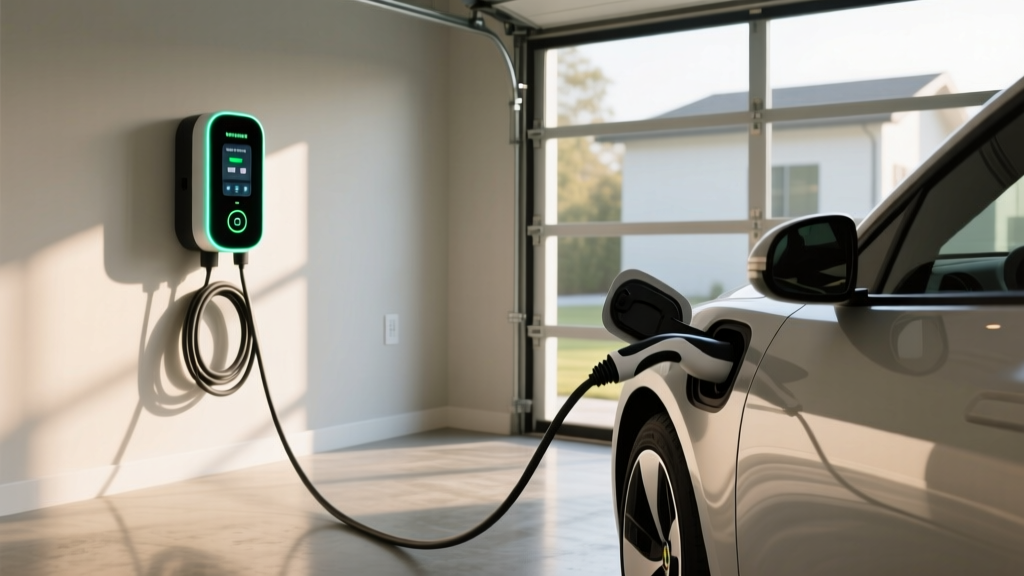
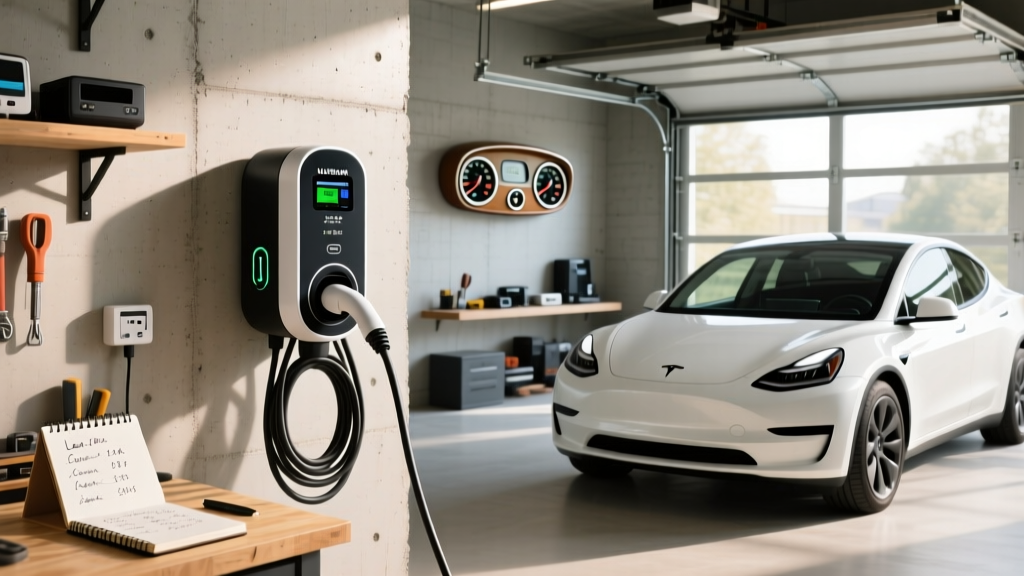
Installing a Level 2 home charger is the single highest-impact upgrade for any EV owner. For a 400-mile range EV with a massive battery, it's essentially mandatory — unless you enjoy spending 80+ hours on a Level 1 cord.
Electrical Requirements
Most Level 2 home chargers require a dedicated 240V circuit, identical in concept to what powers a clothes dryer or electric range. The specific amperage depends on the charger:
- 32A charger (7.7 kW): Requires a 40A circuit (NEC code requires circuits rated 125% above continuous load)
- 40A charger (9.6 kW): Requires a 50A circuit
- 48A charger (11.5 kW): Requires a 60A circuit
- 80A charger (19.2 kW): Requires a 100A circuit — uncommon in residential, but available on vehicles like the Ford F-150 Lightning Extended Range and Chevrolet Silverado EV
Do You Need a Panel Upgrade?
This is the variable most buyers underestimate. If your home has a 100A main electrical panel (common in houses built before the 1990s), adding a 40–60A dedicated EV circuit may push you past safe capacity. A licensed electrician will perform a load calculation per NEC Article 220 to determine whether your panel can handle the additional draw.
If you need a panel upgrade from 100A to 200A, expect to pay $1,500–$3,000 on top of the charger installation. Homes already equipped with 200A service usually have sufficient headroom for a 40–60A EV circuit without an upgrade.
Installation Cost Breakdown
| Cost Component | Low End | High End | Notes |
|---|---|---|---|
| Level 2 charger (hardware) | $400 | $750 | Smart Wi-Fi chargers; basic models from ~$300 |
| Electrician labor | $500 | $2,000 | Depends on run length from panel to garage/driveway |
| Electrical permit | $50 | $200 | Required in most jurisdictions; varies by city/county |
| Wiring & conduit materials | $100 | $500 | Longer runs and outdoor conduit drive cost up |
| Panel upgrade (if needed) | $1,500 | $3,000 | Only if load calculation demands it |
| Total (no panel upgrade) | $1,050 | $3,450 | Most homeowners fall in the $1,200–$2,200 range |
| Total (with panel upgrade) | $2,550 | $6,450 | Older homes with 100A service |
Some utilities and states offer rebates of $250–$1,000 for home charger installation — check with your local utility or the Alternative Fuels Data Center for current programs in your area. Additionally, the federal Residential Clean Energy Credit may cover up to 30% of charger hardware and installation costs (capped at $1,000) through 2032, subject to IRS eligibility rules.
Connector Compatibility: NACS, CCS1, and CHAdeMO
The North American charging connector landscape has consolidated dramatically. As of 2026, nearly every major automaker has adopted the North American Charging Standard (NACS), originally developed by Tesla. Most new 400-mile range EVs now ship with a NACS port natively, including all Tesla models, the Ford F-150 Lightning, Rivian R1T/R1S, Hyundai Ioniq 5 (2025+ refresh), GM Ultium-based vehicles (Cadillac Lyriq, Chevrolet Silverado EV), and the Lucid Air.
| Connector | Brands Using It Natively | Adapter Needed? |
|---|---|---|
| NACS (Tesla standard) | Tesla, Ford, GM, Rivian, Lucid, Hyundai/Kia (2025+), Volvo, Polestar, Fisker, Mercedes (2025+) | CCS-to-NACS adapters available (~$200) for legacy CCS chargers |
| CCS1 | VW ID.4 (pre-2025), some older BMW iX, Honda Prologue (pre-refresh) | NACS-to-CCS adapter needed for Tesla Superchargers |
| CHAdeMO | Nissan Ariya (legacy); effectively discontinued for new models | Limited public infrastructure; adapter options scarce |
Key takeaway: If you're buying a new 400-mile range EV in 2026, it almost certainly has a NACS port. This gives you native access to the Tesla Supercharger network (20,000+ stalls in North America) without an adapter. For the remaining CCS-based public chargers (Electrify America, EVgo), a CCS-to-NACS adapter (sold by Tesla and third parties for ~$200–$250) covers you.
DC Fast Charging: Real-World Speeds for 110+ kWh Batteries
DC fast charging is where battery size matters most. A 400-mile range EV with a 110–131 kWh battery can accept enormous amounts of power, but charging speed is not linear. Every EV follows a charge curve: peak kW is only sustained at low states of charge (typically 10–30%), then the rate tapers progressively to protect battery health. By 80% SoC, most vehicles are charging at a fraction of their peak rate.
Here's what real-world DC fast charging looks like for popular 400-mile range EVs:
- Lucid Air Pure (112 kWh usable, 900V architecture): Peaks at ~220 kW, 10–80% in approximately 30–33 minutes on a 350 kW charger. The 900V system enables excellent efficiency and sustained charge rates.
- Tesla Model S Long Range (~100 kWh usable): Peaks at ~250 kW at V3 Superchargers, 10–80% in approximately 27–30 minutes. Tapers significantly above 60%.
- Chevrolet Silverado EV 4WT (200+ kWh gross, ~131 kWh usable for 4WT): Peaks at ~350 kW on capable chargers (800V-capable Ultium), 10–80% in approximately 35–40 minutes given the enormous battery capacity.
Practical advice: On road trips, plan stops around the 10–80% window. Charging from 80–100% on DC fast charging can take as long as the 10–80% session due to taper. For a 400-mile range EV, 80% still gives you roughly 320 real-world miles — more than enough between stops.
Cost to Charge: Home vs. Public vs. Gas Comparison
One of the strongest ownership arguments for any EV — and especially a 400-mile range EV with a large battery — is the per-mile fuel cost. But the savings vary enormously depending on where and when you charge.
| Scenario | Rate ($/kWh) | Cost for 110 kWh Fill | Cost Per Mile (at 3.5 mi/kWh) | Annual Fuel Cost (12,000 mi) |
|---|---|---|---|---|
| Home, off-peak utility rate | $0.08–$0.13 | $8.80–$14.30 | $0.023–$0.037 | $274–$446 |
| Home, standard residential rate | $0.14–$0.18 | $15.40–$19.80 | $0.040–$0.051 | $481–$617 |
| Public Level 2 (network pricing) | $0.25–$0.49 | $27.50–$53.90 | $0.071–$0.154 | $857–$1,848 |
| DC Fast Charging (EA, EVgo, etc.) | $0.35–$0.55 | $38.50–$60.50 | $0.100–$0.157 | $1,200–$1,886 |
| Gas vehicle (25 MPG combined, $3.40/gal) | — | — | $0.136 | $1,632 |
At home off-peak rates, a 400-mile range EV costs roughly $0.03 per mile — about one-quarter the cost of a 25 MPG gas vehicle. Even at standard residential rates, you're saving 60–70% on fuel. The economics shift when you rely heavily on public DC fast charging, where rates can approach or even exceed gasoline on a per-mile basis.
Bottom line: Home charging is where the savings live. If you can install a Level 2 charger and charge overnight at residential or off-peak rates, a 400-mile range EV will save you $1,000–$1,350 per year in fuel versus a comparable gas vehicle.
Recommended Level 2 Home Chargers for Large-Battery EVs
For a 400-mile range EV with a 100+ kWh battery, you want a Level 2 charger that can deliver meaningful overnight replenishment. A 48A charger (11.5 kW) can add roughly 250–280 miles overnight (8 hours), covering most daily needs and restoring a nearly depleted battery in a single night.
ChargePoint Home Flex (up to 50A / 12 kW)
- Power output: Up to 50A (12 kW) on a 60A circuit; adjustable down to 16A for lower-capacity panels
- Connector: NACS native (2025+ models); J1772 with NACS adapter available
- Cable length: 23 feet
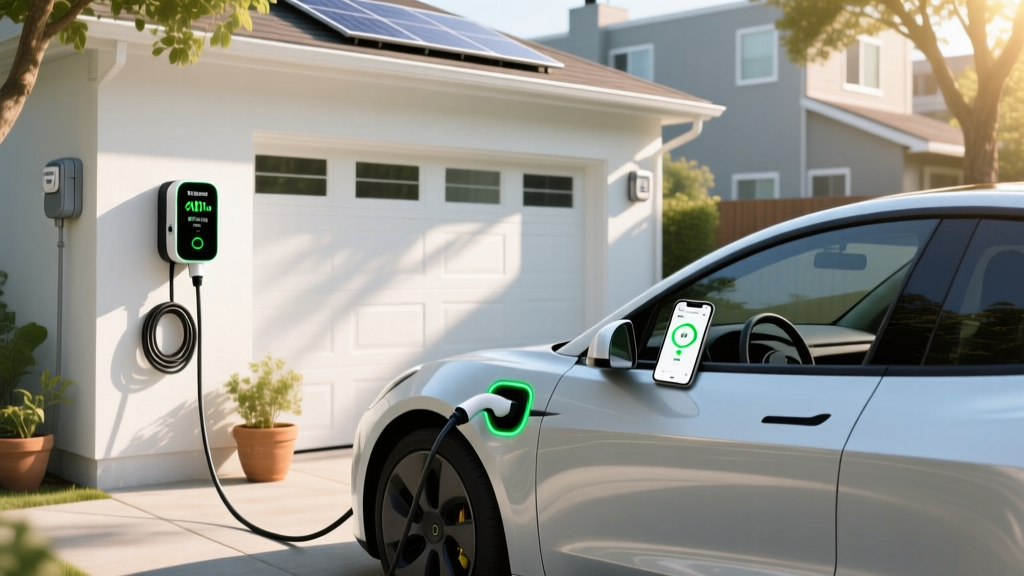
- Smart features: Wi-Fi, app scheduling, energy tracking, Alexa integration
- Price: ~$550–$650 (hardware only)
- Best for: Flexible amperage adjustment if your panel has limited headroom
Tesla Wall Connector (up to 48A / 11.5 kW)
- Power output: Up to 48A (11.5 kW) on a 60A circuit
- Connector: NACS native; also available with J1772 connector for non-Tesla EVs
- Cable length: 24 feet
- Smart features: Wi-Fi, OTA updates, power sharing (link multiple units on one circuit), load management
- Price: ~$475 (hardware only)
- Best for: Tesla owners and NACS-native vehicles; excellent value and reliability
Emporia Vue Level 2 Charger (up to 48A / 11.5 kW)
- Power output: Up to 48A (11.5 kW) on a 60A circuit
- Connector: J1772 (NACS adapter included in some bundles)
- Cable length: 24 feet
- Smart features: Wi-Fi, integration with Emporia Vue energy monitor for whole-home load tracking, scheduled charging, solar-aware charging
- Price: ~$400–$500 (hardware only)
- Best for: Budget-conscious buyers who want energy monitoring and solar integration
Safety, Code, and Installation Best Practices
EV charging is a high-draw, continuous-load application. Cutting corners on safety isn't just a code violation — it's a fire risk. Here's what matters:
- Dedicated circuit: Your Level 2 charger must be on its own dedicated circuit — not shared with other appliances. This is an NEC requirement for continuous loads.
- GFCI protection: The 2020 NEC (and subsequent editions adopted by most states by 2026) requires GFCI protection for all EV charging outlets rated 60A or less. Hardwired chargers may have GFCI built into the unit; plug-in units require a GFCI breaker.
- Outdoor rating: If your charger is installed outside (driveway, exterior wall), ensure the unit is rated NEMA 4 (weatherproof). All recommended chargers above carry this rating.
- Permit and inspection: Most jurisdictions require an electrical permit and post-installation inspection for EV charger circuits. Your electrician should pull this permit — never skip it. Unpermitted work can void homeowner's insurance coverage in the event of an electrical fire.
- Wire gauge: A 60A circuit typically requires 6 AWG copper wire; a 50A circuit requires 6 AWG or 8 AWG depending on wire type and run length. Your electrician will spec this per NEC Table 310.16.
Frequently Asked Questions
How much does it cost to install a home EV charger?
For most homes with an existing 200A panel and a short wire run to the garage, total installation (charger hardware + electrician labor + permit + materials) runs $1,200–$2,200. If your home has an older 100A panel that needs upgrading to 200A, add $1,500–$3,000. Always get at least two quotes from licensed electricians.
How fast will each charging level add range?
Level 1 (120V) adds roughly 3–5 miles per hour — essentially useless for a 400-mile range EV with a 110+ kWh battery. Level 2 (240V, 48A) adds approximately 30–38 miles per hour, enough to replenish 250+ miles overnight. DC fast charging at 200+ kW can add 150–200 miles in 15–20 minutes during the peak portion of the charge curve.
Which connector and charger is compatible with my EV?
As of 2026, nearly all new 400-mile range EVs use the NACS connector natively (Tesla, Ford, GM, Rivian, Lucid, Hyundai/Kia). This means you can charge at Tesla Superchargers and use a NACS-equipped home charger directly. If your EV has a CCS1 port (some carryover models), you'll need a NACS-to-CCS adapter (~$200) for Supercharger access. CHAdeMO is effectively obsolete for new vehicles.
How much does charging cost per mile vs. gas?
At home off-peak rates ($0.10/kWh), a 400-mile range EV achieving 3.5 mi/kWh costs about $0.03/mile — roughly 75% less than a 25 MPG gas car at $3.40/gallon ($0.14/mile). Even at public DC fast-charging rates ($0.45/kWh), you're paying ~$0.13/mile, roughly comparable to gas. The major savings come from home charging.
What electrical upgrades might I need?
The most common upgrade is adding a dedicated 50A or 60A 240V circuit from your main panel. If your panel is already at 200A service with available breaker slots and passes a load calculation, no upgrade is needed. If you have a 100A panel (pre-1990s homes), you'll likely need a panel upgrade to 200A ($1,500–$3,000). Some utilities offer smart-panel solutions or load-management devices that let you add an EV circuit without a full panel upgrade — ask your electrician about options like the Span smart panel or utility-approved load-sharing devices.