Why Your 4-Door EV Needs a Dedicated Home Charging Plan
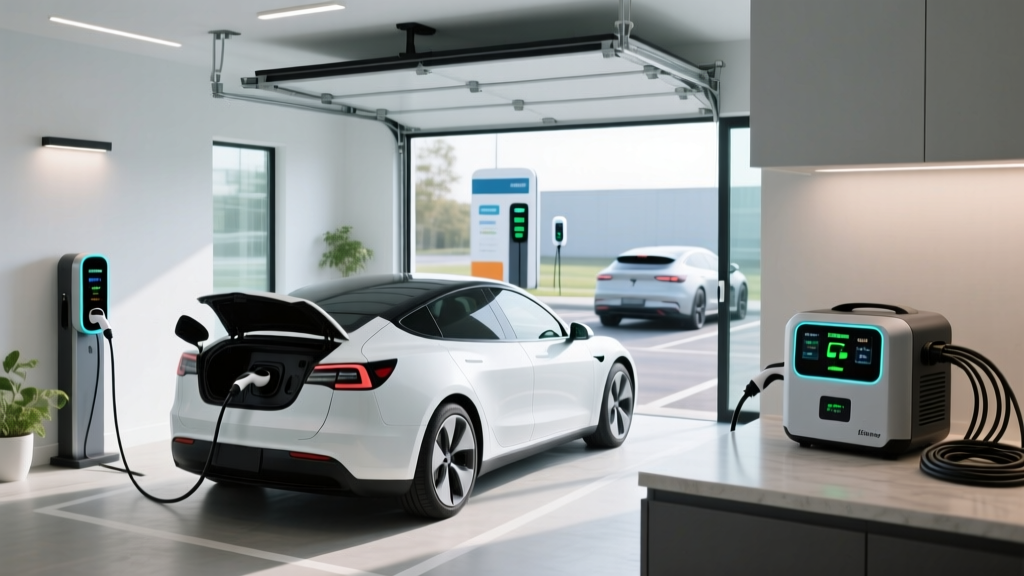
Whether you're plugging in a Tesla Model 3, Hyundai Ioniq 6, BMW i4, or Mercedes EQE, the charging calculus for a 4-door electric sedan is distinct from the crossover crowd. Sedans typically carry smaller battery packs (60–100 kWh usable), weigh less, and return higher efficiency — meaning your home charger can be smaller, your charge sessions shorter, and your cost per mile lower than an F-150 Lightning owner staring at a 131 kWh pack.
But "4 door charger" searches often come from owners who've just taken delivery and are confronting the real questions: What electrical work does my garage need? Which connector fits my car? Will I need a panel upgrade? And what does all of this actually cost? This guide answers those questions with exact numbers, 2026 equipment picks, and the installation realities that manufacturer brochures skip.
Before anything else, let's nail down the single most important EV literacy distinction: kW (kilowatts) measures power — how fast energy flows into your car. kWh (kilowatt-hours) measures energy — the size of your battery. A 11.5 kW Level 2 charger delivers 11.5 kWh of energy per hour. A 75 kWh battery charged from empty at that rate takes roughly 6.5 hours. Confusing these two is the #1 mistake new EV buyers make.
Charging Levels Explained: Speeds, Times, and Real-World Range Gains
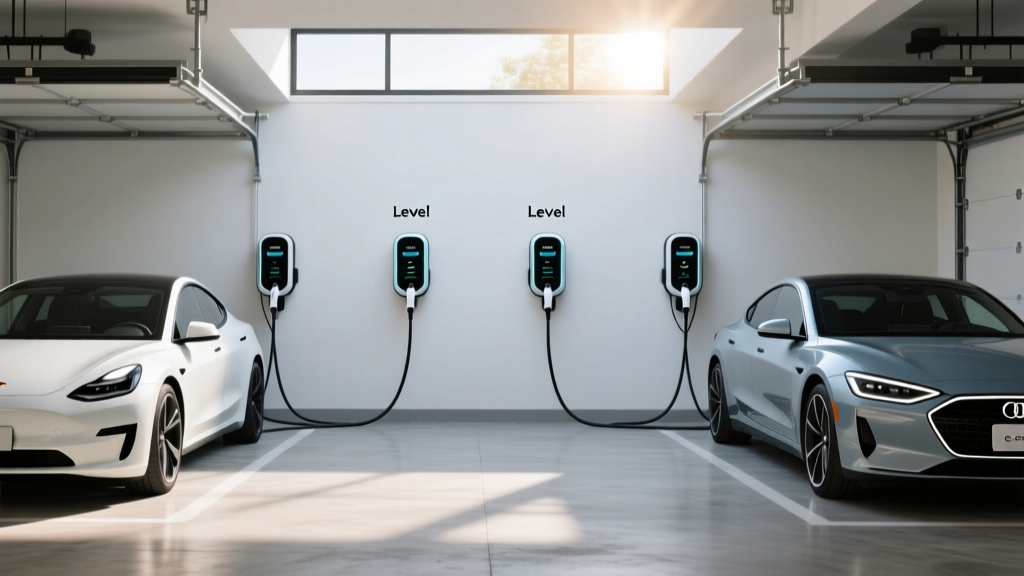
Every EV sold in the US charges at one of three levels. Here's what each actually delivers to a typical 4-door sedan:
| Level | Voltage / Power | Typical kW | Miles of Range Added Per Hour | Best Use Case |
|---|---|---|---|---|
| Level 1 | 120V / 12–16A | 1.4–1.9 kW | 3–5 mi/hr | Overnight top-off, low-mileage drivers |
| Level 2 (Home) | 240V / 32–48A | 7.7–11.5 kW | 25–45 mi/hr | Daily home charging, full overnight refill |
| DC Fast Charging | 400V–800V / 150–350 kW | 150–350 kW (peak) | 600–1,200 mi/hr (peak) | Road trips, 10–80% sessions |
For a sedan like the Hyundai Ioniq 6 SE (77.4 kWh usable, EPA 361 mi), a 48A Level 2 unit adds roughly 40 miles of range per hour — enough to refill from 20% to full in about 7 hours overnight. The same session on Level 1 would take nearly 4 days.
On DC fast charging, understand that peak kW is not sustained kW. A Tesla Model 3 Long Range may peak at 250 kW on a V3 Supercharger but taper sharply above 55% state of charge (SoC). A realistic 10–80% session takes 25–30 minutes, not the 15 minutes the peak number implies. The Ioniq 6, thanks to its 800V architecture, sustains higher rates longer — roughly 18 minutes 10–80% at a 350 kW station. This charge-curve taper is why 10–80% time is the only metric that matters for road-trip planning.
Home Installation: Electrical Requirements, Panel Upgrades, and Real Costs
A Level 2 home charger is the backbone of 4-door EV ownership. Here's what your electrical system actually needs to support one.
Circuit and Amperage Requirements
A 48A Level 2 charger requires a 60A dedicated circuit (the National Electrical Code requires circuits to be rated 125% above continuous load). A 40A charger needs a 50A circuit. Most modern homes with a 200A service panel have room for this, but older homes with 100A or 150A panels may not — especially if you're also running electric heat, a dryer, and an oven.
The charger must be hardwired or plugged into a NEMA 14-50 outlet on a dedicated breaker. Shared circuits are a code violation and a fire risk. GFCI protection is required for outdoor installations under NEC 2023/2026 revisions.
Panel Upgrade Reality
If your panel is maxed out, a 200A service upgrade runs $2,500–$5,000 depending on your utility and local labor rates. In some older homes with 100A service, the utility may need to upgrade the drop wire from the transformer — adding weeks and cost. This is the single biggest variable in installation pricing, and it's why getting a licensed electrician's load calculation before buying a charger is essential.
Permitting
Nearly every jurisdiction requires an electrical permit for a new 240V circuit — typically $50–$200. Your electrician usually pulls this. Skipping the permit risks insurance denial if an electrical fire occurs, and it may surface as a code violation when you sell the home.
| Line Item | Simple Install (Panel Has Room) | Complex Install (Panel Upgrade Needed) |
|---|---|---|
| Level 2 Charger (Equipment) | $400–$700 | $400–$700 |
| Electrician Labor (2–4 hrs simple, 6–10 hrs complex) | $500–$1,200 | $1,500–$3,500 |
| Materials (Wire, Conduit, Breaker) | $150–$400 | $300–$800 |
| Permit | $50–$150 | $100–$250 |
| Panel Upgrade (If Needed) | $0 | $2,500–$5,000 |
| Total Range | $1,100–$2,450 | $4,800–$10,250 |
The Department of Energy's home charging guide confirms these ranges and notes that utility rebates can offset $200–$1,000 of the cost depending on your provider.
Connector Compatibility: NACS, CCS1, CHAdeMO, and What Your Sedan Actually Uses
The connector landscape shifted dramatically between 2023 and 2026. Here's where things stand for 4-door EV sedans on sale today:
| Vehicle | Native Connector | DC Fast Charge Network Access | Adapter Needed? |
|---|---|---|---|
| Tesla Model 3 / Model S | NACS | Tesla Supercharger (native) | CCS adapter for non-Tesla DC stations |
| Hyundai Ioniq 6 / Kia EV6 | CCS1 | Electrify America, EVgo, ChargePoint | Tesla NACS adapter (included w/ new vehicles since 2025) for Supercharger access |
| BMW i4 / i5 | CCS1 (transitioning to NACS 2025+) | Most networks via CCS; NACS adapter for Superchargers | Check model year — 2025+ may ship NACS |
| Mercedes EQE / EQS | CCS1 | Mercedes-Benz High Power Charging Network + public | NACS adapter available |
| Polestar 2 | CCS1 (NACS on 2025+ models) | Public CCS networks + Supercharger (w/ adapter or native) | Model-year dependent |
| Nissan Leaf (if still in production) | CHAdeMO | Limited — CHAdeMO infrastructure declining | No adapter to CCS/NACS exists for DC; avoid for new purchase |
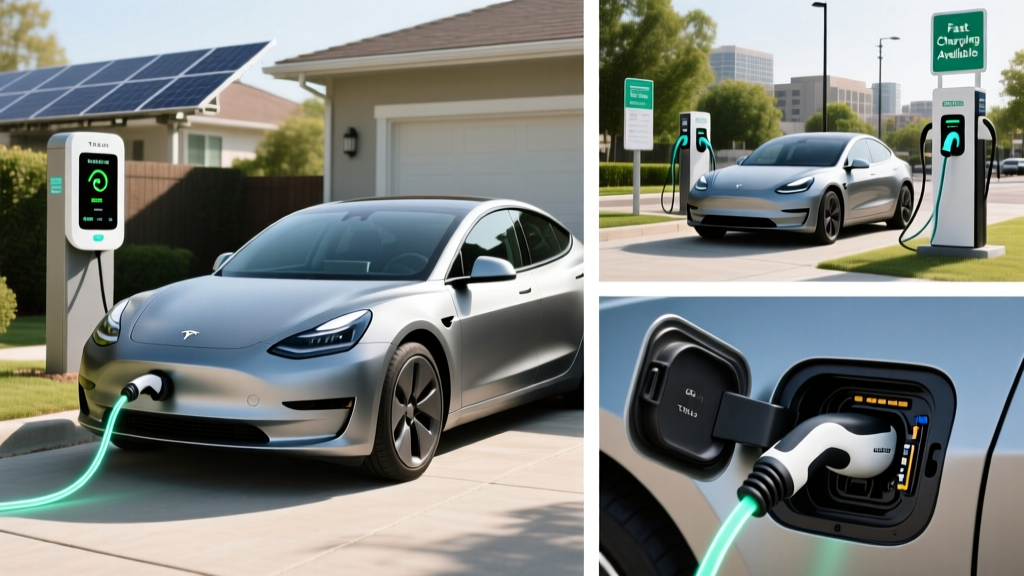
Key 2026 reality: NACS (the Tesla connector, now SAE standard J3400) is the dominant North American standard. Nearly every non-Tesla automaker has adopted it for 2025+ models. If your sedan is a 2024 or older CCS1 vehicle, a Tesla NACS-to-CCS adapter (~$200–$250) unlocks Supercharger access. For home Level 2 charging, all connectors use the J1772 standard (or NACS for Tesla) — and adapters are inexpensive and widely available.
When buying a home charger, match the connector to your car's native port. If you own a Tesla, buy a NACS-terminated charger. If you own a CCS1 car, buy a J1772 unit (universal for non-Tesla). Universal chargers with swappable connectors are now available from brands like Grizzl-E.
Cost to Charge: Home vs. Public vs. Gas — The Per-Mile Math
This is where 4-door sedans shine. Their efficiency (typically 25–30 kWh/100 mi) makes per-mile cost remarkably low — especially on home electricity.
| Scenario | Rate | Cost Per Mile (30 kWh/100 mi Sedan) | Annual Cost (12,000 mi) |
|---|---|---|---|
| Home Charging (Off-Peak TOU Rate) | $0.09/kWh | $0.027 | $324 |
| Home Charging (Standard Residential) | $0.16/kWh | $0.048 | $576 |
| Public Level 2 (ChargePoint, etc.) | $0.30/kWh | $0.09 | $1,080 |
| DC Fast Charging (Electrify America, EVgo) | $0.48/kWh | $0.144 | $1,728 |
| Gas Sedan (30 MPG Combined, $3.40/gal) | $3.40/gal | $0.113 | $1,360 |
Home off-peak charging at $0.027/mile is roughly 4x cheaper than a 30 MPG gas sedan. Even standard residential rates undercut gas by more than half. But if you rely exclusively on DC fast charging, your per-mile cost actually exceeds a gas car — a crucial reason home charging is non-negotiable for EV economics.
Many utilities offer time-of-use (TOU) plans with super off-peak rates between midnight and 6 AM. Pair this with your charger's scheduled charging feature, and you'll consistently hit that $0.09/kWh tier. Check your utility's EV-specific rate plans — some offer rates as low as $0.06/kWh overnight.
Equipment Picks: Best Level 2 Chargers for 4-Door EV Sedans (2026)
For sedan owners, 48A output is the sweet spot — it maxes out most onboard chargers (the Ioniq 6 accepts 10.9 kW AC; the Model 3 accepts 11.5 kW AC) without requiring a panel upgrade in most 200A homes. Here are the units we recommend based on real-world installation and daily use:
Emporia Level 2 EV Charger — Best Value
Power: 48A (11.5 kW) | Connector: J1772 (NACS adapter included) | Cable: 24 ft | Smart Features: Wi-Fi, energy monitoring, scheduled charging, solar integration | Price: ~$399 | Notes: Hardwired only. Best-in-class app with real-time kWh tracking. Requires 60A circuit. Excellent for solar-panel homes wanting to charge only on excess production.
ChargePoint Home Flex — Best for Flexibility
Power: Up to 50A (12 kW), adjustable down to 16A | Connector: J1772 (NACS version available) | Cable: 23 ft | Smart Features: Wi-Fi, Alexa integration, scheduling, charge history | Price: ~$599 | Notes: Amperage is DIP-switch adjustable — critical for older panels where a full 60A circuit isn't feasible. NEMA 14-50 plug option available for renters who may move. UL-listed.
Tesla Wall Connector — Best for NACS Vehicles
Power: 48A (11.5 kW) | Connector: NACS native | Cable: 24 ft | Smart Features: Wi-Fi, OTA updates, Power-Share (two units share one circuit), scheduled charging | Price: ~$475 | Notes: Best native experience for Model 3/S owners. The Power-Share feature lets two Teslas share a single 60A circuit — ideal for two-sedan households. J1772 adapter included for non-Tesla guests. Hardwired, indoor/outdoor rated (NEMA 4).
Grizzl-E Smart — Most Durable / Cold Climate
Power: 40A (9.6 kW) | Connector: J1772 or NACS (selectable at purchase) | Cable: 24 ft | Smart Features: OCPP-compatible, app control, adjustable amperage | Price: ~$549 | Notes: Canadian-built, rated to -40°F. Best option for unheated garages in Minnesota, Maine, or Alaska. Requires 50A circuit. Heavy-duty build with a 3-year warranty. Less polished app than Emporia or ChargePoint.
Charging Time Examples: What to Expect With Common Sedan Battery Sizes
Real charge times depend on battery chemistry, thermal management, and the charge curve. Here are realistic benchmarks for popular 4-door EVs at a Level 2 home charger and on DC fast charging:
| Vehicle | Battery (Usable kWh) | Level 2 Time (0–100%) | DC Fast 10–80% (Peak kW) |
|---|---|---|---|
| Tesla Model 3 Long Range AWD | 79 kWh (NMC) | ~7 hrs @ 11.5 kW | ~27 min (250 kW peak) |
| Hyundai Ioniq 6 SE | 77.4 kWh (NMC) | ~7.3 hrs @ 10.9 kW | ~18 min (350 kW peak, 800V) |
| BMW i4 eDrive40 | 81.5 kWh (NMC) | ~8.2 hrs @ 11 kW | ~31 min (205 kW peak) |
| Polestar 2 Long Range DM | 79 kWh (NMC) | ~7.2 hrs @ 11 kW | ~28 min (205 kW peak) |
| Mercedes EQE 350+ | 90.6 kWh (NMC) | ~8.5 hrs @ 11 kW | ~32 min (170 kW peak) |
Notice that the Ioniq 6's 800V architecture delivers a clear road-trip advantage — 18 minutes 10–80% versus 27–32 minutes for 400V competitors. For daily home charging, however, the difference is negligible since you're plugging in overnight regardless.
Cold-weather caveat: In sub-freezing temperatures, expect Level 2 charge times to increase 15–25% if your sedan doesn't precondition the battery. DC fast charging in cold weather without preconditioning can be 40–50% slower. The Tesla Model 3 and Ioniq 6 both handle this well with heat-pump-based thermal management — but always schedule-depart with preconditioning enabled to protect charge speed and battery longevity.
Safety, Code, and Installation Best Practices
Level 2 chargers draw sustained high current for hours. This is not a DIY-friendly project. Here's what proper installation looks like:
- Dedicated circuit: Your charger must have its own breaker — no sharing with outlets, lights, or appliances.
- Wire gauge: 6 AWG copper for 48A/60A circuits; 8 AWG for 40A/50A circuits. Your electrician will size this based on run length.
- GFCI protection: Required for outdoor installations per NEC 2023 and 2026 code cycles. Many modern breakers include this; older panels may need a GFCI breaker upgrade ($80–$150 additional).
- Outdoor rating: If mounting outside, the charger must be NEMA 4 (or IP65) rated. All four picks above qualify.
- Cable management: A 24-foot cable on a garage floor is a tripping hazard. Wall-mount a cable organizer ($20–$40) to keep things tidy and code-compliant in some jurisdictions.
- Utility notification: Some utilities require you to notify them when adding a Level 2 charger — they may offer a rebate or require a meter upgrade for TOU billing.
Always hire a licensed, insured electrician. Verify they've installed EV chargers before — the continuous-load calculation and NEC Article 625 requirements are specific to EVSE and differ from standard appliance wiring. Ask for a written load calculation before work begins.
Frequently Asked Questions
How much does it cost to install a home EV charger for my 4-door sedan?
Expect $1,100–$2,450 for a straightforward installation where your electrical panel has capacity. If you need a panel upgrade from 100A to 200A, the total can reach $4,800–$10,250. The charger itself costs $400–$700; the rest is electrician labor, materials, and permitting. Always get a load calculation first to know which scenario applies to your home.
How fast will each charging level add range to my sedan?
Level 1 (120V) adds 3–5 miles per hour — adequate only for low-mileage drivers or overnight top-offs. Level 2 (240V, 48A) adds 25–45 miles per hour, fully recharging most sedan batteries overnight. DC fast charging adds 600+ miles per hour at peak, but the charge curve tapers above 80% SoC, so plan 10–80% sessions of 18–32 minutes depending on your vehicle's architecture.
Which connector and charger is compatible with my EV?
Check your vehicle's charge port: Tesla sedans use NACS; most 2024-and-earlier non-Tesla sedans use CCS1 (J1772 for Level 2); 2025+ models from Hyundai, BMW, Ford, GM, and others are transitioning to NACS. For home Level 2 charging, buy a J1772-terminated unit for CCS1 cars or a NACS-terminated unit for Teslas. Adapters exist for cross-compatibility. CHAdeMO (older Nissan Leaf) is a declining standard — avoid new vehicles with this connector.
How much does charging cost per mile vs. gas?
Home off-peak charging costs roughly $0.027/mile for an efficient sedan — about 4x cheaper than a 30 MPG gas car at $3.40/gallon. Standard residential rates ($0.16/kWh) still undercut gas by more than half. However, exclusive reliance on DC fast charging at $0.48/kWh pushes cost to $0.144/mile — actually more expensive than gas. Home charging is essential to the EV cost advantage.
What electrical upgrades might I need for a Level 2 charger?
The most common upgrade is a panel capacity increase from 100A to 200A ($2,500–$5,000). You'll definitely need a new dedicated 50A or 60A breaker, appropriate-gauge wiring (6 or 8 AWG copper), and a permit. Older homes may also need a meter upgrade, service drop replacement, or a sub-panel installation if the charger is far from the main panel. A licensed electrician's load calculation will identify all requirements before you commit.
Is there a federal tax credit for home charger installation?
The IRS §30C Alternative Fuel Vehicle Refueling Property Credit offers up to 30% of the cost of home EV charger equipment and installation, capped at $1,000. However, eligibility depends on whether your census tract qualifies as a "low-income" or "non-urban" area under current IRS guidance. Check the IRS §30C page for the latest qualifying-tract map before assuming eligibility. This credit is separate from the §30D new-vehicle credit.
Sources: fueleconomy.gov (EPA range and efficiency data), U.S. Department of Energy — Home Charging Installation, IRS §30C Refueling Property Credit. All pricing and specs reflect 2026 model-year data and current electrical code requirements. Verify local utility rates and permit requirements with your provider and jurisdiction.