The 350 kW Promise vs. Reality
Walk up to an Electrify America or EVgo station and you'll see stalls labeled "350 kW." That number represents peak power delivery — the maximum rate at which the charger can push electrons into your battery. But peak is not sustained. No EV on the road today maintains a 350 kW draw from 10% to 80% state of charge (SoC). The actual charging curve tapers as the battery fills, and most vehicles cap their intake well below 350 kW due to battery chemistry, thermal limits, and onboard power-electronics constraints.
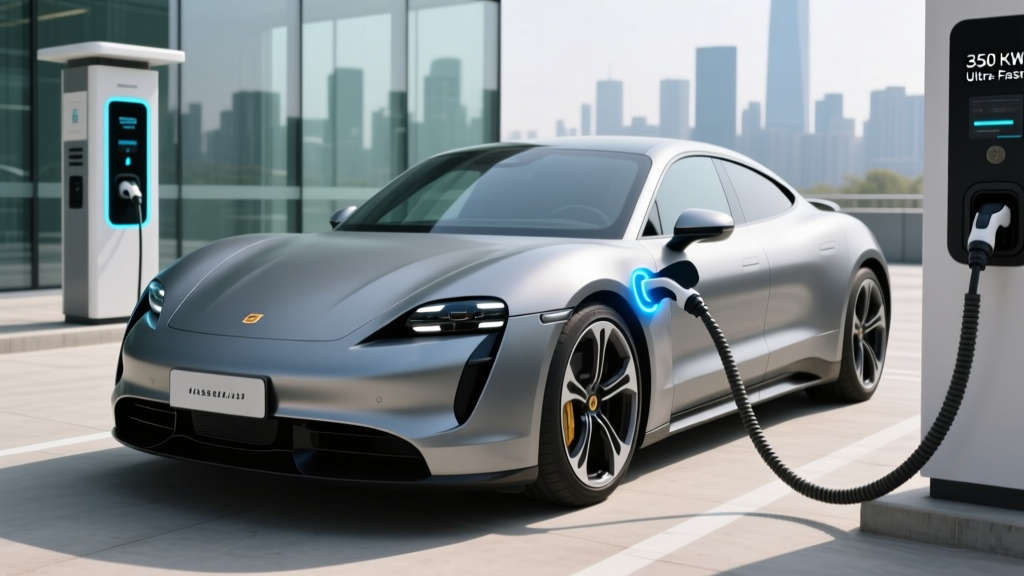
That said, 350 kW infrastructure is the backbone of modern DC fast charging networks, and vehicles capable of accepting even 200-270 kW at peak can deliver remarkably short pit stops. The Hyundai Ioniq 5, for example, peaks around 240 kW on a 350 kW stall and charges from 10-80% in roughly 18 minutes. The Porsche Taycan, with its 800-volt architecture, sustains up to 270 kW and hits 10-80% in about 22 minutes. The Lucid Air, with its 900V+ system, can accept over 300 kW at peak under ideal conditions.
Understanding what 350 kW charging actually means for your daily driving — and how it fits alongside Level 1 and Level 2 charging at home — requires a clear breakdown of power, energy, connectors, and cost.
Charging Levels: Speed, Power, and Miles Per Hour
EV charging falls into three tiers. The critical distinction: kW (kilowatts) measures power — the rate at which energy flows. kWh (kilowatt-hours) measures energy — the total amount stored in your battery. Think of kW as the width of a hose and kWh as the size of the bucket.
| Level | Voltage | Power (kW) | Miles of Range Per Hour | Typical Use Case |
|---|---|---|---|---|
| Level 1 | 120V AC | 1.0–1.4 kW | 3–5 mi/hr | Overnight trickle, PHEV top-ups |
| Level 2 | 240V AC | 3.3–19.2 kW | 12–75 mi/hr | Home daily charging, workplace, shopping centers |
| DC Fast (50 kW) | 200–500V DC | 50 kW | ~100–150 mi/hr | Older DC stations, highway rest stops |
| DC Fast (150 kW) | 200–800V DC | 150 kW | ~200–400 mi/hr | Common highway corridor chargers |
| DC Fast (350 kW) | 200–920V DC | Up to 350 kW | ~400–900 mi/hr (at peak) | Ultra-fast highway stations, 800V-capable EVs |
The "miles per hour" figures vary widely depending on your vehicle's efficiency. A highly efficient sedan like the Lucid Air (roughly 4 mi/kWh) gains range faster per kW than a heavy SUV like the Rivian R1S (roughly 2.5 mi/kWh). Always calculate based on your specific vehicle's EPA efficiency rating.
Which EVs Actually Benefit from 350 kW Chargers?
Plugging into a 350 kW stall doesn't guarantee you'll receive 350 kW. Your vehicle's maximum charge acceptance rate is the bottleneck. Here's how common 2025–2026 models perform on a 350 kW station:
| Vehicle | Battery (kWh usable) | Architecture | Peak DC Rate (kW) | 10–80% Time |
|---|---|---|---|---|
| Hyundai Ioniq 5 | 77.4 (NMC) | 800V | ~240 | ~18 min |
| Kia EV6 GT-Line | 77.4 (NMC) | 800V | ~240 | ~18 min |
| Porsche Taycan | 83.7 (NMC, Performance Battery Plus) | 800V | ~270 | ~22 min |
| Lucid Air Pure | 88 (NMC) | 900V+ | ~300+ | ~15–20 min |
| Tesla Model 3 Highland | 60 (LFP) / 75 (NMC) | 400V | ~170–250 | ~25–30 min |
| Ford F-150 Lightning (Ext. Range) | 131 (NMC) | 400V | ~150 | ~41 min |
| Chevrolet Equinox EV | 85 (NMC) | 400V | ~150 | ~30 min |
The pattern is clear: 800-volt (and higher) architectures unlock the most from 350 kW infrastructure. Vehicles on 400V platforms are typically capped between 150–250 kW regardless of the charger's capability.
Connector Compatibility: NACS, CCS1, and CHAdeMO
The connector landscape in North America has shifted dramatically. Tesla's North American Charging Standard (NACS) has become the de facto industry connector, with nearly every major automaker committing to NACS ports on new vehicles starting in 2025–2026. CCS1 (Combined Charging System) remains on many vehicles sold between 2019–2024, and CHAdeMO is essentially legacy (Nissan Leaf being the primary holdout).
| Connector | Brands Using It (Native Port) | Adapter Needed for 350 kW Stalls? |
|---|---|---|
| NACS (Tesla standard) | Tesla (all), Ford (2025+), GM (2025+), Rivian (2025+), Volvo, Polestar, Mercedes-Benz (2026+), Hyundai/Kia (2026+) | CCS1→NACS adapter if station has only CCS cables; most new 350 kW stalls now include NACS cables |
| CCS1 | VW ID.4 (pre-2026), BMW iX/i4 (pre-2026), Hyundai/Kia (pre-2026), Ford (pre-2025), legacy models | NACS→CCS adapter for Tesla Superchargers; native on most Electrify America and EVgo stalls |
| CHAdeMO | Nissan Leaf (all years), Mitsubishi Outlander PHEV (older) | Limited 350 kW CHAdeMO availability; most stalls max 50 kW for CHAdeMO |
Adapter note: Not all adapters support full 350 kW throughput. Tesla's CCS adapter, for instance, is rated for up to 250 kW. Third-party adapters from brands like A2Z or Lectron vary in their rated capacity — always verify the adapter's maximum kW rating before relying on it for high-speed charging.
Home Charging Setup: What It Costs and What You Need
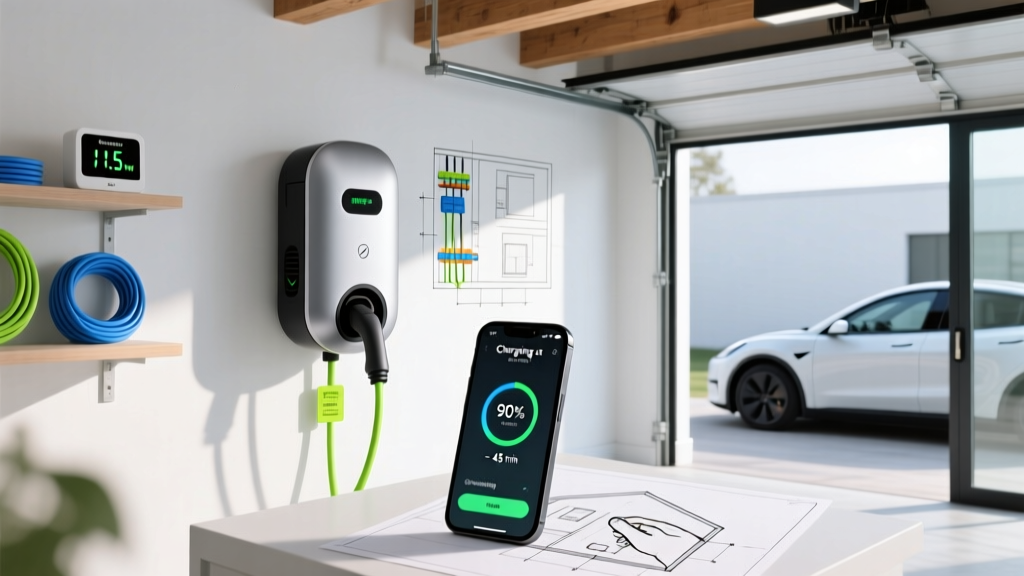
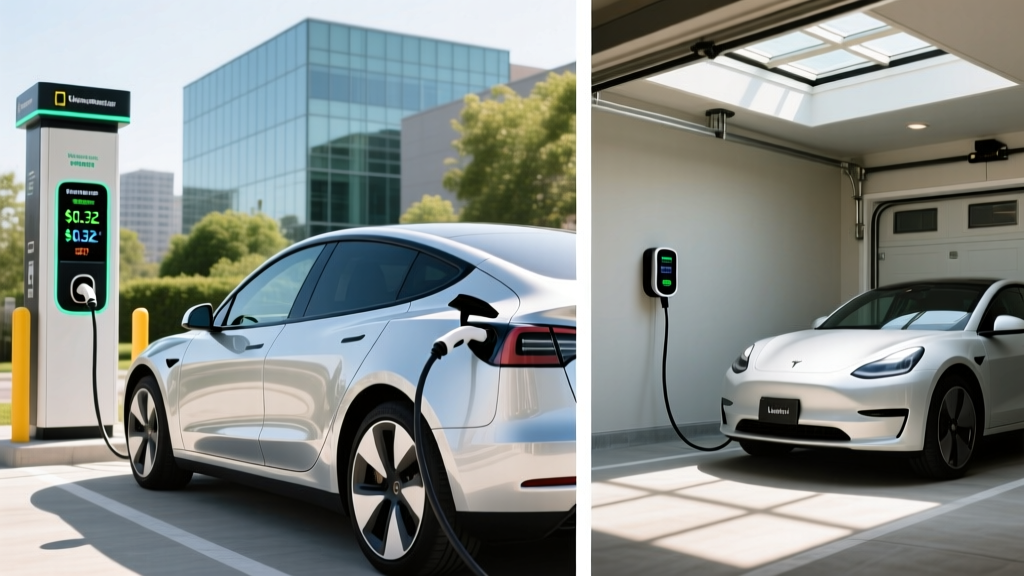
While 350 kW DC fast charging handles road trips, 90%+ of EV charging happens at home on Level 2. A proper home setup is the single biggest quality-of-life upgrade in EV ownership.
Electrical Requirements
A typical Level 2 home charger runs on a 240V dedicated circuit — the same voltage as your electric dryer or oven. Common configurations:
- 40A circuit / 32A continuous: Delivers 7.7 kW. Adds ~25–35 miles of range per hour. Sufficient for most daily driving.
- 50A circuit / 40A continuous: Delivers 9.6 kW. Adds ~35–45 mi/hr. Good for larger batteries (F-150 Lightning, Rivian).
- 60A circuit / 48A continuous: Delivers 11.5 kW. Adds ~40–55 mi/hr. Ideal for high-capacity packs and heavy daily use.
- 80A circuit / 64A continuous: Delivers 15.3–19.2 kW. Requires a hardwired connection and substantial panel capacity. Premium setups for large-battery EVs.
Panel upgrade reality: Most modern homes have a 200A main panel, which can accommodate a 50–60A EV circuit if load capacity allows. Older homes with 100A panels often need a service upgrade to 200A — a significant added cost. Some utilities and municipalities offer rebates for panel upgrades tied to EV adoption.
Installation Cost Breakdown
| Component | Low End | High End | Notes |
|---|---|---|---|
| Level 2 Charger (Equipment) | $200 | $750 | Basic 32A unit vs. smart 48A Wi-Fi-enabled |
| Electrician Labor | $300 | $1,500 | Depends on run length, wall type, conduit needs |
| Electrical Permit | $50 | $300 | Varies by municipality |
| Panel Upgrade (if needed) | $1,500 | $4,500 | 100A→200A service upgrade |
| Total (no panel upgrade) | $550 | $2,550 | Most common scenario for modern homes |
| Total (with panel upgrade) | $2,050 | $7,050 | Older homes or high-draw setups |
The federal Residential Clean Energy Credit covers 30% of home charging equipment and installation costs (up to $1,000 for the charger hardware portion under current rules), though income and location restrictions may apply. Always consult a tax professional for your specific eligibility.
Recommended Home Level 2 Chargers
ChargePoint Home Flex
- Power: Up to 12 kW (50A) configurable
- Connector: NACS or J1772 (CCS via adapter)
- Cable: 23 ft
- Smart features: Wi-Fi, app scheduling, energy tracking, Alexa
- Price: ~$550–$650
Wallbox Pulsar Plus
- Power: Up to 11.5 kW (48A)
- Connector: NACS or J1772
- Cable: 25 ft
- Smart features: Wi-Fi + Bluetooth, Power Sharing for dual installs
- Price: ~$450–$600
Tesla Wall Connector
- Power: Up to 11.5 kW (48A)
- Connector: NACS native (J1772 adapter included)
- Cable: 24 ft
- Smart features: Wi-Fi, OTA updates, Power Sharing
- Price: ~$475
Emporia Vue Level 2
- Power: Up to 11.5 kW (48A)
- Connector: J1772 (NACS adapter available)
- Cable: 24 ft
- Smart features: Whole-home energy monitoring integration
- Price: ~$350–$400
Cost to Charge: Home vs. Public vs. Gas
The economics of EV charging depend heavily on where and when you plug in. Here's a realistic cost comparison using a 30 kWh per 100 miles consumption average (typical for a midsize EV like the Tesla Model Y or Hyundai Ioniq 5):
| Scenario | Rate ($/kWh) | Cost Per 100 Miles | Cost Per Mile |
|---|---|---|---|
| Home (off-peak utility rate) | $0.08–$0.14 | $2.40–$4.20 | $0.024–$0.042 |
| Home (standard residential avg) | $0.16 | $4.80 | $0.048 |
| Public Level 2 (ChargePoint, etc.) | $0.25–$0.49 | $7.50–$14.70 | $0.075–$0.147 |
| DC Fast (Electrify America, EVgo) | $0.35–$0.56 | $10.50–$16.80 | $0.105–$0.168 |
| Tesla Supercharger (avg) | $0.25–$0.40 | $7.50–$12.00 | $0.075–$0.12 |
| Gas vehicle (28 MPG, $3.40/gal) | — | $12.14 | $0.121 |
The takeaway: home charging on off-peak rates is dramatically cheaper than gas. Public DC fast charging at premium rates can approach or exceed gas costs per mile — but it's typically used for road trips, not daily driving. Most EV owners do 85–95% of their charging at home.
For a driver covering 12,000 miles/year charging primarily at home at $0.14/kWh, annual fuel cost is roughly $576. A comparable gas car at 28 MPG and $3.40/gal costs about $1,457/year. That's a savings of approximately $881/year in fuel alone, according to EPA fuel economy data.
Safety, Code, and Installation Best Practices
Level 2 EV charging draws sustained high current for hours — this is not the same as plugging in a lamp. Proper installation protects your home, your vehicle, and your warranty.
- Dedicated circuit: Your EV charger must be on its own dedicated breaker. Sharing a circuit with other appliances risks overloading and tripping.
- GFCI protection: The 2023 NEC (National Electrical Code) requires GFCI (Ground Fault Circuit Interrupter) protection for EV outlets in garages and outdoor locations. Hardwired chargers may have built-in GFCI, which can satisfy this requirement — confirm with your electrician and local inspector.
- Outdoor rating: If your charger is installed outside, it must carry a NEMA 4 (or better) rating for weather resistance. Most quality chargers (ChargePoint, Wallbox, Tesla) are rated for outdoor use.
- Wire gauge: For a 50A circuit, 6 AWG copper wire is standard. Longer runs may require 4 AWG to prevent voltage drop. Your electrician will calculate this.
- Permit and inspection: Most jurisdictions require an electrical permit and final inspection for EV charger installations. Skipping this can void your homeowner's insurance coverage in the event of an electrical fire.
- NEMA 14-50 vs. hardwired: A NEMA 14-50 outlet offers portability (take your charger when you move) but requires GFCI breaker protection. Hardwired installations eliminate the outlet, can support higher amperage (60A+), and simplify GFCI compliance.
Maximizing Your 350 kW Charging Experience
If your vehicle supports high-rate DC charging, a few practices will get you closer to advertised speeds:
- Precondition the battery. Most EVs with navigation will automatically begin warming or cooling the battery when you route to a DC fast charger. Arriving with a battery at its optimal temperature (typically 25–35°C / 77–95°F) is the single biggest factor in achieving peak charge rate. A cold battery may accept only a fraction of its rated kW.
- Arrive at a low state of charge. Peak charge rates occur between roughly 10–55% SoC. If you arrive at 60%, you've already missed the fastest portion of the curve.
- Use the charger's native connector. Adapters add resistance and may limit throughput. If your car has NACS, seek a stall with a native NACS cable rather than using a CCS-to-NACS adapter.
- Check station status before arriving. Apps like PlugShare, A Better Routeplanner, and network-specific apps (EVgo, Electrify America) show real-time stall availability and reported issues. A degraded stall may not deliver its labeled kW.
- Don't obsess over 100%. Charging past 80% on DC fast is slow and stresses the battery over time. Set your charge limit to 80% for road-trip stops and save the top-up for overnight Level 2 at home or your destination.
Frequently Asked Questions
How much does it cost to install a home EV charger?
For most homes with a 200A panel, expect $550–$2,550 total (equipment + electrician + permit). If your home needs a panel upgrade from 100A to 200A, add $1,500–$4,500. The federal Residential Clean Energy Credit can offset 30% of qualifying costs.
How fast will each charging level add range?
Level 1 (120V): 3–5 miles per hour. Level 2 (240V, 48A): roughly 35–45 miles per hour for a typical midsize EV. DC fast charging at 150 kW: roughly 200–400 mi/hr at peak. DC fast at 350 kW with an 800V-capable EV: 400–900 mi/hr at peak, tapering significantly above 60% SoC.
Which connector is compatible with my EV?
For 2025–2026 models: Tesla, Ford, GM, Rivian, Volvo, and an expanding list use NACS natively. Volkswagen, BMW, and pre-2026 Hyundai/Kia models typically use CCS1. Nissan Leaf uses CHAdeMO. Check your vehicle's charge port or owner's manual, and verify the connector type at any public station before driving there.
How much does EV charging cost per mile vs. gas?
Home charging at average residential rates ($0.14/kWh) costs roughly $0.04–$0.05 per mile for a typical EV. Gas at $3.40/gallon and 28 MPG costs about $0.12 per mile. Public DC fast charging at $0.48/kWh runs roughly $0.14/mile — comparable to gas, but used mainly for road trips.
What electrical upgrades might I need for a home charger?
If your home has a 200A panel with available capacity, you likely need only a new dedicated breaker and wiring run. Homes with 100A panels, older wiring, or panels already near capacity may need a service upgrade to 200A ($1,500–$4,500). Load-management devices can sometimes avoid a full upgrade by dynamically sharing capacity between your charger and other appliances.
Can any EV use a 350 kW charger?
Any EV with a DC fast-charge port can physically plug into a 350 kW stall, but the vehicle controls how much power it accepts. A Chevy Bolt EV capped at ~55 kW will charge at 55 kW on a 350 kW stall — no faster than on a 50 kW unit. Only vehicles with 800V+ architectures (Ioniq 5, Taycan, Lucid Air, EV6) can meaningfully leverage 350 kW infrastructure.