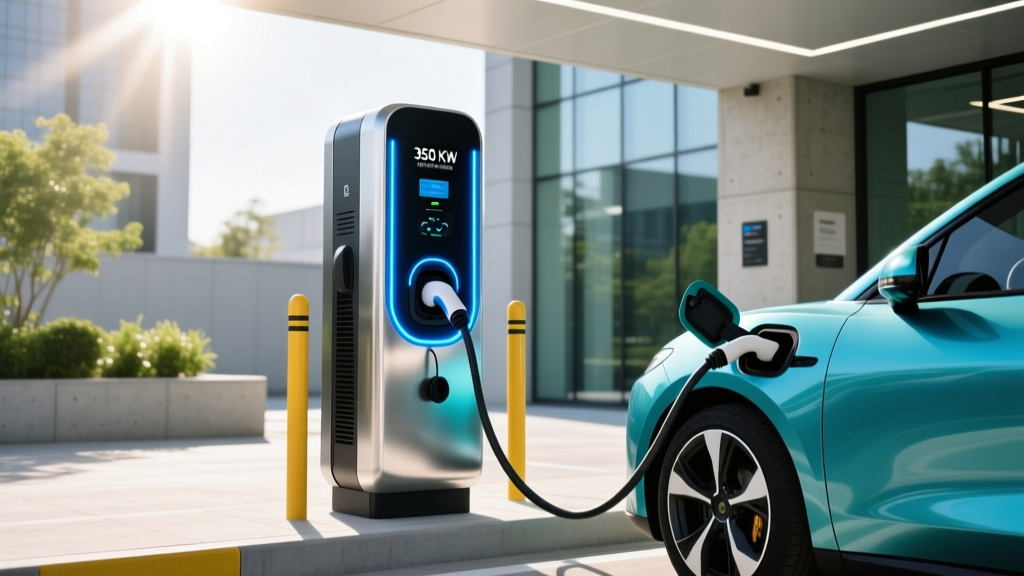
Walk up to an Electrify America or EVgo station today and you'll likely see stalls labeled "350 kW." That number sounds staggering — enough to dump energy into your battery at nearly six miles per minute. But here's the reality most EV buyers discover on their first road trip: peak power is not sustained power, and whether your car can actually pull 350 kW depends on its battery architecture, state of charge, and thermal management.
This guide breaks down what 350 kW DC fast charging actually means in practice, how it compares to Level 2 home charging, what it costs, and which 2026 EVs can take full advantage of these ultra-fast stations.
Understanding Charging Levels: kW Power vs. kWh Energy
Before comparing chargers, let's resolve the single most common EV confusion: kW (kilowatts) measures power — how fast energy flows. kWh (kilowatt-hours) measures energy — how much your battery holds. Think of kW as the width of a hose and kWh as the size of the bucket. A 350 kW charger can theoretically deliver energy 35 times faster than a 10 kW Level 2 home unit, but your car's battery (the bucket) has a maximum intake rate.
| Level | Voltage | Max Power (kW) | Miles of Range / Hour | Typical Use Case |
|---|---|---|---|---|
| Level 1 | 120V AC | 1.2–1.9 kW | 3–5 mi/hr | Overnight trickle, PHEVs, emergencies |
| Level 2 | 240V AC | 7.2–19.2 kW | 20–60 mi/hr | Daily home & workplace charging |
| DC Fast (Level 3) | 400–800V DC | 50–350 kW | 120–900+ mi/hr (peak) | Road trips, highway corridors |
The "miles per hour" column for DC fast charging has an enormous spread because it depends on vehicle efficiency and whether the car can actually accept that power. A 350 kW charger feeding a Hyundai Ioniq 5 (which peaks around 240 kW on its 800V architecture) will add roughly 200 miles in 18 minutes. The same charger feeding a Chevy Bolt EV limited to 55 kW will add about 80 miles in that same window.
What 350 kW Actually Delivers: The Charge Curve Reality
Here's the data point most marketing materials skip: no production EV sustains 350 kW for the entire charging session. Lithium-ion batteries can only accept peak power within a narrow state-of-charge (SoC) window — typically between 10% and 40%. As the battery fills, the vehicle's battery management system (BMS) tapers the charge rate to protect cell health.
This is the charge curve, and it's why the 10–80% time is a far more useful metric than peak kW. Here's what real-world 10–80% sessions look like on a 350 kW-capable station:
| Vehicle | Battery (kWh usable) | Architecture | Peak kW Accepted | 10–80% Time |
|---|---|---|---|---|
| Hyundai Ioniq 5 N | 84 kWh (NMC) | 800V | ~240 kW | ~18 min |
| Porsche Taycan (Performance) | 97 kWh (NMC) | 800V | ~320 kW | ~16 min |
| Kia EV6 GT-Line | 84 kWh (NMC) | 800V | ~240 kW | ~18 min |
| Tesla Model 3 Long Range | 79 kWh (NMC) | 400V | ~250 kW | ~25 min |
| Lucid Air Grand Touring | 112 kWh (NMC) | 900V+ | ~300 kW | ~20 min |
| Rivian R1T Dual-Motor | 129 kWh (NMC) | 400V | ~200 kW | ~40 min |
| Chevy Equinox EV | 85 kWh (NMC) | 400V | ~150 kW | ~35 min |
Notice that even the Porsche Taycan, which comes closest to using the full 350 kW capacity, peaks around 320 kW and only holds that rate for a few minutes before tapering. The 800V-architecture vehicles (Ioniq 5, EV6, Taycan, Lucid) achieve faster sessions because higher voltage reduces current and heat generation, enabling more aggressive charge curves.
Cold-weather caveat: In sub-freezing temperatures, expect 10–80% times to increase by 20–40% unless your vehicle has preconditioned the battery. Most modern EVs do this automatically when you navigate to a charger, but it takes 15–30 minutes of driving to warm the pack.
Connector Compatibility: Will the Plug Fit Your EV?
The North American charging landscape has shifted dramatically. As of 2026, the North American Charging Standard (NACS) — originally Tesla's proprietary connector — has been adopted by Ford, GM, Rivian, Volvo, BMW, and most other major automakers. CCS1 is still widely available at public stations, and adapters bridge the gap.
| Connector | Brands Using It (Native) | Max DC Power | Adapter Needed For |
|---|---|---|---|
| NACS (Tesla/SAE J3400) | Tesla, Ford, GM, Rivian, Volvo, BMW, Hyundai (2025+), Kia (2025+) | Up to 350 kW+ | CCS1 stations (with adapter) |
| CCS1 (Combo) | VW ID.4 (2024 and earlier), older Hyundai/Kia, BMW i4 (pre-2025), Stellantis | Up to 350 kW | NACS/Tesla Superchargers (with adapter) |
| CHAdeMO | Nissan Leaf (legacy only — discontinued) | Up to 100 kW | Increasingly rare; no 350 kW support |
Key takeaway for 350 kW charging: CHAdeMO is effectively dead at the high-power end. If you drive a 2026 model-year EV, you almost certainly have NACS or CCS1. Both support 350 kW-capable stations, but your vehicle's onboard acceptance rate is the limiting factor. Tesla Superchargers now max out at 250 kW (V3) and 350 kW (V4, rolling out at select corridors), while Electrify America, EVgo, and Ionity routinely deploy 350 kW CCS/NACS stalls.
Charging Cost: 350 kW Public vs. Home Level 2
Ultra-fast charging comes at a premium. Here's what you'll actually pay per mile of range added, based on typical 2026 electricity rates and an efficient EV averaging 3.5 miles per kWh (roughly 100 MPGe combined).
| Scenario | Typical $/kWh | Cost per Mile (at 3.5 mi/kWh) | Cost for 200-Mile "Fill-Up" |
|---|---|---|---|
| Home Level 2 (off-peak utility rate) | $0.08–$0.14 | $0.023–$0.040 | $4.60–$8.00 |
| Home Level 2 (standard rate) | $0.14–$0.22 | $0.040–$0.063 | $8.00–$12.60 |
| Public Level 2 (workplace/retail) | $0.20–$0.40 | $0.057–$0.114 | $11.40–$22.80 |
| 350 kW DC Fast (Electrify America/EVgo) | $0.35–$0.55 | $0.100–$0.157 | $20.00–$31.40 |
| Gas equivalent (28 MPG at $3.40/gal) | — | $0.121 | $24.29 |
The math is clear: home charging on off-peak rates costs 3–5× less than a 350 kW public fast charge. A road-trip fast-charge session at $0.48/kWh for a 60 kWh top-up runs about $28.80 — comparable to a gas fill-up. The savings advantage of EV ownership depends heavily on your ability to charge at home.
According to fueleconomy.gov, the average 2026 EV achieves 95–130 MPGe combined, translating to 2.8–3.8 miles per kWh. Use your specific vehicle's efficiency to refine these estimates.
Home Charging Setup: Electrical Requirements and Install Costs
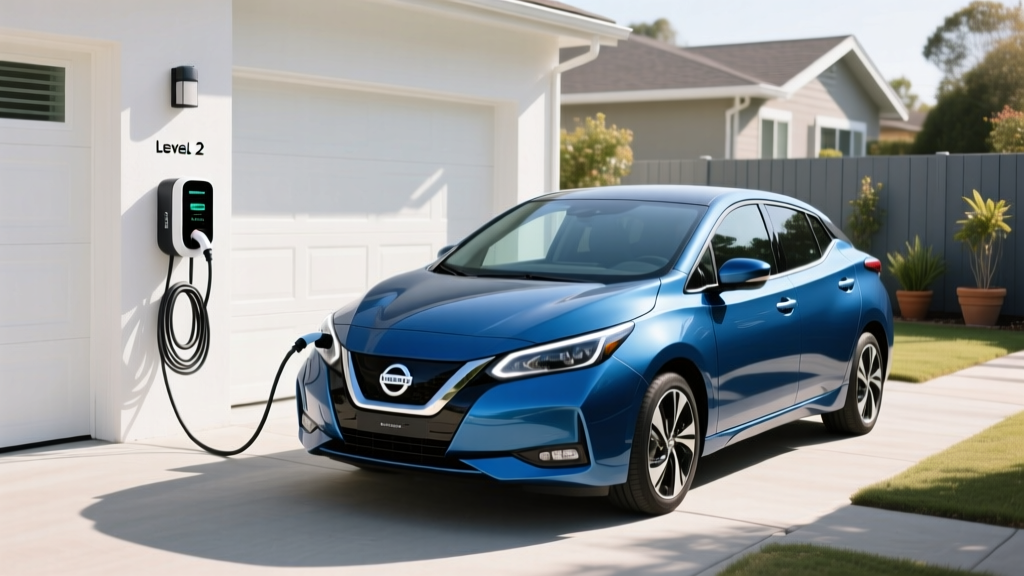
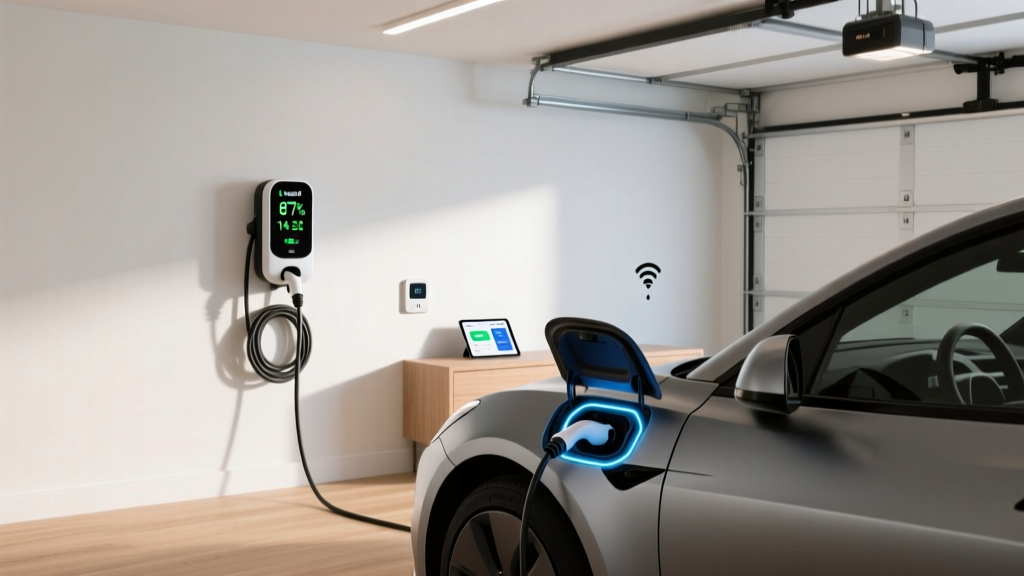
While 350 kW DC fast chargers are public infrastructure, your daily charging backbone is a Level 2 home station. Here's what installation actually involves and what it costs.
Electrical requirements for a typical Level 2 home charger:
- Voltage: 240V AC (same as a dryer or oven outlet)
- Amperage: 40A circuit for a 32A continuous charger (NEC requires circuits rated at 125% of continuous load), or 60A circuit for a 48A charger
- Breaker: Dedicated double-pole breaker in your main panel
- Wiring: 6 AWG copper (40A) or 4 AWG copper (60A), run in conduit
| Component | Simple Install (panel nearby) | Complex Install (panel far/upgrade needed) |
|---|---|---|
| Level 2 charger equipment | $400–$700 | $400–$700 |
| Electrician labor | $400–$800 | $1,200–$2,500 |
| Permit & inspection | $50–$150 | $100–$300 |
| Electrical panel upgrade (100A→200A) | N/A | $1,500–$3,500 |
| Conduit/wiring materials | $100–$250 | $300–$800 |
| Total | $950–$1,900 | $3,500–$7,800 |
The panel-upgrade gotcha: Homes built before 1990 often have 100-amp main panels. Adding a 40A or 60A EV circuit alongside existing loads (dryer, HVAC, electric range) can exceed safe capacity. A licensed electrician will perform a load calculation per NEC Article 220. If an upgrade is required, budget an additional $1,500–$3,500 for a 200A panel swap. Some utilities offer rebates of $300–$1,000 for panel upgrades tied to EV adoption — check with your local provider.
Equipment Picks: Best Home Level 2 Chargers (2026)
You can't install a 350 kW DC fast charger at home (that requires commercial-grade utility infrastructure), but a quality Level 2 unit handles 90%+ of your charging needs. Here are three proven options:
ChargePoint Home Flex (NACS or CCS)
- Power output: Up to 12 kW (50A circuit) — adjustable down to 16A
- Connector: Available in NACS or CCS1; 24-foot cable
- Smart features: Wi-Fi, Alexa, scheduling, energy tracking via app
- Price: ~$550
- Best for: Flexible amperage for older panels; UL-listed for indoor/outdoor
Tesla Wall Connector (NACS)
- Power output: Up to 11.5 kW (48A on 60A circuit)
- Connector: NACS native; 24-foot cable
- Smart features: Wi-Fi, OTA updates, power-sharing between units
- Price: ~$475
- Best for: Tesla and NACS-adopted vehicles (Ford, GM, Rivian); cleanest integration
Emporia Vue Level 2 (CCS1 with NACS adapter)
- Power output: Up to 11.5 kW (48A on 60A circuit)
- Connector: CCS1 native; NACS adapter included
- Smart features: Solar integration, whole-home energy monitoring, load management
- Price: ~$400
- Best for: Budget-conscious buyers; solar homes wanting charger-load coordination
Hardwired vs. plug-in: Chargers rated above 40A (like the 48A models above) must be hardwired per NEC code — no NEMA 14-50 receptacle. A hardwired install is slightly more expensive but eliminates a common failure point (loose receptacle contacts) and typically doesn't require GFCI breaker protection, saving $80–$150 on the breaker alone.
Safety, Code, and Permit Considerations
EV charging involves sustained high-current loads that stress residential wiring differently than intermittent appliances. Key safety requirements:
- Dedicated circuit: Your EV charger needs its own breaker — never share a circuit with other 240V appliances.
- GFCI protection: NEC 2023 (Article 625.54) requires GFCI protection for receptacle-based (plug-in) EV chargers. Hardwired units are exempt. GFCI breakers for 240V/50A+ circuits cost $80–$150 and can nuisance-trip with some chargers — another reason to hardwire.
- Outdoor rating: If your charger is mounted outside, ensure it carries a NEMA 4 or IP65 rating for weather resistance. All three picks above qualify.
- Permit required: Nearly all jurisdictions require an electrical permit for EV charger installation. The inspection verifies wire gauge, breaker sizing, grounding, and proper torque on connections. Skipping the permit risks insurance claim denial if a fire originates from the circuit.
- Utility notification: Some utilities require you to report EV charger installation, especially if you're on a time-of-use (TOU) rate plan that offers discounted overnight charging.
Frequently Asked Questions
How much does it cost to install a home EV charger?
A straightforward Level 2 installation with the panel nearby and sufficient capacity typically runs $950–$1,900 including equipment, electrician labor, and permit. If your home needs a panel upgrade from 100A to 200A, total costs climb to $3,500–$7,800. Always get a load calculation from a licensed electrician before committing.
How fast will each charging level add range?
Level 1 (120V) adds 3–5 miles per hour. Level 2 (240V, 32–48A) adds 20–45 miles per hour depending on your vehicle's onboard charger. A 350 kW DC fast charger can add 120–900+ miles per hour at peak, but charge-curve tapering means realistic road-trip stops take 16–40 minutes for a 10–80% session depending on vehicle architecture.
Which connector and charger is compatible with my EV?
For 2026 models, most new EVs now use NACS (Ford, GM, Tesla, Rivian, Hyundai, Kia, Volvo, BMW). Remaining CCS1 vehicles include older VW ID.4s and some Stellantis models. CHAdeMO is limited to legacy Nissan Leafs. Check your vehicle's charge port or the EPA EV database for your specific model.
How much does charging cost per mile compared to gas?
Home charging on off-peak rates costs roughly $0.02–$0.04 per mile — about 4–6× cheaper than gasoline at $3.40/gallon in a 28 MPG car ($0.12/mile). Public 350 kW DC fast charging at $0.40–$0.55/kWh costs $0.10–$0.16 per mile, which is comparable to or slightly above gasoline. The economics strongly favor home charging.
What electrical upgrades might I need?
The most common upgrade is a 200A panel replacement ($1,500–$3,500) if your home has a 100A service. Other potential needs: running a new 240V circuit from the panel to your garage or driveway ($3–$12 per foot for conduit and wire), upgrading your utility service drop if the transformer is undersized (rare, and typically the utility's cost), or adding a smart load-management device if you want to avoid a panel upgrade by sharing capacity between the EV charger and other appliances.
Can I install a 350 kW DC fast charger at home?
No. A 350 kW DC fast charger requires commercial three-phase power (480V), dedicated utility transformers, and infrastructure costing $100,000–$250,000+ to install. These are strictly public/commercial installations. For home use, a Level 2 charger at 7.2–11.5 kW covers virtually all daily needs and charges your vehicle fully overnight.
Does preconditioning really matter for 350 kW charging?
Yes, significantly. A cold battery (below 50°F / 10°C) cannot accept high charge rates safely. Without preconditioning, a vehicle capable of 240 kW may initially accept only 40–60 kW, extending your 10–80% time by 15–25 minutes. Most 2026 EVs automatically precondition when you navigate to a DC fast charger in the infotainment system. Always use this feature in cold weather.
The Bottom Line on 350 kW Charging
A 350 kW DC fast charger represents the fastest publicly available charging speed in 2026, and a growing number of 800V-architecture EVs can take meaningful advantage of it — pulling 240–320 kW at peak and completing 10–80% sessions in 16–20 minutes. But the practical charging experience is defined more by your vehicle's charge curve than by the station's maximum output. An 800V Hyundai Ioniq 5 on a 150 kW station will charge nearly as fast as it would on a 350 kW unit, because 150 kW is close to its sustained average.
For daily ownership, invest in a quality Level 2 home charger ($400–$700 equipment, $500–$2,000 installation) and reserve 350 kW DC fast charging for road trips. The per-mile economics are dramatically better at home, and your battery will thank you for the gentler charge profile. For current federal tax credit rules on EV purchases, refer to the IRS clean vehicle credit page — eligibility depends on MSRP caps, buyer income limits, and battery-sourcing requirements that change annually.