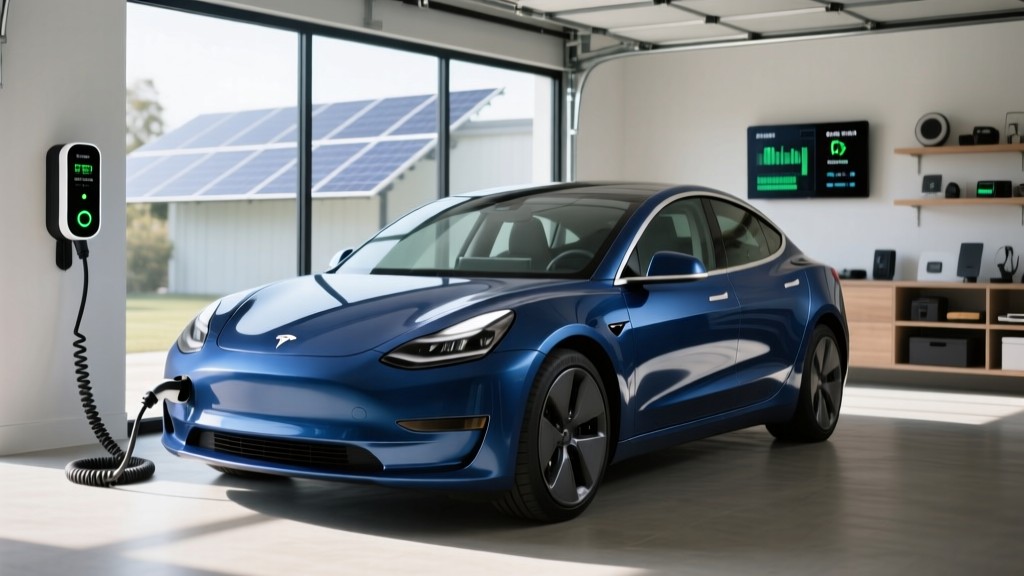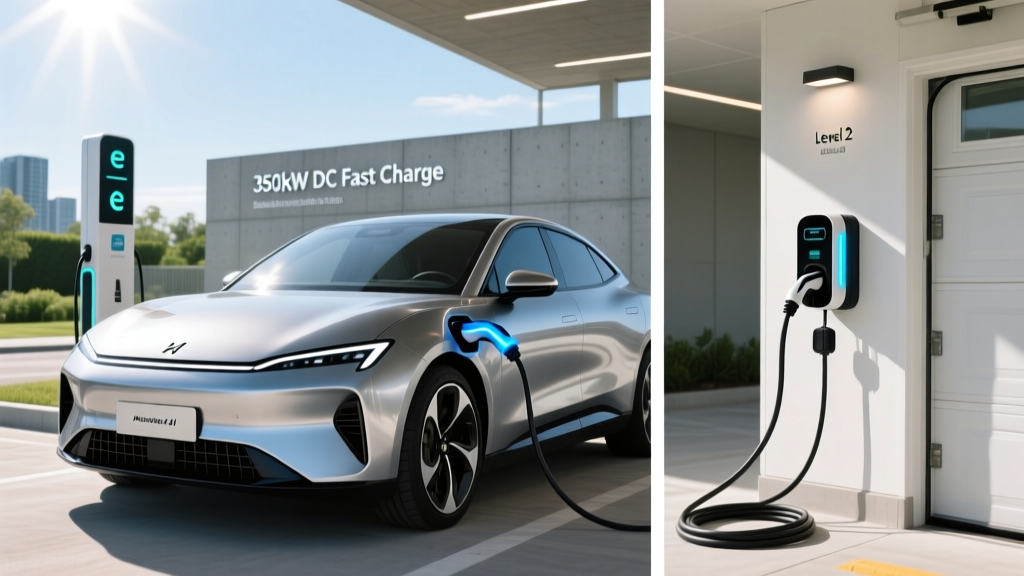
If you've pulled up to a modern highway charging plaza, you've likely seen the stickers: 350 kW DC fast charger. That number is impressive on paper — enough power to theoretically add hundreds of miles of range in minutes. But the reality of what your EV can actually accept, how much it costs, and how home charging fits into the picture requires a closer look. This guide breaks down the full charging ecosystem from public ultra-fast stations to your garage wall, with exact numbers, costs, and equipment picks.
Understanding Charging Levels: kW Power vs. kWh Energy
Before evaluating any charger, let's clear up the most common EV confusion. kW (kilowatts) measures power — how fast energy flows into your battery, like water pressure from a hose. kWh (kilowatt-hours) measures energy capacity — the total amount stored, like the size of the bucket. A 350 kW DC fast charger delivers energy at a very high rate, but your battery's usable capacity (say, 77 kWh or 100 kWh) determines how much total energy it holds.
| Level | Power (kW) | Voltage | Miles of Range Added Per Hour | Typical Use Case |
|---|---|---|---|---|
| Level 1 (120V) | 1.0–1.4 kW | 120V AC | 3–5 mi/hr | Emergency / overnight trickle for PHEVs |
| Level 2 (240V) | 3.3–19.2 kW | 240V AC | 12–75 mi/hr | Home daily charging, workplace, hotels |
| DC Fast (50–150 kW) | 50–150 kW | 200–500V DC | 150–400 mi/hr (peak) | Public highway stops, older CCS stations |
| Ultra-Fast DC (150–350 kW) | 150–350 kW | 200–900V DC | 400–1,000+ mi/hr (peak) | Modern highway plazas, 800V-architecture EVs |
The "miles per hour" figures are peak rates at low states of charge. In practice, charging speed tapers significantly above 80% state of charge (SoC) to protect the battery. A session from 10–80% on a 350 kW charger might average only 150–200 kW sustained, depending on your vehicle's battery architecture and thermal management.
Real-World 350kW DC Fast Charger Performance
Not every EV can accept a full 350 kW. Your vehicle's onboard charge controller and battery voltage architecture set a hard ceiling. Here's what 10–80% charging looks like for popular 2025–2026 EVs at a 350 kW station, based on manufacturer data and independent testing:
| Vehicle | Battery (kWh usable) | Peak Charge Rate (kW) | Architecture | 10–80% Time |
|---|---|---|---|---|
| Hyundai Ioniq 5 (2025) | 77.4 kWh (NMC) | 240 kW | 800V | ~18 minutes |
| Kia EV6 GT-Line (2025) | 77.4 kWh (NMC) | 240 kW | 800V | ~18 minutes |
| Porsche Taycan (2025) | 83.7 kWh (NMC) | 320 kW | 800V | ~16 minutes |
| Tesla Model 3 Long Range (2025) | 75 kWh (NMC) | 250 kW | 400V | ~25 minutes |
| Ford F-150 Lightning (2025) | 131 kWh (NMC) | 150 kW | 400V | ~41 minutes |
| Chevrolet Silverado EV (2025) | 200 kWh (NMC) | 350 kW | 800V | ~30 minutes |
Key takeaway: Even at a 350 kW stall, a 400V-architecture vehicle like the F-150 Lightning will never pull more than its peak 150 kW. The 800V platforms from Hyundai/Kia and Porsche genuinely benefit from ultra-fast infrastructure. Always check your vehicle's max DC charge rate — it's the bottleneck, not the station.
Home Charging Setup: Level 2 Installation Costs and Requirements
While public 350 kW DC fast chargers handle road trips, 90% or more of EV charging happens at home on Level 2. A proper home Level 2 setup is the single most impactful ownership upgrade you can make. Here's what's involved electrically and financially.
Electrical Requirements for Home Level 2
A typical home Level 2 charger requires a 240V dedicated circuit, similar to what an electric dryer or oven uses. The most common configurations:
- 40-amp circuit (delivers 32A continuous / 7.7 kW) — sufficient for most EVs overnight
- 50-amp circuit (delivers 40A continuous / 9.6 kW) — recommended for larger batteries like the F-150 Lightning or Rivian R1T
- 60-amp circuit (delivers 48A continuous / 11.5 kW) — maximum for the fastest Level 2 home charging
The National Electrical Code (NEC) requires EV circuits to be rated at 125% of the continuous load. A 48A charger needs a 60A breaker. Your electrician will verify wire gauge (typically 6 AWG copper for 60A) and ensure your panel has capacity.
Do You Need a Panel Upgrade?
This is the question that can double your installation cost. Most modern homes with a 200-amp main panel can accommodate a 50–60A EV circuit without an upgrade, provided existing loads (HVAC, electric range, dryer) don't max out the panel. Homes with 100-amp service — common in older construction — will likely need a panel upgrade to 200A, which adds $1,500–$3,500 to the project.
Some homeowners opt for a smart load-management device (like the Emporia VUE or Span panel) that dynamically limits EV charging when other high-draw appliances are running, avoiding a panel upgrade entirely. Your licensed electrician should perform a load calculation per NEC Article 220 before recommending a path forward.
| Component | Simple Install (panel nearby) | Complex Install (long run / panel upgrade) |
|---|---|---|
| Level 2 Charger (hardware) | $350–$700 | $350–$700 |
| Electrician labor | $300–$800 | $800–$2,500 |
| Permit & inspection | $50–$200 | $50–$200 |
| Panel upgrade (if needed) | $0 | $1,500–$3,500 |
| Conduit/wire (long runs 50+ ft) | $100–$300 | $300–$1,000 |
| Total | $800–$2,000 | $3,000–$7,900 |
According to the U.S. Department of Energy, the national average for a straightforward Level 2 installation is $1,200–$2,000 all-in. Check for local utility rebates — many co-ops and municipal utilities offer $250–$500 toward equipment or installation.
Connector Compatibility: NACS, CCS, and CHAdeMO in 2026
The connector landscape has shifted dramatically. As of the 2025–2026 model year, the North American Charging Standard (NACS), developed by Tesla, has become the dominant connector for new EVs. Here's where each brand stands:
| Connector | Brands Using It (Native) | Adapter Needed For | Notes |
|---|---|---|---|
| NACS (Tesla) | Tesla, Ford, GM, Rivian, Volvo, Polestar, Fisker | Older CCS public stations | Tesla Supercharger network open to NACS-equipped vehicles; adapters widely available |
| CCS1 | Hyundai, Kia, BMW, VW, Mercedes-Benz, Stellantis | Tesla Superchargers (with adapter) | Many CCS stations remain operational; Electrify America still CCS-native |
| CHAdeMO | Nissan Leaf (legacy) | Most modern public DC stations | Effectively discontinued for new vehicles post-2024; adapters rare |
For home Level 2 charging, the J1772 connector remains the universal AC standard. NACS-equipped vehicles include a J1772 adapter in the box, or you can buy a NACS-to-J1772 adapter ($100–$200) to use any Level 2 wall unit. The Tesla Wall Connector now ships with NACS native and includes a J1772 adapter.
Cost to Charge: Home vs. Public DC Fast vs. Gas
Electricity pricing varies enormously by location, time of day, and whether you're at home or on the road. Here's a realistic cost comparison based on national averages and common scenarios:
| Scenario | Rate | Cost for 300 Miles (at 3 mi/kWh efficiency) | Cost Per Mile |
|---|---|---|---|
| Home Level 2 — off-peak utility rate | $0.09–$0.13/kWh | $9.00–$13.00 | $0.03–$0.043 |
| Home Level 2 — standard residential rate | $0.14–$0.18/kWh | $14.00–$18.00 | $0.047–$0.06 |
| Public Level 2 (workplace / retail) | $0.20–$0.35/kWh | $20.00–$35.00 | $0.067–$0.117 |
| Public DC Fast (Electrify America, EVgo) | $0.35–$0.55/kWh | $35.00–$55.00 | $0.117–$0.183 |
| Tesla Supercharger (varies by location) | $0.25–$0.40/kWh | $25.00–$40.00 | $0.083–$0.133 |
| Gasoline vehicle (27 MPG avg, $3.30/gal) | $3.30/gallon | $36.67 | $0.122 |
At home on off-peak rates, an EV costs roughly one-quarter to one-third per mile compared to a gas car averaging 27 MPG. Even at the most expensive public DC fast chargers, EVs can still be cost-competitive with gasoline — but the savings margin narrows or disappears. The economic case for EV ownership is strongest when you can charge at home most nights.
For the latest federal incentive information, check the IRS §30D Clean Vehicle Credit page, which covers up to $7,500 for qualifying new EVs (subject to MSRP caps, buyer income limits, and battery critical-mineral sourcing requirements).
Recommended Home Level 2 Chargers (2025–2026)
You can't install a 350 kW DC fast charger at home — that requires commercial-grade utility service, transformer upgrades, and six-figure infrastructure. But the right Level 2 unit handles 95% of your charging needs. Here are top picks based on reliability, features, and value:
ChargePoint Home Flex
- Power Output: Up to 11.5 kW (48A) on a 60A circuit; configurable down to 16A
- Connector: J1772 (NACS adapter included for 2025+ models)
- Cable Length: 23 feet
- Smart Features: Wi-Fi connected, app scheduling, utility demand-response integration, Alexa/Google Home
- Price: ~$550–$650 (hardware only)
- Best For: Most homeowners wanting flexible amperage and reliable app control
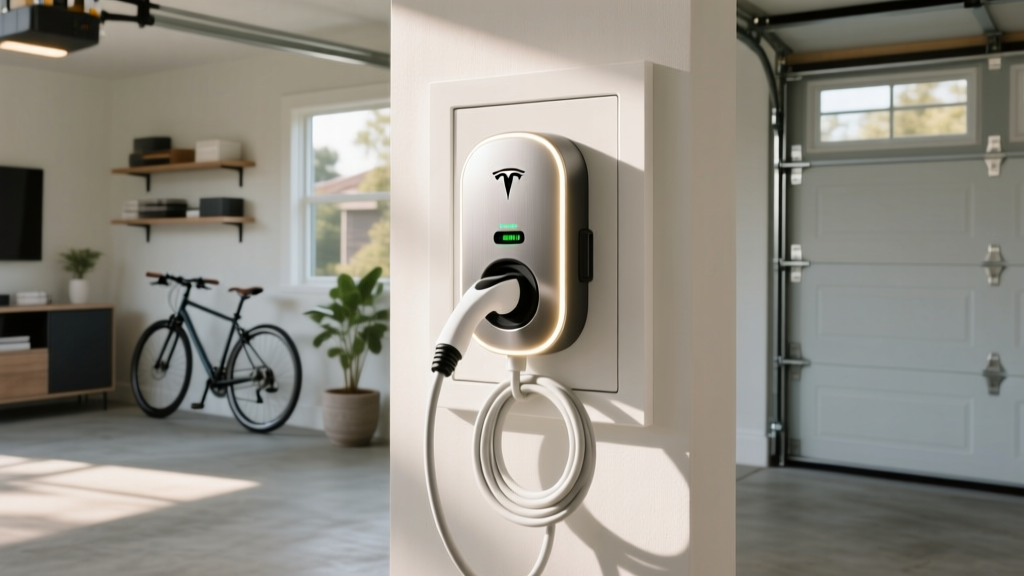
Tesla Wall Connector (Gen 4)
- Power Output: Up to 11.5 kW (48A) on a 60A circuit
- Connector: NACS native; J1772 adapter available (~$150)
- Cable Length: 24 feet
- Smart Features: Wi-Fi updates, power sharing between multiple units, Tesla app integration
- Price: ~$450–$500
- Best For: Tesla owners or households with NACS-equipped vehicles; excellent value
Emporia Level 2 EV Charger
- Power Output: Up to 11.5 kW (48A) on a 60A circuit
- Connector: J1772
- Cable Length: 24 feet
- Smart Features: Energy monitoring via Emporia VUE integration, solar-aware charging, load management
- Price: ~$350–$400
- Best For: Budget-conscious buyers and solar-panel households wanting energy tracking
Grizzl-E Smart
- Power Output: Up to 9.6 kW (40A) on a 50A circuit
- Connector: J1772
- Cable Length: 24 feet
- Smart Features: OCPP-compatible, app control, adjustable amperage
- Price: ~$400–$500
- Best For: Cold-climate durability (rated to -40°F) and Canadian-built reliability
Safety, Code, and Installation Best Practices
EV charging involves sustained high-current draw — often 8+ hours at 32–48 amps. This is more demanding than most household appliances and demands proper installation:
- Dedicated circuit: Your EV charger must have its own dedicated breaker — never share a circuit with other outlets or appliances.
- GFCI protection: The 2020 NEC and later require GFCI (Ground Fault Circuit Interrupter) protection for outdoor EV outlets. Many modern Level 2 chargers have built-in GFCI; your electrician will confirm code compliance.
- Outdoor rating: If installing outside, the charger must carry a NEMA 4 or NEMA 4X rating for weather resistance. All units listed above meet this standard.
- NRTL listing: Ensure the charger is UL-listed or ETL-listed (Nationally Recognized Testing Laboratory). Non-listed import chargers may not pass inspection and can void insurance claims.
- Permit and inspection: Most jurisdictions require an electrical permit for EV charger installation. Skipping this risks code violations, failed home inspections at resale, and insurance denial in the event of an electrical fire. Permits typically cost $50–$200 and include a final inspection.
For detailed safety guidance, the National Fire Protection Association's NEC guidelines govern EV charging installations under Article 625.
Frequently Asked Questions
How much does it cost to install a home EV charger?
A straightforward Level 2 home installation with the electrical panel nearby typically costs $800–$2,000 all-in (charger hardware, electrician labor, permit). Complex installs requiring long wire runs, conduit, or a panel upgrade to 200A service can range from $3,000–$7,900. Always get at least two quotes from licensed electricians.
How fast will each charging level add range?
Level 1 (120V) adds 3–5 miles per hour. Level 2 (240V) adds 12–75 miles per hour depending on amperage and your vehicle's onboard charger. A 350 kW DC fast charger can add 200+ miles in 15–20 minutes for compatible 800V-architecture vehicles, though actual sustained rates average 150–250 kW during a typical 10–80% session.
Which connector/charger is compatible with my EV?
For 2025–2026 models: Tesla, Ford, GM, Rivian, Volvo, and Polestar use NACS. Hyundai, Kia, BMW, VW, and Mercedes use CCS1. For home Level 2, all vehicles can use J1772 with an adapter. Check your owner's manual or the EPA's fueleconomy.gov vehicle listings for your specific model's connector and max charge rate.
How much does charging cost per mile vs. gas?
Home charging at off-peak rates costs $0.03–$0.04 per mile — about one-third the cost of gasoline at $3.30/gallon and 27 MPG ($0.12/mile). Public DC fast charging at $0.40–$0.55/kWh narrows the gap to $0.12–$0.18 per mile, roughly equivalent to gas. The savings case for EVs depends heavily on access to affordable home or workplace charging.
What electrical upgrades might I need?
Homes with a 200-amp panel usually have enough capacity for a 50–60A EV circuit. Homes with 100-amp service often need a panel upgrade ($1,500–$3,500). Smart load-management systems can sometimes avoid a panel upgrade by dynamically limiting charger draw. A licensed electrician must perform an NEC Article 220 load calculation to determine your home's capacity.
Can I install a 350kW DC fast charger at home?
No. A 350 kW DC fast charger requires three-phase commercial power, dedicated transformers, utility coordination, and infrastructure costing $50,000–$150,000+. These are commercial installations for highway plazas, fleet depots, and retail locations. For home use, Level 2 at 7.7–11.5 kW provides ample overnight charging for all current EVs.
Should I charge to 100% at DC fast chargers?
For road trips, charge to 80% and go — the charging curve tapers sharply above 80%, meaning the last 20% can take as long as the first 60%. For daily driving, most manufacturers recommend setting a daily charge limit of 80% for NMC batteries to maximize long-term battery health. LFP batteries (found in some Tesla Model 3 RWD and standard-range vehicles) can be charged to 100% regularly without degradation concerns.