The 350kW Charger Reality: What It Means for Your EV
Walk past any new Electrify America or EVgo station and you'll likely see a sticker boasting "up to 350 kW." That number — 350 kilowatts of peak charging power — represents the fastest public DC fast-charging speeds available to consumer EVs in 2026. But here's what most buyers get wrong: very few vehicles on the road can actually accept a sustained 350 kW charge, and you absolutely cannot install one at home.
This guide untangles the real-world charging landscape, from the 350 kW chargers at highway rest stops to the Level 2 unit you'll plug into every night. We'll cover exact speeds, installation costs, connector compatibility, and what you'll actually pay per mile — backed by data, not marketing.
First, a critical distinction every EV owner must internalize: kW (kilowatts) measures power — how fast energy flows into your battery, like water pressure from a hose. kWh (kilowatt-hours) measures energy — the total amount stored in your battery, like gallons in a tank. A 350 kW charger delivers energy very fast, but the battery's capacity is still measured in kWh.
Charging Levels Explained: Speeds, Power, and Range Added
Every EV charging scenario falls into one of three categories. The table below shows realistic power delivery and the approximate range added per hour of charging — the metric that matters most when you're planning your time.
| Level | Power Source | Typical Power (kW) | Miles of Range Added per Hour | Best Use Case |
|---|---|---|---|---|
| Level 1 | 120V household outlet | 1.2 – 1.9 kW | 3 – 5 miles | Overnight top-up for PHEVs or low-mileage drivers |
| Level 2 | 240V dedicated circuit | 7.2 – 19.2 kW | 20 – 60 miles | Daily home and workplace charging |
| DC Fast (50–150 kW) | 480V+ commercial DC | 50 – 150 kW | 150 – 350 miles/hr | Public fast stops, road trips |
| DC Ultra-Fast (150–350 kW) | 480V+ commercial DC | 150 – 350 kW | 350 – 700+ miles/hr | Highway corridor fast stops for capable EVs |
A few things to notice. Level 1 is painfully slow for a full BEV with a 75+ kWh battery — it would take over 50 hours from empty. Level 2 at home is the sweet spot for daily use: a 48-amp (11.5 kW) charger adds roughly 35-40 miles per hour, easily replenishing a full day's driving overnight. DC fast charging at 350 kW can theoretically add 10 miles of range per minute — but only if your vehicle's battery management system (BMS) can accept that rate.
Which EVs Can Actually Use a 350kW Charger?
A 350 kW charger is only as useful as the vehicle plugged into it. In 2026, these EVs can accept peak charge rates at or near 350 kW, typically thanks to 800-volt battery architectures:
- Hyundai Ioniq 5 / Ioniq 6 — peak ~240 kW (800V platform, 10-80% in ~18 min)
- Kia EV6 / EV9 (GT variants) — peak ~240 kW (800V, 10-80% in ~18 min)
- Porsche Taycan — peak ~320 kW (800V, 10-80% in ~18 min with Performance Battery Plus)
- Lucid Air — peak ~300+ kW (900V+ architecture, 10-80% in ~15-20 min)
- Genesis GV60 / Electrified G80 — peak ~240 kW (800V, 10-80% in ~18 min)
- Rivian R1S/R1T (2025+ refresh) — peak ~220 kW (new architecture)
- Cadillac Optiq / Chevrolet Silverado EV — peak ~350 kW on capable trims
Most mainstream EVs — the Tesla Model Y, Ford Mustang Mach-E, Volkswagen ID.4, Nissan Ariya — peak between 130 kW and 175 kW on DC fast charging. Plugging a 150 kW-capable Mach-E into a 350 kW stall won't damage anything; the vehicle's BMS simply draws only what it can handle. But you won't see any speed benefit over a 150 kW charger.
Home Charging Installation: Requirements, Costs, and Gotchas
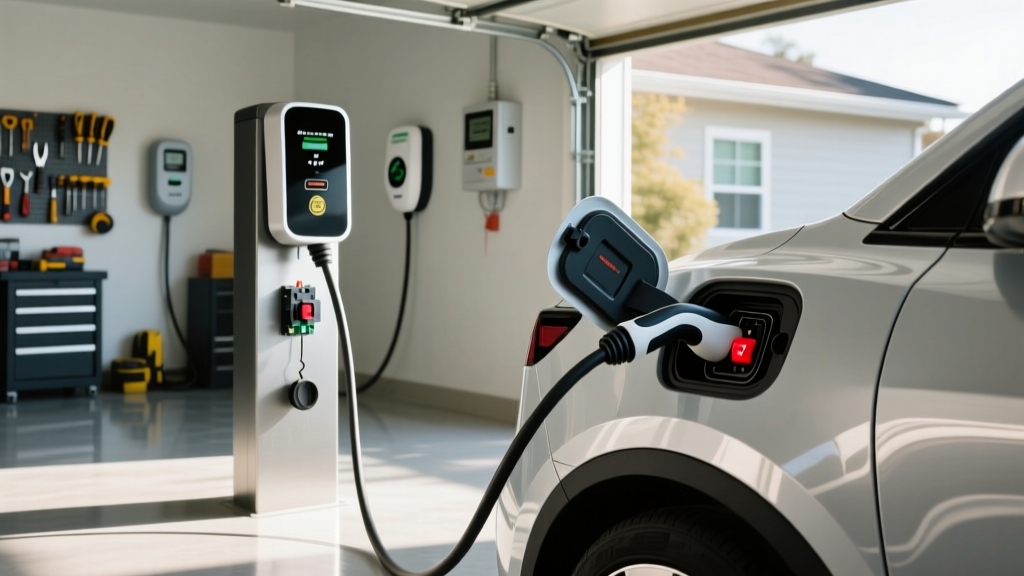
You won't install a 350 kW charger at home — that requires commercial-grade 480V three-phase power and infrastructure that costs tens of thousands of dollars. Home charging is a Level 2 game, and it's where 80%+ of all EV charging happens for owners with garage or driveway access.
Electrical Requirements for Level 2 Home Charging
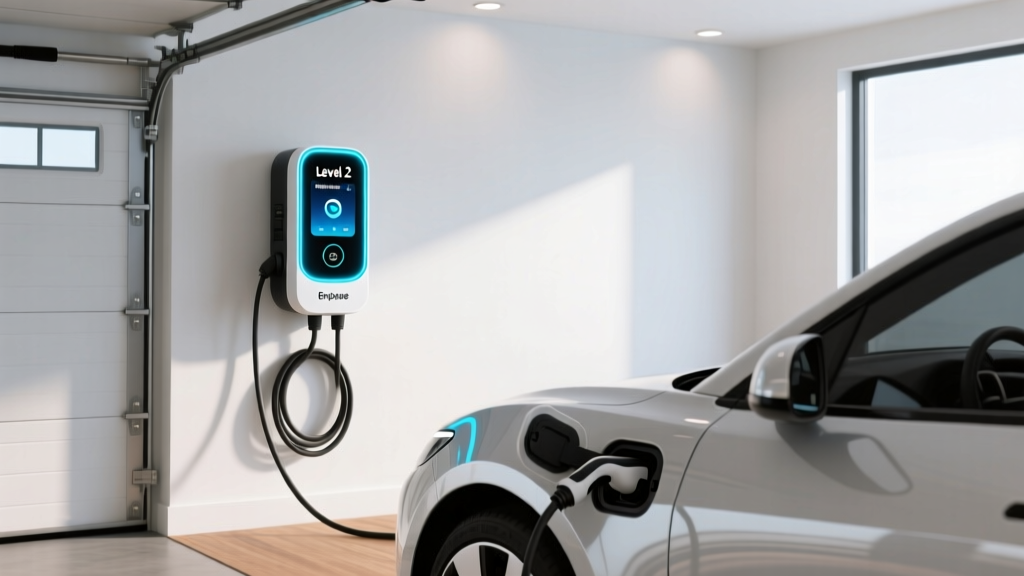
A typical Level 2 home charger requires a 240-volt dedicated circuit — the same type of circuit your electric dryer or oven uses. Here's what the electrical specs look like:
- Most common setup: 240V / 48-amp circuit with a 40-amp continuous draw (National Electrical Code requires circuits rated at 125% of continuous load)
- Higher-power option: 240V / 60-amp circuit for 48-amp continuous draw — charges larger batteries faster
- Lower-power budget option: 240V / 20-amp or 30-amp circuit — slower but may avoid a panel upgrade
Installation Cost Breakdown
Home charger installation costs vary enormously based on your electrical panel's capacity, the distance from the panel to the charger location, and local permit fees. Here's a realistic 2026 cost breakdown:
| Cost Component | Simple Install (panel has capacity, short run) | Complex Install (panel upgrade needed, long run) |
|---|---|---|
| Level 2 Charger Equipment | $400 – $750 | $400 – $750 |
| Electrician Labor (licensed) | $300 – $800 | $800 – $2,000 |
| Electrical Permit | $50 – $200 | $50 – $350 |
| Panel Upgrade (200A service, if needed) | N/A | $1,500 – $4,000 |
| Conduit, Wiring, Miscellaneous | $100 – $300 | $300 – $800 |
| Total Estimated Cost | $850 – $2,050 | $3,050 – $7,900 |
Safety and Code Requirements
The National Electrical Code (NEC Article 625) governs EV charging installations. Key requirements your electrician will follow:
- Dedicated circuit: Your EV charger must have its own breaker — no sharing with other appliances
- GFCI protection: Required for all outdoor installations and many indoor installations per 2023 NEC updates (check local amendments)
- Outdoor rating: If mounted outside, the charger must carry a NEMA 4 (or NEMA 4X) weather-resistance rating
- Proper wire gauge: 6 AWG copper for 48-amp continuous circuits; 4 AWG for 60-amp circuits (your electrician will spec this)
- Permit and inspection: Nearly all jurisdictions require a permit and post-installation inspection — skip this and you risk voiding homeowner's insurance coverage
Connector Compatibility: NACS, CCS1, and CHAdeMO in 2026
The connector landscape has consolidated dramatically since Ford, GM, Rivian, and nearly every major automaker adopted the North American Charging Standard (NACS) — originally developed by Tesla. Here's where things stand for the 2026 model year:
| Connector | Used By (2026 Models) | DC Fast Charge Availability | Adapter Needed? |
|---|---|---|---|
| NACS (Tesla standard) | Tesla (all), Ford, GM, Rivian, Hyundai/Kia (new models), Volvo, Polestar, Fisker | Tesla Superchargers + growing NACS networks (EA, EVgo retrofitting) | CCS-to-NACS adapters available for legacy CCS vehicles (~$150-$250) |
| CCS1 (Combined Charging System) | VW ID.4, BMW i4/iX (legacy), older Ford/GM models, Nissan Ariya | Electrify America, EVgo, ChargePoint DC stations | NACS-to-CCS adapters available; many networks adding NACS cables |
| CHAdeMO | Nissan Leaf (legacy only — no new models since 2024) | Declining availability; some EA and EVgo stations retain connectors | No widely available adapter to NACS/CCS; plan around CHAdeMO stations |
If you're buying a new EV in 2026, NACS is the clear trajectory. Even if your vehicle ships with a CCS port (some carryover models), a CCS-to-NACS adapter unlocks access to Tesla's Supercharger network — over 25,000 stalls in North America, widely considered the most reliable public charging infrastructure available. Per the Tesla Supercharger page, NACS adoption has been the single biggest improvement to non-Tesla EV road-trip charging.
Charging Cost Per Mile: Home vs. Public vs. Gas
One of the strongest economic arguments for EV ownership is lower fueling cost — but the savings depend entirely on where and when you charge. Here's a real-world cost comparison for 2026 using national averages:
| Charging Scenario | Average Cost ($/kWh) | Cost per Mile (at 3.5 mi/kWh efficiency) | Annual Cost (12,000 miles) |
|---|---|---|---|
| Home, off-peak (time-of-use rate) | $0.08 – $0.14 | $0.023 – $0.040 | $274 – $480 |
| Home, standard residential rate | $0.14 – $0.20 | $0.040 – $0.057 | $480 – $686 |
| Public Level 2 (ChargePoint, etc.) | $0.25 – $0.49 | $0.071 – $0.140 | $857 – $1,680 |
| DC Fast Charging (Electrify America, EVgo) | $0.35 – $0.55 | $0.100 – $0.157 | $1,200 – $1,886 |
| Tesla Supercharger (varies by location) | $0.25 – $0.40 | $0.071 – $0.114 | $857 – $1,371 |
| Gasoline car (28 MPG, $3.40/gal) | — | $0.121 | $1,457 |
The takeaway: home charging on an off-peak rate is 3-5x cheaper per mile than gasoline. Even public DC fast charging is generally cost-competitive with gas — but if you rely exclusively on DC fast charging, you may actually exceed gas-car fueling costs. This is why home or workplace Level 2 access is the single most important factor in EV ownership satisfaction and economics.
For current energy-efficiency ratings and MPGe figures across all EV models, fueleconomy.gov remains the authoritative source for EPA-certified data.
Charging Time Examples: 10-80% for Common Battery Sizes
Battery capacity (measured in kWh) and charge rate (measured in kW) together determine how long a session takes. Here are realistic 10-80% charging times for popular 2026 EVs across different charger types:
| Vehicle | Usable Battery (kWh) | Peak DC Rate (kW) | 10-80% on 350 kW Charger | 10-80% on 150 kW Charger | Level 2 at 11.5 kW (0-100%) |
|---|---|---|---|---|---|
| Tesla Model Y Long Range | 75 kWh | ~175 kW (CCS/NACS) | ~28 min | ~32 min | ~7 hours |
| Hyundai Ioniq 5 (84 kWh pack) | 77.4 kWh | ~240 kW (800V) | ~18 min | ~28 min | ~7.5 hours |
| Ford Mustang Mach-E Extended Range | 91 kWh | ~150 kW | ~42 min* | ~42 min | ~9 hours |
| Porsche Taycan (Performance Batt. Plus) | 83.7 kWh | ~320 kW (800V) | ~18 min | ~30 min | ~8.5 hours |
| Chevrolet Silverado EV (4WT) | 200 kWh | ~350 kW | ~35 min | ~70 min | ~18+ hours |
*The Mach-E peaks at ~150 kW, so a 350 kW charger provides no speed advantage over a 150 kW unit.
These times assume optimal battery preconditioning — the process where the vehicle's thermal management system heats or cools the battery to its ideal charging temperature before you arrive at the station. Most modern EVs initiate preconditioning automatically when you navigate to a charger in the built-in navigation. Skipping preconditioning in cold weather can add 5-10 minutes to your session and reduce peak charge rate by 30-50%.
Equipment Recommendations: Level 2 Home Chargers for 2026
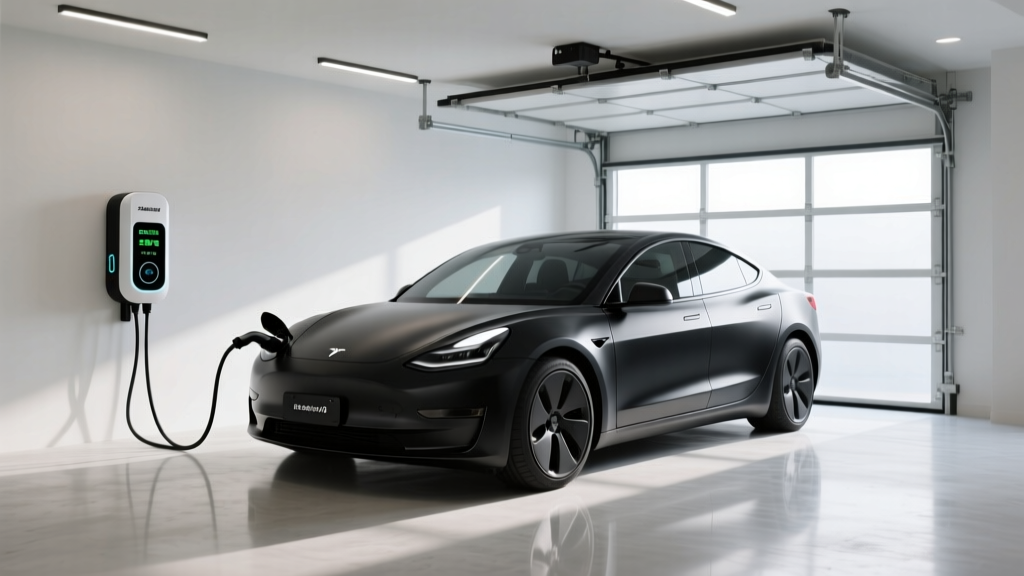
You won't find a 350 kW charger for your garage — those are commercial, grid-connected units costing $50,000-$150,000 installed. But here are the best Level 2 home chargers available in 2026, each offering the fastest practical home-charging speeds:
ChargePoint Home Flex
- Power Output: Up to 12 kW (50 amps) on a 60-amp circuit; configurable down to 16 amps
- Connector: NACS (2025+ models) or J1772 with NACS adapter included
- Cable Length: 23 feet
- Smart Features: Wi-Fi, Alexa integration, scheduling, energy tracking via ChargePoint app
- Price: ~$599 – $699
- Best For: Most EV owners wanting flexible amperage and reliable app control
Tesla Wall Connector (Gen 4)
- Power Output: Up to 11.5 kW (48 amps) on a 60-amp circuit
- Connector: NACS native — ideal for Tesla and NACS-equipped vehicles
- Cable Length: 24 feet
- Smart Features: Wi-Fi, OTA updates, power sharing between two units on one circuit, Tesla app integration
- Price: ~$475
- Best For: Tesla owners or households with multiple NACS vehicles (power-sharing feature)
Emporia Vue Smart EV Charger
- Power Output: Up to 11.5 kW (48 amps) on a 60-amp circuit
- Connector: J1772 (NACS adapter available separately)
- Cable Length: 24 feet
- Smart Features: Integration with Emporia Vue home energy monitor, solar-aware scheduling, load management
- Price: ~$399 – $499
- Best For: Solar-panel owners and energy-monitoring enthusiasts seeking the best value
Grizzl-E Smart
- Power Output: Up to 10 kW (40 amps) on a 50-amp circuit
- Connector: J1772 (NACS version available)
- Cable Length: 24 feet
- Smart Features: Wi-Fi, OCPP support, adjustable amperage, rugged outdoor-rated enclosure
- Price: ~$449 – $549
- Best For: Outdoor installations in extreme climates — rated to -40°F / -40°C
All units above are hardwired (recommended for 48-amp+ circuits) or available with a NEMA 14-50 plug for outlets. Hardwired installations are more reliable and avoid the GFCI breaker nuisance-tripping issues that plague some plug-in setups on 240V circuits.
Frequently Asked Questions
How much does it cost to install a home EV charger?
A straightforward Level 2 home charger installation — where your electrical panel has spare capacity and the charger is close to the panel — typically costs $850 to $2,050 including equipment, electrician labor, and permits. If your home needs a 200-amp panel upgrade, total costs can reach $3,050 to $7,900. Always get a load calculation from a licensed electrician before purchasing your EV to avoid surprise costs.
How fast will each charging level add range?
Level 1 (120V) adds roughly 3-5 miles of range per hour. Level 2 (240V) adds 20-60 miles per hour depending on amperage and your vehicle's onboard charger. DC fast charging at a 350 kW charger can theoretically add 700+ miles per hour, but real-world 10-80% sessions take 15-35 minutes depending on battery size and vehicle charge acceptance rate. The charge curve always tapers above 80% SoC.
Which connector/charger is compatible with my EV?
For 2026 model-year vehicles, most new EVs from Ford, GM, Rivian, Hyundai, Kia, and Tesla use the NACS connector. Volkswagen, BMW, and some carryover models still use CCS1. The legacy CHAdeMO connector is essentially discontinued for new vehicles. Check your vehicle's charge port or the manufacturer's spec sheet, and consider a CCS-to-NACS adapter (~$150-$250) if you own a CCS vehicle and want Supercharger access.
How much does charging cost per mile vs gas?
Home charging on an off-peak rate costs approximately $0.02-$0.04 per mile — roughly 4-5x cheaper than a 28 MPG gas car at $3.40/gallon ($0.12/mile). Public DC fast charging at $0.35-$0.55/kWh costs $0.10-$0.16 per mile, which is comparable to or slightly above gasoline. The economic advantage of an EV is maximized when you charge at home.
What electrical upgrades might I need?
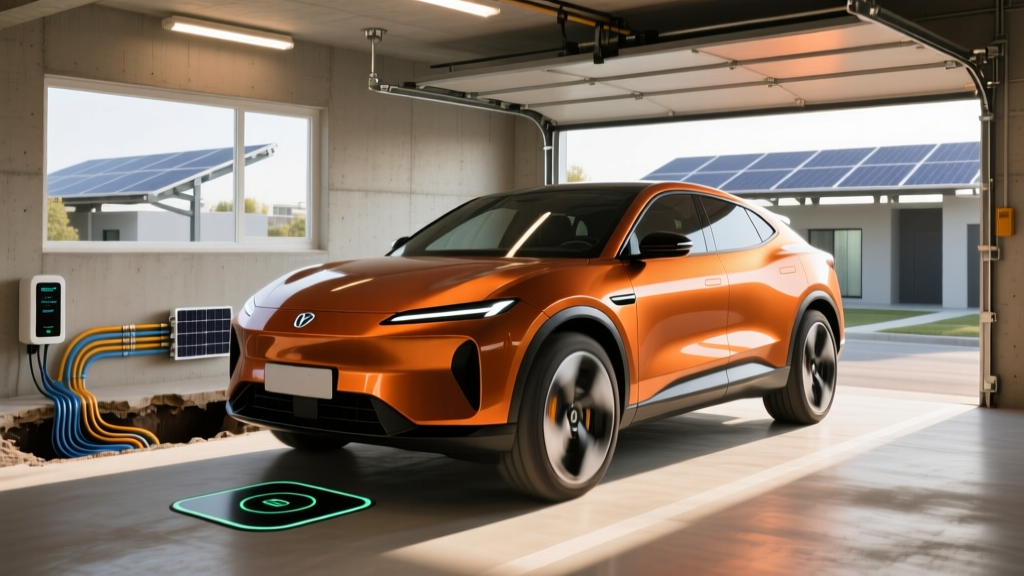
The most common upgrade is a 200-amp electrical panel if your home currently has 100-amp or 150-amp service with limited spare capacity. Other potential needs include: a new dedicated 240V circuit with appropriate wire gauge (6 AWG for 48A, 4 AWG for 60A), a GFCI breaker for code compliance, and conduit runs if the charger is far from the panel. Homes with solar panels or battery storage (like Tesla Powerwall) may need load-management hardware to coordinate EV charging with other energy systems.
Can I install a 350 kW charger at home?
No. A 350 kW DC fast charger requires commercial-grade 480V three-phase electrical service, heavy-duty switchgear, utility coordination, and infrastructure costing $50,000-$150,000+. These are deployed by charging networks (Electrify America, EVgo, Tesla) at commercial sites. For home use, Level 2 at 7.2-11.5 kW is the practical maximum, and it's all you need — overnight charging fully replenishes any consumer EV battery.
Does fast charging damage my battery?
Modern battery management systems are highly sophisticated. DC fast charging does generate more heat than Level 2 charging, and sustained high temperatures accelerate degradation — but the BMS actively manages cell temperature and tapers charge rate to prevent damage. Data from Recurrent Auto tracking over 15,000 EVs shows that vehicles frequently using DC fast charging exhibit only marginally more degradation (1-2% difference over 100,000 miles) compared to those using primarily Level 2. For daily use, Level 2 is ideal; for road trips, fast charge without worry.
Sources: EPA fuel economy data via fueleconomy.gov; IRS §30D tax credit rules via irs.gov; National Electrical Code Article 625 (NFPA); manufacturer specification sheets for 2026 model-year vehicles. Tax credit eligibility, incentive amounts, and electricity rates vary by jurisdiction — consult a tax professional and your local utility for specifics.