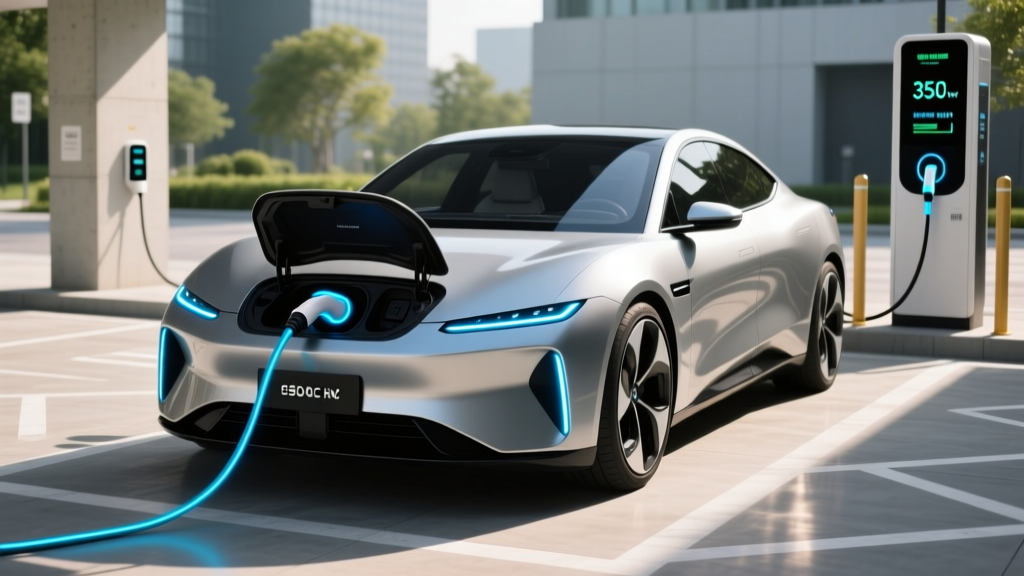
Walk up to any Electrify America or Tesla Supercharger station and you'll likely see a sticker boasting "up to 350 kW." That number — the peak power output of today's fastest public DC fast chargers — sounds extraordinary. But here's the question most EV buyers actually need answered: can your car even accept 350 kW, and do you need that speed for daily ownership?
The short answer: very few production EVs can sustain anywhere near 350 kW, and the vast majority of your charging will happen at home at 7–19 kW. Understanding the gap between headline charger specs and real-world charging reality is the single most important thing you can learn before spending thousands on equipment or choosing your next EV.
This guide breaks down every charging level with exact numbers — kW, kWh, miles per hour, cost per mile — and walks you through home installation costs, connector compatibility, and the electrical upgrades you might actually need.
The kW vs kWh Distinction You Cannot Skip
Before we go further, let's settle the most common EV literacy gap: kW (kilowatts) measures power — how fast energy flows. kWh (kilowatt-hours) measures energy — how much your battery holds.
Think of it like plumbing: kW is the diameter of the pipe (flow rate), kWh is the size of the tank. A 350 kW charger can push energy into your battery extremely fast — but only if your battery's management system opens the valve wide enough to accept it. Most EVs throttle incoming power well below the charger's maximum to protect battery chemistry and manage heat.
This distinction matters because it explains why plugging into a 350 kW charger doesn't automatically mean you're charging at 350 kW. Your car decides the rate, not the station.
Charging Levels Explained: Speeds, Power, and Real-World Range Added
Every EV owner uses a mix of three charging levels. Here's what each delivers in practice:
| Level | Voltage / Phase | Power (kW) | Miles of Range Added per Hour | Typical Use Case |
|---|---|---|---|---|
| Level 1 | 120V AC (standard outlet) | 1.0–1.9 kW | 3–5 miles | Overnight top-up, PHEV daily needs |
| Level 2 | 240V AC (dryer-style outlet or hardwired) | 3.3–19.2 kW | 12–75 miles | Daily home and workplace charging |
| DC Fast Charging | 400–900V DC (public stations) | 50–350 kW | 150–1,000+ miles (theoretical peak) | Road trips, highway corridors, quick stops |
A few things to notice in that table:
- Level 1 is essentially a trickle. A 75 kWh battery gaining 1.4 kW takes roughly 53 hours from empty to full. It's fine for plug-in hybrids with 10–15 kWh batteries, but impractical as the sole charging method for a full-size BEV.
- Level 2 is where 90%+ of EV charging actually happens. A 48-amp (11.5 kW) home charger adds roughly 40–45 miles of range per hour — enough to fully replenish most EVs overnight in 6–9 hours.
- DC fast charging is measured in minutes, not hours, for a 10–80% session. But peak kW is not sustained kW — and that's where the 350 kW headline gets misleading.
The 350 kW Charger Reality: What Peak Power Actually Means
A 350 kW DC fast charger — like those deployed by Electrify America, EVgo, and Tesla's V4 Superchargers — represents the station's maximum output capability. Your vehicle's actual charging rate depends on its onboard battery management system (BMS), battery chemistry, state of charge (SoC), and ambient temperature.
- Hyundai Ioniq 5 (84 kWh, 800V architecture): peaks ~240 kW, averages ~180 kW → 10–80% in ~18 minutes
- Porsche Taycan (93.4 kWh, 800V): peaks ~270 kW (with Performance Battery Plus), averages ~200 kW → 10–80% in ~22 minutes
- Tesla Model 3 Long Range (79 kWh, 400V): peaks ~250 kW, averages ~170 kW → 10–80% in ~25 minutes
- Ford F-150 Lightning Extended Range (131 kWh, 400V): peaks ~160 kW, averages ~110 kW → 10–80% in ~45 minutes
- Chevrolet Bolt EV (65 kWh, 400V): peaks ~55 kW → 10–80% in ~65 minutes (CCS-limited)
The 350 kW station is future-proof infrastructure. Your car is the bottleneck — for now.
Why does charging slow down above 80% SoC? Lithium-ion batteries resist accepting high current as they fill up. The BMS tapers power to prevent lithium plating and thermal runaway. This is why you'll see "10–80%" quoted for fast-charge times — the final 20% can take as long as the first 80%.
Bottom line: A 350 kW charger is excellent infrastructure that lets capable vehicles charge as fast as their hardware allows. But buying a car that can only accept 50 kW and expecting 350 kW speeds is like connecting a garden hose to a fire hydrant.
Home Charger Installation: Electrical Requirements, Costs, and Panel Upgrades
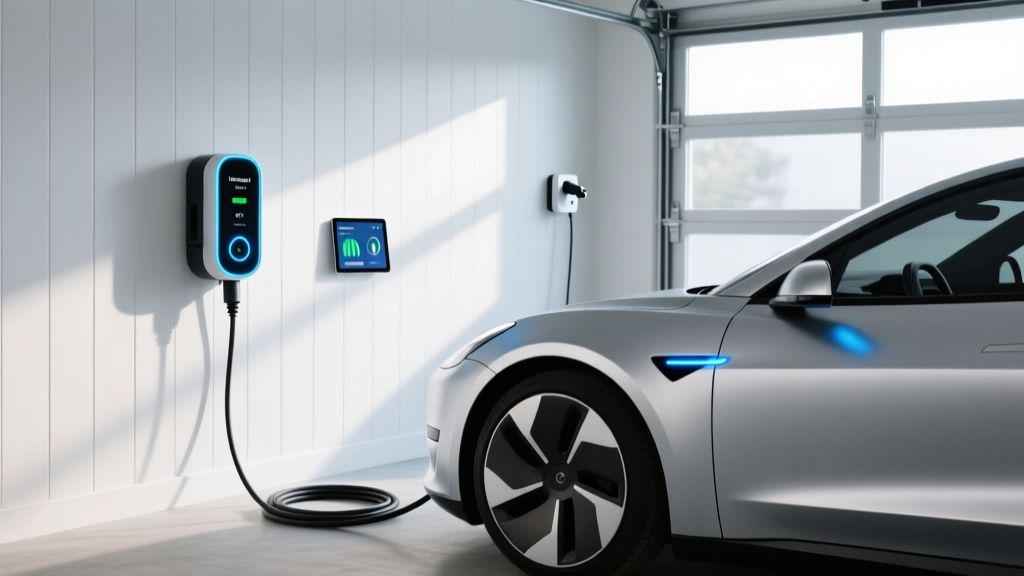
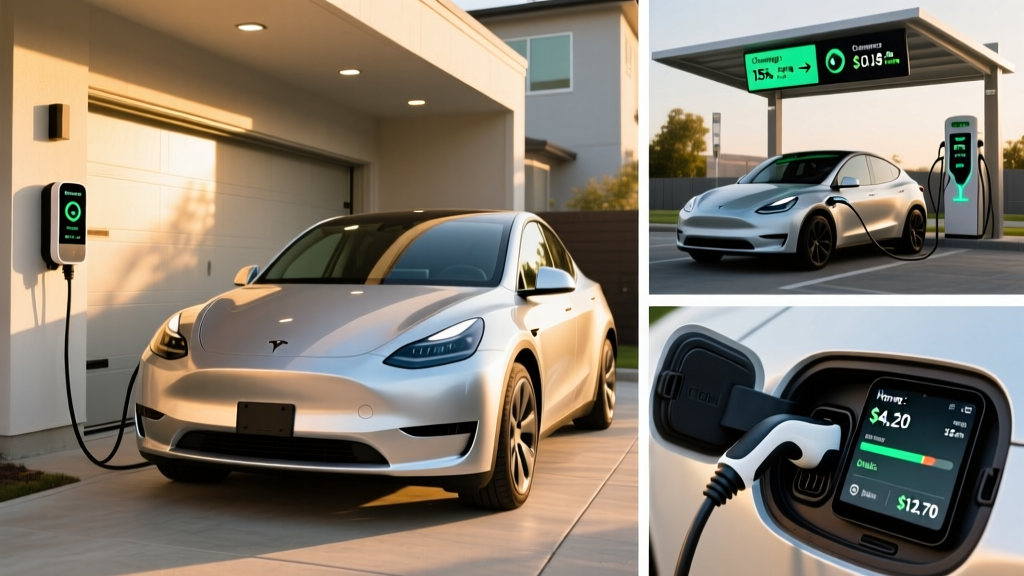
For most EV owners, a Level 2 home charger is the backbone of daily charging. Here's what installation actually involves and what it costs.
Electrical Requirements
A Level 2 charger requires a 240V dedicated circuit — the same voltage as your electric dryer or oven. The most common configurations:
- 40-amp circuit / 32-amp continuous → 7.7 kW output (most common for single-EV households)
- 48-amp circuit / 40-amp continuous → 9.6 kW output (faster charging, common with larger batteries)
- 60-amp circuit / 48-amp continuous → 11.5 kW output (maximum for most residential chargers)
- 80-amp circuit / 64-amp continuous → 15.4–19.2 kW output (requires robust panel, e.g., Tesla Wall Connector on 80A)
The National Electrical Code (NEC) requires that continuous loads (like EV charging, which runs for 3+ hours) use no more than 80% of the circuit's rated capacity. That's why a 48-amp charger needs a 60-amp breaker.
Do You Need a Panel Upgrade?
This is the cost variable that catches many homeowners off guard. If your home has a 100-amp electrical panel (common in homes built before the 1990s), adding a 40–60 amp dedicated circuit for EV charging may exceed your panel's available capacity — especially if you already run electric heat, an electric dryer, and an electric oven.
A licensed electrician will perform a load calculation per NEC Article 220 to determine whether your existing panel can handle the additional draw. If not, you'll need a panel upgrade to 200 amps — a significant added cost.
| Component | Cost Range | Notes |
|---|---|---|
| Level 2 charger hardware (smart, 40–48A) | $400–$750 | Wi-Fi-enabled, app-scheduled, NEMA 14-50 or hardwired |
| Electrician labor (240V circuit, standard run) | $600–$1,800 | Varies by distance from panel to garage/carport |
| Permit and inspection | $100–$350 | Required in most jurisdictions; varies by municipality |
| Panel upgrade (100A → 200A, if needed) | $1,500–$4,000 | Not always required; depends on existing load calculation |
| Total (no panel upgrade) | $1,100–$2,900 | Typical for homes with 200A panel and short wire runs |
| Total (with panel upgrade) | $2,600–$6,900 | Older homes or high-load households |
Always hire a licensed electrician and pull a permit. Unpermitted EV charger installations can void home insurance claims and create fire hazards. The National Electrical Code (NEC) and your local building department set the requirements — your electrician should handle compliance.
Safety and Code Considerations
- Dedicated circuit: Your EV charger must have its own breaker — no sharing with other appliances.
- GFCI protection: NEC 2020+ requires ground-fault circuit interrupter protection for outdoor receptacles. Hardwired chargers often avoid nuisance GFCI trips that plague NEMA 14-50 outlets.
- Outdoor rating: If your charger is mounted outside, both the unit and the enclosure must carry a NEMA 4 (weatherproof) rating.
- Wire gauge: A 48-amp circuit requires 6 AWG copper wire minimum; a 60-amp circuit typically needs 4 AWG. Your electrician will size this correctly.
- Utility incentives: Many utilities offer rebates of $250–$500 for smart Level 2 charger installations, especially if you agree to off-peak charging schedules. Check with your local provider.
Connector Compatibility: NACS, CCS, and CHAdeMO in 2026
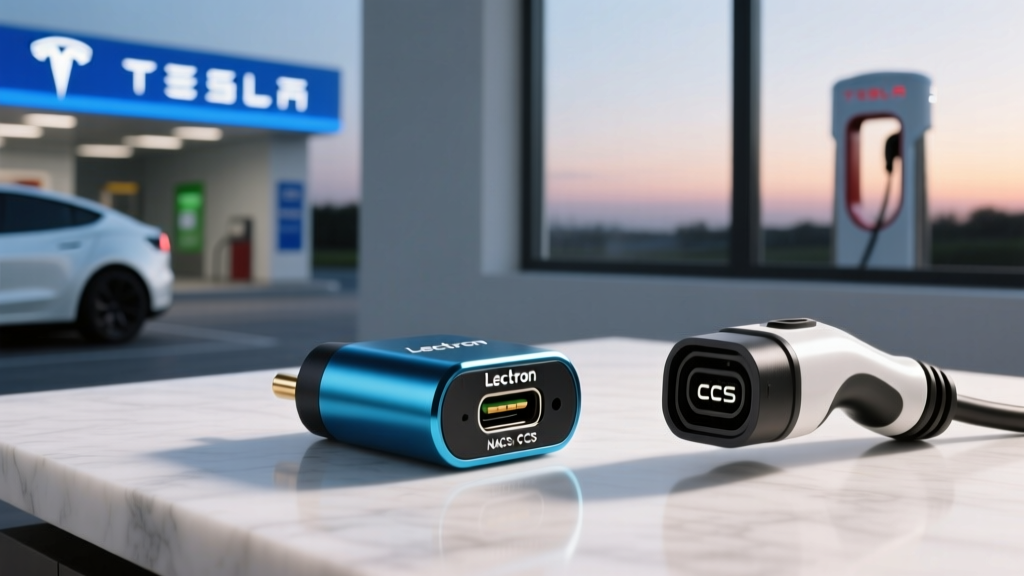
The connector landscape has consolidated significantly since 2023, when Ford and GM announced adoption of Tesla's North American Charging Standard (NACS). As of the 2025–2026 model years, here's where things stand:
| Connector | Brands Using It (Factory) | Public DC Fast Charger Availability |
|---|---|---|
| NACS (J3400) | Tesla (all), Ford (2025+), GM (2025+), Rivian (2025+), Volvo/Polestar (2025+), Hyundai/Kia (2026 select), Mercedes-Benz (2026+) | Tesla Supercharger network (20,000+ stalls), growing Electrify America and EVgo deployment |
| CCS1 (Combo) | Hyundai/Kia (2025 and earlier), BMW, Volkswagen, Stellantis, most legacy OEMs | Electrify America, EVgo, ChargePoint DC, Ionity (EU) |
| CHAdeMO | Nissan Leaf (discontinued 2025), Mitsubishi Outlander PHEV (older) | Limited and declining; some Electrify America and EVgo legacy stalls |
Adapter reality: If you own a CCS-equipped vehicle (say, a 2024 Hyundai Ioniq 5) and want to charge at a Tesla Supercharger, you'll need a CCS-to-NACS adapter. Tesla sells an official adapter for ~$250, and Ford/GM provide adapters to early adopters. Conversely, NACS-equipped vehicles can use CCS stations with a NACS-to-CCS adapter.
For home Level 2 charging, all vehicles use the J1772 connector (or NACS, which integrates J1772 signaling). Tesla includes a J1772-to-NACS adapter with every vehicle, so any Level 2 charger works with any EV.
How Much Does Charging Cost Per Mile vs Gas?
This is where EV ownership economics either shine or disappoint — depending entirely on where and when you charge.
| Charging Scenario | Avg $/kWh | Cost per Mile (at 3.5 mi/kWh) | Annual Cost (12,000 mi) |
|---|---|---|---|
| Home, off-peak utility rate | $0.09–$0.14 | $0.026–$0.040 | $312–$480 |
| Home, standard residential rate | $0.15–$0.20 | $0.043–$0.057 | $516–$684 |
| Public Level 2 (workplace, retail) | $0.20–$0.35 | $0.057–$0.100 | $684–$1,200 |
| DC fast charging (Electrify America, EVgo) | $0.35–$0.55 | $0.100–$0.157 | $1,200–$1,884 |
| Gasoline comparison (28 MPG avg, $3.40/gal) | — | $0.121 | $1,452 |
Key takeaways from the data:
- Home off-peak charging is the economic sweet spot. At $0.12/kWh, you're paying roughly $0.034 per mile — about one-quarter the cost of gasoline. Over 12,000 miles, that's roughly $1,040 in annual savings versus gas.
- Exclusive DC fast charging erases most savings. If you rely entirely on public fast charging at $0.48/kWh, your per-mile cost rivals or exceeds a fuel-efficient hybrid. DC fast charging is a road-trip convenience, not a daily strategy.
- Time-of-use (TOU) plans matter enormously. Many utilities offer EV-specific rates with off-peak pricing as low as $0.06–$0.09/kWh between midnight and 6 AM. Scheduling your charger to run overnight via its app is the single highest-ROI habit you can adopt.
Source: National average electricity rates via the U.S. Energy Information Administration (EIA); gasoline prices via AAA national averages; vehicle efficiency figures from fueleconomy.gov.
Recommended Home Level 2 Chargers: Specs, Features, and Pricing
Not all Level 2 chargers are created equal. Here are four well-regarded options for 2025–2026, spanning budget to premium:
Emporia Level 2 Smart EV Charger
- Power output: 48 amps (11.5 kW) on a 60A circuit
- Connector: J1772 (works with all EVs; Tesla owners use included adapter)
- Cable length: 24 feet
- Smart features: Wi-Fi, app scheduling, solar integration, energy monitoring, load management
- Price: ~$400
- Best for: Budget-conscious buyers who want full smart features and solar-aware charging
ChargePoint Home Flex
- Power output: Configurable 16–50 amps (up to 12 kW on a 60A circuit)
- Connector: J1772 (NACS adapter available separately)
- Cable length: 23 feet
- Smart features: Wi-Fi, app scheduling, Alexa integration, flexible amperage to match your circuit
- Price: ~$550–$700
- Best for: Homes with varying circuit capacities; the adjustable amperage is uniquely practical
Tesla Wall Connector
- Power output: 48 amps (11.5 kW) on 60A circuit; up to 80A/19.2 kW on 100A circuit
- Connector: NACS (native Tesla); J1772 adapter included for non-Tesla EVs
- Cable length: 24 feet
- Smart features: Wi-Fi, over-the-air updates, power sharing between two units on one circuit
- Price: ~$475
- Best for: Tesla owners and mixed-fleet households; the 80A option is best-in-class for high-power charging
Grizzl-E Smart
- Power output: 40 amps (9.6 kW) on a 50A circuit
- Connector: J1772 (NACS version available)
- Cable length: 24 feet
- Smart features: Wi-Fi, OCPP compatibility, extreme cold rating (-40°F), rugged aluminum case
- Price: ~$550
- Best for: Cold-climate and outdoor installations; built in Canada with industrial-grade components
Pro tip: Choose a hardwired installation over a NEMA 14-50 plug if possible. Hardwired chargers avoid the GFCI nuisance-tripping issues that plague 14-50 receptacles under NEC 2020+, and they allow higher amperage (60A+ circuits aren't available as plug-in configurations).
Public Charging at 350 kW Stations: Where to Find Them and What to Expect
If you're planning road trips, 350 kW chargers are increasingly common along major U.S. highway corridors. Here's the current landscape:
- Electrify America operates 900+ stations with 350 kW CCS chargers, with NACS connectors being added through 2026.
- Tesla Supercharger V4 cabinets support up to 350 kW for compatible vehicles, deployed at select highway locations.
- EVgo has 350 kW stalls at select metro and highway locations, with both CCS and NACS connectors.
- Meridian and Ionna (the joint venture from seven automakers) are deploying 350 kW stations along highway corridors starting in 2025.
When you pull up to a 350 kW stall, precondition your battery if your EV supports it. Most vehicles with navigation-based preconditioning (Tesla, Hyundai/Kia, Porsche, BMW) will automatically warm the battery to optimal temperature when you route through a charger. This can improve your peak charge rate by 30–50% in cold weather.
Expect to pay $0.35–$0.55/kWh at public DC fast chargers. Some networks offer subscription plans (e.g., Electrify America's Pass+ at $7/month for reduced per-kWh rates) that make sense if you fast-charge more than twice a month.
Frequently Asked Questions
How much does it cost to install a home EV charger?
A typical Level 2 home charger installation costs $1,100–$2,900 when no panel upgrade is needed. This includes the charger hardware ($400–$750), electrician labor ($600–$1,800), and permit fees ($100–$350). If your home requires a 100A-to-200A panel upgrade, add $1,500–$4,000, bringing the total to $2,600–$6,900. Always get a load calculation from a licensed electrician before committing.
How fast will each charging level add range?
Level 1 (120V) adds 3–5 miles per hour. Level 2 (240V, 48A) adds roughly 35–45 miles per hour for a typical EV. DC fast charging at a 350 kW station can add 100–200+ miles in 15–20 minutes, depending on your vehicle's peak acceptance rate and battery size. Check your specific vehicle's 10–80% charge time — it varies from ~18 minutes (Hyundai Ioniq 5) to ~65 minutes (Chevrolet Bolt).
Which connector/charger is compatible with my EV?
For 2025–2026 models: Tesla, Ford, GM, Rivian, Volvo, and Polestar use NACS natively. Most other brands (Hyundai, Kia, BMW, VW) still use CCS1, though many are transitioning to NACS by 2026–2027. CHAdeMO is essentially discontinued. For home Level 2 charging, all EVs work with any J1772 charger — Tesla includes a J1772 adapter, and non-Tesla EVs can use NACS chargers with an adapter.
How much does charging cost per mile vs gas?
Home off-peak charging at $0.12/kWh costs roughly $0.034/mile — about one-quarter the $0.121/mile cost of gasoline at $3.40/gal and 28 MPG. Even at standard residential rates ($0.17/kWh), you're at ~$0.049/mile. Public DC fast charging at $0.48/kWh rises to ~$0.137/mile, which rivals gas. The economics strongly favor home charging.
What electrical upgrades might I need for a home charger?
The most common upgrade is a panel capacity increase from 100A to 200A, needed when your existing load calculation doesn't have room for a 40–60 amp dedicated circuit. Other potential upgrades: replacing a Federal Pacific or Zinsco panel (known fire hazards), running new conduit for long wire runs from the panel to your garage, or adding a sub-panel. Your electrician's load calculation will determine what's required. Some utilities offer clean vehicle and charger tax credits — check IRS guidelines for eligibility.
Can I charge my EV at a 350 kW station if my car only supports 50 kW?
Yes — the station and your car negotiate the charge rate automatically. Your vehicle will only draw the power it can safely accept. Plugging a 50 kW-capable car into a 350 kW stall simply charges at 50 kW. There's no risk of damage; the BMS controls the handshake.
Is it safe to leave my EV plugged in overnight at home?
Absolutely. Modern EVs and smart chargers are designed for continuous overnight charging. The BMS stops drawing current once the battery reaches your set limit (typically 80–90% for daily use). Many chargers also support scheduled charging, so you can delay the session until off-peak utility rates kick in after midnight.