Why EV Owners Are Switching to a 2nd Gen Charger
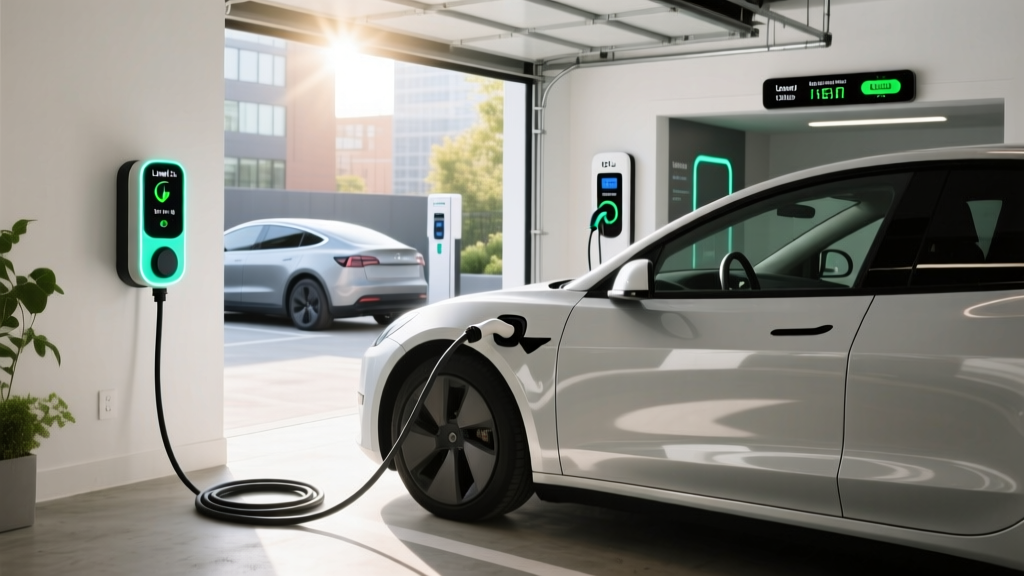
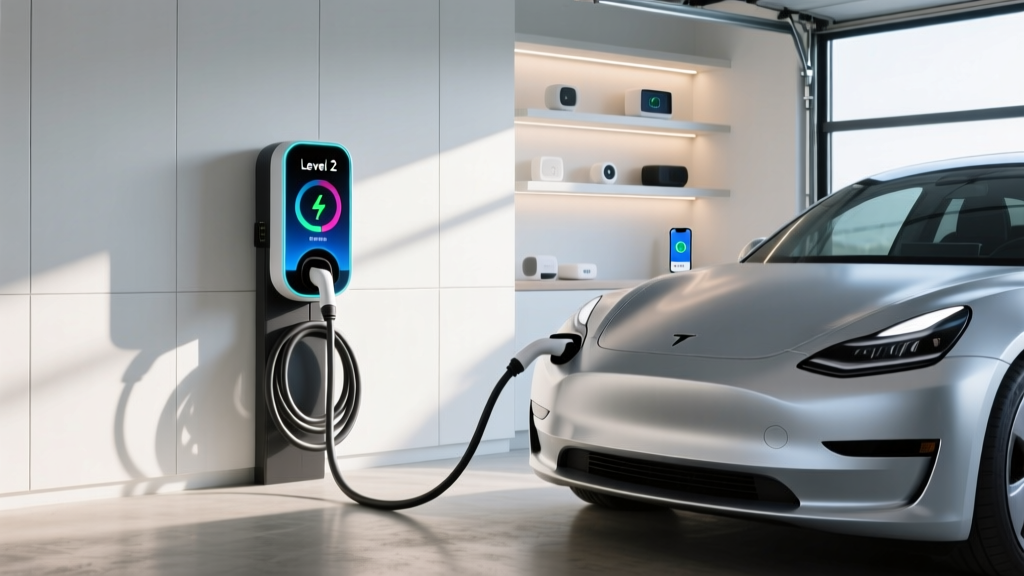
If you've been plugging your EV into a standard 120V wall outlet and waiting 40+ hours for a full charge, you've hit the wall that pushes most owners toward a proper home charging setup. A 2nd gen charger — referring to the current wave of Wi-Fi-enabled, hardwired Level 2 home EV chargers — delivers dramatically faster charging, smarter scheduling, and better safety features than the portable Level 1 cord that came with your car or the first-generation 240V units from the early 2010s.
The upgrade from Level 1 to a modern Level 2 unit isn't subtle. Where a 120V outlet adds roughly 3-5 miles of range per hour, a 2nd gen Level 2 charger on a dedicated 240V circuit can add 25-44 miles per hour depending on amperage. For a 75 kWh battery (think Tesla Model Y, Hyundai Ioniq 5, Ford Mustang Mach-E), that's the difference between an overnight top-up and a multi-day ordeal.
This guide covers everything you need to know: charging levels and speeds, real installation costs including the panel-upgrade scenario nobody talks about, connector compatibility across brands, per-mile cost vs. gasoline, and our 2026 equipment recommendations with exact specs.
Charging Levels Explained: kW Speeds and Miles Per Hour
Before picking hardware, you need to understand the three charging levels and the critical distinction between kW (kilowatts) and kWh (kilowatt-hours). Kilowatts measure power — the rate at which energy flows into your battery, like water pressure from a hose. Kilowatt-hours measure energy — the total capacity of your battery, like the size of the tank. A 48A Level 2 charger delivers up to 11.5 kW of power; your 75 kWh battery needs roughly 75 kWh of energy to fill from empty.
| Level | Voltage | Max Power (kW) | Miles of Range Per Hour | Typical Use Case |
|---|---|---|---|---|
| Level 1 | 120V AC | 1.4 kW | 3-5 mi/hr | Emergency / overnight trickle |
| Level 2 (2nd Gen Home) | 240V AC | 7.2 - 19.2 kW | 25-65 mi/hr | Daily home charging |
| DC Fast Charging | 400-800V DC | 50 - 350 kW | 150-1,000+ mi/hr | Road trips, public stations |
For daily driving, Level 2 is the sweet spot. Most EV owners drive 30-50 miles per day. A 2nd gen charger running at 11.5 kW (48A on a 60A circuit) replenishes that in 1-2 hours overnight — well within any off-peak electricity window.
DC fast charging is for road trips, not daily use. Peak rates of 150-350 kW sound impressive, but the charge curve matters: most EVs accept peak power only between roughly 10-50% state of charge, then taper significantly above 80% to protect battery longevity. A Tesla Model Y at a 250 kW Supercharger might add 170 miles in 15 minutes (10-80%), but that last 20% can take another 20+ minutes.
How Much Does It Cost to Install a 2nd Gen Home EV Charger?
This is where the sticker shock often hits. The charger itself is $300-$700, but the full installed cost depends heavily on your home's electrical panel and the distance from panel to garage or driveway.
| Component | Simple Install (Panel Nearby, 200A Service) | Complex Install (Long Run, Panel Upgrade Needed) |
|---|---|---|
| Level 2 Charger (40-48A) | $350 - $650 | $350 - $650 |
| Electrician Labor (2-8 hrs) | $400 - $800 | $1,200 - $3,000 |
| Materials (conduit, wire, breaker) | $100 - $300 | $300 - $800 |
| Permit & Inspection | $50 - $200 | $50 - $300 |
| Electrical Panel Upgrade (if needed) | $0 | $1,500 - $3,500 |
| Total Estimated Cost | $900 - $1,950 | $3,400 - $8,250 |
The biggest variable is your electrical panel. Homes built after 2000 typically have 200-amp service with spare breaker slots — a straightforward install. Older homes with 100A or 150A panels, or panels already near capacity, may need an upgrade to 200A service before adding a 40-60A EV circuit. According to the U.S. Department of Energy, panel upgrades add $1,500-$3,500 to the project but are sometimes unavoidable.
Before hiring an electrician, check your panel's amperage rating (printed on the main breaker) and count available slots. A licensed electrician can perform a load calculation per NEC Article 220 to determine if your panel can handle the additional draw. Some utilities offer rebates of $250-$1,000 for Level 2 installations — check your local provider.
Electrical Requirements: Voltage, Amperage, and Safety Codes
A 2nd gen Level 2 charger requires a dedicated 240V circuit. Here's what the electrical specs actually mean for your setup:
- 40A charger requires a 50A breaker and circuit (NEC requires circuits rated at 125% of continuous load)
- 48A charger requires a 60A breaker and circuit — the most common high-power home setup
- Hardwired vs. plug-in: Chargers above 40A (9.6 kW+) are typically hardwired directly to the junction box. Plug-in units use a NEMA 14-50 outlet (the same as an electric dryer), which limits you to 40A / 9.6 kW maximum
Safety and code requirements you must meet:
- Dedicated circuit: Your EV charger must have its own breaker — no sharing with other appliances
- GFCI protection: NEC 2020 and later require ground-fault circuit interrupter protection for outdoor receptacles; hardwired indoor installs may also require GFCI breakers depending on jurisdiction
- Outdoor rating: If your charger mounts outside, it must carry at least a NEMA 4 (weatherproof) rating — most quality 2nd gen units are rated NEMA 4 or NEMA 4X
- Wire gauge: 6 AWG copper for 50A circuits; 4 AWG for 60A circuits. Aluminum wire is cheaper but requires larger gauge
- Permit required: Virtually all jurisdictions require an electrical permit and inspection for new 240V circuits. Skipping this risks insurance claim denials and code violations at resale
Connector Compatibility: NACS, CCS1, and CHAdeMO
The connector landscape shifted dramatically between 2023 and 2026. Tesla's North American Charging Standard (NACS) has become the dominant plug, with Ford, GM, Rivian, Hyundai, Kia, Volvo, and most other major automakers adopting it for new vehicles starting in the 2025-2026 model years.
| Connector | Brands Using It (2026 MY) | Notes |
|---|---|---|
| NACS (Tesla) | Tesla, Ford, GM, Rivian, Hyundai, Kia, Volvo, Polestar, Mercedes, BMW (new), Nissan (new Ariya+) | Now the de facto North American standard. Compact, no locking pins. |
| CCS1 (Combo) | VW ID.4 (carryover), some Stellantis, legacy 2022-2024 EVs still on road | Phasing out on new models. Larger connector, locking mechanism. |
| CHAdeMO | Nissan Leaf (discontinued), Mitsubishi Outlander PHEV (legacy) | Effectively retired for new vehicles. DC-only standard. |
What this means for your 2nd gen charger purchase: If you're buying a new 2025-2026 EV, it almost certainly uses NACS. Buy a NACS-connector charger. If you own a 2022-2024 CCS1 vehicle (like an early VW ID.4 or Hyundai Ioniq 5), buy a CCS1 charger — or a NACS charger with a CCS1 adapter ($100-$200). Most 2nd gen chargers now ship with NACS connectors as default, with CCS1 available as an option or adapter.
Level 2 home charging does not use CHAdeMO at all — that connector was DC-only. Your Nissan Leaf (if you still own one) uses a J1772 connector for Level 2, which is compatible with all Level 2 chargers via the J1772 inlet standard.
Charging Cost Per Mile: Home Electricity vs. Gasoline
One of the strongest arguments for a 2nd gen home charger is cost. Let's run the numbers using real 2026 electricity rates and gasoline prices.
| Scenario | Rate | Cost Per Mile (3.5 mi/kWh EV) | Annual Cost (12,000 mi) |
|---|---|---|---|
| Home Off-Peak (TOU rate) | $0.09/kWh | $0.026/mi | $309 |
| Home Standard Rate | $0.16/kWh | $0.046/mi | $549 |
| Public Level 2 (ChargePoint, EVgo) | $0.35/kWh | $0.10/mi | $1,200 |
| DC Fast Charging (EA, Tesla SC) | $0.42/kWh | $0.12/mi | $1,440 |
| Gasoline (28 MPG avg, $3.40/gal) | $3.40/gal | $0.121/mi | $1,457 |
Home charging on a time-of-use (TOU) plan is roughly 4.7x cheaper per mile than gasoline. Even at standard residential rates without TOU optimization, you're paying less than half per mile. The moment you rely primarily on public DC fast charging, the cost advantage narrows to near parity with gas — which is why a 2nd gen home charger is the single biggest financial lever in EV ownership.
Most utilities offer TOU plans that discount overnight electricity to $0.06-$0.12/kWh. Smart 2nd gen chargers can schedule charging to start at 10 PM or midnight automatically, maximizing savings without any effort from you.
Charging Time Examples: How Fast Will a 2nd Gen Charger Fill Your EV?
Charging time depends on three factors: your battery's usable capacity (kWh), the charger's power output (kW), and the vehicle's onboard charger limit (the AC-to-DC converter inside the car that caps how fast it can accept Level 2 power).
Here are real-world estimates for common 2026 EVs charging on a 48A / 11.5 kW 2nd gen charger:
- Tesla Model Y (75 kWh usable): 10-80% in approximately 6.5 hours (accepts up to 11.5 kW onboard)
- Hyundai Ioniq 5 (77.4 kWh usable): 10-80% in approximately 6.7 hours (accepts up to 10.9 kW onboard)
- Ford Mustang Mach-E (91 kWh usable, Extended Range): 10-80% in approximately 7.9 hours (accepts up to 10.5 kW onboard)
- Chevrolet Equinox EV (85 kWh usable): 10-80% in approximately 7.4 hours (accepts up to 11.5 kW onboard)
- BMW i4 eDrive40 (81.5 kWh usable): 10-80% in approximately 5.5 hours (accepts up to 11 kW onboard)
Note: these are Level 2 AC charging times. They assume the vehicle's onboard charger can accept the full 11.5 kW. Some older or lower-spec EVs have 7.2 kW or 9.6 kW onboard chargers, which will extend these times. Level 2 charging is essentially linear — unlike DC fast charging, there's no dramatic taper at high state of charge on AC power, so the math stays straightforward.
Top 2nd Gen Chargers for 2026: Equipment Picks
Based on power output, reliability, smart features, cable length, and price, these are the standout Level 2 home chargers available in 2026:
Tesla Wall Connector (Gen 4)
- Power: Up to 11.5 kW (48A)
- Connector: NACS (native)
- Cable: 24 ft
- Smart Features: Wi-Fi, OTA updates, load sharing (pair two units on one circuit), access control
- Price: ~$425
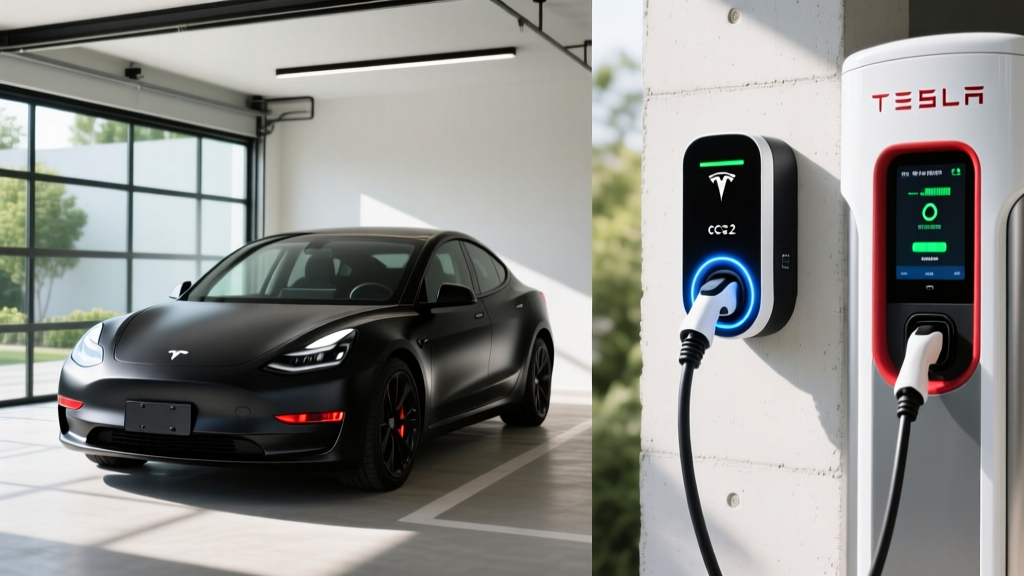
- Best For: Tesla owners and NACS-adopting EVs. Excellent build quality, sleek design.
ChargePoint Home Flex (2nd Gen)
- Power: Up to 12 kW (50A) — adjustable down to 16A
- Connector: NACS or CCS1 (configurable)
- Cable: 23 ft
- Smart Features: Wi-Fi, app scheduling, Alexa/Google integration, energy dashboard, flexible amperage
- Price: ~$599
- Best For: Multi-EV households, renters who may move (adjustable amperage fits different panels).
Emporia Level 2 Smart Charger
- Power: Up to 11.5 kW (48A)
- Connector: NACS or J1772
- Cable: 24 ft
- Smart Features: Wi-Fi, solar integration (pairs with Emporia Vue energy monitor), TOU scheduling, load management
- Price: ~$399
- Best For: Solar-equipped homes, budget-conscious buyers who still want smart features.
Grizzl-E Smart (United Chargers)
- Power: Up to 10 kW (40A)
- Connector: NACS or J1772
- Cable: 24 ft
- Smart Features: Wi-Fi, OCPP compatibility, adjustable amperage, extreme cold rating (-40°F)
- Price: ~$499
- Best For: Cold-climate owners (Canadian-built, tested to -40°C), outdoor installs in harsh weather.
All four units carry NEMA 4 or 4X outdoor ratings, are UL-listed (or ETL-listed to equivalent standards), and support hardwired installation. The ChargePoint and Tesla units also support plug-in via NEMA 14-50, though hardwired is preferred for 48A+ units to avoid the 40A plug-in limit.
Frequently Asked Questions
Can I install a 2nd gen charger myself?
Technically, a homeowner can perform electrical work in some jurisdictions, but a 240V / 40-60A circuit is not a DIY project for anyone without electrical training. Mistakes risk fire, electrocution, and insurance denial. Most manufacturers' warranties require professional installation. Budget $400-$800 for a licensed electrician — it's worth it.
Do I need a permit for a home EV charger?
Yes, in virtually all U.S. jurisdictions. The National Electrical Code (NEC) requires permits for new branch circuits, and your local building department will inspect the work. Permit fees typically run $50-$200. Skipping the permit can void your homeowner's insurance coverage for electrical fires and create problems when you sell the home.
Will a 2nd gen charger work with my older EV that has a J1772 or CCS1 port?
Yes, with the right adapter or configuration. Most 2nd gen chargers ship with NACS connectors as standard in 2026, but CCS1-to-NACS adapters ($100-$200) and J1772 adapters ($50-$80) are widely available. The ChargePoint Home Flex can be ordered with either NACS or CCS1 connectors natively. The J1772 standard (used by all pre-2025 non-Tesla EVs for Level 2) is backward-compatible with any Level 2 charger via a simple adapter.
How does the federal tax credit apply to home charger installation?
The IRS §30C Alternative Fuel Vehicle Refueling Property Credit covers 30% of the cost of home EV charger equipment and installation, up to a maximum credit of $1,000. This is separate from the §30D new vehicle credit. The charger must be installed at your primary residence in an eligible census tract (most urban and suburban areas qualify). The credit is non-refundable, meaning it can reduce your tax liability to zero but won't generate a refund beyond that. Consult a tax professional for your specific situation, as eligibility rules and eligible census tracts are updated periodically.
What if my home only has 100A electrical service?
A 100A panel can typically support a 32A (7.7 kW) Level 2 charger if the rest of your home's load is modest — but it's tight. Your electrician will perform a NEC Article 220 load calculation factoring in your HVAC, water heater, dryer, range, and other major loads. If the calculation exceeds 80% of your panel's capacity with the EV charger added, you'll need to either install a lower-amperage charger (24A or 32A), use a smart load-management device that throttles charger power when other loads spike, or upgrade to 200A service ($1,500-$3,500).
Is it worth getting a smart charger, or is a basic "dumb" unit fine?
A smart 2nd gen charger with Wi-Fi and scheduling is worth the $50-$150 premium over a basic unit for most owners. The key advantages: automatic time-of-use scheduling (charge during cheap overnight hours without thinking about it), energy monitoring to track your electricity costs, remote start/stop from your phone, and firmware updates that can add features over time. A "dumb" charger works fine electrically, but you lose the cost-optimization and convenience features that make home charging effortless.