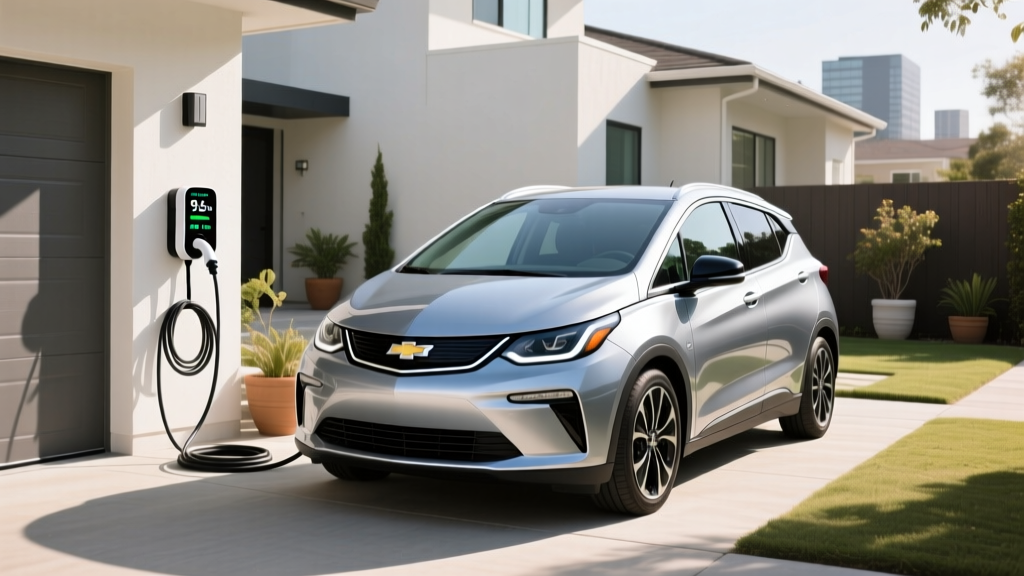
The next-generation Chevrolet Bolt returns on GM's Ultium platform with a new NACS charge port and faster DC charging. But the headline question for buyers remains practical: how far does it actually go, and what does it take to charge at home? This guide breaks down the 2027 Chevy Bolt range and efficiency figures, maps every charging scenario from a 120V wall outlet to a 150 kW DC fast charger, and walks through the real electrical work and costs of a Level 2 home install.
2027 Chevy Bolt Range, Battery & Efficiency at a Glance
The 2027 Bolt EV uses a ~65 kWh usable Ultium battery pack (LFP chemistry on the base configuration, NMC on the extended-range trim). GM targets an EPA-estimated 259 miles of range for the standard FWD model, with the extended-range variant pushing toward 285 miles. Efficiency lands around 118 MPGe combined (roughly 28 kWh/100 mi), which is competitive with the Hyundai Kona Electric and slightly behind the Tesla Model 3 RWD.
| Spec | 2027 Bolt EV (Standard) | 2027 Bolt EV (Extended Range) |
|---|---|---|
| Battery (usable) | ~65 kWh (LFP) | ~72 kWh (NMC) |
| EPA Range | 259 mi | 285 mi (est.) |
| Efficiency | 118 MPGe / 28 kWh/100mi | 121 MPGe / 27 kWh/100mi |
| Motor Output | 200 hp / 236 lb-ft | 200 hp / 236 lb-ft |
| 0–60 mph | ~7.0 sec | ~6.8 sec |
| Max DC Charge Rate | 150 kW peak | 150 kW peak |
| Level 2 Acceptance | 11.5 kW (48A) | 11.5 kW (48A) |
| Charge Port | NACS (native) | NACS (native) |
| Base MSRP | $28,995 | $32,495 (est.) |
| Battery Warranty | 8 yr / 100,000 mi | 8 yr / 100,000 mi |
Charging Levels Explained: kW, Miles per Hour, and 10–80% Times
Before plugging in, clarify the single most common EV confusion: kW (kilowatts) is power — the rate of charging. kWh (kilowatt-hours) is energy — the battery's capacity. Think of kW as the width of a hose and kWh as the size of the bucket. The 2027 Bolt's ~65 kWh bucket can be filled at different hose widths depending on your charger.
| Level | Voltage / Amps | Power (kW) | Miles Added per Hour | Use Case |
|---|---|---|---|---|
| Level 1 | 120V / 12A | 1.4 kW | ~4 mi/hr | Overnight top-up, low-mileage drivers |
| Level 2 (Home) | 240V / 40A | 9.6 kW | ~30 mi/hr | Daily home charging standard |
| Level 2 (Max) | 240V / 48A | 11.5 kW | ~36 mi/hr | Full Bolt onboard acceptance |
| DC Fast (Peak) | 400V DC | 150 kW peak | ~180 mi in 30 min | Road trips, highway corridor stops |
10–80% DC fast charging time: Approximately 28 minutes at a 150 kW charger under ideal conditions (battery preconditioned, ambient 60–80°F). The Bolt's charge curve peaks near 150 kW up to roughly 40% SoC, then tapers to ~100 kW through 60%, and drops below 50 kW past 80%. Charging from 80–100% on DC fast is painfully slow — plan to unplug at 80% during road trips.
Level 2 full charge (0–100%): About 7 hours on a 48A / 11.5 kW station, or 8.5 hours on a 40A / 9.6 kW station. This is ideal for overnight home charging — plug in at 10 PM, full by 5 AM.
Home Level 2 Installation: Electrical Requirements, Costs & Panel Upgrades
Installing a 240V Level 2 home charger is the single biggest ownership upgrade you can make. Here is exactly what is required.
Electrical Requirements
- Circuit: Dedicated 50A breaker (for a 40A continuous charger) or 60A breaker (for a 48A continuous charger). NEC requires circuits rated 125% above continuous load.
- Wiring: 6 AWG copper (50A) or 4 AWG copper (60A) run in conduit from panel to charger location.
- Outlet vs. hardwire: NEMA 14-50 receptacle (plug-in, portable-friendly) or hardwired (cleaner install, no GFCI breaker requirement on some jurisdictions).
- Panel capacity: Your main panel must have physical breaker slots AND sufficient amperage headroom. A 200A panel with existing high-load appliances (electric range, dryer, HVAC) may be tight.
Panel Upgrade Reality
Homes built before 1990 often have 100A or 150A main panels. Adding a 50A EV circuit may require a panel upgrade to 200A ($1,500–$3,500) or a smart load-management device ($300–$600) that throttles the charger when other loads spike. An electrician's load calculation is mandatory before quoting.
| Component | Typical Range | Notes |
|---|---|---|
| Level 2 Charger (Equipment) | $350 – $750 | 40A–48A NACS or J1772 w/ adapter |
| Electrician Labor (standard run) | $600 – $1,800 | Depends on panel-to-charger distance, drywall/conduit work |
| Electrical Permit | $50 – $250 | Varies by municipality |
| Panel Upgrade (if needed) | $1,500 – $3,500 | 100A → 200A service upgrade |
| Utility Make-Ready Rebate | –$200 to –$1,000 | Check local utility; some cover conduit/wiring to meter |
| Total (no panel upgrade) | $1,000 – $2,800 | Most homes with 200A panels |
| Total (with panel upgrade) | $2,500 – $6,300 | Older homes or high-load panels |
Safety & code must-haves: A GFCI-protected breaker (if using a receptacle), outdoor-rated (NEMA 4) enclosure for exterior installs, and a dedicated circuit — never share the EV circuit with other appliances. Always pull a permit; unpermitted work can void home insurance and complicate resale. Source: NFPA National Electrical Code (NEC).
Connector Compatibility: NACS, CCS1 & Adapter Requirements
The 2027 Chevy Bolt ships with a native NACS (North American Charging Standard) port — the same connector Tesla uses. This is a major shift from the outgoing Bolt's CCS1 port and means direct access to the Tesla Supercharger network without any adapter.
| Connector | Native on 2027 Bolt? | Network Access | Adapter Needed? |
|---|---|---|---|
| NACS (Tesla) | Yes — built-in | Tesla Superchargers, Electrify America (new stalls), EVgo | None |
| CCS1 | No | Legacy Electrify America, ChargePoint, non-Tesla DCFC | NACS-to-CCS adapter (~$200–$300) |
| CHAdeMO | No | Nissan Leaf network, older DCFC stations | Not recommended; no reliable adapter exists |
| J1772 (Level 2) | No (NACS port) | Public Level 2, older home chargers | J1772-to-NACS adapter (often included with charger) |
Practical advice: If you're buying a home Level 2 charger, get one with a native NACS plug to avoid adapter clutter. For older J1772 home chargers you already own, a J1772-to-NACS adapter ($40–$80) works seamlessly for Level 2 charging. For CCS1 public chargers that haven't been retrofitted with NACS cables, keep a compact NACS-to-CCS adapter in the frunk.
Cost to Charge: Home, Public & DC Fast vs. Gasoline
The 2027 Bolt's 28 kWh/100mi efficiency makes it one of the cheapest vehicles to fuel in its class. Here is what charging actually costs across scenarios, benchmarked against a comparable 30 MPG gas car at $3.40/gallon.
| Scenario | $/kWh | Cost per Full Charge (65 kWh) | Cost per Mile | vs. Gas (30 MPG) |
|---|---|---|---|---|
| Home Off-Peak (utility rate) | $0.09 | $5.85 | $0.025 | Gas: $0.113/mi — 78% cheaper |
| Home Standard Rate | $0.14 | $9.10 | $0.039 | Gas: $0.113/mi — 65% cheaper |
| Public Level 2 (ChargePoint, etc.) | $0.22 | $14.30 | $0.062 | Gas: $0.113/mi — 45% cheaper |
| DC Fast Charging (EA, EVgo) | $0.38 | $24.70 | $0.107 | Gas: $0.113/mi — 5% cheaper |
| Tesla Supercharger (avg.) | $0.30 | $19.50 | $0.084 | Gas: $0.113/mi — 26% cheaper |
Key takeaway: Home charging is where EV economics shine. A Bolt driver covering 12,000 miles/year on home off-peak rates spends roughly $300/year on electricity vs. $1,360 on gasoline. Even frequent DC fast charging remains cheaper than gas — but only marginally. Time-of-use (TOU) utility plans are essential; check your provider for EV-specific rates (source: fueleconomy.gov EV cost calculator).
Best Home Level 2 Chargers for the 2027 Chevy Bolt
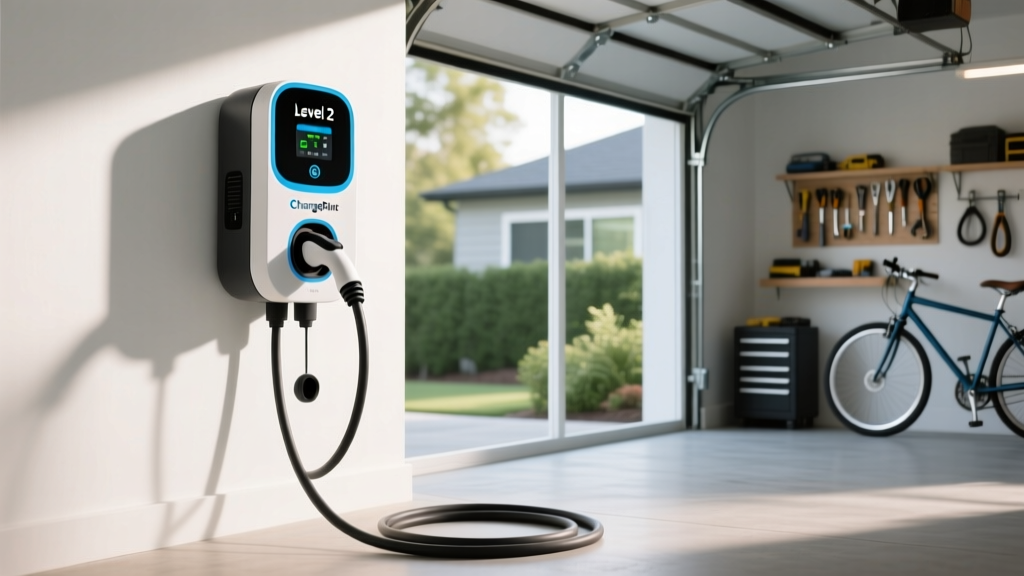
These chargers pair natively with the Bolt's NACS port and deliver its maximum 11.5 kW Level 2 acceptance rate.
ChargePoint Home Flex (NACS)
- Power: Up to 12 kW / 50A (adjustable via app to match your circuit)
- Connector: Native NACS plug
- Cable: 23 ft
- Smart Features: Wi-Fi, scheduling, Alexa, energy dashboard, TOU optimization
- Price: ~$599
- Verdict: Best all-around smart charger; amperage flexibility future-proofs for panel constraints.
Wallbox Pulsar Plus (NACS)
- Power: Up to 11.5 kW / 48A
- Connector: Native NACS plug
- Cable: 25 ft
- Smart Features: Wi-Fi + Bluetooth, load-sharing (two chargers on one circuit), Power Boost load management
- Price: ~$549
- Verdict: Compact, excellent load management for homes without panel headroom.
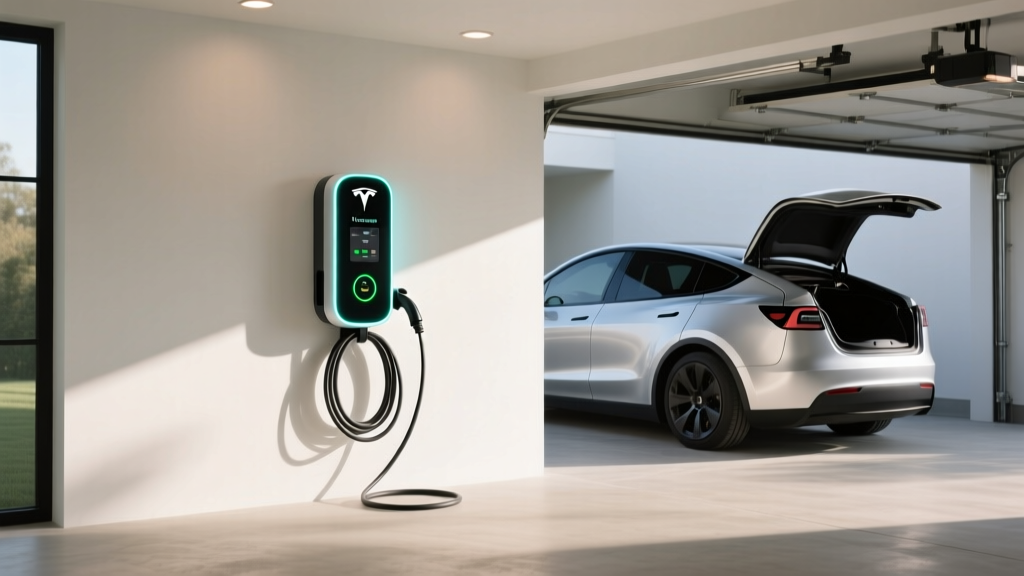
Tesla Wall Connector (NACS)
- Power: Up to 11.5 kW / 48A
- Connector: Native NACS plug
- Cable: 24 ft
- Smart Features: Wi-Fi, OTA updates, power-sharing, integrated with Tesla app
- Price: ~$450
- Verdict: Most affordable quality NACS charger; works with all NACS-equipped EVs, not just Teslas.
Emporia Vue Level 2 (NACS)
- Power: Up to 11.5 kW / 48A
- Connector: Native NACS plug
- Cable: 24 ft
- Smart Features: Real-time energy monitoring, solar integration, V2H-ready (future firmware), scheduling
- Price: ~$399
- Verdict: Budget pick with excellent energy monitoring; pairs well with solar-equipped homes.
Federal Tax Credit & Incentives for Home Charging
The Alternative Fuel Vehicle Refueling Property Credit (IRS §30C) covers 30% of home charger equipment and installation costs, up to $1,000. This is separate from the §30D new-EV purchase credit. Key rules for 2026–2027:
- The charger must be installed at your primary residence.
- The property must be in an eligible census tract (generally non-urban or low-income areas — check the IRS §30C eligibility tool).
- The credit is non-refundable: it reduces your tax liability but won't generate a refund beyond what you owe.
- Some utilities offer additional rebates ($200–$500) for smart charger installation — stack these with the federal credit.
Charging the 2027 Bolt on Road Trips: Network Access & Trip Planning
With a native NACS port, the 2027 Bolt has the broadest DC fast-charging access of any non-Tesla EV. The Tesla Supercharger network now numbers over 6,000 stalls in the US, and Electrify America is retrofitting NACS cables on new and existing stations.
Real-world road-trip charging plan (259-mile range model):
- Depart at 90% SoC (~233 real-world highway miles).
- First stop at ~180 miles: 10–80% in ~28 minutes at 150 kW.
- Second stop at ~340 miles: same 28-minute cycle.
- Use the PlugShare or A Better Routeplanner apps to pre-identify NACS-equipped stations and precondition the battery 15–20 minutes before arrival.
Preconditioning matters: The Bolt's battery thermal management system will ramp charge speed if the navigation system routes you through a DC fast charger. Manually triggering preconditioning via the infotainment (or the MyChevrolet app) before arriving at a cold-weather charger can shave 8–12 minutes off a 10–80% session.
Frequently Asked Questions
How much does it cost to install a home EV charger for the 2027 Bolt?
Most homes with an existing 200A panel pay $1,000–$2,800 total (charger + electrician + permit). Older homes needing a panel upgrade should budget $2,500–$6,300. Get three quotes and ask for a load calculation before committing.
How fast will each charging level add range to the 2027 Bolt?
Level 1 (120V): ~4 miles per hour. Level 2 (240V/48A): ~36 miles per hour. DC fast (150 kW): ~180 miles in 30 minutes (10–80%). Level 2 is the daily sweet spot — a full overnight charge in 7 hours.
Which connector and charger is compatible with the 2027 Chevy Bolt?
The 2027 Bolt uses a NACS charge port natively. Any NACS-equipped Level 2 home charger (ChargePoint Home Flex, Tesla Wall Connector, Wallbox Pulsar Plus) works without adapters. For legacy CCS1 public chargers, carry a NACS-to-CCS adapter.
How much does charging the Bolt cost per mile vs. gasoline?
At home off-peak rates ($0.09/kWh), the Bolt costs ~$0.025/mile — 78% cheaper than a 30 MPG gas car at $3.40/gallon ($0.113/mile). Even public DC fast charging at $0.38/kWh ($0.107/mile) beats gas.
What electrical upgrades might I need for a Level 2 charger?
You need a dedicated 50A or 60A breaker, 6 or 4 AWG copper wiring, and sufficient panel headroom. Homes with 100A or 150A panels may need a panel upgrade ($1,500–$3,500) or a smart load-management device to avoid overloading the service.
Is the 2027 Chevy Bolt eligible for the $7,500 federal EV tax credit?
The Bolt is expected to qualify for the §30D new clean vehicle credit, but the exact amount ($3,750 or $7,500) depends on battery critical-mineral and component sourcing requirements that shift annually. Buyer income caps ($150K single / $300K joint) and the $55,000 MSRP cap apply. The credit can be transferred to the dealer at point of sale for an instant price reduction. Verify current-year eligibility at irs.gov §30D before purchasing.
Does the 2027 Bolt support vehicle-to-home (V2H) or vehicle-to-load (V2L)?
GM has confirmed Ultium-platform vehicles will support V2H bidirectional charging, but the 2027 Bolt's V2H capability depends on firmware and compatible home equipment (expected late 2027 or 2028 model-year activation). V2L (powering devices via an outlet adapter) is available on higher trims.
Sources: EPA fueleconomy.gov, Chevrolet Bolt EV press specifications, IRS §30D New Clean Vehicle Credit, NFPA National Electrical Code.