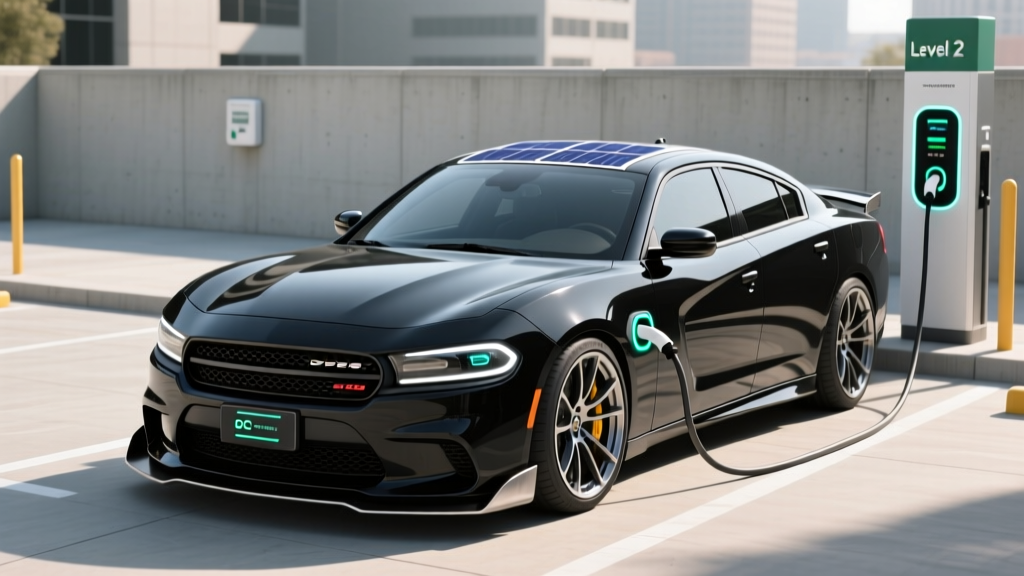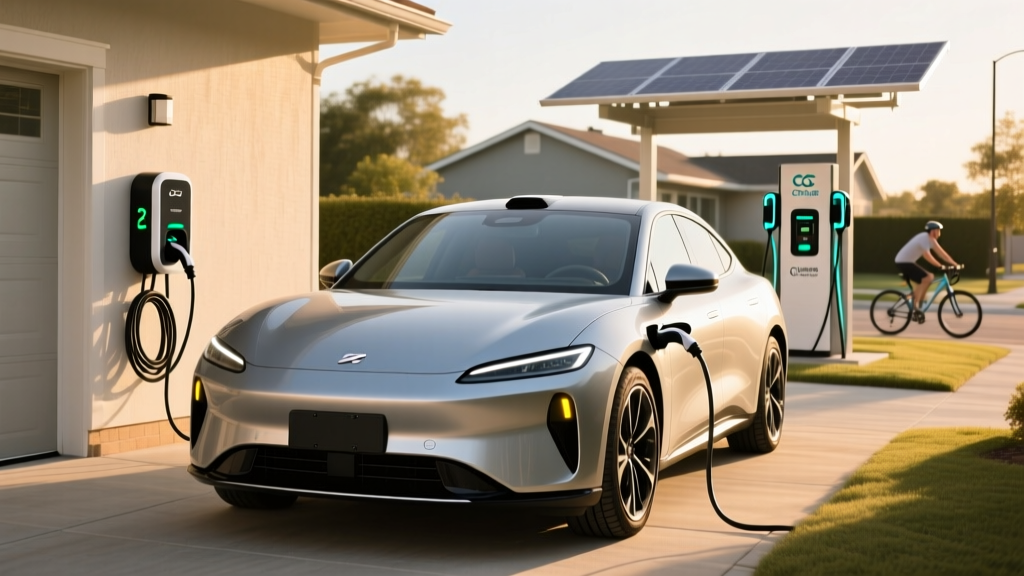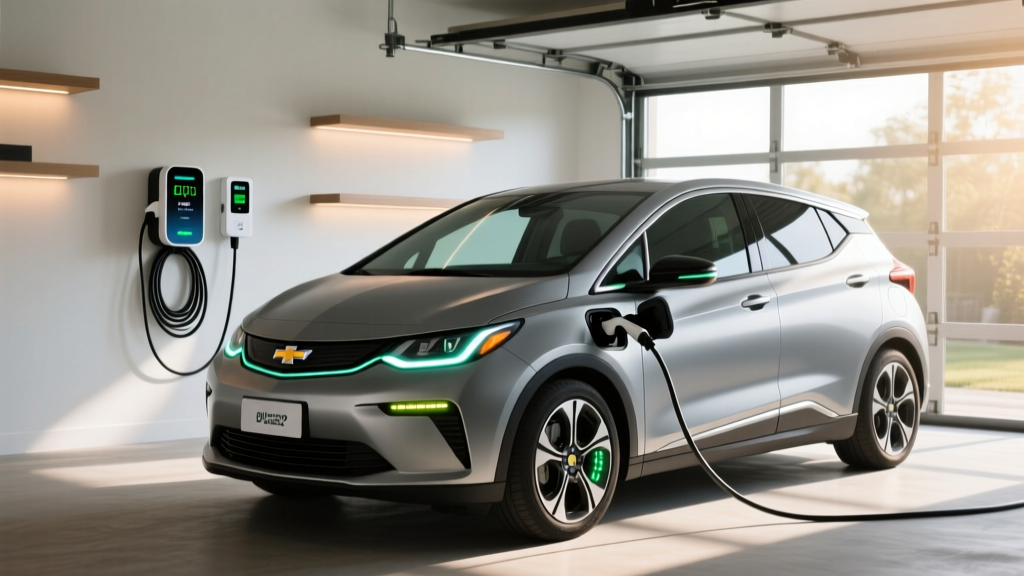
The next-generation Chevrolet Bolt EV returns with a larger Ultium-based battery, faster DC charging, and the native NACS connector that Tesla popularized. But the headline number most buyers search for — the 2027 Chevy Bolt EV range — is only half the ownership equation. The other half is how quickly and affordably you can replenish that battery, whether in your garage or on a road trip.
This guide breaks down the 2027 Bolt EV's estimated range and battery specs, then walks through every charging scenario you'll face: Level 1 trickle, Level 2 home, and DC fast charging on the road. We cover exact kW speeds, home electrical requirements, installation costs, connector compatibility, and per-mile cost comparisons versus gasoline.
2027 Chevy Bolt EV Range and Battery: What We Know
Chevrolet has confirmed the next-gen Bolt rides on GM's Ultium platform with a larger battery than the outgoing 65 kWh pack. Based on GM's preliminary disclosures and the platform's energy density improvements, here is what buyers should expect:
| Spec | 2027 Chevy Bolt EV (Est.) |
|---|---|
| Battery Capacity (usable) | ~72 kWh (LFP chemistry) |
| EPA Range (estimated) | ~280–310 miles |
| Real-World Highway Range | ~240–270 miles (70+ mph, moderate temps) |
| Cold-Weather Range (20°F) | ~200–230 miles |
| Peak DC Fast Charge Rate | ~150 kW |
| Level 2 AC Charge Rate | 11.5 kW (48A) |
| Native Connector | NACS (Tesla standard) |
| 0–60 mph | ~6.5 seconds (est.) |
| Starting MSRP (est.) | ~$28,000–$30,000 |
GM has signaled the new Bolt will use LFP (lithium iron phosphate) chemistry, which trades a small amount of energy density for dramatically longer cycle life, lower cost, and reduced fire risk. LFP packs tolerate regular 100% charging better than NMC, meaning daily full charges are less harmful to long-term State of Health (SoH).
Charging Levels Explained: kW Speeds and Miles Per Hour
Before we get into equipment and costs, you need to understand the three charging tiers. The critical distinction: kW (kilowatts) measures power — how fast energy flows into the battery. kWh (kilowatt-hours) measures energy — the total capacity of the battery. Think of kW as the width of a hose and kWh as the size of the bucket.
| Level | Voltage | Power (kW) | Miles of Range Added Per Hour | Typical Use Case |
|---|---|---|---|---|
| Level 1 | 120V AC | 1.0–1.4 kW | 3–5 miles/hr | Overnight top-off, emergency |
| Level 2 | 240V AC | 7.2–11.5 kW | 25–45 miles/hr | Home daily charging, workplace |
| DC Fast Charge | 400V+ DC | 50–150+ kW | 150–400+ miles/hr (peak) | Road trips, rapid top-ups |
For the 2027 Bolt EV's estimated 72 kWh battery, here's what charging times look like in practice:
- Level 1 (1.4 kW): 0–100% in ~51 hours. Useful only for overnight top-offs adding ~30–40 miles.
- Level 2 (11.5 kW): 0–100% in ~6.5 hours. A full overnight charge from near-empty.
- DC Fast (150 kW peak): 10–80% in approximately 28–32 minutes. Peak rate tapers significantly above 80% SoC — expect the final 20% to take as long as the first 60%.
Home Level 2 Charger Installation: Electrical Requirements and Costs
A Level 2 home charger is the single biggest quality-of-life upgrade for any EV owner. For the 2027 Bolt EV with its 11.5 kW onboard charger, you'll want a 48-amp hardwired unit on a dedicated 60-amp circuit (EVSE must be derated to 80% of breaker capacity per NEC Article 625).
Electrical Requirements
- Voltage: 240V (standard split-phase residential)
- Circuit breaker: 60A dedicated, double-pole
- Wire gauge: 6 AWG copper (THHN in conduit) or 4 AWG aluminum
- Connection: Hardwired preferred for 48A+ units; NEMA 14-50 receptacle acceptable for 40A/32A units
- GFCI protection: Required for receptacle installations per 2020/2023 NEC; hardwired units have built-in ground-fault protection
Panel Upgrade Considerations
If your home has a 100-amp main panel that's already near capacity, adding a 60A EV circuit may require a panel upgrade to 200A. This is one of the most common surprises for EV buyers in older homes. A licensed electrician will perform a load calculation per NEC Article 220 to determine if your existing panel can handle the additional draw.
| Cost Component | Low End | High End | Notes |
|---|---|---|---|
| Level 2 EVSE Equipment | $350 | $700 | 40A–48A smart charger |
| Electrician Labor (standard install) | $500 | $1,200 | Run within 10–30 ft of panel |
| Electrical Materials (wire, conduit, breaker) | $150 | $400 | Varies with run length |
| Permit and Inspection | $50 | $200 | Varies by municipality |
| Total (no panel upgrade) | $1,050 | $2,500 | Most common scenario |
| Panel Upgrade (100A → 200A) | $1,500 | $3,500 | If required — older homes |
| Total (with panel upgrade) | $2,550 | $6,000 | Less common but real cost |
Always hire a licensed electrician familiar with NEC Article 625 (EV charging system installations). Many utilities offer rebates of $250–$500 for Level 2 installations — check with your local provider before scheduling work.
Connector Compatibility: NACS, CCS1, and Adapter Needs
The 2027 Bolt EV ships with the NACS (North American Charging Standard) connector — the same plug used on all Tesla vehicles. This is a major shift from the outgoing Bolt, which used CCS1. NACS gives the Bolt direct access to Tesla's Supercharger network, the largest and most reliable DC fast-charging network in North America.
| Connector | Description | 2027 Bolt EV Compatibility |
|---|---|---|
| NACS | Tesla-standard, compact design | Native — no adapter needed |
| CCS1 | Legacy standard (Electrify America, EVgo) | NACS-to-CCS1 adapter required (~$150–$250) |
| CHAdeMO | Older Japanese standard (Nissan Leaf) | Not compatible; network largely deprecated |
| J1772 | Legacy Level 2 AC connector | NACS-to-J1772 adapter needed for older public L2 stations |
Most new public Level 2 stations are adding NACS cables, and all major DC networks (Electrify America, EVgo) are retrofitting NACS connectors through 2026–2027. Still, carrying a quality NACS-to-CCS1 adapter is smart insurance for road trips through areas where CCS-only stations remain.
Level 2 Home Charger Equipment Recommendations
For the 2027 Bolt EV's 11.5 kW onboard charger, you want a 48-amp Level 2 unit to maximize charging speed. Here are three proven options across price tiers:
Emporia Vue Level 2 EV Charger
- Power Output: 48A / 11.5 kW (hardwired) or 40A / 9.6 kW (NEMA 14-50)
- Connector: NACS native
- Cable Length: 24 ft
- Smart Features: Wi-Fi, energy monitoring, scheduled charging, solar integration
- Price: ~$399
- Best For: Budget-conscious buyers wanting smart features
ChargePoint Home Flex (NACS)
- Power Output: Up to 50A / 12 kW (hardwired); adjustable down to 16A
- Connector: NACS native (2025+ models)
- Cable Length: 23 ft
- Smart Features: Wi-Fi, Alexa/Google Home, detailed app analytics, flexible amperage
- Price: ~$599
- Best For: Adjustable amperage for homes with limited panel capacity
Grizzl-E Smart (NACS)
- Power Output: 40A / 9.6 kW (NEMA 14-50) or 48A / 11.5 kW (hardwired)
- Connector: NACS native
- Cable Length: 24 ft
- Smart Features: Wi-Fi, OCPP-compatible, extreme cold rated (-40°F)
- Price: ~$499
- Best For: Cold-climate owners needing rugged outdoor durability
All three units are UL-listed and compatible with the 2027 Bolt EV's NACS inlet. For full 11.5 kW charging, choose the hardwired 48A configuration. If your panel can't support a 60A circuit, the ChargePoint Home Flex can be dialed down to match your available amperage.
Cost to Charge: Home vs. Public vs. Gasoline
One of the strongest arguments for the 2027 Bolt EV is the per-mile fuel cost. Electricity prices vary widely by region and time of day, but home charging almost always undercuts gasoline.
| Charging Scenario | Price per kWh | Cost for Full 72 kWh Charge | Cost per Mile (est. 295 mi range) |
|---|---|---|---|
| Home Off-Peak (national avg) | $0.10 | $7.20 | $0.024/mile |
| Home Standard Rate (national avg) | $0.16 | $11.52 | $0.039/mile |
| Public Level 2 (avg network) | $0.25 | $18.00 | $0.061/mile |
| DC Fast Charge (avg network) | $0.40 | $28.80 | $0.098/mile |
| Gasoline Car (30 MPG, $3.40/gal) | — | $33.53 (equivalent) | $0.113/mile |
At home off-peak rates, the Bolt EV costs roughly $0.024 per mile to fuel — about one-fifth the cost of a 30 MPG gasoline car. Even at DC fast-charging prices, you're still paying less per mile than gasoline. The savings compound: at 12,000 miles per year, home charging saves approximately $850–$1,100 annually versus a comparable gas vehicle.
Many utilities offer time-of-use (TOU) plans that drop rates to $0.06–$0.10/kWh overnight. Pair a TOU plan with scheduled charging on your Level 2 EVSE, and you'll consistently hit the lowest per-mile costs.
Safety, Code, and Installation Best Practices
EV charging involves sustained high-current draw over many hours — this is fundamentally different from typical household appliance use. Proper installation isn't optional.
- Dedicated circuit: Your EVSE must be on its own dedicated breaker — no sharing with other appliances.
- Outdoor rating: If your charger mounts outside, ensure the unit carries a NEMA 4 (weatherproof) rating. All three recommendations above are outdoor-rated.
- GFCI protection: Required by NEC 2020/2023 for receptacle-based (NEMA 14-50) installations. Hardwired units integrate ground-fault protection internally.
- Cable management: Use a holster or retractable reel to keep the charging cable off the ground and protected from vehicle traffic.
- Surge protection: Consider a whole-panel surge protective device (SPD), especially in areas with frequent lightning or grid instability.
- Permit and inspection: Most jurisdictions require an electrical permit and post-installation inspection. Skipping this risks insurance claim denial in the event of an electrical fire.
For detailed code requirements, refer to NFPA's NEC resources and always defer final specifications to your licensed electrician.
Tax Credits and Incentives for Home Charging
The federal Alternative Fuel Vehicle Refueling Property Credit (IRC §30C) covers 30% of home EV charger equipment and installation costs, up to $1,000. This credit applies to both the EVSE hardware and the electrician's labor, but only for installations at your principal residence in eligible census tracts.
- Credit amount: 30% of total cost, capped at $1,000
- Eligible expenses: EVSE equipment + electrical installation labor
- Location requirement: Must be in a qualifying low-income or non-urban census tract (check the IRS eligibility tool)
- Not stackable: Cannot be combined with the §30D vehicle credit — they're separate credits
Additionally, the 2027 Bolt EV itself is expected to qualify for the §30D New Clean Vehicle Credit of up to $7,500, subject to MSRP caps (under $55,000 for sedans/hatchbacks), buyer income limits ($150K single / $300K joint), and battery critical-mineral sourcing requirements. With an estimated starting MSRP near $28,000–$30,000, the Bolt should clear the MSRP cap comfortably. Confirm current-year eligibility with a tax professional before purchasing.
Frequently Asked Questions
How much does it cost to install a home EV charger for the 2027 Bolt EV?
A standard Level 2 installation (48A hardwired, 240V, within 30 feet of the panel) typically costs $1,050–$2,500 including equipment, electrician labor, materials, and permit. If your home needs a 200A panel upgrade, add $1,500–$3,500. Most newer homes with 200A service won't need an upgrade.
How fast will each charging level add range to the 2027 Bolt?
Level 1 (120V) adds 3–5 miles per hour. Level 2 (240V, 48A) adds roughly 40–45 miles per hour. DC fast charging at 150 kW peak can add up to 200+ miles in 20 minutes, but only during the 10–40% SoC window before the charge curve tapers.
Which connector does the 2027 Chevy Bolt EV use?
The 2027 Bolt EV uses the NACS connector natively, giving it direct access to Tesla Superchargers and the growing number of NACS-equipped public stations. For legacy CCS1 stations, you'll need a NACS-to-CCS adapter.
How much does charging the Bolt EV cost per mile versus a gas car?
At home off-peak rates ($0.10/kWh), the Bolt costs about $0.024/mile. A 30 MPG gas car at $3.40/gallon costs $0.113/mile. That's a 79% per-mile savings with home charging. Even public DC fast charging at $0.40/kWh ($0.098/mile) undercuts gasoline.
What electrical upgrades might my home need for a Level 2 charger?
If you have a modern 200A panel with available capacity, you likely only need a new 60A double-pole breaker and a wire run. Homes with 100A panels or panels already near their load limit may require a service upgrade to 200A, which costs $1,500–$3,500. Your electrician will perform a NEC Article 220 load calculation to determine this.
Does the 2027 Bolt EV support vehicle-to-load (V2L) or vehicle-to-home (V2H)?
GM has not confirmed V2L or V2H for the 2027 Bolt as of this writing. The Ultium platform supports bidirectional charging in larger vehicles (Silverado EV, Blazer EV), but it remains unconfirmed for the Bolt. We'll update this section when GM releases final specifications.