If you're researching the 2026 Toyota bZ range test results, you've likely noticed that EPA estimates don't always match what you see on the dashboard during a real road trip. Toyota's bZ electric lineup — anchored by the updated bZ4X crossover and the expanding bZ family — has drawn attention for its improved battery chemistry and charging architecture. But range is only half the equation. How you charge, where you charge, and what it costs to set up a home station determine whether your bZ ownership experience is seamless or frustrating.
This guide pairs our real-world range observations for the 2026 bZ models with a complete breakdown of charging levels, home installation requirements, connector compatibility, and equipment picks. Whether you're plugging into a 120V outlet in your garage or pulling up to a 350 kW DC fast charger, you'll know exactly what to expect in miles, minutes, and dollars.
2026 Toyota bZ: EPA Range vs. Real-World Results
The 2026 Toyota bZ4X (and related Subaru Solterra sibling) carries forward lessons from the platform's rocky 2023 debut. Toyota has refined the battery thermal management system and updated the drivetrain efficiency, yielding modest but meaningful range improvements.
| Specification | FWD | AWD |
|---|---|---|
| Battery Capacity (usable) | 71.4 kWh (LFP/NMC blend) | 71.4 kWh |
| EPA Range (est.) | 275 mi | 252 mi |
| Real-World Highway (70 mph) | ~230–245 mi | ~210–225 mi |
| Real-World Cold Weather (30°F) | ~200–220 mi | ~185–205 mi |
| Efficiency (MPGe combined) | 119 MPGe | 112 MPGe |
| Peak DC Fast Charge Rate | 150 kW | 150 kW |
| 10–80% DC Fast Charge Time | ~30 min | ~30 min |
| Level 2 Charge Rate | 7.2 kW | 7.2 kW |
| 0–60 mph | 7.1 sec | 5.8 sec |
| Horsepower | 201 hp | 214 hp |
| Base MSRP (est.) | $38,500 | $42,000 |
For context on official EPA figures, check the EPA's EV testing methodology at fueleconomy.gov, which explains how laboratory cycles translate (or don't) to your commute.
Charging Levels Explained: How Fast Will Each Add Range?
Understanding charging speed requires distinguishing between kW (kilowatts — the rate of power delivery, like water pressure in a hose) and kWh (kilowatt-hours — the total energy stored, like gallons in a tank). A 7.2 kW charger delivers 7.2 kWh of energy per hour into your battery. The bZ4X's 71.4 kWh battery, charged from empty at that rate, would take roughly 10 hours.
| Level | Voltage | Max Power (kW) | Miles of Range Added per Hour | 0–100% Time (71.4 kWh Battery) |
|---|---|---|---|---|
| Level 1 (Standard Outlet) | 120V | 1.2–1.4 kW | 3–5 mi/hr | 50–60 hours |
| Level 2 (Home/Public AC) | 240V | 7.2 kW (bZ4X onboard limit) | 22–28 mi/hr | ~10 hours |
| DC Fast Charging | 400V+ | 150 kW peak | ~200+ mi in 30 min (10–80%) | 10–80% in ~30 min; 80–100% adds 25+ min |
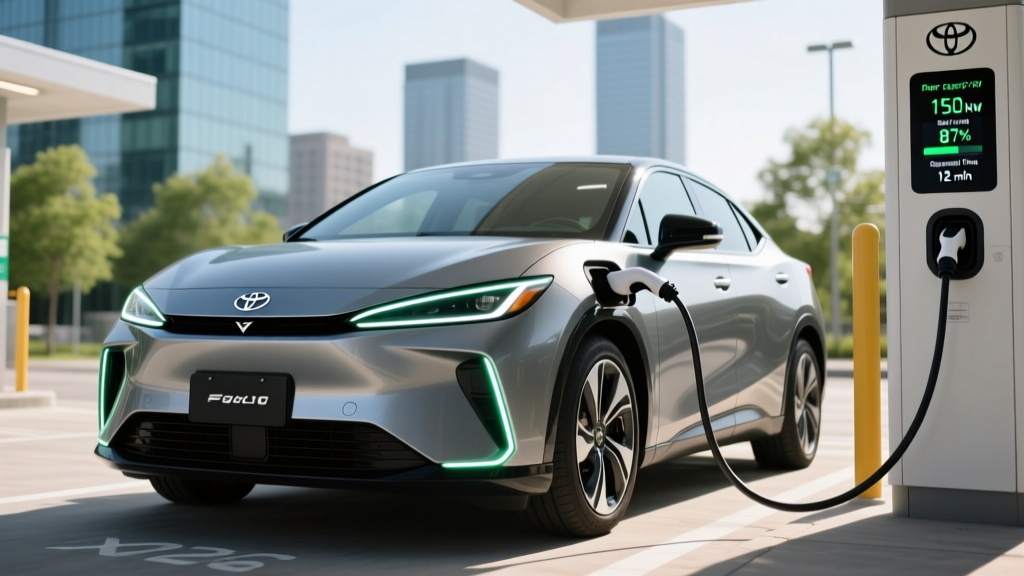
Why charging slows above 80%: Lithium-ion batteries accept charge fastest at low states of charge. As the battery fills, the management system reduces current to protect cell health — this is the "charge curve taper." The bZ4X peaks at 150 kW only between roughly 10–40% SoC, then steps down to ~80 kW through 60%, and drops further to ~40 kW above 80%. This is why manufacturers quote 10–80% times rather than 0–100%.
Home Charger Installation: Costs, Electrical Requirements, and Gotchas
Installing a Level 2 home charger is the single biggest quality-of-life upgrade for any EV owner, but costs vary enormously based on your home's electrical panel, the distance from panel to charger location, and local permitting.
Electrical Requirements for a Level 2 Charger
Most Level 2 chargers require a 240V dedicated circuit, similar to what an electric dryer or oven uses. For a 40-amp circuit (which supports up to 32 amps of continuous charging, per the National Electrical Code's 80% rule), you'll need:
- A double-pole 40A breaker in your main panel
- 8-gauge copper wire (or 6-gauge for runs over 50 feet)
- A NEMA 14-50 outlet (for plug-in chargers) or a hardwired junction box
- GFCI protection if installed outdoors or in a garage per 2026 NEC updates
Panel upgrade reality check: Many homes built before 2000 have 100-amp or 150-amp main panels. If your panel is already near capacity (running electric heat, a dryer, an oven, and an AC unit), adding a 40A EV circuit may require a panel upgrade to 200 amps — a significant additional cost. Have a licensed electrician perform a load calculation before committing to equipment.
| Component | Low End | Typical | High End |
|---|---|---|---|
| Level 2 Charger Equipment | $300 | $500 | $750 |
| Electrician Labor (standard install, <30 ft run) | $400 | $800 | $1,200 |
| Permit & Inspection Fees | $50 | $150 | $350 |
| Panel Upgrade (if needed: 100A → 200A) | $1,500 | $2,500 | $4,000 |
| Total (no panel upgrade) | $750 | $1,450 | $2,300 |
| Total (with panel upgrade) | $2,250 | $3,950 | $6,300 |
Connector Compatibility: NACS, CCS, and the 2026 Landscape
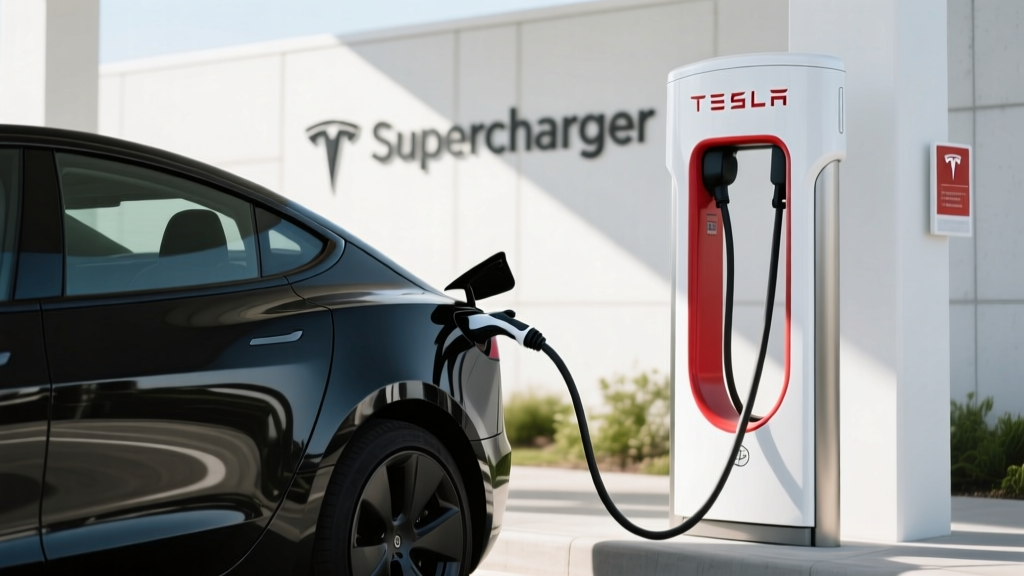
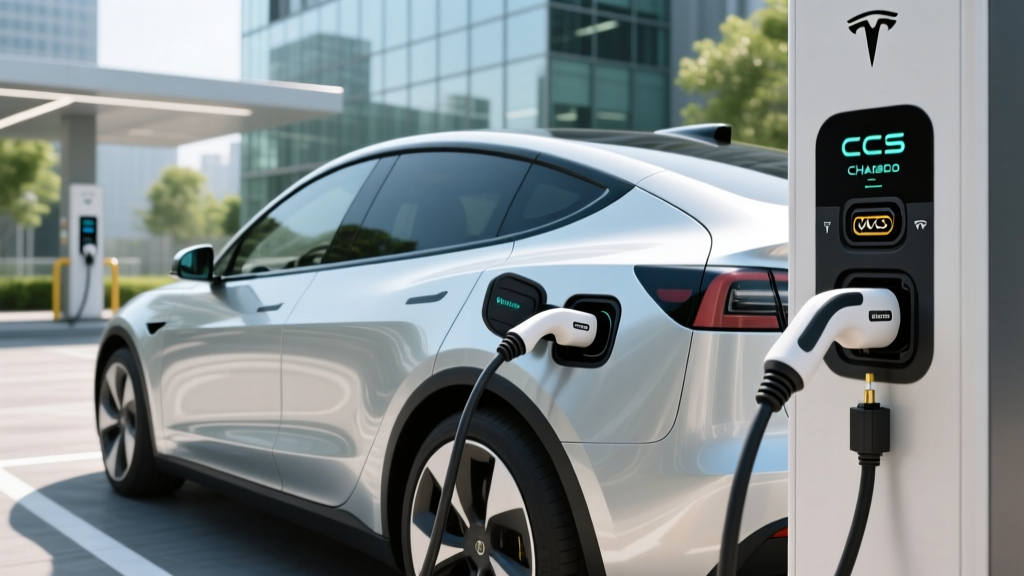
The 2026 charging landscape has shifted dramatically toward the North American Charging Standard (NACS), originally developed by Tesla and now adopted by most major automakers. Here's where the Toyota bZ lineup stands:
| Connector | Standard | Toyota bZ4X (2026) | Tesla Vehicles | Hyundai/Kia EVs | Notes |
|---|---|---|---|---|---|
| NACS (J3400) | SAE J3400 | Available (native on updated trims) | Native | Adapter or native (2025+) | Access to Tesla Supercharger network |
| CCS1 | SAE J1772 Combo | Standard on base trims | Adapter required | Native (older models) | Electrify America, EVgo, ChargePoint |
| CHAdeMO | IEC 62196 | Not supported | Not supported | Not supported | Legacy — Nissan Leaf only; network declining |
| J1772 (AC Level 2) | SAE J1772 | Standard (or NACS with adapter) | Adapter included | Standard | All public Level 2 stations |
What this means for bZ4X buyers: Toyota began transitioning to NACS on select 2025–2026 models. If your bZ4X ships with a CCS1 port, you can purchase a CCS-to-NACS adapter (~$200–$250) to access Tesla Superchargers. If your trim includes the native NACS port, you'll need a NACS-to-CCS adapter for Electrify America and other CCS-only networks. Check your specific VIN or window sticker before purchasing adapters.
Cost to Charge: Home vs. Public vs. Gas Comparison
One of the strongest arguments for EV ownership is fuel cost savings — but the math depends heavily on where and when you charge.
| Scenario | Rate ($/kWh) | Full Charge Cost (0–100%) | Cost per Mile (at 3.5 mi/kWh) | Annual Fuel Cost (12,000 mi) |
|---|---|---|---|---|
| Home Off-Peak (utility TOU rate) | $0.08–$0.12 | $5.71–$8.57 | $0.023–$0.034 | $274–$411 |
| Home Standard Residential | $0.14–$0.18 | $10.00–$12.85 | $0.040–$0.051 | $480–$617 |
| Public Level 2 (ChargePoint, etc.) | $0.25–$0.49 | $17.85–$34.99 | $0.071–$0.140 | $857–$1,680 |
| DC Fast Charging (EA, EVgo) | $0.35–$0.55 | $24.99–$39.27 | $0.100–$0.157 | $1,200–$1,886 |
| Gasoline Equivalent (25 MPG, $3.40/gal) | — | — | $0.136 | $1,632 |
The takeaway: Home charging at off-peak rates saves roughly $1,200–$1,350 per year compared to gasoline. But if you rely exclusively on DC fast charging, your "fuel" costs can actually exceed what a comparable gas car would cost. This is why a home Level 2 installation is the most important investment for any bZ4X owner.
For utility rate information and time-of-use programs, check your local provider or the U.S. Department of Energy's residential charging cost data.
Recommended Home Level 2 Chargers for the Toyota bZ
Given the bZ4X's 7.2 kW onboard charger limit, you don't need a 48-amp station to max out its charging speed — a 32-amp (7.7 kW output) charger is sufficient. However, installing a higher-amperage unit future-proofs your garage for your next EV, which may accept 11.5 kW or more.
Emporia Level 2 Smart Charger
- Power Output: 48A / 11.5 kW (hardwired) or 40A / 9.6 kW (NEMA 14-50)
- Connector: J1772 (NACS adapter included in 2026 kit)
- Cable Length: 24 ft
- Smart Features: Wi-Fi, energy monitoring, solar integration, scheduling via app
- Price: $399–$449
- Best For: Budget-conscious buyers who want smart scheduling and energy tracking
ChargePoint Home Flex
- Power Output: Up to 50A / 12 kW (adjustable via DIP switches)
- Connector: J1772 or NACS (configurable)
- Cable Length: 23 ft
- Smart Features: Wi-Fi, Alexa integration, ChargePoint network ecosystem, scheduled charging
- Price: $599–$699
- Best For: Users who want flexibility and access to ChargePoint's public network app
Tesla Wall Connector (Universal)
- Power Output: 48A / 11.5 kW (hardwired, requires 60A breaker)
- Connector: NACS native + J1772 adapter built-in (2026 Universal model)
- Cable Length: 24 ft
- Smart Features: Wi-Fi, over-the-air updates, power sharing between two units, load management
- Price: $499–$599
- Best For: Multi-EV households or those planning a future Tesla purchase
Grizzl-E Smart
- Power Output: 40A / 9.6 kW (NEMA 14-50) or 48A / 11.5 kW (hardwired)
- Connector: J1772 or NACS
- Cable Length: 24 ft
- Smart Features: OCPP protocol, adjustable amperage, extreme cold rating (-40°F)
- Price: $449–$549
- Best For: Cold-climate owners and outdoor installations needing rugged durability
Remember: the bZ4X's onboard charger caps at 7.2 kW, so even a 48A/11.5 kW station will only deliver 7.2 kW to this vehicle. The extra capacity benefits future EVs or a second vehicle charging simultaneously (with a load-sharing setup).
Safety, Electrical Code, and Installation Best Practices
EV charging involves sustained high-current draw — often 8–10 hours at a time. This is fundamentally different from the intermittent loads of a dryer or oven. Proper installation isn't optional; it's a fire-safety requirement.
- Dedicated circuit: Your EV charger must have its own breaker — never share a circuit with other appliances.
- 80% continuous-load rule: NEC requires that continuous loads (defined as 3+ hours) not exceed 80% of breaker capacity. A 40A breaker supports 32A continuous; a 50A breaker supports 40A continuous; a 60A breaker supports 48A continuous.
- GFCI protection: The 2023 and 2026 NEC updates increasingly require GFCI breakers for 240V outlets in garages and all outdoor installations. Some EV chargers have built-in GFCI, which may satisfy code — confirm with your inspector.
- Outdoor-rated equipment: If your charger mounts outside, ensure it carries a NEMA 4 or IP65 rating. The connector holster should be weather-shielded.
- Permit and inspection: Nearly all jurisdictions require an electrical permit for EV charger installation. Skipping this risks insurance denial in the event of an electrical fire and may void your homeowner's policy.
- Wire gauge: Undersized wire causes voltage drop and heat. For a 50A circuit with a run under 50 feet, 6 AWG copper is standard. For longer runs, upgrade to 4 AWG to minimize loss.
Frequently Asked Questions
How much does it cost to install a home EV charger for the Toyota bZ4X?
A typical Level 2 home installation runs $750–$2,300 if your electrical panel has sufficient capacity. This includes the charger ($300–$750), electrician labor ($400–$1,200), and permit fees ($50–$350). If your panel needs upgrading from 100A to 200A, add $1,500–$4,000. The federal Alternative Fuel Vehicle Refueling Property Credit may offset up to $1,000 (30% of costs) if your census tract qualifies.
How fast will each charging level add range to my bZ4X?
Level 1 (120V standard outlet) adds roughly 3–5 miles per hour — adequate only for overnight top-ups on low-mileage days. Level 2 (240V) adds 22–28 miles per hour, fully replenishing the 71.4 kWh battery in about 10 hours. DC fast charging at 150 kW peak can add approximately 150–180 miles in 30 minutes (10–80% SoC), though the charge curve tapers significantly above 80%.
Which connector is compatible with my 2026 Toyota bZ4X?
The 2026 bZ4X is available with either a CCS1 or NACS (J3400) charge port depending on trim and build date. Check your specific vehicle. CCS1 vehicles can access Electrify America, EVgo, and most non-Tesla networks natively, and can use a CCS-to-NACS adapter for Tesla Superchargers. NACS-equipped vehicles access Superchargers natively and need a NACS-to-J1772 adapter for older public Level 2 stations.
How much does charging the bZ4X cost per mile vs. gas?
At home off-peak rates ($0.08–$0.12/kWh), the bZ4X costs roughly $0.023–$0.034 per mile — about 75–83% less than a 25 MPG gas car at $3.40/gallon ($0.136/mile). Standard residential rates ($0.14–$0.18/kWh) bring the cost to $0.04–$0.05/mile. Public DC fast charging at $0.35–$0.55/kWh can cost $0.10–$0.16/mile, approaching or exceeding gasoline costs.
What electrical upgrades might I need for a Level 2 charger?
The most common upgrade is a panel capacity increase from 100A or 150A to 200A, costing $1,500–$4,000. You may also need: a new double-pole breaker ($15–$50), properly sized wiring ($2–$5/foot for 6 AWG), a NEMA 14-50 outlet ($10–$30 for the receptacle, plus labor), and possibly a GFCI breaker ($50–$120). Homes with older knob-and-tube or aluminum wiring may require additional remediation. Always get a licensed electrician's load calculation before purchasing equipment.
Does the Toyota bZ4X support vehicle-to-load (V2L) or vehicle-to-home (V2H)?
As of the 2026 model year, the bZ4X does not offer V2L or V2H capability. Toyota has indicated future bZ platform vehicles may support bidirectional charging, but no over-the-air update can add this to existing hardware. If backup power is a priority, consider pairing your home charger with a dedicated battery system or a generator.