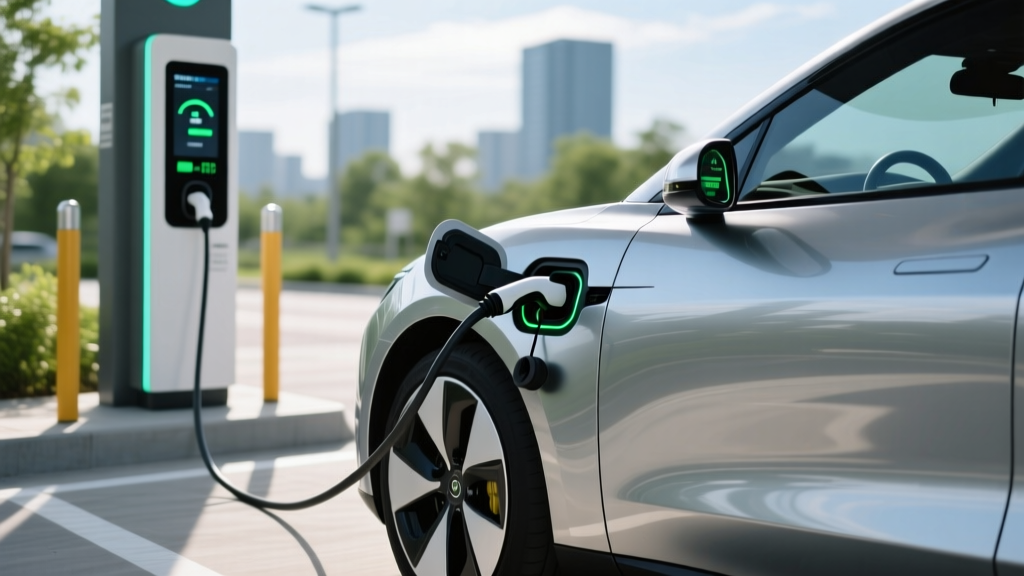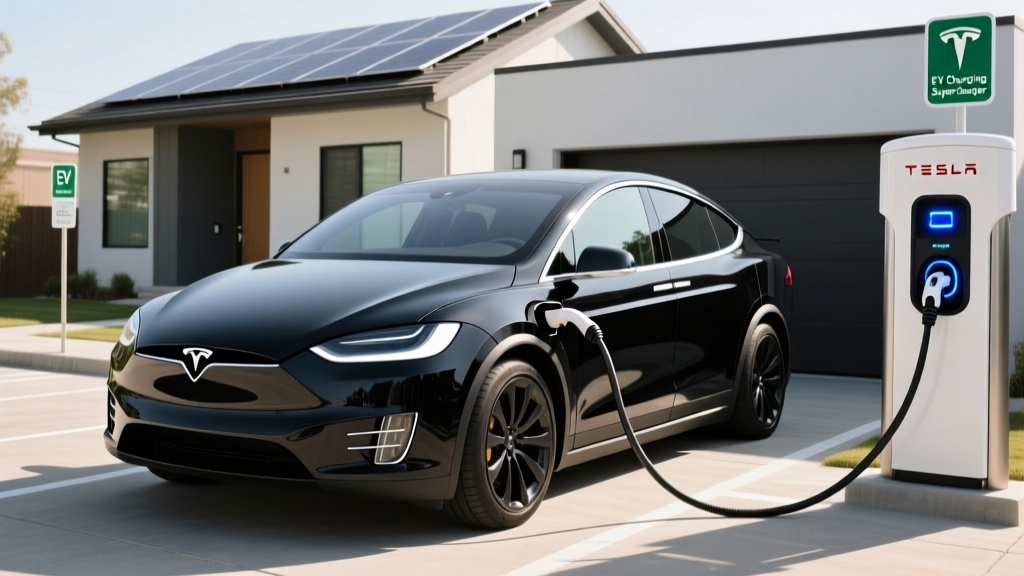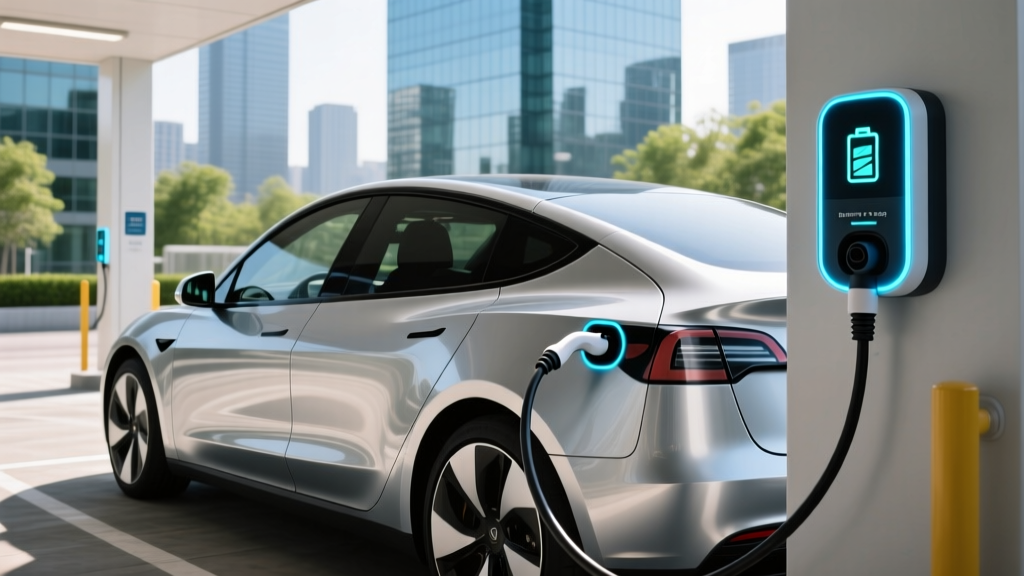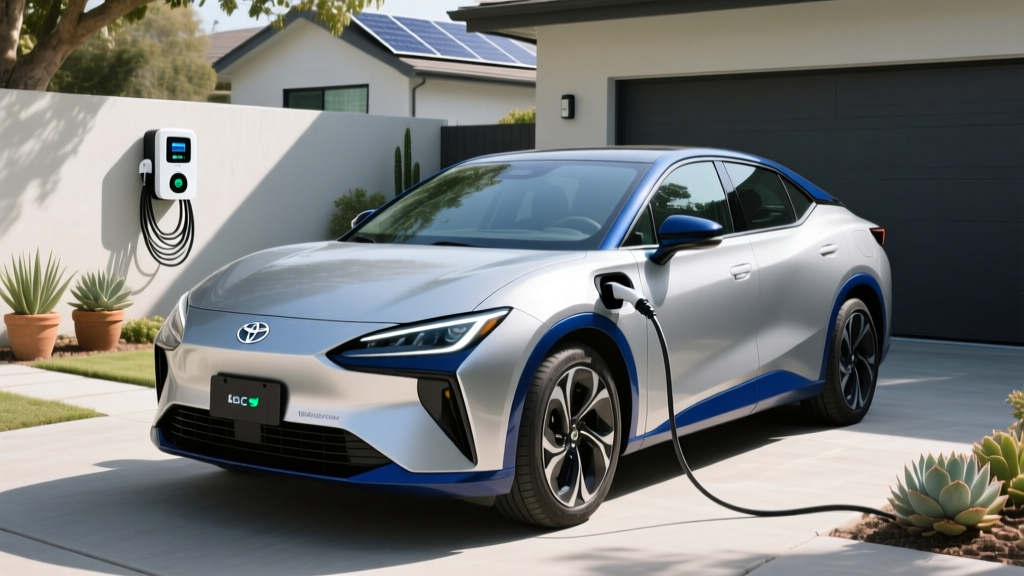
The 2026 Toyota bZ lineup—anchored by the refreshed bZ4X crossover and the newly introduced bZ4X Touring variant—represents Toyota's most serious push into the mainstream BEV market. But range stickers only tell part of the story. What matters more to daily ownership is how quickly you can replenish that battery at home, what it costs per mile, and whether your electrical panel can handle the load.
This guide covers the 2026 Toyota bZ range in real-world terms, then walks through every charging scenario you'll encounter—from a standard 120V outlet to a 350 kW DC fast charger—including home installation costs, equipment picks, and the math behind charging versus gas.
2026 Toyota bZ Range and Battery Specs
The 2026 bZ4X carries over its 71.4 kWh usable battery pack (NMC chemistry) but receives a revised thermal management system that improves cold-weather charging performance. Here's what the EPA rates and what you should actually expect:
| Spec | bZ4X FWD | bZ4X AWD |
|---|---|---|
| Usable Battery | 71.4 kWh (NMC) | 71.4 kWh (NMC) |
| EPA Range | 252 mi | 228 mi |
| Real-World Highway (70 mph) | ~215-230 mi | ~195-210 mi |
| Cold-Weather Estimate (20°F) | ~185-200 mi | ~170-185 mi |
| Efficiency | 119 MPGe (28 kWh/100mi) | 112 MPGe (30 kWh/100mi) |
| Peak DC Fast Charge | 150 kW | 150 kW |
| 10-80% DC Fast Time | ~30 min | ~30 min |
| Level 2 Rate | 7.2 kW | 7.2 kW |
| 0-60 mph | 7.1 sec | 5.8 sec |
| Horsepower | 201 hp | 214 hp |
| Starting MSRP | $38,450 | $42,100 |
| Battery Warranty | 8 yr / 100,000 mi (70% retention) | |
For the latest official figures, check fueleconomy.gov or Toyota's bZ4X spec page.
Charging Levels Explained: Speeds in kW and Miles Per Hour
The single most important distinction in EV charging is kW (kilowatts), which measures power—the rate at which energy flows into your battery—versus kWh (kilowatt-hours), which measures energy capacity, the total amount your battery holds. Think of kW as the width of a hose and kWh as the size of the bucket.
| Level | Voltage | Max Power (kW) | Miles Added/Hour | Best For |
|---|---|---|---|---|
| Level 1 | 120V AC | 1.4 kW | 3-5 mi/hr | Overnight top-ups, PHEVs, emergencies |
| Level 2 (Home) | 240V AC | 7.2-11.5 kW | 20-40 mi/hr | Daily home charging, full overnight replenishment |
| DC Fast Charge | 400-800V DC | 50-350 kW | 150-600+ mi/hr | Road trips, rapid replenishment |
The bZ4X's onboard charger accepts up to 7.2 kW on Level 2, meaning a full 0-100% charge at home takes roughly 10 hours. On a DC fast charger, it peaks at 150 kW, though as with all EVs, the charge curve tapers significantly above 80% State of Charge (SoC) to protect battery longevity. That 10-80% time of ~30 minutes assumes optimal battery preconditioning—arriving at the charger with the battery warm.
Home Charger Installation: Costs, Electrical Requirements, and Panel Upgrades
Most bZ4X owners will install a Level 2 home charger, and the total cost depends heavily on your home's existing electrical infrastructure. Here's a realistic breakdown:
| Component | Typical Range | Notes |
|---|---|---|
| Level 2 Charger (Equipment) | $350-$700 | Smart Wi-Fi-enabled units; basic units from $250 |
| Electrician Labor | $400-$1,200 | Depends on run length from panel to garage/driveway |
| Permit & Inspection | $50-$200 | Required in most jurisdictions; varies by locality |
| Electrical Panel Upgrade (if needed) | $1,500-$3,500 | Older 100A panels often need 200A service upgrade |
| Total (No Panel Upgrade) | $800-$2,100 | Most newer homes with 200A service |
| Total (With Panel Upgrade) | $2,300-$5,600 | Homes with 100A or maxed-out panels |
Electrical requirements for the bZ4X: To extract the full 7.2 kW the vehicle can accept, you need a dedicated 240V circuit on a 40-amp breaker (which delivers a continuous 32 amps, following the NEC 80% rule for continuous loads). If your panel has spare capacity and the run from panel to charger is short (under 50 feet), expect costs on the lower end.
Panel upgrade reality: Homes built before the 1990s often have 100-amp service. Adding a 40A EV circuit may exceed the panel's capacity, requiring a service upgrade to 200A. This is the single biggest variable in home charging costs and is often overlooked in early budgeting. Have a licensed electrician perform a load calculation before committing to equipment.
Safety and Code Considerations
- Dedicated circuit: Your Level 2 charger must be on its own dedicated breaker—never share a circuit with other high-draw appliances.
- GFCI protection: NEC 2023 and later codes require GFCI (Ground Fault Circuit Interrupter) protection for EV charging outlets, particularly outdoors.
- Outdoor rating: If mounting outside, ensure both the charger and the outlet enclosure carry a NEMA 4 (weatherproof) rating.
- Hardwired vs. plug: Hardwired installations (no outlet) are slightly cheaper, eliminate one failure point, and avoid the GFCI breaker requirement in some jurisdictions. However, a NEMA 14-50 outlet gives you portability—useful if you plan to move or use the charger at a second property.
Which Connector Does the 2026 Toyota bZ Use?
The 2026 bZ4X sold in North America now ships with the NACS (North American Charging Standard) port—the Tesla-designed connector that has become the industry standard. This is a significant change from the CCS1 connector used on 2023-2024 bZ4X models.
| Connector | Brands Using It (2026) | Adapter Needed for bZ4X? |
|---|---|---|
| NACS (Tesla) | Tesla, Toyota, Ford, GM, Rivian, Hyundai, Volvo, Polestar, others | No—native on 2026 bZ4X |
| CCS1 | Legacy models (pre-2025 VW ID.4, older BMW iX, Stellantis EVs) | NACS-to-CCS adapter (~$200-$250) for older CCS stations |
| CHAdeMO | Nissan Leaf (discontinued in US), Mitsubishi Outlander PHEV | No practical adapter; CHAdeMO is effectively retired |
With a native NACS port, the 2026 bZ4X can access Tesla Superchargers directly—no adapter required. This unlocks over 20,000 additional fast-charging stalls nationwide. For the shrinking number of CCS-only public chargers, a NACS-to-CCS adapter is a worthwhile $200 investment for road-trip flexibility.
Charging Cost Per Mile: Home vs. Public vs. Gas
One of the strongest arguments for the bZ4X over a comparable gas crossover is fuel cost. Here's how the math works out across different charging scenarios, using the bZ4X FWD's efficiency of 28 kWh per 100 miles:
| Scenario | Rate ($/kWh) | Cost per Full Charge (71.4 kWh) | Cost per Mile | Cost per 1,000 Miles |
|---|---|---|---|---|
| Home Off-Peak (utility TOU rate) | $0.08 | $5.71 | $0.022 | $22 |
| Home Standard Rate | $0.14 | $10.00 | $0.039 | $39 |
| Public Level 2 (ChargePoint, EVgo) | $0.30 | $21.42 | $0.084 | $84 |
| DC Fast Charge (Electrify America, Tesla) | $0.42 | $29.99 | $0.118 | $118 |
| Gas Equivalent (RAV4 AWD, 28 MPG avg, $3.40/gal) | — | — | $0.121 | $121 |
Even at public DC fast-charging rates, the bZ4X is competitive with a gas RAV4. But the real savings come from home charging on off-peak utility rates—potentially as low as $22 per 1,000 miles, an 82% reduction compared to gasoline. Over a typical 12,000-mile year, home-charging owners spend roughly $264-$468 on electricity versus $1,452 on gas.
If your utility offers a time-of-use (TOU) plan, scheduling charging between midnight and 6 AM can cut costs dramatically. Many smart chargers (detailed below) automate this scheduling through their companion apps.
Best Home Chargers for the 2026 Toyota bZ4X
Since the bZ4X's onboard charger caps at 7.2 kW, you don't need a 48-amp charger to get maximum speed—but installing a higher-amperage unit future-proofs your setup for your next EV. Here are three proven options:
ChargePoint Home Flex
- Power Output: Up to 12 kW (50A) — adjustable down to 32A/40A
- Connector: NACS (native, 2025+ models)
- Cable Length: 23 feet
- Smart Features: Wi-Fi, app scheduling, TOU optimization, Alexa integration, energy tracking
- Price: ~$550
- Best For: Most bZ4X owners; adjustable amperage fits any panel
Tesla Wall Connector
- Power Output: Up to 11.5 kW (48A)
- Connector: NACS (native)
- Cable Length: 24 feet
- Smart Features: Wi-Fi, OTA updates, power sharing (multiple units on one circuit), access control
- Price: ~$450
- Best For: Tesla households adding a bZ4X; excellent build quality and reliability
Emporia Level 2 EV Charger
- Power Output: Up to 11.5 kW (48A)
- Connector: NACS (native, 2025+ models)
- Cable Length: 24 feet
- Smart Features: Wi-Fi, solar integration, real-time energy monitoring, TOU scheduling
- Price: ~$400
- Best For: Budget-conscious buyers or homes with solar panels
All three chargers exceed the bZ4X's 7.2 kW acceptance rate, meaning you'll charge at the vehicle's maximum speed. The ChargePoint Home Flex remains our top pick for its adjustable amperage—a feature that lets your electrician set the unit to match your panel's exact capacity without a return trip.
Frequently Asked Questions
How much does it cost to install a home EV charger for the Toyota bZ4X?
Expect $800-$2,100 for a straightforward installation in a home with adequate 200A panel capacity. This includes the charger ($350-$700), electrician labor ($400-$1,200), and permit fees ($50-$200). If your home needs a panel upgrade from 100A to 200A service, add $1,500-$3,500, bringing the total to $2,300-$5,600. Always get a load calculation from a licensed electrician first.
How fast will each charging level add range to the bZ4X?
Level 1 (120V) adds roughly 3-5 miles per hour—enough for overnight top-ups of 30-40 miles. Level 2 (240V, 32A) adds approximately 25-28 miles per hour, fully replenishing the 71.4 kWh battery in about 10 hours. DC fast charging at 150 kW peak can add up to 150+ miles in 15 minutes during the peak portion of the charge curve (roughly 10-50% SoC), though the rate tapers significantly above 80%.
Which connector and charger are compatible with my 2026 bZ4X?
The 2026 bZ4X uses the NACS connector natively, meaning it plugs directly into Tesla Superchargers and any other NACS-equipped public station without an adapter. For home charging, any NACS-equipped Level 2 charger works. If you encounter a legacy CCS1 public charger, a NACS-to-CCS adapter (~$200-$250) will be required.
How much does charging the bZ4X cost per mile versus a gas car?
Charging at home on standard rates costs roughly $0.039 per mile, and as little as $0.022 per mile on off-peak utility rates. A comparable gas RAV4 AWD costs about $0.121 per mile at $3.40/gallon. Even using exclusively public DC fast chargers ($0.42/kWh), the bZ4X costs $0.118 per mile—still slightly cheaper than gas. The savings widen significantly with home charging.
What electrical upgrades might I need for a Level 2 charger?
The most common upgrade is a panel capacity increase. Homes with 100-amp service or panels already near capacity (running central A/C, electric oven, dryer, etc.) will likely need a 200-amp service upgrade ($1,500-$3,500). Other potential costs include running a new conduit from the panel to the charger location (especially if the panel is on the opposite side of the house from the garage), upgrading the meter socket, or adding a sub-panel. A licensed electrician's load calculation will identify exactly what's needed.
Does the 2026 bZ4X qualify for the federal EV tax credit?
Eligibility for the §30D federal tax credit (up to $7,500) depends on several factors including the buyer's taxable income, the vehicle's MSRP (must be under $80,000 for SUVs), and battery component/critical mineral sourcing requirements. As of 2026, the credit can be transferred to the dealer at point of sale, reducing your purchase price directly. Check the latest rules at IRS.gov and confirm eligibility with a tax professional, as sourcing requirements change frequently.
How does cold weather affect the bZ4X's charging speed?
Cold batteries charge significantly slower. In temperatures below 40°F, the bZ4X may not reach its 150 kW peak DC charge rate until the battery warms up through preconditioning or initial driving. Always use the vehicle's navigation to route to a charger—this triggers automatic battery preconditioning, warming the pack for optimal charge speed. Without preconditioning, a cold-soaked battery may charge at half its peak rate for the first 10-15 minutes.