Understanding the 2026 Tesla Model Y Range and Charging Needs
The 2026 Tesla Model Y Long Range continues to dominate the EV market with an EPA-estimated 320 miles of range from its ~75 kWh usable battery pack (NMC chemistry). In real-world highway driving at 70 mph, expect approximately 270-290 miles, and in cold weather (below 30°F), that can drop to 220-250 miles due to battery resistance and cabin heating demands. The Performance trim sacrifices some efficiency for a 303-mile EPA rating but delivers a 3.5-second 0-60 mph time.
Whether you're charging at home or on the road, understanding the three charging levels and their speeds is essential to maximizing your Model Y's usability. Let's break down exactly what you need to know about charging infrastructure, costs, and equipment.
Charging Levels Explained: Speed, Power, and Range Added
EV charging comes in three levels, each with different power outputs measured in kilowatts (kW). Remember: kW measures power (charge rate), while kWh measures energy (battery capacity). Your 2026 Model Y's battery holds approximately 75 kWh of usable energy.
| Charging Level | Voltage/Amperage | Power (kW) | Miles Added Per Hour | Best Use Case |
|---|---|---|---|---|
| Level 1 (Standard Outlet) | 120V / 12A | 1.4 kW | 3-5 miles | Emergency/overnight trickle |
| Level 2 (Home/Public) | 240V / 32-48A | 7.7-11.5 kW | 25-44 miles | Daily home charging |
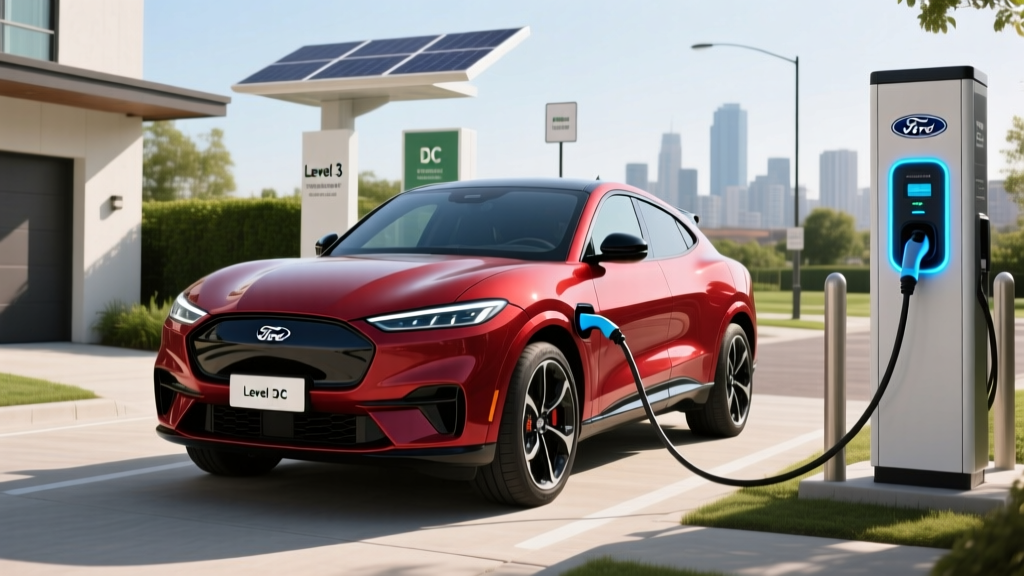
| DC Fast Charging | 400-800V DC | 50-250 kW | 150-750+ miles | Road trips/quick top-ups |
For your 2026 Model Y, Level 2 home charging is the sweet spot. The vehicle accepts up to 11.5 kW on Level 2 (48A), meaning a full charge from 10% to 90% takes approximately 7-8 hours—perfect for overnight charging. DC fast charging peaks at 250 kW on V3 Superchargers, delivering a 10-80% charge in about 20-25 minutes, though the charge curve tapers significantly above 80% to protect battery health.
Home Charging Installation: Electrical Requirements and Costs
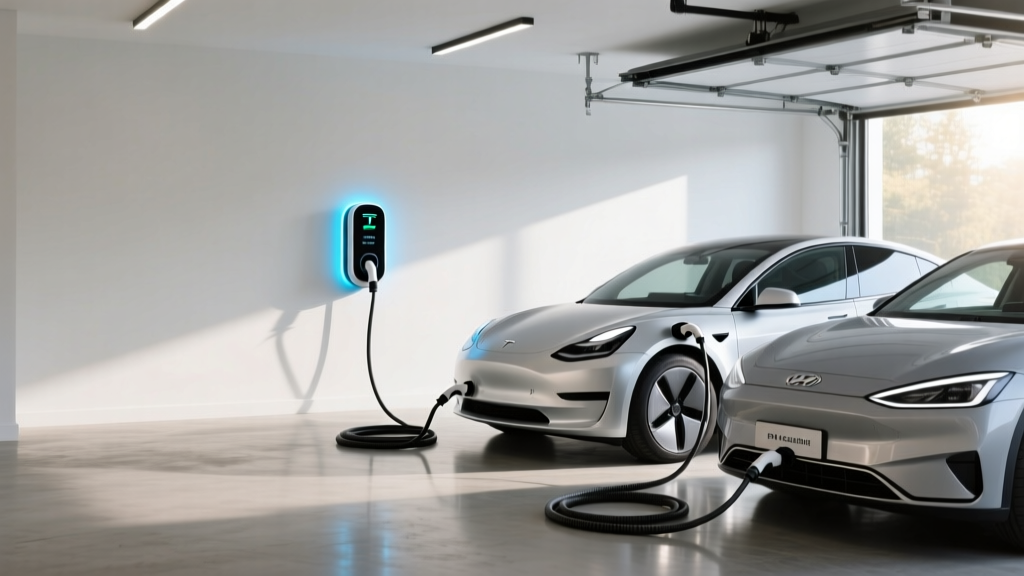
Installing a Level 2 home charger for your Model Y requires a dedicated 240V circuit, similar to what powers an electric dryer or oven. Here's what you need to know about the electrical requirements and realistic installation costs.
Electrical Specifications for Model Y Home Charging
- Voltage: 240V (split-phase residential)
- Amperage: 40A circuit for 32A continuous charging, or 60A circuit for 48A continuous charging
- Circuit breaker: Must be rated 125% of continuous load (NEC requirement)
- Wire gauge: 6 AWG copper for 40A, 4 AWG for 60A (may vary by run length)
- Dedicated circuit: Required—no sharing with other appliances
Installation Cost Breakdown
The total cost to install a Level 2 charger varies dramatically based on your home's electrical panel capacity and the distance from panel to charging location. Here's a realistic breakdown for 2026:
| Component | Basic Install (Near Panel) | Complex Install (Far Run + Panel Upgrade) |
|---|---|---|
| Level 2 Charger Equipment | $400-$650 | $500-$700 |
| Electrician Labor | $500-$1,200 | $2,000-$4,000 |
| Electrical Permit | $50-$150 | $100-$250 |
| Panel Upgrade (if needed) | $0 | $1,500-$3,500 |
| Conduit/Wire Materials | $100-$300 | $400-$800 |
| Total Estimated Cost | $1,050-$2,300 | $4,500-$9,250 |
Panel Upgrade Reality Check: If your home has a 100A or older electrical panel, adding a 40-60A EV circuit may require upgrading to 200A service. This is common in homes built before 1990. The upgrade alone costs $1,500-$3,500 and may require utility coordination. Always get a professional assessment before budgeting.
Connector Compatibility: NACS, Adapters, and the Tesla Ecosystem
The 2026 Tesla Model Y uses the North American Charging Standard (NACS) connector, which Tesla opened to other manufacturers starting in 2024. Here's what this means for your charging options:
| Connector Type | Native Compatibility | Adapter Required? | Availability |
|---|---|---|---|
| NACS (Tesla) | Yes—native on Model Y | No | Tesla Superchargers, Destination Chargers, growing public networks |
| CCS1 | No (as of 2026) | Yes—Tesla CCS adapter (~$175) | Electrify America, EVgo, ChargePoint DC stations |
| CHAdeMO | No | Not available from Tesla | Limited—mostly older Nissan Leaf infrastructure |
| J1772 (Level 2) | Yes—with included adapter | Included with vehicle | Public Level 2 stations, hotels, workplaces |
Key Advantage: Your 2026 Model Y has access to Tesla's Supercharger network, which remains the most reliable DC fast-charging infrastructure in North America. As of 2026, there are over 6,000 Supercharger stations with 60,000+ stalls nationwide. The NACS standard is also being adopted by Ford, GM, Rivian, and others, meaning more NACS-compatible public chargers are coming online.
Charging Cost Analysis: Home vs Public vs Gas
One of the strongest arguments for EV ownership is lower fueling costs, but the savings depend heavily on where and when you charge. Let's compare real costs for the 2026 Model Y.
Cost Per kWh Scenarios (2026 Rates)
- Home charging (off-peak utility rate): $0.12-$0.18/kWh
- Home charging (standard rate): $0.15-$0.25/kWh
- Public Level 2 (workplace/shopping): $0.20-$0.35/kWh (sometimes free)
- DC Fast Charging (Supercharger): $0.28-$0.45/kWh (varies by location/time)
- DC Fast Charging (Electrify America): $0.35-$0.55/kWh
Cost Per Mile Comparison
The 2026 Model Y Long Range achieves approximately 3.5 miles per kWh (113 MPGe combined). Here's how that translates to cost per mile:
| Charging Method | Cost Per kWh | Cost Per Mile | Annual Cost (12,000 mi) |
|---|---|---|---|
| Home (off-peak) | $0.14 | $0.040 | $480 |
| Home (standard) | $0.20 | $0.057 | $684 |
| Supercharger (avg) | $0.36 | $0.103 | $1,236 |
| Gas Vehicle (25 MPG, $3.50/gal) | N/A | $0.140 | $1,680 |
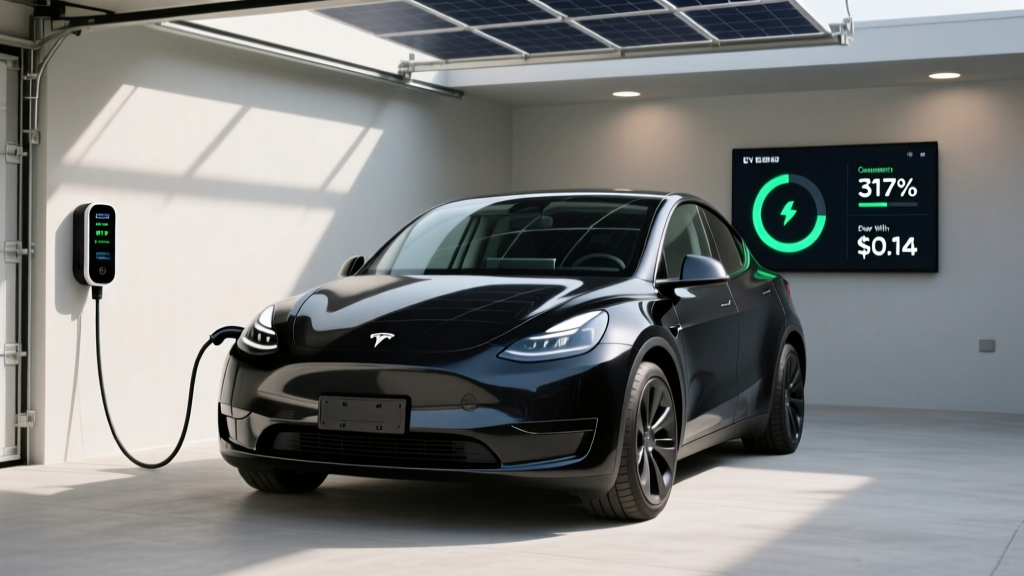
Bottom Line: Charging at home on off-peak rates saves approximately $1,200 annually versus a comparable gas vehicle. Even exclusive Supercharger use saves about $440 per year. Over five years, home charging can save $6,000+ in fuel costs alone.
Recommended Level 2 Chargers for Your 2026 Model Y
While Tesla offers the Wall Connector, third-party options provide competitive features and pricing. Here are three excellent choices for 2026:
Tesla Wall Connector (Gen 4)
- Power Output: Up to 11.5 kW (48A)
- Connector: NACS (native)
- Cable Length: 24 feet
- Smart Features: Wi-Fi, OTA updates, power sharing, load management
- Price: $475
- Best For: Tesla-only households, seamless app integration
ChargePoint Home Flex
- Power Output: Up to 12 kW (50A, adjustable)
- Connector: J1772 (NACS adapter included)
- Cable Length: 23 feet
- Smart Features: Wi-Fi, app scheduling, Alexa integration, energy reporting
- Price: $549
- Best For: Multi-EV households (J1772 works with all EVs)
Emporia Vue Level 2 Charger
- Power Output: Up to 11.5 kW (48A)
- Connector: J1772 (NACS adapter available)
- Cable Length: 24 feet
- Smart Features: Wi-Fi, energy monitoring, solar integration, load balancing
- Price: $399
- Best For: Budget-conscious buyers with solar panels
Safety, Permits, and Code Compliance
EV charger installation must comply with the National Electrical Code (NEC) and local building codes. Here are the critical safety considerations:
Required Safety Features
- Dedicated circuit: EV chargers cannot share circuits with other loads
- GFCI protection: Required for outdoor installations (2026 NEC update)
- Outdoor rating: NEMA 4 rating required for outdoor chargers (weather/dust protection)
- Proper grounding: Equipment grounding conductor required per NEC 250
- Load calculation: Electrician must verify panel capacity before installation
Permit Requirements
Most jurisdictions require an electrical permit for Level 2 charger installation. The permit ensures:
- Installation meets NEC and local code requirements
- Electrical panel has adequate capacity
- Work is inspected by a certified inspector
- Insurance coverage remains valid (unpermitted work may void claims)
Typical permit cost: $50-$250 depending on jurisdiction. Some utilities offer rebates that offset permit fees—check with your local provider.
Charging Time Examples for Common Scenarios
Understanding charge times helps you plan effectively. Here are real-world charging times for the 2026 Model Y's ~75 kWh battery:
Level 2 Home Charging (11.5 kW)
- 10% to 80% (52.5 kWh): ~5 hours
- 20% to 90% (52.5 kWh): ~5 hours
- Full charge 0-100%: ~7-8 hours (includes taper above 90%)
DC Fast Charging (Tesla Supercharger V3, 250 kW peak)
- 10% to 80%: 20-25 minutes (sustained ~150 kW average)
- 10% to 50%: 12-15 minutes (peak charging zone)
- 80% to 100%: 25-30 minutes (significant taper for battery protection)
Pro Tip: Precondition your battery by navigating to a Supercharger in the Tesla app or vehicle. This warms the battery to optimal temperature, enabling faster charging speeds—especially critical in cold weather.
Frequently Asked Questions
How much does it cost to install a home EV charger for my 2026 Model Y?
Basic installations near your electrical panel cost $1,050-$2,300 (equipment + electrician + permit). Complex installations requiring long wire runs or panel upgrades can cost $4,500-$9,250. Get 2-3 quotes from licensed electricians and verify they have EV charger experience.
How fast will each charging level add range to my Model Y?
Level 1 (120V outlet) adds 3-5 miles per hour—too slow for daily use. Level 2 (240V home charger) adds 25-44 miles per hour, fully charging overnight. DC fast charging adds 150-750+ miles per hour at peak speeds, with a 10-80% charge in 20-25 minutes on Tesla Superchargers.
Which connector and charger is compatible with my 2026 Tesla Model Y?
Your Model Y uses the NACS connector natively. Tesla's Wall Connector is the simplest choice. Third-party J1772 chargers work with the included adapter. For CCS1 public chargers (Electrify America, EVgo), you'll need Tesla's CCS adapter (~$175). CHAdeMO is not supported.
How much does charging cost per mile compared to gas?
Home charging on off-peak rates costs approximately $0.04 per mile ($480 annually for 12,000 miles). Supercharger use costs ~$0.10 per mile ($1,236 annually). A comparable gas vehicle at 25 MPG and $3.50/gallon costs $0.14 per mile ($1,680 annually). Home charging saves $1,200+ per year.
What electrical upgrades might I need for a Level 2 charger?
If your home has a 100A electrical panel (common in pre-1990 homes), you may need a 200A panel upgrade ($1,500-$3,500). Homes with modern 200A panels typically have adequate capacity. An electrician will perform a load calculation to determine if your panel can handle a 40-60A EV circuit without upgrades.
Can I charge my Model Y on a regular 120V outlet?
Yes, but Level 1 charging (120V) only adds 3-5 miles per hour. For a 75 kWh battery, a full charge takes 50+ hours. This works for emergencies or very low-mileage drivers but isn't practical for daily use. Most owners install Level 2 for overnight charging.
Does the 2026 Model Y qualify for the federal tax credit?
As of 2026, the Model Y may qualify for up to $7,500 under IRS §30D, but eligibility depends on your income (under $150K single/$300K joint), the vehicle's MSRP (under $80K for SUVs), and battery sourcing requirements. The credit can now be transferred at point-of-sale. Check IRS guidelines and consult a tax professional for your specific situation.
For official range and efficiency data, visit fueleconomy.gov. For safety ratings, check NHTSA and IIHS.