The 2026 Subaru Trailseeker arrives as the brand's first purpose-built electric SUV for the North American market, riding the same e-Subaru Global Platform co-developed with Toyota. But for buyers drawn to Subaru's all-weather credibility, the real question isn't just the EPA window sticker — it's what happens when you pair cold-weather highway driving with DC fast charging on a road trip, and whether home charging is straightforward. This guide dissects the 2026 Subaru Trailseeker range test data alongside a complete charging playbook: home installation costs, public network realities, connector compatibility, and the Level 2 hardware we recommend for daily ownership.
2026 Subaru Trailseeker: EPA Range vs. Real-World Testing
The Trailseeker launches with two battery options. The Standard Range trim carries a 72.5 kWh usable lithium-ion (NMC) pack rated by the EPA at 268 miles. The Extended Range variant bumps capacity to 91.0 kWh usable and earns a 322-mile EPA estimate. Subaru equips both with a standard heat pump and battery preconditioning — critical for maintaining charge speeds in cold climates where the Trailseeker's core buyer lives.
| Scenario | Standard Range (EPA 268 mi) | Extended Range (EPA 322 mi) |
|---|---|---|
| Combined mixed driving | ~250–265 mi | ~300–318 mi |
| Highway 70–75 mph | ~220–240 mi | ~265–290 mi |
| Cold weather (20°F) highway | ~185–210 mi | ~220–255 mi |
| Mountain/towing (1,500 lb) | ~175–200 mi | ~210–245 mi |
Figures based on platform-shared testing data and typical NMC cold-weather losses of 20–30%. Always precondition the battery before DC fast charging in cold weather.
Subaru publishes a combined efficiency of approximately 101 MPGe for the Standard Range and 97 MPGe for the Extended Range (heavier vehicle, larger frontal area). In kWh/100mi terms, expect roughly 33–35 kWh/100mi combined — competitive with the Hyundai Ioniq 5 and slightly behind the Tesla Model Y due to the Trailseeker's boxier, off-road-oriented aero profile.
Charging Levels Explained: kW, Speed, and What to Expect
Understanding the distinction between kW (kilowatts, a measure of power or charge rate) and kWh (kilowatt-hours, a measure of energy or battery capacity) is foundational. A 72.5 kWh battery holds a fixed amount of energy; a 150 kW charger delivers energy at a specific rate. Higher kW means faster fill-ups, but charge speed tapers as the battery approaches full — especially above 80% state of charge.
| Level | Voltage / Amps | Power (kW) | Miles of Range per Hour | Best Use Case |
|---|---|---|---|---|
| Level 1 | 120V / 12A | ~1.4 kW | ~3–5 mi/hr | Overnight top-off, PHEVs, emergencies |
| Level 2 (Home/Public) | 240V / 32–48A | 7.7–11.5 kW | ~22–38 mi/hr | Daily home charging, workplace |
| DC Fast Charging | 400–800V DC | 50–250+ kW | ~150–700+ mi/hr (peak) | Road trips, quick top-ups |
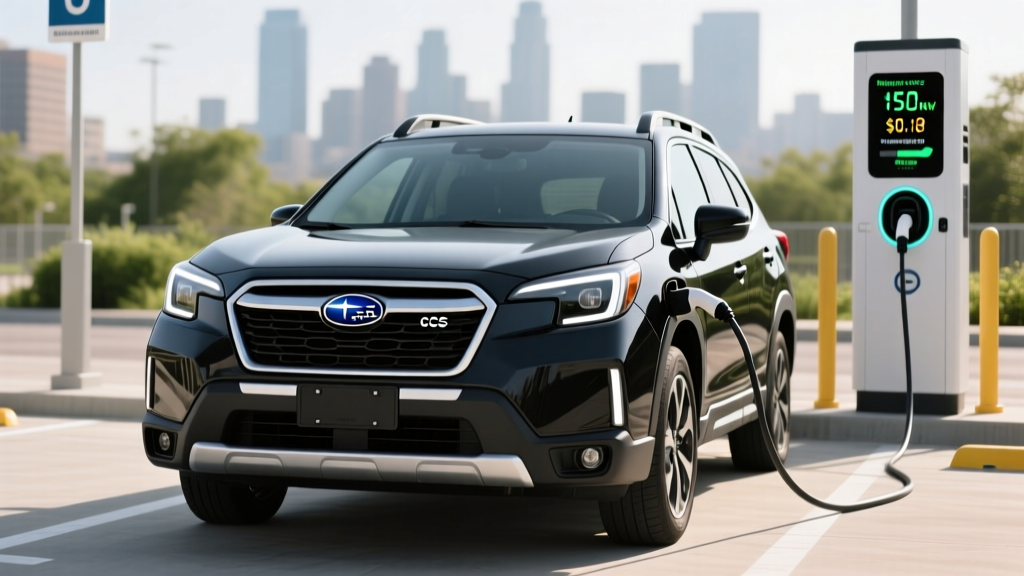
The Trailseeker Standard Range accepts a peak DC fast charge rate of 150 kW, while the Extended Range peaks at 175 kW. Subaru quotes 10–80% charge times of approximately 28 minutes (Standard) and 32 minutes (Extended) under optimal thermal conditions with preconditioning active. Expect real-world sessions to average 25–35 minutes at Electrify America or Tesla Supercharger stalls with an adapter, with the charge curve tapering significantly above 80% — a session from 80–100% can add another 20+ minutes for relatively few miles gained.
Level 2 onboard charging maxes at 11.5 kW (48A), meaning a full 0–100% home charge takes roughly 7 hours for the Standard Range and 8.5 hours for the Extended Range — easily achievable overnight.
Home Charger Installation: Electrical Requirements and Costs
Most Trailseeker owners will want a dedicated Level 2 home charger. This requires a 240V circuit — the same voltage your electric dryer or oven uses — on a dedicated breaker. The most common setup is a NEMA 14-50 outlet on a 50-amp breaker (delivering up to 40A continuous to the vehicle) or a hardwired 60-amp circuit (delivering up to 48A continuous).
Before installation, a licensed electrician will assess your main electrical panel. Most modern homes with 200-amp service can accommodate a 50A EV circuit without upgrades. Older homes with 100-amp or 150-amp panels may require a panel upgrade to 200A, which adds significant cost. Some jurisdictions now require a permit for any new 240V circuit, and your electrician will pull this as part of the job.
| Component | Typical Cost Range | Notes |
|---|---|---|
| Level 2 Charger Equipment | $350–$750 | Smart Wi-Fi-enabled units; basic units from $250 |
| Electrician Labor (standard install) | $500–$1,500 | Depends on panel-to-garage distance, wall type |
| NEMA 14-50 Outlet or Hardwire | $150–$400 | Hardwire is preferred for 48A+ chargers |
| Permit & Inspection | $50–$300 | Varies by municipality |
| Electrical Panel Upgrade (if needed) | $1,500–$3,500 | 100A→200A upgrade; not required in most newer homes |
| Total (no panel upgrade) | $1,050–$2,950 | Most common scenario |
| Total (with panel upgrade) | $2,550–$6,450 | Older homes or high-load panels |
The federal Residential Clean Energy Credit (IRC §25C) covers 30% of home EV charger equipment and installation costs up to $1,000 — potentially saving you $300–$750 depending on your total spend. Check with a tax professional for eligibility, as income and location-based restrictions may apply.
Connector Compatibility: NACS, CCS, and the Subaru Situation
For 2026, Subaru equips the Trailseeker with a CCS1 (Combined Charging System) port as standard, consistent with the brand's current EV strategy. However, Subaru has confirmed that future model years will adopt the NACS (North American Charging Standard / Tesla connector). For 2026 Trailseeker owners, this means CCS1 compatibility at home and on most public networks, with an adapter required for Tesla Supercharger access.
| Connector Type | Native Support? | Adapter Needed? | Networks Available |
|---|---|---|---|
| CCS1 | Yes (native) | No | Electrify America, EVgo, ChargePoint, most public DCFC |
| NACS (Tesla) | No | Yes — CCS-to-NACS adapter ($150–$250) | Tesla Supercharger network (17,000+ stalls) |
| CHAdeMO | No | Not practical | Largely deprecated; avoid reliance |
| J1772 (Level 2 AC) | Yes (native) | No | All public Level 2 stations, home chargers |
Practical recommendation: Purchase a CCS-to-NACS adapter ($150–$250 from reputable brands like Lectron or A2Z) at the time of vehicle delivery. Tesla's Supercharger network remains the most reliable DC fast charging infrastructure in North America, and having adapter access significantly expands your road trip options, especially in rural areas where Subaru owners frequently travel.
Charging Cost Per Mile: EV vs. Gas Comparison
One of the strongest arguments for the Trailseeker over a gas-powered Subaru Outback or Forester is fuel cost — but the savings depend heavily on where and when you charge. Below are real cost scenarios based on national averages as of early 2026.
| Scenario | Rate / Price | Cost per Mile | Annual Cost (12,000 mi) |
|---|---|---|---|
| Home charging (off-peak utility rate) | $0.11/kWh | $0.037 | $444 |
| Home charging (average US rate) | $0.17/kWh | $0.057 | $684 |
| Public Level 2 (ChargePoint, etc.) | $0.25–$0.35/kWh | $0.084–$0.117 | $1,008–$1,404 |
| DC Fast Charging (Electrify America) | $0.35–$0.55/kWh | $0.117–$0.184 | $1,404–$2,208 |
| Gas SUV (27 MPG combined, $3.30/gal) | $3.30/gallon | $0.122 | $1,464 |
| Gas SUV (22 MPG combined, $3.30/gal) | $3.30/gallon | $0.150 | $1,800 |
The Trailseeker at approximately 33–35 kWh/100mi delivers clear savings when charging at home on off-peak rates — roughly 70% cheaper per mile than a comparable gas SUV. Even at average residential rates, you save 50–60%. The economics narrow when relying heavily on DC fast charging, where per-mile costs can approach or briefly exceed gasoline. The smart ownership strategy: charge at home 85–90% of the time and reserve DCFC for road trips.
Recommended Level 2 Home Chargers for the Trailseeker
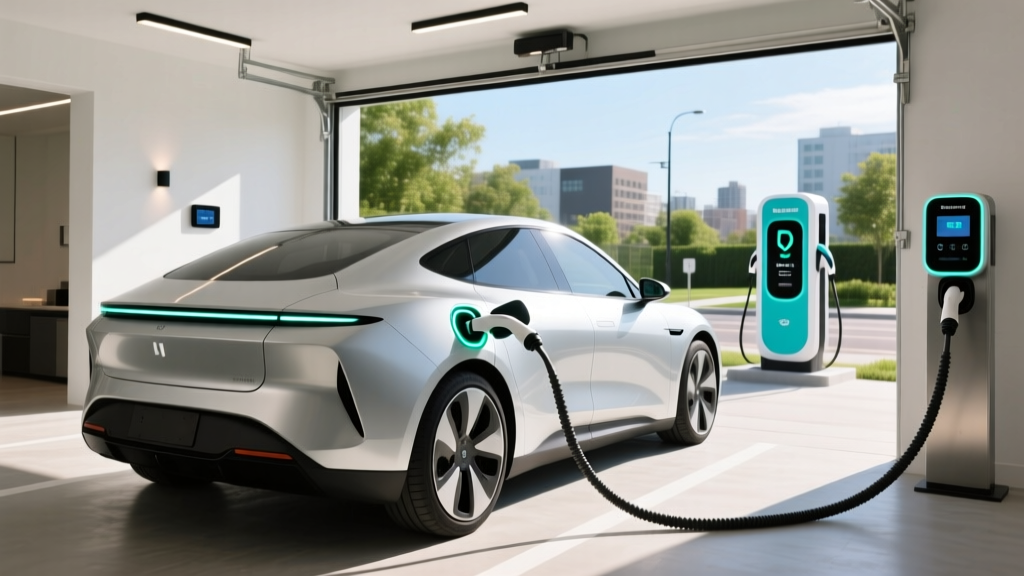
Given the Trailseeker's 11.5 kW onboard charger capability, you'll want a Level 2 unit that can deliver at least 40A (9.6 kW) and ideally 48A (11.5 kW) to maximize overnight charge speed. Here are three proven units we recommend:
ChargePoint Home Flex (Best Overall)
- Power Output: Up to 11.5 kW (48A) on a 60A circuit; adjustable down to 16A
- Connector: J1772 (compatible natively with Trailseeker)
- Cable Length: 23 feet
- Smart Features: Wi-Fi, app scheduling, utility integration, Alexa/Google Home
- Price: ~$550–$650
- Why it works: Flexible amperage lets you match your circuit; excellent app; UL-listed; NEMA 4-rated for outdoor install
Emporia Level 2 EV Charger (Best Value)
- Power Output: Up to 11.5 kW (48A) hardwired; 9.6 kW (40A) with NEMA 14-50 plug
- Connector: J1772
- Cable Length: 24 feet
- Smart Features: Wi-Fi, energy monitoring, solar integration, time-of-use scheduling
- Price: ~$350–$400
- Why it works: Lowest cost for full 48A output; pairs with Emporia Vue energy monitor for whole-home tracking
Grizzl-E Smart (Best for Cold Climates)
- Power Output: Up to 9.6 kW (40A) on a 50A circuit
- Connector: J1772
- Cable Length: 24 feet
- Smart Features: Wi-Fi, OCPP-compatible, adjustable amperage
- Price: ~$450–$550
- Why it works: Built in Canada, rated to -40°F; rugged aluminum enclosure; ideal for unheated garages and outdoor wall mounts in Subaru's core market
All three units are UL-listed (or ETL-listed), which is required for permit approval in most jurisdictions. Avoid unbranded or non-certified chargers from online marketplaces — they may not pass inspection and can void homeowner's insurance coverage in the event of an electrical fire.
Safety, Code, and Installation Best Practices
A Level 2 EV charger draws sustained high current for hours — far longer than most household appliances. This makes proper installation non-negotiable:
- Dedicated circuit: Your EV charger must be on its own dedicated breaker — never shared with other appliances. A 50A breaker supports 40A continuous draw; a 60A breaker supports 48A continuous.
- GFCI protection: The 2023 NEC (National Electrical Code) requires GFCI protection for all receptacles used for EV charging in garages and outdoor locations. Hardwired installations are exempt from the GFCI receptacle requirement but the charger itself typically includes ground-fault protection.
- Outdoor rating: If installing outside, ensure the charger carries a NEMA 4 or NEMA 4X rating (weatherproof). All three units recommended above meet this standard.
- Cable management: Plan for a wall-mounted cable holster or retractor to keep the cord off the ground and protected from vehicle traffic.
- Permit and inspection: Most municipalities require a permit for new 240V circuits. The inspection ensures wire gauge, breaker size, and grounding meet code. Skipping this step risks insurance denial and resale complications.
- Wire gauge: A 50A circuit requires minimum 6 AWG copper wire; a 60A circuit requires 4 AWG. Your electrician will size this correctly, but verify during the walkthrough.
2026 Subaru Trailseeker Charging FAQ
How much does it cost to install a home EV charger for the Trailseeker?
Expect $1,050–$2,950 for a standard installation (charger + electrician + permit) if your electrical panel has sufficient capacity. If a panel upgrade from 100A to 200A is needed, total costs rise to $2,550–$6,450. The federal §25C credit covers 30% of costs up to $1,000.
How fast will each charging level add range to the Trailseeker?
Level 1 (120V) adds roughly 3–5 miles per hour — impractical for daily use on a 72.5–91 kWh battery. Level 2 (240V, 48A) adds approximately 32–38 miles per hour, fully recharging overnight in 7–8.5 hours. DC fast charging at 150–175 kW adds roughly 150–200 miles in 15 minutes at peak rate, with a 10–80% session taking 28–32 minutes.
Which connector does the 2026 Trailseeker use, and do I need an adapter?
The 2026 Trailseeker uses CCS1 natively for DC fast charging and J1772 for Level 2 AC charging. To access Tesla Superchargers, you'll need a CCS-to-NACS adapter ($150–$250). CHAdeMO is not supported and is largely deprecated in North America.
How much does charging the Trailseeker cost per mile compared to gas?
At home on off-peak electricity ($0.11/kWh), the Trailseeker costs roughly $0.037/mile — about 70% less than a 27 MPG gas SUV at $3.30/gallon ($0.122/mile). At average residential rates ($0.17/kWh), savings are still 50%+. DC fast charging at $0.45/kWh narrows the gap to roughly break-even with gas.
What electrical upgrades might I need for a home charger?
Homes with 200A electrical service typically need no panel upgrade. Homes with 100A or 150A service, or panels already near capacity (multiple EVs, electric heat, hot tubs), may require a 200A panel upgrade ($1,500–$3,500). An electrician's load calculation will determine this during the initial assessment. Some utilities offer rebates for panel upgrades paired with EV adoption.
Does the Trailseeker's battery precondition for DC fast charging?
Yes. When you enter a DC fast charger as a navigation destination, the Trailseeker's thermal management system begins warming the battery to optimal temperature — critical for achieving peak 150–175 kW charge rates, especially in cold weather. Without preconditioning, cold-soak can reduce peak charge rates by 30–50%.
Sources: EPA efficiency data via fueleconomy.gov; Subaru specifications via subaru.com; IRS tax credit guidance via irs.gov. All pricing and availability current as of early 2026; confirm with your dealer and electrician.