2026 Subaru Solterra Range: What the EPA Sticker Doesn't Tell You
The 2026 Subaru Solterra carries an EPA-estimated range of 227 miles in its Touring trim and up to 228 miles in the Premium trim, powered by a 72.8 kWh (usable) lithium-ion battery pack. Those numbers place it squarely in the compact electric SUV segment alongside the Toyota bZ4X, Hyundai Ioniq 5, and Ford Mustang Mach-E. But EPA range is a laboratory composite figure — your real-world mileage will vary depending on driving style, terrain, and especially temperature.
- EPA Combined: 227–228 miles (depending on trim and wheel size)
- Highway (70–75 mph, mild weather): ~190–210 miles
- City/Stop-and-Go (with regen): ~230–245 miles
- Cold Weather (below 30°F, highway): ~150–180 miles
The Solterra's standard all-wheel drive and 8,300-pound curb weight work against highway efficiency. Subaru includes a heat pump on 2026 models, which helps mitigate cold-weather range loss compared to earlier model years, but EV batteries still lose 20–35% capacity in freezing temperatures. Source: fueleconomy.gov
If you're evaluating the Solterra — or any EV — range is only half the equation. How quickly and cheaply you can replenish that 72.8 kWh battery matters just as much. This guide covers every charging scenario the 2026 Solterra supports, from a standard 120V wall outlet to 150 kW DC fast chargers, plus what it costs to set up Level 2 charging at home.
Charging Levels Explained: kW, Miles Per Hour, and What Each Means for the Solterra
Before diving into hardware, let's establish the difference between kW (kilowatts) and kWh (kilowatt-hours) — the single most common point of confusion for new EV owners:
- kW = Power (rate of energy delivery). Think of it as the width of the hose. A 150 kW DC fast charger delivers energy faster than a 7.2 kW Level 2 charger.
- kWh = Energy (total capacity). The Solterra's battery holds 72.8 kWh. This is the size of the tank.
Charging speed is measured in kW, and we can convert that into approximate miles of range added per hour based on the Solterra's efficiency of roughly 3.0–3.3 miles per kWh (varies by trim).
| Level | Voltage / Amperage | Power (kW) | Miles of Range Per Hour | 10–80% Time (Solterra 72.8 kWh) |
|---|---|---|---|---|
| Level 1 (120V) | 120V / 12A | ~1.4 kW | ~4–5 mi/hr | ~48+ hours |
| Level 2 (240V) | 240V / 32A (typical home) | 7.7 kW | ~23–26 mi/hr | ~6.5–7 hours |
| Level 2 (240V, 48A) | 240V / 48A | 11.5 kW | ~35–38 mi/hr | ~4.5–5 hours |
| DC Fast Charge | 400V architecture | Peak 150 kW | ~400+ mi/hr (at peak) | ~30–35 minutes |
Key takeaway for Solterra owners: Level 1 charging is impractical as a daily strategy — it would take nearly two full days to replenish the battery from 10% to 80%. A Level 2 home charger is the realistic baseline, fully replenishing the battery overnight. DC fast charging is reserved for road trips and quick top-ups.
Home Level 2 Charger Installation: Electrical Requirements, Costs, and Gotchas
Installing a Level 2 charger at home is the single highest-impact upgrade for EV ownership. For the Solterra, it means waking up every morning to a full battery without relying on public infrastructure. But the installation is not simply plugging in a device — it requires dedicated electrical work.
Electrical Requirements for the 2026 Solterra
The Solterra's onboard charger accepts up to 7.7 kW at 240V / 32A (some 2026 trims with the updated onboard charger support up to 11.5 kW at 48A). This means:
- Minimum circuit: 40-amp dedicated breaker (for a 32A continuous load — NEC requires 125% headroom, so 32A × 1.25 = 40A)
- Optimal circuit: 60-amp dedicated breaker (for a 48A charger, allowing you to max out the Solterra's onboard charger and future-proof for your next EV)
- Wire gauge: 6 AWG copper for 40A; 4 AWG copper for 60A
- Outlet type: NEMA 14-50 (most common) or hardwired connection
Installation Cost Breakdown
Home charger installation costs vary dramatically based on your home's electrical panel capacity, the distance from panel to garage, and local permit fees. Here's a realistic breakdown:
| Component | Simple Install (panel nearby, no upgrade) | Complex Install (long run, panel upgrade) |
|---|---|---|
| Level 2 Charger (equipment) | $400–$700 | $400–$700 |
| Electrician labor | $500–$1,000 | $1,500–$3,000 |
| Permit & inspection | $100–$300 | $150–$400 |
| Electrical panel upgrade (200A) | Not needed | $2,000–$5,000 |
| Conduit/wiring materials | $100–$200 | $300–$800 |
| TOTAL ESTIMATE | $1,100–$2,200 | $4,350–$9,900 |
The panel upgrade gotcha: Many homes built before 2000 have 100-amp or 150-amp main panels. Adding a 40A or 60A EV circuit may push you past 80% of panel capacity (the NEC continuous-load rule), triggering a mandatory upgrade to a 200A panel. This is the single biggest cost variable — get a load calculation from a licensed electrician before committing. Some utilities offer rebates of $500–$1,500 for panel upgrades tied to EV adoption.
Safety and Code Considerations
- Dedicated circuit: Your EV charger must be on its own dedicated breaker — never shared with other appliances.
- GFCI protection: NEC 2023 (and adopted in most jurisdictions by 2026) requires GFCI protection for all EV charging outlets. Many modern Level 2 chargers have built-in GFCI, but your electrician will verify compliance.
- Outdoor rating: If your charger is mounted outside or in an unenclosed carport, it must carry a NEMA 4 (weatherproof) rating. All recommended chargers below meet this standard.
- Permit required: Virtually every jurisdiction requires an electrical permit and inspection for a new 240V circuit. Skipping this can void homeowner's insurance coverage in the event of a fire.
Connector Compatibility: What Plug Does the 2026 Solterra Use?
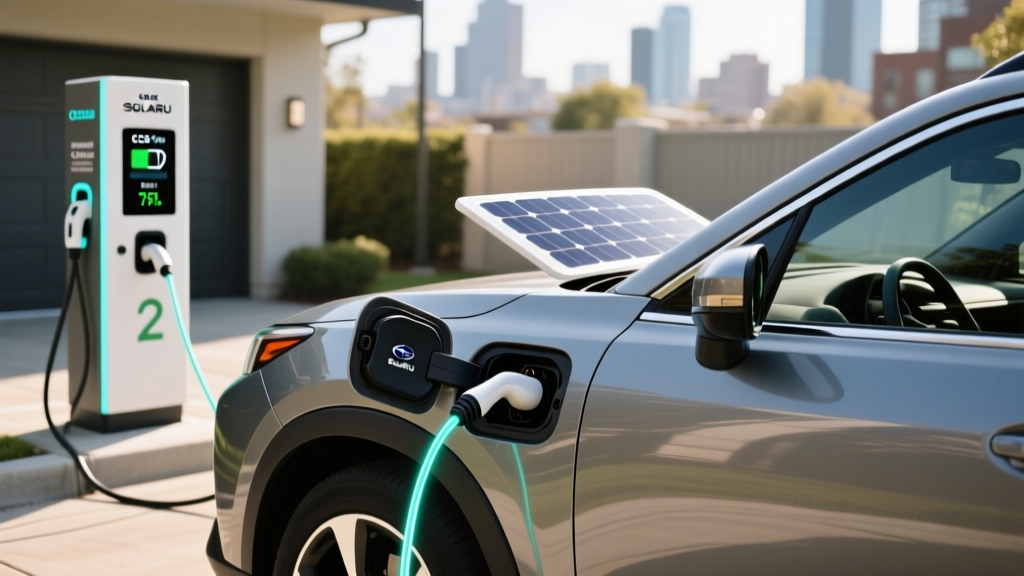
The 2026 Subaru Solterra uses the CCS1 (Combined Charging System) connector for both Level 2 AC charging and DC fast charging in North America. However, the industry-wide shift to NACS (North American Charging Standard, aka the Tesla connector) means the charging landscape has changed significantly since the Solterra's launch.
| Connector | Native to Solterra? | Where You'll Find It | Adapter Needed? |
|---|---|---|---|
| J1772 (AC Level 1/2) | Yes (upper portion of CCS1) | Most home chargers, public Level 2 stations | No |
| CCS1 (DC fast) | Yes | Electrify America, EVgo, ChargePoint DC stations | No |
| NACS (Tesla Supercharger) | No | Tesla Supercharger network (17,000+ stalls in US) | Yes — CCS-to-NACS adapter (~$200–$250) |
| CHAdeMO | No | Legacy stations (largely phased out by 2026) | No adapter available; avoid |
What this means practically: As of 2026, Subaru has not switched the Solterra to a native NACS port (unlike Ford, GM, and Rivian). However, Tesla has opened its Supercharger network to CCS-equipped vehicles via adapter. Subaru offers an official CCS-to-NACS adapter through dealerships, and third-party options from brands like A2Z and Lectron are available. With an adapter, Solterra owners gain access to the Supercharger network — a significant advantage for road-trip charging reliability.
Charging Cost: Home vs. Public vs. Gas — What Does It Really Cost Per Mile?
One of the strongest arguments for the Solterra over a gas-powered Subaru (like the Outback or Forester) is fuel cost savings. But the savings depend heavily on where and when you charge. Here's a realistic cost breakdown based on the Solterra's efficiency of approximately 3.1 miles per kWh (112 MPGe combined, per fueleconomy.gov):
| Scenario | Rate ($/kWh) | Cost to Charge 10–80% (~51 kWh) | Cost Per Mile |
|---|---|---|---|
| Home (off-peak utility rate) | $0.09–$0.14 | $4.60–$7.15 | $0.029–$0.045 |
| Home (standard residential rate) | $0.14–$0.20 | $7.15–$10.20 | $0.045–$0.065 |
| Public Level 2 (ChargePoint, etc.) | $0.20–$0.35 | $10.20–$17.85 | $0.065–$0.113 |
| DC Fast Charge (Electrify America, EVgo) | $0.35–$0.55 | $17.85–$28.05 | $0.113–$0.178 |
| Tesla Supercharger (with adapter) | $0.28–$0.40 | $14.28–$20.40 | $0.091–$0.130 |
Gas comparison: A 2026 Subaru Outback (26 MPG combined) at $3.40/gallon costs approximately $0.131 per mile. The Solterra charged at home on off-peak rates costs roughly $0.037 per mile — a savings of about $0.094 per mile, or $1,410 over 15,000 miles annually. However, if you rely exclusively on DC fast charging at $0.48/kWh, your per-mile cost rises to ~$0.155 — actually more expensive than gas. Home charging access is the make-or-break factor for EV economics.
DC Fast Charging the Solterra: Charge Curve Reality and 10–80% Times
The 2026 Solterra supports DC fast charging at up to 150 kW peak on its 400V architecture. Subaru quotes a 10–80% charge time of approximately 30–35 minutes under ideal conditions. But "peak" does not mean "sustained" — and understanding the charge curve is critical for realistic road-trip planning.
Here's how a typical DC fast-charging session unfolds for the Solterra at a 150 kW (or higher) station:
- 10–30% SoC: The battery accepts close to peak power (~130–150 kW). You'll add roughly 50–60 miles of range in the first 8 minutes.
- 30–60% SoC: Power tapers to ~100–120 kW as battery management systems protect cell health. Still fast, but not peak.
- 60–80% SoC: Further taper to ~60–80 kW. The final push from 60 to 80% takes almost as long as 10 to 60%.
- Above 80% SoC: Charging drops to under 30 kW. Do not plan road-trip stops beyond 80% — it's faster to unplug and drive.
Recommended Level 2 Home Chargers for the 2026 Subaru Solterra
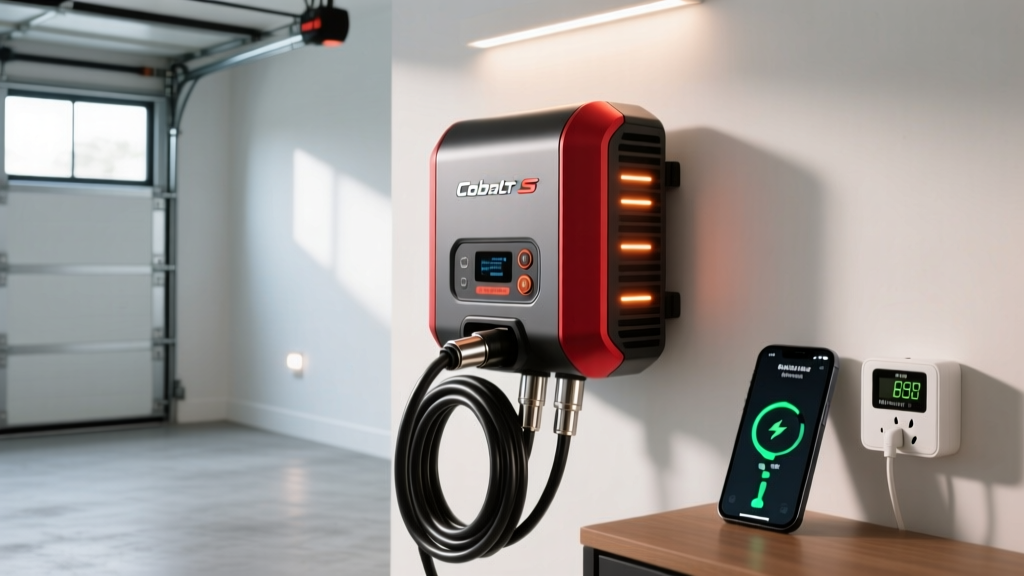
Based on the Solterra's 7.7 kW onboard charger (accepting up to 32A at 240V), here are three proven Level 2 chargers that pair well with the vehicle. Each is NEMA 4 rated for outdoor use, UL-listed, and compatible with the J1772/CCS1 connector:
ChargePoint Home Flex
- Power: Up to 11.5 kW (48A, adjustable down to 16A)
- Connector: J1772 (fits Solterra natively)
- Cable length: 23 feet
- Smart features: Wi-Fi, scheduling, energy tracking, Alexa integration
- Price: ~$550–$650
- Best for: Future-proofing — supports higher amperage for your next EV
Emporia Level 2 EV Charger
- Power: Up to 11.5 kW (48A)
- Connector: J1772
- Cable length: 24 feet
- Smart features: Wi-Fi, solar integration, energy monitoring, load management
- Price: ~$400–$500
- Best for: Budget-conscious buyers with solar panels
Grizzl-E Smart
- Power: Up to 10 kW (40A)
- Connector: J1772
- Cable length: 24 feet
- Smart features: Wi-Fi, OCPP protocol, adjustable amperage
- Price: ~$450–$550
- Best for: Extreme cold climates — rated to -40°F, built in Canada
Since the Solterra's onboard charger caps at 7.7 kW (32A), a 40A circuit with a 32A charger will fully utilize the vehicle's capability. Installing a 48A-capable charger on a 60A circuit costs slightly more upfront but ensures you won't need to replace hardware when you upgrade to a vehicle with an 11.5 kW or higher onboard charger.
2026 Subaru Solterra: Quick Spec Reference
| EPA Range | 227–228 miles (varies by trim) |
| Battery Capacity | 72.8 kWh usable (lithium-ion, NMC chemistry) |
| Efficiency | 112 MPGe combined (~3.1 mi/kWh) |
| Onboard Charger (Level 2) | 7.7 kW (240V / 32A) |
| DC Fast Charge Peak | 150 kW (10–80% in ~30–35 min) |
| Connector | CCS1 (J1772 for AC, CCS for DC) |
| Drivetrain | Dual-motor AWD, 215 hp |
| 0–60 mph | ~6.5 seconds |
| Battery/Powertrain Warranty | 8 years / 100,000 miles |
| Starting MSRP | ~$39,995 (Premium); ~$45,995 (Touring) |
| Federal Tax Credit (§30D) | Up to $7,500 (eligibility depends on battery sourcing, buyer income, and MSRP caps — verify at irs.gov) |
Frequently Asked Questions
How much does it cost to install a home EV charger for the Subaru Solterra?
Expect $1,100–$2,200 for a straightforward installation where your electrical panel has sufficient capacity and is near the garage. If your home needs a 200A panel upgrade or a long conduit run, costs can reach $4,350–$9,900. Always get a load calculation from a licensed electrician first.
How fast will each charging level add range to the Solterra?
Level 1 (120V) adds about 4–5 miles per hour — too slow for daily use on a 72.8 kWh battery. Level 2 (240V, 32A) adds roughly 23–26 miles per hour, fully recharging overnight in 7 hours. DC fast charging at 150 kW peak can add 100+ miles in about 15 minutes during the optimal 10–60% SoC window.
Which connector and charger is compatible with my 2026 Solterra?
The Solterra uses the CCS1 connector natively, which includes the J1772 plug for AC charging. Any J1772 Level 2 home charger will work directly. For Tesla Supercharger access, you'll need a CCS-to-NACS adapter (~$200–$250). CHAdeMO is not supported.
How much does charging the Solterra cost per mile versus gas?
Charging at home on off-peak electricity (~$0.12/kWh) costs roughly $0.039 per mile. A comparable gas Subaru Outback at 26 MPG and $3.40/gallon costs ~$0.131 per mile. That's a savings of about $1,400 per year at 15,000 miles — but only if you charge primarily at home. Exclusive DC fast-charging can actually exceed gas costs.
What electrical upgrades might I need for a home Level 2 charger?
You'll need a dedicated 40A (minimum) or 60A (recommended) 240V circuit. If your home has a 100A or 150A main panel, or if the panel is already near capacity, you may need a panel upgrade to 200A — adding $2,000–$5,000 to the project. Homes with 200A panels and available breaker slots typically need no panel upgrade. Your electrician will perform a load calculation to determine this.
Does the 2026 Solterra qualify for the $7,500 federal EV tax credit?
Eligibility under IRS §30D depends on several factors: the vehicle's battery must meet critical-mineral and component sourcing requirements, the buyer's AGI must fall below income caps ($150K single / $300K joint), and the vehicle MSRP must not exceed $80,000 for SUVs. The Solterra's MSRP clears the cap, but battery sourcing rules change periodically. The credit can now be transferred to the dealer at point of sale as an immediate discount. Always verify current eligibility at irs.gov or consult a tax professional before purchase.
Is the Solterra's real-world range significantly less than the EPA estimate?
Yes, in certain conditions. Expect ~190–210 miles on the highway in mild weather (vs. the 227 EPA rating), and potentially 150–180 miles in freezing temperatures at highway speeds. City driving with regenerative braking can actually exceed the EPA number. The heat pump on 2026 models helps reduce cold-weather losses compared to the original 2023 Solterra.