2026 RAV4 Plug-In Hybrid Range and Efficiency: What the EPA Says vs. Real-World Driving
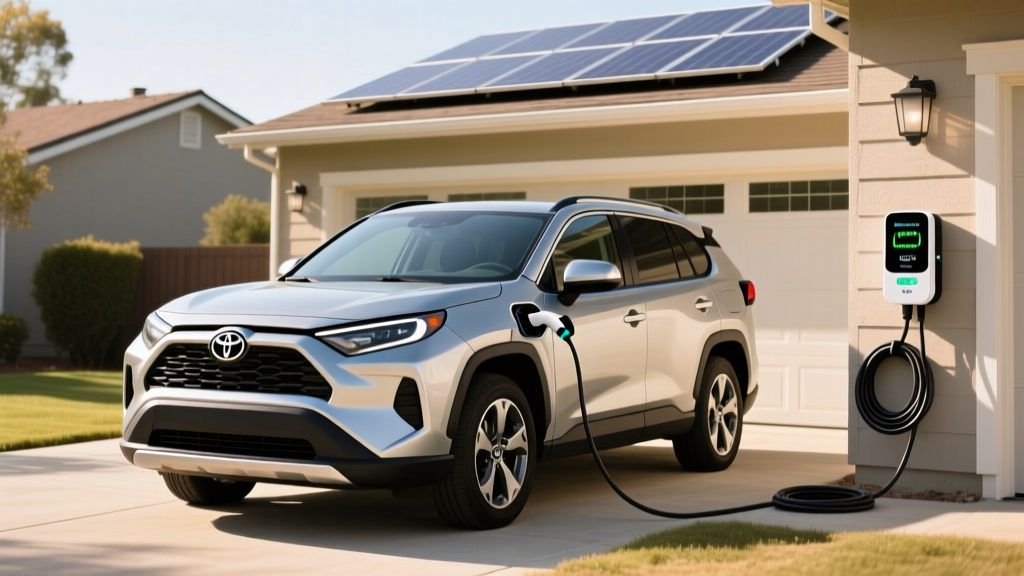
The 2026 Toyota RAV4 Plug-In Hybrid (formerly badged as the RAV4 Prime in the U.S.) pairs a 2.5-liter four-cylinder engine with a front and rear electric motor setup producing a combined 302 horsepower. The traction battery is an 18.1 kWh lithium-ion pack (usable capacity approximately 14.9 kWh), which Toyota has carried over from the prior generation with minor thermal-management refinements.
According to fueleconomy.gov, the 2026 RAV4 Plug-In Hybrid achieves an EPA-estimated 42 miles of electric-only range and 94 MPGe combined when operating in EV mode. Once the battery is depleted, the hybrid powertrain delivers an EPA-estimated 38 MPG combined.
| Spec | Value |
|---|---|
| EPA Electric Range | 42 miles |
| Battery (Total / Usable) | 18.1 kWh / ~14.9 kWh |
| MPGe (EV Mode) | 94 MPGe combined |
| MPG (Hybrid Mode) | 38 MPG combined |
| Combined Horsepower | 302 hp |
| 0-60 mph | 5.7 seconds |
| Max AC Charge Rate | 6.6 kW (Level 2) |
| DC Fast Charging | Not supported |
| Connector | J1772 (CCS1 inlet, no DC pins active) |
| Base MSRP (SE) | ~$45,050 |
| Battery/Powertrain Warranty | 10 yr / 150,000 mi (hybrid battery) |
Federal tax credit note: The 2026 RAV4 Plug-In Hybrid's eligibility for the IRS §30D clean vehicle credit depends on current-year battery sourcing and critical-mineral requirements, the $80,000 MSRP cap for SUVs, and buyer income limits ($300,000 joint / $150,000 single). Because the RAV4 PHEV is assembled in Japan and its battery supply chain may not meet 2026 domestic-content thresholds, buyers should verify eligibility on the IRS website or with a tax professional before assuming a credit. A point-of-sale transfer is available if you do qualify.
Charging Levels Explained: How Fast Will Each Level Add Range?
Understanding charging speed requires distinguishing between kW (kilowatts — the rate of power delivery, like water pressure from a hose) and kWh (kilowatt-hours — the total energy stored, like the size of a bucket). The RAV4 PHEV's 18.1 kWh battery is the bucket. The charger's kW rating determines how quickly that bucket fills.
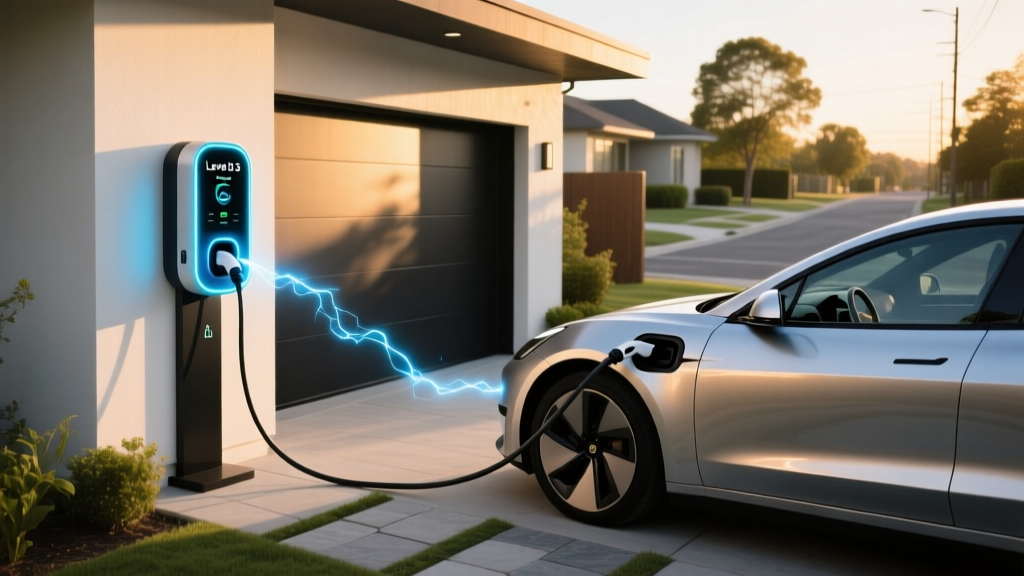
The RAV4 Plug-In Hybrid supports Level 1 (120V household outlet) and Level 2 (240V dedicated circuit) AC charging. It does not support DC fast charging — a deliberate Toyota engineering choice shared by most PHEVs, since the battery is small enough that overnight Level 2 charging is sufficient for daily use.
| Level | Voltage / Amps | Power (kW) | Miles of Range per Hour | 0–100% Time (RAV4 PHEV) |
|---|---|---|---|---|
| Level 1 (120V) | 120V / 12A | ~1.4 kW | ~3–4 mi/hr | ~12–14 hours |
| Level 2 (240V, 16A) | 240V / 16A | 3.3 kW | ~8–9 mi/hr | ~5.5 hours |
| Level 2 (240V, 32A) | 240V / 32A | 6.6 kW (max) | ~16–18 mi/hr | ~2.5 hours |
| DC Fast Charging | N/A | N/A | N/A | Not supported |
The RAV4 PHEV's onboard charger maxes out at 6.6 kW. Even if you plug into a 48-amp Level 2 station capable of delivering 11.5 kW, the car will only draw 6.6 kW. This means there's no benefit to over-provisioning your home charger beyond 32 amps for this specific vehicle — though installing a 48-amp unit is still smart if you plan to own a full BEV in the future.
Home Charger Installation: Electrical Requirements, Costs, and Panel Upgrades
Installing a Level 2 home charger for the RAV4 Plug-In Hybrid requires a dedicated 240-volt circuit. For a 32-amp charger (matching the RAV4's 6.6 kW maximum), you need a 40-amp breaker on that circuit — electrical code requires the breaker to be rated at 125% of the continuous load (32A × 1.25 = 40A).
Most homes built after 1990 have a 200-amp electrical panel with sufficient spare capacity for a 40-amp circuit. Older homes with 100-amp service or panels already near capacity may require a panel upgrade (to 200A) or a service upgrade from the utility — a significant added cost.
| Component | Low Estimate | High Estimate | Notes |
|---|---|---|---|
| Level 2 Charger (hardware) | $300 | $700 | 32A–48A, J1772 or NACS |
| Electrician labor (run 240V circuit) | $400 | $1,500 | Varies by run length, wall type |
| Permit and inspection | $50 | $250 | Required in most jurisdictions |
| Panel upgrade (if needed) | $1,500 | $4,000 | 100A → 200A; not always required |
| EV-ready panel / smart splitter (alternative) | $400 | $800 | e.g., Span panel or DCC-10 load manager |
| Total (no panel upgrade) | $750 | $2,450 | |
| Total (with panel upgrade) | $2,250 | $6,450 |
Key cost variables: The distance from your electrical panel to the charger location is the biggest labor driver. A charger mounted on the garage wall directly next to a 200A panel might cost $400–$600 in labor. Running 60+ feet of conduit through an attic or crawlspace to reach a detached carport can push labor past $1,500. Always get at least two quotes from licensed electricians and confirm they pull a permit — unpermitted work can void homeowner's insurance claims.
Smart alternative for tight panels: If your panel lacks spare capacity but you don't want to pay for a full upgrade, devices like the Emporia Load Manager or NeoCharge Smart Splitter can share an existing 240V circuit (like a dryer outlet) with your EV charger, automatically throttling the charger when the dryer runs. This can save $1,500–$3,000 versus a panel upgrade.
Connector Compatibility: J1772, CCS, and NACS — What the RAV4 PHEV Uses
The 2026 RAV4 Plug-In Hybrid uses a J1772 connector for AC charging. This is the standard AC charging connector for all non-Tesla EVs and PHEVs sold in North America. You'll find J1772 plugs on virtually every public Level 2 charger in the country.
| Connector | Type | RAV4 PHEV Compatible? | Adapter Needed? |
|---|---|---|---|
| J1772 | AC (Level 1 & 2) | Yes — native | None |
| NACS (Tesla) | AC & DC | AC only with adapter | NACS-to-J1772 adapter (~$150–$250) |
| CCS1 | DC Fast | No (no DC capability) | N/A |
| CHAdeMO | DC Fast | No | N/A |
NACS adapter note: As Tesla opens its Destination Charging network (Level 2, AC only) to non-Tesla vehicles, a NACS-to-J1772 adapter lets you use Tesla wall connectors at hotels, workplaces, and shopping centers. Since the RAV4 PHEV cannot DC fast charge, Tesla Superchargers are irrelevant for this vehicle even with an adapter. Budget $150–$250 for a quality adapter from Lectron or Tesla's official J1772-to-NACS unit.
Cost to Charge: Home Electricity vs. Public vs. Gas — The Per-Mile Math
One of the strongest arguments for plugging in the RAV4 PHEV every night is the dramatic cost advantage of electricity over gasoline for daily driving. Here's how the math works with the RAV4's 14.9 kWh usable battery and 42-mile electric range.
| Scenario | Rate | Cost to Fill 42 mi | Cost Per Mile |
|---|---|---|---|
| Home (off-peak utility rate) | $0.12/kWh | $1.79 | $0.043/mi |
| Home (national avg. rate) | $0.17/kWh | $2.53 | $0.060/mi |
| Public Level 2 (network rate) | $0.30/kWh | $4.47 | $0.106/mi |
| Gasoline (RAV4 hybrid mode, 38 MPG) | $3.40/gal | $3.76 | $0.089/mi |
| Gasoline (gas-only RAV4, 30 MPG) | $3.40/gal | $4.76 | $0.113/mi |
The takeaway: Charging at home on an off-peak rate cuts your per-mile fuel cost by more than half compared to gasoline. Even at the national average electricity rate, home charging is cheaper than gas. Public Level 2 charging is roughly break-even with gas — so the financial case for a PHEV depends heavily on reliable home charging access. If you can't charge at home, a standard hybrid (HEV) may be a more economical choice.
For a driver commuting 30 miles round-trip and plugging in nightly at home ($0.12/kWh), annual "fuel" cost for those electric miles is roughly $465. The same 30 miles/day in a gas-only RAV4 at 30 MPG and $3.40/gallon costs $1,241 — a savings of about $775 per year from home charging alone.
Recommended Home Chargers for the RAV4 Plug-In Hybrid
Since the RAV4 PHEV maxes out at 6.6 kW (32 amps), a 32-amp charger is perfectly matched. However, we recommend 40-amp or 48-amp units for future-proofing — if you ever switch to a full BEV like a Hyundai Ioniq 5 or Tesla Model Y, you'll already have the infrastructure. Below are top picks across budget tiers.
Best Value: Emporia Vue Level 2
- Power: 48A (11.5 kW max)
- Connector: J1772 (NACS version available)
- Cable length: 24 ft
- Smart features: Wi-Fi, scheduling, energy monitoring via Emporia app, load management with Vue panel monitor
- Price: ~$399
- Why it works: Excellent smart features at a budget price. Load management avoids panel upgrades.
Best Overall: ChargePoint Home Flex
- Power: Up to 50A (12 kW), configurable via dip switch
- Connector: J1772 (NACS adapter included in 2026 kit)
- Cable length: 23 ft
- Smart features: Wi-Fi, Alexa integration, ChargePoint app scheduling, utility demand-response programs
- Price: ~$599
- Why it works: UL-listed, Energy Star certified, configurable amperage matches any panel. Proven reliability.
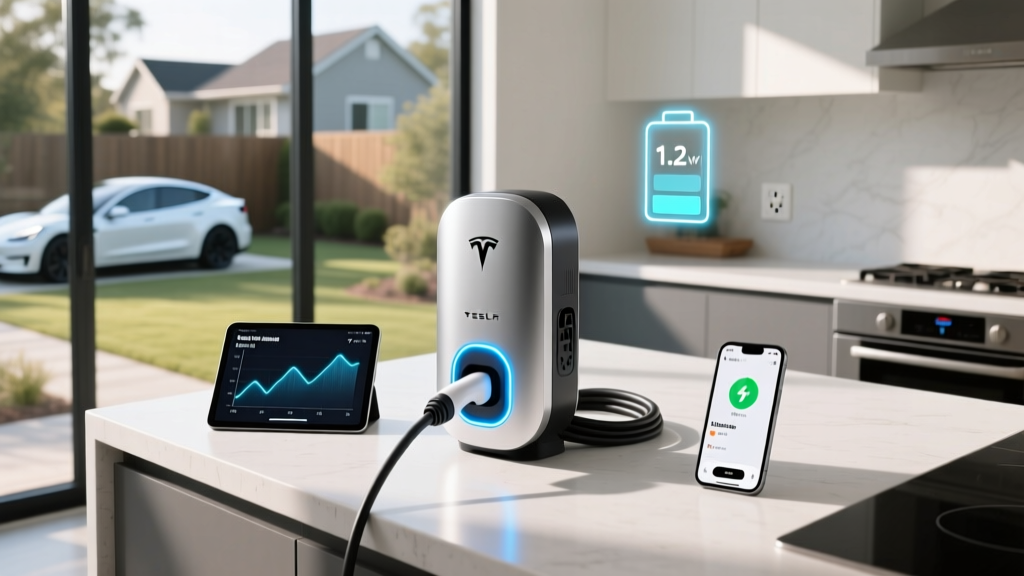
Premium Pick: Tesla Wall Connector
- Power: Up to 48A (11.5 kW)
- Connector: NACS native (J1772 adapter needed for RAV4)
- Cable length: 24 ft
- Smart features: Wi-Fi, power sharing (link up to 6 units on one circuit), OTA updates
- Price: ~$420 + ~$150 J1772 adapter
- Why it works: Best build quality and aesthetics. Ideal if your household also has a Tesla.
Portable Option: Lectron V-Box Pro
- Power: 40A (9.6 kW)
- Connector: J1772
- Cable length: 21 ft
- Smart features: LCD display, no Wi-Fi (dumb charger — works without internet)
- Price: ~$280
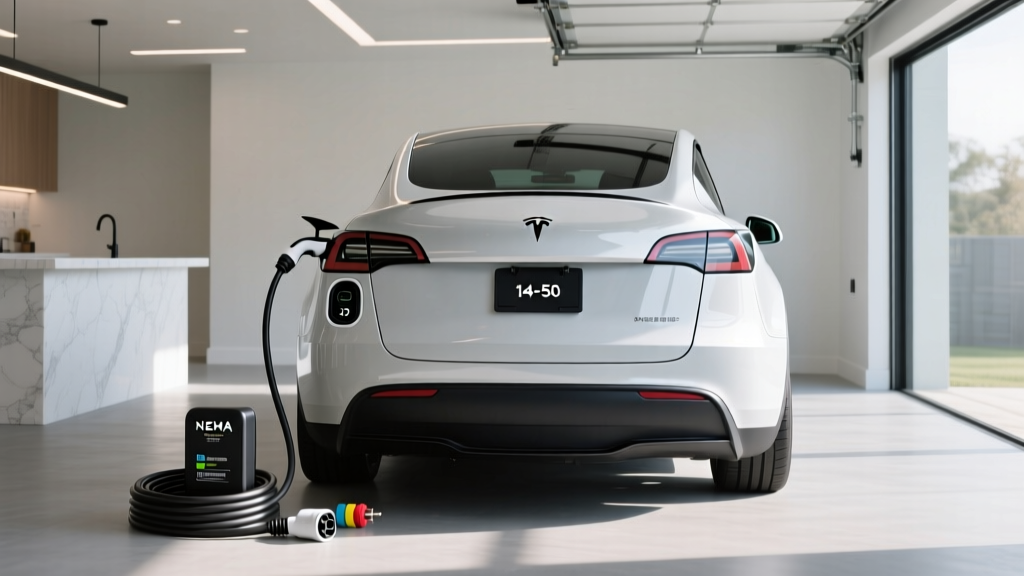
- Why it works: NEMA 14-50 plug lets you take it when you move. No hardwiring required.
Our pick for RAV4 PHEV owners: The Emporia Vue Level 2 at $399 offers the best value-to-feature ratio. Its load-management capability can save you $1,500+ on a panel upgrade, and the energy-monitoring dashboard helps you track exactly how many kWh — and dollars — you're spending on charging each month.
Safety, Code, and Installation Best Practices
EV charging places a sustained high-current load on your home's electrical system — unlike a dryer that cycles on and off, an EV charger may run at full draw for 2–5 hours straight. This makes code compliance and safety non-negotiable.
- Dedicated circuit: Your Level 2 charger must be on its own dedicated circuit — it cannot share with other outlets or appliances. A shared circuit risks tripped breakers and fire hazard.
- Breaker sizing: Per NEC Article 625, the circuit breaker must be rated at 125% of the charger's maximum continuous draw. A 32A charger needs a 40A breaker; a 48A charger needs a 60A breaker.
- GFCI protection: The 2023 NEC (adopted by most states by 2026) requires GFCI protection for all EV charging outlets. Hardwired chargers with built-in ground-fault protection may exempt you from a GFCI breaker — ask your electrician.
- Outdoor rating: If your charger is installed outdoors (carport, driveway), it must be rated NEMA 4 (weatherproof). All the chargers recommended above carry outdoor ratings.
- Wire gauge: A 40A circuit requires minimum 8 AWG copper wire; a 60A circuit requires 6 AWG. Longer runs may need thicker wire to prevent voltage drop.
- Permit and inspection: Most jurisdictions require an electrical permit for a new 240V circuit. The inspection ensures the work meets NEC code — skip this step and you risk insurance denial in the event of an electrical fire.
Frequently Asked Questions
How much does it cost to install a home EV charger for the RAV4 Plug-In Hybrid?
Expect $750–$2,450 total for a straightforward installation (charger hardware + electrician labor + permit) if your electrical panel has spare capacity. If your panel needs upgrading from 100A to 200A, total cost can reach $2,250–$6,450. Get at least two quotes from licensed electricians and always pull a permit.
How fast will each charging level add range to the RAV4 PHEV?
Level 1 (120V standard outlet) adds approximately 3–4 miles of electric range per hour — enough to replenish about 35 miles overnight in 10 hours. Level 2 at 6.6 kW (240V, 32A) adds approximately 16–18 miles per hour, fully recharging the 42-mile battery in about 2.5 hours. The RAV4 PHEV does not support DC fast charging.
Which connector and charger are compatible with my RAV4 Plug-In Hybrid?
The RAV4 PHEV uses a J1772 connector for all AC charging. Any Level 1 or Level 2 charger with a J1772 plug is directly compatible. If you want to use a Tesla Wall Connector or charge at Tesla Destination Chargers, you'll need a NACS-to-J1772 adapter (~$150–$250). CCS1 and CHAdeMO connectors are for DC fast charging only, which the RAV4 PHEV does not support.
How much does charging the RAV4 PHEV cost per mile compared to gas?
At a typical off-peak home electricity rate of $0.12/kWh, charging costs about $0.043 per mile — less than half the $0.089 per mile of driving the RAV4 in hybrid mode on $3.40/gallon gas. At the national average electricity rate ($0.17/kWh), home charging costs $0.060/mile, still 32% cheaper than gas. Public Level 2 charging at $0.30/kWh is roughly break-even with gas at $0.106/mile.
What electrical upgrades might I need for a Level 2 charger?
If your home has a 200-amp panel with available breaker slots and load capacity, you likely need no upgrades — just a new 40A or 60A breaker and a wire run to the charger location. If your panel is at or near capacity (common in older homes with electric heat, A/C, and an electric dryer), you may need a panel upgrade to 200A ($1,500–$4,000), a smart load-management device ($400–$800), or a utility service upgrade ($2,000–$5,000 for overhead-to-underground conversions). A licensed electrician can perform a load calculation to determine your exact needs.
Can I just use a standard 120V outlet to charge the RAV4 PHEV?
Yes — the RAV4 PHEV comes with a Level 1 charging cord that plugs into any standard 120V household outlet. At roughly 1.4 kW, it adds 3–4 miles of range per hour, meaning a full charge from empty takes 12–14 hours. For a 30-mile daily commute, plugging in overnight (10 hours) recovers about 35 miles — enough for most daily needs. However, Level 2 is strongly recommended for convenience and to ensure a full battery every morning regardless of how depleted it was.
Does the 2026 RAV4 Plug-In Hybrid qualify for the federal tax credit?
Eligibility for the IRS §30D clean vehicle credit (up to $7,500) depends on 2026 battery-sourcing and critical-mineral requirements, the $80,000 MSRP cap for SUVs, and buyer income limits ($300,000 joint / $150,000 single AGI). Because the RAV4 PHEV is manufactured in Japan, its battery supply chain may not satisfy 2026 domestic-content rules. Always verify current eligibility on the IRS website or consult a tax professional before purchasing. If eligible, the credit can be transferred to the dealer at point of sale as a price reduction.