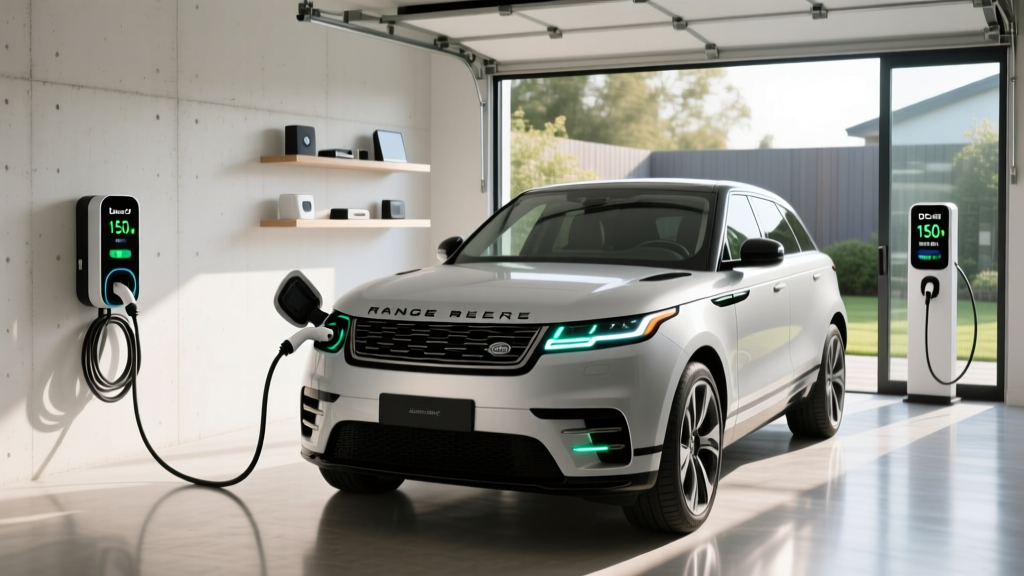
The 2026 Range Rover Electric arrives as Land Rover's first all-electric flagship, built on the modular MLA-Flex architecture with an estimated 117 kWh usable battery pack and an EPA-estimated range target north of 300 miles. But owning a luxury EV this size isn't just about the sticker price — it's about whether your garage, your electrical panel, and your daily routine can support it. This guide breaks down every charging scenario you'll face as a Range Rover Electric owner, from overnight Level 2 top-ups to 200+ kW DC fast charging on road trips.
Understanding Charging Levels: What Speeds Actually Mean
Before we talk equipment, let's clarify the single most important distinction in EV ownership: kW (kilowatts) measures power — how fast energy flows into the battery. kWh (kilowatt-hours) measures energy — how much the battery holds. Think of kW as the width of a hose and kWh as the size of the bucket. A 117 kWh battery charged at 11 kW takes roughly 10.6 hours from empty; at 200 kW, the math changes dramatically (though charge-curve taper means you'll never sustain peak speed the whole session).
| Level | Voltage / Amps | Max Power (kW) | Miles Added per Hour | Best Use Case |
|---|---|---|---|---|
| Level 1 (120V) | 120V / 12A | 1.4 kW | ~3–5 mi/hr | Emergency / trickle top-up |
| Level 2 (240V) | 240V / 32–48A | 7.7–11.5 kW | ~22–38 mi/hr | Daily home charging |
| DC Fast Charge | 400–800V DC | 50–350 kW | ~150–600+ mi/hr (peak) | Road trips, quick top-ups |
For the Range Rover Electric's large battery, Level 1 is effectively useless for daily needs — you'd need nearly 80 hours to fill it from empty. Level 2 at home is the backbone of ownership, while DC fast charging handles road-trip scenarios.
DC Fast Charging: Range Rover Electric Estimated Speeds
Land Rover has confirmed the Range Rover Electric will support DC fast charging at up to 200+ kW on compatible CCS or NACS stations. Based on the MLA-Flex platform's 800V-capable architecture (shared in part with Jaguar's upcoming EVs), here's what to expect:
- Peak charge rate: ~200–220 kW (estimated, pending official certification)
- 10–80% charge time: ~25–30 minutes (at a 350 kW-capable station with battery preconditioning active)
- Sustained rate to 80%: Expect the curve to taper from ~200 kW down to ~80–100 kW as the battery passes 60% SoC — this is normal lithium-ion behavior to protect cell longevity
- 80–100% top-off: An additional 25–40 minutes at progressively lower kW; only worth doing if you need the full range for a long drive leg
Home Level 2 Charger Installation: Requirements and Real Costs
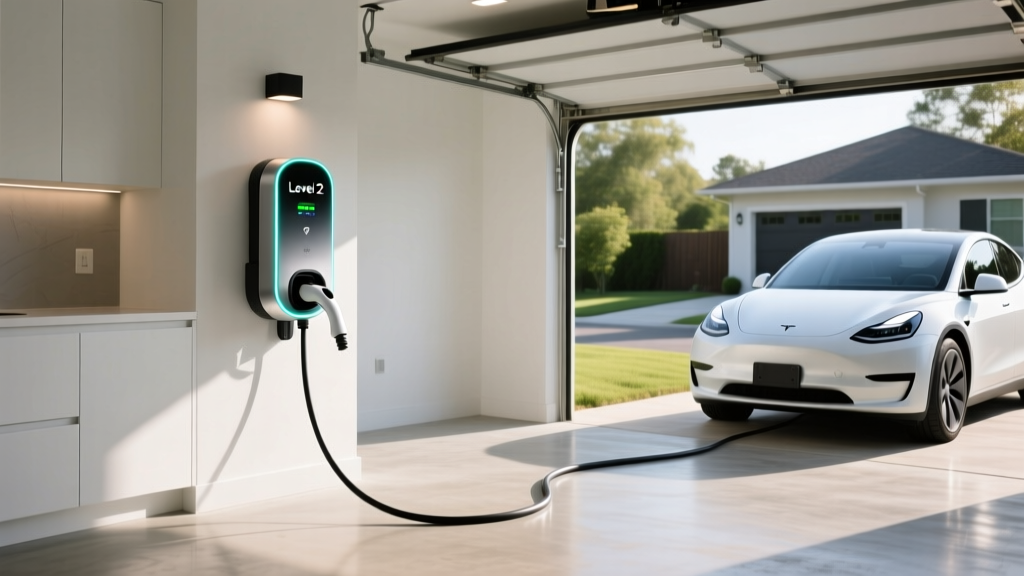
The Range Rover Electric's onboard charger is expected to accept up to 11 kW (48A at 240V) on Level 2 AC power, though some trims may cap at 7.7 kW (32A). To maximize overnight charging speed, you'll want a 48A-capable hardwired charger on a dedicated 60A circuit (NEC code requires circuits to be rated 125% above continuous load, so 48A continuous draw requires a 60A breaker).
Electrical Requirements at a Glance
- Circuit: Dedicated 60A double-pole breaker (for 48A charging) or 50A breaker (for 40A charging)
- Wire: 6 AWG copper (60A) or 8 AWG copper (50A) — your electrician will confirm based on run length
- Connection: Hardwired (recommended for 48A) or NEMA 14-50 receptacle (max 40A continuous)
- Panel capacity: Minimum 200A main service panel recommended; homes with 100A panels will almost certainly need an upgrade
Will You Need a Panel Upgrade?
This is the question that separates a $1,200 charger install from a $5,000+ electrical project. Here's how to assess:
- 200A panel with spare slots: Likely no upgrade needed. Your electrician will perform a load calculation per NEC Article 220 to confirm available headroom.
- 200A panel near capacity: You may need a load-management device (like the Emporia VUE or Span smart panel) that dynamically throttles charger amperage when other large loads (HVAC, oven, dryer) are running. Cost: $300–$800 for hardware.
- 100A or 150A panel (common in pre-2000 homes): A service upgrade to 200A typically runs $2,500–$5,000 including utility coordination, new meter base, and permit. This is a multi-day project.
| Component | Low End | High End | Notes |
|---|---|---|---|
| Level 2 Charger (hardware) | $400 | $800 | 40A–48A smart charger |
| Electrician labor (standard install) | $500 | $1,500 | Depends on panel-to-garage distance |
| Permit and inspection | $100 | $350 | Varies by municipality |
| Panel upgrade (if needed) | $2,500 | $5,000 | 100A→200A service upgrade |
| Conduit/wire (long runs >50 ft) | $200 | $800 | Trenching adds cost for detached garages |
| TOTAL (no panel upgrade) | $1,000 | $2,650 | Most homes with 200A service |
| TOTAL (with panel upgrade) | $3,500 | $7,650 | Older homes needing 200A service |
Get at least three quotes from licensed electricians who specialize in EV charger installs. Ask specifically about NEC Article 625 compliance and whether they'll pull a permit — unpermitted work can void home insurance claims and create resale issues.
Connector Compatibility: NACS, CCS, and the 2026 Landscape
The 2026 Range Rover Electric will ship with a NACS (North American Charging Standard) charge port, following Land Rover's parent company JLR's commitment to adopt the Tesla-originated connector across its EV lineup. This is significant for charging access:
| Connector | Native Support? | Network Access | Adapter Needed? |
|---|---|---|---|
| NACS (Tesla) | Yes — native port | Tesla Supercharger, Electrify America, EVgo, many others by 2026 | No |
| CCS1 | No — requires adapter | Legacy Electrify America, EVgo, ChargePoint stations | Yes — NACS-to-CCS adapter (~$200–$300) |
| CHAdeMO | No | Largely deprecated; some legacy Nissan Leaf stations | Not recommended — no reliable adapter |
| J1772 (Level 2 AC) | Yes — via included adapter or native | All public Level 2 stations, home chargers | Included with vehicle or built-in |
By 2026, the NACS transition has dramatically simplified public charging. Most major networks now offer NACS cables alongside or in place of CCS. However, if you travel to rural areas or older installations, carrying a NACS-to-CCS adapter in your frunk is smart insurance.
Cost to Charge: Range Rover Electric Per-Mile Economics
The Range Rover Electric's efficiency will likely land around 2.5–3.0 kWh per mile (roughly 100–120 MPGe), typical for a 6,000+ lb luxury SUV. Let's calculate real costs across charging scenarios:
| Scenario | Rate ($/kWh) | Cost for 250 mi | Cost per Mile |
|---|---|---|---|
| Home — off-peak (utility TOU rate) | $0.12 | $7.50–$9.00 | $0.03–$0.036 |
| Home — standard residential rate | $0.17 | $10.63–$12.75 | $0.043–$0.051 |
| Public Level 2 (ChargePoint, etc.) | $0.25–$0.35 | $15.63–$26.25 | $0.063–$0.105 |
| DC Fast Charge (Electrify America) | $0.40–$0.55 | $25.00–$41.25 | $0.10–$0.165 |
| Gas equivalent (Range Rover 4.4L V8, 19 MPG combined, $3.80/gal) | — | $50.00 | $0.20 |
The savings story is clear: home charging on an off-peak rate delivers fuel costs at roughly 15–18% of what gasoline costs per mile. Even exclusive DC fast charging comes in below gas. The key is maximizing home charging — every mile charged at home is a mile at $0.03–$0.05 instead of $0.20.
Recommended Home Chargers for the Range Rover Electric
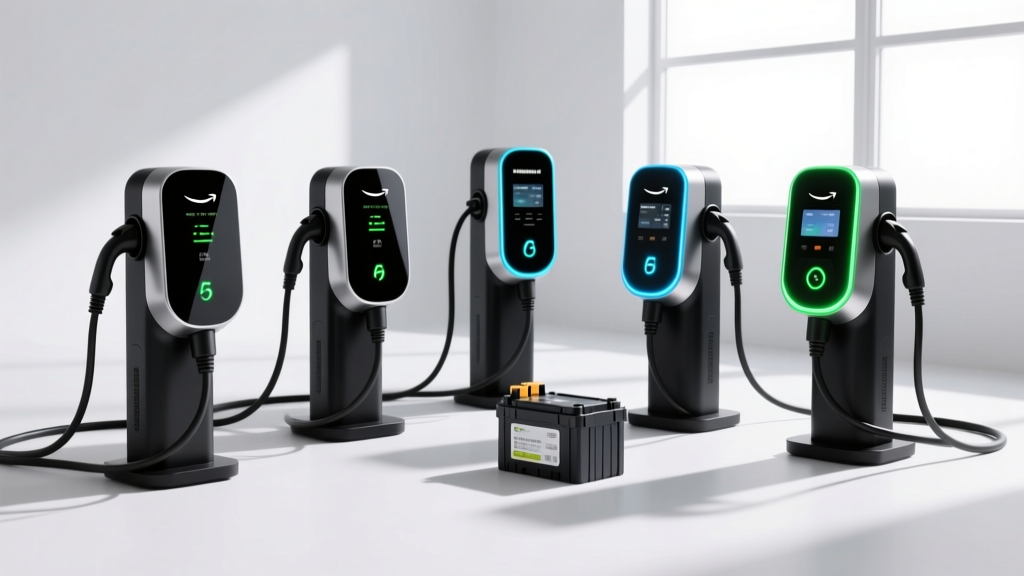
With an expected 11 kW onboard charger, you'll want a 48A-capable Level 2 unit to extract maximum speed. Here are three proven options for 2026:
ChargePoint Home Flex
- Power: Up to 11.5 kW (48A) hardwired
- Connector: NACS native (2025+ models)
- Cable: 23 ft
- Smart features: Wi-Fi, app scheduling, Alexa, load sharing
- Price: ~$650
- Best for: Most Range Rover Electric owners; reliable app, wide compatibility
Tesla Wall Connector
- Power: Up to 11.5 kW (48A) hardwired
- Connector: NACS native
- Cable: 24 ft
- Smart features: Wi-Fi, OTA updates, power sharing with multiple units
- Price: ~$475
- Best for: Budget-conscious buyers who want NACS; works with any NACS-equipped EV
Emporia Vue 2 Smart Charger
- Power: Up to 11.5 kW (48A) hardwired
- Connector: NACS or J1772 options
- Cable: 24 ft
- Smart features: Real-time energy monitoring, solar integration, load management
- Price: ~$550
- Best for: Homes with solar panels or those wanting granular energy data
For outdoor installations, ensure your chosen charger carries a NEMA 4 rating (weatherproof against rain and splashing). All three options above meet this standard. If your garage is detached or the charger mounts more than 50 feet from the panel, factor in conduit and wire costs — 6 AWG THHN copper runs roughly $3–$5 per foot installed.
Safety, Code, and Permit Essentials
EV charger installation falls under NEC Article 625 and your local building code. Here's what your installation must include to be safe, legal, and insurable:
- Dedicated circuit: The charger must have its own breaker — no sharing with other outlets or appliances.
- GFCI protection: Required for all outdoor receptacles; hardwired indoor installations may be exempt in some jurisdictions, but GFCI breakers add safety regardless.
- Proper wire gauge: Undersized wire causes heat buildup and fire risk. Your electrician will size per NEC Table 310.16 based on amperage and run length.
- Permit and inspection: Most municipalities require an electrical permit ($100–$350) and a post-install inspection. Skipping this risks insurance denial in the event of an electrical fire.
- Utility notification: Some utilities require notification before adding a large new load; they may also offer rebates or special EV time-of-use rates that offset installation cost.
Charging Time Estimates for the Range Rover Electric
Using the estimated 117 kWh usable battery capacity and 2.7 kWh/mi efficiency, here's how long common charging scenarios take:
- Level 1 (120V, 1.4 kW): ~84 hours from 10–100% — impractical for daily use; adds ~30 miles overnight
- Level 2 (240V, 48A, 11.5 kW): ~10.2 hours from 10–100%; ~7.5 hours from 10–80% — ideal overnight charge
- Level 2 (240V, 32A, 7.7 kW): ~15.2 hours from 10–100%; ~11.2 hours from 10–80% — adequate if you drive <150 mi/day
- DC Fast Charge (200 kW peak): ~25–30 minutes from 10–80% (adds ~180–210 miles); tapers significantly past 80%
- DC Fast Charge (50 kW station): ~90 minutes from 10–80% — avoid these when possible; they're painfully slow for a 117 kWh pack
For context, a typical Range Rover Electric owner driving 35 miles per day would need roughly 95 kWh per week — easily replenished with a single overnight Level 2 session or two shorter top-ups.
Frequently Asked Questions
How much does it cost to install a home EV charger for the Range Rover Electric?
A standard Level 2 installation with a 200A panel and short wire run costs $1,000–$2,650 including equipment, electrician labor, and permit. Homes needing a panel upgrade to 200A should budget $3,500–$7,650 total. Always get three quotes and verify the electrician will pull a permit.
How fast will each charging level add range to the Range Rover Electric?
Level 1 adds roughly 3–5 miles per hour (1.4 kW). Level 2 at 48A adds approximately 30–38 miles per hour (11.5 kW). DC fast charging at 200 kW can add 150–200 miles in 15–20 minutes at peak rate, though the charge curve tapers above 60% SoC.
Which connector and charger is compatible with the 2026 Range Rover Electric?
The 2026 Range Rover Electric uses a native NACS port. This connects directly to Tesla Superchargers, most Electrify America stations, and an expanding network of NACS-equipped chargers. For legacy CCS stations, a NACS-to-CCS adapter (~$200–$300) is recommended for road trips.
How much does charging the Range Rover Electric cost per mile vs gas?
At home on an off-peak rate of $0.12/kWh, charging costs approximately $0.03–$0.04 per mile. A comparable gas Range Rover at 19 MPG with $3.80/gallon fuel costs about $0.20 per mile. Home-charged EV driving is roughly 80–85% cheaper per mile.
What electrical upgrades might I need before installing a charger?
The most common upgrade is a panel service increase from 100A or 150A to 200A ($2,500–$5,000). Homes with dangerous legacy panels (Federal Pacific, Zinsco, Challenger) need full replacement regardless. You may also need a dedicated 60A circuit with 6 AWG wire, and homes with long runs to detached garages will incur conduit and trenching costs.
Does the Range Rover Electric qualify for the federal EV tax credit?
As an announced vehicle, final §30D tax credit eligibility depends on battery component and critical mineral sourcing requirements that may shift before deliveries begin. The IRS clean vehicle credit page lists currently eligible models. The credit is up to $7,500 with income caps ($300K joint / $150K single) and MSRP limits ($80K for SUVs). Consult a tax professional before relying on credit eligibility for purchase decisions.
The 2026 Range Rover Electric represents a significant investment in luxury EV ownership. Getting the charging infrastructure right before delivery day — with a properly permitted 48A Level 2 charger on a dedicated circuit — transforms the ownership experience from range-management anxiety to effortless overnight replenishment. Budget $1,500–$3,000 for a standard home install, carry a NACS-to-CCS adapter for road trips, and enroll in your utility's EV time-of-use rate to keep per-mile costs below four cents.