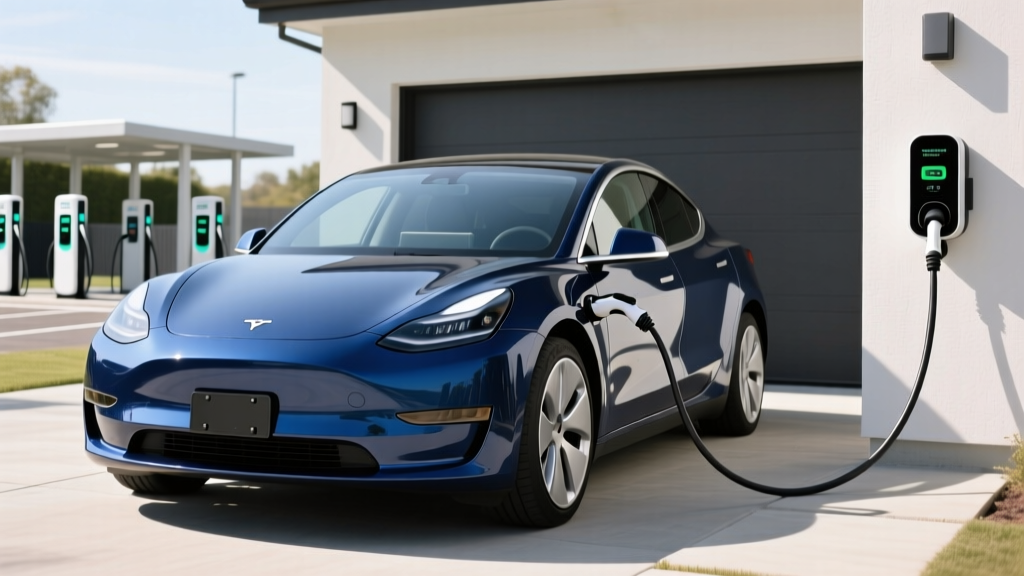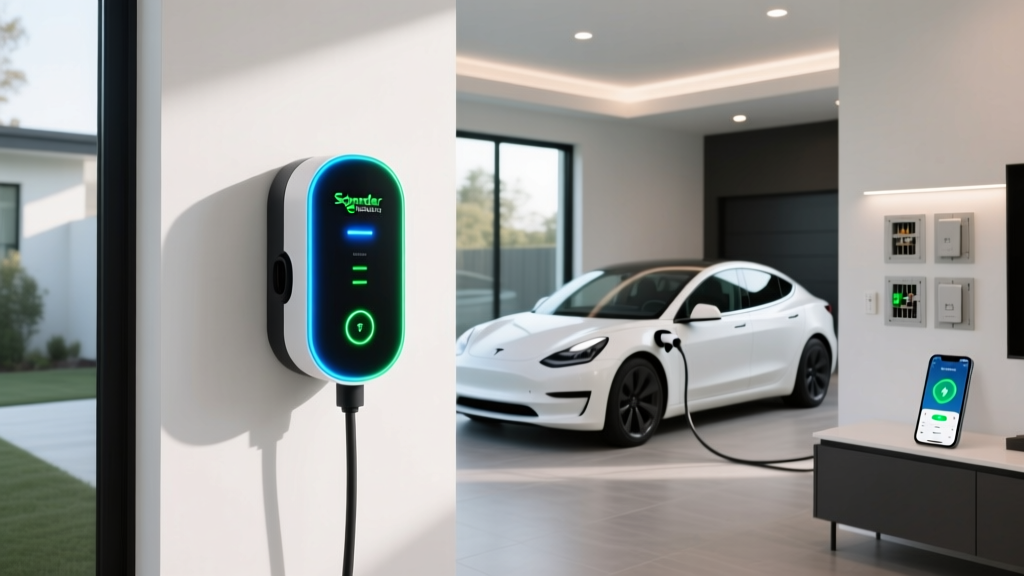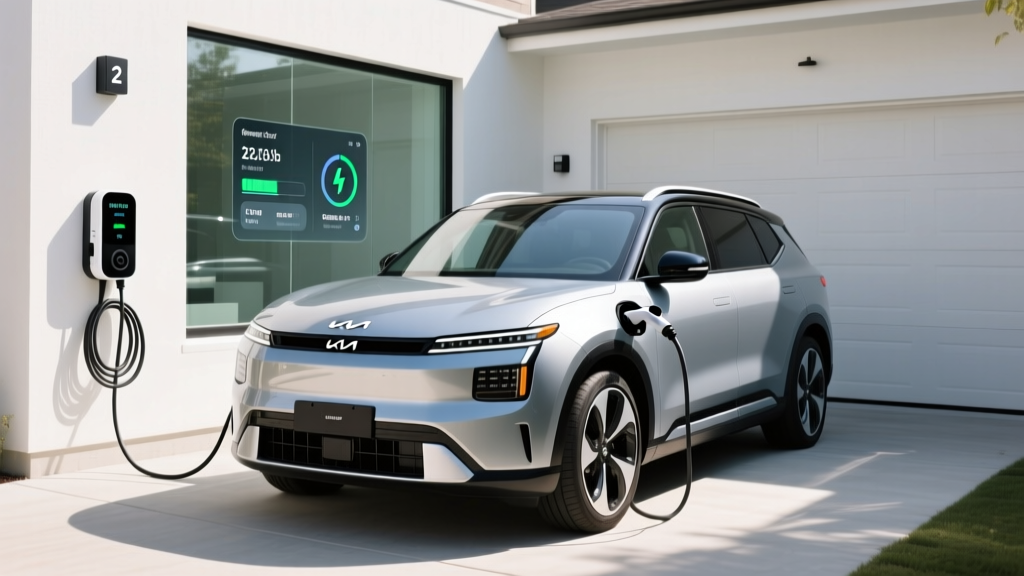
The 2026 Kia EV9 Light Long Range pairs a 77.4 kWh usable battery with an EPA-estimated 304 miles of range — a compelling three-row electric SUV for families. But owning this vehicle comfortably hinges on understanding how to charge it efficiently, whether at home overnight or on a cross-country road trip. This guide covers every charging scenario for the EV9 Light Long Range, from Level 1 trickle charging to 240 kW DC fast charging, with exact numbers, install costs, and equipment picks.
Understanding the Three Charging Levels for the EV9
Before we talk equipment and costs, let's establish the critical distinction: kW (kilowatts) measures power — how fast energy flows into your battery — while kWh (kilowatt-hours) measures energy — the total capacity of your battery. Think of kW as the width of a hose and kWh as the size of the bucket. The 2026 EV9 Light Long Range has a 77.4 kWh battery (the bucket) and accepts up to 240 kW of DC fast-charging power (the hose width).
| Level | Voltage / Amperage | Power (kW) | Miles of Range Added per Hour | Full Charge Time (0–100%) |
|---|---|---|---|---|
| Level 1 (120V household) | 120V / 12A | ~1.4 kW | ~4–5 miles | ~55+ hours |
| Level 2 (240V home/public) | 240V / 48A | ~11.5 kW | ~33–37 miles | ~7–8 hours |
| DC Fast Charging | 400V–800V DC | Up to 240 kW (peak) | ~150+ miles in 15 min | 10–80% in ~24 minutes |
For daily driving, Level 2 is the sweet spot. Most EV9 owners drive 30–50 miles per day, and a Level 2 home charger replenishes that in roughly one to two hours of overnight plugging. Level 1 is only practical as a backup or for very low-mileage drivers. DC fast charging is reserved for road trips.
How Fast Does the 2026 EV9 Light Long Range Actually Charge?
Kia equips the EV9 with an 800V-capable architecture, which allows it to accept very high DC fast-charging rates — but only under the right conditions. Here's what the charge curve actually looks like in practice:
- 10–80% at a 240 kW DC fast charger: approximately 24 minutes (under ideal conditions — battery preconditioned, ambient temp 65–85°F)
- 10–80% at a 150 kW DC fast charger: approximately 32–35 minutes
- 10–80% at a 50 kW DC fast charger: approximately 65–70 minutes
- 0–100% on Level 2 (11.5 kW onboard charger): approximately 7–8 hours
The charge curve matters. The EV9 will peak near 240 kW only between roughly 10–35% state of charge (SoC). After 50%, the rate tapers significantly — often dropping below 100 kW. Above 80%, charging slows dramatically to protect battery health, sometimes crawling at under 30 kW. This is why we measure DC fast charging in "10–80%" times: the last 20% can take as long as the first 70%.
For Level 2 home charging, the EV9's onboard charger maxes out at 11.5 kW (48A at 240V). Installing a 60A circuit with a 48A charger is ideal to capture the full onboard capacity. A 40A charger (9.6 kW) will still fully charge overnight but adds roughly one hour to the total time.
Home Charger Installation: Costs, Electrical Requirements & Panel Upgrades
Installing a Level 2 home charger for your EV9 is one of the most impactful upgrades you can make as an EV owner. Here's what's involved electrically and financially.
Electrical Requirements
The EV9's 11.5 kW onboard charger needs a dedicated 240V circuit. Per the National Electrical Code (NEC), continuous loads like EV charging can only use 80% of a circuit's rated capacity. This means:
- 48A charger → requires a 60A breaker (48 ÷ 0.8 = 60)
- 40A charger → requires a 50A breaker
- 32A charger → requires a 40A breaker
You'll need 6-gauge copper wire (or 4-gauge aluminum) for a 60A circuit, run from your electrical panel to the charger location. For outdoor installations, the charger must carry a NEMA 4 or NEMA 4X weather rating.
Do You Need a Panel Upgrade?
This is the question that can double your install cost. Most modern homes have a 200A main electrical panel. If your panel is already near capacity (common in homes with electric ranges, dryers, and HVAC), adding a 60A EV circuit may require a panel upgrade to 300A or 400A, or the addition of a sub-panel. Signs you may need an upgrade:
- Your panel is 100A or 150A (common in pre-1990 homes)
- You have fewer than 4 open breaker slots
- Your electrician's load calculation shows you're above 80% of panel capacity
A licensed electrician will perform a NEC Article 220 load calculation to determine if your panel can handle the additional circuit. Don't skip this step — it's a code requirement and a safety necessity.
| Component | Simple Install (panel nearby) | Complex Install (long run / upgrades) |
|---|---|---|
| Level 2 Charger (hardware) | $400–$700 | $500–$800 |
| Electrician labor (2–4 hrs simple / 6–10 hrs complex) | $300–$600 | $800–$2,000 |
| Electrical permit | $50–$150 | $50–$200 |
| Wire, conduit, breaker | $100–$250 | $300–$800 |
| Panel upgrade (if needed) | — | $1,500–$4,000 |
| TOTAL | $850–$1,700 | $3,150–$7,800 |
Get at least three quotes from licensed electricians. Many utilities offer rebates of $250–$500 for Level 2 charger installation, and the federal Alternative Fuel Vehicle Refueling Property Credit (IRS Form 8911) may cover up to 30% of installation costs (capped at $1,000), subject to income and location requirements.
Connector Compatibility: NACS, CCS1 & What the 2026 EV9 Uses
The 2026 Kia EV9 ships with a NACS (North American Charging Standard) charge port — the connector originally developed by Tesla and now adopted by most major automakers. This is a significant advantage: NACS-equipped vehicles gain native access to the Tesla Supercharger network, the largest and most reliable DC fast-charging network in North America, without an adapter.
| Connector Type | Native or Adapter? | Network Access |
|---|---|---|
| NACS (Tesla-style) | Native (built-in) | Tesla Superchargers, Electrify America, EVgo, ChargePoint (NACS stations) |
| CCS1 | Adapter required (NACS-to-CCS1) | Legacy CCS1 stations (most non-Tesla DCFC built before 2025) |
| CHAdeMO | Not supported | Effectively obsolete in the US; no adapter available |
| J1772 (Level 2 AC) | Adapter included or available | Public Level 2 stations (hotels, malls, workplaces) |
Practical tip: Keep a NACS-to-J1772 adapter in your EV9 for public Level 2 charging at older stations, and consider a NACS-to-CCS1 adapter ($200–$300) if you frequently travel through areas where legacy Electrify America or EVgo CCS1 chargers are the only option. Kia may include a J1772 adapter with the vehicle — check your owner's manual or dealer.
Cost to Charge: Home vs. Public vs. Gas Comparison
One of the strongest arguments for the EV9 Light Long Range is fuel cost savings — but the math depends heavily on where and when you charge.
| Scenario | Rate ($/kWh) | Cost per Full Charge (77.4 kWh) | Cost per Mile |
|---|---|---|---|
| Home (off-peak utility rate) | $0.12 | $9.29 | $0.040 |
| Home (average US rate) | $0.17 | $13.16 | $0.057 |
| Public Level 2 (ChargePoint, etc.) | $0.25–$0.40 | $19.35–$30.96 | $0.083–$0.134 |
| DC Fast Charging (Electrify America, EVgo) | $0.35–$0.55 | $27.09–$42.57 | $0.117–$0.183 |
| Gas equivalent (22 MPG combined SUV at $3.40/gal) | — | $35.55 (per 232 mi) | $0.155 |
At home on off-peak rates, the EV9 costs roughly 4 cents per mile — about a quarter of what a comparable gas-powered three-row SUV costs. Even at public DC fast chargers, the EV9 can be cheaper than gas, though the gap narrows considerably. The key financial takeaway: home charging is where the savings live. If you rely exclusively on public DC fast charging at $0.50/kWh, your per-mile cost can actually exceed that of an efficient gas SUV.
For the latest EPA efficiency data, the EV9 Light Long Range achieves approximately 89 MPGe combined (3.0 miles per kWh).
Best Home Chargers for the 2026 Kia EV9
Because the EV9 uses a NACS connector natively, you'll want a NACS-equipped Level 2 wall charger to avoid adapter hassle. Here are three proven options matched to the EV9's 11.5 kW onboard charger:
Tesla Wall Connector (NACS)
- Power output: up to 11.5 kW (48A)
- Connector: Native NACS — perfect match for the EV9
- Cable length: 24 feet
- Smart features: Wi-Fi, OTA updates, load sharing, access control via Tesla app
- Price: ~$475
- Best for: Best value NACS charger; works seamlessly with the EV9 despite the Tesla branding
ChargePoint Home Flex (NACS version)
- Power output: up to 12 kW (50A, adjustable down)
- Connector: NACS (2025+ model) or J1772 with adapter
- Cable length: 23 feet
- Smart features: Wi-Fi, ChargePoint app scheduling, Alexa integration, detailed energy reporting
- Price: ~$600–$700
- Best for: App-driven scheduling and utility demand-response programs
Emporia Vue Level 2 Charger
- Power output: up to 11.5 kW (48A)
- Connector: NACS (2025+ model) or J1772
- Cable length: 24 feet
- Smart features: Wi-Fi, Emporia app, energy monitoring, solar integration, scheduling
- Price: ~$400–$500
- Best for: Budget-conscious buyers who want smart scheduling and solar pairing
Our pick for the EV9: The Tesla Wall Connector offers the best combination of price, native NACS compatibility, and 48A output that matches the EV9's onboard charger exactly. Despite the Tesla name, it charges any NACS-equipped vehicle without issue.
Public Charging & Road Trip Strategy for the EV9
The EV9's NACS port and 240 kW peak charging rate make it one of the most road-trip-capable three-row EVs on the market. Here's how to plan effectively:
Tesla Supercharger Network
With native NACS, the EV9 can use Tesla's V3 (250 kW) and V4 Superchargers directly. In practice, expect 10–80% in approximately 24–28 minutes at a V3 stall. The Kia Connect app and the vehicle's native navigation will route you through Superchargers alongside Kia's partner networks.
Preconditioning Is Critical
The EV9's battery management system will precondition (pre-heat or pre-cool) the battery when you navigate to a DC fast charger. This is essential for achieving peak charge rates. If you arrive at a charger without preconditioning — for example, by driving to a station you found manually rather than navigating to it in the car — your peak charge rate may drop from 240 kW to 100–120 kW, adding 10–15 minutes to your stop. Always use the vehicle's built-in navigation to route to chargers.
Charging Deserts Are Real
Despite network growth, rural stretches in the Mountain West, Great Plains, and parts of the Southeast still have sparse DC fast-charging coverage. For the EV9 Light Long Range with its ~250-mile real-world highway range, plan charging stops every 200–220 miles to maintain a safety buffer. Apps like PlugShare and A Better Routeplanner (ABRP) are essential for trip planning.
Safety, Code & Best Practices for Home Charging
EV charging is a high-draw, long-duration electrical load — more similar to running an electric furnace than charging a phone. Safety isn't optional:
- Dedicated circuit: Your Level 2 charger must be on its own dedicated breaker — never shared with other appliances. This is a code requirement (NEC Article 625).
- GFCI protection: Outdoor installations require a GFCI (Ground Fault Circuit Interrupter) breaker. Most modern EVSEs (Electric Vehicle Supply Equipment) have built-in ground-fault protection, but your electrician will verify code compliance.
- Outdoor rating: If mounting outdoors, ensure the charger is rated NEMA 4 (weather-resistant). All three chargers recommended above carry outdoor ratings.
- Permit and inspection: Most jurisdictions require an electrical permit for a new 240V circuit. The inspection ensures the wire gauge, breaker size, and grounding are correct. Don't skip this — it protects your home insurance coverage.
- Cable management: Use a wall-mounted cable organizer to prevent the charging cable from lying on the ground where it can be damaged, tripped over, or exposed to standing water.
Frequently Asked Questions
How much does it cost to install a home EV charger for the 2026 Kia EV9?
For a straightforward installation with the electrical panel near the garage, expect $850–$1,700 total (charger hardware, electrician labor, wire, breaker, and permit). Complex installations requiring long wire runs, conduit, or a panel upgrade can range from $3,150–$7,800. Utility rebates and the federal refueling property credit can offset $250–$1,000 of this cost.
How fast will each charging level add range to the EV9?
Level 1 (120V) adds roughly 4–5 miles per hour — barely practical for daily use. Level 2 (240V, 48A) adds approximately 33–37 miles per hour, fully replenishing a day's driving in 1–2 hours. DC fast charging at 240 kW can add over 150 miles of range in about 15 minutes under ideal conditions.
Which connector does the 2026 Kia EV9 use?
The 2026 EV9 uses the NACS (North American Charging Standard) connector natively. This gives it direct access to Tesla Superchargers and the growing number of NACS-equipped public stations. For legacy CCS1 stations, a NACS-to-CCS1 adapter is required. A J1772 adapter is needed for older public Level 2 chargers.
How much does charging the EV9 cost per mile compared to gas?
At home on average electricity rates ($0.17/kWh), the EV9 costs about $0.057 per mile — roughly one-third the cost of a comparable gas SUV at $0.155 per mile (assuming 22 MPG combined and $3.40/gallon). Off-peak home rates drop the EV9 to about $0.04 per mile. Public DC fast charging narrows the gap to $0.12–$0.18 per mile depending on the network.
What electrical upgrades might I need for a Level 2 charger?
You need a dedicated 240V circuit — ideally 60A (to support a 48A charger). If your home's electrical panel is 100A or 150A, or is already near capacity, you may need a panel upgrade to 200A, 300A, or 400A, which adds $1,500–$4,000 to the project. A licensed electrician will perform a load calculation to determine if an upgrade is necessary.
Does the 2026 EV9 qualify for the federal EV tax credit?
Eligibility for the IRS §30D Clean Vehicle Credit (up to $7,500) depends on multiple factors: the buyer's modified adjusted gross income, the vehicle's MSRP (must be under $80,000 for SUVs), and battery component/critical mineral sourcing requirements that tighten annually. The credit can be transferred to the dealer as a point-of-sale discount. Consult a tax professional and check the latest IRS guidance before purchasing, as sourcing rules may affect the EV9's eligibility in 2026.
Quick-Reference Specs: 2026 Kia EV9 Light Long Range
| Specification | Value |
|---|---|
| EPA Range | 304 miles (real-world highway: ~250–270 mi) |
| Battery Capacity (usable) | 77.4 kWh (NMC chemistry) |
| Max DC Fast Charge Rate | 240 kW (peak) |
| 10–80% DC Fast Charge Time | ~24 minutes (ideal conditions) |
| Onboard Charger (Level 2) | 11.5 kW (48A at 240V) |
| Charge Port Connector | NACS (native) |
| Efficiency | ~89 MPGe / 3.0 mi/kWh |
| Horsepower / 0–60 mph | 201 hp / ~7.8 seconds |
| Base MSRP (Light Long Range RWD) | ~$56,395 (est.) |
| Battery/Powertrain Warranty | 10 years / 100,000 miles |