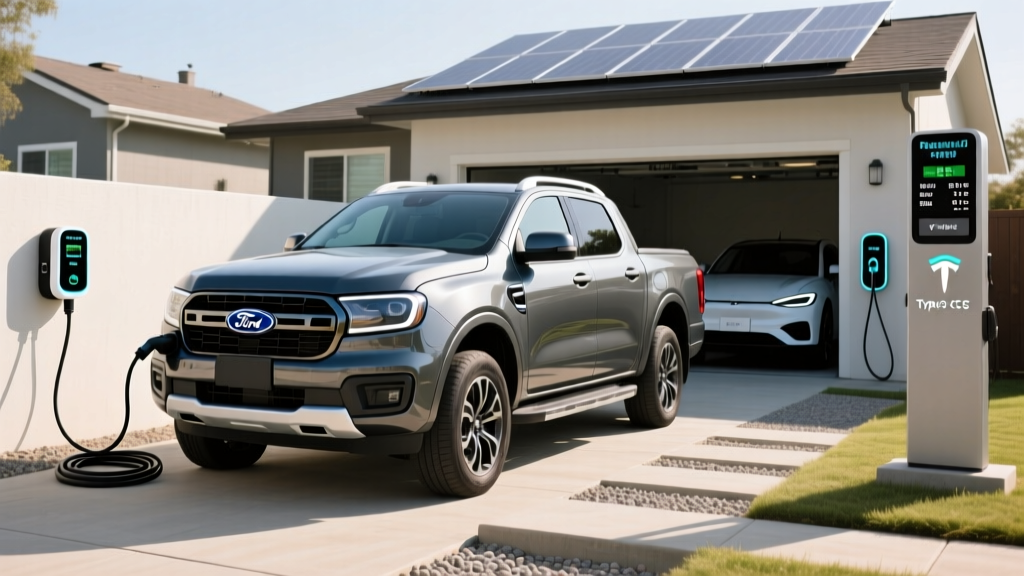
The 2026 Ford Ranger Hybrid (officially the Ranger PHEV for global markets, with the U.S. plug-in variant arriving for the first time in the Ranger lineup) pairs a turbocharged engine with an electric motor and a modest plug-in battery. If you've ordered one or are weighing the purchase, the biggest ownership question isn't horsepower — it's how, where, and how much it costs to charge. This guide covers every charging scenario Ranger Hybrid owners will face in 2026, from a standard 120V garage outlet to public DC fast chargers, with exact numbers for time, cost, and electrical requirements.
2026 Ford Ranger Hybrid: Battery, Range & Charging Spec Snapshot
Before plugging in, know what you're working with. The 2026 Ranger Hybrid's plug-in variant is expected to carry a battery in the 15–20 kWh usable range (final U.S. specs are preliminary as of early 2026; global Ranger PHEV variants have been confirmed with similar capacity). That's small compared to a full BEV like the F-150 Lightning's 98–131 kWh pack, but it's enough for roughly 25–35 miles of electric-only driving before the gas engine kicks in.
| Spec | 2026 Ford Ranger Hybrid (Preliminary) |
|---|---|
| Battery Capacity (usable) | ~15–20 kWh (Lithium-ion NMC) |
| EPA Electric-Only Range | ~25–35 miles (estimated, pending EPA certification) |
| Level 1 Charge Rate (120V) | ~1.4 kW (12A) |
| Level 2 Charge Rate (240V) | Up to ~7.2 kW onboard charger limit |
| DC Fast Charging | ~50 kW peak (estimated, CCS1/NACS via adapter) |
| Level 2 Full Charge (0–100%) | ~2.5–3 hours |
| DC Fast 10–80% | ~20–25 minutes (estimated) |
| Connector (U.S.) | NACS (Ford's 2025+ standard) or CCS1 depending on build date |
Charging Levels Explained: Speeds in kW and Miles Per Hour
The single most common EV/PHEV confusion is between kW (kilowatts) and kWh (kilowatt-hours). Here's the rule: kW is the rate of charging (like gallons-per-minute from a hose), while kWh is the amount of energy stored in your battery (like the size of the tank). Your Ranger Hybrid's battery holds roughly 15–20 kWh. How fast you refill it depends on the charging level's kW output.
| Level | Voltage | Power (kW) | Miles of Range Added Per Hour | Best For |
|---|---|---|---|---|
| Level 1 | 120V AC | 1.0–1.4 kW | ~3–5 miles/hour | Overnight top-ups, no install needed |
| Level 2 | 240V AC | 3.3–7.2 kW (Ranger limited to ~7.2) | ~12–25 miles/hour | Daily home charging, full overnight refill |
| DC Fast | 400V+ DC | 50–150+ kW (Ranger ~50 kW peak) | ~150–250+ miles/hour (at peak) | Road-trip quick charges, public stations |
For the Ranger Hybrid's ~18 kWh battery, Level 1 charging adds a full battery in roughly 13–18 hours — workable if you drive under 30 miles daily and plug in every night. Level 2 cuts that to about 2.5–3 hours, which is the sweet spot for PHEV owners who want a full electric tank every morning. DC fast charging is overkill for daily use but useful on road trips when you want to maximize electric miles between gas fill-ups.
Home Charger Installation: Electrical Requirements & Costs
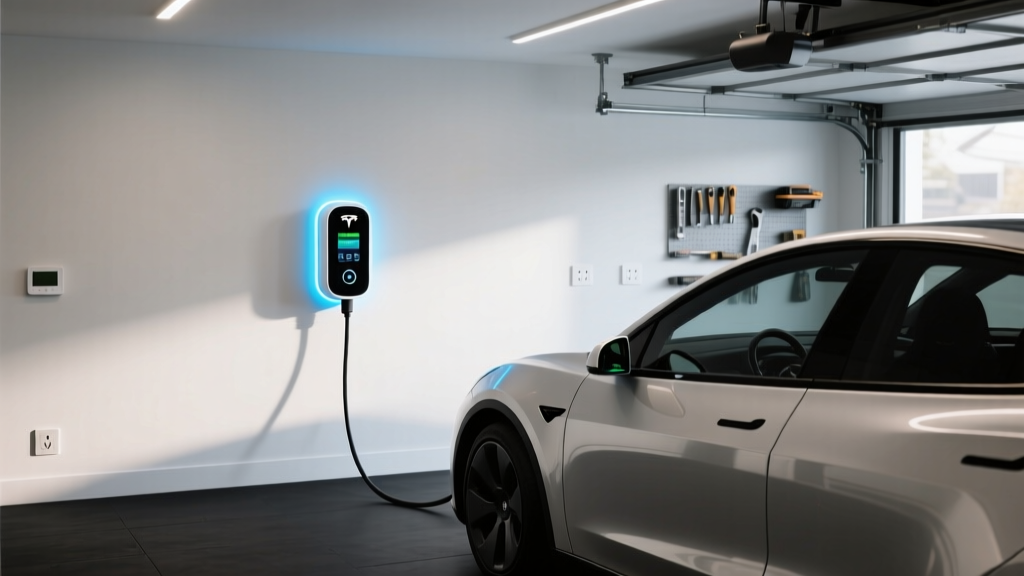
Installing a Level 2 home charger for your Ranger Hybrid requires a dedicated 240V circuit, similar to what an electric dryer or oven uses. Here's what's involved and what it costs in 2026.
Electrical Requirements
- Circuit: Dedicated 40-amp breaker (for a 32-amp continuous charger) or 50-amp breaker (for a 40-amp continuous charger)
- Voltage: 240V single-phase
- Wire: 6 AWG copper (for 50A) or 8 AWG (for 40A), run in conduit
- Outlet option: NEMA 14-50 (most common) or hardwired connection
- GFCI protection: Required by NEC 2020+ for garage receptacles; hardwired chargers with built-in ground-fault protection may exempt the breaker
Panel Capacity Check
Most modern homes with 200-amp service panels can accommodate a 40–50A EV circuit without a panel upgrade. However, if your home has a 100-amp panel (common in pre-1990 builds) or your existing loads are near capacity (electric heat, tankless water heater, pool equipment), you may need a panel upgrade to 200A or a load-management device that throttles charger amperage when other circuits draw heavily. A licensed electrician performs a load calculation to determine this.
| Component | Cost Range (2026) | Notes |
|---|---|---|
| Level 2 Charger (Equipment) | $300–$700 | Smart Wi-Fi chargers; basic models from $200 |
| Electrician Labor | $500–$1,500 | Varies by run length, wall material, conduit needs |
| Electrical Permit | $50–$200 | Required in most jurisdictions; inspection included |
| Panel Upgrade (if needed) | $1,500–$3,500 | 100A to 200A service upgrade; not required in most homes |
| Load Management Device (optional) | $200–$500 | Alternative to panel upgrade in tight-capacity homes |
| Total (typical, no panel upgrade) | $850–$2,400 | Most homeowners land in $1,000–$1,600 range |
Connector Compatibility: NACS, CCS1 & Adapter Requirements
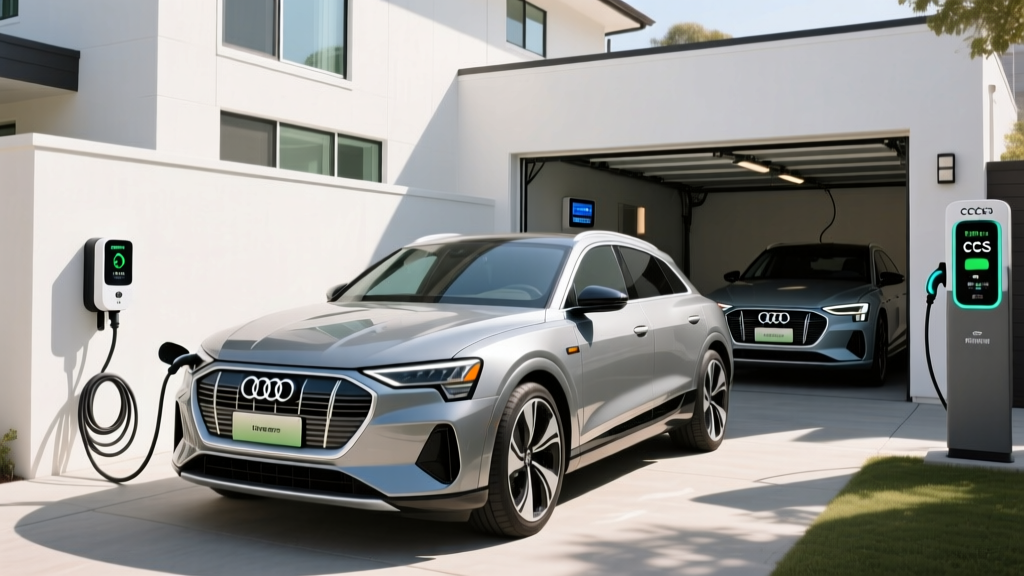
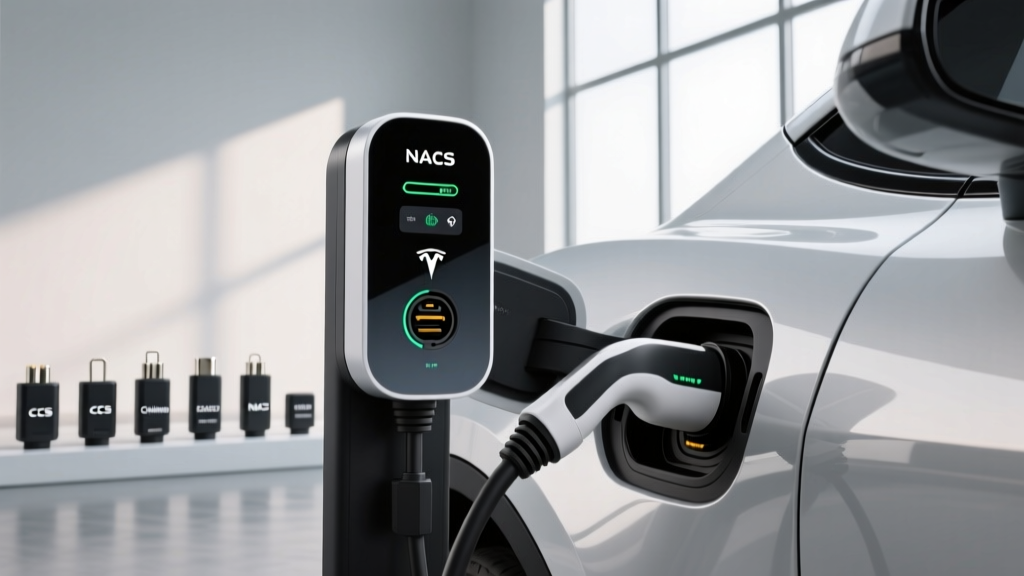
Ford began transitioning its North American EVs and PHEVs to the NACS (North American Charging Standard) connector — the Tesla-designed plug now adopted industry-wide — starting with 2025 model-year vehicles. For the 2026 Ranger Hybrid, expect a NACS charge port on vehicles built for the U.S. market. However, some early-build or fleet-spec units may still carry CCS1.
| Connector | Networks | Ranger Hybrid Compatibility |
|---|---|---|
| NACS (J3400) | Tesla Supercharger, Electrify America (new stalls), Rivian Adventure Network, most 2025+ public chargers | Native on 2026 U.S. models |
| CCS1 | Electrify America, EVgo, ChargePoint, older public DC chargers | Requires NACS-to-CCS adapter ($150–$250) |
| CHAdeMO | Largely deprecated in U.S.; some legacy Nissan/Mitsubishi stations | Not compatible; avoid seeking out |
| J1772 (Level 1/2 AC) | Public Level 2 stations, home chargers (pre-2025) | Requires NACS-to-J1772 adapter for AC charging (~$100–$180) |
Adapter strategy for Ranger Hybrid owners: If your truck has NACS, you can plug directly into Tesla Superchargers and the growing number of NACS-equipped public stations. Carry a NACS-to-CCS adapter ($150–$250 from Ford or third-party suppliers like Lectron or A2Z) to access older Electrify America and EVgo stalls that still use CCS1 cables. Ford's Ford EV charging page lists approved adapters.
Charging Cost Per Mile: Ranger Hybrid vs Gas
The Ranger Hybrid's economic advantage depends on how much you drive on electricity vs. gas. Here's the math for 2026 electricity and fuel prices.
| Scenario | Rate | Cost to Fill ~18 kWh Battery | Cost Per Electric Mile (30 mi range) | Gas Equivalent (25 MPG combined, $3.40/gal) |
|---|---|---|---|---|
| Home Off-Peak (utility TOU rate) | $0.09/kWh | $1.62 | $0.054/mile | $0.136/mile |
| Home Standard Rate | $0.15/kWh | $2.70 | $0.090/mile | $0.136/mile |
| Public Level 2 (ChargePoint, etc.) | $0.25/kWh | $4.50 | $0.150/mile | $0.136/mile |
| DC Fast Charger (EA, EVgo) | $0.40/kWh | $7.20 | $0.240/mile | $0.136/mile |
The takeaway: Charging at home on off-peak utility rates saves roughly 60% per mile vs. gasoline. At standard residential rates, you save about 34%. But relying on public DC fast chargers for daily charging actually costs more per mile than gas — a reality PHEV owners should plan around. The Ranger Hybrid's value proposition assumes regular home or workplace Level 2 charging.
Recommended Home Chargers for the 2026 Ranger Hybrid
Since the Ranger Hybrid's onboard charger maxes out around 7.2 kW, you don't need a 48-amp charger — a 32-amp unit delivers the full speed your truck can accept. That said, installing a higher-amperage charger future-proofs for a second EV or a future BEV upgrade.
ChargePoint Home Flex (NACS)
- Power: Up to 12 kW (50A) — Ranger will draw ~7.2 kW
- Connector: NACS native (2025+ model); J1772 older stock
- Cable Length: 23 feet
- Smart Features: Wi-Fi, app scheduling, utility TOU integration, Alexa
- Price:~$550 (NACS version)
- Best For: Smart scheduling to charge during off-peak hours automatically
Emporia Level 2 EV Charger
- Power: Up to 11.5 kW (48A)
- Connector: NACS or J1772 (select at purchase)
- Cable Length: 24 feet
- Smart Features: Wi-Fi, solar integration, energy monitoring, load management
- Price: ~$400
- Best For: Budget-conscious buyers who want energy monitoring and solar pairing
Tesla Wall Connector (NACS)
- Power: Up to 11.5 kW (48A)
- Connector: NACS native
- Cable Length: 24 feet
- Smart Features: Wi-Fi, power sharing (two units on one circuit), OTA updates
- Price: ~$475
- Best For: NACS-native homes; cleanest plug-and-play with Ford's NACS port
Grizzl-E Smart (Level 2)
- Power: Up to 10 kW (40A)
- Connector: J1772 (use adapter for NACS) or NACS (2025+ SKU)
- Cable Length: 24 feet
- Smart Features: Basic app, OCPP-compatible, extreme cold rated (-40°F)
- Price: ~$450
- Best For: Cold-climate garages and outdoor installations; built in Canada
Safety, Code & Installation Best Practices
A Level 2 charger draws sustained high amperage for hours — this is one of the heaviest continuous loads in your home. Cutting corners on installation risks fire, failed inspections, and voided insurance claims.
- Dedicated circuit: The charger must have its own breaker — never share a circuit with other appliances.
- Hardwired vs. plug-in: Hardwired installations (no receptacle) eliminate the GFCI breaker requirement and reduce points of failure. Plug-in (NEMA 14-50) offers portability but requires a GFCI breaker in most 2020+ NEC jurisdictions, adding $50–$120 to the breaker cost.
- Outdoor rating: If installing outside, ensure the charger is NEMA 4-rated (weatherproof). All recommended chargers above carry outdoor ratings.
- Permit and inspection: Required in most U.S. jurisdictions. The inspector verifies wire gauge, breaker size, grounding, and GFCI compliance. Skipping the permit risks insurance denial in the event of an electrical fire.
- Use a licensed electrician: DIY 240V work is dangerous and illegal without a permit in most states. Hire a licensed, insured electrician who provides a written load calculation.
For detailed NEC requirements, the National Fire Protection Association's NEC page publishes the code standards your electrician will follow.
Public Charging Tips for Ranger Hybrid Owners
With only ~25–35 miles of electric range, public charging is optional for the Ranger Hybrid — not essential like it is for a full BEV. Still, topping up on electric miles during road trips or while shopping reduces fuel costs. Here's how to make it work:
- Level 2 public stations (grocery stores, workplaces, parking garages) add ~12–25 miles of range per hour. A 2-hour shopping trip can fully refill the Ranger's battery. Use apps like PlugShare or ChargePoint to locate stations.
- DC fast chargers are rarely cost-effective for a PHEV's small battery. The $0.35–$0.48/kWh rates mean a full charge costs $6–$9 for 30 miles of range — more than the gas equivalent. Use DC fast only when free charging is available or when you need to maximize electric miles on a long trip.
- Preconditioning: The Ranger Hybrid's thermal management system warms the battery for faster charging. Enable preconditioning in the FordPass app when navigating to a charger — this reduces the 10–80% charge time by several minutes, especially in cold weather.
- Charge curve reality: Like all lithium-ion batteries, the Ranger's charge rate tapers significantly above 80% SoC. Charging from 80–100% can take as long as 10–80%. For road trips, charge to 80% and drive.
Frequently Asked Questions
How much does it cost to install a home EV charger for the 2026 Ford Ranger Hybrid?
A typical Level 2 home installation costs $850–$2,400 total, including the charger ($300–$700), electrician labor ($500–$1,500), and permit ($50–$200). If your home needs a panel upgrade from 100A to 200A, add $1,500–$3,500. Most modern homes with 200A service don't require an upgrade. The IRS Alternative Fuel Vehicle Refueling Property Credit covers 30% of costs, up to $1,000, in qualifying census tracts.
How fast will each charging level add range to the Ranger Hybrid?
Level 1 (120V) adds roughly 3–5 miles of electric range per hour. Level 2 (240V, 32A) adds 12–25 miles per hour and fully charges the ~18 kWh battery in about 2.5–3 hours. DC fast charging at ~50 kW peaks at 150+ miles per hour but is limited by the small battery — a 10–80% charge takes approximately 20–25 minutes.
Which connector and charger is compatible with my 2026 Ranger Hybrid?
U.S.-spec 2026 Ranger Hybrids are expected to use the NACS (J3400) connector natively, giving direct access to Tesla Superchargers and new NACS public stations. For older CCS1 public chargers, carry a NACS-to-CCS adapter ($150–$250). For home Level 2, a NACS Wall Connector or a ChargePoint Home Flex with NACS plug works directly.
How much does charging cost per mile vs. gas in the Ranger Hybrid?
At home off-peak rates ($0.09/kWh), electric driving costs roughly $0.05/mile — about 60% less than gasoline at $3.40/gallon and 25 MPG combined ($0.14/mile). At standard residential rates ($0.15/kWh), you save about 34%. Public DC fast charging ($0.40/kWh) costs $0.24/mile — more than gas — so prioritize home and workplace Level 2 charging for savings.
What electrical upgrades might I need for a home charger?
If your home has a 200-amp electrical panel with available capacity, no upgrade is needed — a licensed electrician adds a 40–50A dedicated breaker and runs 6 or 8 AWG wire to your garage. If you have a 100-amp panel or your existing loads are near capacity, you'll need either a panel upgrade to 200A ($1,500–$3,500) or a load-management device ($200–$500) that dynamically reduces charger amperage when other circuits are active.
Is the 2026 Ford Ranger Hybrid eligible for the federal EV tax credit?
PHEVs with sufficient battery capacity may qualify for a partial or full §30D Clean Vehicle Credit (up to $7,500), subject to MSRP caps ($80,000 for trucks), buyer income limits ($150K single / $300K joint), and battery critical-mineral sourcing requirements. The point-of-sale transfer option lets you apply the credit as a down-payment reduction at the dealer. Check current eligibility on fueleconomy.gov, as sourcing rules tighten annually.
The 2026 Ford Ranger Hybrid's plug-in architecture rewards owners who charge at home regularly. With a $1,000–$1,600 Level 2 installation and off-peak utility rates, you'll cut your per-mile fuel cost by more than half on daily electric-range commutes — while the gas engine eliminates range anxiety for longer hauls. Plan your charging setup before delivery day, and the Ranger Hybrid becomes the most cost-efficient midsize truck in Ford's lineup.