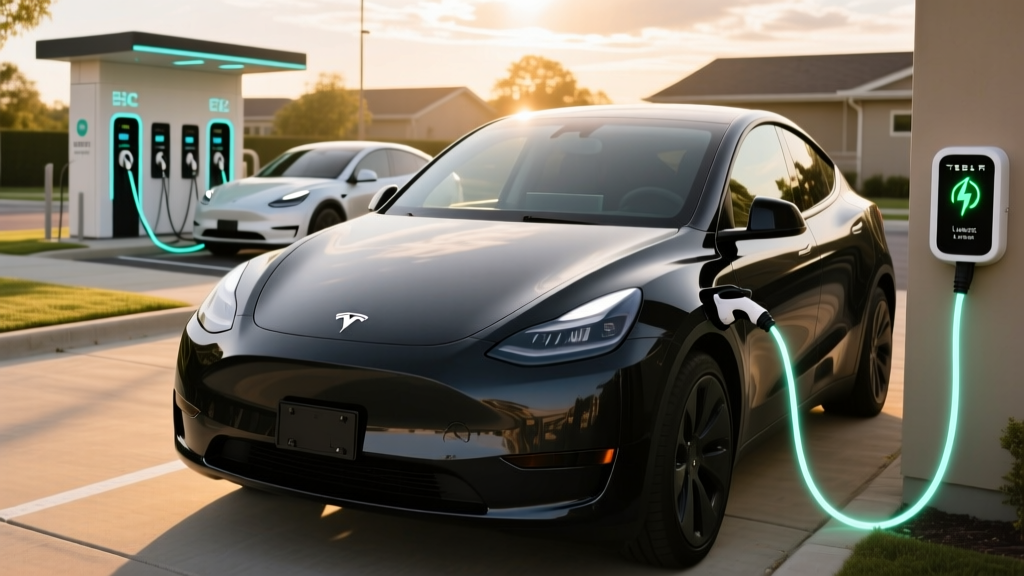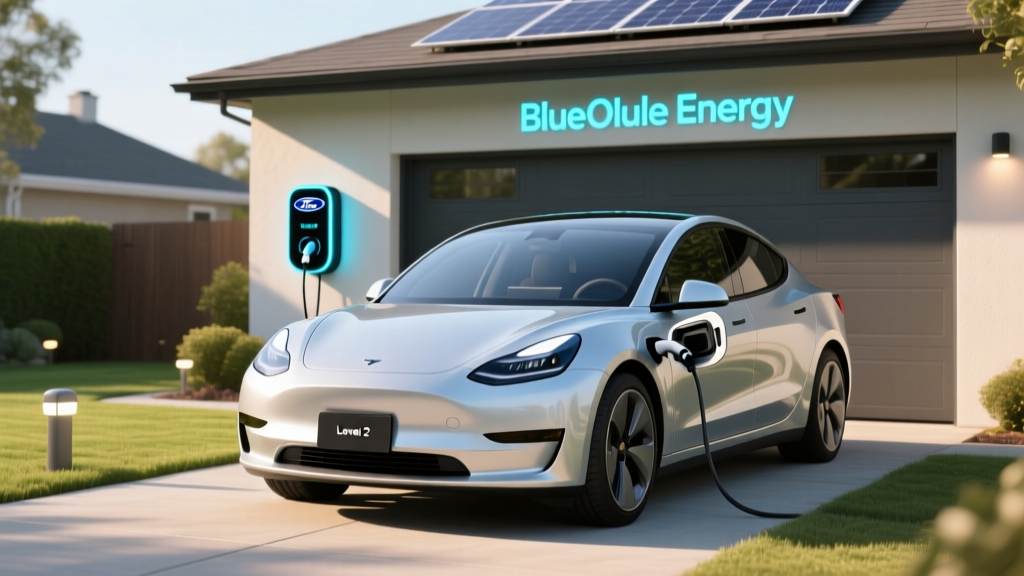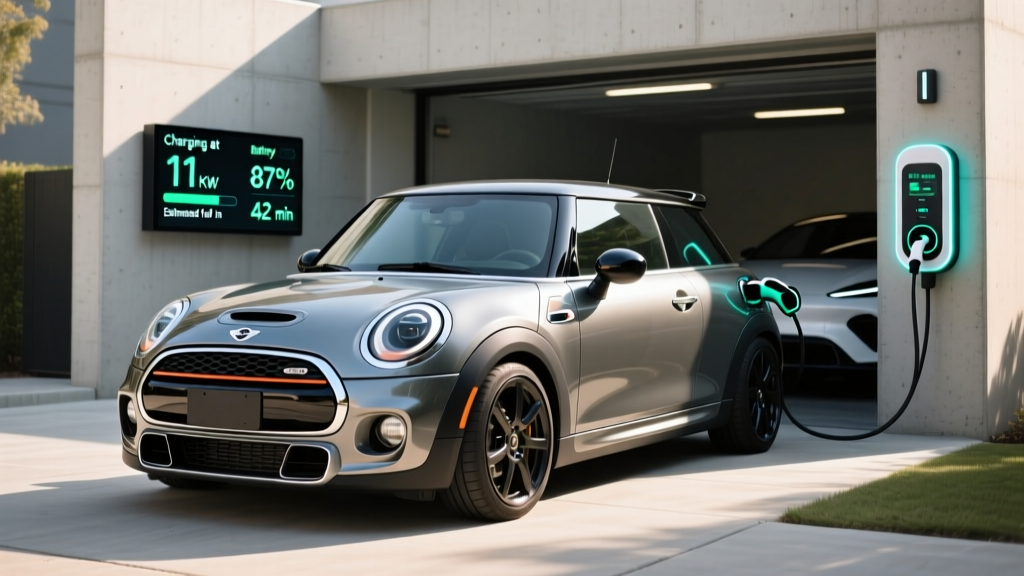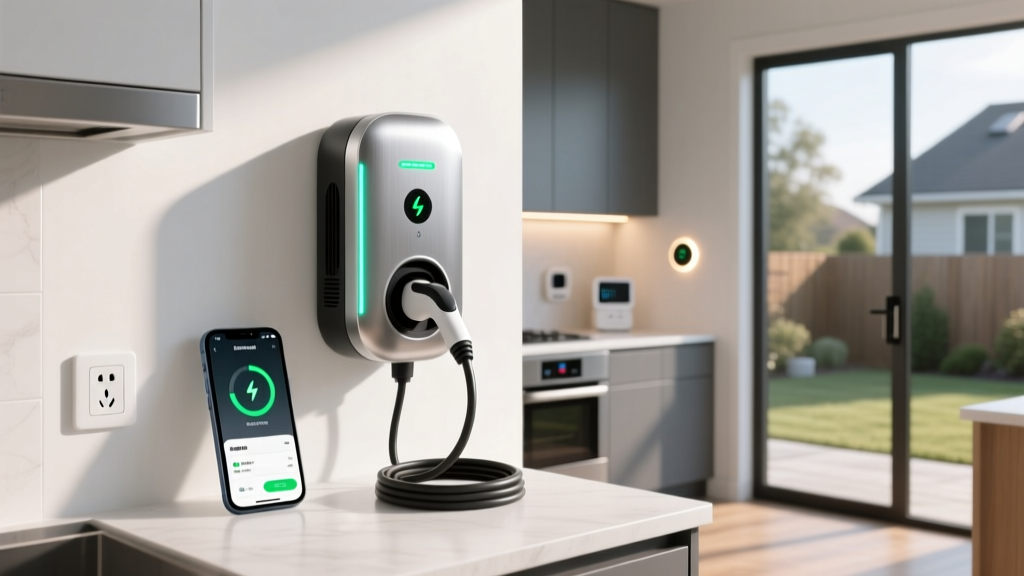
Choosing the right electric vehicle supply equipment (EVSE) in 2026 is more nuanced than simply buying the highest-powered unit you can find. With the North American Charging Standard (NACS) now adopted by nearly every major automaker, DC fast-charging networks expanding past 75,000 public ports nationwide, and home electrical panels increasingly strained by larger EV batteries, the 2026 electric charger landscape demands careful planning. This guide cuts through marketing claims to give you exact power outputs, installation realities, connector compatibility, and per-mile costs — the data you need before you plug in or pull a permit.
Charging Levels Explained: Speed, Power, and Real-World Range Added
The single most important distinction in EV charging is between kW (kilowatts — the rate of power delivery, like water pressure) and kWh (kilowatt-hours — the total energy stored in your battery, like gallons in a tank). A charger rated at 11.5 kW delivers energy at that rate; a 75 kWh battery holds that total amount. Confusing these two is the most common mistake new EV owners make.
Here's how each charging level translates to real-world range recovery, based on an average EV efficiency of 3.0 miles per kWh (representative of vehicles like the Tesla Model Y and Hyundai Ioniq 5):
| Level | Voltage / Amperage | Power (kW) | Miles of Range per Hour | Typical Use Case |
|---|---|---|---|---|
| Level 1 | 120V / 12A | 1.4 kW | ~4 mi/hr | Overnight trickle, PHEVs, low-mileage drivers |
| Level 2 (basic) | 240V / 32A | 7.7 kW | ~23 mi/hr | Standard home charging, most daily needs |
| Level 2 (high-power) | 240V / 48A | 11.5 kW | ~34 mi/hr | Larger batteries (100+ kWh), faster overnight fills |
| DC Fast (moderate) | 400V architecture | 50–150 kW | ~150–450 mi/hr | Road trips, quick top-ups |
| DC Fast (ultra) | 800V architecture | 200–350 kW | ~600–1,000+ mi/hr | Hyundai/Kia/Porsche 800V platforms, Tesla V4 Superchargers |
Real-world caveat: DC fast chargers do not sustain peak kW across the entire session. A charger advertising 250 kW peak may only deliver that rate between 10–30% State of Charge (SoC), tapering significantly above 80%. A realistic 10–80% session on a 250 kW charger with a 75 kWh battery takes 18–25 minutes, not the 12 minutes that simple division would suggest. Always look for published 10–80% times rather than peak kW claims.
Home Installation: Electrical Requirements, Panel Upgrades, and True Costs
The sticker price of a Level 2 home charger ($300–$700 for quality equipment) is usually the smallest part of your total investment. Professional installation — including wiring, a dedicated circuit, permits, and potential panel upgrades — is where the real cost lies.
What Your Electrician Will Evaluate
A licensed electrician will perform a load calculation on your existing electrical panel to determine whether it can support a new 240V circuit. Here's what they're checking:
- Panel capacity: Most modern homes have 200-amp service. Older homes may have 100A or even 60A panels, which may not support a 40A or 50A EV circuit alongside existing loads (HVAC, electric range, dryer).
- Available breaker slots: You need two adjacent slots for a 240V double-pole breaker.
- Wire run distance: Longer runs from panel to garage or driveway require thicker (and more expensive) copper wire — typically 6 AWG for 50A circuits or 8 AWG for 40A circuits.
- Continuous load rules: The National Electrical Code (NEC) requires EV chargers to be treated as continuous loads, meaning a 40A charger needs a 50A breaker (125% rule).
| Component | Low-End Estimate | High-End Estimate | Notes |
|---|---|---|---|
| Level 2 EVSE equipment | $300 | $700 | 32A–48A hardwired or NEMA 14-50 plug |
| Electrician labor + wire | $400 | $1,500 | Depends on run length, wall/floor penetration |
| Electrical permit | $50 | $200 | Varies by municipality |
| Panel upgrade (if needed) | $1,500 | $4,000 | 100A → 200A service upgrade; not always required |
| Total (no panel upgrade) | $750 | $2,400 | Most typical scenario for modern homes |
| Total (with panel upgrade) | $2,250 | $6,400 | Common in pre-1990 homes with 100A service |
Panel-upgrade gotcha: If your home was built before 1990 or has a 100-amp panel, budget for a possible upgrade. Some homeowners opt for a smart load-management device (such as the Emporia VUE with automatic load shedding) that monitors household draw and throttles the charger when other large appliances cycle on — this can avoid a panel upgrade entirely, saving $1,500–$4,000.
Safety and Code Requirements
- Dedicated circuit: Your EV charger must have its own dedicated double-pole breaker — never share a circuit with other appliances.
- GFCI protection: NEC 2020 and later requires GFCI protection for outdoor receptacles. Hardwired chargers (no plug) often bypass this requirement and are generally preferred for reliability — NEMA 14-50 receptacles can loosen over time and cause thermal events.
- Outdoor rating: If installing outside, ensure the EVSE carries a NEMA 4 or NEMA 4X rating for weather resistance. Most quality 2026 chargers (ChargePoint, Emporia, Wallbox) carry this rating.
- WiFi connectivity: Smart chargers with app-based scheduling let you charge during off-peak utility hours, cutting your electricity cost by 30–60%.
Connector Compatibility: NACS, CCS, and CHAdeMO in 2026
The connector landscape has consolidated dramatically. As of 2026, nearly all new EVs sold in North America use the NACS (North American Charging Standard) port, originally developed by Tesla and now standardized as SAE J3400. The legacy CCS1 connector is still found on vehicles sold through 2024–2025, while CHAdeMO is effectively discontinued on new vehicles (the Nissan Leaf ended production).
| Connector | Brands Using It (2026 Models) | Adapter Needed? |
|---|---|---|
| NACS (J3400) | Tesla, Ford, GM, Rivian, Hyundai, Kia, BMW, Mercedes, Volvo, Polestar, Nissan (Ariya+), Lucid, Subaru | None for Tesla Superchargers and NACS-native public stations |
| CCS1 | Legacy 2022–2025 models (VW ID.4 early, older Bolt EUV, some Stellantis PHEVs) | NACS-to-CCS adapter (~$150–$250) required for Tesla Supercharger access |
| CHAdeMO | Discontinued — no new 2026 models | Limited public availability; plan replacement |
For home Level 2 charging: Most 2026 home chargers ship with a NACS connector. If you own a CCS1 vehicle, you can either purchase a CCS-equipped EVSE or use a NACS-to-CCS adapter (sold by Tesla, Lectron, and A2Z) for approximately $150–$250. Verify adapter compatibility with your specific model year before purchasing.
Cost to Charge: Home vs. Public vs. Gas — Per-Mile Breakdown
The economic case for home charging remains overwhelming in 2026, even as public DC fast-charging prices have risen. Here's how costs compare across scenarios, assuming an EV efficiency of 3.0 mi/kWh (similar to a Tesla Model Y Long Range or Hyundai Ioniq 5):
| Charging Scenario | Price per kWh | Cost per Mile | Cost for 300-Mile Trip |
|---|---|---|---|
| Home (off-peak TOU rate) | $0.08–$0.12 | $0.03–$0.04 | $9–$12 |
| Home (standard flat rate) | $0.14–$0.18 | $0.05–$0.06 | $14–$18 |
| Public Level 2 (workplace, retail) | $0.20–$0.35 | $0.07–$0.12 | $20–$35 |
| DC Fast (Electrify America, EVgo) | $0.35–$0.55 | $0.12–$0.18 | $35–$55 |
| Tesla Supercharger (varies by location) | $0.25–$0.40 | $0.08–$0.13 | $25–$40 |
| Gas vehicle (28 MPG combined, $3.40/gal) | — | $0.12 | $36 |
The takeaway: Home off-peak charging costs roughly one-quarter what gasoline does per mile. Even frequent DC fast charging is cost-competitive with gas, though it erodes the EV savings advantage. According to fueleconomy.gov, the average EV owner who charges primarily at home saves $800–$1,200 annually versus a comparable gas vehicle.
Time-of-use (TOU) tip: Contact your utility about EV-specific TOU plans. Many utilities in 2026 offer super-off-peak rates between midnight and 6 AM as low as $0.05–$0.08/kWh. A smart charger with scheduled charging automates this entirely — you plug in when you get home, and the charger waits for the cheap window.
Charging Time Examples: How Long for Common EV Batteries?
Charge time depends on battery capacity (kWh), the charger's power output (kW), and the vehicle's onboard charger limit for Level 2 (most accept 7.7–11.5 kW AC). For DC fast charging, the vehicle's battery management system controls the charge curve.
| Vehicle (2026) | Battery (kWh) | Level 2 at 11.5 kW (0–100%) | DC Fast 10–80% |
|---|---|---|---|
| Tesla Model Y Long Range | 75 kWh (NMC) | ~7 hours | ~18 min (250 kW peak) |
| Hyundai Ioniq 5 | 77.4 kWh (NMC, 800V) | ~7.3 hours | ~18 min (350 kW capable) |
| Ford F-150 Lightning Ext. Range | 131 kWh (NMC) | ~12 hours | ~41 min (150 kW peak) |
| Chevrolet Equinox EV | 85 kWh (NMC) | ~8 hours | ~28 min (150 kW peak) |
| Toyota bZ4X | 71.4 kWh (NMC) | ~6.8 hours | ~30 min (150 kW peak) |
Cold-weather reality: Battery charging speed drops significantly below freezing. Without preconditioning (warming the battery before arriving at a charger), a 250 kW session may start at just 50–80 kW and taper early. Vehicles with built-in battery preconditioning (Tesla, Hyundai/Kia 800V models, GM Ultium) mitigate this — always enable navigation to a charger to trigger preconditioning automatically.
Best 2026 Electric Charger Equipment: Top Picks by Use Case
These recommendations prioritize verified power output, build quality, safety certifications (UL-listed), and connector options. All units below are NACS-equipped by default, with CCS available as a configuration option.
Best Overall: ChargePoint Home Flex (2nd Gen)
- Power output: Up to 11.5 kW (48A) on a 60A circuit, configurable down to 16A for smaller panels
- Connector: NACS (J3400) standard; CCS1 available
- Cable length: 23 feet
- Smart features: WiFi, app scheduling, Alexa integration, load-sharing with second unit, utility TOU integration
- Price: ~$550–$650
- Why it wins: Amperage flexibility means it works on nearly any panel. UL-listed, NEMA 4 outdoor rated, and backed by a 3-year warranty.
Best Value: Emporia Level 2 EV Charger
- Power output: Up to 11.5 kW (48A)
- Connector: NACS standard; J1772 with adapter
- Cable length: 24 feet
- Smart features: WiFi, app control, energy monitoring via Emporia VUE panel integration, solar-aware charging
- Price: ~$350–$400
- Why it wins: The lowest-cost 48A UL-listed smart charger on the market. Pairs with Emporia's whole-home energy monitor for load management — potentially avoiding a panel upgrade.
Best for Tesla Owners: Tesla Wall Connector (Gen 4)
- Power output: Up to 11.5 kW (48A)
- Connector: NACS native
- Cable length: 24 feet
- Smart features: WiFi, over-the-air updates, Power Sharing with additional Wall Connectors, integrated with Tesla app
- Price: ~$420–$475
- Why it wins: Cleanest integration for Tesla vehicles. Gen 4 adds a NACS connector natively and a slimmer wall-mounted form factor.
Best Portable / Renters: Lectron V-Box Pro
- Power output: Up to 11.5 kW (48A) when hardwired; 7.7 kW (32A) on NEMA 14-50 plug
- Connector: NACS or CCS1 selectable
- Cable length: 20 feet
- Smart features: Basic app scheduling, LED status display
- Price: ~$300–$380
- Why it wins: Dual-mode (plug-in or hardwire) makes it portable between residences. Good option for renters who may move and want to take their charger.
Federal Incentives and Utility Rebates for Home Charging
The IRS §30C Alternative Fuel Vehicle Refueling Property Credit offers a tax credit of up to 30% of the cost of home EV charger equipment and installation, capped at $1,000. Key eligibility rules for 2026:
- The charger must be installed at your primary residence in the United States.
- The property must be located in an eligible census tract (generally non-urban or low-income communities — check the IRS locator tool).
- Both equipment and installation labor qualify toward the 30% calculation.
- The credit is non-refundable — it reduces your tax liability but won't generate a refund beyond zero.
Beyond federal credits, many utilities in 2026 offer rebates of $200–$500 for installing a smart Level 2 charger, and some provide free or discounted TOU rate enrollment. Check your utility's EV program page before purchasing — some require pre-approval to qualify.
Frequently Asked Questions
How much does it cost to install a home EV charger?
Expect $750–$2,400 total for a typical Level 2 installation (equipment, electrician, permit) in a home with adequate 200A panel capacity. Homes requiring a panel upgrade from 100A to 200A should budget an additional $1,500–$4,000. Always get 2–3 quotes from licensed electricians and confirm they include permit costs.
How fast will each charging level add range?
Level 1 (120V) adds roughly 4 miles of range per hour. Level 2 at 32A (7.7 kW) adds about 23 miles per hour. Level 2 at 48A (11.5 kW) adds about 34 miles per hour. DC fast charging adds 150–1,000+ miles per hour at peak, but tapers significantly above 80% SoC — a 10–80% session typically takes 18–45 minutes depending on the vehicle and charger.
Which connector or charger is compatible with my EV?
For 2026 models, nearly all new EVs use the NACS (J3400) connector — this includes Tesla, Ford, GM, Hyundai, Kia, BMW, Rivian, and most others. If you drive a 2022–2025 vehicle with CCS1, you'll need a NACS-to-CCS adapter (~$150–$250) for Tesla Supercharger access, or a CCS-equipped home charger. CHAdeMO is no longer supported on new vehicles.
How much does charging cost per mile compared to gas?
Home charging on an off-peak TOU rate costs approximately $0.03–$0.04 per mile — about one-third the cost of gasoline at $3.40/gallon and 28 MPG ($0.12/mile). Public DC fast charging at $0.35–$0.55/kWh costs $0.12–$0.18 per mile, roughly equivalent to gas. The savings advantage is largest when you charge at home overnight. Data from fueleconomy.gov confirms average annual fuel savings of $800–$1,200 for primarily home-charged EVs.
What electrical upgrades might I need?
The most common upgrade is a panel capacity increase from 100A to 200A service ($1,500–$4,000), needed in older homes that lack headroom for a 40A–50A dedicated EV circuit. You may also need a new conduit run if your panel is far from the charging location, or a sub-panel if you're charging in a detached garage. Some homeowners use smart load-management devices to avoid panel upgrades entirely — these monitor total household draw and throttle the charger dynamically.
Should I hardwire my charger or use a NEMA 14-50 plug?
Hardwiring is generally recommended for reliability and code compliance. NEMA 14-50 receptacles can loosen with repeated plug/unplug cycles, creating thermal risk, and some jurisdictions now require GFCI breakers on 14-50 outlets — which can nuisance-trip with EV chargers. Hardwired installations avoid both issues and often pass inspection more easily. Choose a plug only if portability between residences is a priority.
Can I charge my EV with solar panels?
Yes. Smart chargers like the Emporia Level 2 and Wallbox Pulsar Plus can integrate with home solar systems to charge only when excess solar production is available — effectively driving on sunlight at near-zero marginal cost. This requires a compatible energy management system and typically works best with a home battery (such as a Tesla Powerwall) to smooth intermittent production.
For the most current safety standards, consult the National Electrical Code (NEC) and always hire a licensed electrician for installation. The EV charging ecosystem in 2026 is mature and reliable — the key is matching the right equipment to your home's electrical capacity, your vehicle's connector, and your driving patterns.