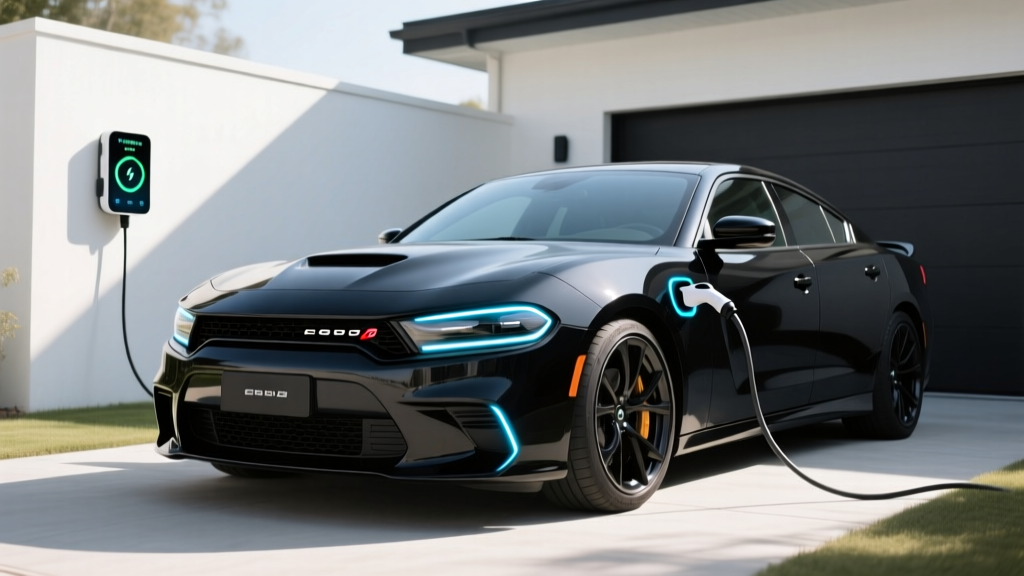
The 2026 Dodge Charger Daytona marks Stellantis's first serious entry into the electric muscle car segment. Built on the STLA Large platform and packing up to a 100.5 kWh (usable) battery in the Scat Pack variant, this is a heavy, powerful EV that demands a thoughtful charging strategy. Whether you're planning a home Level 2 installation or mapping out road-trip DC fast-charging stops, understanding the Charger Daytona's charging profile — peak rates, taper behavior, connector type, and real-world cost — is essential before you sign the paperwork.
This guide covers every charging scenario you'll encounter as a Charger Daytona owner in 2026, with exact numbers, installation cost breakdowns, and equipment picks.
2026 Dodge Charger Daytona: Battery and Charging Specs at a Glance
Before diving into charging levels, here are the key numbers that determine how and how fast your Charger Daytona charges:
| Specification | R/T (Base) | Scat Pack |
|---|---|---|
| Battery Capacity (Usable) | ~100.5 kWh | ~100.5 kWh |
| Battery Chemistry | NMC (Nickel Manganese Cobalt) | NMC |
| EPA Range (Est.) | ~317 miles | ~260 miles |
| Max DC Fast Charge Rate | ~200 kW (peak) | ~200 kW (peak) |
| 10–80% DC Fast Charge Time | ~27 min | ~27 min |
| Level 2 Onboard Charger | 11.5 kW (48A) | 11.5 kW (48A) |
| Charging Port / Connector | NACS (Tesla standard) | NACS |
| Horsepower | 496 hp | 670 hp |
| 0–60 mph | ~4.7 sec | ~3.3 sec |
| Starting MSRP | ~$52,995 | ~$61,995 |
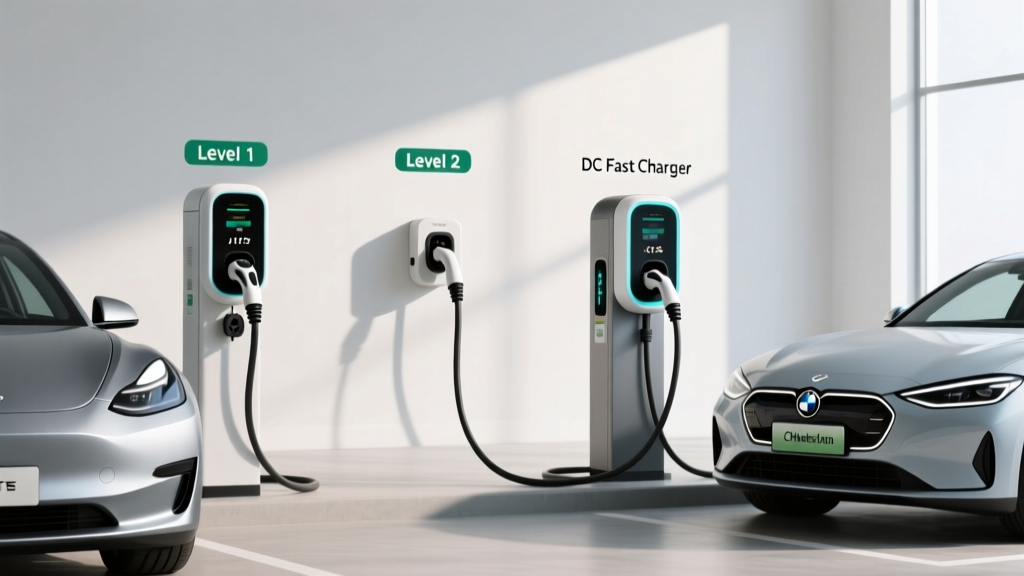
Understanding Charging Levels: Level 1, Level 2, and DC Fast Charging
EV charging is measured in kW (kilowatts), which represents power — the rate at which energy flows into your battery. Your battery's capacity is measured in kWh (kilowatt-hours), which represents total energy stored. Think of kW as the width of the hose and kWh as the size of the bucket. Confusing these two is the most common mistake new EV owners make.
| Charging Level | Voltage | Power (kW) | Miles of Range Added per Hour | Best Use Case |
|---|---|---|---|---|
| Level 1 (Standard Outlet) | 120V AC | 1.2–1.4 kW | 3–5 miles/hr | Overnight top-up, emergencies |
| Level 2 (Home/Public AC) | 240V AC | 7.2–11.5 kW | 20–38 miles/hr | Daily home charging, workplace |
| DC Fast Charging | 400V+ DC | 50–350 kW | 150–400+ miles/hr | Road trips, highway corridors |
What This Means for Your Charger Daytona
With a 100.5 kWh battery, Level 1 charging is essentially impractical as a primary strategy — a full charge would take over 70 hours. Level 2 at the car's maximum 11.5 kW acceptance rate will add roughly 35 miles of range per hour, or fill the entire battery from empty in about 9 hours. This is the sweet spot for overnight home charging.
For DC fast charging, the Charger Daytona peaks around 200 kW. However — and this is critical — peak rate is not sustained rate. The charging curve tapers significantly above 60–70% state of charge (SoC). You'll see the fastest charging between 10% and 50%, where the car can sustain close to its peak rate. Above 80%, speeds drop dramatically to protect battery health, sometimes falling below 50 kW. This is why manufacturers quote 10–80% times rather than 0–100%.
Home Level 2 Charger Installation: Costs, Electrical Requirements, and Panel Upgrades
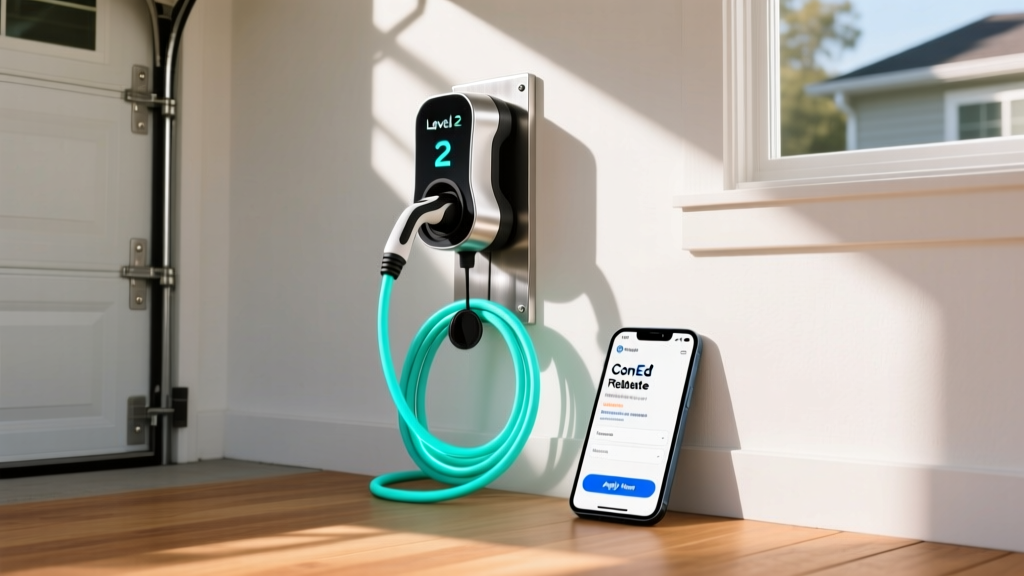
Installing a Level 2 home charger is the single highest-impact upgrade for EV ownership. Here's what's required for a Charger Daytona running at its full 11.5 kW acceptance rate:
Electrical Requirements
- Circuit: Dedicated 60-amp breaker (to support continuous 48A draw — the National Electrical Code requires a 125% safety margin for continuous loads)
- Voltage: 240V, single-phase
- Wire Gauge: 6 AWG copper (THHN/THWN in conduit) or 4 AWG aluminum
- Outlet Option: NEMA 14-60 receptacle (if using a plug-in charger) or hardwired connection
- GFCI: Required by NEC 2020+ for EV charging outlets in garages and outdoor locations
Installation Cost Breakdown
| Cost Component | Typical Range | Notes |
|---|---|---|
| Level 2 Charger (Equipment) | $400 – $750 | Smart Wi-Fi-enabled 48A unit |
| Electrician Labor | $600 – $2,000 | Varies by run length, conduit, wall type |
| Electrical Permit | $50 – $200 | Required in most jurisdictions |
| Panel Upgrade (if needed) | $1,500 – $4,000 | 200A service upgrade for older 100A panels |
| Total (No Panel Upgrade) | $1,050 – $2,950 | Most homes with 200A service |
| Total (With Panel Upgrade) | $2,550 – $6,950 | Homes with 100A or maxed-out panels |
Federal Tax Credit for Home Charging
Under the IRS Residential Clean Energy Credit (IRC §25C/25D), certain home energy improvements may qualify for tax credits. The EV charger itself may also qualify under the Alternative Fuel Vehicle Refueling Property Credit (§30C), which covers up to 30% of charging equipment and installation costs, capped at $1,000 for residential property. This credit is subject to census-tract eligibility requirements — consult a tax professional to confirm your qualification.
Connector Compatibility: NACS, CCS1, and the 2026 Charger Daytona
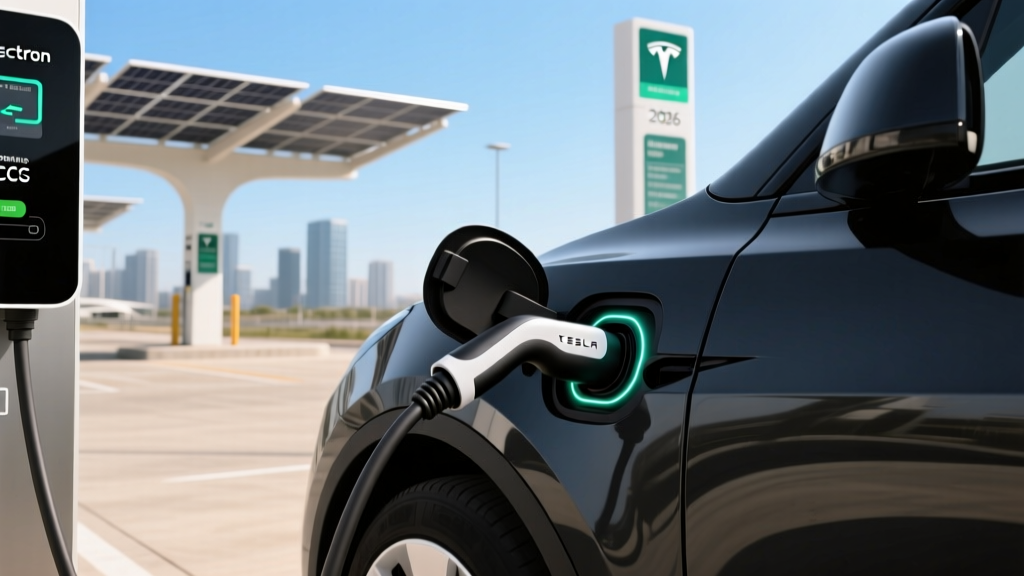
For 2026, Stellantis has adopted the NACS (North American Charging Standard) connector — originally developed by Tesla — for the Charger Daytona. This is a significant advantage, as it grants native access to the Tesla Supercharger network (now rebranded as the largest NACS DC fast-charging network in North America) without an adapter.
| Connector Type | Compatibility with Charger Daytona | Network Access |
|---|---|---|
| NACS (Tesla) | Native — built-in port | Tesla Superchargers, Electrify America (newer stations), Rivian Adventure Network, many others |
| CCS1 | Requires NACS-to-CCS adapter | Legacy Electrify America, EVgo, ChargePoint DC stations with CCS cables |
| CHAdeMO | Requires adapter (limited availability) | Largely deprecated; some older Nissan/Leaf stations |
By 2026, the vast majority of new DC fast-charging installations in the U.S. include NACS connectors. However, some older public chargers still only offer CCS1 cables. Dodge includes a NACS-to-CCS adapter with the vehicle in most trims — confirm this with your dealer. For Level 2 public charging, most J1772 stations will require a J1772-to-NACS adapter (also commonly included).
Public Charging: DC Fast-Charging Costs, Networks, and Road-Trip Planning
DC Fast-Charging the Charger Daytona on the Road
With a ~200 kW peak charge rate, the Charger Daytona charges respectably on modern 350 kW dispensers, though it won't match the 250+ kW peaks of vehicles like the Hyundai Ioniq 5 or Porsche Taycan. Here's what to expect:
- 10–50% SoC: Sustains near 180–200 kW on a capable charger — approximately 12–14 minutes
- 50–80% SoC: Tapers to 80–120 kW — adds another ~13 minutes
- Total 10–80%: Approximately 27 minutes on a 250+ kW station
- On a 150 kW station: Expect 10–80% in roughly 38–42 minutes
- On a 50 kW station: Expect 10–80% in roughly 1 hour 50 minutes (avoid if possible)
Cost to Charge: Home vs. Public vs. DC Fast
| Charging Scenario | Avg. Cost per kWh | Cost for Full Charge (100.5 kWh) | Cost per Mile (Scat Pack, 260 mi) |
|---|---|---|---|
| Home — Off-Peak Utility Rate | $0.08 – $0.12 | $8.04 – $12.06 | $0.03 – $0.05 |
| Home — Standard Residential Rate | $0.14 – $0.18 | $14.07 – $18.09 | $0.05 – $0.07 |
| Public Level 2 (ChargePoint, etc.) | $0.20 – $0.35 | $20.10 – $35.18 | $0.08 – $0.14 |
| DC Fast Charging (Electrify America, Tesla) | $0.30 – $0.55 | $30.15 – $55.28 | $0.12 – $0.21 |
| Gasoline Equivalent (25 MPG, $3.50/gal) | — | $36.40 | $0.14 |
Home off-peak charging is where EV economics shine. At $0.10/kWh, a full Charger Daytona battery costs about $10 — roughly a quarter of what you'd spend on gas for equivalent range in a 425-hp V8 muscle car. Even at DC fast-charging rates, the cost per mile is competitive with gasoline, though frequent DC fast charging exclusively will erode your savings advantage.
Many utilities offer time-of-use (TOU) plans that provide off-peak rates between 10 PM and 6 AM. If your utility offers this, scheduling your Level 2 charger to operate during off-peak hours can cut your home charging costs by 30–50%.
Recommended Home Level 2 Chargers for the Charger Daytona
Since the Charger Daytona accepts up to 11.5 kW (48A) on Level 2, you'll want a charger that can deliver at least that rate to maximize overnight charging speed. Here are top picks for 2026:
Tesla Universal Wall Connector
- Power Output: Up to 11.5 kW (48A)
- Connector: NACS native (includes J1772 adapter)
- Cable Length: 24 feet
- Smart Features: Wi-Fi, OTA updates, load sharing, access control
- Price: ~$475
- Why It Works: Native NACS means no adapter needed. Excellent build quality and reliability track record.
ChargePoint Home Flex (NACS)
- Power Output: Up to 12 kW (50A), adjustable
- Connector: NACS (2025+ models) or CCS with adapter
- Cable Length: 23 feet
- Smart Features: Wi-Fi, app scheduling, Alexa integration, energy dashboard
- Price: ~$599
- Why It Works: Amperage adjustable via DIP switches — useful if your panel can't support a full 60A circuit.
Emporia Level 2 EV Charger
- Power Output: Up to 11.5 kW (48A)
- Connector: NACS (2025+ models)
- Cable Length: 24 feet
- Smart Features: Wi-Fi, solar integration, real-time energy monitoring, load management
- Price: ~$399
- Why It Works: Best value smart charger. Pairs with Emporia Vue energy monitor for whole-home load tracking.
Safety, Code, and Best Practices for Charger Daytona Owners
EV charging involves sustained high-current draw over many hours — far more demanding than typical household appliances. Follow these guidelines:
- Dedicated circuit only: Your Level 2 charger must be on its own dedicated breaker. Never share the circuit with other appliances.
- Hardwired vs. plug-in: Hardwired installations eliminate the failure point of a receptacle and are required in some jurisdictions for circuits above 40A. Plug-in (NEMA 14-60) offers portability if you move.
- Outdoor-rated equipment: If your charger is installed outside, ensure the unit carries a NEMA 4 or IP65 weather rating, and that the conduit and junction boxes are rated for wet locations.
- GFCI protection: Required by NEC Article 625 for all EV charging outlets. Most modern smart chargers include built-in GFCI protection — confirm with your electrician that the installation meets local code.
- Cable management: Use a wall-mounted cable organizer to prevent tripping hazards and cord damage. Never run charging cables across driveways or walkways.
- Annual inspection: Have your electrician inspect the outlet, wiring connections, and breaker annually for signs of heat damage or loosening.
Frequently Asked Questions
How much does it cost to install a home EV charger for the 2026 Dodge Charger Daytona?
For most homes with an existing 200-amp electrical panel, expect to pay between $1,050 and $2,950 total (charger, electrician labor, and permit). If your home needs a panel upgrade from 100A to 200A service, add $1,500 to $4,000, bringing the total to $2,550–$6,950. Always get a load calculation from a licensed electrician first.
How fast will each charging level add range to the Charger Daytona?
Level 1 (120V): roughly 3–5 miles per hour — not practical for a 100+ kWh battery. Level 2 (240V at 48A/11.5 kW): approximately 35 miles per hour, or a full charge overnight in about 9 hours. DC fast charging at 200 kW peak: approximately 150–200 miles added in 15–20 minutes, with the 10–80% charge taking about 27 minutes on a capable station.
Which connector does the 2026 Dodge Charger Daytona use?
The 2026 Charger Daytona uses the NACS (North American Charging Standard) connector natively. This gives you direct access to Tesla Superchargers and the growing NACS public charging network without an adapter. For older CCS1-only public chargers, a NACS-to-CCS adapter (typically included with the vehicle) is required.
How much does charging cost per mile compared to gas?
Charging at home on off-peak rates (~$0.10/kWh), the Charger Daytona Scat Pack costs approximately $0.04 per mile. A comparable gas-powered muscle car at 20 MPG with $3.50/gallon fuel costs about $0.18 per mile. Even at DC fast-charging rates ($0.40/kWh average), the EV costs roughly $0.15 per mile — still competitive with gasoline.
What electrical upgrades might I need for a Level 2 charger?
The most common upgrade is a panel service increase from 100A to 200A if your existing panel lacks capacity for a dedicated 60-amp circuit. Other potential upgrades include adding a sub-panel in the garage, upgrading wiring from the meter to the panel, or installing a load-management device (like the Emporia Smart Load Manager) that dynamically reduces charger amperage when other appliances are drawing power — potentially avoiding a panel upgrade entirely.
Does the Charger Daytona qualify for the federal EV tax credit?
Federal tax credit eligibility under IRS §30D depends on several factors: the vehicle's MSRP must not exceed $55,000 for sedans (the Charger Daytona R/T may qualify, while the Scat Pack likely exceeds the cap), buyer income must fall below $150,000 (single) or $300,000 (joint), and the battery must meet critical-mineral and component sourcing requirements that tighten annually. The credit can be transferred to the dealer at point of sale as a purchase-price reduction. Always verify current-year eligibility on the IRS website or with a tax professional before relying on the credit.
Can I charge the Charger Daytona at Tesla Superchargers?
Yes. Because the 2026 Charger Daytona has a native NACS port, you can charge at any Tesla Supercharger station that supports non-Tesla vehicles. Tesla has progressively opened its network to NACS-equipped vehicles from other manufacturers through the "Charge Your Non-Tesla" feature in the Tesla app. Confirm station compatibility via the Tesla app or your Dodge infotainment system before relying on a specific Supercharger on a road trip.