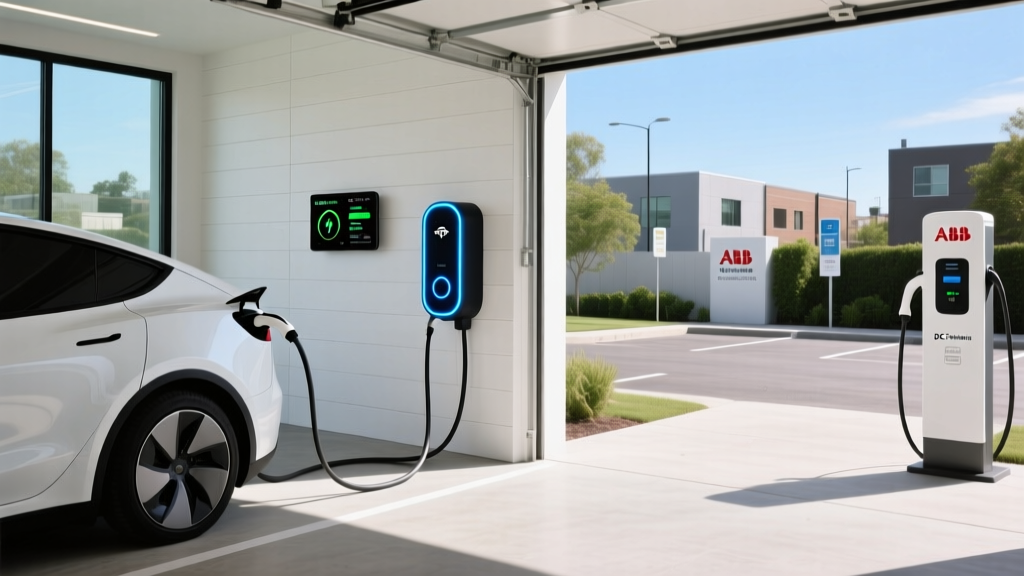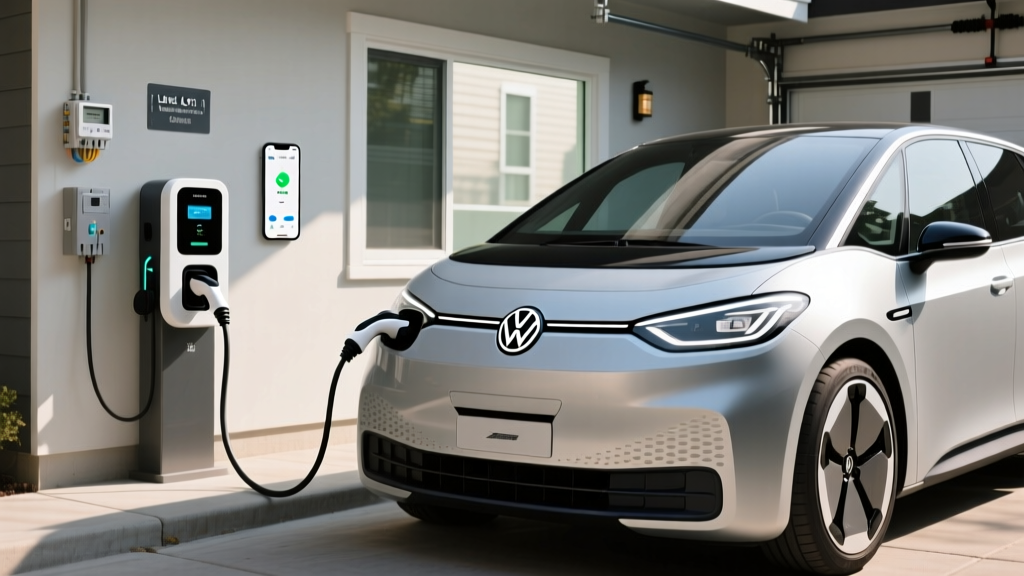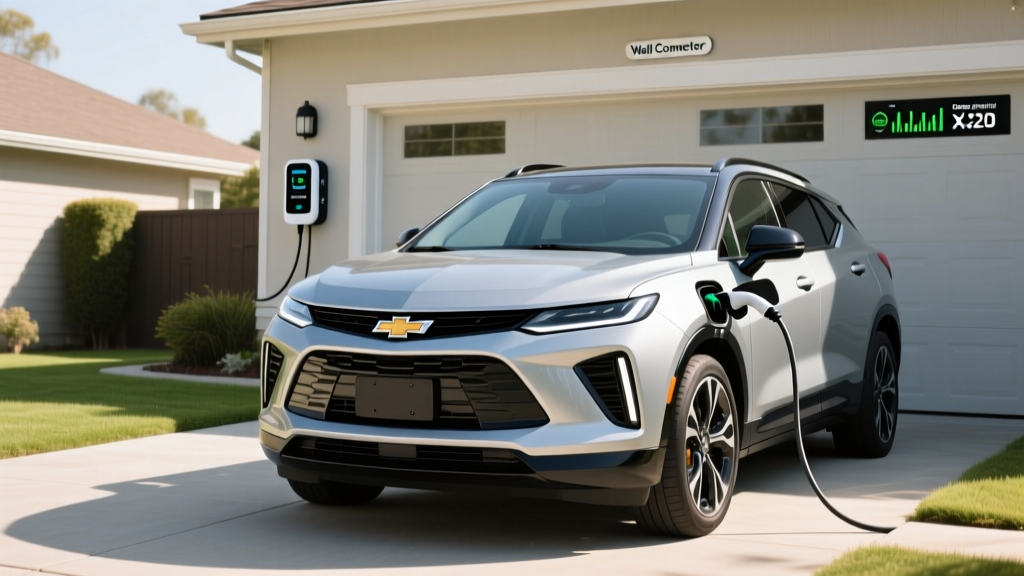
If you're researching 2026 Chevrolet Blazer EV charging, you're likely weighing one of the most practical midsize electric crossovers on the market — and trying to figure out how to keep it powered efficiently at home and on the road. The Blazer EV uses GM's Ultium platform with a usable battery capacity of approximately 102 kWh (in the larger pack configuration) and EPA range up to 324 miles depending on trim. But sticker range only tells half the story: your real-world experience depends heavily on how you charge, what equipment you install, and how the Blazer's charge curve behaves at public stations.
This guide breaks down every charging scenario you'll face as a 2026 Blazer EV owner — from overnight Level 2 home charging to DC fast-charging road trips — with exact numbers for speed, cost, and equipment.
2026 Blazer EV Charging at a Glance: Key Specs
| Specification | Value |
|---|---|
| Battery Capacity (Usable) | ~85 kWh (2LT/RS) / ~102 kWh (SS) |
| Battery Chemistry | NMC (Nickel Manganese Cobalt) — Ultium |
| EPA Range (Max) | Up to 324 miles (2LT RWD) |
| Max DC Fast-Charge Rate | 190 kW (peak) |
| DC Fast-Charge 10–80% | ~30–34 minutes (estimated) |
| Level 2 Onboard Charger | 11.5 kW (48A) / optional 19.2 kW (80A) |
| Native Charging Connector (2026) | NACS (Tesla Supercharger compatible) |
| Level 2 Charge Time (0–100%, 11.5 kW) | ~9–11 hours (depending on pack size) |
| Base MSRP | ~$44,600 (2LT) – ~$60,000+ (SS) |
Charging Levels Explained: How Fast Does Each Add Range?
Before evaluating your home or public options, it's critical to understand the three charging levels and how they differ. kW (kilowatts) measures the rate of power delivery — think of it as how fast water flows from a hose. kWh (kilowatt-hours) measures total energy stored in the battery — like the size of the tank. A higher kW charge rate fills your kWh battery faster.
| Level | Voltage | Power (kW) | Miles Added Per Hour | Best For |
|---|---|---|---|---|
| Level 1 (Standard Outlet) | 120V AC | 1.0–1.4 kW | ~3–5 miles/hour | Emergency top-ups, very low daily mileage |
| Level 2 (Home/Public AC) | 240V AC | 7.2–19.2 kW | ~25–65 miles/hour | Daily home charging, overnight refills |
| DC Fast Charging | 400–800V DC | 50–350 kW | ~150–400+ miles/hour (peak) | Road trips, quick top-ups away from home |
For the 2026 Blazer EV with its 11.5 kW onboard charger, a full Level 2 session at maximum amperage will add roughly 37 miles of range per hour of charging. If you opt for the available 19.2 kW (80A) onboard charger upgrade, that jumps to approximately 62 miles per hour — meaning even the larger 102 kWh pack can go from near-empty to full in roughly 6 hours.
On DC fast charging, the Blazer EV peaks at 190 kW. However, like all EVs, it does not sustain peak speed for the entire session. The charge curve tapers significantly above 80% state of charge (SoC) to protect battery longevity. Expect the 10–80% session to take roughly 30–34 minutes at a compatible 200+ kW station, but a 10–100% session could stretch to 50+ minutes due to tapering.
Home Charger Installation: Electrical Requirements and Costs
Installing a Level 2 home charger is the single most impactful upgrade for EV ownership. For the 2026 Blazer EV, you'll want a 240V circuit that matches or exceeds the vehicle's onboard charger capacity.
Electrical Requirements
- Standard 11.5 kW onboard charger: Requires a 240V / 60A dedicated circuit (NEMA 14-50 outlet or hardwired), delivering up to 48A continuous to the vehicle.
- Optional 19.2 kW onboard charger: Requires a 240V / 100A dedicated circuit (hardwired only), delivering up to 80A continuous.
- Circuit sizing rule: Per NEC (National Electrical Code), continuous loads must use a circuit rated at 125% of the charger's max draw. A 48A charger needs a 60A breaker; an 80A charger needs a 100A breaker.
Panel Upgrade Considerations
Many older homes have 100A or 150A main electrical panels. Adding a 60A EV circuit may push total load beyond your panel's capacity, especially if you run electric HVAC, a dryer, and an electric range simultaneously. A licensed electrician will perform a load calculation to determine if a panel upgrade to 200A (or higher) is necessary. Panel upgrades typically add $1,500–$3,500 to the project and may take 1–2 days.
| Cost Component | Typical Range | Notes |
|---|---|---|
| Level 2 Charger (Equipment) | $350 – $750 | Smart WiFi-enabled chargers; higher for 80A models |
| Electrician Labor | $500 – $2,000 | Depends on run length from panel to garage/driveway |
| Electrical Materials (wire, conduit, breaker) | $150 – $500 | Longer wire runs cost more; THHN in conduit is standard |
| Permit & Inspection | $50 – $250 | Required in most jurisdictions for code compliance |
| Panel Upgrade (if needed) | $1,500 – $3,500 | 200A service upgrade; not needed in most newer homes |
| Total (No Panel Upgrade) | $1,050 – $3,500 | Most common scenario for homes built after 2000 |
| Total (With Panel Upgrade) | $2,550 – $7,000 | Older homes or those with existing high electrical loads |
Always hire a licensed electrician and pull a permit. Unpermitted work can void home insurance coverage and create fire risk. According to Energy.gov's home charging installation guide, proper permitting ensures your installation meets NEC safety standards.
Connector Compatibility: NACS, CCS, and the 2026 Blazer EV
For the 2026 model year, Chevrolet has fully transitioned the Blazer EV to the NACS (North American Charging Standard) connector — the same physical plug used by Tesla's Supercharger network. This is a significant shift from the CCS1 connector used on the 2024 Blazer EV and most non-Tesla EVs through 2024.
| Connector Type | 2026 Blazer EV Compatibility | Network Access |
|---|---|---|
| NACS (Tesla-style) | Native — built-in charge port | Tesla Superchargers, Electrify America (NACS stalls), EVgo NACS stations |
| CCS1 | Requires NACS-to-CCS1 adapter (included or available from GM) | Legacy Electrify America, ChargePoint, and independent CCS stations |
| CHAdeMO | Not compatible (no adapter available) | Largely deprecated in the US; found on older Nissan Leaf stations |
| J1772 (Level 2 AC) | Requires NACS-to-J1772 adapter or NACS-native Level 2 charger | Public Level 2 stations, older home chargers |
What this means practically: You can pull up to any Tesla Supercharger (V3 at 250 kW or V4) and plug in directly. For legacy CCS stations still common in many areas, keep the GM-provided adapter in your vehicle. When buying a home Level 2 charger, look for NACS-connector models — or use an adapter with a J1772-connector charger you may already own.
Recommended Home Chargers for the Blazer EV
Here are three NACS-compatible Level 2 chargers that pair well with the Blazer EV's onboard charging capabilities, with specific specs to match your electrical setup:
ChargePoint Home Flex (NACS)
- Power Output: Up to 12 kW (50A) on a 60A circuit
- Connector: NACS native
- Cable Length: 23 feet
- Smart Features: WiFi, app scheduling, utility rate optimization, Alexa integration
- Price: ~$550–$650
- Best For: Most Blazer EV owners with the standard 11.5 kW onboard charger
Tesla Wall Connector (NACS)
- Power Output: Up to 11.5 kW (48A) on a 60A circuit
- Connector: NACS native
- Cable Length: 24 feet
- Smart Features: WiFi, firmware updates, power sharing (multiple units on one circuit)
- Price: ~$425–$475
- Best For: Budget-conscious install; no app scheduling but reliable and simple
Emporia Vue Smart Charger (NACS)
- Power Output: Up to 11.5 kW (48A) on a 60A circuit
- Connector: NACS native
- Cable Length: 24 feet
- Smart Features: WiFi, solar integration, energy monitoring, TOU scheduling
- Price: ~$400–$500
- Best For: Homes with solar panels or those wanting detailed energy tracking
If you spec the Blazer EV with the optional 19.2 kW onboard charger, you'll need an 80A-capable charger like the Tesla Wall Connector on a 100A circuit (set to 80A output) or the Grizzl-E Smart (80A model, ~$700). Most buyers will be fully served by a 48A/60A circuit setup.
Charging Cost Per Mile: Blazer EV vs. Gasoline Equivalents
The 2026 Blazer EV achieves an EPA-estimated efficiency of roughly 2.7–3.0 miles per kWh depending on trim and drivetrain. Using that figure, here's how charging costs break down across different scenarios compared to a gasoline midsize SUV averaging 24 MPG combined.
| Charging Scenario | Avg. Cost | Cost Per Mile (Blazer EV) | Gas Equivalent (24 MPG @ $3.40/gal) |
|---|---|---|---|
| Home — Off-Peak Utility Rate | $0.09/kWh | $0.033/mile | $0.142/mile |
| Home — Standard Residential Rate | $0.16/kWh | $0.057/mile | $0.142/mile |
| Public Level 2 (e.g., ChargePoint) | $0.25–$0.35/kWh | $0.09–$0.13/mile | $0.142/mile |
| DC Fast Charging (Tesla Supercharger) | $0.28–$0.40/kWh | $0.10–$0.14/mile | $0.142/mile |
| DC Fast Charging (Electrify America) | $0.35–$0.52/kWh | $0.13–$0.19/mile | $0.142/mile |
The takeaway: Home charging is dramatically cheaper — roughly 75–80% less per mile than gasoline. Even public DC fast charging on networks like Tesla Superchargers is often slightly cheaper than or competitive with gas. However, premium-priced networks like Electrify America's pay-per-use rates can occasionally exceed the cost of gasoline per mile, especially in states with high electricity costs. This is why home charging access is so critical to EV economics.
For a driver covering 12,000 miles per year and charging primarily at home at $0.14/kWh, annual fuel cost is approximately $616 — compared to roughly $1,700 for a 24 MPG gas SUV at $3.40/gallon. That's over $1,000 in annual savings before factoring in reduced maintenance.
DC Fast Charging on the Road: What to Expect
The Blazer EV's 190 kW peak DC fast-charge rate places it in the solid middle tier for 2026 EVs. It's not the fastest (Hyundai/Kia's 800V architecture peaks at 240+ kW), but it's meaningfully quicker than many competitors limited to 150 kW.
Charging Curve Reality
At a 250 kW Tesla Supercharger V3/V4 or a 200+ kW Electrify America stall, the Blazer EV's charge curve typically behaves as follows:
- 10–30% SoC: Sustains near peak (~180–190 kW)
- 30–55% SoC: Gradually tapers to ~140–160 kW
- 55–80% SoC: Further taper to ~80–110 kW
- 80–100% SoC: Drops sharply to ~30–50 kW (protecting battery health)
This means that on a road trip, the most time-efficient strategy is to charge from roughly 10–15% up to 75–80%, then drive on. Charging above 80% at a DC fast station adds significant time for relatively few miles. Use the Blazer EV's built-in route planner — accessible through the infotainment system or the myChevrolet app — which will precondition the battery (warm it to optimal temperature) when you navigate to a charge station, ensuring faster charge acceptance on arrival.
Safety, Code, and Installation Best Practices
A Level 2 charger installation involves significant electrical work. Here's what to verify with your electrician:
- Dedicated circuit: Your EV charger must be on its own dedicated breaker — never shared with other appliances.
- GFCI protection: NEC 2020 and later requires GFCI (Ground Fault Circuit Interrupter) protection for all EV charging outlets. Hardwired installations may have different requirements depending on local code.
- Outdoor rating: If your charger is installed outdoors (driveway or exterior wall), the unit must carry a NEMA 4 or NEMA 4X rating for weather resistance. All chargers listed above meet this standard.
- Wire gauge: A 60A circuit typically requires 6 AWG copper wire; a 100A circuit requires 3 AWG copper or 1 AWG aluminum. Your electrician will size appropriately based on run length and local amendments.
- Permit and inspection: Required in virtually all jurisdictions. The inspector will verify wire sizing, breaker rating, grounding, and GFCI compliance. Do not skip this step.
The National Fire Protection Association's NEC guidelines govern all EV charging installations, and local amendments may add further requirements. Your electrician should be familiar with Article 625 of the NEC, which specifically addresses EV charging systems.
Frequently Asked Questions
How much does it cost to install a home EV charger for the 2026 Blazer EV?
Most homeowners spend between $1,050 and $3,500 for a complete Level 2 installation (charger + electrician + materials + permit) assuming no panel upgrade is needed. If your home requires a 200A panel upgrade, total costs can reach $2,550–$7,000. Always get 2–3 quotes from licensed electricians.
How fast will each charging level add range to my Blazer EV?
Level 1 (120V) adds about 3–5 miles per hour — essentially an overnight trickle. Level 2 at 11.5 kW (48A) adds roughly 37 miles per hour, enough for a full overnight charge. DC fast charging at peak 190 kW can add up to 180+ miles in a 30-minute session (10–80%).
Which connector and charger is compatible with the 2026 Blazer EV?
The 2026 Blazer EV uses the NACS connector natively, giving it direct access to Tesla Superchargers and an expanding network of NACS-equipped public stations. For legacy CCS1 stations, use the GM-provided adapter. For Level 2 home charging, purchase a NACS-connector charger or use a J1772-to-NACS adapter.
How much does charging cost per mile vs. gas?
At a typical residential rate of $0.16/kWh, the Blazer EV costs about $0.057 per mile to fuel — roughly 60% less than a 24 MPG gas SUV at $3.40/gallon ($0.142/mile). Off-peak utility rates can push costs as low as $0.033/mile. Even public DC fast charging is often competitive with or cheaper than gasoline.
What electrical upgrades might I need?
The most common upgrade is a new 60A (or 100A) dedicated circuit from your main panel. Homes with older 100A or 150A service panels may need a full panel upgrade to 200A, adding $1,500–$3,500. Your electrician will perform a load calculation to determine if your existing panel can support the additional EV circuit.
Can I charge the Blazer EV at Tesla Superchargers?
Yes. Because the 2026 Blazer EV has a native NACS charge port, it can access the full Tesla Supercharger network without an adapter. Use the myChevrolet app or the vehicle's built-in navigation to locate and route to Superchargers. Tesla's Plug & Charge functionality enables automatic billing when you plug in.
Does the Blazer EV qualify for the federal EV tax credit?
The §30D federal tax credit provides up to $7,500 for qualifying new EVs, but eligibility depends on MSRP caps (under $80,000 for SUVs), buyer income limits, and battery mineral sourcing requirements that change frequently. As of 2026, the Blazer EV may qualify for a partial or full credit depending on trim and current IRS sourcing rules. Check the latest guidance at IRS.gov's clean vehicle credits page and consult a tax professional for your specific situation.
According to fueleconomy.gov, the EPA's official source for EV efficiency data, proper charging setup and understanding your vehicle's charge curve are the two most impactful factors in maximizing real-world EV satisfaction. The 2026 Blazer EV's combination of NACS access, a competitive 190 kW charge rate, and a large Ultium battery makes it one of the more flexible midsize EVs for both daily commuting and road-trip charging.