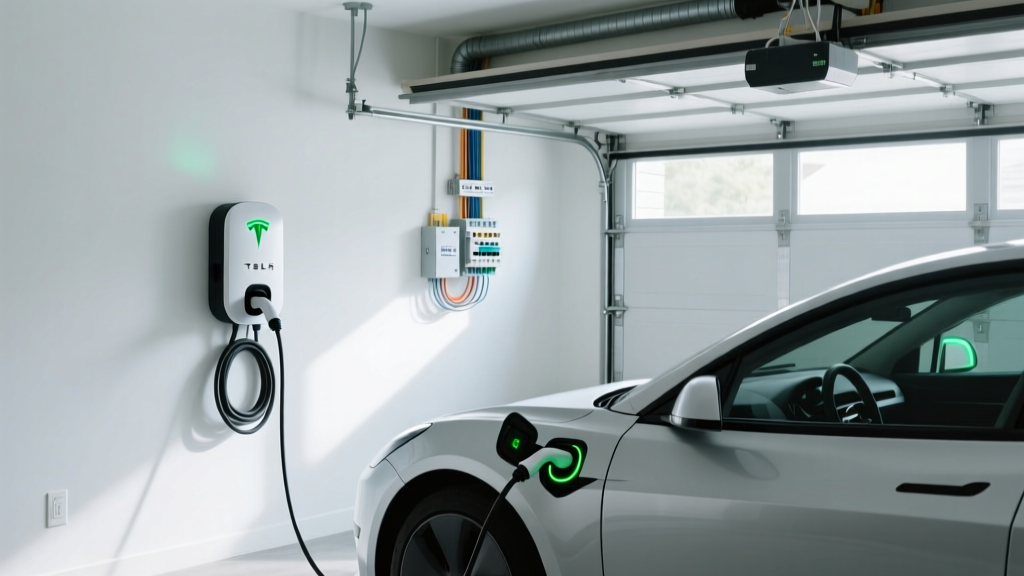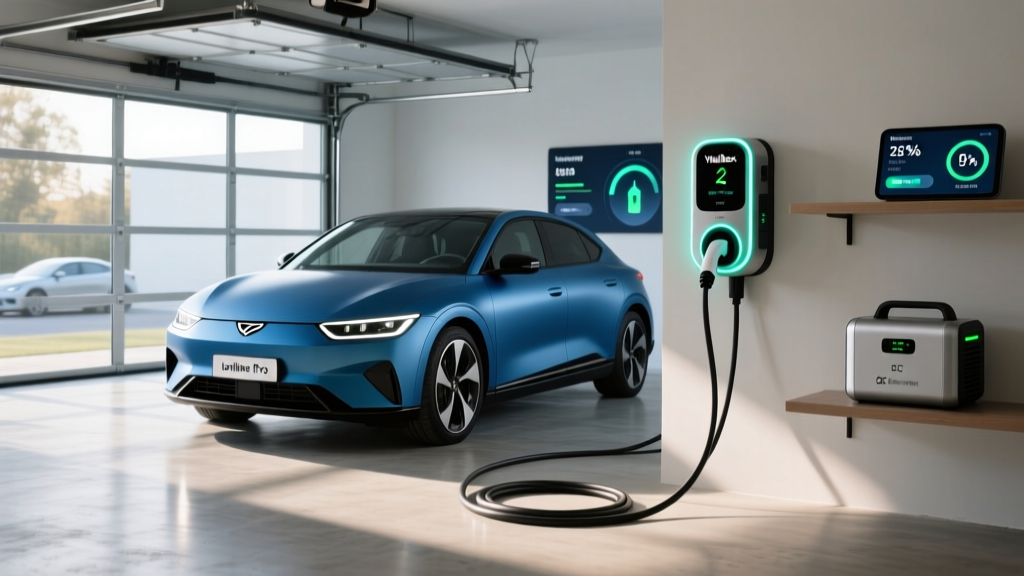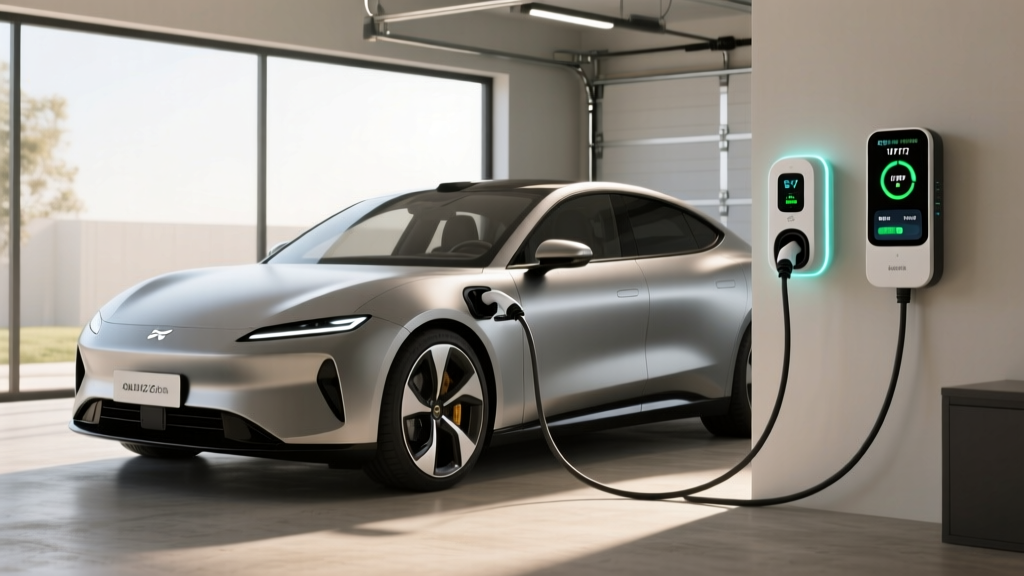
If you've just ordered or picked up a new 2026 electric sedan — whether it's a Tesla Model 3, Hyundai Ioniq 6, BMW i4, or Polestar 2 — the single most impactful upgrade you can make isn't an accessory package. It's a proper home charging setup. A dedicated Level 2 unit transforms daily EV ownership from a planning exercise into a wake-up-with-a-full-battery convenience that gas cars can't match.
This guide covers everything you need to know about choosing, installing, and using a 4 door charger setup in 2026: charging speeds at every level, real installation costs including the panel-upgrade scenarios nobody warns you about, connector compatibility as the NACS transition accelerates, and specific equipment recommendations with exact specs.
Charging Levels Explained: kW, Miles Per Hour, and Real-World Times
The most common mistake new EV owners make is confusing kW (kilowatts, a measure of power or charging speed) with kWh (kilowatt-hours, a measure of energy or battery capacity). Think of kW as how fast water flows through a hose, and kWh as the size of the bucket. Your EV's battery is measured in kWh; your charger's output is measured in kW.
| Level | Voltage | Max Power (kW) | Miles of Range Added Per Hour | Typical 10–80% Time (75 kWh Battery) | Best For |
|---|---|---|---|---|---|
| Level 1 | 120V AC | 1.4–1.9 kW | 3–5 mi/hr | ~35–45 hours | Overnight top-ups, low daily mileage, PHEVs |
| Level 2 (Home/Public) | 240V AC | 7.2–19.2 kW | 20–60 mi/hr | ~4–8 hours | Daily home charging, workplace, destination |
| DC Fast Charging | 400–800V DC | 50–350 kW | 150–1,200+ mi/hr (peak) | ~18–45 min | Road trips, highway corridors, quick top-ups |
How Much Does It Cost to Install a Home EV Charger in 2026?
Home Level 2 installation costs vary dramatically based on your electrical panel's capacity, the distance from panel to charger location, and local permit fees. Here's what the numbers actually look like — not the rosy "$500 install" you see in marketing materials, but the real range based on 2026 electrician rates and code requirements.
| Component | Simple Install (Panel Adjacent) | Moderate Install (50–80 ft Run) | Complex Install (Panel Upgrade Needed) |
|---|---|---|---|
| Level 2 Charger Equipment | $350–$700 | $350–$700 | $350–$700 |
| Electrician Labor (2–8 hrs @ $85–$150/hr) | $170–$400 | $500–$1,200 | $800–$1,500 |
| Electrical Materials (conduit, wire, breaker) | $50–$150 | $200–$500 | $300–$600 |
| Permit & Inspection | $50–$200 | $50–$200 | $100–$300 |
| Electrical Panel Upgrade (100A → 200A) | — | — | $1,500–$3,500 |
| Total Estimated Cost | $620–$1,450 | $1,100–$2,600 | $3,050–$6,600 |
The panel-upgrade reality: Homes built before the 1990s often have 100-amp service panels. A 48-amp Level 2 charger on a 60-amp dedicated circuit consumes a significant chunk of your home's total capacity. Per the National Electrical Code (NEC), continuous loads like EV charging can only use 80% of a circuit's rated capacity — meaning a 60A breaker supports a 48A continuous draw. If your panel is already near capacity with HVAC, electric range, and dryer loads, an upgrade to 200A service may be mandatory, not optional. Get a licensed electrician to perform a load calculation before committing to a high-amperage charger.
Federal incentive note: The IRS §30C Alternative Fuel Vehicle Refueling Property Credit offers up to 30% of installation costs (capped at $1,000 for residential) for home charger equipment and installation, subject to census-tract eligibility requirements. Check your eligibility at the IRS site or consult a tax professional, as rules and qualifying tracts are updated periodically.
Which Connector Does Your 2026 EV Use? NACS, CCS, and Adapters
The connector landscape in 2026 is mid-transition. The North American Charging Standard (NACS), developed by Tesla and now adopted industry-wide, is rapidly replacing CCS1 as the default connector for new vehicles. Here's where each major brand stands for the 2026 model year:
| Brand | Native Connector | Adapter Needed for CCS Stations? | Tesla Supercharger Access? |
|---|---|---|---|
| Tesla (Model 3, Model S) | NACS | Yes (CCS adapter, ~$200) | Native — no adapter |
| Ford (Mustang Mach-E, F-150 Lightning) | NACS | Yes (for legacy CCS) | Native — no adapter |
| GM (Chevy Equinox EV, Cadillac Lyriq) | NACS | Yes (for legacy CCS) | Native — no adapter |
| Hyundai / Kia (Ioniq 6, EV6) | NACS (2026 models) | Yes (for legacy CCS) | Native — no adapter |
| BMW (i4, i5) | NACS (2026 models) | Yes (for legacy CCS) | Native — no adapter |
| Rivian (R1T, R1S) | NACS | Yes (for legacy CCS) | Native — no adapter |
| Volkswagen (ID.4, ID.7) | CCS1 / NACS (varies by trim) | No (if CCS native) | Via adapter or NACS-equipped trims |
| Nissan (Leaf — if still sold) | CHAdeMO (legacy) | CHAdeMO-to-CCS adapters limited | Via CHAdeMO-to-NACS adapter (limited availability) |
Home charger connector choice: If you're buying a wall-mounted Level 2 charger in 2026, choose a unit with a NACS plug if your EV has a NACS port — or buy a universal unit with an adapter. Most quality home chargers now ship with NACS connectors as standard, with J1772 adapters included for backward compatibility. For public charging, the growing NACS-equipped Supercharger network (now open to non-Tesla EVs via the "NACS Open" program) offers the most reliable DC fast-charging experience in the U.S., with Electrify America and EVgo also expanding NACS-equipped stalls.
Cost to Charge: Home vs. Public vs. Gas — The Per-Mile Math
One of the strongest economic arguments for a home 4 door charger setup is the per-mile fueling cost. Let's break it down with real 2026 electricity rates and compare against a gas equivalent.
| Scenario | Rate ($/kWh) | Cost to Add 200 Miles* | Cost Per Mile |
|---|---|---|---|
| Home Level 2 (off-peak utility rate) | $0.09–$0.14 | $5.40–$8.40 | $0.027–$0.042 |
| Home Level 2 (standard residential rate) | $0.14–$0.20 | $8.40–$12.00 | $0.042–$0.060 |
| Public Level 2 (ChargePoint, EVgo L2) | $0.20–$0.35 | $12.00–$21.00 | $0.060–$0.105 |
| DC Fast Charging (Electrify America, Tesla) | $0.32–$0.55 | $19.20–$33.00 | $0.096–$0.165 |
| Gas Car (28 MPG avg, $3.40/gal) | — | $24.29 | $0.121 |
*Based on an EV averaging 3.3 miles per kWh (roughly 100 MPGe combined), typical of a mid-size 2026 sedan like the Hyundai Ioniq 6 or Tesla Model 3.
The takeaway: home off-peak charging delivers fueling costs at roughly one-third to one-quarter of gasoline. Even DC fast charging on road trips is competitive with gas on a per-mile basis, though it's clearly the most expensive EV charging option. The U.S. Department of Energy's MPGe ratings at fueleconomy.gov let you compare specific models' efficiency.
Pro tip for cost savings: Many utilities offer time-of-use (TOU) plans that drop rates to $0.06–$0.10/kWh overnight (typically 11 PM – 6 AM). Set your charger or EV to schedule charging during these windows. Over a year of 12,000 miles, that's the difference between ~$500 and ~$300 in electricity costs.
Best Home Level 2 Chargers for 2026: Equipment Picks
Not all Level 2 chargers are created equal. The right unit depends on your electrical panel's capacity, your EV's onboard charger limit, and whether you want smart scheduling features. Here are the top picks for 2026 4-door sedan owners:
Tesla Wall Connector (Gen 4)
- Power Output: Up to 11.5 kW (48A on 60A circuit)
- Connector: NACS native
- Cable Length: 24 ft
- Smart Features: Wi-Fi, OTA updates, load sharing (pair two units on one circuit), scheduled charging via app
- Price: ~$450
- Best For: Tesla owners and any NACS-equipped 2026 EV
ChargePoint Home Flex (2nd Gen)
- Power Output: Configurable 16A–50A (up to 12 kW on 240V)
- Connector: NACS or J1772 (configurable)
- Cable Length: 23 ft
- Smart Features: Wi-Fi, Alexa integration, flexible amperage dial (match to your circuit), detailed energy tracking
- Price: ~$550–$650
- Best For: Homes with limited panel capacity (dial down to 32A/24A to avoid panel upgrade)
Emporia Level 2 EV Charger
- Power Output: Up to 11.5 kW (48A)
- Connector: J1772 (NACS adapter available)
- Cable Length: 24 ft
- Smart Features: Wi-Fi, solar integration (pairs with Emporia Vue energy monitor), TOU scheduling, energy dashboard
- Price: ~$350–$400
- Best For: Budget-conscious buyers and solar-panel households
Grizzl-E Smart (United Chargers)
- Power Output: Up to 10 kW (40A)
- Connector: J1772 or NACS
- Cable Length: 24 ft
- Smart Features: OCPP-compatible, adjustable amperage (16A–40A), extreme cold rated (-40°F), rugged aluminum enclosure
- Price: ~$450–$550
- Best For: Cold-climate garages and outdoor installations
Electrical Requirements and Safety: What Your Installer Needs to Do Right
A Level 2 charger is a continuous, high-draw electrical load that runs for hours — more like an electric furnace than a phone charger. Cutting corners here creates fire risk. Here's what code-compliant installation requires in 2026:
- Dedicated circuit: Your Level 2 charger must have its own dedicated double-pole breaker — not shared with any other outlet or appliance. A 48A charger requires a 60A breaker; a 32A charger requires a 40A breaker.
- Wire gauge: 6 AWG copper for 48A/60A circuits; 8 AWG for 32A/40A circuits. Longer runs (over 50 ft) may require upsizing to prevent voltage drop.
- GFCI protection: The 2020 NEC (and subsequent editions adopted by most jurisdictions by 2026) requires GFCI protection for all EV charging outlets. Hardwired units often include internal GFCI; plug-in units require a GFCI breaker, which adds $50–$100 to material costs.
- Outdoor rating: If your charger is installed outdoors (carport, driveway), the unit must carry a NEMA 4 or IP65 weather rating, and the receptacle (if plug-in) needs an in-use weatherproof cover.
- Permit and inspection: Virtually all jurisdictions require an electrical permit for a new 240V circuit. The inspection verifies wire gauge, breaker sizing, grounding, and GFCI compliance. Do not skip this — unpermitted work can void homeowner's insurance claims related to electrical fires.
Hardwired vs. plug-in (NEMA 14-50): Hardwired installations are generally preferred for 48A+ chargers because NEMA 14-50 receptacles are rated for intermittent use, not the daily plug/unplug cycle of EV charging. If you choose a plug-in setup for portability, invest in a high-quality industrial-grade receptacle (Hubbell or Bryant, ~$80–$120) — not the $15 builder-grade outlet. Loose connections in cheap receptacles are a documented fire cause under sustained high-amperage loads.
Charging Time Examples: How Long Does a Full Session Take?
Let's put real numbers to common 2026 sedan battery sizes, assuming a 10–80% charge (the practical fast-charging window that preserves battery health):
| Vehicle Example | Battery (kWh usable) | Level 2 @ 7.2 kW (32A) | Level 2 @ 11.5 kW (48A) | DC Fast @ 150 kW (avg) | DC Fast @ 250 kW (avg) |
|---|---|---|---|---|---|
| Tesla Model 3 (2026) | ~60 kWh | ~5 hr 50 min | ~3 hr 40 min | ~28 min | ~18 min |
| Hyundai Ioniq 6 (2026) | ~74 kWh | ~7 hr 10 min | ~4 hr 30 min | ~32 min | ~18 min |
| BMW i4 eDrive40 | ~81 kWh | ~7 hr 50 min | ~4 hr 55 min | ~35 min | ~22 min |
| Polestar 2 (LR) | ~79 kWh | ~7 hr 40 min | ~4 hr 50 min | ~34 min | ~25 min |
For daily home use, Level 2 at 11.5 kW is the sweet spot: you plug in when you get home at 6 PM with 30% remaining, and you're at 80%+ by bedtime. A 7.2 kW unit works fine if your daily driving is under 40 miles — you'll replenish that in roughly 2–3 hours.
Frequently Asked Questions
Do I need a 200-amp electrical panel to install a Level 2 charger?
Not necessarily. A 200A panel is common in homes built after 2000, but many older homes have 100A or 150A service. The key question is your panel's remaining capacity after existing loads. A licensed electrician performs a NEC Article 220 load calculation to determine this. If you have gas appliances (range, dryer, furnace), your electrical headroom is much greater than an all-electric home. A 32A Level 2 charger (requiring a 40A breaker) can often be added to a 100A panel without upgrade — but a 48A charger on a 60A breaker may trigger the upgrade requirement.
Can I use a regular 120V outlet to charge my 2026 EV?
Yes, but slowly. Level 1 charging at 120V/12A delivers roughly 1.4 kW, adding about 3–5 miles of range per hour. For a 60 kWh battery going from 10–80%, that's roughly 35–40 hours. Level 1 works if your daily commute is under 20 miles and you can top up overnight, or as a stopgap while waiting for Level 2 installation. Most 2026 EVs include a mobile Level 1 charging cord in the trunk.
Is it cheaper to charge at home or at public DC fast chargers?
Home charging is dramatically cheaper. At the national average residential rate of ~$0.16/kWh, adding 200 miles costs roughly $9.60. The same 200 miles at a DC fast charger averaging $0.42/kWh costs about $25.20 — roughly 2.6x more. For daily driving, home Level 2 is the clear economic winner. Reserve DC fast charging for road trips and emergencies.
Will frequent DC fast charging damage my battery?
Modern battery management systems (BMS) in 2026 EVs actively manage thermal conditions and charge rates to minimize degradation from DC fast charging. That said, data from NREL's battery aging studies suggests that exclusive reliance on DC fast charging accelerates capacity loss by roughly 2–5% over 100,000 miles compared to predominantly Level 2 charging. The practical advice: use DC fast charging for road trips and occasional needs, but default to Level 2 for daily charging. Avoid regularly charging above 80% on any chemistry unless you need the full range for a specific trip.
What's the difference between NACS and CCS for home charging?
For home Level 2 charging, the connector type (NACS vs. CCS1/J1772) determines the physical plug shape but not the charging speed — that's governed by the circuit amperage and your EV's onboard charger. NACS connectors are smaller, lighter, and now the industry standard for 2026 models. If you're buying a home charger today, NACS is the forward-looking choice. If your EV still has a CCS port, buy a charger with a J1772/CCS connector or use the adapter that came with your vehicle.