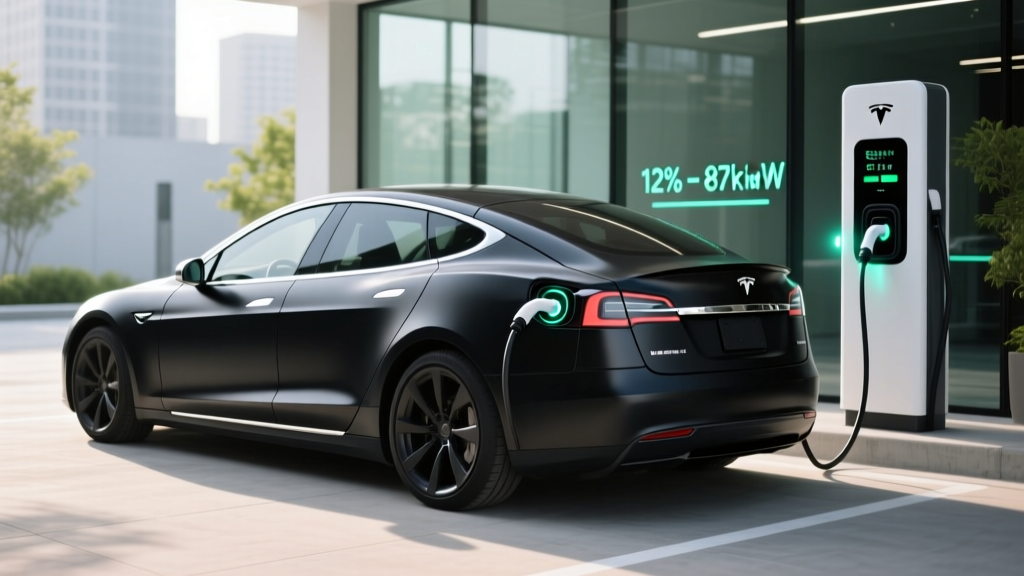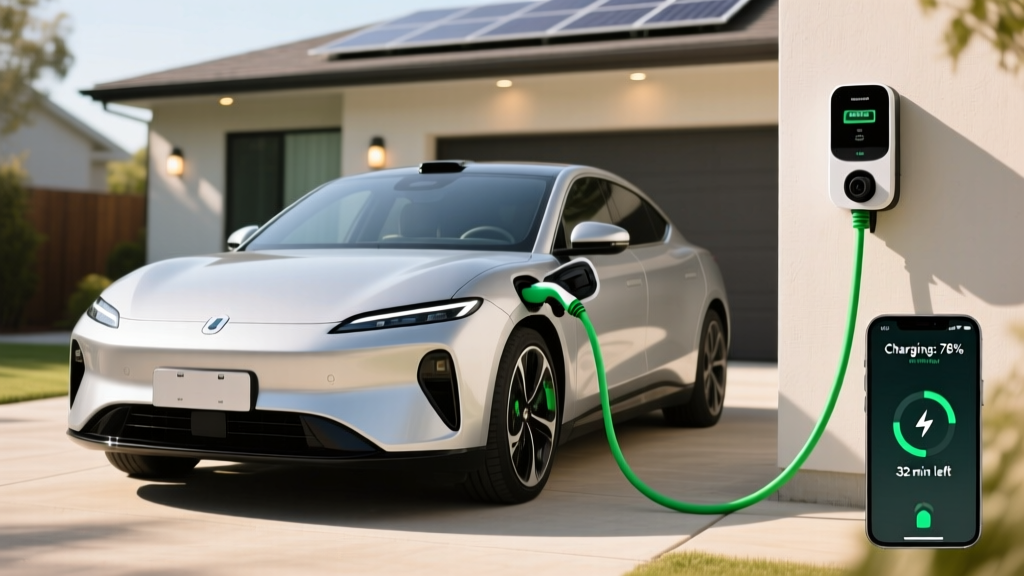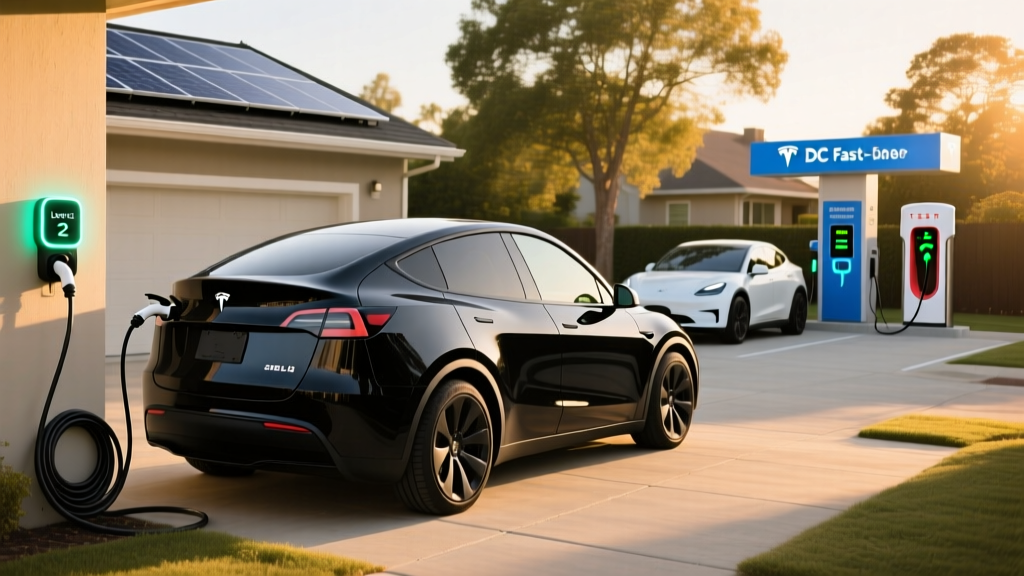
The 2025 Tesla Model Y Long Range remains one of the best-selling electric vehicles in the United States, and for good reason: an EPA-estimated 320 miles of range, access to Tesla's Supercharger network, and a starting MSRP around $48,990 before incentives. But owning an EV is only as good as your charging strategy. Whether you're plugging in at home, topping off on a road trip, or calculating your monthly electricity bill, the numbers matter more than the marketing.
This guide breaks down exactly how to charge the 2025 Model Y Long Range — from Level 1 trickle charging to 250 kW DC fast charging — with real-world times, costs, and equipment picks. We'll also cover home installation requirements, electrical panel considerations, and how the Model Y's charging cost per mile stacks up against a comparable gas crossover.
2025 Tesla Model Y Long Range: Key Charging Specs at a Glance
Before we get into the charging infrastructure, here are the vehicle-side numbers that dictate your charging experience. The 2025 Model Y Long Range uses a nickel-based (NMC) battery pack with approximately 75 kWh of usable capacity. Tesla equips all current Model Y vehicles with the North American Charging Standard (NACS) connector natively — no adapter needed at Superchargers or NACS-equipped public stations.
| Spec | Value |
|---|---|
| EPA Range | 320 miles |
| Battery (usable) | ~75 kWh (NMC) |
| Max DC Fast Charge Rate | 250 kW (peak) |
| 10–80% DC Fast Charge | ~27 minutes (V3 Supercharger) |
| Level 2 Onboard Charger | 11.5 kW (48A at 240V) |
| Miles per Hour at Level 2 | ~37–44 mi/hr |
| EPA Efficiency | 122 MPGe combined / 27 kWh/100mi |
| Connector | NACS (native) |
| Base MSRP | $48,990 (before incentives) |
Understanding Charging Levels: How Fast Will Each Add Range?
EV charging falls into three categories. The critical distinction here is kW (kilowatts), which measures the rate of power delivery — think of it as how fast water flows through a hose — versus kWh (kilowatt-hours), which measures total energy stored, like the size of the bucket. Your charging speed is measured in kW; your battery capacity is measured in kWh.
| Level | Voltage / Power | Approx. Miles Added per Hour | 0–100% Full Charge Time | Best For |
|---|---|---|---|---|
| Level 1 | 120V / ~1.4 kW | 3–5 mi/hr | ~50+ hours | Emergency top-off, overnight if daily driving is under 20 mi |
| Level 2 (Home/Public) | 240V / 7.7–11.5 kW | 25–44 mi/hr | ~7–10 hours | Daily home charging, workplace, shopping centers |
| DC Fast Charging | 400V+ / 50–250 kW | 150–1,000+ mi/hr (peak) | 10–80% in ~27 min (250 kW) | Road trips, highway corridors |
For the 2025 Model Y Long Range, Level 2 home charging is the sweet spot. The onboard charger accepts up to 11.5 kW (48 amps at 240V), meaning a properly installed 60-amp circuit with a hardwired wall connector will deliver the maximum Level 2 speed. At 11.5 kW, you'll recover roughly 37–44 miles of range per hour — enough to fully replenish the battery overnight.
DC fast charging peaks at 250 kW on Tesla V3 Superchargers, but that peak rate only holds at lower states of charge (roughly 10–30% SoC). The charge curve tapers significantly above 60%, and especially above 80%. This is why Tesla and most EV makers quote 10–80% times rather than 0–100% — charging the final 20% can take as long as the first 70%.
Home Charger Installation: Electrical Requirements and Costs
Installing a Level 2 home charger for your Model Y Long Range requires a dedicated 240V circuit, typically 60 amps to support the full 48A continuous draw (electrical code requires circuits to be rated at 125% of the continuous load). Here's what's involved:
Electrical requirements:
- Voltage: 240V (split-phase, standard US residential)
- Circuit breaker: 60A dedicated (for 48A continuous charging)
- Wiring: 6 AWG copper (or 4 AWG aluminum) for runs up to ~50 feet; thicker gauge for longer runs
- Connection: Hardwired (preferred for 48A) or NEMA 14-50 receptacle (limits to 40A/9.6 kW)
- GFCI protection: Required by NEC 2020+ for receptacle-based EV chargers; hardwired units typically have integrated ground-fault protection
How Much Does It Cost to Install a Home EV Charger?
Installation costs vary widely based on your home's electrical setup, the distance from your panel to the charging location, and local permit fees. Here's a realistic breakdown for a 2025 Model Y Long Range home charging setup:
| Component | Simple Install (panel near garage) | Complex Install (long run, panel upgrade) |
|---|---|---|
| EV Charger Equipment (e.g., Tesla Wall Connector) | $400–$500 | $400–$500 |
| Electrician Labor (2–4 hrs simple; 6–10+ hrs complex) | $500–$1,200 | $1,500–$3,000 |
| Electrical Materials (wire, conduit, breaker) | $100–$300 | $300–$800 |
| Permit & Inspection | $50–$200 | $50–$200 |
| Panel Upgrade (if needed) | — | $1,500–$3,500 |
| Total Estimated Cost | $1,050–$2,200 | $3,750–$8,000 |
For most homeowners with a 200A panel and a garage adjacent to the electrical service, expect to pay in the $1,200–$2,000 range all-in for a hardwired Tesla Wall Connector installation. Always hire a licensed electrician and pull the required permit — unpermitted electrical work can void your homeowner's insurance and create fire hazards.
Connector Compatibility: NACS, CCS, and Adapters
The 2025 Tesla Model Y Long Range comes equipped with a native NACS (North American Charging Standard) port. This is the same connector used by Tesla's Supercharger network, which now exceeds 6,000 stations and 65,000+ connectors in North America according to Tesla's Supercharger page.
The good news for Tesla owners: NACS is rapidly becoming the dominant standard. Ford, Rivian, GM, Hyundai, and most major automakers have adopted NACS for their 2025+ EVs, meaning the public charging ecosystem is consolidating around this connector.
| Connector Type | Compatible with Model Y? | Notes |
|---|---|---|
| NACS (Tesla) | ✅ Native | Direct plug at all Superchargers and NACS public stations |
| CCS1 | ⚠️ Adapter needed | Tesla sells a CCS adapter (~$250); needed for Electrify America, some ChargePoint stations |
| CHAdeMO | ❌ No adapter available | Legacy standard (Nissan Leaf); effectively obsolete for new Tesla owners |
| J1772 (Level 2 public) | ✅ Adapter included | Tesla includes a J1772-to-NACS adapter in the vehicle; works at most public Level 2 stations |
For home charging, the Tesla Wall Connector uses a native NACS plug — just plug in directly. For public Level 2 stations with J1772 connectors (still common at malls, hotels, and workplaces), use the included J1772 adapter. For DC fast charging on non-Tesla networks like Electrify America, you'll need the optional CCS adapter, though Tesla has been adding NACS connectors to some third-party networks as well.
Charging Cost: Model Y Long Range vs. Gas — What's the Real Cost Per Mile?
One of the strongest ownership arguments for the 2025 Model Y Long Range is fuel cost savings. The EPA rates the Model Y Long Range at approximately 27 kWh per 100 miles (combined). Let's translate that into dollars per mile across different charging scenarios and compare it against a gas-powered equivalent.
For our gas comparison, we'll use a similarly sized AWD crossover getting 26 MPG combined with gas at $3.50/gallon (national average estimate).
| Charging Scenario | Rate | Cost per Mile (Model Y) | Cost per Mile (Gas, 26 MPG) |
|---|---|---|---|
| Home (national avg. electricity) | $0.16/kWh | $0.043 | $0.135 |
| Home (off-peak / time-of-use) | $0.08–$0.10/kWh | $0.022–$0.027 | $0.135 |
| Public Level 2 (e.g., ChargePoint) | $0.25–$0.35/kWh | $0.068–$0.095 | $0.135 |
| Tesla Supercharger (avg.) | $0.28–$0.36/kWh | $0.076–$0.097 | $0.135 |
| Electrify America / DC Fast | $0.35–$0.48/kWh | $0.095–$0.130 | $0.135 |
The takeaway: home charging is dramatically cheaper than gas — roughly one-third to one-fifth the cost per mile. Even public DC fast charging is generally cheaper than or competitive with gas, though the gap narrows significantly on premium-priced networks. If you charge primarily at home on an off-peak rate plan, your annual "fuel" cost for 12,000 miles of driving could be as low as $264–$324, versus $1,615 for the gas equivalent.
Tesla also offers free Supercharging credits periodically through referral programs or promotions, which can further reduce road-trip costs for new owners.
Recommended Home Chargers for the 2025 Model Y Long Range
Since the Model Y uses NACS natively, Tesla's own Wall Connector is the obvious first choice — but it's not the only option. Here are three chargers that pair well with the Model Y Long Range's 11.5 kW onboard charger:
Tesla Wall Connector (Gen 3)
- Power: Up to 11.5 kW (48A)
- Connector: NACS native
- Cable Length: 24 ft
- Smart Features: Wi-Fi, OTA updates, power sharing (pair two units on one circuit), access control
- Price: ~$475
- Best For: Tesla-only households; cleanest integration
ChargePoint Home Flex (NACS)
- Power: Up to 12 kW (50A) — adjustable down to 16A
- Connector: NACS (2025+ version)
- Cable Length: 23 ft
- Smart Features: Wi-Fi, Alexa, scheduling, detailed energy reporting, works with non-Tesla EVs via adapter
- Price: ~$650–$700
- Best For: Multi-EV households; flexible amperage for older panels
Emporia Vue Level 2 Charger
- Power: Up to 11.5 kW (48A)
- Connector: NACS (2025+ version)
- Cable Length: 24 ft
- Smart Features: Wi-Fi, energy monitoring integration with Emporia Vue panel monitor, scheduling, solar-aware charging
- Price: ~$400–$450
- Best For: Budget-conscious buyers; solar panel owners
For most Model Y Long Range owners, the Tesla Wall Connector at $475 is the default recommendation — it matches the vehicle's 11.5 kW maximum, offers a 24-foot cable for flexible parking, and integrates seamlessly with the Tesla app. If you plan to own a non-Tesla EV in the future or want detailed energy monitoring, the ChargePoint Home Flex is a strong alternative.
Safety, Code, and Installation Best Practices
EV charging involves sustained high-current draw — often 8+ hours at 40–48 amps. This is more demanding on your electrical system than almost any other household appliance. Here's what to get right:
- Dedicated circuit: Your EV charger must be on its own dedicated breaker — never shared with other outlets or appliances.
- Hardwired vs. receptacle: Hardwired installations (no plug) are preferred for 48A chargers. They avoid the NEC requirement for GFCI breakers on receptacles (which can nuisance-trip and add $150–$250 in cost) and provide a more reliable connection.
- Outdoor rating: If your charging location is outside or in an unenclosed carport, ensure the charger carries a NEMA 4 (weatherproof) rating. The Tesla Wall Connector and ChargePoint Home Flex are both rated for outdoor use.
- Permit and inspection: Most jurisdictions require an electrical permit for a new 240V circuit. The inspection ensures proper wire gauge, breaker sizing, grounding, and bonding. Skipping this step risks fire and insurance claim denial.
- Surge protection: Consider a whole-home surge protector or a dedicated EV charger surge device, especially in areas with frequent lightning or grid instability. A $150–$300 investment can protect a $475+ charger and your vehicle's onboard electronics.
For a deeper understanding of electrical code requirements specific to EV charging, the U.S. Department of Energy's Alternative Fuels Data Center maintains up-to-date guidance on residential EVSE installation standards.
Federal Tax Credit and Incentives for Home Charging
The IRS §30C Alternative Fuel Vehicle Refueling Property Credit offers a tax credit of up to 30% of the cost of home EV charger equipment and installation, capped at $1,000. This credit is available for equipment placed in service through December 31, 2032, but it has important limitations:
- The credit applies only to your primary residence.
- The property must be located in an eligible low-income or non-urban census tract (as defined by the IRS for 2025–2026 filings — check the latest IRS guidance for qualifying tracts).
- It covers both equipment and installation labor costs.
- You claim it on IRS Form 8911 with your annual tax return.
Separately, the §30D Clean Vehicle Credit applies to the vehicle purchase itself — up to $7,500 for eligible new EVs. However, the 2025 Tesla Model Y Long Range's eligibility depends on battery component and critical mineral sourcing requirements that shift annually. Check the latest rules on fueleconomy.gov before assuming you qualify. Income caps ($150K single / $300K joint) and MSRP caps ($55K for SUVs) also apply.
Frequently Asked Questions
Can I charge the 2025 Model Y Long Range on a standard 120V outlet?
Yes, using the Tesla Mobile Connector with the NEMA 5-15 adapter, you'll get roughly 1.4 kW and add about 3–5 miles of range per hour. This works for overnight top-offs if your daily driving is under 20–30 miles, but a full charge from empty would take over 50 hours. For daily use, Level 2 is strongly recommended.
How long does it take to charge the Model Y Long Range from 10% to 80% on a Supercharger?
On a Tesla V3 Supercharger (250 kW peak), expect approximately 27 minutes from 10% to 80% under ideal conditions (warm battery, low state of charge at start). In cold weather without preconditioning, this can stretch to 35–45 minutes. Always navigate to a Supercharger using the car's built-in navigation to trigger automatic battery preconditioning.
Do I need a 60-amp circuit, or can I use a 50-amp NEMA 14-50 outlet?
A NEMA 14-50 receptacle on a 50-amp breaker limits you to 40A continuous (9.6 kW), which still adds roughly 30–35 miles per hour — adequate for most daily needs. A 60-amp hardwired circuit unlocks the full 48A (11.5 kW). The choice depends on your panel capacity and whether you want maximum speed or a simpler, potentially cheaper install. Consult your electrician.
Will frequent DC fast charging damage my Model Y's battery?
Occasional DC fast charging (road trips, a few times per month) has minimal impact on long-term battery health. However, daily DC fast charging — especially at high states of charge — can accelerate degradation. Tesla's battery management system actively manages thermal loads and charge tapering to protect the pack. For daily use, Level 2 home charging set to 80% or 90% (configurable in the app) is the longevity-friendly approach. Tesla's battery warranty covers 8 years / 120,000 miles with at least 70% capacity retention.
What electrical upgrades might I need for a home charger?
The most common upgrade is a panel replacement from 100A or 125A to 200A service, costing $1,500–$3,500. Other potential needs include: a sub-panel if your main panel is full (no open breaker slots), conduit runs for long wire distances (adding $200–$600 in materials), or a meter-main replacement if your utility requires it for increased service. An electrician's load calculation will determine exactly what's needed before you commit to equipment.
Is the Tesla Mobile Connector included with the 2025 Model Y Long Range?
As of the 2025 model year, Tesla no longer bundles the Mobile Connector with new vehicles — it must be purchased separately (~$200). The Mobile Connector supports Level 1 (120V) and, with a NEMA 14-50 adapter ($35), Level 2 at up to 32A (7.7 kW). It's a useful backup and travel charger, but for primary home use, a dedicated Wall Connector is faster and more reliable.
How does cold weather affect charging speed?
Lithium-ion batteries charge more slowly when cold because the battery management system limits charge current to prevent lithium plating. In sub-freezing temperatures, a DC fast charge session can take 30–50% longer if the battery hasn't been preconditioned. The Model Y automatically preconditioning the battery when you navigate to a Supercharger — always use in-car navigation for charging stops to activate this feature. At home, scheduled departure preconditioning warms the battery using grid power, improving both range and charging readiness.