Owning a 2025 Tesla Model 3 means understanding how charging habits directly impact the vehicle's EPA-estimated range of up to 363 miles (Long Range AWD). Whether you're charging at home, on the road, or planning a long trip, the interplay between battery chemistry, charging speed, and real-world conditions determines how far you'll actually go. This guide breaks down the exact numbers — in kilowatts (kW) for power and kilowatt-hours (kWh) for energy — so you can plan charging infrastructure that preserves your Model 3's range potential.
Understanding Charging Levels and Range Addition Speeds
Electric vehicle charging operates across three primary levels, each with distinct power delivery rates measured in kilowatts (kW). The higher the kW, the faster energy flows into your Model 3's battery pack — but real-world charging curves mean peak rates aren't sustained throughout the session.
| Level | Voltage | Power (kW) | Miles Added/Hour | Typical Use Case |
|---|---|---|---|---|
| Level 1 | 120V | 1.4-1.9 kW | 3-5 miles | Emergency top-ups, overnight trickle |
| Level 2 (Home/Public AC) | 240V | 7.2-11.5 kW | 25-44 miles | Daily home charging, workplace |
| DC Fast Charging | 400-800V DC | 50-250 kW (peak) | 170-200+ miles in 15 min | Road trips, rapid top-ups |
The 2025 Model 3 Long Range AWD features an 82 kWh (usable) lithium-ion battery pack with NMC (nickel-manganese-cobalt) chemistry. On a Level 2 charger delivering 11.5 kW — the maximum the Model 3's onboard charger accepts — you'll add approximately 44 miles of range per hour. A full 10-100% charge takes about 7-8 hours from a depleted state.
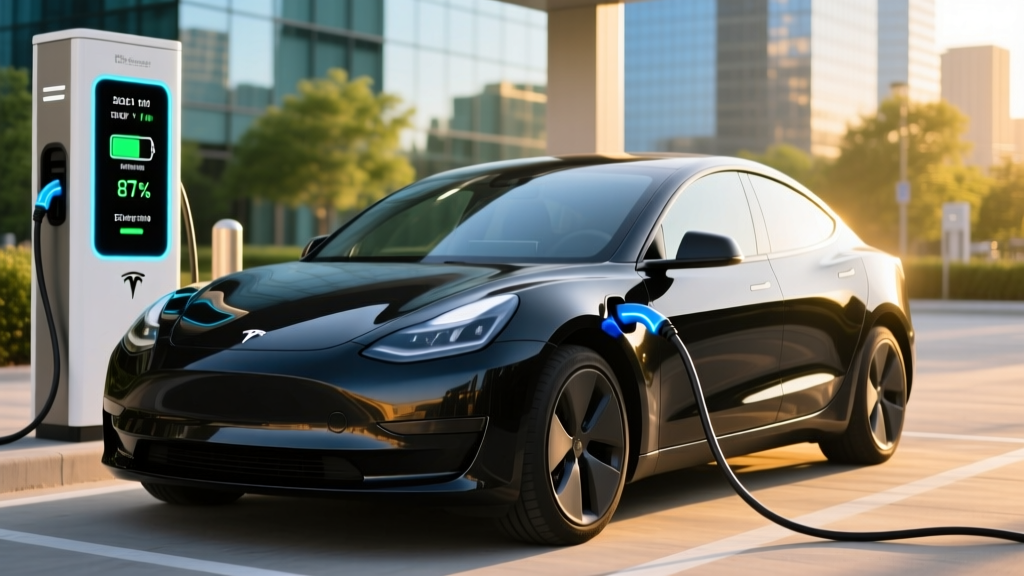
At a Tesla Supercharger V3 (250 kW peak), the Model 3 can accept peak power between 10-30% state of charge (SoC), but charging speed tapers significantly above 60% SoC to protect battery health. Expect a 10-80% charge in roughly 25-30 minutes under optimal conditions (battery preconditioned, moderate ambient temperature). Above 80%, the charge rate drops to under 50 kW, which is why Tesla's navigation system typically routes you to charge only to the level needed to reach your next stop.
Home Charger Installation: Electrical Requirements and Costs
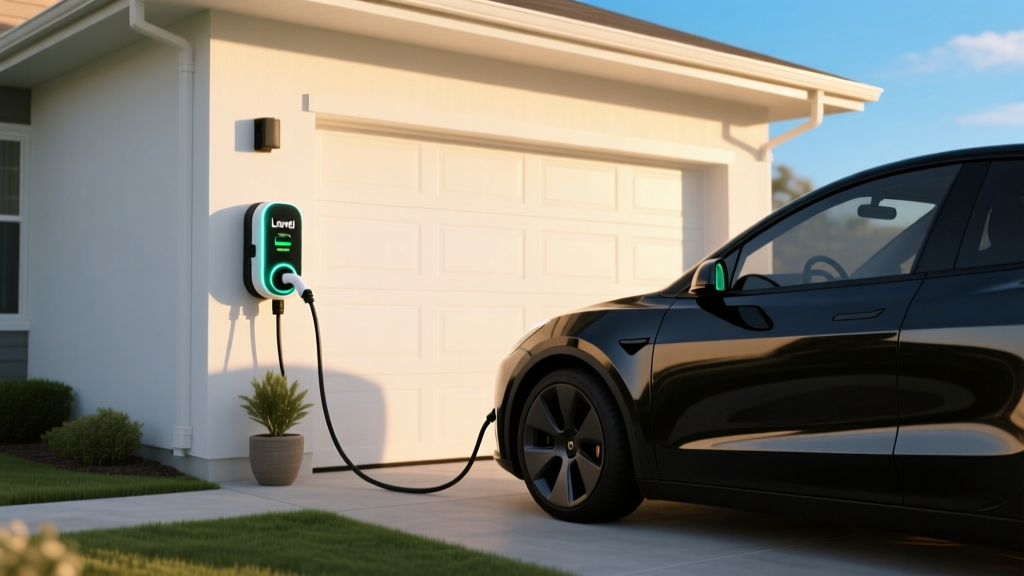
Installing a Level 2 home charger for your Model 3 requires a dedicated 240V circuit, typically rated at 40-60 amps. The National Electrical Code (NEC) requires that continuous loads (like EV charging) not exceed 80% of a circuit's rated capacity, so a 60-amp circuit delivers a maximum of 48 amps (11.5 kW) to the vehicle.
Installation Cost Breakdown: Level 2 Home Charger
| Component | Cost Range | Notes |
|---|---|---|
| Level 2 Charger (Hardware) | $400-$750 | Tesla Wall Connector, ChargePoint Home Flex, Emporia Vue |
| Electrician Labor | $600-$2,000 | Depends on distance from panel, wall type, conduit run |
| Electrical Permit | $50-$200 | Varies by municipality; required for code compliance |
| Panel Upgrade (if needed) | $1,500-$4,000 | Older homes with 100A service may need 200A upgrade |
| Total (No Panel Upgrade) | $1,050-$2,950 | Most common scenario for homes built after 2000 |
| Total (With Panel Upgrade) | $2,550-$6,950 | Typical for pre-1990 homes or those with existing high loads |
Before installation, have a licensed electrician perform a load calculation on your electrical panel. Homes with 200-amp service and modern wiring typically accommodate a 60-amp EV circuit without upgrades. However, if your panel is already near capacity (running electric heat, A/C, dryer, and oven), you may need a panel upgrade or a smart load-management system that throttles charger power when other appliances draw current.
The IRS §30D tax credit does not cover home charging equipment directly, but the Alternative Fuel Vehicle Refueling Property Credit (Form 8911) offers up to $1,000 for residential charger installation through 2032, subject to income caps and census-tract eligibility.
Connector Compatibility: NACS, CCS, and Adapters
The 2025 Tesla Model 3 uses the North American Charging Standard (NACS) connector, which Tesla opened to other manufacturers in late 2022. As of 2025, NACS is the de facto standard for new EVs sold in North America, with Ford, GM, Rivian, Volvo, and others adopting it.
| Connector Type | Native Compatibility | Adapter Needed? | Networks Available |
|---|---|---|---|
| NACS (Tesla) | Yes (built-in) | No | Tesla Supercharger, Tesla Destination, Electrify America (select) |
| CCS1 | No | Yes (Tesla CCS Adapter, ~$175) | Electrify America, EVgo, ChargePoint, Ionity (Europe) |
| CHAdeMO | No | Yes (third-party, ~$300-$450) | Limited; mostly legacy Nissan Leaf infrastructure |
For Model 3 owners, the Tesla Supercharger network remains the most reliable DC fast-charging option, with over 6,000 V3 (250 kW) and V4 stalls across North America as of 2026. The CCS adapter is useful for accessing non-Tesla networks in areas with sparse Supercharger coverage, but charging speeds on third-party networks can be inconsistent due to maintenance and uptime variability.
Charging Cost: Home vs. Public vs. Gas Equivalent
Electricity pricing varies dramatically by region, time of day, and charging location. The 2025 Model 3 Long Range AWD achieves an EPA-estimated efficiency of 132 MPGe combined (25 kWh/100 miles), which translates to real-world highway efficiency of approximately 28-32 kWh/100 miles depending on speed, temperature, and terrain.
| Scenario | Rate | Cost per 100 Miles | Cost per Mile |
|---|---|---|---|
| Home Charging (Off-Peak, $0.12/kWh) | 30 kWh/100 mi | $3.60 | $0.036 |
| Home Charging (Peak, $0.25/kWh) | 30 kWh/100 mi | $7.50 | $0.075 |
| Public Level 2 ($0.35/kWh) | 30 kWh/100 mi | $10.50 | $0.105 |
| DC Fast Charging ($0.48/kWh avg) | 32 kWh/100 mi | $15.36 | $0.154 |
| Gas Vehicle (30 MPG, $3.50/gal) | 3.33 gal/100 mi | $11.67 | $0.117 |
Home charging during off-peak hours delivers the lowest cost per mile — roughly one-third the cost of gasoline. Even public DC fast charging at premium rates remains competitive with gas on a per-mile basis, though frequent reliance on public charging erodes the economic advantage. For the 2025 Model 3, charging at home 80% of the time and using DC fast charging for road trips yields an annual fuel cost of approximately $450-$650 for 12,000 miles of driving, compared to $1,400-$1,600 for a comparable gas vehicle.
Equipment Recommendations: Level 2 Chargers for Model 3
Selecting a Level 2 charger involves balancing power output, cable length, smart features, and price. The Model 3's 11.5 kW onboard charger means any charger delivering 48 amps or more will maximize charging speed.
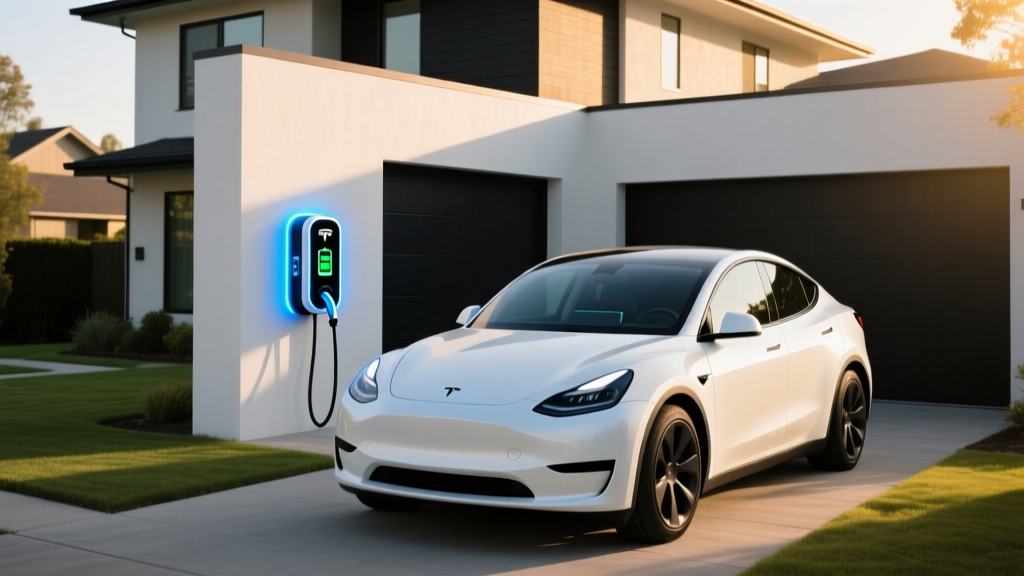
Tesla Wall Connector (Gen 3)
- Power Output: Up to 11.5 kW (48A @ 240V)
- Connector: NACS (native Tesla)
- Cable Length: 24 feet
- Smart Features: Wi-Fi enabled, OTA updates, power sharing (multiple units on one circuit), load management
- Price: $475 (direct from Tesla)
- Best For: Tesla-only households seeking seamless integration
ChargePoint Home Flex
- Power Output: Up to 12 kW (50A @ 240V, configurable down to 16A)
- Connector: NACS or J1772 (select at purchase)
- Cable Length: 23 feet
- Smart Features: Wi-Fi, app scheduling, Alexa integration, flexible amperage for older panels
- Price: $699 (NACS version)
- Best For: Multi-EV households or renters who may move chargers
Emporia Vue Smart Charger
- Power Output: Up to 11.5 kW (48A @ 240V)
- Connector: NACS or J1772
- Cable Length: 24 feet
- Smart Features: Real-time energy monitoring, solar integration, circuit-breaker-level load management
- Price: $599 (with energy monitor bundle)
- Best For: Homes with solar panels or those tracking whole-home energy use
Safety, Code Compliance, and Outdoor Installation
EV charger installations must comply with NEC Article 625 and local building codes. Key safety requirements include:
- Dedicated Circuit: The charger must have its own circuit breaker — no sharing with other appliances.
- GFCI Protection: Outdoor installations require ground-fault circuit interrupter (GFCI) protection, either via a GFCI breaker or a charger with built-in GFCI.
- Outdoor Rating: Chargers mounted outside must carry a NEMA 3R or NEMA 4 rating for weather resistance. The Tesla Wall Connector and ChargePoint Home Flex are both rated for outdoor use.
- Conduit and Wiring: THHN copper wire in conduit is standard for runs over 50 feet; direct burial cable (UF-B) is permitted for shorter underground runs.
- Permit and Inspection: Most jurisdictions require an electrical permit and final inspection to ensure code compliance. Skipping this step can void home insurance coverage in the event of an electrical fire.
For outdoor installations in cold climates, consider a charger with a heated cable holster or a retractable cable management system to prevent cord damage from freezing and UV exposure. Tesla's Wall Connector includes a cable management bracket, while third-party solutions like the EV Cable Holder ($35-$50) keep cords organized and off the ground.
Real-World Range Considerations: Beyond the EPA Sticker
The 2025 Tesla Model 3 Long Range AWD carries an EPA-estimated range of 363 miles, but real-world range varies based on driving conditions. According to fueleconomy.gov, the Model 3 Long Range achieves 132 MPGe combined (25 kWh/100 mi), but highway driving at 75 mph increases consumption to approximately 28-30 kWh/100 mi, reducing effective range to 270-300 miles.
Cold weather (below 32°F) can reduce range by 15-30% due to battery heating demands and reduced regenerative braking efficiency. Tesla's heat pump system mitigates some of this loss, but preconditioning the battery while plugged in — using the Tesla app to warm the cabin and battery before departure — preserves range by drawing power from the grid rather than the pack.
For road trips, Tesla's navigation system accounts for elevation changes, wind, and temperature when estimating arrival SoC. Plan to arrive at Superchargers with 10-15% SoC remaining and depart at 60-70% to minimize charging time (the 10-80% charge window is fastest, with significant taper above 80%).
Frequently Asked Questions
How much does it cost to install a home EV charger for my 2025 Tesla Model 3?
Expect $1,050-$2,950 for a standard Level 2 installation (equipment, electrician, permit) if your electrical panel has capacity. Homes needing a panel upgrade (100A to 200A) should budget $2,550-$6,950 total. The federal Alternative Fuel Vehicle Refueling Property Credit may offset up to $1,000 of installation costs, subject to income limits and census-tract eligibility.
How fast will each charging level add range to my Model 3?
Level 1 (120V) adds 3-5 miles per hour — suitable only for overnight trickle charging. Level 2 (240V, 48A) adds 40-44 miles per hour, fully recharging a depleted Model 3 Long Range in 7-8 hours. DC fast charging at a Tesla Supercharger V3 (250 kW) adds approximately 170 miles in 15 minutes under optimal conditions, with a 10-80% charge taking 25-30 minutes.
Which connector is compatible with my 2025 Tesla Model 3?
The Model 3 uses the NACS connector natively, compatible with Tesla Superchargers and a growing number of third-party networks. To access CCS1 chargers (Electrify America, EVgo), you'll need Tesla's CCS adapter ($175). CHAdeMO compatibility requires a third-party adapter ($300-$450) but is rarely necessary given NACS network expansion.
How much does charging cost per mile compared to gas?
Home charging during off-peak hours ($0.12/kWh) costs approximately $0.036 per mile for the Model 3 Long Range. Public DC fast charging ($0.48/kWh) costs about $0.154 per mile. A comparable gas vehicle achieving 30 MPG at $3.50/gallon costs $0.117 per mile. Charging at home delivers the lowest cost; frequent public charging narrows the advantage.
What electrical upgrades might I need for a home charger?
Homes with 200-amp electrical service and available panel capacity typically require no upgrades. Older homes (pre-1990) with 100-amp service or panels already near capacity may need a panel upgrade ($1,500-$4,000) or a smart load-management system that dynamically reduces charger power when other appliances draw current. A licensed electrician can perform a load calculation to determine your specific needs.
For authoritative information on EV charging infrastructure, consult the U.S. Department of Energy's Alternative Fuels Data Center and NHTSA's EV safety guidance.