If you've just ordered or are researching the 2025 Tesla Model Y Long Range, you already know it's one of the most efficient electric SUVs on the road. But the gap between owning an EV and living with one almost always comes down to charging. How fast can you replenish that 75 kWh (usable) battery? What will a home Level 2 install actually cost? And how does the per-mile cost stack up against a comparable gas crossover?
This guide breaks down every charging scenario a 2025 Model Y Long Range owner will face — from overnight Level 2 top-ups to cross-country DC fast charging — with exact numbers, real-world caveats, and the electrical details your installer will need.
2025 Model Y Long Range: Key Charging Specs at a Glance
| Spec | Value |
|---|---|
| Battery (usable) | ~75 kWh (NMC chemistry) |
| EPA Range | 320 miles (AWD Long Range) |
| Real-World Highway Range | ~270–290 mi (70 mph, mild weather); ~230–250 mi (cold/highway) |
| Max DC Fast Charge Rate | 250 kW (peak, V3 Supercharger) |
| 10–80% DC Fast Charge | ~25 minutes (optimal conditions) |
| Level 2 AC Charge Rate | 11.5 kW (48A onboard charger) |
| Connector | NACS (native Tesla) |
| Efficiency | 122 MPGe combined / 28 kWh/100mi |
| Base MSRP (Long Range AWD) | ~$48,990 (2025, pre-incentives) |
Charging Levels Explained: How Fast Will Each Level Add Range?
Before we get into costs and equipment, let's nail down the three charging levels and what they mean for your Model Y Long Range. The critical distinction: kW (kilowatts) measures power — how fast energy flows into your car. kWh (kilowatt-hours) measures energy — the total capacity of your battery. Think of kW as the width of the hose and kWh as the size of the bucket.
| Level | Voltage / Amps | Power (kW) | Miles of Range Added per Hour | Full Charge Time (0–100%) | Best Use Case |
|---|---|---|---|---|---|
| Level 1 (120V household outlet) | 120V / 12A | ~1.4 kW | ~3–4 mi/hr | ~50+ hours | Emergency / overnight trickle |
| Level 2 (240V home/public) | 240V / 48A | 11.5 kW | ~37–44 mi/hr | ~7–8 hours | Daily home charging |
| DC Fast Charging (Supercharger/public) | 400V+ DC | Up to 250 kW (peak) | ~200+ mi in 15 min (peak) | 10–80% in ~25 min | Road trips, rapid top-ups |
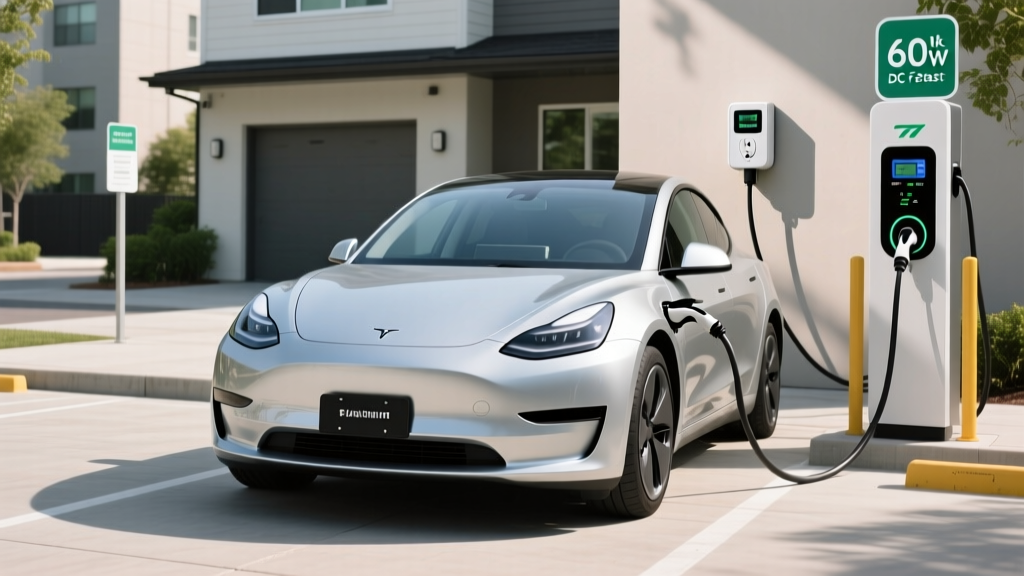
The charge curve reality: That 250 kW peak on a V3 Supercharger doesn't last the whole session. The Model Y Long Range will pull close to peak rate from roughly 10–30% State of Charge (SoC), then taper progressively. By 60% SoC, you're likely around 100–120 kW; by 80%, it drops to roughly 50–60 kW. This is why Tesla (and every EV maker) quotes 10–80% times rather than 0–100%. Charging above 80% on DC fast is slow and generates excess heat — save that last 20% for home Level 2.
Home Level 2 Charger Installation: Costs, Electrical Requirements & What to Expect
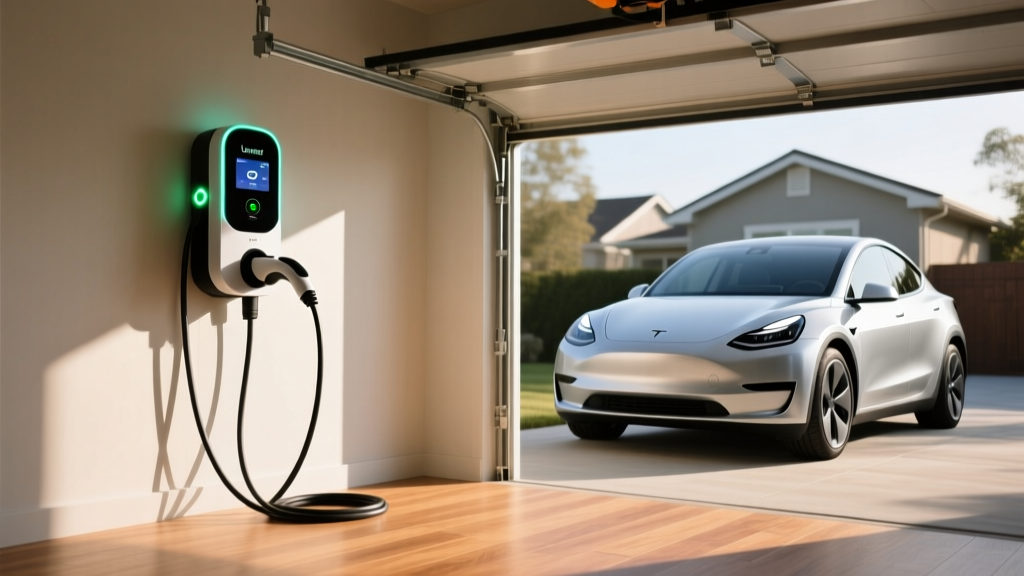
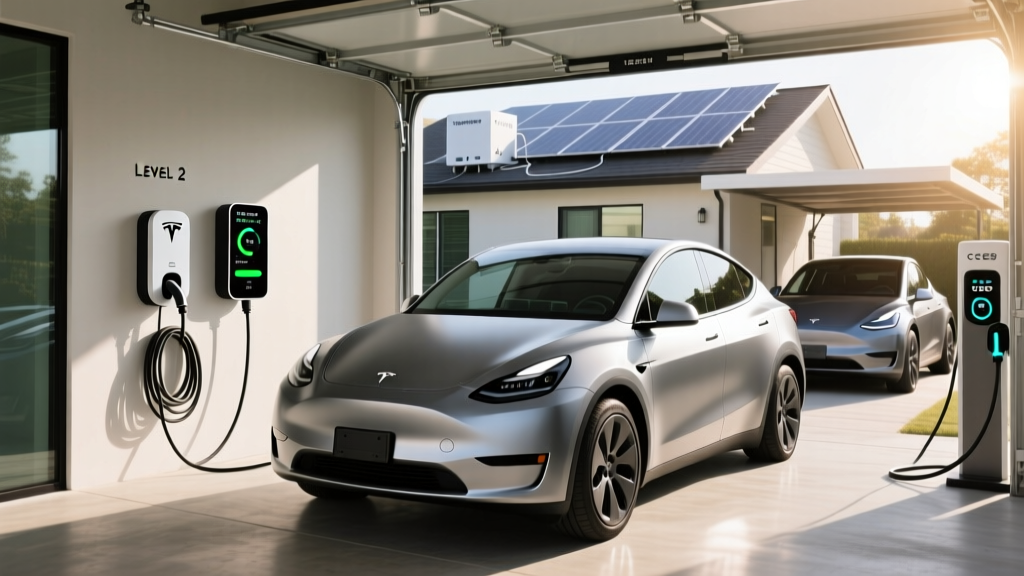
For most 2025 Model Y Long Range owners, a home Level 2 charger is the cornerstone of daily EV life. You plug in at night, wake up with a full battery, and rarely think about it. But getting that 240V circuit installed correctly requires understanding your home's electrical panel and budgeting for the full job.
Electrical Requirements for the Model Y Long Range
The Model Y's onboard charger accepts up to 11.5 kW on AC power, which means it can draw 48 amps at 240 volts. Per the National Electrical Code (NEC), continuous loads must be limited to 80% of the circuit breaker rating, so you'll need a 60-amp dedicated circuit to deliver a full 48A to the car.
- Ideal setup: 240V / 60A dedicated circuit (NEMA 14-60 outlet or hardwired wall connector)
- Minimum functional setup: 240V / 30A circuit (NEMA 14-30 or 10-30), delivering ~5.7 kW / ~22 mi/hr
- Panel capacity check: Most modern homes with a 200A service panel can accommodate a 60A EV circuit. Older homes with 100A panels may need a panel upgrade.
How Much Does It Cost to Install a Home EV Charger?
Installation costs vary widely based on how far your electrical panel is from your garage or parking spot, whether your panel needs an upgrade, and local permit fees. Here's a realistic breakdown:
| Component | Low-End Estimate | High-End Estimate | Notes |
|---|---|---|---|
| Level 2 Charger Equipment | $250 | $650 | Tesla Wall Connector ~$420; third-party smart chargers $400–$650 |
| Electrician Labor (short run, <20 ft from panel) | $400 | $800 | Simple conduit run, new breaker, outlet or hardwire |
| Electrician Labor (long run, >40 ft, conduit through walls) | $1,000 | $2,500 | Wire gauge (6 AWG copper for 60A), trenching, wall penetration |
| Permit & Inspection | $50 | $300 | Varies by municipality; some jurisdictions waive EV permits |
| Electrical Panel Upgrade (if needed) | $1,500 | $4,000 | 100A → 200A service upgrade; not required in most newer homes |
| Total (no panel upgrade) | $700 | $3,750 | Most homeowners land between $1,200–$2,200 |
| Total (with panel upgrade) | $2,200 | $7,750 | Older homes or those adding multiple high-draw circuits |
Always hire a licensed electrician familiar with EV installations. Some utilities offer rebates of $250–$1,000 for home charger installation — check with your local provider before scheduling work.
Which Connector and Charger Is Compatible with the Model Y?
The 2025 Model Y Long Range uses the NACS (North American Charging Standard) connector natively — this is Tesla's proprietary plug, now adopted as the industry standard by Ford, GM, Rivian, Volvo, and most major automakers through 2025–2026.
| Connector Type | Native Support? | Adapter Needed? | Where You'll Find It |
|---|---|---|---|
| NACS (Tesla) | Yes — native | None | Tesla Superchargers, Tesla Wall Connector, Destination Chargers |
| CCS1 | No | Tesla CCS Adapter (~$175) | Electrify America, EVgo, ChargePoint DC stations |
| CHAdeMO | No | Third-party adapter (limited availability, ~$300+) | Older Nissan Leaf-era stations; being phased out |
| J1772 (Level 2 AC) | No | Tesla J1772 Adapter (included with vehicle) | Public Level 2 stations, non-Tesla home chargers |
Practical advice: For home charging, the Tesla Wall Connector (NACS) is the simplest and most cost-effective choice. For public DC fast charging, Tesla's Supercharger network remains the most reliable option by a wide margin — but carrying the CCS adapter unlocks Electrify America and other networks as backup on road trips through areas with sparse Supercharger coverage.
Cost to Charge: Per-Mile Breakdown vs. Gas
One of the strongest arguments for the 2025 Model Y Long Range is its low operating cost. Let's run the numbers with real electricity rates and compare against a gas-powered crossover getting 28 MPG combined (roughly the EPA combined figure for a Toyota RAV4 AWD or Honda CR-V AWD).
| Charging Scenario | Rate ($/kWh) | Cost for 75 kWh Fill | Cost Per Mile (320 mi range) |
|---|---|---|---|
| Home (off-peak utility rate) | $0.10 | $7.50 | $0.023/mi |
| Home (national avg residential) | $0.16 | $12.00 | $0.038/mi |
| Public Level 2 (ChargePoint, etc.) | $0.25–$0.35 | $18.75–$26.25 | $0.059–$0.082/mi |
| Tesla Supercharger (avg 2025) | $0.28–$0.36 | $21.00–$27.00 | $0.066–$0.084/mi |
| Electrify America DC Fast | $0.35–$0.48 | $26.25–$36.00 | $0.082–$0.113/mi |
| Gas Baseline: 28 MPG at $3.40/gal = $0.121/mi | |||
The bottom line: Charging at home on off-peak rates, the Model Y Long Range costs roughly one-fifth what a comparable gas crossover costs per mile. Even at public DC fast-charging rates, you're still saving 25–40% per mile vs. gasoline. Over 15,000 miles per year, home charging saves approximately $1,400–$1,600 annually compared to gas at $3.40/gallon.
Sources: fueleconomy.gov for EPA efficiency data; EIA electricity pricing.
Best Home Chargers for the 2025 Model Y Long Range
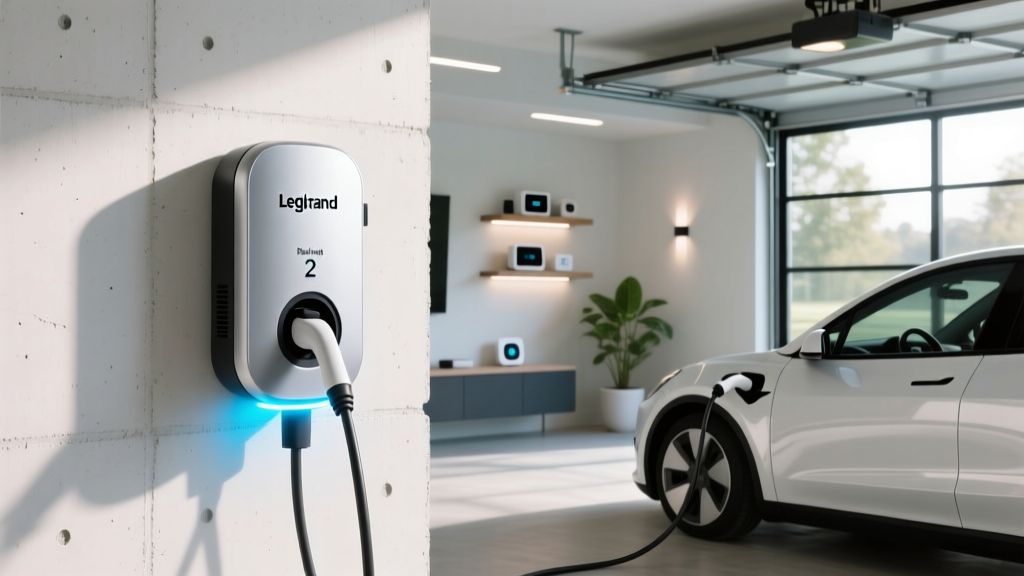
Here are three proven Level 2 chargers that pair well with the Model Y's 11.5 kW onboard charger, with specifics on power output, cable length, and smart features.
Tesla Wall Connector (Gen 3)
- Power Output: Up to 11.5 kW (48A at 240V)
- Connector: NACS (native Tesla)
- Cable Length: 24 ft
- Smart Features: Wi-Fi for OTA updates, power sharing between two units, Tesla app integration
- Price: ~$420
- Best For: Tesla-only households; simplest plug-and-charge experience
ChargePoint Home Flex
- Power Output: Up to 12 kW (50A at 240V, adjustable down to 16A)
- Connector: J1772 (use included Tesla adapter) or NACS version available
- Cable Length: 23 ft
- Smart Features: Wi-Fi, ChargePoint app with scheduling & energy tracking, Alexa compatible
- Price: ~$550–$650
- Best For: Multi-EV households (Tesla + non-Tesla); flexible amperage for smaller panels
Emporia Vue Smart EV Charger
- Power Output: Up to 11.5 kW (48A at 240V)
- Connector: J1772 (Tesla adapter included) or NACS
- Cable Length: 24 ft
- Smart Features: Integrates with Emporia home energy monitor, solar-aware scheduling, app control
- Price: ~$350–$400
- Best For: Budget-conscious buyers with solar panels or energy monitoring setups
Key buying tip: Match the charger's max amperage to your installed circuit. A 60A circuit supports a 48A charger (11.5 kW). If your electrician installs a 40A circuit, you'll be limited to 32A (7.7 kW) — still adequate for overnight charging but roughly 33% slower. The ChargePoint Home Flex's adjustable amperage is useful if you're unsure of your panel's headroom.
Safety, Code & Permit Considerations
EV charging draws significant current for hours at a time — this is not the same as plugging in a dryer for 45 minutes. Proper installation per the National Electrical Code (NEC) is non-negotiable.
- Dedicated circuit: Your Level 2 charger must be on its own dedicated breaker — no sharing with other appliances.
- GFCI protection: NEC 2020 and later requires GFCI (Ground Fault Circuit Interrupter) protection for EV charging outlets in garages. Hardwired installations may have different requirements depending on jurisdiction.
- Outdoor rating: If your charger is installed outside (driveway, carport), both the outlet and the charger must carry a NEMA 4 or NEMA 4X weather-resistance rating. The Tesla Wall Connector and ChargePoint Home Flex are both rated for outdoor use.
- Wire gauge: 6 AWG copper wire for 60A circuits; 8 AWG for 40A circuits. Your electrician will size appropriately.
- Permit & inspection: Most municipalities require an electrical permit for a new 240V circuit. The inspection ensures the work meets code and protects your home insurance coverage. Never skip this.
Public & Road-Trip Charging: What Model Y Owners Need to Know
The 2025 Model Y Long Range has a distinct road-trip advantage: native access to Tesla's Supercharger network, which as of 2025 includes over 6,000 stations and 65,000+ stalls across North America. Superchargers are consistently rated the most reliable public DC fast-charging network in independent surveys.
On a typical road trip, you'll stop at a Supercharger every 180–220 miles (accounting for real-world highway range and keeping a 10–15% buffer). A 10–80% session takes approximately 25 minutes at a V3 (250 kW) stall. Preconditioning — which the Model Y does automatically when you navigate to a Supercharger — warms the battery to optimal temperature and is critical for achieving peak charge rates, especially in cold weather.
With the CCS adapter, you also gain access to Electrify America, EVgo, and other networks. These can serve as backup in areas with limited Supercharger density, but expect variable reliability and occasional stalls that are out of service. The Tesla Supercharger map should remain your primary route-planning tool.
Frequently Asked Questions
How much does it cost to install a home EV charger for the Model Y?
Most homeowners spend between $1,200 and $2,200 for a complete Level 2 installation (charger + electrician + permit) when no panel upgrade is needed. If your home requires a 100A-to-200A panel upgrade, add $1,500–$4,000. Always get at least two quotes from licensed electricians.
How fast will each charging level add range to my Model Y Long Range?
Level 1 (120V) adds roughly 3–4 miles per hour — useful only for overnight trickle or emergencies. Level 2 (240V / 48A) adds 37–44 miles per hour, fully recharging overnight. DC fast charging at a V3 Supercharger can add roughly 200 miles in about 15 minutes under optimal conditions, though the charge curve tapers significantly above 60% SoC.
Which connector does the 2025 Model Y Long Range use?
NACS (Tesla's native connector). No adapter is needed for Tesla Superchargers or the Tesla Wall Connector. To use CCS public chargers (Electrify America, EVgo), you'll need Tesla's CCS adapter, sold separately for approximately $175. A J1772 adapter for non-Tesla Level 2 stations is included with the vehicle.
How much does charging the Model Y cost per mile compared to gas?
Charging at home on the national average residential rate (~$0.16/kWh), the Model Y Long Range costs approximately $0.038 per mile — roughly one-third the cost of a 28 MPG gas crossover at $3.40/gallon ($0.121/mi). Off-peak home rates can push the cost as low as $0.023/mi.
What electrical upgrades might I need for a home charger?
If your home has a modern 200A electrical panel with available breaker slots, you likely need only a new 60A breaker and a wire run to your garage. Homes with 100A panels, or panels already near capacity (large HVAC, electric heat, multiple high-draw appliances), may require a panel upgrade to 200A — a $1,500–$4,000 job. A licensed electrician's load calculation will determine this before any work begins.
Does the 2025 Model Y Long Range qualify for the federal EV tax credit?
Under current IRS §30D rules, the Model Y Long Range may qualify for up to $7,500 in federal tax credits, subject to buyer income caps ($150K single / $300K joint), MSRP limits ($80K for SUVs), and battery critical-mineral sourcing requirements that tighten annually. The credit can now be transferred to the dealer at point of sale as an instant discount. Verify your eligibility at irs.gov or consult a tax professional before purchasing.