The 2025 Dodge Charger Daytona EV: What Owners Need to Know About Charging
The 2025 Dodge Charger Daytona marks Stellantis's first all-electric muscle car, and its 800-volt architecture promises some of the fastest DC charging in the segment. But peak kilowatt figures on a spec sheet only tell half the story. Whether you're eyeing the R/T (496 hp) or the Scat Pack (670 hp), understanding how this car charges at home, on public networks, and what your electrical panel can actually support is the difference between effortless EV ownership and a frustrating learning curve.
This guide breaks down the Charger Daytona's charging capabilities across all three levels, walks through real home-installation costs, and compares per-mile energy expenses against the gas-powered Charger it replaces. All figures reference the production-spec 2025 Dodge Charger Daytona as sold in the U.S.
Battery: 100.5 kWh usable (NMC lithium-ion, 800V architecture)
EPA Range: 317 miles (R/T), 260 miles (Scat Pack)
Real-World Expectation: ~265–285 mi highway (R/T), ~215–235 mi (Scat Pack); expect 15–25% loss in sub-freezing temps
Max DC Fast Charge: 270 kW peak
Level 2 AC Charge: 11 kW onboard charger
0–60 mph: 4.3 sec (R/T), 3.3 sec (Scat Pack)
Base MSRP: ~$59,590 (R/T), ~$63,590 (Scat Pack) — destination included
Charging Levels Explained: Level 1, Level 2, and DC Fast Charging
Every EV owner interacts with three charging tiers. The critical distinction: kW (kilowatts) measures power — how fast energy flows into the battery, while kWh (kilbert-hours) measures energy capacity — how much the battery stores. Think of kW as the width of a hose and kWh as the size of the bucket.
| Level | Voltage | Max Power (kW) | Miles Added per Hour | Best For |
|---|---|---|---|---|
| Level 1 (120V outlet) | 120V AC | ~1.4 kW | ~3–5 mi/hr | Overnight trickle; emergency top-ups |
| Level 2 (240V home/public) | 240V AC | Up to 11 kW (Charger Daytona onboard limit) | ~30–37 mi/hr | Daily home charging; destination charging |
| DC Fast Charging | 400–800V DC | Up to 270 kW (peak, Charger Daytona) | ~180–220 mi in first 10 min (tapering) | Road trips; rapid top-ups |
The Charger Daytona's 100.5 kWh battery means Level 1 charging is impractical as a primary strategy — a full recharge would take over 70 hours. Level 2 at 11 kW is the daily workhorse, while the 800V DC fast-charging architecture unlocks genuinely rapid stops on road trips.
Home Level 2 Installation: Electrical Requirements, Costs, and Panel Gotchas
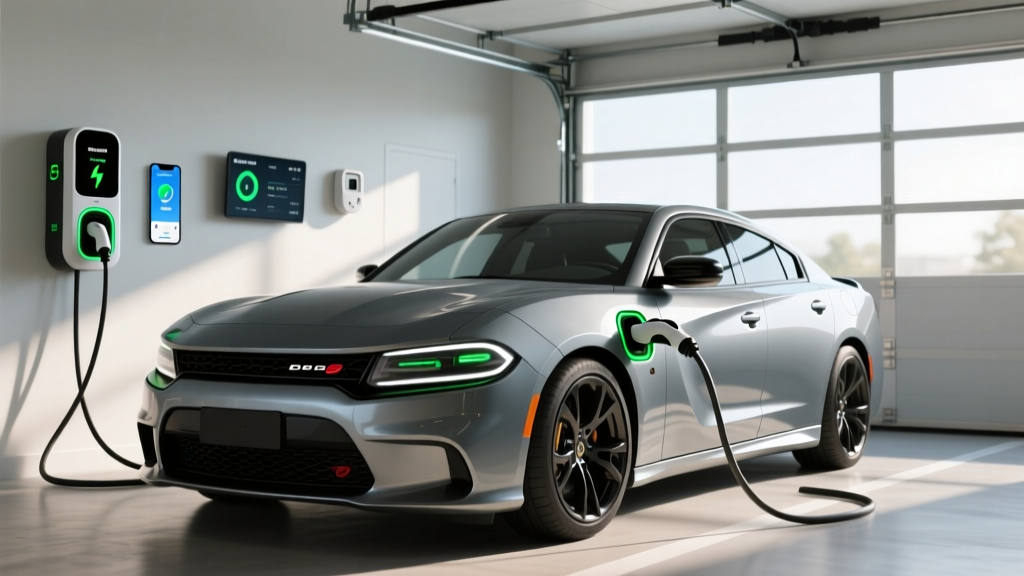
Charging a 100.5 kWh battery at home requires a properly sized 240V circuit. The Charger Daytona's 11 kW onboard charger draws roughly 48 amps, meaning you need a dedicated 60-amp circuit (EVSE hardwired) or a 50-amp NEMA 14-50 outlet (derated to 40A continuous, yielding ~9.6 kW). Either approach delivers a full overnight recharge in 9–11 hours.
What Your Electrical Panel Needs
A Level 2 charger on a 60-amp breaker requires your home's electrical panel to have sufficient spare capacity. Most modern 200-amp panels handle this without issue, but older homes with 100-amp service may need a panel upgrade — a significant line item. An electrician will perform a load calculation per NEC Article 220 to determine whether your panel can accommodate the additional draw.
| Component | Typical Cost Range | Notes |
|---|---|---|
| Level 2 EVSE (charger hardware) | $350–$750 | Varies by brand, power output, smart features |
| Electrician labor (standard install) | $500–$1,500 | Depends on run length from panel to garage |
| Electrical permit | $50–$200 | Required in most jurisdictions; inspected post-install |
| Panel upgrade (if needed) | $1,500–$4,000 | Only if existing panel lacks capacity (100A → 200A) |
| Total (no panel upgrade) | $900–$2,450 | Most homes with 200A service |
| Total (with panel upgrade) | $2,400–$6,450 | Older homes with 100A service |
The federal Alternative Fuel Vehicle Refueling Property Credit (IRS Form 8911) may offset up to 30% of home charger hardware and installation costs (capped at $1,000), subject to income and census-tract eligibility. Check with a tax professional for your specific situation.
Safety and Code Essentials
- Dedicated circuit: Your Level 2 charger must be on its own breaker — never shared with other appliances.
- GFCI protection: NEC 2020+ requires GFCI for EV receptacles; hardwired EVSEs have built-in ground-fault protection.
- Outdoor rating: If your charger mounts outside, confirm the unit carries a NEMA 4 or IP55+ weather rating.
- Cable management: A 25-foot cable reaches most driveways; consider a retractable reel or wall hook to prevent trip hazards.
DC Fast Charging: Real-World Speeds and the 800V Advantage
The Charger Daytona's 800-volt architecture is the same platform technology found in the Hyundai Ioniq 5 and Porsche Taycan. Higher voltage allows faster charging at lower amperage, reducing heat and cable weight. At a compatible 350 kW DC fast charger, the Daytona peaks at approximately 270 kW.
However, peak kW is not sustained kW. Like all EVs, the Charger Daytona's charging curve tapers significantly above 80% State of Charge (SoC) to protect battery longevity. Here's what real charging sessions look like:
- 10–80% (optimal fast-charge window): ~27 minutes at a 350 kW station
- 10–50% (quick road-trip top-up): ~12 minutes — adds roughly 130–150 miles (R/T)
- 80–100% (taper zone): Adds another 25–35 minutes — avoid unless you need full range
At older 50 kW CHAdeMO or 150 kW CCS stations, expect significantly longer sessions: roughly 90 minutes (50 kW) or 40 minutes (150 kW) for a 10–80% charge. The 800V system only shows its full advantage at 250+ kW chargers.
Connector Compatibility: CCS, NACS, and the Adapter Landscape
The 2025 Dodge Charger Daytona ships with a CCS1 (Combined Charging System) port, the current standard for Stellantis and most non-Tesla automakers. However, the North American charging landscape is shifting rapidly toward Tesla's NACS (North American Charging Standard), which Ford, GM, Rivian, and others have adopted for 2025+ models.
| Connector | Used By | Charger Daytona Compatible? | Adapter Needed? |
|---|---|---|---|
| CCS1 | Stellantis, VW, BMW, Hyundai, most legacy | ✅ Native | No |
| NACS (Tesla) | Tesla, Ford, GM, Rivian, Volvo (2025+) | ⚠️ With adapter | Yes — CCS-to-NACS adapter ($150–$250) |
| CHAdeMO | Nissan Leaf, older Japanese EVs | ❌ Not compatible | No adapter available |
| J1772 (AC only) | All EVs (Level 1 & 2 AC charging) | ✅ Native | No |
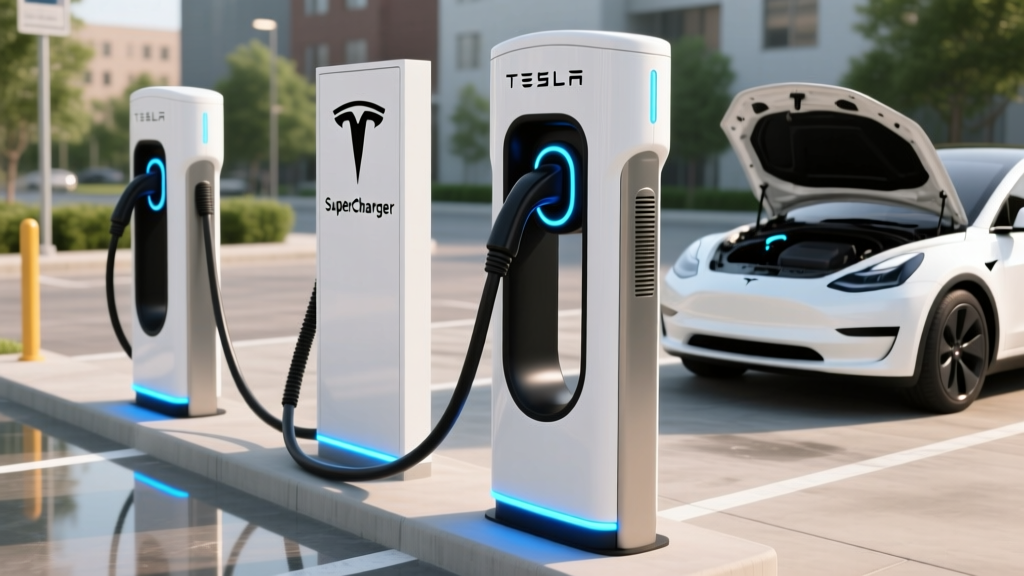
The practical implication: the Charger Daytona can access Electrify America, EVgo, and ChargePoint DC networks natively. For Tesla Supercharger access, you'll need an approved CCS-to-NACS adapter once Tesla opens its network to CCS vehicles via adapter (availability varies by region and adapter certification). Plan road trips around CCS-compatible networks for now.
Recommended Home Chargers for the Charger Daytona
With an 11 kW onboard charger, the Daytona benefits from a 48-amp hardwired Level 2 unit (or a 40-amp plug-in on a NEMA 14-50). Here are three proven options that match the car's capabilities:
Power: Up to 12 kW (50A, NEMA 14-50) or 11.5 kW (48A, hardwired)
Cable: 23 ft
Connector: J1772 (CCS-compatible)
Smart Features: Wi-Fi, app scheduling, utility rate optimization, Alexa integration
Price: ~$550–$700
Best for: Most Charger Daytona owners — flexible amperage, reliable app, Energy Star certified.
Power: Up to 11.5 kW (48A, hardwired)
Cable: 24 ft
Connector: J1772
Smart Features: Wi-Fi, real-time energy monitoring, solar integration, load management
Price: ~$400–$500
Best for: Budget-conscious buyers who want energy monitoring and solar-aware charging.
Power: Up to 11.5 kW (48A, hardwired)
Cable: 25 ft
Connector: J1772
Smart Features: Wi-Fi + Bluetooth, app control, power-sharing for dual-charger setups
Price: ~$500–$650
Best for: Compact design, outdoor-rated (NEMA 4), and ideal for two-EV households.
All three units are UL-listed and support the Charger Daytona's full 11 kW AC charge rate when hardwired at 48 amps. For NEMA 14-50 plug-in installations, expect ~9.6 kW (40A continuous).
Charging Cost Per Mile: EV vs. Gas Charger
The 2025 Charger Daytona R/T carries an EPA efficiency rating of approximately 84 MPGe (combined), translating to roughly 40 kWh per 100 miles. The outgoing gas-powered Charger R/T (3.6L V6) averaged about 23 MPG combined. Here's how costs compare across common charging scenarios:
| Scenario | Rate | Cost per Mile (Charger Daytona R/T) | Cost per Mile (Gas Charger, 23 MPG) |
|---|---|---|---|
| Home (off-peak utility rate) | $0.12/kWh | $0.048 | $0.152 (at $3.50/gal) |
| Home (average U.S. rate) | $0.17/kWh | $0.068 | $0.152 |
| Public Level 2 (ChargePoint, EVgo) | $0.25–$0.35/kWh | $0.10–$0.14 | $0.152 |
| DC Fast (Electrify America) | $0.35–$0.48/kWh | $0.14–$0.19 | $0.152 |
At home on off-peak rates, the electric Charger costs roughly one-third per mile compared to its gas predecessor. Even at premium DC fast-charging rates, the EV is competitive — though frequent reliance on public DC charging erodes the cost advantage. The breakeven calculation depends heavily on your home electricity rate and how often you charge at home versus on the road.
For a driver covering 12,000 miles annually and charging 80% at home ($0.14/kWh average) and 20% on DC fast chargers ($0.42/kWh), the annual fuel cost is approximately $960 — compared to roughly $1,824 for the gas Charger at $3.50/gallon. That's nearly $900 in annual savings, or about $4,500 over five years.
Federal Tax Credits and Incentives for the Charger Daytona
The 2025 Dodge Charger Daytona's eligibility for the IRS §30D New Clean Vehicle Credit depends on several factors that shift frequently:
- MSRP cap: The vehicle must have an MSRP at or below $55,000 for sedans. The Charger Daytona R/T (~$59,590) and Scat Pack (~$63,590) exceed this cap, making them ineligible for the $7,500 federal credit as of current rules.
- Buyer income limits: AGI must not exceed $150,000 (single), $225,000 (head of household), or $300,000 (joint).
- Battery sourcing: Critical minerals and battery component requirements phase in annually; Stellantis sourcing details vary by build date.
- Point-of-sale transfer: If eligible, the credit can be transferred to the dealer at purchase for an immediate price reduction.
State and local incentives may still apply — check your state's energy office or AFDC incentive database for region-specific rebates that may not carry MSRP caps.
Frequently Asked Questions
How much does it cost to install a home EV charger for the Dodge Charger Daytona?
Expect $900–$2,450 for a standard Level 2 installation (equipment, electrician, permit) if your home has a 200-amp panel with spare capacity. Homes requiring a panel upgrade to 200A should budget $2,400–$6,450 total. The IRS Alternative Fuel Vehicle Refueling Property Credit may offset up to $1,000 (30% of costs).
How fast will each charging level add range to the Charger Daytona?
Level 1 (120V): roughly 3–5 miles per hour — not practical for a 100.5 kWh battery. Level 2 (240V, 48A): approximately 30–37 miles per hour, fully recharging overnight in 9–11 hours. DC fast charging at 270 kW: adds roughly 130–150 miles in 12 minutes (10–50% SoC) under ideal conditions.
Which connector does the 2025 Charger Daytona use, and will it work at Tesla Superchargers?
The Charger Daytona uses a CCS1 connector natively, compatible with Electrify America, EVgo, ChargePoint, and other CCS networks. Tesla Supercharger access requires a CCS-to-NACS adapter ($150–$250) once Tesla certifies third-party adapters for non-Tesla vehicles. J1772 connectors (Level 2 AC) work natively for home and destination charging.
How much does charging cost per mile compared to gas?
At home on average U.S. electricity rates ($0.17/kWh), the Charger Daytona costs about $0.068 per mile. The gas-powered Charger R/T at 23 MPG and $3.50/gallon costs about $0.152 per mile. DC fast charging at $0.42/kWh raises the EV cost to ~$0.17/mile — slightly more than gas. Maximizing home charging is key to realizing EV savings.
What electrical upgrades might I need for home charging?
If your home has a 200-amp electrical panel with available breaker slots, you likely need only a dedicated 60-amp circuit and a permit — no panel work required. Homes with 100-amp service, older wiring, or panels already near capacity will need an upgrade to 200A, adding $1,500–$4,000 to the project. A licensed electrician's load calculation is the definitive answer.
Does cold weather affect the Charger Daytona's charging speed?
Yes. Lithium-ion batteries charge significantly slower when cold (below 50°F / 10°C). The Charger Daytona includes battery preconditioning — when you navigate to a DC fast charger via the infotainment system, the thermal management system warms the battery en route, restoring near-optimal charge speeds. Without preconditioning, expect 10–80% charge times to increase by 30–50% in freezing conditions.