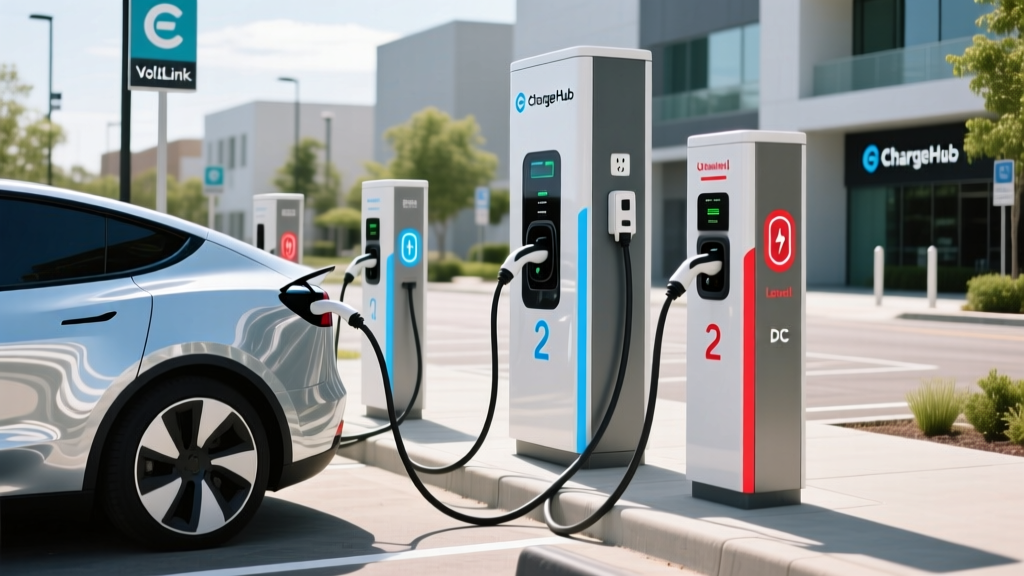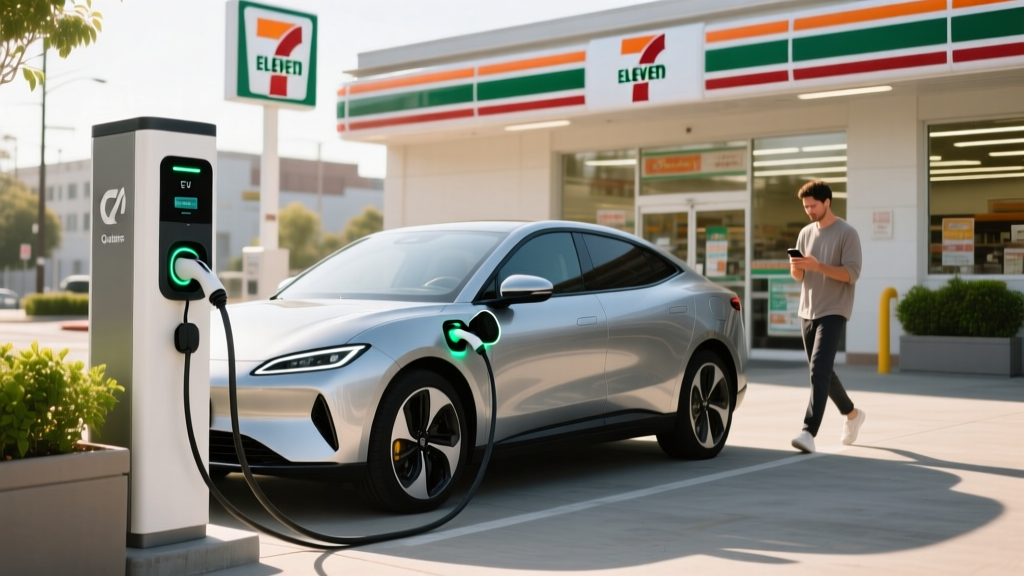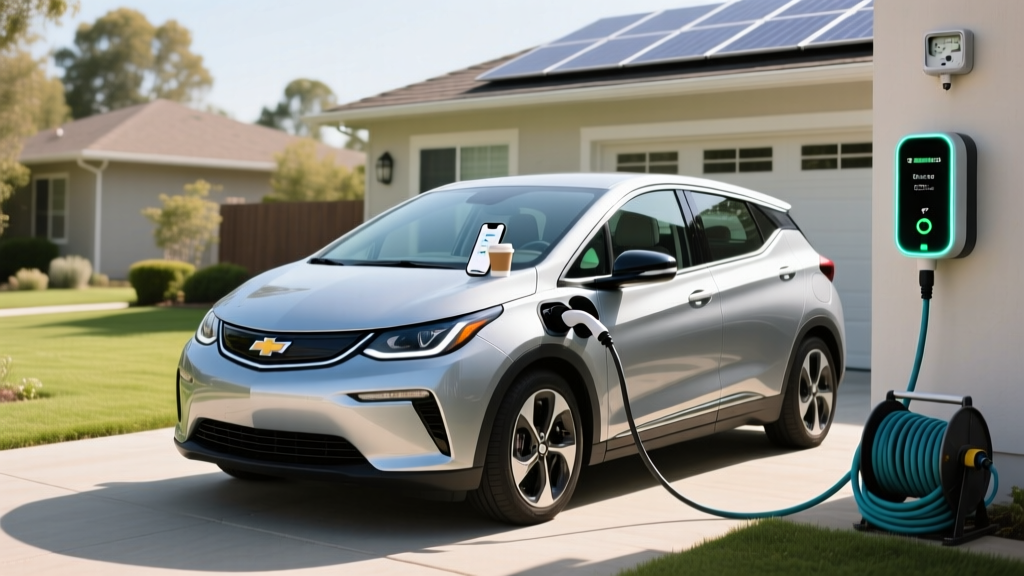
The 2025 Chevrolet Bolt EV remains one of the most accessible electric vehicles on the market, but understanding its real-world range and charging needs is essential before you plug in. With a refreshed battery pack and updated DC fast-charging capability, the Bolt is a compelling daily driver — if you know how to charge it efficiently at home and on the road. This guide covers the 2025 Chevy Bolt range in real-world conditions, the exact charging speeds at every level, what a home Level 2 installation costs, and how the Bolt's per-mile fuel cost stacks up against a comparable gas car.
2025 Chevy Bolt Range: EPA Sticker vs. Real-World Driving
The 2025 Chevrolet Bolt EV carries an EPA-estimated range of 259 miles on a full charge, powered by a 65 kWh (usable) lithium-ion NMC battery pack. The Bolt EUV (the slightly longer wheelbase variant) is rated at 247 miles EPA. These figures are achieved on the EPA's combined city/highway test cycle, but real-world results vary based on driving style, temperature, and terrain.
- City / moderate climate (60-75°F): 255-275 miles (regen braking helps recover energy in stop-and-go traffic)
- Highway (70 mph sustained, mild weather): 220-240 miles (aerodynamic drag reduces efficiency at speed)
- Cold weather (below 32°F, cabin heat on): 180-210 miles (battery chemistry and heating draw reduce usable capacity by 20-30%)
- Hot weather (above 95°F, A/C max): 230-245 miles (less impact than cold, but thermal management draws power)
The Bolt's combined efficiency rating is 120 MPGe (city: 131 MPGe / highway: 109 MPGe), which translates to roughly 28 kWh per 100 miles in mixed driving. That efficiency figure is the key number for calculating your actual charging cost, as we'll cover below.
Charging Levels Explained: How Fast Each Level Adds Range
Understanding the three charging levels — and the critical difference between kW (power, or charge rate) and kWh (energy, or battery capacity) — is the foundation of EV ownership. Think of kW as how fast water flows from a hose, and kWh as the size of the bucket you're filling. The Bolt's 65 kWh battery is the bucket; the charger's kW rating determines how quickly it fills.
| Level | Voltage / Power | Peak kW | Miles of Range Added Per Hour | Full Charge Time (0-100%) |
|---|---|---|---|---|
| Level 1 (Standard Outlet) | 120V / 1.4 kW | 1.4 kW | ~4 miles/hr | ~48 hours |
| Level 2 (Home / Public AC) | 240V / 7.7-11.5 kW | 11.5 kW | ~34-39 miles/hr | ~7-9 hours |
| DC Fast Charging | 400V+ / up to 55 kW (CCS) or higher with NACS adapter | ~55 kW peak | ~150-180 miles/hr (peak) | 10-80% in ~35 min (see curve note) |
Charging curve reality check: The Bolt's DC fast-charging rate peaks around 55 kW at a low state of charge (10-20%), but tapers significantly above 60% SoC. Expect a 10-80% session to take roughly 35-40 minutes at a 50+ kW CCS station. Charging from 80-100% on DC fast charging is painfully slow — the car limits current to protect battery health. For daily use, charge to 80% at home on Level 2 and reserve DC fast charging for road trips.
Home Level 2 Charger Installation: Costs, Electrical Requirements & Panel Upgrades
The single most impactful upgrade for any Bolt owner is a home Level 2 charger. It transforms the EV experience: plug in when you get home, wake up to a full battery every morning, and virtually eliminate public charging for daily driving. But installation cost varies enormously depending on your home's electrical panel.
Electrical Requirements for a Bolt Level 2 Charger
The 2025 Bolt's onboard charger accepts up to 11.5 kW on Level 2 AC (48 amps). To deliver that, you need a dedicated 240V / 60-amp circuit (EV chargers are considered continuous loads under NEC Article 625, so the circuit must be rated at 125% of the charger's max draw — a 48A charger requires a 60A breaker). Many owners opt for a 40A or 32A charger on a 50A or 40A circuit, which still delivers 9.6 kW or 7.7 kW respectively — more than enough for overnight charging of the Bolt's 65 kWh pack.
| Component | Low End | High End | Notes |
|---|---|---|---|
| Level 2 Charger (Equipment) | $350 | $750 | Smart WiFi chargers with 25ft cable |
| Electrician Labor (run 240V line, mount, connect) | $500 | $2,000 | Depends on distance from panel to garage/driveway |
| Electrical Permit | $50 | $250 | Varies by municipality; required in most jurisdictions |
| Panel Upgrade (if needed — 100A to 200A service) | $1,500 | $4,500 | Older homes with 100A panels often need this |
| Total (no panel upgrade) | $900 | $3,000 | Most modern homes with 200A service |
| Total (with panel upgrade) | $2,400 | $7,500 | Common in homes built before 1990 |
Panel upgrade gotcha: If your home has a 100-amp electrical service (common in houses built before the 1990s), adding a 60A EV circuit may exceed your panel's capacity. A licensed electrician will perform a load calculation per NEC 220.82. If you're near the limit, you'll either need a panel upgrade to 200A service or opt for a lower-amperage charger (e.g., 32A / 7.7 kW) that leaves headroom. Never skip the permit — unpermitted electrical work can void homeowner's insurance and create fire risk.
Connector Compatibility: CCS1, NACS, and the Bolt's Adapter Situation
The 2025 Chevy Bolt EV comes equipped with a CCS1 (Combined Charging System) port for both Level 2 AC and DC fast charging. However, the EV charging landscape is rapidly shifting toward the NACS (North American Charging Standard) connector pioneered by Tesla. Here's what Bolt owners need to know:
| Connector Type | Native on Bolt? | Adapter Needed? | Network Access |
|---|---|---|---|
| J1772 (Level 2 AC) | Yes (CCS1 includes J1772) | No | ChargePoint, EVgo L2, public L2 stations |
| CCS1 (DC Fast) | Yes | No | Electrify America, EVgo, ChargePoint DC |
| NACS / Tesla Supercharger | No | Yes — GM-approved CCS-to-NACS adapter (~$200-$300) | Tesla Supercharger network (15,000+ stalls in US) |
| CHAdeMO | No | Rare/expensive adapter | Largely deprecated in the US; not recommended |
Why the NACS adapter matters: Tesla's Supercharger network is the largest and most reliable DC fast-charging network in the US. GM has enabled Supercharger access for Bolt owners via an approved CCS-to-NACS adapter (available through Chevrolet dealers or the myChevrolet app). With the adapter, Bolt owners gain access to thousands of additional fast-charging stalls — a significant advantage for road trips. However, note that the Bolt's peak DC charge rate (~55 kW) is well below what Superchargers can deliver (250 kW for V3 stalls), so you won't see faster charging speeds — just broader access. Source: Chevrolet EV Charging Information
Cost to Charge the Bolt: Home vs. Public vs. Gas Comparison
The 2025 Bolt's 28 kWh/100mi efficiency makes it one of the cheapest vehicles to fuel — especially when charging at home on off-peak electricity rates. Here's a breakdown of real-world cost per mile across scenarios:
| Charging / Fueling Scenario | Rate | Cost Per Mile (Bolt) | Cost Per Mile (30 MPG Gas) |
|---|---|---|---|
| Home Off-Peak (utility time-of-use rate) | $0.08/kWh | $0.022 | $0.117 (at $3.50/gal) |
| Home Standard Rate (national avg) | $0.16/kWh | $0.045 | $0.117 (at $3.50/gal) |
| Public Level 2 (ChargePoint, etc.) | $0.25/kWh | $0.070 | $0.117 (at $3.50/gal) |
| DC Fast Charging (Electrify America) | $0.48/kWh | $0.134 | $0.117 (at $3.50/gal) |
Key takeaway: Charging at home on standard or off-peak rates, the Bolt costs roughly $0.02-$0.05 per mile — a fraction of the $0.12/mile a 30 MPG gas car burns at $3.50/gallon. Even public Level 2 charging undercuts gas. The only scenario where the Bolt is more expensive per mile is exclusive reliance on premium-priced DC fast chargers. This is why home charging is non-negotiable for maximizing EV savings. A Bolt owner driving 12,000 miles/year and charging at home saves approximately $850-$1,150 annually versus a gas car.
Recommended Level 2 Home Chargers for the Chevy Bolt
The Bolt's 11.5 kW onboard charger means you can take full advantage of a 48A Level 2 charger — but a 32A or 40A unit is also a practical and budget-friendly choice. Here are three proven options:
Emporia Vue Level 2 Smart Charger (48A)
- Power Output: 11.5 kW (48A / 240V)
- Connector: J1772 (CCS1 compatible)
- Cable Length: 24 feet
- Smart Features: WiFi, app scheduling, energy monitoring, solar integration
- Price: ~$399
- Best For: Bolt owners wanting max charge speed on a budget; excellent app and energy tracking
ChargePoint Home Flex (up to 50A, adjustable)
- Power Output: Up to 12 kW (50A), adjustable down to 16A for panel-limited homes
- Connector: J1772
- Cable Length: 23 feet
- Smart Features: WiFi, Alexa integration, scheduling, charge history, works with utility demand-response programs
- Price: ~$649
- Best For: Flexibility — adjustable amperage means it works in homes with limited panel capacity without a separate unit
Grizzl-E Smart (40A)
- Power Output: 9.6 kW (40A / 240V)
- Connector: J1772
- Cable Length: 24 feet
- Smart Features: WiFi, OCPP-compatible, OTA updates
- Price: ~$499
- Best For: Durability — built in Canada, rated to -40°F, NEMA 4 outdoor-rated enclosure. Ideal for cold-climate Bolt owners charging in an unheated garage or driveway
Pro tip: All three chargers above are hardwired units, which is the recommended installation method for 40A+ circuits (NEC 625.40 allows plug-in for circuits up to 50A with a NEMA 14-50 receptacle, but hardwired connections avoid receptacle overheating issues that have plagued some NEMA 14-50 installations). Have your electrician confirm the best method for your setup.
Safety, Code & Maintenance Considerations
EV charger installation is governed by NEC Article 625 (National Electrical Code) and local amendments. Key requirements and best practices for Bolt owners:
- Dedicated circuit: Your Level 2 charger must be on its own dedicated breaker — no sharing with other appliances.
- GFCI protection: NEC 2020 and later requires GFCI (Ground Fault Circuit Interrupter) protection for EV charging outlets. Hardwired chargers with built-in ground-fault protection meet this requirement.
- Outdoor rating: If your charger is mounted outside or in an exposed carport, ensure it carries a NEMA 4 or NEMA 4X rating (weatherproof against rain, snow, and hose-directed water).
- Cable management: A 24-foot cable is long enough for most driveways, but ensure the cable doesn't cross a walkway where it becomes a trip hazard. Wall-mounted cable organizers ($20-$40) keep things tidy.
- Utility incentives: Many electric utilities offer rebates of $250-$500 for installing a smart Level 2 charger, and some offer time-of-use (TOU) rate plans that slash overnight charging costs. Check with your local utility before purchasing equipment — some programs require specific charger models to qualify.
Federal Tax Credit & Incentives for Home Charger Installation
The Alternative Fuel Vehicle Refueling Property Credit (IRS §30C) provides a tax credit of up to $1,000 for the purchase and installation of home EV charging equipment. Key rules for 2025-2026:
- Credit covers 30% of equipment + installation cost, capped at $1,000
- Must be installed at your primary residence
- The property must be located in an eligible census tract (many urban and suburban areas qualify; check IRS §30C guidance for tract eligibility)
- Claim on IRS Form 8911 with your annual tax return
- Nonrefundable credit — reduces your tax liability but won't generate a refund beyond what you owe
Additionally, the §30D Clean Vehicle Credit (up to $7,500 for new EVs) applies to the Bolt itself if you meet income caps ($150K single / $300K joint), the MSRP cap ($55,000 for sedans), and critical mineral/battery sourcing requirements. The Bolt qualifies for a portion or all of the credit depending on the manufacturing quarter — check the latest DOE/EPA eligibility list before purchasing, as sourcing rules have tightened through 2025.
Frequently Asked Questions
How much does it cost to install a home EV charger for the Chevy Bolt?
Expect $900-$3,000 for a standard installation (charger + electrician + permit) in a home with adequate 200A electrical service. If your home needs a panel upgrade from 100A to 200A, add $1,500-$4,500. Most Bolt owners with modern panels and a garage close to the electrical panel land in the $1,200-$1,800 range.
How fast will each charging level add range to the Bolt?
Level 1 (120V wall outlet) adds roughly 4 miles per hour — adequate only for emergency top-ups or very low daily mileage. Level 2 (240V home charger at 48A) adds about 39 miles per hour, fully recharging the Bolt's 65 kWh battery overnight in 7-8 hours. DC fast charging adds roughly 150-180 miles per hour at peak rate, but tapers significantly above 60% SoC.
Which connector and charger is compatible with my 2025 Bolt?
The Bolt uses the CCS1 connector natively, which includes J1772 for AC Level 2 charging. For Tesla Supercharger access, you'll need a GM-approved CCS-to-NACS adapter (approximately $200-$300). Any J1772 Level 2 home charger will work — the Bolt's 11.5 kW onboard charger can accept up to 48A.
How much does charging the Bolt cost per mile vs. gas?
At home on the national average electricity rate ($0.16/kWh), the Bolt costs about $0.045 per mile to fuel. A comparable 30 MPG gas car at $3.50/gallon costs $0.117 per mile. Home charging saves roughly $850-$1,150 per year for a driver covering 12,000 miles. DC fast charging at $0.48/kWh is slightly more expensive than gas per mile, so rely on home charging for daily savings.
What electrical upgrades might I need for a Level 2 charger?
If your home has a 200-amp electrical panel with available breaker slots, you likely need only a dedicated 60A (or 50A/40A) 240V circuit run from the panel to your garage or parking spot. If your home has a 100A panel (common pre-1990), you may need a full panel upgrade to 200A service, costing $1,500-$4,500. A licensed electrician can perform a load calculation to determine your exact needs.
Does the 2025 Bolt's range hold up in winter?
Expect a 20-30% range reduction in sustained cold weather (below 32°F), bringing the Bolt's real-world winter range to roughly 180-210 miles. Preconditioning the battery while plugged in (using the Bolt's departure timer feature) warms the pack and reduces the range penalty. Parking in a garage and using seat/steering wheel heaters instead of cabin heat also help preserve range.
Quick Spec Reference: 2025 Chevrolet Bolt EV
| Specification | 2025 Bolt EV |
|---|---|
| EPA Range | 259 miles |
| Battery (Usable) | 65 kWh, NMC lithium-ion |
| Efficiency | 120 MPGe combined (28 kWh/100mi) |
| Level 2 AC Charge Rate | 11.5 kW (48A max) |
| DC Fast Charge Peak | ~55 kW (CCS1) |
| 10-80% DC Fast Charge Time | ~35-40 minutes |
| 0-60 mph | 6.5 seconds |
| Horsepower | 200 hp / 266 lb-ft torque |
| Base MSRP (1LT) | ~$28,785 (incl. destination) |
| Battery Warranty | 8 years / 100,000 miles (60% capacity retention minimum) |
| Federal Tax Credit (§30D) | Up to $7,500 (eligibility varies — verify on fueleconomy.gov) |