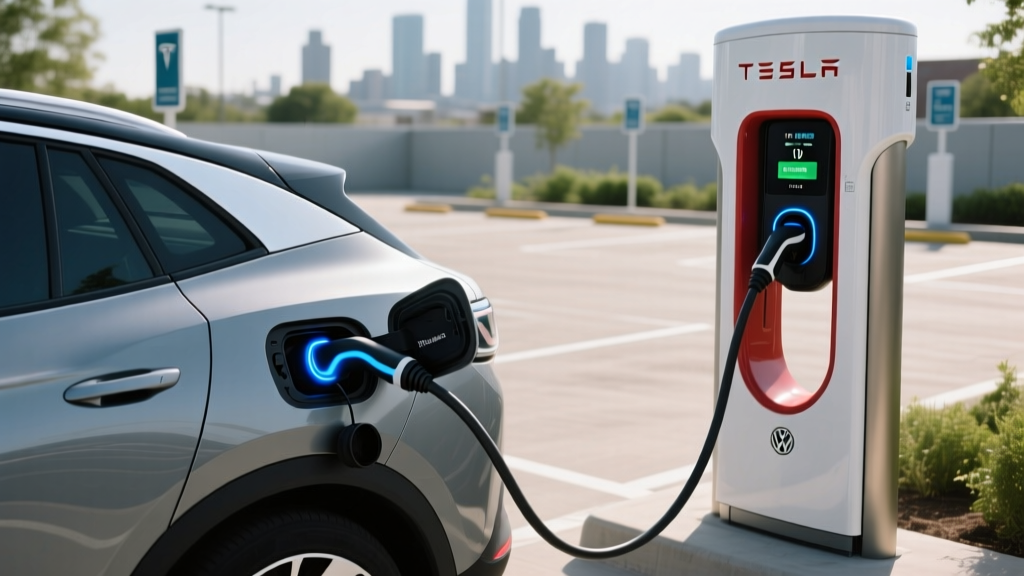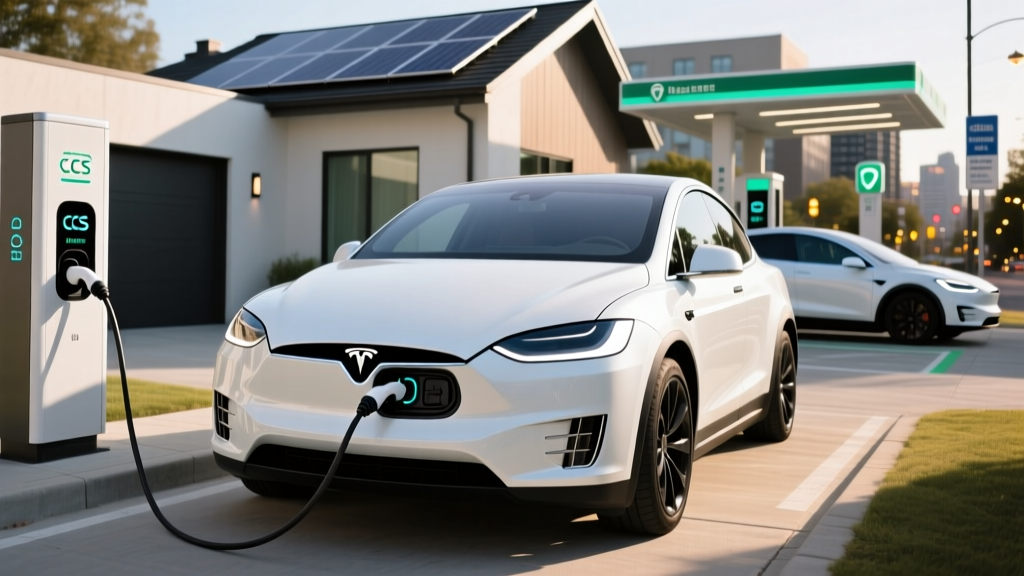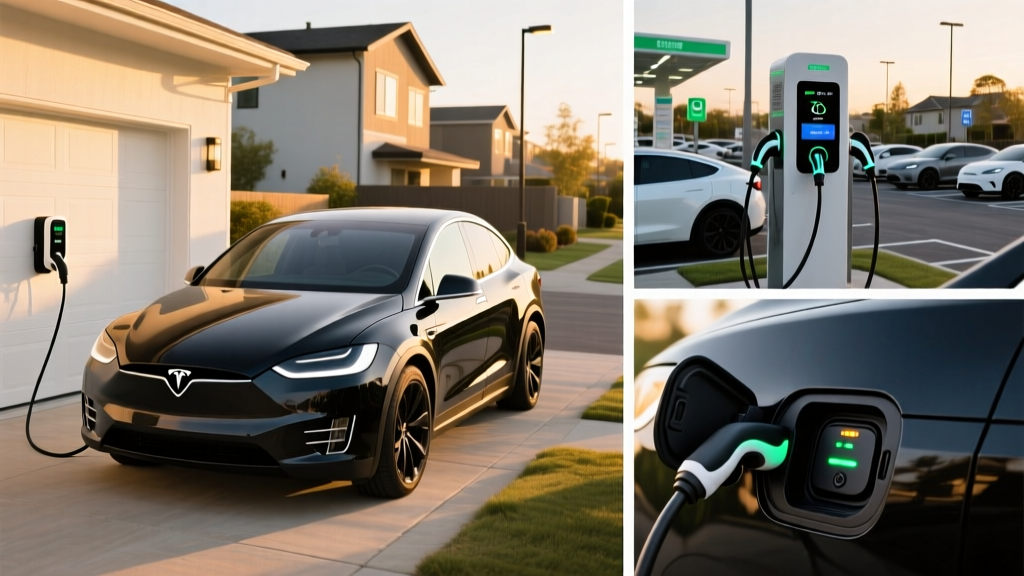
The 2024 Tesla Model X Long Range pairs a 100 kWh (usable) battery pack with the North American Charging Standard (NACS) connector and access to Tesla's Supercharger network. That combination makes it one of the most convenient large EVs to own — but only if your home electrical setup and charging strategy are dialed in. This guide covers every charging scenario a Model X Long Range owner will face, from a standard 120V outlet to a 250 kW Supercharger, with exact costs, times, and equipment picks.
2024 Tesla Model X Long Range: Key Charging Specs
| Spec | Value |
|---|---|
| Usable Battery Capacity | ~100 kWh (NMC chemistry) |
| EPA Range | 335 miles |
| Real-World Highway Range | ~275–300 mi (70 mph, moderate climate) |
| Cold-Weather Range (20°F) | ~230–260 mi |
| Max DC Fast Charge Rate | 250 kW peak |
| 10–80% DC Fast Charge Time | ~30–35 minutes (V3 Supercharger) |
| Max AC Level 2 Charge Rate | 11.5 kW (48A onboard charger) |
| Level 2 Time (0–100%) | ~9–10 hours |
| Connector | NACS (native Tesla) |
| EPA Efficiency | 101 MPGe combined |
| Base MSRP (Long Range AWD) | $79,990 (excl. destination) |
| Federal §30D Tax Credit | Not eligible (MSRP exceeds $80,000 SUV cap after destination; verify at IRS.gov) |
| Battery Warranty | 8 years / 150,000 miles (min 70% retention) |
Charging Levels Explained: Speeds and Range Added Per Hour
Understanding the three charging levels is essential. Power is measured in kilowatts (kW) — the rate of energy flow. Energy is measured in kilowatt-hours (kWh) — the total amount stored in the battery. Think of kW as how wide the hose is, and kWh as how big the bucket is. The Model X Long Range has a ~100 kWh bucket.
| Level | Voltage / Amperage | Max Power (kW) | Miles of Range Added Per Hour | Best For |
|---|---|---|---|---|
| Level 1 (120V) | 120V / 12A | ~1.4 kW | ~3–4 mi/hr | Emergency top-offs, overnight trickle |
| Level 2 (240V) | 240V / 48A | 11.5 kW | ~30–36 mi/hr | Daily home charging |
| DC Fast Charge | 400V+ DC | Up to 250 kW | ~300+ mi/hr (at peak) | Road trips, rapid top-ups |
Level 1 using the included Tesla Mobile Connector on a standard 120V household outlet adds roughly 3–4 miles of range per hour. Fully charging a depleted 100 kWh battery would take approximately 70+ hours — impractical for daily use but adequate for occasional overnight top-offs if you drive less than 30 miles per day.
Level 2 at 240V is the home charging standard. The Model X Long Range's onboard charger accepts up to 11.5 kW (48 amps). A dedicated 60-amp circuit with a hardwired wall connector delivers the full 48A, adding roughly 30–36 miles per hour — enough to fully replenish the battery overnight in about 9–10 hours.
DC Fast Charging bypasses the onboard charger entirely, sending DC current directly to the battery. On a Tesla V3 Supercharger (250 kW peak), the Model X Long Range can add up to 175 miles in about 15 minutes under ideal conditions. However, charging speed follows a curve: the battery accepts peak power only at lower states of charge (roughly 10–40%), then tapers progressively. A 10–80% session typically takes 30–35 minutes; pushing from 80–100% can add another 25+ minutes and is rarely worth the wait on a road trip.
Home Charger Installation: Electrical Requirements and Costs
Installing a Level 2 home charger for the Model X Long Range requires a dedicated 240V circuit. Here's what that entails electrically:
- Circuit rating: 60 amps (to deliver a continuous 48A to the vehicle per NEC 80% rule)
- Wire gauge: Typically 6 AWG copper (THHN in conduit) or 4 AWG aluminum, depending on run length
- Connection type: Hardwired preferred for 60A circuits (NEMA 14-50 outlets are rated for 50A circuits / 40A continuous only)
- GFCI protection: Required by NEC 2020+ for EV outlets; hardwired units with built-in ground-fault protection satisfy this
- Outdoor rating: NEMA 4 enclosure required for outdoor installations
- Permit: Most jurisdictions require an electrical permit and inspection ($50–$200)
Installation Cost Breakdown
| Component | Typical Range | Notes |
|---|---|---|
| EV Charger Equipment | $400–$700 | Tesla Wall Connector, ChargePoint, Emporia |
| Electrician Labor | $500–$2,500 | Depends on panel proximity, conduit run length, wall type |
| Electrical Permit | $50–$200 | Varies by municipality |
| Panel Upgrade (if needed) | $1,500–$4,000 | Required if existing panel lacks capacity (common in homes with 100A service) |
| Total (no panel upgrade) | $950–$3,400 | Average install: ~$1,500–$2,200 |
| Total (with panel upgrade) | $2,450–$7,400 | Homes built before 2000 with 100A panels often need 200A upgrade |
Which Connector and Charger Are Compatible?
The 2024 Tesla Model X Long Range uses the NACS (North American Charging Standard) connector natively — the same connector Tesla has used since the Model S launched. As of 2024–2025, Tesla has opened its Supercharger network to non-Tesla EVs via Magic Dock adapters, and most major automakers (Ford, GM, Rivian, Volvo, Hyundai, and others) have adopted NACS for their vehicles starting in 2025.
| Connector Type | Compatible with Model X? | Adapter Needed? |
|---|---|---|
| NACS (Tesla) | Yes — native | None |
| CCS1 | Yes (at non-Tesla DCFC) | Tesla CCS Adapter (~$175, included with some models) |
| CHAdeMO | No (network largely retired) | No reliable adapter available |
| J1772 (Level 2 public) | Yes | Tesla J1772 Adapter (included with vehicle) |
For home charging, a NACS-equipped Tesla Wall Connector is the most seamless option. For public Level 2 stations (which overwhelmingly use J1772 connectors), the J1772 adapter included with the Model X works perfectly. For non-Tesla DC fast chargers using CCS1, the Tesla CCS adapter is required — check whether yours was included or needs to be purchased separately from Tesla's shop.
Recommended Home Chargers for the Model X Long Range
The Model X's 11.5 kW onboard charger means you'll get the most from a 48A (60A circuit) Level 2 station. Here are three proven options:
Tesla Wall Connector (Gen 3)
- Power Output: Up to 11.5 kW (48A)
- Connector: NACS (native)
- Cable Length: 24 ft
- Smart Features: Wi-Fi, OTA updates, power sharing (link up to 6 units on one circuit), Tesla app integration
- Price: ~$475
- Best For: Tesla-only households seeking seamless integration
Emporia Vue EV Charger
- Power Output: Up to 11.5 kW (48A)
- Connector: NACS (2025+ models) or J1772
- Cable Length: 24 ft
- Smart Features: Energy monitoring, scheduling, solar integration, load management
- Price: ~$400
- Best For: Budget-conscious owners who want energy data and solar pairing
ChargePoint Home Flex
- Power Output: Up to 12 kW (50A, configurable down)
- Connector: J1772 (use included Tesla adapter) or NACS (newer units)
- Cable Length: 23 ft
- Smart Features: App scheduling, Alexa integration, flexible amperage settings
- Price: ~$550–$650
- Best For: Multi-EV households with mixed connector types
All three units should be hardwired on a dedicated 60-amp circuit to deliver the full 48A continuous. Plug-in NEMA 14-50 installations are limited to 40A continuous (9.6 kW), which still provides adequate overnight charging but leaves roughly 15% of the Model X's onboard charging capacity unused.
Charging Cost Per Mile: Home vs. Public vs. Gas
One of the strongest arguments for the Model X Long Range is fuel cost savings — but the math depends heavily on where and when you charge. According to fueleconomy.gov, the 2024 Model X Long Range achieves 101 MPGe combined, consuming roughly 33 kWh per 100 miles.
| Scenario | Rate ($/kWh) | Cost per 100 Miles | Cost per Mile | Annual Cost (12,000 mi) |
|---|---|---|---|---|
| Home Off-Peak (utility TOU rate) | $0.09 | $2.97 | $0.030 | $356 |
| Home Standard Rate | $0.16 | $5.28 | $0.053 | $634 |
| Public Level 2 (e.g., ChargePoint) | $0.25–$0.35 | $8.25–$11.55 | $0.083–$0.116 | $990–$1,386 |
| Tesla Supercharger (DCFC) | $0.28–$0.40 | $9.24–$13.20 | $0.092–$0.132 | $1,109–$1,584 |
| Gas SUV Comparable (22 MPG avg, $3.40/gal) | — | $15.45 | $0.155 | $1,855 |
Home charging on an off-peak time-of-use plan delivers the lowest cost per mile by a wide margin — roughly one-fifth the cost of a comparable gas SUV. Even at standard residential rates, the Model X costs about one-third as much to fuel. Public DC fast charging narrows the gap significantly, which is why maximizing home charging is the single most impactful ownership decision you can make.
DC Fast Charging Times and the Charge Curve
DC fast charging speed is not constant. The battery management system (BMS) carefully controls the charge rate to protect cell health. Here's what a typical Supercharger session looks like for the Model X Long Range starting at 10% state of charge:
- 10–30% SoC: Peak ~250 kW — adds roughly 5–6 miles per minute
- 30–50% SoC: ~175–200 kW — still fast, adding ~4 mi/min
- 50–70% SoC: ~100–150 kW — tapering begins noticeably
- 70–80% SoC: ~75–100 kW — significant slowdown
- 80–100% SoC: ~25–50 kW — very slow; avoid unless necessary
This is why the industry-standard metric is 10–80% time rather than 0–100%. For the Model X Long Range on a V3 Supercharger, 10–80% takes approximately 30–35 minutes. On a V2 Supercharger (150 kW peak), expect 40–50 minutes for the same range.
Safety, Electrical Code, and Best Practices
Home EV charging involves significant electrical current running for hours. Safety and code compliance are non-negotiable:
- Dedicated circuit: The EV charger must be on its own dedicated breaker — never share a circuit with other appliances
- Continuous load derating: Per NEC Article 625, EV charging is a continuous load, so the circuit must be rated at 125% of the charger's maximum draw (48A charger requires a 60A breaker)
- GFCI protection: NEC 2020 and later requires ground-fault protection for EV charging outlets; hardwired chargers with integrated GFCI meet this requirement
- Outdoor installations: Use a NEMA 4-rated enclosure and outdoor-rated conduit; ensure the charger itself carries an outdoor/wet-location rating
- Professional installation only: Always hire a licensed electrician. DIY 240V work carries lethal risk and will void insurance if unpermitted
- Utility notification: Some utilities require notification before adding an EV load; they may offer rebates or TOU rate plans that significantly reduce charging cost
Frequently Asked Questions
How much does it cost to install a home EV charger for the Model X?
A typical Level 2 installation with a 60-amp dedicated circuit costs $950–$3,400 (equipment + electrician + permit) if your electrical panel has sufficient capacity. If a panel upgrade from 100A to 200A is needed, add $1,500–$4,000, bringing the total to $2,450–$7,400.
How fast will each charging level add range to the Model X Long Range?
Level 1 (120V): ~3–4 miles per hour. Level 2 (240V, 48A): ~30–36 miles per hour. DC Fast Charge (250 kW peak): up to ~300+ miles per hour at peak, though the rate tapers significantly above 50% SoC.
Which connector and charger are compatible with the 2024 Model X?
The Model X uses NACS natively. For Tesla Superchargers and Tesla Wall Connectors, no adapter is needed. For J1772 public Level 2 stations, use the included J1772 adapter. For CCS1 DC fast chargers, use the Tesla CCS adapter. CHAdeMO is not supported.
How much does charging cost per mile compared to gas?
Home charging at off-peak rates costs approximately $0.03 per mile — about one-fifth the cost of a comparable gas SUV at $0.15/mile. Standard home rates bring it to ~$0.05/mile. Public DC fast charging at $0.28–$0.40/kWh costs $0.09–$0.13 per mile, narrowing the savings gap.
What electrical upgrades might I need for a Level 2 home charger?
You'll need a dedicated 60-amp, 240V circuit. If your home has a 100-amp electrical panel (common in homes built before 2000), you'll likely need a panel upgrade to 200A service. A licensed electrician can perform a load calculation to determine if your current panel can accommodate the new circuit.
Does the 2024 Model X Long Range qualify for the federal EV tax credit?
The Model X Long Range has an MSRP that exceeds the $80,000 cap for SUVs under IRS §30D rules (after destination charges), making it ineligible for the federal clean vehicle credit. Always verify current eligibility at IRS.gov and consult a tax professional, as rules and manufacturer sourcing requirements can change.
How long does it take to fully charge the Model X Long Range at home?
On a 48A (11.5 kW) Level 2 charger, a full 0–100% charge takes approximately 9–10 hours. In practice, most owners arrive home with 30–50% remaining and wake up fully charged in 5–7 hours.