2024 Tesla Model 3 RWD: Charging Specs at a Glance
The 2024 Tesla Model 3 Rear-Wheel Drive (formerly "Standard Range") pairs a ~57.5 kWh usable LFP (lithium iron phosphate) battery with the North American Charging Standard (NACS) port. That LFP chemistry matters: Tesla recommends charging it to 100% regularly, unlike NMC packs where 80% daily is preferred. Here are the core numbers every owner or buyer needs:
| Spec | Value |
|---|---|
| EPA Range | 272 miles |
| Real-World Range (highway 70 mph, mild weather) | ~235–250 miles |
| Real-World Range (cold, 30°F) | ~200–220 miles |
| Usable Battery Capacity | ~57.5 kWh (LFP) |
| EPA Efficiency | 132 MPGe combined / 25 kWh/100 mi |
| Max DC Fast Charge Rate | 170 kW peak |
| 10–80% DC Fast Charge Time | ~25 minutes (with preconditioning) |
| Level 2 Onboard Charger | 11.5 kW (48A max) |
| Charging Port | NACS (native Tesla) |
| Base MSRP (2024 RWD) | $38,990 (before incentives) |
Charging Levels Explained: Speeds in kW and Miles Per Hour
EV charging comes in three tiers. The critical distinction: kW (kilowatts) measures power — how fast energy flows into the battery. kWh (kilowatt-hours) measures energy — how much the battery holds. Think of kW as the flow rate of a hose, and kWh as the size of the bucket.
| Level | Voltage / Power | Miles of Range Added Per Hour | Best For |
|---|---|---|---|
| Level 1 (120V) | 120V / ~1.4 kW | ~3–5 mi/hr | Overnight top-ups, emergencies, low-mileage drivers |
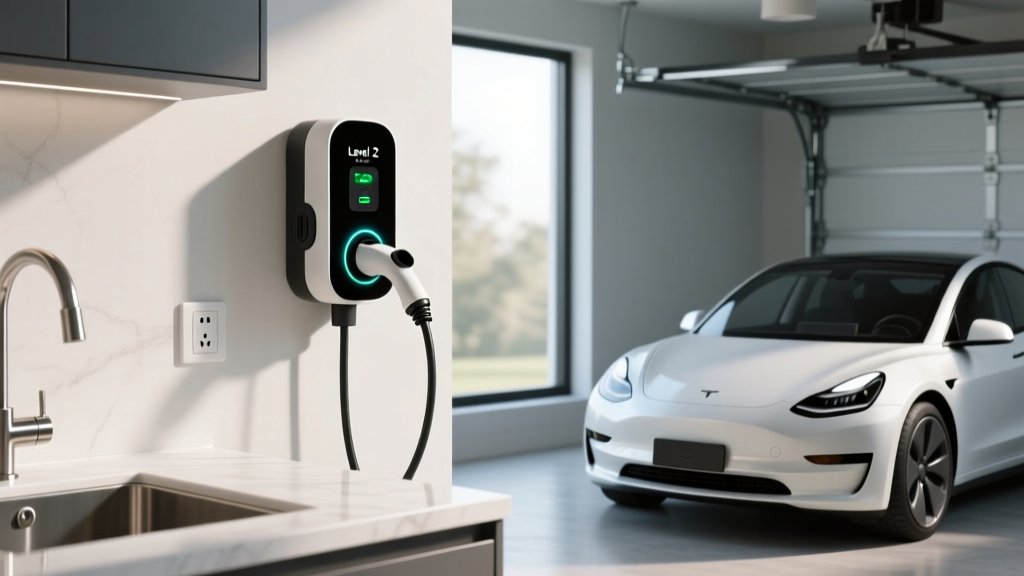
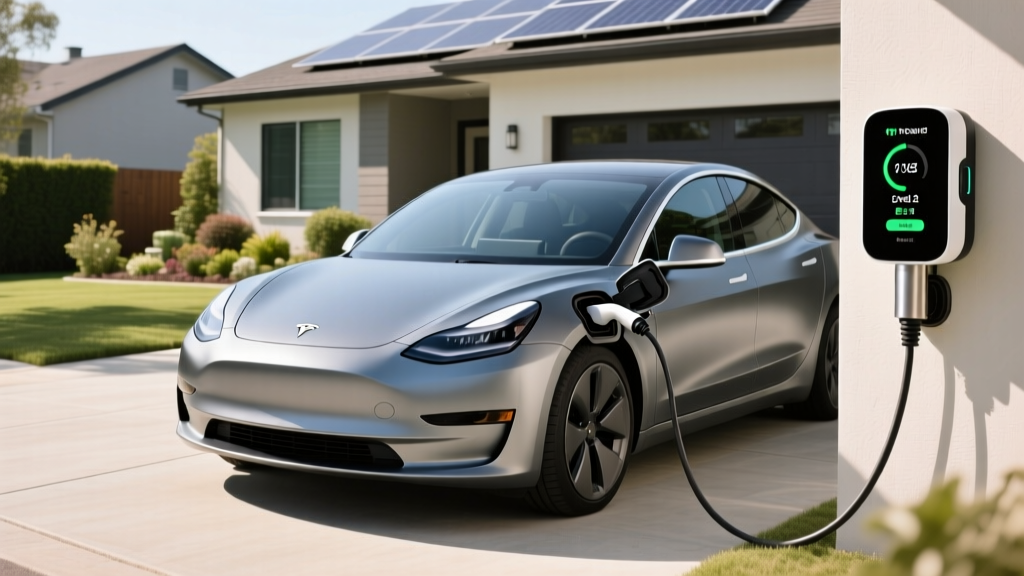
| Level 2 (240V) | 240V / 7.7–11.5 kW | ~30–44 mi/hr | Daily home charging, workplace, hotels |
| DC Fast Charging | 400V+ / 50–170 kW | ~500–700 mi/hr (peak) | Road trips, rapid top-ups on Superchargers |
For a 57.5 kWh battery, Level 1 adds roughly 5–6 kWh overnight (8–10 hours), recovering maybe 20–25 miles — fine for a 30-mile round-trip commute but inadequate for heavier use. Level 2 at 11.5 kW refills the pack from 10% to 100% in about 5 hours. DC fast charging at 170 kW peak takes the pack from 10% to 80% in roughly 25 minutes, but the charge curve tapers sharply above 80% — that last 20% can take as long as the first 70%.
Home Level 2 Installation: Electrical Requirements and Costs
The Model 3's onboard charger accepts up to 11.5 kW (48 amps). To deliver that, you need a 240V circuit rated for at least 60 amps (EV code requires the circuit breaker to be 125% of the continuous load, so 48A × 1.25 = 60A). A 40-amp circuit (delivering ~9.6 kW / 32A continuous) is also common and still provides ~30 miles of range per hour — enough for most daily needs.
What Your Electrical Panel Needs to Support
Most modern homes with 200-amp service can accommodate a 60A EV circuit without a panel upgrade. Older homes with 100A or 150A panels may need a service upgrade ($1,500–$3,500) or a smart load-management device that throttles the charger when other large appliances run. A licensed electrician will perform a load calculation per NEC Article 220 to determine this.
| Item | Cost Range |
|---|---|
| Level 2 Charger (hardware) | $350–$700 |
| Electrical Permit | $50–$200 |
| Electrician Labor (simple install, panel nearby) | $500–$1,200 |
| Electrician Labor (long wire run, conduit, sub-panel) | $1,200–$3,000 |
| Panel Upgrade (100A → 200A, if needed) | $1,500–$3,500 |
| Total (typical, no panel upgrade) | $900–$2,100 |
| Total (with panel upgrade) | $2,400–$5,600 |
The federal Alternative Fuel Vehicle Refueling Property Credit (IRC §30C) covers up to 30% of home charger hardware and installation costs, capped at $1,000, for eligible taxpayers in qualifying census tracts. Check the IRS page and consult a tax professional for your specific eligibility.
Safety and Code Requirements
- Dedicated circuit: Your EV charger must be on its own dedicated breaker — never shared with other appliances.
- GFCI protection: NEC 2020+ requires GFCI protection for outdoor receptacles; hardwired chargers may be exempt depending on jurisdiction.
- Outdoor rating: If mounted outside, the charger must carry a NEMA 4 or IP65 rating for weather resistance.
- Wire gauge: 6 AWG copper for 48A/60A circuits; 8 AWG for 40A circuits. Your electrician will size per NEC Table 310.16.
- Hardwired vs. plug: Hardwired installations avoid the NEMA 14-50 receptacle, which has been associated with overheating in some EV charging scenarios when non-commercial-grade outlets are used.
Connector Compatibility: NACS, CCS, and Adapters
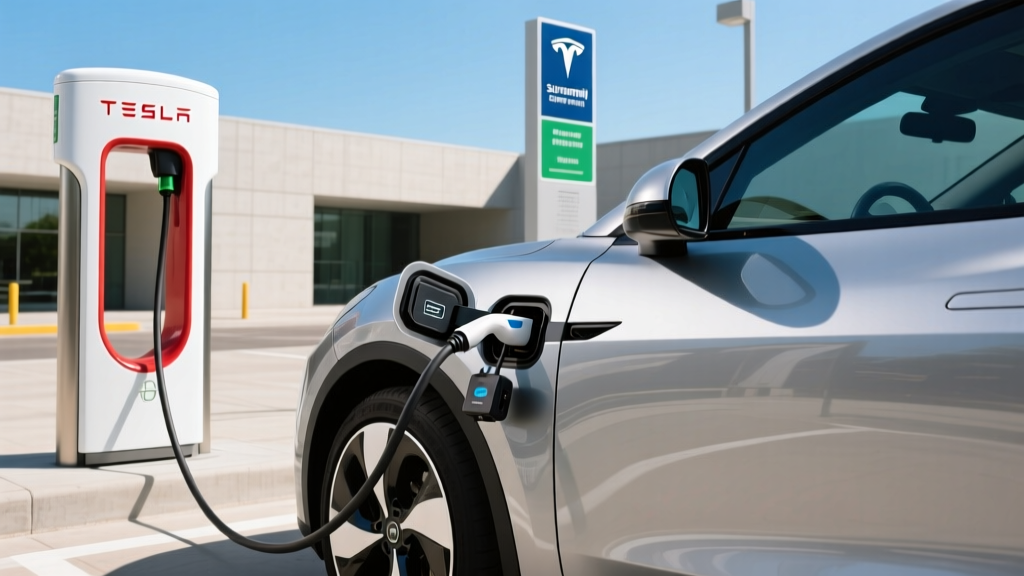
The 2024 Model 3 uses the NACS (North American Charging Standard) connector natively — the same port Tesla has used since 2012, now formally standardized as SAE J3400. This gives the Model 3 direct access to the Tesla Supercharger network (17,000+ stalls in North America) without any adapter.
| Connector | Compatible? | Adapter Needed? |
|---|---|---|
| NACS (Tesla Supercharger, Tesla Destination) | Yes — native | No |
| CCS1 (Electrify America, EVgo, most non-Tesla DCFC) | Yes | Tesla CCS Adapter (~$175–$250) |
| CHAdeMO (Nissan Leaf, older DCFC stations) | Yes | Third-party CHAdeMO-to-NACS adapter (~$300–$400) |
| J1772 (public Level 2, non-Tesla) | Yes | Tesla J1772 Adapter (included with vehicle) |
With Tesla opening its Supercharger network to non-Tesla EVs and most automakers adopting NACS by 2025–2026, the Model 3's native NACS port is a long-term asset. However, if you frequently travel in areas where Electrify America is the only DCFC option, the CCS adapter is a worthwhile $175–$250 investment. Tesla sells the official adapter through its online shop.
Charging Cost Per Mile: Home vs. Public vs. Gas
One of the strongest ownership arguments for the Model 3 RWD is fuel cost. At 25 kWh/100 miles (its EPA combined rating), here's what you'll pay per mile in different scenarios:
| Scenario | Rate | Cost Per Mile |
|---|---|---|
| Home charging (national avg. residential, off-peak) | $0.13/kWh | $0.033/mi |
| Home charging (California avg.) | $0.27/kWh | $0.068/mi |
| Home charging (time-of-use, overnight rate) | $0.08/kWh | $0.020/mi |
| Tesla Supercharger (avg. national) | $0.30/kWh | $0.075/mi |
| Electrify America / public DCFC (avg.) | $0.38/kWh | $0.095/mi |
| Gasoline sedan (30 MPG combined, $3.40/gal) | $3.40/gal | $0.113/mi |
At the national average residential electricity rate, home charging costs roughly $0.033 per mile — about one-third the cost of a 30 MPG gasoline sedan at $3.40/gallon. Even on public DC fast chargers at $0.38/kWh, the Model 3 RWD undercuts most gas cars. Over 15,000 miles per year, home charging at $0.13/kWh saves roughly $1,200 annually compared to gasoline.
Time-of-use (TOU) utility plans are the key unlock: charging overnight at $0.08/kWh drops the cost to $0.02/mile — under $1.00 to "refuel" for a 50-mile commute. Contact your utility about EV-specific TOU rates; many offer them at no enrollment cost.
Recommended Level 2 Home Chargers for the Model 3
Because the Model 3 uses NACS natively, you have two paths: buy a NACS-equipped charger (no adapter needed) or buy a J1772 charger and use Tesla's included J1772 adapter. NACS-native chargers are increasingly available and more convenient.
Tesla Wall Connector (Gen 3)
- Power Output: Up to 11.5 kW (48A) — matches the Model 3's onboard charger max
- Connector: NACS (native, no adapter)
- Cable Length: 24 feet
- Smart Features: Wi-Fi, OTA updates, load sharing (pair up to 6 units on one circuit), access control
- Price: ~$475
- Verdict: Best value for Tesla owners. Delivers the Model 3's full 11.5 kW charge rate. Hardwired only.
ChargePoint Home Flex
- Power Output: Up to 12 kW (50A), configurable down to 16A
- Connector: J1772 (use Tesla adapter) or NACS pigtail version
- Cable Length: 23 feet
- Smart Features: Wi-Fi, app scheduling, Alexa integration, flexible amperage settings
- Price: ~$550–$700
- Verdict: Best for multi-EV households (Tesla + non-Tesla). NACS version available. Plug-in (NEMA 14-50) or hardwired.
Emporia Level 2 EV Charger
- Power Output: Up to 11.5 kW (48A)
- Connector: J1772 (use Tesla adapter)
- Cable Length: 24 feet
- Smart Features: Wi-Fi, energy monitoring, solar integration, load management
- Price: ~$350–$400
- Verdict: Budget pick with excellent energy-monitoring features. Great if you have solar panels. Requires Tesla J1772 adapter for daily use.
DC Fast Charging on the Road: Superchargers and Beyond
The 2024 Model 3 RWD peaks at 170 kW on DC fast chargers. That's lower than the Long Range AWD's ~250 kW, a trade-off of the smaller LFP pack. Here's what that means in practice:
- Tesla Supercharger V3 (250 kW stalls): The Model 3 RWD will peak at ~170 kW, tapering to ~60 kW above 60% SoC. Expect 10–80% in ~25 minutes.
- Tesla Supercharger V4: Same peak — V4 stalls don't increase the car's max acceptance rate.
- Non-Tesla DCFC with CCS adapter: Electrify America 150 kW or 350 kW stalls will deliver ~150–170 kW peak, depending on station load and battery temperature.
Always navigate to a Supercharger using the car's built-in navigation — this triggers battery preconditioning, warming the pack to optimal temperature for maximum charge speed. Showing up at a DCFC without preconditioning (e.g., using a third-party app to navigate) can add 5–10 minutes to your session, especially in cold weather.
For road-trip planning, use the Tesla navigation or A Better Route Planner (ABRP) to model stops. With a 272-mile EPA range, plan to stop every 180–200 miles in warm weather and every 140–160 miles in freezing conditions. The Model 3 RWD's 25-minute charge stops pair well with rest breaks.
Frequently Asked Questions
How much does it cost to install a home EV charger for the Model 3?
A typical Level 2 installation with a Tesla Wall Connector runs $900–$2,100 total (hardware + electrician + permit) when your electrical panel has capacity. If your home needs a panel upgrade from 100A to 200A, add $1,500–$3,500. The federal §30C credit may reimburse 30% of costs up to $1,000 if you're in an eligible census tract.
How fast will each charging level add range to the Model 3 RWD?
Level 1 (120V) adds ~3–5 miles per hour. Level 2 (240V, 48A) adds ~44 miles per hour. DC fast charging at 170 kW peak adds ~500–700 miles per hour at peak — but that rate only sustains for the first 15–20 minutes before tapering.
Do I need an adapter to charge the Model 3 at non-Tesla stations?
For J1772 Level 2 public chargers, use the adapter Tesla includes in the vehicle. For CCS1 DC fast chargers (Electrify America, EVgo), buy Tesla's CCS adapter (~$175–$250). CHAdeMO requires a third-party adapter. At NACS-equipped Superchargers, no adapter is needed.
Can I charge the Model 3 LFP battery to 100% daily?
Yes. Tesla specifically recommends charging LFP batteries to 100% regularly to maintain accurate state-of-charge calibration and cell balance. This is a key advantage over NMC chemistry, where 80% daily is recommended. Set your charge limit to 100% in the Tesla app without concern.
How much does charging cost per mile vs. gas?
At the national average residential rate ($0.13/kWh), home charging costs $0.033/mile — roughly one-third the $0.113/mile of a 30 MPG gas car at $3.40/gallon. Even at $0.30/kWh on Superchargers, the Model 3 costs ~$0.075/mile. Over 15,000 miles/year, home charging saves ~$1,200 annually vs. gasoline.
What electrical upgrades might my home need?
Homes with 200A panels usually need no upgrade. Homes with 100A or 150A service may require a panel upgrade ($1,500–$3,500) or a smart load-management device ($200–$500) that dynamically reduces charger amperage when other appliances are running. A licensed electrician will perform a NEC Article 220 load calculation to determine your options.
Does the 2024 Model 3 RWD qualify for the federal EV tax credit?
The 2024 Model 3 RWD is assembled in Fremont, CA, and its eligibility under IRS §30D depends on battery-component and critical-minerals sourcing requirements, which change annually. As of the latest IRS guidance, certain Model 3 configurations qualify for up to $7,500, but buyer income caps ($150K single / $300K joint), MSRP caps ($55,000 for sedans), and sourcing rules apply. Verify current eligibility on fueleconomy.gov and consult a tax professional. The credit can be transferred to the dealer at point of sale as an upfront discount.