2024 Nissan Leaf Range and Charging: What Owners Actually Need to Know
The 2024 Nissan Leaf remains one of the most affordable new electric vehicles on the US market, starting under $29,000 before incentives. But its value proposition hinges on one question: can you charge it conveniently at home and on the road? This guide breaks down the 2024 Nissan Leaf range, charging architecture, home installation requirements, and real-world ownership costs so you can decide whether the Leaf fits your driving life.
EPA Estimate: 149 miles (S trim, 40 kWh battery) / 212 miles (SV Plus, 60 kWh battery)
Real-World Expectation: 120–135 miles highway (S) / 175–195 miles highway (SV Plus). Cold weather (below 32°F) can reduce range by 20–30%, bringing the SV Plus down to roughly 150–165 miles in winter conditions.
Source: fueleconomy.gov
Understanding EV Charging Levels: kW, kWh, and What They Mean
Before we discuss Leaf-specific charging, let's clear up the most common confusion in EV ownership: the difference between kW and kWh.
- kWh (kilowatt-hour) = energy capacity. Think of it as the size of your fuel tank. The Leaf S has a 40 kWh battery; the SV Plus has a 60 kWh battery.
- kW (kilowatt) = power, or the rate of energy delivery. Think of it as the diameter of the hose filling your tank. A 7.2 kW Level 2 charger delivers energy faster than a 1.4 kW Level 1 outlet.
With that foundation, here's how each charging level performs with the 2024 Nissan Leaf:
| Level | Voltage / Power | Miles of Range Added per Hour | Full Charge Time (40 kWh) | Full Charge Time (60 kWh) |
|---|---|---|---|---|
| Level 1 (standard outlet) | 120V / 1.4 kW | ~4–5 miles | ~28–30 hours | ~42–45 hours |
| Level 2 (home/public AC) | 240V / 6.6 kW (Leaf onboard charger limit) | ~22–25 miles | ~7–8 hours | ~10–11 hours |
| DC Fast Charging | Up to 50 kW (CHAdeMO) or 100 kW (newer stations) | ~150–180 miles (peak rate) | 10–80% in ~40–45 min | 10–80% in ~60 min |
Critical note: The 2024 Leaf's onboard AC charger maxes out at 6.6 kW. Even if you install a 48-amp (11.5 kW) Level 2 charger at home, the Leaf will only draw 6.6 kW. This isn't a defect—it's a design constraint. However, installing a higher-capacity charger now future-proofs your setup for your next EV.
Home Charger Installation: Electrical Requirements and Costs
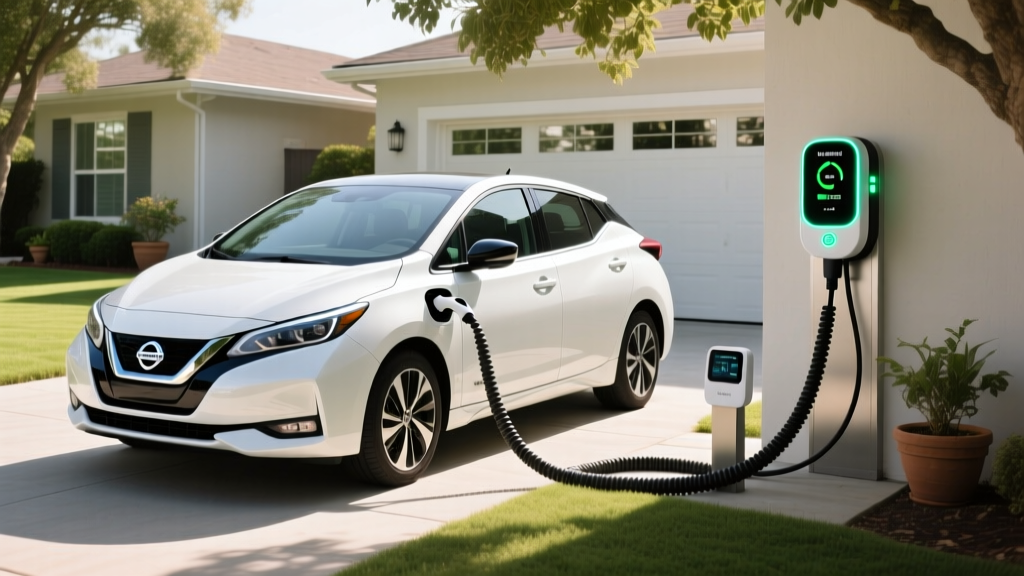
How much does it cost to install a home EV charger? The answer depends on your electrical panel, the distance from panel to charger location, and local permit fees. Here's a realistic breakdown for a 2024 Nissan Leaf owner installing a 40-amp, 240V Level 2 circuit (sufficient for the Leaf's 6.6 kW onboard charger, with headroom for future vehicles):
| Component | Low Estimate | High Estimate | Notes |
|---|---|---|---|
| Level 2 charger (hardware) | $350 | $700 | Smart chargers with Wi-Fi and scheduling cost more |
| Electrician labor (standard install) | $500 | $1,500 | Depends on run length, wall type, conduit needs |
| Electrical permit | $50 | $200 | Varies by municipality |
| Panel upgrade (if needed) | $1,500 | $4,000 | Required if your panel is 100A or near capacity |
| Total (no panel upgrade) | $900 | $2,400 | Most homes with 200A panels fall in this range |
| Total (with panel upgrade) | $2,400 | $6,400 | Older homes (pre-2000) often need this |
What Electrical Upgrades Might I Need?
The 2024 Nissan Leaf charges at 6.6 kW on Level 2, which draws roughly 27.5 amps at 240V. Electrical code requires a dedicated circuit rated at 125% of continuous load, meaning you need a 40-amp breaker on a 240V circuit. Most modern homes with 200-amp service panels can accommodate this without issue.
However, you may need a panel upgrade if:
- Your home has a 100-amp panel (common in homes built before 1990)
- Your panel is already near capacity (running electric heat, AC, dryer, oven, and water heater simultaneously)
- You want to install a 48-amp charger for future EV compatibility (requires a 60-amp breaker)
Safety and code considerations: Your installation must include a dedicated circuit (not shared with other appliances), a GFCI breaker for outdoor installations (per NEC 2020 and later), and an outdoor-rated (NEMA 4) charger if mounted outside. Always hire a licensed electrician—DIY 240V work carries serious fire and shock risk.
Connector Compatibility: CHAdeMO, CCS, and the NACS Shift
Which connector/charger is compatible with my EV? The 2024 Nissan Leaf uses two connector types:
- J1772 for Level 1 and Level 2 AC charging (standard across all non-Tesla EVs in North America)
- CHAdeMO for DC fast charging
This is where the Leaf faces a growing challenge. The North American EV industry is rapidly consolidating around two DC fast-charging standards:
| Connector | Supported Brands | Station Availability Trend |
|---|---|---|
| CHAdeMO | Nissan Leaf, Mitsubishi Outlander PHEV (older) | Declining—fewer new installations |
| CCS1 (Combined Charging System) | Ford, GM, Hyundai, Kia, VW, BMW, most non-Tesla EVs | Widely available, Electrify America standard |
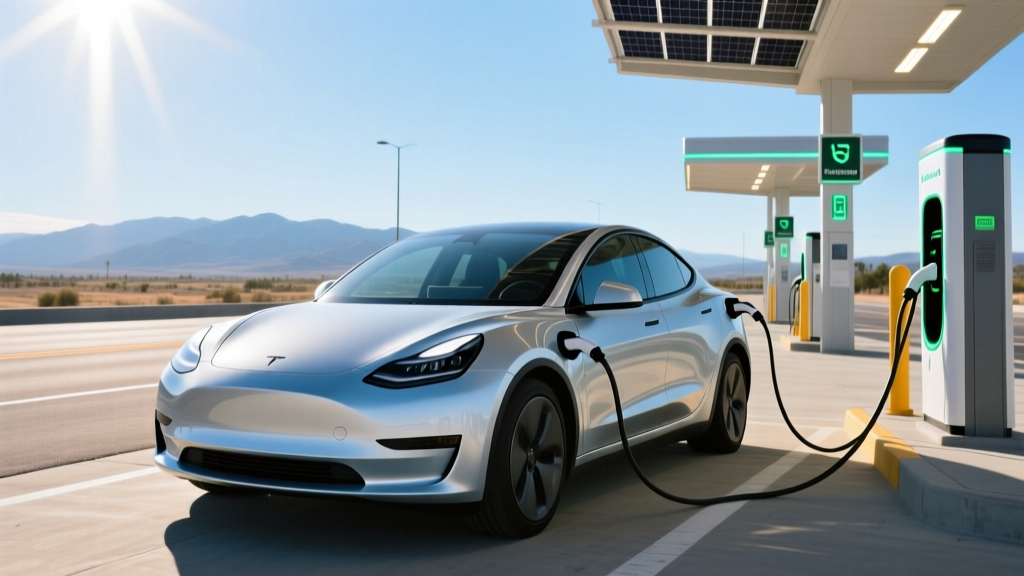
| NACS (North American Charging Standard / Tesla) | Tesla, Ford (2025+), GM (2025+), Rivian, Volvo, others adopting | Expanding rapidly—Tesla Supercharger network opening to NACS-equipped vehicles |
What this means for Leaf owners: CHAdeMO stations still exist (Nissan partnered with EVgo to maintain some infrastructure), but new public charger deployments overwhelmingly favor CCS and NACS. If you plan to rely on DC fast charging for road trips, the Leaf's CHAdeMO connector will limit your options compared to CCS or NACS vehicles.
There is no reliable CHAdeMO-to-CCS or CHAdeMO-to-NACS adapter available for the Leaf. Adapters exist for Tesla-to-J1772 Level 2 charging, but DC fast-charging adapters for CHAdeMO remain unavailable due to protocol differences.
Charging Cost Breakdown: Home vs. Public vs. Gas
How much does charging cost per mile vs gas? Let's compare the 2024 Nissan Leaf SV Plus (60 kWh battery, 212 miles EPA) against a comparable gas vehicle (2024 Nissan Sentra, 33 MPG combined) across three charging scenarios:
| Scenario | Rate | Cost for Full Charge (60 kWh) | Cost Per Mile | Equivalent Gas Cost (Sentra at 33 MPG) |
|---|---|---|---|---|
| Home (off-peak utility rate) | $0.13/kWh | $7.80 | $0.037 | $0.106 (at $3.50/gal) |
| Home (average US rate) | $0.16/kWh | $9.60 | $0.045 | $0.106 (at $3.50/gal) |
| Public Level 2 (ChargePoint, EVgo) | $0.30/kWh | $18.00 | $0.085 | $0.106 (at $3.50/gal) |
| DC Fast Charging (public) | $0.45/kWh | $27.00 | $0.127 | $0.106 (at $3.50/gal) |
The takeaway: Home charging at off-peak rates delivers the lowest cost per mile—roughly one-third the cost of gas. Public DC fast charging, however, can exceed gas costs per mile. The Leaf's value proposition depends heavily on reliable home charging access.
For a driver covering 12,000 miles annually:
- Home charging (off-peak): ~$444/year
- Gas (Sentra, $3.50/gal): ~$1,273/year
- Annual savings: ~$829
Recommended Level 2 Chargers for the 2024 Nissan Leaf
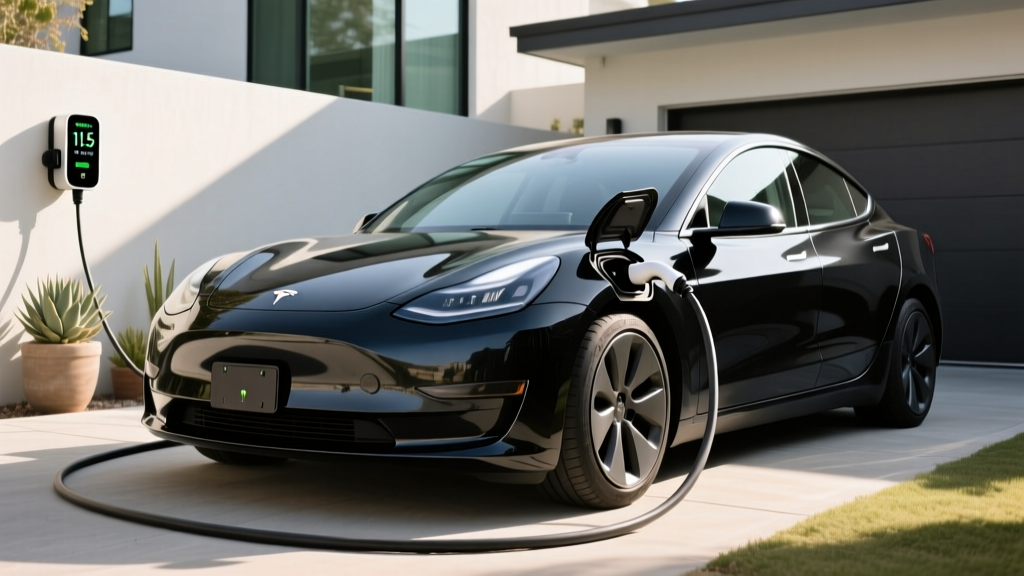
Since the Leaf's onboard charger caps at 6.6 kW (27.5A at 240V), you could install a 32-amp charger and fully utilize the Leaf's charging capability. However, most EV owners recommend installing a 40-amp or 48-amp charger to future-proof for your next vehicle. Here are three proven options:
ChargePoint Home Flex
- Power output: Up to 12 kW (50A) — configurable down to 16A for older panels
- Connector: J1772 (compatible with Leaf)
- Cable length: 23 feet
- Smart features: Wi-Fi, app scheduling, Alexa integration, utility demand-response programs
- Price: ~$699
- Best for: Owners who want smart scheduling to take advantage of off-peak electricity rates
Emporia Vue Level 2 Charger
- Power output: Up to 11.5 kW (48A)
- Connector: J1772
- Cable length: 24 feet
- Smart features: Energy monitoring, solar integration, app control, load management
- Price: ~$599
- Best for: Homes with solar panels or those wanting detailed energy tracking
Grizzl-E Smart
- Power output: Up to 10 kW (40A)
- Connector: J1772
- Cable length: 24 feet
- Smart features: OCPP-compatible, works with multiple apps, rugged outdoor rating (NEMA 4)
- Price: ~$549
- Best for: Outdoor installations and extreme climates (-40°F to +122°F rated)
All three chargers exceed the Leaf's 6.6 kW onboard limit, but that's intentional—you're investing in infrastructure for your next EV, which will likely support 11+ kW AC charging.
2024 Nissan Leaf Ownership: Warranty, Tax Credits, and Long-Term Costs
The 2024 Leaf comes with Nissan's lithium-ion battery warranty: 8 years / 100,000 miles with a capacity retention guarantee of 66% (9 bars out of 12 on the battery health gauge). This is competitive with industry standards, though some competitors (Hyundai, Kia) offer 10-year/100,000-mile coverage.
Federal Tax Credit Eligibility (§30D)
The 2024 Nissan Leaf qualifies for the federal EV tax credit, but eligibility depends on several factors per current IRS rules:
- MSRP cap: Leaf starts at ~$28,140 (S) and ~$36,190 (SV Plus)—both under the $55,000 sedan cap ✓
- Buyer income limits: AGI must not exceed $150,000 (single) / $300,000 (joint) / $225,000 (head of household)
- Battery sourcing requirements: As of 2024, a percentage of critical minerals and battery components must be sourced from the US or free-trade-agreement countries. Nissan manufactures the Leaf in Smyrna, Tennessee, but battery cell sourcing varies by model year.
- Point-of-sale transfer: You can transfer the credit to the dealer at purchase, reducing your upfront cost by up to $7,500 (if fully eligible)
Important: Tax credit rules change frequently. Verify current eligibility on IRS.gov before purchasing. Consult a tax professional for your specific situation.
Frequently Asked Questions
How fast will each charging level add range to the 2024 Nissan Leaf?
Level 1 (120V outlet) adds roughly 4–5 miles per hour—suitable only for overnight top-ups if you drive under 40 miles daily. Level 2 (240V home charger) adds 22–25 miles per hour, fully recharging the 60 kWh SV Plus overnight in about 10 hours. DC fast charging can add 100+ miles in 30 minutes, but the Leaf's CHAdeMO connector limits station availability.
Can I charge the 2024 Nissan Leaf at a Tesla Supercharger?
No. Tesla Superchargers use the NACS connector and proprietary communication protocol. The Leaf uses CHAdeMO for DC fast charging, and no reliable adapter exists to convert CHAdeMO to NACS or CCS. You'll need to use EVgo, Electrify America (with CHAdeMO availability—check the app), or regional networks.
What happens if my home electrical panel can't support a Level 2 charger?
If your panel is 100 amps or near capacity, you'll need a panel upgrade (typically $1,500–$4,000) or a load-management device that throttles the charger when other appliances draw heavy current. Some utilities offer rebates for panel upgrades tied to EV adoption—check with your local provider.
Is the 2024 Nissan Leaf's 212-mile range enough for daily driving?
For most commuters, yes. The US average daily drive is under 40 miles, meaning the SV Plus (212 miles EPA) requires charging every 4–5 days with home Level 2. However, if you frequently drive 150+ miles in a day, take winter road trips, or lack home charging, the Leaf's range and CHAdeMO charging limitations may frustrate you. Consider the Hyundai Kona Electric (261 miles EPA) or Chevrolet Bolt EUV (247 miles EPA) for more range and CCS fast-charging compatibility.
How much does it cost to replace the 2024 Nissan Leaf battery?
Out-of-warranty battery replacement for the 60 kWh Leaf currently costs $6,500–$9,000 (parts and labor), though prices are expected to decline as battery manufacturing scales. Most Leafs experience gradual degradation (2–3% per year) rather than sudden failure, and the 8-year/100,000-mile warranty covers capacity loss below 66%.
Bottom Line: Who Should Buy the 2024 Nissan Leaf?
The 2024 Nissan Leaf makes sense if you:
- Have reliable home charging access (garage or driveway with 240V circuit)
- Drive under 150 miles daily and rarely take long road trips
- Want an affordable entry point into EV ownership (under $30k before incentives)
- Live in a mild climate where cold-weather range loss is minimal
Look elsewhere if you:
- Rely on public DC fast charging (CHAdeMO stations are declining)
- Need 250+ miles of range for frequent road trips
- Live in a cold climate where the SV Plus's real-world winter range drops to ~150 miles
The Leaf's 2024 range and charging setup are adequate for urban and suburban commuters with home charging—but the industry's shift away from CHAdeMO makes it a short-term solution rather than a long-term platform.