If you own or are shopping for a 2024 Model Y Long Range, understanding your charging options is the single biggest factor in daily satisfaction. Tesla's dual-motor crossover pairs a 75 kWh (usable) NMC battery with an EPA-rated 310 miles of range, but real-world highway driving at 75 mph typically yields 260–280 miles, and cold weather can shave another 15–25% off that figure. The good news: Tesla's Supercharger network and NACS connector ecosystem make charging more straightforward than most competitors — provided you set up the right home infrastructure.
This guide covers every charging scenario for the 2024 Model Y Long Range, from overnight Level 2 home charging to DC fast charging on road trips, with exact costs, times, and equipment recommendations updated for 2026.
2024 Model Y Long Range: Key Charging Specs at a Glance
| Spec | Value |
|---|---|
| EPA Range | 310 miles |
| Real-World Range (highway, 75 mph) | ~260–280 miles |
| Real-World Range (cold, 20°F) | ~210–240 miles |
| Battery Capacity (usable) | ~75 kWh (NMC) |
| Max DC Fast Charge Rate | 250 kW peak |
| 10–80% DC Fast Charge Time | ~27 minutes |
| Onboard AC Charger | 11.5 kW (48A) |
| Connector | NACS (native Tesla) |
| EPA Efficiency | 122 MPGe combined |
| Base MSRP (2024) | ~$48,990 |
| Battery Warranty | 8 years / 120,000 miles (70% retention) |
Understanding Charging Levels: How Fast Does Each Add Range?
EV charging operates at three distinct levels, each defined by its power output in kilowatts (kW). Remember: kW measures power (the rate of energy delivery, like water pressure from a hose), while kWh measures energy (the total battery capacity, like the size of the tank). This distinction matters when comparing chargers and calculating costs.
| Level | Voltage / Amperage | Power (kW) | Miles Added/Hour | Best For |
|---|---|---|---|---|
| Level 1 (120V) | 120V / 12A | ~1.4 kW | ~3–5 mi/hr | Emergency / trickle top-off |
| Level 2 (240V) | 240V / 48A | 11.5 kW | ~37–44 mi/hr | Daily home charging |
| DC Fast Charging | 400V+ DC | Up to 250 kW | ~175+ mi in 15 min | Road trips, rapid top-ups |
Level 1: The Emergency Backup
Every 2024 Model Y Long Range ships with a Tesla Mobile Connector and a 120V NEMA 5-15 adapter. Plugging into a standard household outlet delivers roughly 1.4 kW — enough to add 3–5 miles of range per hour. A full 10–80% charge would take approximately 35–40 hours. This is practical only for overnight trickle charging if you drive less than 30 miles daily or as an emergency backup.
Level 2: The Daily Workhorse
Level 2 charging at 240V is the standard for home EV ownership. The Model Y Long Range's onboard charger accepts up to 11.5 kW (48 amps), meaning a 48A Level 2 circuit will fully utilize the car's AC charging capability. At this rate, you'll recover roughly 37–44 miles of range per hour, and a 10–80% charge takes approximately 5.5–6 hours — ideal for overnight replenishment.
DC Fast Charging: Road-Trip Power
Tesla's V3 Superchargers deliver up to 250 kW of DC power directly to the battery. The 2024 Model Y Long Range peaks at 250 kW but follows a tapering charge curve: it sustains near-peak rates from 10–30% SoC, then progressively slows. The 10–80% charge takes roughly 27 minutes at a V3 Supercharger. Above 80%, charging slows dramatically to protect battery health — plan to charge to 80% on road trips and move on rather than waiting for a full battery.
Home Charger Installation: Requirements, Costs & Electrical Upgrades
Installing a Level 2 home charger for your 2024 Model Y Long Range requires a dedicated 240V circuit. Here's what's involved electrically and financially.
Electrical Requirements
To deliver the Model Y's maximum 11.5 kW AC charge rate, you need a 60-amp dedicated circuit (NEC code requires circuits to be rated 125% above continuous load, so a 48A charger requires a 60A breaker). This typically uses 6 AWG copper wire on a 240V circuit.
- Ideal setup: 240V / 60A circuit → delivers full 11.5 kW (48A)
- Common alternative: 240V / 50A circuit (NEMA 14-50 outlet) → delivers 9.6 kW (40A), still practical for most daily needs
- Minimum useful: 240V / 30A circuit → delivers 5.8 kW (24A), adequate for low-mileage drivers
Does Your Electrical Panel Need an Upgrade?
This is the variable most online guides gloss over. If your home has a 100-amp main panel (common in homes built before the 1990s), adding a 60A EV circuit may exceed your panel's capacity — especially if you already run electric range, dryer, and HVAC. A panel upgrade to 200A typically costs $1,500–$3,000 before any EV charger work begins.
Homes with existing 200A panels usually have sufficient headroom for a 60A EV circuit without an upgrade. Your licensed electrician will perform a load calculation per NEC Article 220 to determine this. Don't skip this step — it's a code requirement and a safety necessity.
Installation Cost Breakdown
| Cost Component | Low Estimate | High Estimate | Notes |
|---|---|---|---|
| Level 2 Charger (Equipment) | $250 | $650 | Tesla Wall Connector, ChargePoint, Emporia |
| Electrician Labor (standard install) | $500 | $1,500 | Depends on run length from panel to garage |
| Electrical Permit | $50 | $200 | Varies by municipality |
| Panel Upgrade (if needed) | $1,500 | $3,000 | 100A → 200A service upgrade |
| Conduit / Trenching (long runs) | $200 | $1,000 | Detached garages, long distances |
| Total (no panel upgrade) | $800 | $2,350 | Most homes with 200A service |
| Total (with panel upgrade) | $2,300 | $5,350 | Older homes with 100A service |
The federal Residential Clean Energy Credit does not cover EV charger equipment for 2024 onward (the Alternative Fuel Vehicle Refueling Property Credit under §30C expired for most residential installations at the end of 2023, though some census-tract-based eligibility may remain — consult a tax professional). Some utilities and states still offer rebates of $250–$1,000 for Level 2 installations; check your local provider.
Safety and Code Considerations
- Dedicated circuit: Your EV charger must be on its own breaker — never share a circuit with other major appliances.
- GFCI protection: NEC 2020 and later require GFCI protection for outdoor receptacles used for EV charging. Hardwired installations may have different requirements depending on jurisdiction.
- Outdoor rating: If mounting outside, ensure the charger is rated NEMA 4 (weatherproof). The Tesla Wall Connector and most quality Level 2 units carry this rating.
- Permit and inspection: Always pull a permit. Unpermitted electrical work can void home insurance and create fire risk.
Connector Compatibility: NACS, CCS1, and Adapter Options
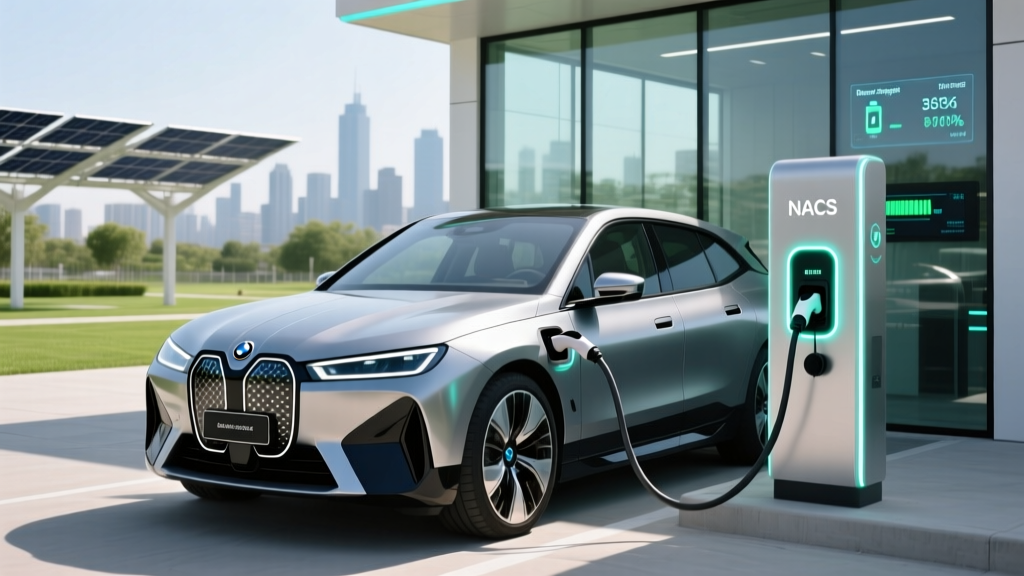
The 2024 Model Y Long Range comes equipped with the NACS (North American Charging Standard) connector — Tesla's proprietary plug, now formally adopted as SAE J3400. This is a significant advantage in 2026: Tesla's Supercharger network exceeds 6,000 stations and 60,000+ connectors across North America, and the growing list of automakers adopting NACS means the connector is becoming the de facto standard.
| Connector | Compatibility with Model Y LR | Notes |
|---|---|---|
| NACS (Tesla) | Native — no adapter needed | Works with all Superchargers and Destination Chargers |
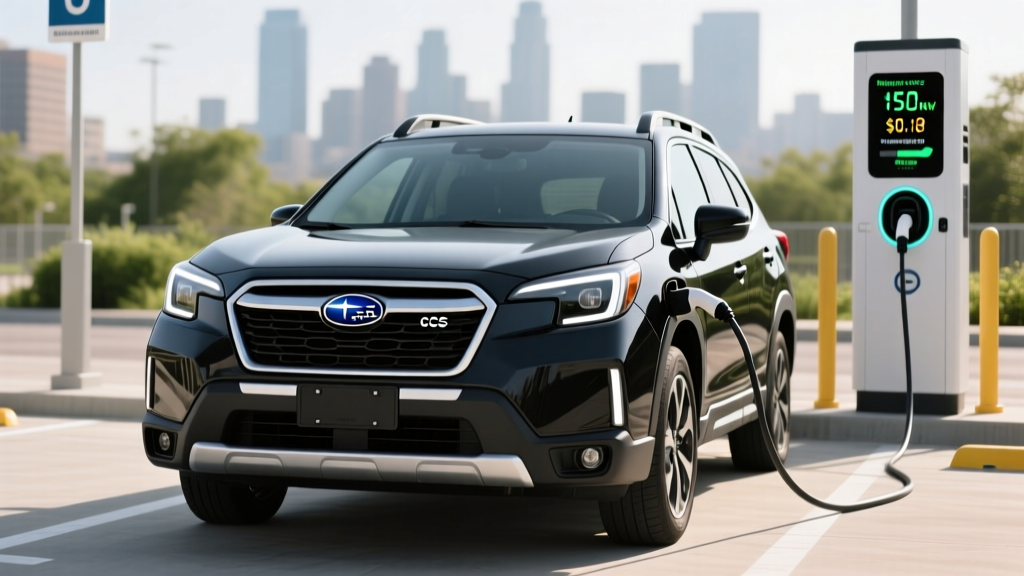
| CCS1 | Requires Tesla CCS Adapter (~$200) | Needed for Electrify America, non-Tesla DCFC networks |
| CHAdeMO | Requires adapter (~$400+) | Largely legacy; limited new station deployment |
| J1772 (Level 2) | Requires Tesla J1772 Adapter (included) | For non-Tesla Level 2 public chargers |
Adapter recommendations: Tesla includes a J1772-to-NACS adapter with every Model Y. For CCS1 DC fast charging (Electrify America, EVgo, and other non-Tesla networks), the official Tesla CCS1 adapter is a worthwhile $200 investment for road-trip flexibility. CHAdeMO is increasingly rare and generally not worth the adapter cost unless you regularly visit areas with no Supercharger or CCS coverage.
Cost to Charge: Home vs. Public vs. Gas Comparison
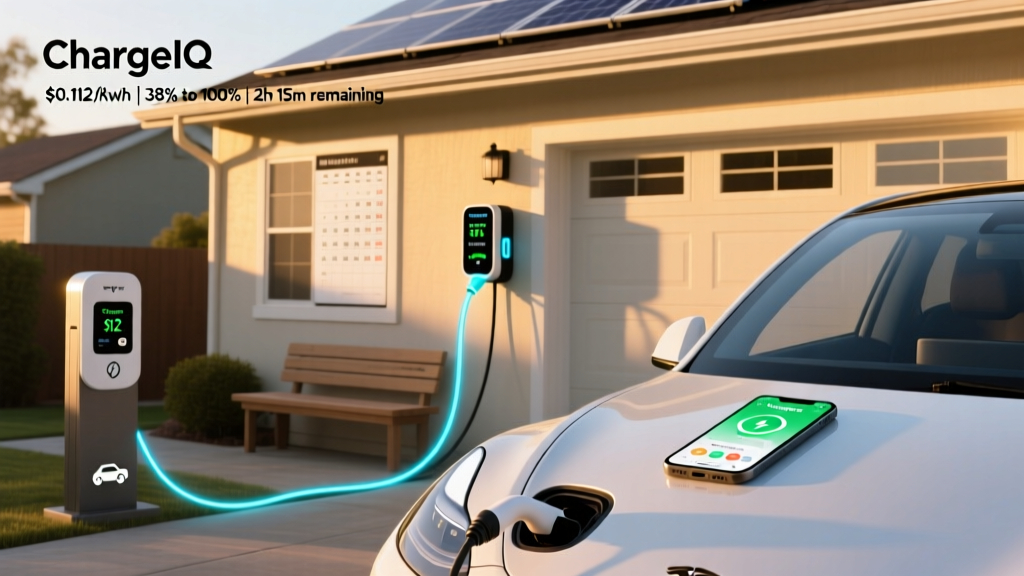
Electricity pricing varies enormously by location, time of day, and charging type. Here's a realistic cost breakdown for the 2024 Model Y Long Range, using its EPA efficiency of approximately 28 kWh/100 miles (or 122 MPGe combined).
| Scenario | Rate ($/kWh) | Cost per Full Charge (75 kWh) | Cost per Mile | Cost for 1,000 Miles |
|---|---|---|---|---|
| Home Off-Peak (utility TOU rate) | $0.08–$0.12 | $6.00–$9.00 | $0.022–$0.034 | $22–$34 |
| Home Standard Rate | $0.13–$0.18 | $9.75–$13.50 | $0.036–$0.050 | $36–$50 |
| Tesla Supercharger (avg.) | $0.25–$0.35 | $18.75–$26.25 | $0.070–$0.098 | $70–$98 |
| Electrify America / Public DCFC | $0.30–$0.48 | $22.50–$36.00 | $0.084–$0.134 | $84–$134 |
| Gas Equivalent (25 MPG, $3.50/gal) | — | — | $0.140 | $140 |
For perspective, a Model Y Long Range driver covering 12,000 miles per year with 80% home charging (off-peak) and 20% Supercharging would spend roughly $450–$600 annually on electricity. A comparable gas vehicle at 25 MPG would spend approximately $1,680 at $3.50/gallon — a savings of $1,000–$1,200 per year with the EV.
Recommended Home Charging Equipment for the Model Y Long Range
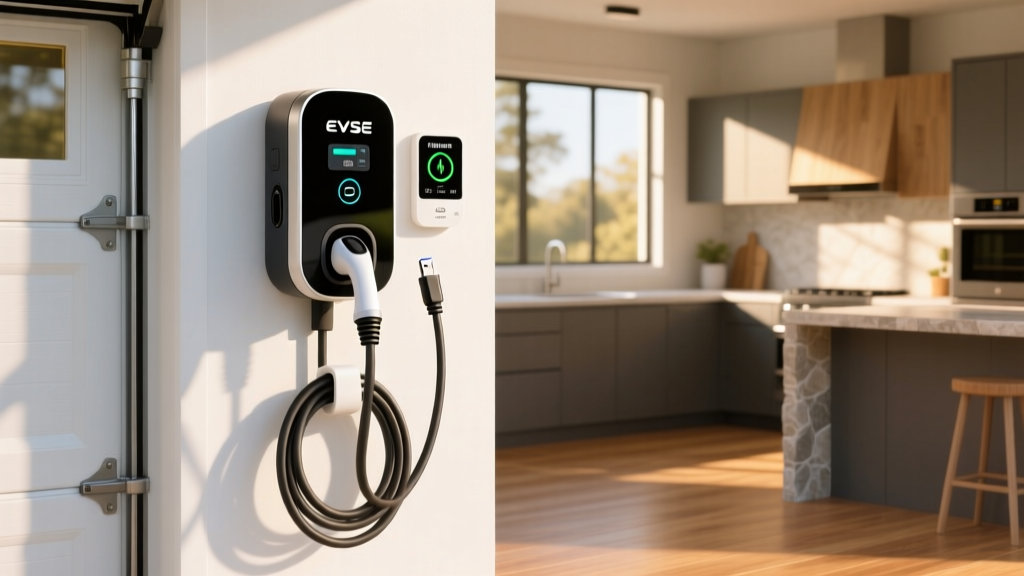
Because the 2024 Model Y Long Range has an 11.5 kW onboard charger, pairing it with a 48A Level 2 unit maximizes your charging speed. Here are proven options as of 2026:
Tesla Wall Connector
- Power: 11.5 kW (48A)
- Connector: Native NACS
- Cable Length: 24 ft
- Smart Features: Wi-Fi, OTA updates, load sharing (pair two units on one circuit), Power Share
- Price: ~$475
- Verdict: Best overall for Tesla owners. Seamless integration, full 48A output, clean design. Hardwired only (no plug).
Emporia Vue Level 2 Charger
- Power: 11.5 kW (48A)
- Connector: NACS (2025+ models) or J1772 with adapter
- Cable Length: 24 ft
- Smart Features: Wi-Fi, scheduling, energy monitoring, solar integration
- Price: ~$399
- Verdict: Best value smart charger. Excellent app, energy tracking, and solar-aware charging at a lower price point.
ChargePoint Home Flex
- Power: Up to 12 kW (50A) — configurable
- Connector: J1772 (use Tesla adapter) or NACS (newer versions)
- Cable Length: 23 ft
- Smart Features: Wi-Fi, Alexa, scheduling, amperage adjustable via app
- Price: ~$549
- Verdict: Most flexible amperage settings. Ideal if your panel can't support a full 60A circuit — dial it down in the app.
Our pick for Model Y Long Range owners: The Tesla Wall Connector is the obvious default — it delivers the car's full 11.5 kW, requires no adapter, and integrates with Tesla's ecosystem. If you want energy monitoring or plan to add solar, the Emporia Vue is a compelling alternative at a lower price.
Charging Times for the 2024 Model Y Long Range by Scenario
| Scenario | Charger Type | Power | 10–80% Time | 0–100% Time |
|---|---|---|---|---|
| Standard 120V outlet | Level 1 (Mobile Connector) | 1.4 kW | ~37 hours | ~54 hours |
| NEMA 14-50 outlet (40A) | Level 2 (Mobile Connector) | 9.6 kW | ~6.5 hours | ~9 hours |
| Hardwired 48A Wall Connector | Level 2 | 11.5 kW | ~5.5 hours | ~7.5 hours |
| Tesla V3 Supercharger | DC Fast | 250 kW peak | ~27 minutes | ~55 minutes |
| Tesla V4 Supercharger | DC Fast | 250+ kW peak | ~25 minutes | ~50 minutes |
Preconditioning tip: When navigating to a Supercharger in the Tesla app or in-car navigation, the car automatically begins preconditioning the battery — warming it to the optimal temperature for fast charging. This can shave 5–10 minutes off your charge session in cold weather. Always use the in-car nav for Supercharger routing to trigger this feature.
Frequently Asked Questions
How much does it cost to install a home EV charger for the Model Y?
Expect $800–$2,350 for a standard Level 2 installation in a home with an adequate 200A electrical panel. This covers the charger unit ($250–$650), electrician labor ($500–$1,500), and permit fees ($50–$200). If your home has an older 100A panel requiring an upgrade, add $1,500–$3,000, bringing the total to $2,300–$5,350.
How fast will each charging level add range to my Model Y Long Range?
Level 1 (120V) adds roughly 3–5 miles per hour. Level 2 (240V at 48A) adds 37–44 miles per hour. DC fast charging at a Tesla V3 Supercharger adds approximately 175 miles in 15 minutes under optimal conditions.
Which connector does the 2024 Model Y Long Range use?
The 2024 Model Y uses the NACS (Tesla) connector natively. It works directly with all Tesla Superchargers and Destination Chargers. For non-Tesla DC fast chargers (Electrify America, EVgo), you'll need the Tesla CCS1 adapter (~$200). A J1772-to-NACS adapter for Level 2 public chargers is included with the vehicle.
How much does charging cost per mile compared to gasoline?
Home charging on off-peak rates costs roughly $0.02–$0.03 per mile — about one-quarter to one-fifth the cost of gasoline at $3.50/gallon in a 25 MPG vehicle ($0.14/mile). Even Supercharger rates ($0.07–$0.10/mile) remain significantly cheaper than gas.
What electrical upgrades might I need for a home charger?
You'll need a dedicated 240V circuit — ideally 60 amps for the Model Y's full 11.5 kW charging capability. Homes with 100A main panels may need a panel upgrade to 200A ($1,500–$3,000) to accommodate the additional load. A licensed electrician must perform a load calculation per NEC Article 220 to determine your panel's capacity. Always pull a permit for EV charger installation.
Does the 2024 Model Y Long Range qualify for the federal EV tax credit?
Federal tax credit eligibility under IRS §30D depends on multiple factors: buyer income limits (AGI ≤$150,000 single / $300,000 joint), vehicle MSRP caps ($80,000 for SUVs), battery component and critical mineral sourcing requirements, and final assembly in North America. The 2024 Model Y Long Range assembled at Giga Texas has qualified for partial or full credits depending on the production quarter and sourcing rules. Point-of-sale transfer is available. Always verify current eligibility on the IRS qualified vehicles list and consult a tax professional — rules change frequently.
Sources: EPA Fuel Economy – 2024 Tesla Model Y, Tesla Model Y Owner's Manual, IRS Qualified Clean Vehicles