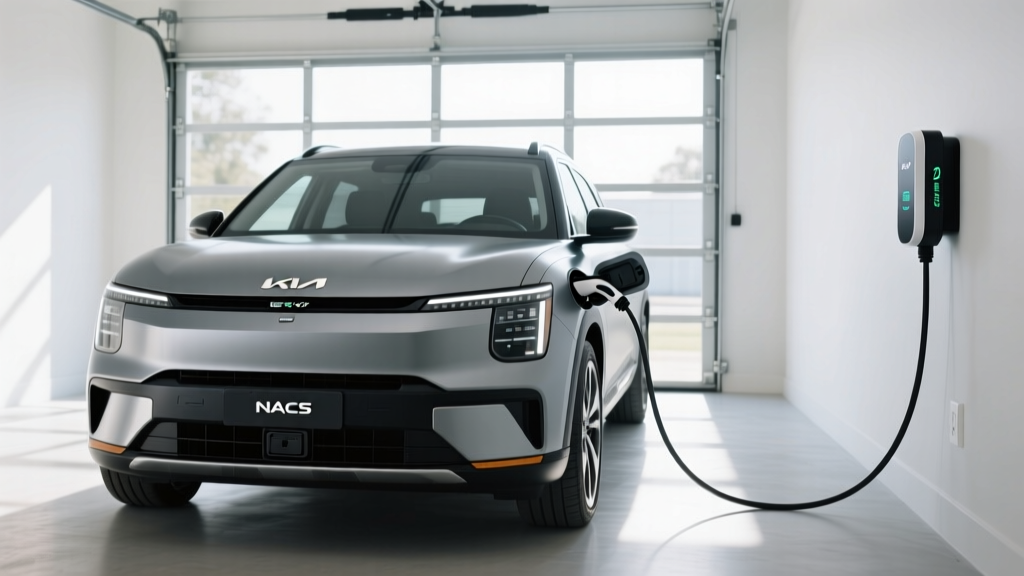
The 2024 Kia Niro EV is a practical, efficient compact crossover that punches above its weight in the electrified space. With an EPA-estimated 239 miles of range and a 64.8 kWh usable battery pack, it offers solid daily usability. But owning an EV is only half the equation — understanding how to charge it efficiently at home, on the road, and at what cost is where real ownership satisfaction lives.
This guide breaks down everything you need to know about charging the 2024 Kia Niro EV: how each charging level affects your actual range, what a home Level 2 installation really costs, which connectors work, and how charging expenses stack up against gasoline. Whether you're a current Niro EV owner optimizing your setup or a prospective buyer evaluating the total ownership picture, the numbers below will give you a clear, data-driven roadmap.
2024 Kia Niro EV: Range and Battery Specs at a Glance
Before diving into charging infrastructure, let's anchor on the vehicle's core energy specs. These numbers dictate everything from your charging times to your monthly electricity bill.
| Spec | Value |
|---|---|
| EPA Range | 239 miles |
| Battery Capacity (Usable) | 64.8 kWh (NMC chemistry) |
| Combined MPGe | 113 MPGe |
| Efficiency | 30 kWh/100 mi |
| Max DC Fast Charge Rate | ~85 kW peak |
| Level 2 AC Charge Rate | 11 kW (onboard charger) |
| 10–80% DC Fast Charge | ~45 minutes |
| Motor Output | 201 hp / 291 lb-ft torque |
| 0–60 mph | ~7.0 seconds |
| Base MSRP (Wind trim) | $39,600 |
| Battery/Powertrain Warranty | 10 years / 100,000 miles |
Charging Levels Explained: How Fast Will Each Level Add Range?
EV charging comes in three tiers, each with vastly different power outputs and use cases. Understanding the difference between kW (kilowatts — the rate of power flow, like water pressure from a hose) and kWh (kilowatt-hours — the total energy stored, like gallons in a tank) is essential. Your Niro EV's 64.8 kWh battery needs 64.8 kilowatt-hours of energy to fill from empty; how fast that happens depends on the charger's kW output.
| Level | Voltage | Power (kW) | Miles of Range Added Per Hour | Best Use Case |
|---|---|---|---|---|
| Level 1 (Standard Outlet) | 120V | ~1.4 kW | ~4–5 miles/hour | Overnight top-ups, emergencies |
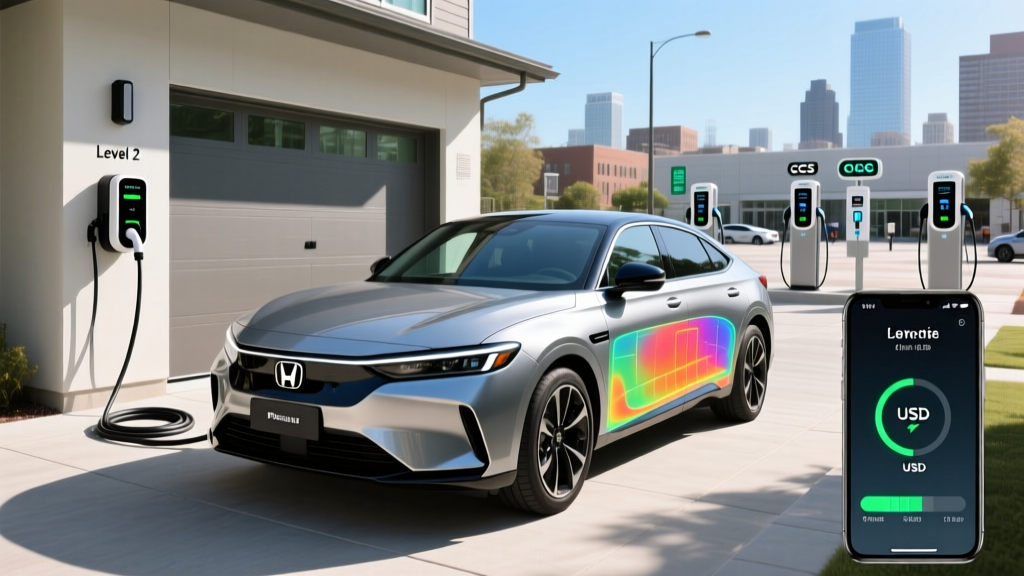
| Level 2 (Home/Public AC) | 240V | Up to 11 kW | ~35–40 miles/hour | Daily home charging, workplace |
| DC Fast Charging | 400V+ | Up to ~85 kW peak | ~170+ miles in 30 min | Road trips, quick top-ups |
Level 1 uses a standard 120V household outlet and the portable cord that ships with the Niro EV. It adds roughly 4–5 miles of range per hour — enough to recover a day's commute overnight if your daily driving is under 40 miles. A full 0–100% charge takes approximately 50+ hours, making it impractical as a primary charging method.
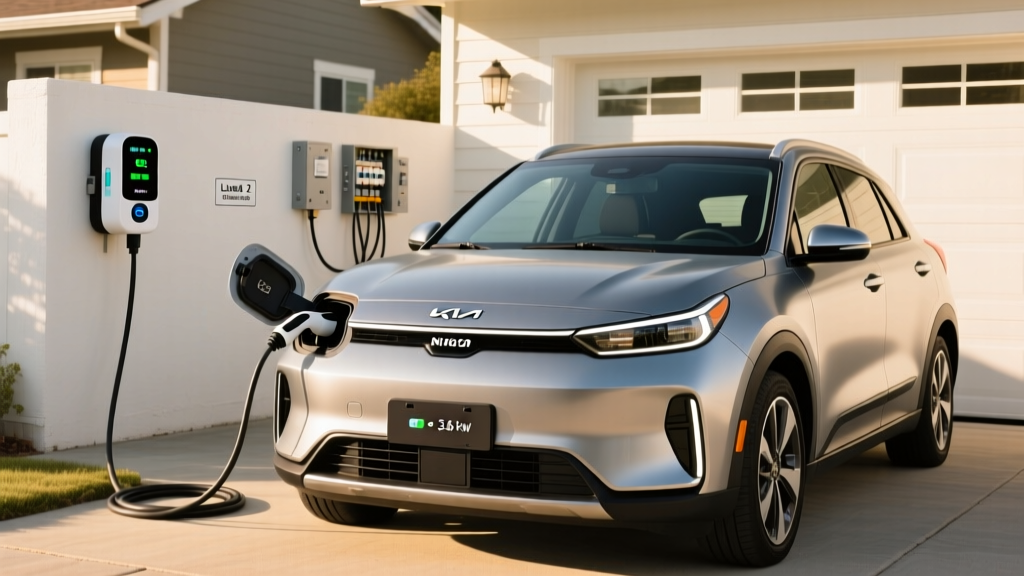
Level 2 is the backbone of daily EV ownership. Running on 240V (the same as a dryer outlet), it delivers up to 11 kW to the Niro EV, limited by the vehicle's onboard charger. At this rate, a full charge from empty takes roughly 6.5 hours. A typical overnight session from 20% to 80% takes about 4 hours — more than sufficient for daily needs.
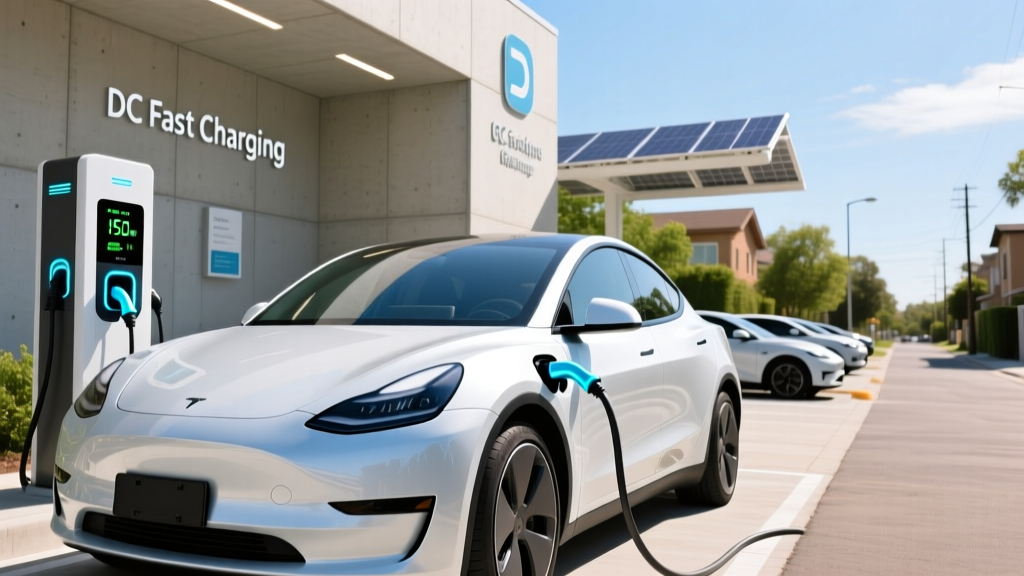
DC Fast Charging bypasses the onboard charger and feeds direct current straight to the battery. The Niro EV peaks at approximately 85 kW on a capable station. However, peak rate is not sustained rate: the charge curve tapers significantly above 80% State of Charge (SoC) to protect battery health. A 10–80% session takes roughly 45 minutes. Charging from 80–100% can add another 30+ minutes — so plan your road-trip stops around the 10–80% sweet spot.
Home Level 2 Charger Installation: Costs, Electrical Requirements, and What to Expect
Installing a Level 2 home charger is the single most impactful upgrade an EV owner can make. Here's what's involved for a 2024 Kia Niro EV owner.
Electrical Requirements
For optimal Level 2 charging at the Niro EV's full 11 kW, you'll need:
- Circuit: Dedicated 50-amp, 240V circuit (a 40-amp circuit also works, delivering ~9.6 kW)
- Wire gauge: 6 AWG copper for a 50A circuit
- Breaker: Double-pole 50A breaker in your main panel
- Panel capacity: Minimum 2–4 open slots; 200A main service recommended
Do You Need a Panel Upgrade?
Homes with 100-amp electrical service or older panels (Federal Pacific, Zinsco, certain Pushmatic models) may require a panel upgrade to 200A before adding an EV charger. This is one of the most overlooked costs in EV ownership. A panel upgrade typically runs $1,500–$3,500 and may take 1–3 days. If your home already has 200A service with available breaker slots, you likely won't need this.
Installation Cost Breakdown
| Component | Cost Range |
|---|---|
| Level 2 Charger Equipment (hardware) | $350–$700 |
| Electrician Labor (standard install, 2–4 hrs) | $600–$1,500 |
| Electrical Permit | $50–$200 |
| Conduit, Wire, and Misc. Materials | $100–$400 |
| Panel Upgrade (if needed) | $1,500–$3,500 |
| Total (Standard Install, No Panel Upgrade) | $1,100–$2,800 |
| Total (With Panel Upgrade) | $2,600–$6,300 |
Costs vary significantly by region, the distance from your panel to the charger location, and whether walls need to be opened for conduit runs. Always get at least three quotes from licensed electricians and confirm they pull a permit — unpermitted work can void homeowner's insurance and cause problems at resale.
Connector Compatibility: Which Plugs Work with the Niro EV?
The 2024 Kia Niro EV uses the CCS1 (Combined Charging System) connector for both Level 2 AC charging and DC fast charging. This is the standard connector used by most non-Tesla EVs sold in North America through 2024.
| Connector Type | Use | Niro EV Compatible? | Notes |
|---|---|---|---|
| J1772 | Level 1 & Level 2 AC | Yes (part of CCS1) | Standard for all North American EVs |
| CCS1 | DC Fast Charging | Yes (native) | Primary fast-charge connector |
| NACS (Tesla) | Level 2 & DC Fast (Supercharger) | With adapter | Kia has announced NACS adoption for future models; for 2024 Niro EV, a CCS-to-NACS adapter is required for Tesla Supercharger access |
| CHAdeMO | DC Fast Charging | No | Legacy standard (Nissan Leaf); being phased out |
Adapter reality check: As Tesla opens its Supercharger network to non-Tesla EVs, CCS-equipped vehicles like the Niro EV need a CCS-to-NACS adapter. Kia does not currently include this adapter with the 2024 Niro EV. Third-party adapters are available ($150–$250), but verify they are UL-listed and rated for the full power output. Not all Supercharger stalls have the "Magic Dock" built-in adapter — check the Tesla app for station compatibility before relying on Superchargers for road trips.
Charging Cost Per Mile: EV vs. Gasoline
One of the strongest ownership arguments for the Niro EV is fuel cost savings. Let's compare real scenarios using the Niro EV's efficiency of 30 kWh/100 miles (or 0.30 kWh/mile) against a comparable gas-powered Kia Niro hybrid averaging 49 MPG combined.
| Scenario | Rate | Niro EV Cost/Mile | Gas Niro (49 MPG) Cost/Mile |
|---|---|---|---|
| Home Charging (national avg. $0.16/kWh) | $0.16/kWh | $0.048 | $0.071 (at $3.50/gal) |
| Home Off-Peak (utility TOU rate $0.09/kWh) | $0.09/kWh | $0.027 | $0.071 |
| Public Level 2 (avg. $0.30/kWh) | $0.30/kWh | $0.090 | $0.071 |
| DC Fast Charging (avg. $0.40/kWh) | $0.40/kWh | $0.120 | $0.071 |
Key takeaway: Home charging — especially on off-peak time-of-use (TOU) rates — delivers massive savings. At $0.09/kWh, the Niro EV costs under 3 cents per mile, roughly 60% less than the gas Niro hybrid. However, exclusive reliance on public DC fast charging can actually exceed the cost of gasoline. This is why home Level 2 charging is the economic foundation of EV ownership.
For a driver covering 12,000 miles per year and charging 80% at home (off-peak) and 20% on DC fast chargers, annual fuel cost is approximately $540 for the Niro EV versus $857 for the gas hybrid — a savings of about $317 per year, or $1,585 over five years. Source: fueleconomy.gov
Recommended Home Level 2 Chargers for the Niro EV
Not all Level 2 chargers are equal. Below are three well-regarded options that pair well with the Niro EV's 11 kW onboard charger and CCS1 inlet.
Emporia Level 2 EV Charger
- Power Output: Up to 48A / 11.5 kW (240V)
- Connector: J1772 (CCS1 compatible)
- Cable Length: 24 feet
- Smart Features: Wi-Fi, app scheduling, energy monitoring, solar integration
- Price: ~$400
- Best For: Budget-conscious buyers who want smart features and energy tracking
ChargePoint Home Flex
- Power Output: Up to 50A / 12 kW (240V, adjustable)
- Connector: J1772 (CCS1 compatible)
- Cable Length: 23 feet
- Smart Features: Wi-Fi, app scheduling, Alexa integration, flexible amperage settings
- Price: ~$550
- Best For: Flexibility across different circuit sizes; strong app ecosystem
Grizzl-E Smart
- Power Output: Up to 40A / 9.6 kW (240V)
- Connector: J1772 (CCS1 compatible)
- Cable Length: 24 feet
- Smart Features: Wi-Fi, OCPP protocol, over-the-air updates
- Price: ~$500
- Best For: Extreme durability (IP67 rated, -40°F operation), Canadian-built
Why not a 48A charger? The Niro EV's onboard charger caps at 11 kW (~46A at 240V). A 48A charger will still work perfectly, but you won't extract more than the car can accept. The advantage of a higher-rated unit is future-proofing for your next EV.
Safety, Electrical Code, and Installation Best Practices
EV charging draws sustained high current for hours — far more demanding than typical household appliances. Cutting corners on safety is not an option.
- Dedicated circuit: Your Level 2 charger must be on its own dedicated breaker — never shared with other appliances. Continuous loads (defined as running 3+ hours) require the circuit to be rated at 125% of the charger's maximum draw. A 40A charger needs a 50A breaker.
- GFCI protection: The 2020 and 2023 National Electrical Code (NEC) require GFCI (Ground Fault Circuit Interrupter) protection for EV charging outlets in garages and outdoor locations. Hardwired chargers may have built-in GFCI; plug-in units require a GFCI breaker.
- Outdoor rating: If installing outside, the charger must carry an outdoor/NEMA 4 rating. All three chargers listed above meet this standard. Ensure the conduit and junction boxes are also rated for wet locations.
- Permit and inspection: Most jurisdictions require an electrical permit for a new 240V circuit. The inspection verifies wire gauge, breaker sizing, grounding, and GFCI compliance. Skipping the permit risks insurance denial in the event of an electrical fire.
- Hardwired vs. plug-in (NEMA 14-50): Hardwired installations eliminate the outlet as a failure point and may not require GFCI breakers (depending on local code). NEMA 14-50 outlets offer portability but require GFCI breakers in most jurisdictions, adding $50–$100 to the breaker cost.
Federal Tax Credit and Incentives for Home Charging
Under the IRS §30D Clean Vehicle Credit, the 2024 Kia Niro EV may qualify for up to $7,500 in federal tax credits — but eligibility depends on several factors that change annually. Additionally, the Alternative Fuel Infrastructure Tax Credit (§30C) can cover up to 30% of home charger equipment and installation costs, capped at $1,000 for residential installations, if you live in an eligible census tract.
- Vehicle MSRP must not exceed $55,000 for SUVs (Niro EV qualifies at ~$39,600 base)
- Buyer AGI must not exceed $150,000 (single) / $300,000 (joint)
- Battery critical minerals and component sourcing must meet annual thresholds (increases each year)
- Credit can be transferred to the dealer at point of sale as an immediate price reduction
- Verify current eligibility at IRS.gov before purchasing — sourcing rules tighten annually
Frequently Asked Questions
How much does it cost to install a home EV charger for the Kia Niro EV?
A standard Level 2 home installation (equipment + electrician + permit + materials) typically costs $1,100–$2,800 if your electrical panel has sufficient capacity. If a panel upgrade from 100A to 200A is needed, total costs can reach $2,600–$6,300. The §30C Alternative Fuel Infrastructure Tax Credit may offset up to $1,000 of this cost for eligible taxpayers in qualifying census tracts.
How fast will each charging level add range to the Niro EV?
Level 1 (120V) adds approximately 4–5 miles per hour. Level 2 (240V, 11 kW) adds approximately 35–40 miles per hour. DC fast charging at peak rate (~85 kW) can add roughly 120 miles in 20 minutes, though the charge curve tapers significantly above 80% SoC.
Which connector does the 2024 Kia Niro EV use?
The Niro EV uses CCS1 natively for both Level 2 AC and DC fast charging. For Tesla Supercharger access, a CCS-to-NACS adapter is required. The older CHAdeMO standard is not compatible.
How much does charging the Niro EV cost per mile versus a gas car?
At home off-peak rates ($0.09/kWh), the Niro EV costs approximately $0.027 per mile — about 60% less than a 49 MPG gas hybrid at $3.50/gallon. At public DC fast charging rates ($0.40/kWh), the cost rises to $0.12/mile, which can exceed gasoline. Home charging is where the economics work best.
What electrical upgrades might I need before installing a Level 2 charger?
The most common upgrade is a panel replacement from 100A to 200A service ($1,500–$3,500), needed in older homes. You'll also need 2–4 open breaker slots, a dedicated 50A double-pole breaker, and 6 AWG copper wire. Homes with modern 200A panels and available slots typically need no upgrade beyond the new circuit run.
Does DC fast charging degrade the Niro EV's battery faster?
Occasional DC fast charging has minimal impact on long-term battery health. Kia's battery management system actively manages cell temperatures and limits charge rates to protect longevity. The NMC battery is covered by a 10-year/100,000-mile warranty with a capacity retention threshold (typically 70% of original capacity). For daily use, Level 2 charging at home and limiting max SoC to 80–90% will maximize battery lifespan.