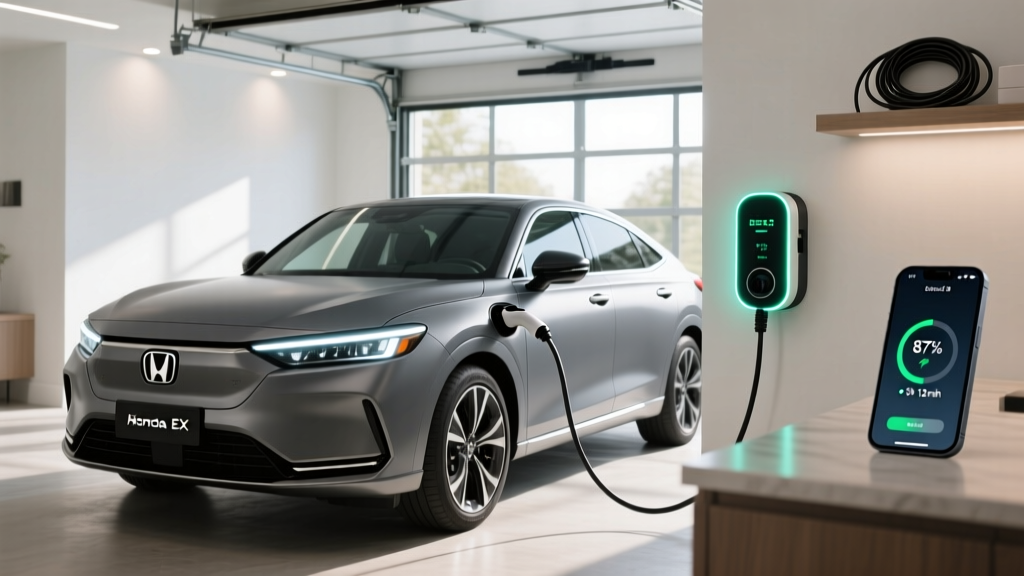
The 2024 Honda Prologue EX represents a significant milestone for the brand, utilizing GM's Ultium platform to deliver a competitive electric SUV. For owners and prospective buyers, understanding the 2024 Honda Prologue EX range and how to maintain it through proper charging infrastructure is essential. While the EPA estimates the FWD Prologue EX at 296 miles of range, real-world highway driving and cold weather can reduce that figure by 15–25%. To keep this vehicle on the road efficiently, you need a home charging setup that matches its 85 kWh (usable) battery architecture.
2024 Honda Prologue EX: Range Reality Check
EPA Sticker: 296 miles (FWD) / 281 miles (AWD)
Real-World Highway (70 mph): ~240–260 miles
Cold Weather (Below 32°F): ~210–235 miles
Battery: 85 kWh usable, NMC chemistry
Understanding Charging Levels and Speeds
To optimize the Prologue's 11.5 kW onboard AC charger and its 150+ kW DC fast-charging capability, you must understand the difference between power (kW) and energy (kWh). A kilowatt (kW) is the rate of flow; a kilowatt-hour (kWh) is the total energy stored. The Prologue's 85 kWh battery requires significant power to refill quickly.
| Level | Power (kW) | Voltage/Amps | Miles Added/Hour | 0-100% Time (85 kWh) |
|---|---|---|---|---|
| Level 1 | 1.4–1.9 kW | 120V / 12-16A | 4–6 miles | 50+ hours |
| Level 2 | 7.2–11.5 kW | 240V / 30-48A | 25–38 miles | 7.5–11 hours |
| DC Fast | 50–155 kW | 400V+ DC | 180–400 miles | 10-80% in ~32 min |
Home Installation Requirements and Costs
The Prologue EX can accept up to 11.5 kW on Level 2, but only if your home charger and electrical panel can support a 48-amp to 60-amp circuit. According to the National Electrical Code (NEC), a continuous load like EV charging requires a circuit rated for 125% of the charger's amperage. Therefore, a 48A charger requires a 60A breaker.
Do I Need a Panel Upgrade?
Most modern homes have 200-amp service, which can typically handle a 60A EV circuit. However, older homes with 100-amp service or high-load appliances (electric heat, tankless water heaters) may require a panel upgrade or a load-management device. Always have a licensed electrician perform a load calculation.
| Item | Estimated Cost | Notes |
|---|---|---|
| Level 2 Charger (48A) | $500–$750 | Smart Wi-Fi enabled models |
| Electrician (Basic Install) | $600–$1,200 | Short run, near panel |
| Permit & Inspection | $100–$300 | Varies by municipality |
| Panel Upgrade (if needed) | $1,500–$3,500 | From 100A to 200A service |
Connector Compatibility: CCS vs. NACS
The 2024 Honda Prologue was originally equipped with the CCS1 connector. However, Honda has joined the NACS (Tesla) standard alliance. If you purchase a 2024 model today, it will likely have CCS1, but Honda provides or sells adapters for access to the Tesla Supercharger network. For home charging, you should choose a charger that matches your vehicle's port or invest in a high-quality adapter.
| Connector Type | Prologue Compatibility | Public Network Availability |
|---|---|---|
| CCS1 | Native (2024 Models) | Electrify America, EVgo |
| NACS (Tesla) | Via Adapter | Tesla Superchargers (Open Network) |
| CHAdeMO | Not Compatible | Legacy/Nissan Leaf focus |
Charging Cost: Electricity vs. Gasoline
Charging the Prologue at home is significantly cheaper than fueling a comparable gas SUV. At the national average electricity rate of $0.17/kWh and a gas price of $3.50/gallon at 25 MPG, the EV wins on a per-mile basis.
| Scenario | Cost per kWh/Gallon | Efficiency | Cost Per Mile |
|---|---|---|---|
| Home Level 2 (Off-Peak) | $0.12/kWh | 3.0 mi/kWh | $0.04 |
| Public Level 2 | $0.25/kWh | 3.0 mi/kWh | $0.08 |
| DC Fast Charging | $0.45/kWh | 3.0 mi/kWh | $0.15 |
| Gas SUV (25 MPG) | $3.50/Gallon | 25 mi/Gal | $0.14 |
Recommended Level 2 Equipment
To maximize the Prologue's 11.5 kW onboard charger, we recommend 48-amp hardwired units. These provide the fastest Level 2 speeds and avoid the 40-amp limit of standard NEMA 14-50 plugs.
ChargePoint Home Flex
Power: Up to 12 kW (50A)
Connector: NACS or CCS (selectable)
Price: ~$699
Emporia Vue Smart Charger
Power: Up to 11.5 kW (48A)
Features: Energy monitoring, solar integration
Price: ~$599
Grizzl-E Smart
Power: 10 kW (40A)
Durability: IP67 outdoor rating, extreme cold tested
Price: ~$499
Safety and Code Considerations
When installing a Level 2 charger, ensure the unit is UL-listed or ETL-certified. For outdoor installations, look for a NEMA 4 or IP67 rating to protect against water and dust. Hardwired connections are generally safer and more reliable than plug-in units for high-amperage charging because they eliminate the risk of a plug overheating over time.
Frequently Asked Questions
How much does it cost to install a home EV charger for the Prologue?
Expect to pay between $1,200 and $2,250 for a standard 48A/60A circuit installation, including the charger and electrician labor. Costs increase if a panel upgrade is required.
How fast will Level 2 add range to my 2024 Prologue EX?
At 11.5 kW (48A), you will add approximately 35–38 miles of range per hour. A full charge from 10% to 100% takes about 8.5 hours.
Can I use a Tesla Supercharger with my 2024 Prologue?
Yes, but you will need a Honda-approved CCS-to-NACS adapter. Honda has begun providing these to owners for access to the 15,000+ Supercharger network.
Does the Prologue qualify for the $7,500 tax credit?
Under current IRS §30D rules, the Prologue may qualify for up to $7,500, but eligibility depends on battery sourcing, your MSRP cap compliance, and buyer income limits. Check the latest IRS guidance for 2026.