If you own or are considering a 2023 Tesla Model X Long Range, understanding your charging options is the single most important factor in daily satisfaction. The Model X Long Range pairs a 100 kWh battery pack (approximately 95 kWh usable) with Tesla's proprietary NACS charge port, giving you access to the largest fast-charging network in North America — but home charging setup, electrical requirements, and real-world charge times need careful planning.
This guide walks through every charging scenario for the 2023 Model X Long Range, from overnight Level 2 replenishment in your garage to 250 kW Supercharger road trips, with exact numbers on speed, cost, and equipment.
2023 Tesla Model X Long Range: Charging Specs at a Glance
| Spec | Value |
|---|---|
| Battery Capacity (usable) | ~95 kWh (NMC chemistry) |
| EPA Range | 348 miles (335 mi with 22" wheels) |
| Real-World Highway Range | ~280–310 mi (70 mph, moderate temps) |
| Max DC Fast Charge Rate | 250 kW peak (V3 Supercharger) |
| 10–80% DC Fast Charge Time | ~30 minutes (with preconditioning) |
| Level 2 Onboard Charger | 11.5 kW max (48A) |
| Charge Port / Connector | NACS (Tesla proprietary) |
| EPA Efficiency | 101 MPGe combined (33 kWh/100 mi) |
| 0–60 mph | 3.8 seconds |
| Horsepower | 670 hp (dual motor) |
| Battery Warranty | 8 years / 150,000 miles (min 70% retention) |
The real-world highway range deserves a caveat: at sustained 75–80 mph speeds in 40°F weather, expect closer to 250–270 miles before needing to stop. Tesla's navigation system accounts for this automatically, factoring in elevation, temperature, and speed when routing through Superchargers. Per fueleconomy.gov, the 348-mile EPA figure assumes mixed driving — your mileage on a flat interstate will differ.
Charging Levels Explained: Speeds for the Model X Long Range
EV charging is measured in kW (kilowatts), which is the rate of power delivery — think of it as how fast water flows through a hose. The battery capacity is measured in kWh (kilowatt-hours), which is the total energy stored — the size of the bucket. Confusing these two is the most common EV literacy mistake. The Model X Long Range has a ~95 kWh bucket, and the charger's kW rating determines how quickly you fill it.
| Level | Voltage / Amperage | Power (kW) | Miles of Range Added per Hour | 0–100% Time (est.) |
|---|---|---|---|---|
| Level 1 (Standard 120V Outlet) | 120V / 12A | ~1.4 kW | ~3–4 mi/hr | ~65+ hours |
| Level 2 (Home / Public AC) | 240V / 48A | 11.5 kW | ~34 mi/hr | ~9–10 hours |
| Level 2 (Public, lower amperage) | 240V / 32A | 7.7 kW | ~23 mi/hr | ~13 hours |
| DC Fast (Tesla V3 Supercharger) | 400V DC | 250 kW peak | ~175 mi in 15 min | 10–80% in ~30 min |
| DC Fast (Tesla V4 / CCS adapter) | 400V DC | ~150–250 kW | Varies by station | 10–80% in ~30–40 min |
For a 100 kWh battery pack, Level 1 is an emergency-only option — it would take nearly three days to fill from empty. Level 2 at the Model X's maximum 11.5 kW acceptance rate is the practical daily solution, recovering a full night's worth of driving in a few hours. DC fast charging is for road trips, and the charge curve matters: the Model X will pull close to 250 kW only between roughly 10–30% State of Charge (SoC), then taper progressively. Expect ~150 kW sustained through 50%, dropping to ~75 kW by 70%, and ~40 kW above 80%. This is why 10–80% is the standard metric — charging past 80% at a DC fast charger is painfully slow and wastes time.
Home Charger Installation: Electrical Requirements and Costs
Charging a Model X Long Range at home is the most convenient and cheapest method, but installation costs vary dramatically depending on your electrical panel's capacity and the distance from panel to charger location.
Electrical Requirements
To achieve the Model X's full 11.5 kW Level 2 rate, you need a 240V / 60-amp dedicated circuit (the National Electrical Code requires circuits be rated at 125% of continuous load, so a 48A charger requires a 60A breaker). If your garage is near the main panel and you have 200-amp service with spare capacity, this is straightforward. If you have an older home with 100-amp service, or the panel is on the opposite side of the house from the garage, costs escalate.
Do You Need a Panel Upgrade?
Many homes built before 2000 have 100-amp or 150-amp main panels. Adding a 60A EV circuit to an already-loaded panel may require a service upgrade to 200 amps, which is the single largest variable in installation cost. Signs you may need an upgrade: your panel has no open slots, you already run electric heat/dryer/oven on a 100A service, or your electrician flags the load calculation as too close to capacity. A panel upgrade alone runs $2,000–$5,000 before the charger circuit work even begins.
An alternative for panel-constrained homes: install a smart load-management device like the Emporia VUE with automatic EV circuit throttling, or run a 240V/20A circuit (3.8 kW, ~11 mi/hr) which is enough for most daily driving under 80 miles. For a 2026 perspective, many jurisdictions now allow "smart splitter" devices that share dryer circuits with the EV charger, reducing the need for panel upgrades — check with your local AHJ (Authority Having Jurisdiction).
| Component | Simple Install (panel near garage, 200A service) | Complex Install (long run, panel upgrade needed) |
|---|---|---|
| Level 2 Charger Equipment | $400–$700 | $400–$700 |
| Electrician Labor (60A circuit, conduit, wiring) | $600–$1,200 | $2,000–$4,000 |
| Permit & Inspection | $50–$200 | $100–$300 |
| Panel Upgrade (if needed) | $0 | $2,000–$5,000 |
| Total Estimated Cost | $1,050–$2,100 | $4,500–$10,000 |
Always get at least two quotes from licensed electricians who have specific EV charger installation experience. Ask for a load calculation per NEC Article 220 before committing to a 60A circuit. Per the IRS §30D rules, the federal clean vehicle credit does not cover home charger equipment for purchases after 2022 — however, the separate §30C Alternative Fuel Infrastructure Tax Credit was reinstated through 2032 and can cover up to $1,000 of home charging equipment costs, subject to census-tract eligibility. Consult a tax professional.
Connector Compatibility: NACS, CCS, and Adapter Realities
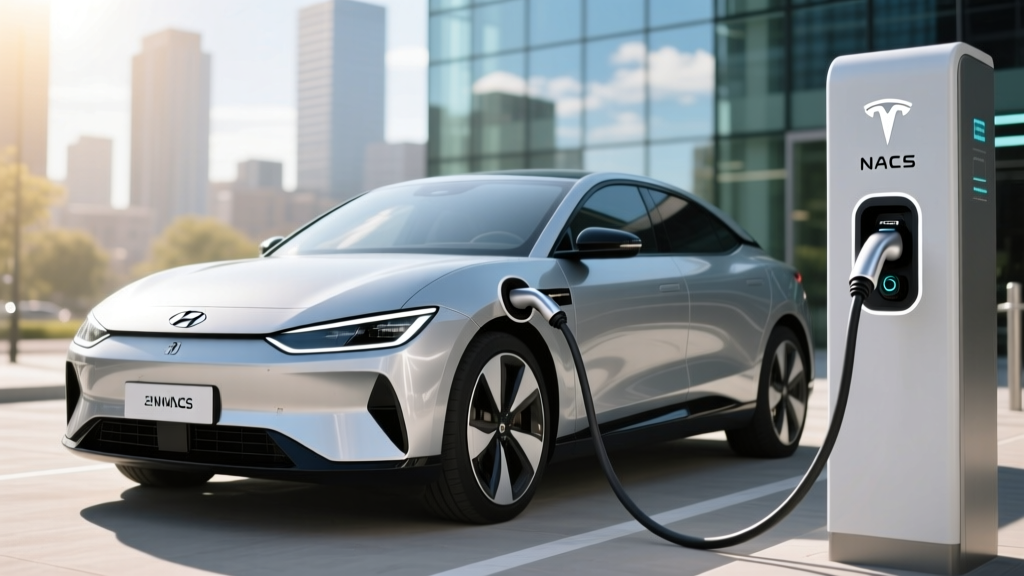
The 2023 Tesla Model X Long Range uses Tesla's proprietary NACS (North American Charging Standard) connector. As of 2023, this is the same physical port used across all Tesla vehicles. The good news: Tesla's Supercharger network uses this natively, and you'll never need an adapter for Tesla's own chargers.
| Connector Type | Native Support? | Adapter Needed? | Notes |
|---|---|---|---|
| NACS (Tesla) | Yes — native | None | All Superchargers and Tesla Wall Connectors |
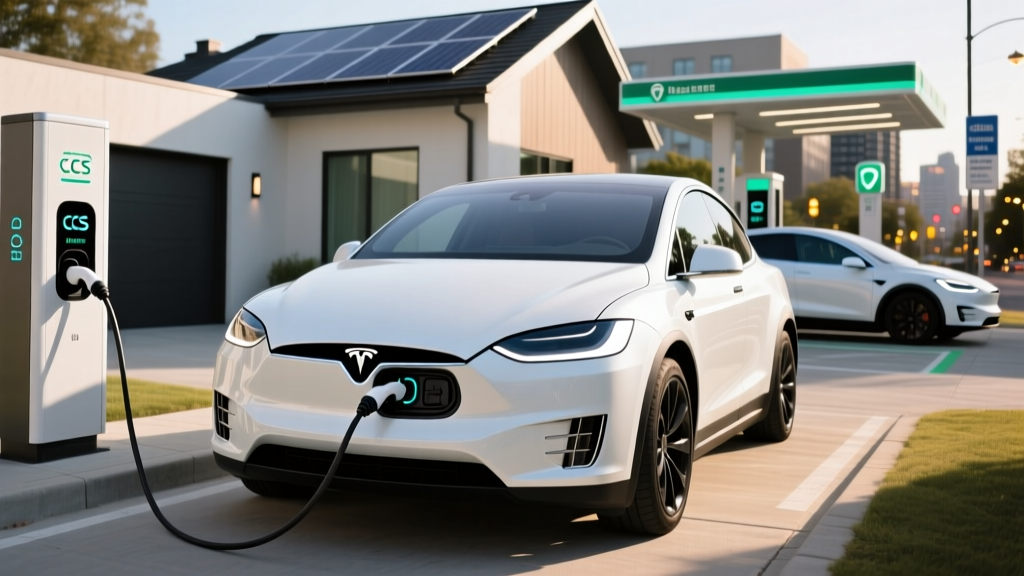
| CCS1 (non-Tesla DC fast) | No | Tesla CCS Adapter (~$175–$250) | Required for Electrify America, EVgo, and other CCS stations; Model X supports up to ~150 kW via adapter |
| CHAdeMO | No | Third-party (discontinued/limited) | Not recommended; CHAdeMO network is shrinking in the US |
| J1772 (non-Tesla Level 2 public) | No | Tesla J1772 Adapter (included with vehicle) | Works at public Level 2 stations; limited to 11.5 kW |
The Tesla CCS Adapter is worth purchasing if you regularly travel in areas with sparse Supercharger coverage. It unlocks Electrify America's 150–350 kW stalls, though the Model X will cap at roughly 150 kW via the adapter due to communication-protocol limitations. Always precondition the battery by navigating to a Supercharger (or any charger) in the Tesla app before arriving — cold batteries charge dramatically slower, and preconditioning warms the pack to optimal temperature.
Recommended Home Charging Equipment for the Model X
Because the Model X Long Range accepts up to 11.5 kW (48A) on Level 2, you want a charger that can deliver at least that to minimize overnight charge times. Here are top picks as of 2026:
Tesla Wall Connector (Gen 3)
- Power Output: Up to 11.5 kW (48A) at 240V
- Connector: NACS native — no adapter needed
- Cable Length: 24 ft
- Smart Features: Wi-Fi, OTA updates, power sharing between two units, access control
- Price: ~$475
- Verdict: The default choice for any Tesla. Simple, reliable, and designed for the car's maximum acceptance rate.
ChargePoint Home Flex
- Power Output: Up to 12 kW (50A) at 240V, configurable down to 16A
- Connector: J1772 (use Tesla's included J1772 adapter) or NACS pigtail version
- Cable Length: 23 ft
- Smart Features: Wi-Fi, scheduling, Alexa integration, detailed energy tracking
- Price: ~$550–$700
- Verdict: Best for mixed-EV households. If you also own a non-Tesla EV, the J1772 connector is universal.
Emporia Vue Level 2 Charger
- Power Output: Up to 11.5 kW (48A) at 240V
- Connector: J1772 (NACS version available)
- Cable Length: 24 ft
- Smart Features: Solar integration, load management, energy monitoring, works with Emporia VUE panel monitor
- Price: ~$400–$500
- Verdict: Best budget pick with smart load management. Ideal if your panel is near capacity and you want automatic circuit sharing.
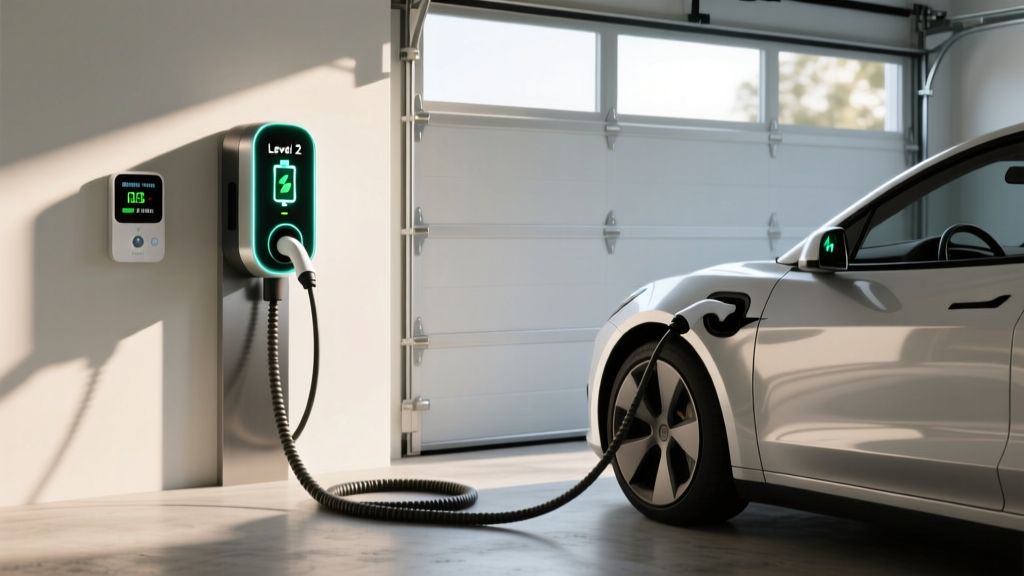
For a dedicated Tesla garage, the Tesla Wall Connector is the obvious winner — native NACS, no adapter fumbling, and 11.5 kW fills the Model X from 20% to full overnight in about 7 hours. If you have solar panels, the Emporia's solar-aware scheduling can charge the car only when excess solar is available.
Cost to Charge: Home vs. Public vs. Gas Comparison
The 2023 Model X Long Range consumes approximately 33 kWh per 100 miles (EPA combined). Real-world highway driving at 75 mph pushes this closer to 35–38 kWh/100 mi, and cold weather can add another 10–15% on top. Let's use 35 kWh/100 mi as a realistic baseline for cost calculations.
| Charging / Fuel Scenario | Cost per Unit | Cost per 100 Miles | Cost per Mile |
|---|---|---|---|
| Home Level 2 (national avg electricity, $0.16/kWh) | $0.16/kWh | $5.60 | $0.056 |
| Home Level 2 (off-peak TOU rate, $0.09/kWh) | $0.09/kWh | $3.15 | $0.032 |
| Home Level 2 (peak TOU rate, $0.30/kWh) | $0.30/kWh | $10.50 | $0.105 |
| Tesla Supercharger (avg $0.32/kWh) | $0.32/kWh | $11.20 | $0.112 |
| Electrify America (avg $0.48/kWh + idle fees) | $0.48/kWh | $16.80 | $0.168 |
| Gas SUV (23 MPG, $3.50/gal) | $3.50/gal | $15.22 | $0.152 |
| Gas SUV (23 MPG, $4.50/gal) | $4.50/gal | $19.57 | $0.196 |
The takeaway is clear: home charging on off-peak rates is roughly 5–6× cheaper per mile than gasoline. Even at Supercharger prices, the Model X is competitive with a gas SUV. The worst-case EV scenario — peak-rate home charging or expensive public DC fast charging — still undercuts or matches gasoline at $3.50/gal. For a driver covering 12,000 miles per year, home off-peak charging saves approximately $1,600–$2,100 annually versus a comparable gas SUV.
One note on Supercharger pricing: Tesla's rates vary by location, time of day, and whether you're a Tesla owner. Some urban Superchargers now charge $0.40–$0.50/kWh during peak hours. Always check the in-car navigation for real-time pricing before committing to a stop.
Safety, Code, and Practical Installation Considerations
Installing a Level 2 charger is not a DIY project. Here are the code and safety requirements your electrician should follow:
- Dedicated Circuit: NEC requires EV chargers to be on a dedicated circuit — no sharing with other outlets or appliances (unless using a certified load-management device).
- GFCI Protection: 2020 NEC and later require GFCI (Ground Fault Circuit Interrupter) protection for EV outlets. Most hardwired chargers have internal GFCI; receptacle-based installs need a GFCI breaker. Note: some EV owners report nuisance GFCI trips with certain breaker brands — a known issue your electrician can mitigate with the right breaker model.
- Outdoor Rating: If your charger is mounted outside (carport, driveway), it must be NEMA 4 rated for weather resistance. The Tesla Wall Connector is rated for indoor and outdoor use.
- Wire Gauge: A 60A circuit requires 6 AWG copper wire (THHN in conduit) or 4 AWG for longer runs to manage voltage drop. Your electrician will calculate this.
- Permit and Inspection: Virtually all jurisdictions require an electrical permit for a new 240V circuit. The inspection ensures code compliance and is typically $50–$200. Skipping this can void your homeowner's insurance in the event of an electrical fire.
- Hardwired vs. Receptacle: Hardwired installations (no plug) are preferred for 48A+ chargers — they eliminate the NEMA 14-50 receptacle as a potential failure point and are required by some jurisdictions for circuits over 40A. The Tesla Wall Connector supports both configurations.
Frequently Asked Questions
How much does it cost to install a home EV charger for the 2023 Tesla Model X?
A straightforward installation with an existing 200A panel and short wire run costs $1,050–$2,100 including the Tesla Wall Connector ($475), electrician labor ($600–$1,200), and permit ($50–$200). If your home needs a panel upgrade to 200A service, expect the total to reach $4,500–$10,000. The wide range reflects real variability — always get a load calculation first.
How fast will each charging level add range to my Model X Long Range?
Level 1 (120V) adds roughly 3–4 miles per hour — essentially unusable for a 100 kWh pack. Level 2 at 240V/48A adds about 34 miles per hour, recovering a full day's driving in 2–3 hours. DC fast charging at a V3 Supercharger adds up to 175 miles in 15 minutes, but only at low state of charge with a preconditioned battery.
Which connector and charger is compatible with the 2023 Model X Long Range?
The Model X uses the NACS connector natively. It works with all Tesla Superchargers and Tesla Wall Connectors without an adapter. For non-Tesla public chargers, you'll need the Tesla CCS Adapter (~$175–$250) for DC fast stations and the included J1772 adapter for Level 2 public chargers. CHAdeMO is not supported.
How much does charging the Model X cost per mile compared to gas?
At home off-peak rates ($0.09/kWh), the Model X costs about $0.032 per mile. At Supercharger rates ($0.32/kWh), it's about $0.112/mile. A comparable gas SUV at 23 MPG and $3.50/gal costs $0.152/mile. Home charging saves $1,600+ annually for typical mileage. See the cost-per-mile table above for detailed scenarios.
What electrical upgrades might I need for a home charger?
The most common upgrade is a panel service increase from 100A or 150A to 200A, required when your existing panel lacks capacity for a new 60A circuit. This costs $2,000–$5,000. Other potential upgrades: adding a sub-panel in the garage if the main panel is far away, replacing an outdated fuse box with a modern breaker panel, or upgrading the utility service drop if the utility's transformer is undersized. Your electrician's load calculation will determine what's needed.
Should I charge to 100% or limit to 80% daily?
The 2023 Model X Long Range uses an NMC battery, which degrades faster when held at 100% SoC for extended periods. Tesla recommends setting the daily charge limit to 80–90% and only charging to 100% when you need the full range for a trip. This can extend battery lifespan significantly — many Tesla owners report less than 10% degradation after 100,000 miles with this practice. The battery warranty guarantees at least 70% capacity retention over 8 years / 150,000 miles.
Does cold weather affect charging speed?
Yes, significantly. A cold battery (below 50°F) cannot accept charge as quickly, and DC fast charging can be 30–50% slower in freezing conditions. Always use the Tesla app or in-car navigation to precondition the battery before arriving at a Supercharger — the car will heat the pack en route, restoring near-peak charge rates. This is one of the biggest practical differences between experienced and new EV owners in cold climates.
For the most current federal incentive information, including the §30C charger infrastructure credit and any state-level rebates for home charging equipment, consult IRS.gov and your state energy office. Tax rules are subject to change and have income, location, and sourcing requirements that vary by taxpayer.