Understanding Your 2023 Tesla Model 3 Standard Range Battery and Charging Capacity
The 2023 Tesla Model 3 Standard Range (officially the Rear-Wheel Drive trim) ships with a ~57.5 kWh usable lithium iron phosphate (LFP) battery pack. This chemistry choice matters for how you charge: LFP cells tolerate—and even benefit from—regular 100% top-ups, unlike NMC packs that degrade faster when held at full state of charge. Tesla recommends charging LFP vehicles to 100% at least once per week for optimal battery management system calibration.
On the efficiency side, the EPA rates the 2023 Model 3 RWD at 272 miles of range and 132 MPGe combined (fueleconomy.gov). Real-world highway driving at 70+ mph typically nets 230–250 miles, and cold-weather conditions (below 32°F) can drop that to 190–210 miles due to cabin heating demands and reduced regenerative braking efficiency.
The vehicle's onboard charger accepts up to 11.5 kW on Level 2 AC (48A at 240V), and the DC fast-charging peak rate reaches approximately 170 kW. That peak is not sustained—charging curves taper significantly above 50% state of charge, which is why manufacturers quote 10–80% times rather than 0–100%.
Charging Levels Explained: Speeds, Power, and What They Mean for Your Model 3
The single most common confusion for new EV owners is the difference between kW (kilowatts, a measure of power or flow rate) and kWh (kilowatt-hours, a measure of energy or tank size). Think of kW as the width of the hose filling your battery, and kWh as the total volume of the battery itself. A 57.5 kWh battery charged at 11.5 kW takes roughly 5 hours from empty; at 1.4 kW it takes nearly 41 hours.
| Level | Voltage / Amperage | Max Power (kW) | Miles of Range Added Per Hour | Best Use Case |
|---|---|---|---|---|
| Level 1 (120V household outlet) | 120V / 12A | 1.4 kW | 3–5 mi/hr | Overnight trickle for low-mileage commuters |
| Level 2 (240V home/public) | 240V / 40–48A | 9.6–11.5 kW | 30–44 mi/hr | Daily home charging, workplace, hotels |
| DC Fast Charging (Supercharger/CCS) | 400V+ / variable | Up to 170 kW (peak) | Up to ~750 mi/hr (at peak) | Road trips, quick top-ups away from home |
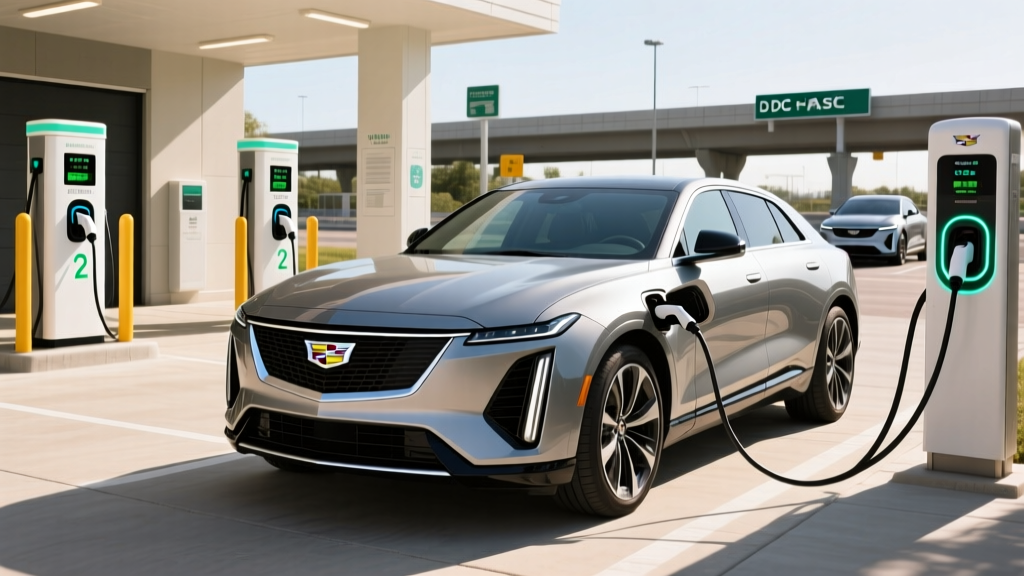
For the 2023 Model 3 RWD, a 10–80% session at a V3 Tesla Supercharger (250 kW capable, though this car peaks lower) takes approximately 25–30 minutes. At a 150 kW station, expect 30–35 minutes. The charge curve is aggressive in the 10–40% range (near peak 170 kW), then tapers to ~80 kW by 60% SoC, and drops below 40 kW past 80%. This is why road-trip strategy favors shorter, more frequent stops in the 10–60% band rather than filling to 80% or higher.
Home Level 2 Installation: Electrical Requirements, Costs, and Panel Considerations
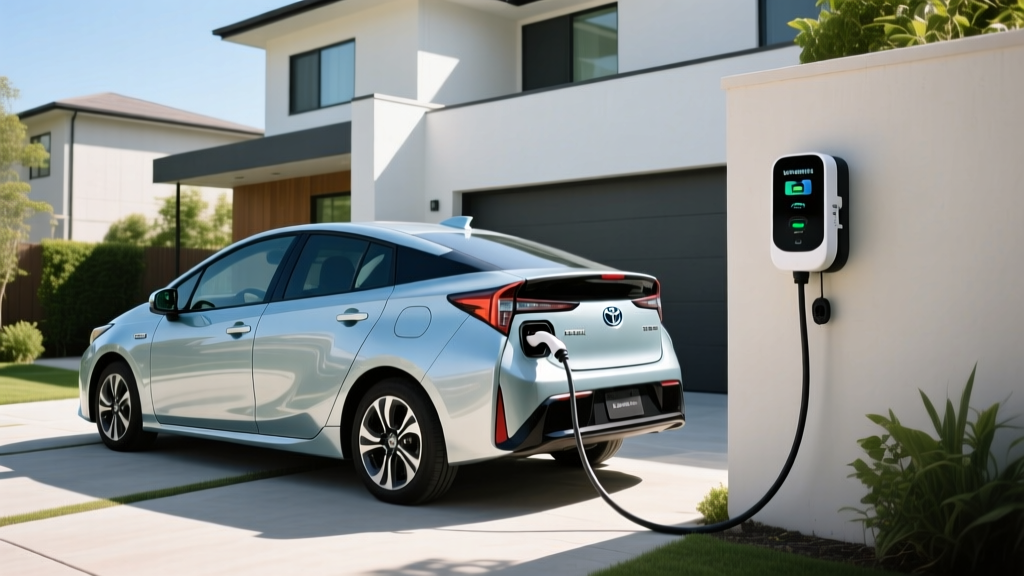
Installing a Level 2 home charger is the single biggest quality-of-life upgrade for EV ownership. For the 2023 Model 3 RWD with its 48A onboard charger, you'll want a 60A dedicated circuit (NEC code requires continuous loads to use only 80% of circuit capacity, so 48A continuous needs a 60A breaker).
Electrical requirements for a full-speed home setup:
- 240V dedicated circuit
- 60A breaker (for 48A continuous charging)
- 6 AWG copper wire (or 4 AWG aluminum) for runs up to ~50 feet; thicker gauge for longer runs
- NEMA 14-60 outlet (if using Mobile Connector) or hardwired connection (required for Wall Connector at 48A+ and recommended for reliability)
- GFCI protection if the outlet is outdoors or in a garage (per NEC 2020 Article 625)
| Component | Cost Range | Notes |
|---|---|---|
| Level 2 Charger Equipment | $200–$650 | Tesla Mobile Connector ~$200; Wall Connector ~$475; third-party smart chargers $400–$650 |
| Electrician Labor (standard install) | $600–$1,800 | Depends on run length, wall type, conduit needs; short run in unfinished garage is cheapest |
| Permit & Inspection | $50–$250 | Varies by municipality; some jurisdictions bundle with electrical permit |
| Panel Upgrade (if needed) | $1,500–$3,500 | 100A→200A service upgrade; not needed in most newer homes |
| Total (no panel upgrade) | $850–$2,700 | Most homeowners fall in $1,200–$1,800 range |
| Total (with panel upgrade) | $2,350–$6,200 | Older homes or homes with high existing loads |
The federal Alternative Fuel Vehicle Refueling Property Credit (IRS Form 8911) may cover up to 30% of home charger equipment and installation costs, capped at $1,000, but eligibility depends on census-tract requirements and is subject to change. Check current IRS guidelines or consult a tax professional before assuming the credit applies.
Connector Compatibility: NACS, CCS, and Adapters for Your Model 3
The 2023 Tesla Model 3 was built with Tesla's proprietary connector, which was formally adopted as the North American Charging Standard (NACS / SAE J3400) in late 2022. This gives Model 3 owners the broadest native charging access of any EV on the road.
| Connector Type | Native to 2023 Model 3? | Adapter Needed? | Where You'll Find It |
|---|---|---|---|
| NACS (Tesla) | Yes — native port | No | Tesla Superchargers, Destination Chargers, most new public stations |
| CCS1 (Combo) | No | Yes — Tesla CCS Adapter (~$175–$250) | Electrify America, EVgo, ChargePoint DC stations, some retail locations |
| CHAdeMO | No | Yes — third-party adapter ($300+) | Legacy stations, increasingly rare; not worth purchasing for most owners |
| J1772 (Level 2 AC) | No | Yes — included with Tesla Mobile Connector | Public Level 2 stations, workplaces, hotels, non-Tesla home chargers |
The CCS adapter is worth purchasing if you frequently travel in areas with limited Supercharger coverage or if you want access to Electrify America's 350 kW stations (though your Model 3 will still peak at ~170 kW). By 2026, most new public DC fast chargers are being built with NACS connectors, reducing the adapter need over time.
Recommended Home Charging Equipment for the Model 3 RWD
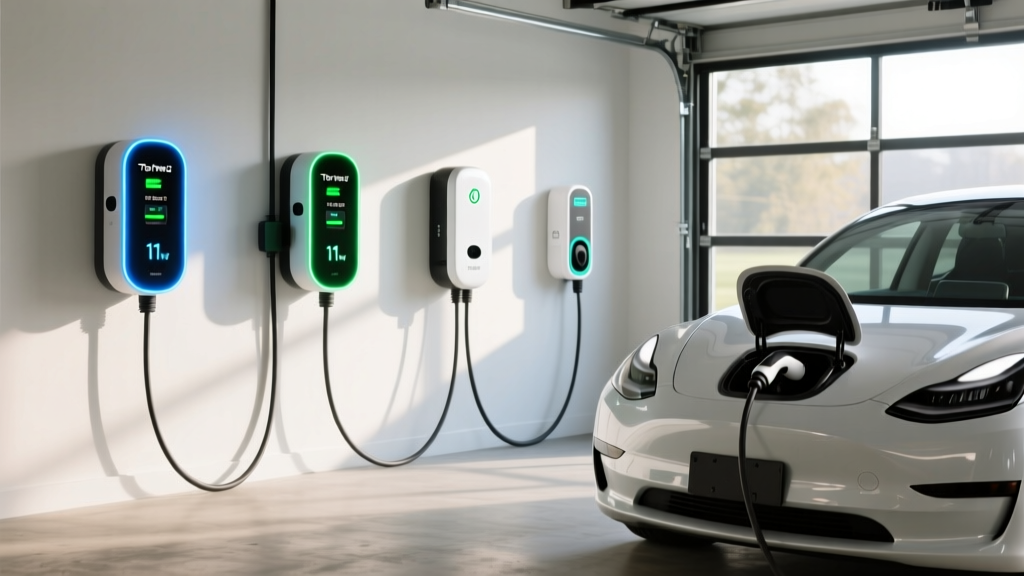
Not all Level 2 chargers deliver the same experience. Here's how the top options stack up for a 2023 Model 3 owner:
Tesla Wall Connector
Power Output: Up to 11.5 kW (48A at 240V)
Connector: NACS native
Cable Length: 24 feet
Smart Features: Wi-Fi, OTA updates, load sharing (multiple units on one circuit), access control
Price: ~$475
Verdict: Best value for Tesla-only households. Maxes out the Model 3's onboard charger. No J1772 adapter included—if you ever charge a non-Tesla EV, you'll need a NACS-to-J1772 adapter.
ChargePoint Home Flex
Power Output: Up to 12 kW (50A, configurable 16–50A)
Connector: J1772 (use included Tesla adapter) or NACS version available
Cable Length: 23 feet
Smart Features: Wi-Fi, app scheduling, Alexa integration, energy tracking, amperage adjustable to match your circuit
Price: ~$550–$650
Verdict: Best for multi-EV households or those wanting granular app control. The adjustable amperage means you can install it on a 40A circuit today and upgrade later.
Tesla Mobile Connector
Power Output: Up to 7.2 kW (32A at 240V with NEMA 14-50 adapter)
Connector: NACS native; J1772 adapter included
Cable Length: 20 feet
Smart Features: None (no Wi-Fi or app)
Price: ~$200
Verdict: Budget option or travel companion. On a NEMA 14-50 outlet (40A circuit), it delivers 32A—enough to add ~23 miles per hour or fully recharge overnight. Not ideal as a permanent daily solution if you want max speed.
Safety note: All hardwired installations should be performed by a licensed electrician. NEMA 14-50 outlets must be installed with the correct torque specifications and ideally on a GFCI breaker if outdoors. Never use extension cords or outlet splitters for EV charging—the sustained high-current draw creates fire risk that household wiring accessories aren't designed to handle.
Cost to Charge: Home vs. Public vs. Gas — The Real Numbers
Charging economics vary dramatically based on where and when you plug in. Here's a realistic breakdown for the 2023 Model 3 RWD, assuming an average consumption of 25 kWh per 100 miles (close to EPA-rated 26 kWh/100mi, adjusted slightly for real-world driving):
| Scenario | Rate ($/kWh) | Cost per 100 Miles | Cost per Mile | Annual Cost (12,000 mi) |
|---|---|---|---|---|
| Home — Off-Peak TOU Rate | $0.08–$0.12 | $2.00–$3.00 | $0.02–$0.03 | $240–$360 |
| Home — Standard Residential Rate | $0.14–$0.18 | $3.50–$4.50 | $0.035–$0.045 | $420–$540 |
| Tesla Supercharger (V2/V3) | $0.25–$0.38 | $6.25–$9.50 | $0.063–$0.095 | $750–$1,140 |
| Third-Party DC Fast (EA, EVgo) | $0.35–$0.55 | $8.75–$13.75 | $0.088–$0.138 | $1,050–$1,650 |
| Gas Car Comparison (30 MPG avg, $3.40/gal) | — | $11.33 | $0.113 | $1,360 |
The takeaway is clear: home charging on an off-peak rate delivers fuel costs at roughly 20–25% of a comparable gas car. Even exclusive Supercharger use costs less than gas, though the gap narrows considerably. If your only charging option is expensive third-party DC fast chargers, the savings over gas nearly disappear—which is why home charging access is the single most important factor in EV satisfaction.
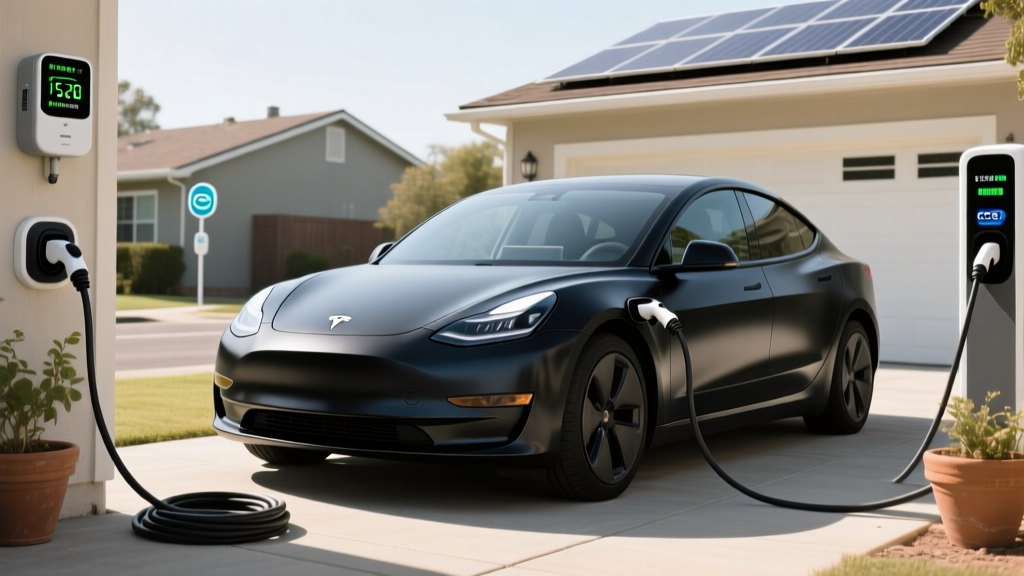
For the 2023 Model 3 RWD's 57.5 kWh battery, a full 0–100% charge costs approximately $4.60 at home (off-peak) versus $16.10 at a $0.28/kWh Supercharger. Most daily driving only requires topping up 20–40% of the battery, making home charging sessions cost well under a dollar per day for typical commuters.
Public Charging Strategy: Supercharger Network and Beyond
Tesla's Supercharger network remains the most reliable DC fast-charging infrastructure in North America, with over 25,000 stalls across the continent as of 2026. The 2023 Model 3 RWD can access all V2 (150 kW) and V3 (250 kW) Superchargers natively, and newer V4 posts with integrated CCS cables are also compatible.
For non-Tesla networks, download the Electrify America, EVgo, and ChargePoint apps before you need them. Account setup takes 2 minutes and avoids fumbling at unfamiliar stations. The Tesla CCS adapter unlocks these networks, though reliability varies—third-party charger uptime averages 80–85% versus Tesla's ~97% (J.D. Power EV Experience Index).
Preconditioning matters: When you navigate to a Supercharger using the car's built-in navigation, the Model 3 automatically warms or cools the battery to optimal charging temperature before arrival. This can shave 5–10 minutes off a fast-charging session, especially in cold weather. If you drive to a Supercharger without using the car's nav, preconditioning won't activate—manually enable it via the charging menu or enter the station as a nav waypoint.
Frequently Asked Questions
How much does it cost to install a home EV charger for a 2023 Tesla Model 3?
A typical Level 2 installation with a Tesla Wall Connector costs $1,200–$1,800 all-in (equipment, electrician, permit) for homes with adequate panel capacity. If your panel requires a 200A upgrade, add $1,500–$3,500. The cheapest path is a NEMA 14-50 outlet for the Mobile Connector at around $850–$1,200.
How fast will each charging level add range to my Model 3 Standard Range?
Level 1 (120V): 3–5 miles per hour. Level 2 at 48A (240V): 38–44 miles per hour. DC Fast Charging at peak 170 kW: up to 170 miles in 15 minutes, though the rate tapers above 50% SoC. A typical 10–80% Supercharger session takes 25–30 minutes.
Which connector and charger is compatible with my 2023 Model 3?
Your Model 3 uses the NACS (Tesla) connector natively, giving you direct access to all Tesla Superchargers, Destination Chargers, and newer public NACS stations. For CCS-based public chargers (Electrify America, EVgo), you'll need a Tesla CCS adapter. For J1772 Level 2 stations, the J1772 adapter (included with the Mobile Connector) works perfectly.
How much does charging cost per mile compared to gas?
Home charging on off-peak rates costs $0.02–$0.03 per mile—roughly 4–5× cheaper than a 30 MPG gas car at $3.40/gallon ($0.113/mile). Supercharger use averages $0.06–$0.10 per mile, still cheaper than gas. Exclusive reliance on expensive third-party DC fast chargers ($0.09–$0.14/mile) can approach gas-car costs.
What electrical upgrades might I need for a home charger?
The most common upgrade is a new 60A breaker and dedicated 240V circuit, which any licensed electrician can install if your panel has spare capacity. Homes with 100A or 125A main service, or panels already near their load limit, may need a service upgrade to 200A ($1,500–$3,500). An electrician's load calculation—typically $100–$200 as a standalone service—tells you definitively before you commit to equipment purchases.
Should I charge my LFP battery to 100% every day?
Tesla recommends charging LFP packs to 100% at least once per week. Unlike NMC chemistry, LFP cells don't suffer accelerated degradation from full-charge storage, and periodic 100% charges help the battery management system maintain accurate range estimates. Daily 100% charging is acceptable for LFP, though setting it to 80–90% on days you don't need full range slightly extends long-term cycle life.