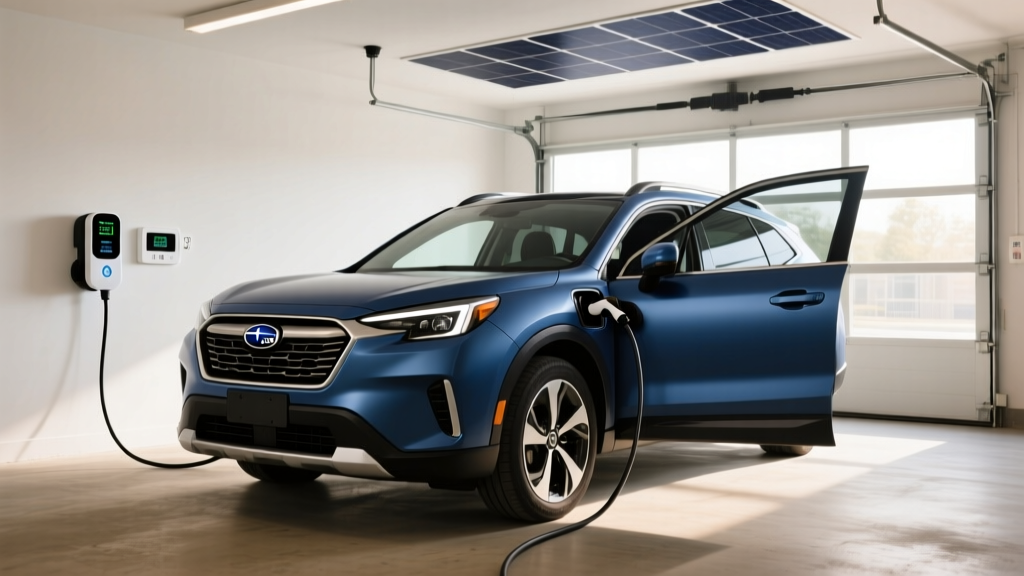
The 2023 Subaru Solterra was the brand's first dedicated battery-electric vehicle, co-developed with Toyota on the e-TNGA platform. Buyers cross-shopping the Solterra care about two things above all: how far it actually goes on a charge, and what it takes to keep it charged at home and on the road. This guide pairs a precise look at the 2023 Subaru Solterra range with a full charging playbook — Level 1 trickle, Level 2 home installs, DC fast charging realities, connector compatibility, and the real costs involved.
2023 Subaru Solterra Range: EPA Sticker vs Real World
The Solterra launched with two EPA-estimated range figures depending on trim, driven primarily by wheel size and the resulting efficiency hit from larger, heavier 20-inch wheels on the Touring and Limited XT trims.
| Spec | Premium / Limited (18" wheels) | Touring (20" wheels) |
|---|---|---|
| EPA Range | 228 miles | 222 miles |
| Battery (Usable / Gross) | ~65 kWh / 71.4 kWh | ~65 kWh / 71.4 kWh |
| Chemistry | NMC (Nickel Manganese Cobalt) | NMC |
| Combined MPGe | 104 MPGe | 102 MPGe |
| Efficiency | 32 kWh/100 mi | 33 kWh/100 mi |
| Drivetrain | Dual-motor AWD, 215 hp, 249 lb-ft | Dual-motor AWD, 215 hp, 249 lb-ft |
| 0-60 mph | ~6.5 sec | ~6.5 sec |
| Battery Warranty | 8 years / 100,000 miles | 8 years / 100,000 miles |
| Base MSRP (at launch) | $44,995 | $51,995 |
EPA figures are measured under controlled lab cycles. On a 70-mph highway loop in mild weather (65-75°F), expect approximately 190-205 miles from the 228-mi trims and 185-195 miles from the 222-mi Touring. In freezing temperatures (below 32°F), range can drop 20-30% — plan for 150-170 miles in deep winter. The Solterra lacks a heat pump on early 2023 builds, which amplifies cold-weather cabin-heating losses. If your daily commute is under 80 miles round-trip, the Solterra's real-world range is plenty; for road trips, you'll be stopping every 2.5-3 hours.
Sources: EPA Fuel Economy — 2023 Subaru Solterra.
Charging Levels Explained: Speeds in kW and Miles Per Hour
EV charging is measured in kW (kilowatts), which is the rate of power delivery — think of it as the size of the pipe. The battery stores energy in kWh (kilowatt-hours) — the size of the tank. These are not interchangeable. A 10 kW charger delivers 10 kWh of energy in one hour (before losses).
| Level | Voltage | Max Power | Miles Added / Hour | Best Use Case |
|---|---|---|---|---|
| Level 1 (120V) | 120V AC | ~1.4 kW (12A) | ~3-4 mi/hr | Emergency / overnight top-off |
| Level 2 (240V) | 240V AC | ~6.6 kW (vehicle-limited) | ~20-22 mi/hr | Daily home & workplace charging |
| DC Fast Charge | 400V DC | Up to ~150 kW peak | N/A (see 10-80% times) | Road trips, quick top-ups |
The Solterra's onboard charger is rated at 6.6 kW, meaning even a 48-amp (11.5 kW) Level 2 station will only deliver 6.6 kW into the battery. A full Level 2 charge from 10-100% takes roughly 9-10 hours.
DC Fast Charging: 150 kW Peak and the Curve Reality
The 2023 Solterra supports DC fast charging at up to ~150 kW peak via its CCS1 connector. However, peak rate is not sustained rate — every EV tapers charging speed as the battery fills to protect cell health and manage heat.
Typical 10-80% DC fast-charge session for the Solterra:
- 10-80% in approximately 55-60 minutes (on a 150 kW+ station)
- Peak rate (~100-135 kW) sustained from ~15-45% SoC
- Significant taper above 60%, dropping below 50 kW past 75%
This is slower than competitors like the Hyundai Ioniq 5 (10-80% in ~18 min on 800V architecture) or the Kia EV6. For road-trippers, budget roughly one hour per charging stop. The Solterra's charging speed was updated via a software recall (Subaru's battery-management firmware update) to improve taper behavior, but it remains a middling performer in the DC fast-charge segment.
For context on charging network availability, see the U.S. Department of Energy Alternative Fuels Station Locator.
Home Level 2 Charger Installation: Costs, Electrical Requirements, and Panel Upgrades
A Level 2 home charger is the single most impactful upgrade for daily EV ownership. For the Solterra's 6.6 kW onboard charger, you need a 240V circuit — and here's what that actually involves.
Electrical Requirements
- Voltage: 240V (same as a dryer or oven outlet)
- Recommended circuit: 40-amp breaker with a 32-amp continuous charger, or 50-amp breaker for a 40-amp charger (NEC requires 125% derating for continuous loads)
- Outlet or hardwire: NEMA 14-50 outlet (if using a plug-in charger) or direct hardwire (often preferred for 48A+ units and required by some local codes for circuits over 40A)
- Dedicated circuit: The charger must have its own breaker — no sharing with other appliances
Panel Upgrade Possibility
Homes with 100-amp main panels or those already near capacity (electric dryer, oven, HVAC, water heater) may need a panel upgrade to 200 amps. This is the single biggest variable in installation cost. A panel upgrade adds $1,500-$3,500+ and requires a utility coordination and new permit.
Permit and Inspection
Most municipalities require an electrical permit for EV charger installation ($50-$300 depending on jurisdiction). A post-install inspection ensures code compliance — skip this and you risk insurance coverage issues.
| Component | Low End | High End | Notes |
|---|---|---|---|
| Level 2 Charger (Equipment) | $300 | $750 | 32A-48A smart chargers |
| Electrician Labor | $400 | $1,500 | Depends on run length, conduit, wall type |
| Permit & Inspection | $50 | $300 | Varies by municipality |
| Electrical Materials (conduit, wire, breaker) | $100 | $500 | Longer runs cost more |
| Panel Upgrade (if needed) | $1,500 | $3,500+ | 100A → 200A; not always required |
| Total (no panel upgrade) | $850 | $3,050 | Most homes with 200A panel |
| Total (with panel upgrade) | $2,350 | $6,550+ | Older homes or maxed-out panels |
Always hire a licensed electrician and get a quote that includes a load calculation on your panel before committing. The U.S. Department of Energy Home Charging Guide provides further detail on residential requirements.
Connector Compatibility: CCS1, NACS Adapters, and What You Need
The 2023 Subaru Solterra uses the CCS1 (Combined Charging System) connector for both Level 2 AC and DC fast charging. However, the North American charging landscape has shifted heavily toward Tesla's NACS connector, and Subaru has confirmed future models will adopt NACS natively.
| Connector | Native Support? | Adapter Available? | Network Access |
|---|---|---|---|
| CCS1 | Yes (native) | N/A | Electrify America, EVgo, ChargePoint DC, Ionity (EU) |
| NACS (Tesla) | No | Yes — CCS-to-NACS adapter (~$200-$400) | Tesla Supercharger network (via adapter, confirmed compatible for many CCS vehicles) |
| CHAdeMO | No | No practical adapter | Legacy Nissan Leaf network; largely deprecated |
| J1772 (AC Level 2) | Yes (CCS includes J1772) | N/A | Public Level 2 stations, home chargers |
For Solterra owners wanting Tesla Supercharger access, a CCS-to-NACS adapter is the primary solution. Verify adapter compatibility with your specific model year through Subaru's official channels before purchasing, as not all adapters support every vehicle's communication protocol.
Charging Cost Per Mile: Home vs Public vs Gas
One of the strongest ownership arguments for the Solterra is the per-mile fuel cost — but it varies dramatically depending on where you charge.
| Scenario | Rate | Cost / Mile | Notes |
|---|---|---|---|
| Home (off-peak utility rate) | $0.10/kWh | $0.032 | Time-of-use plans; best-case |
| Home (national avg electricity) | $0.16/kWh | $0.051 | Based on ~32 kWh/100 mi |
| Public Level 2 (ChargePoint, etc.) | $0.25-$0.40/kWh | $0.08-$0.13 | Varies by network & location |
| DC Fast Charge (Electrify America) | $0.35-$0.55/kWh | $0.11-$0.18 | Peak pricing; membership plans lower rate |
| Gas equivalent (25 MPG, $3.50/gal) | $3.50/gallon | $0.14 | Comparable AWD compact SUV |
At home on a standard utility rate, the Solterra costs roughly one-third to one-half what a comparable gas SUV costs per mile. Even on DC fast chargers at peak rates, the per-mile cost is often competitive with gasoline. However, frequent reliance on premium-priced public DC chargers erodes the savings advantage — home charging is where the economics work best.
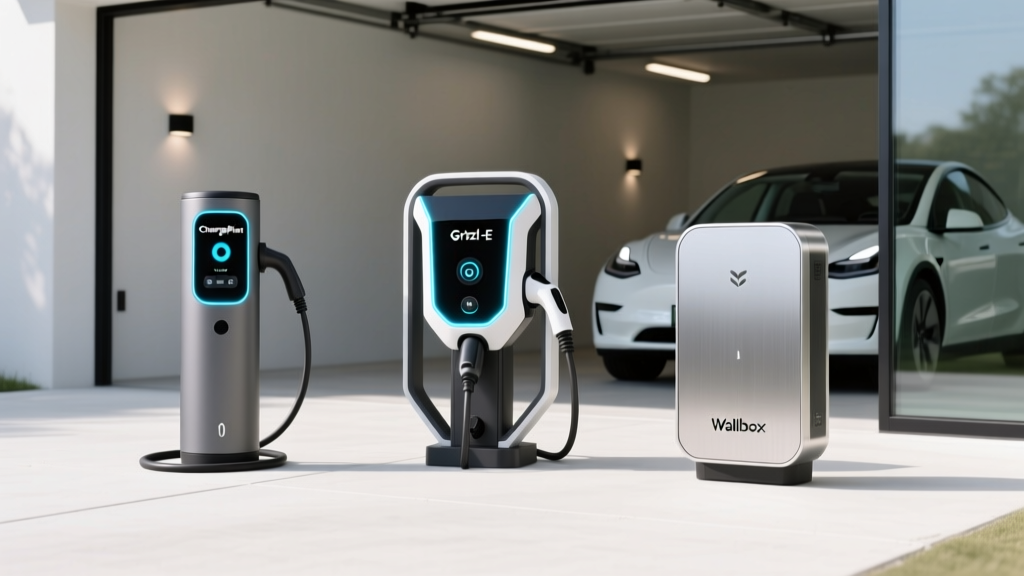
Recommended Level 2 Home Chargers for the Solterra
Since the Solterra's onboard charger maxes out at 6.6 kW, you technically only need a 32-amp charger. However, installing a 48-amp unit future-proofs for your next EV — which will likely support 11.5 kW or higher.
ChargePoint Home Flex (up to 50A / 12 kW)
- Power Output: Up to 50 amps (12 kW) — configurable via DIP switches
- Connector: J1772 (compatible with Solterra's CCS inlet for AC)
- Cable Length: 23 feet
- Smart Features: Wi-Fi, app scheduling, Alexa integration, energy tracking
- Price: ~$550-$700
- Best For: Flexible amperage setup; works with any home circuit from 20A to 60A
Emporia Vue Level 2 Charger (48A / 11.5 kW)
- Power Output: 48 amps (11.5 kW)
- Connector: J1772
- Cable Length: 24 feet
- Smart Features: Wi-Fi, app control, energy monitoring, solar integration
- Price: ~$350-$450
- Best For: Budget-conscious buyers who want smart features and solar pairing
Grizzl-E Smart (40A / 9.6 kW)
- Power Output: 40 amps (9.6 kW)
- Connector: J1772
- Cable Length: 24 feet
- Smart Features: Optional smart version with app; base model is dumb/robust
- Price: ~$350-$500
- Best For: Cold climates (rated to -40°F), outdoor installs, extreme durability
All three chargers deliver more than enough power for the Solterra's 6.6 kW onboard limit. The Grizzl-E is particularly well-suited for unheated garages or outdoor wall mounts in northern climates.
Safety and Code Considerations
EV charger installation is electrical work that must meet National Electrical Code (NEC) standards. Key requirements:
- Dedicated circuit: Your charger must be on its own breaker — never share with laundry, HVAC, or other loads
- GFCI protection: NEC 2020 and later requires GFCI protection for outdoor receptacles used for EV charging; hardwired units often bypass this requirement (check local code)
- Outdoor rating: If installing outside, the charger must carry a NEMA 4 (or IP65+) rating for weather resistance
- Wire gauge: 6 AWG copper for 40-50A circuits; 4 AWG for 60A — your electrician will size this based on run length and local derating rules
- Cable management: Avoid running charging cables across walkways or driveways where they create a trip hazard or can be damaged by vehicles
Frequently Asked Questions
How much does it cost to install a home EV charger for the Solterra?
Expect $850-$3,050 for a standard Level 2 install on a home with a 200-amp panel. If your home needs a panel upgrade (common in pre-1990 homes with 100A service), add $1,500-$3,500. Get at least two quotes from licensed electricians, and ensure each includes a panel load calculation.
How fast will each charging level add range to the Solterra?
Level 1 (120V) adds about 3-4 miles per hour — roughly 35-45 miles overnight. Level 2 (240V, 6.6 kW limited) adds about 20-22 miles per hour, fully recharging the ~65 kWh usable battery in 9-10 hours. DC fast charging delivers 10-80% in approximately 55-60 minutes at a 150 kW station.
Which connector and charger is compatible with the 2023 Solterra?
The Solterra uses CCS1 natively. Any J1772 Level 2 charger works for AC charging (the CCS inlet includes the J1772 portion). For DC fast charging, use CCS1 stations (Electrify America, EVgo). A CCS-to-NACS adapter enables Tesla Supercharger access — verify adapter compatibility before purchasing.
How much does charging cost per mile vs gas?
At the national average electricity rate ($0.16/kWh), the Solterra costs about $0.05 per mile at home — roughly one-third the cost of a 25 MPG gas SUV at $3.50/gallon ($0.14/mi). Public DC fast charging at $0.48/kWh averages $0.15/mi, still competitive with gas but eroding the savings advantage.
What electrical upgrades might I need?
If your home has a 100-amp main panel, or your existing loads already consume most of a 200-amp panel's capacity, you may need a panel upgrade ($1,500-$3,500+). Other potential upgrades include adding a sub-panel near the garage, upgrading the service drop from the utility, or replacing an outdated fuse box with a modern breaker panel. A licensed electrician's load calculation is the definitive answer.
Does the 2023 Solterra qualify for the federal EV tax credit?
The 2023 Solterra's eligibility under IRS §30D depends on battery-component and critical-mineral sourcing requirements, buyer income caps ($150K single / $300K joint), and the $80,000 SUV MSRP cap. As a Japan-built vehicle, it has faced sourcing-related limitations in some tax years. Check the latest eligibility list on fueleconomy.gov and consult a tax professional before relying on the credit.