2023 Tesla Model 3 Long Range: Charging Specs at a Glance
If you own or are shopping for a used 2023 Model 3 Long Range, understanding its charging behavior is essential to maximizing range, minimizing cost, and avoiding installation surprises. The 2023 Long Range (Dual Motor AWD) carries an 82 kWh battery pack (approximately 75 kWh usable), delivers an EPA-estimated 341 miles of range, and supports up to 250 kW peak DC fast charging via Tesla's native NACS connector.
| Spec | Value |
|---|---|
| EPA Range | 341 miles |
| Real-World Highway Range | ~275–295 miles (70+ mph, moderate temps) |
| Battery (Usable) | ~75 kWh (NMC chemistry) |
| Max DC Fast Charge | 250 kW peak (V3 Supercharger) |
| 10–80% DC Fast Charge | ~27 minutes |
| Level 2 AC Charge (Max) | 11.5 kW (48A) |
| Connector | NACS (native Tesla) |
| MPGe (Combined) | 132 MPGe |
| Efficiency | 25 kWh/100 mi |
Real-World Range Note: The EPA 341-mile figure assumes mixed driving at moderate speeds. Expect 275–295 miles at sustained highway speeds (70–75 mph), and as low as 230–250 miles in sub-freezing winter conditions without preconditioning. Tesla's heat pump helps, but cold still reduces battery chemistry efficiency by 15–30%.
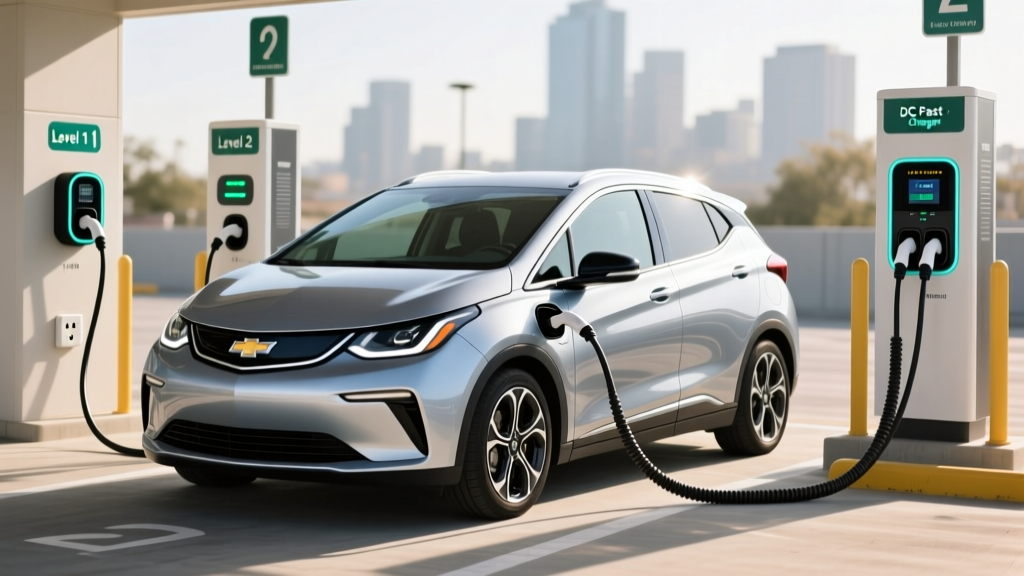
Charging Levels Explained: How Fast Will You Add Range?
EV charging falls into three tiers. The critical distinction: kW (kilowatts) measures power — the rate of energy delivery. kWh (kilowatt-hours) measures energy — the total amount stored in the battery. Think of kW as water flow rate and kWh as the bucket size.
| Level | Voltage | Max Power (kW) | Miles Added/Hour | Best Use Case |
|---|---|---|---|---|
| Level 1 (120V) | 120V AC | ~1.4 kW | ~3–5 mi/hr | Emergency / overnight trickle |
| Level 2 (240V) | 240V AC | 11.5 kW (Model 3 max) | ~35–44 mi/hr | Home daily charging |
| DC Fast Charge | 400V+ DC | 250 kW peak | ~1,000+ mi/hr (peak) | Road trips, rapid top-ups |
For the 2023 Model 3 Long Range, a full overnight Level 2 session (8 hours at 11.5 kW) adds roughly 280–300 miles — essentially a full charge from near-empty. Level 1 is impractical for daily use unless your commute is under 30 miles round-trip and you have 12+ hours plugged in.
On a V3 Supercharger (250 kW peak), the charge curve matters: you'll see peak speeds between 10–30% SoC, with the rate tapering significantly above 60% and crawling above 80%. That 10–80% time of ~27 minutes assumes you've preconditioned the battery via the car's navigation routing to a Supercharger.
Home Charger Installation: Electrical Requirements and Costs
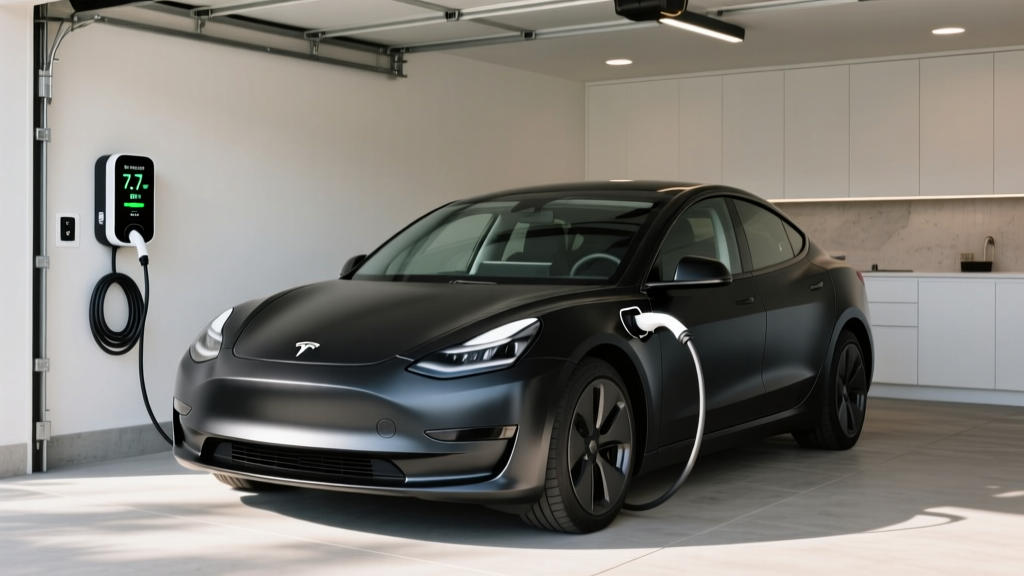
Home Level 2 charging is the backbone of practical EV ownership. For the 2023 Model 3 Long Range, the onboard charger accepts up to 11.5 kW (48 amps). To deliver that, you need a 240V circuit rated at 60 amps (EVSE continuous load must be derated to 80% of breaker capacity: 48A × 1.25 = 60A breaker).
Electrical Requirements
- Voltage: 240V (split-phase residential)
- Circuit breaker: 60A dedicated (for full 48A charging)
- Wire gauge: 6 AWG copper (or 4 AWG aluminum for longer runs)
- Panel capacity: Minimum 200A main service recommended; 100A panels often require an upgrade
- Permit: Required in most jurisdictions — your electrician pulls this
| Item | Cost Range |
|---|---|
| Level 2 EVSE (charger hardware) | $400–$700 |
| Electrician labor (standard install, panel to garage <50 ft) | $500–$1,500 |
| Permit and inspection | $100–$300 |
| Electrical panel upgrade (100A → 200A, if needed) | $1,500–$3,500 |
| Total (no panel upgrade) | $1,000–$2,500 |
| Total (with panel upgrade) | $2,500–$6,000 |
Panel Upgrade Reality Check
Homes built before 2000 frequently have 100A or 150A main panels. Adding a 60A EV circuit to an already-loaded 100A panel (electric dryer, range, HVAC) may exceed safe capacity. A licensed electrician will perform a load calculation per NEC Article 220. If your panel is maxed out, budget for a service upgrade — this is the single biggest variable in home charging cost. Some utilities offer rebates for panel upgrades tied to EV adoption; check with your local provider.
Safety and Code Considerations
- Dedicated circuit: The EVSE must be on its own breaker — never shared with other appliances.
- GFCI protection: NEC 2020+ requires GFCI breakers for outdoor receptacles and many jurisdictions now require them for indoor EVSE installations as well.
- Outdoor rating: If your charger mounts outside, ensure the EVSE carries a NEMA 4 or IP65 weather rating.
- Hardwired vs. plug: Hardwired installations (no NEMA 14-50 receptacle) avoid the GFCI nuisance-trip issues some owners experience with high-amperage plug-in setups and allow full 48A without a 50A receptacle limitation.
Connector Compatibility: NACS, CCS, and Adapters
The 2023 Model 3 Long Range ships with a native NACS (North American Charging Standard) port — Tesla's proprietary connector, now adopted industry-wide. This means direct compatibility with all Tesla Superchargers and Destination Chargers without any adapter.
| Network / Connector | Compatible with 2023 Model 3? | Adapter Needed? |
|---|---|---|
| Tesla Supercharger (NACS) | Yes — native | No |
| Tesla Destination Charger (NACS) | Yes — native | No |
| Electrify America (CCS1) | Yes, with adapter | Tesla CCS Adapter (~$175) |
| EVgo / ChargePoint (CCS1) | Yes, with adapter | Tesla CCS Adapter |
| CHAdeMO (Nissan Leaf-era) | Not practical | No reliable adapter exists |
| J1772 (Level 2 public) | Yes, with adapter | Tesla J1772 Adapter (included with car) |
By 2026, most major non-Tesla networks have begun adding NACS cables, but CCS1 connectors still dominate many Electrify America and EVgo stations. The Tesla CCS Adapter is a worthwhile $175 accessory for road-trip redundancy. Tesla also includes a J1772 adapter in the glovebox for Level 2 public chargers at hotels, malls, and workplaces.
Cost to Charge: Home vs. Public vs. Gas
Electricity pricing varies enormously by region and time-of-use. Here's what charging the 2023 Model 3 Long Range actually costs per mile, benchmarked against a comparable gas sedan (Toyota Camry, 32 MPG combined, $3.40/gal).
| Scenario | Rate ($/kWh) | Cost to Add 200 mi | Cost Per Mile |
|---|---|---|---|
| Home off-peak (utility TOU rate) | $0.09–$0.13 | $4.50–$6.50 | $0.023–$0.033 |
| Home standard rate (no TOU) | $0.14–$0.20 | $7.00–$10.00 | $0.035–$0.050 |
| Public Level 2 (ChargePoint, EVgo) | $0.25–$0.49 | $12.50–$24.50 | $0.063–$0.123 |
| Tesla Supercharger (average 2026) | $0.30–$0.45 | $15.00–$22.50 | $0.075–$0.113 |
| Gas sedan (32 MPG, $3.40/gal) | — | $21.25 | $0.106 |
At the Model 3 Long Range's efficiency of 25 kWh/100 miles, adding 200 miles requires approximately 50 kWh. With home off-peak rates, that's roughly $5–$7 — a quarter of the gas equivalent. Even at peak Supercharger rates, you're roughly at parity with or slightly below gasoline on a per-mile basis.
The economic advantage is clearest for home chargers on time-of-use plans. Contact your utility about EV-specific rate schedules — many offer overnight rates 40–60% below standard pricing.
Recommended Home Chargers for the Model 3 Long Range
To extract the full 11.5 kW (48A) the Model 3's onboard charger supports, you need a Level 2 EVSE rated at 48A or higher on a 60A circuit. Here are proven picks as of 2026:
Tesla Wall Connector
- Power: 11.5 kW (48A) max
- Connector: NACS (native — no adapter)
- Cable length: 24 ft
- Smart features: Wi-Fi, OTA updates, load sharing (pair two units on one circuit), access control
- Price: ~$475
- Verdict: Best value for Tesla owners. Clean integration, no adapter clutter, and the load-sharing feature is ideal for two-EV households.
ChargePoint Home Flex
- Power: Up to 12 kW (50A) — configurable down for smaller panels
- Connector: J1772 (needs Tesla J1772 adapter) or NACS version available
- Cable length: 23 ft
- Smart features: Wi-Fi, app scheduling, Alexa integration, flexible amperage DIP switches
- Price: ~$650
- Verdict: Best for mixed-fleet households (Tesla + non-Tesla EV). The adjustable amperage means you can install on a 40A circuit today and upgrade later.
Emporia Vue Level 2 Charger
- Power: 11.5 kW (48A)
- Connector: J1772 (NACS adapter required for Tesla)
- Cable length: 24 ft
- Smart features: Energy monitoring, solar integration, app control, load management
- Price: ~$400
- Verdict: Budget pick with excellent energy tracking. Pairs well with Emporia's whole-home energy monitor for solar-aware charging.
DC Fast Charging Times for Common Battery Sizes
The 10–80% charge time depends on battery size, peak charge rate, and the charge curve. Here's how the Model 3 Long Range's ~75 kWh usable pack compares on typical DC fast chargers:
| Charger Type | Peak kW | 10–80% Time (Model 3 LR) | Miles Added in 15 Min |
|---|---|---|---|
| Tesla V3 Supercharger | 250 kW | ~27 min | ~175 miles |
| Tesla V2 Supercharger | 150 kW | ~38 min | ~120 miles |
| Electrify America 150 kW | 150 kW | ~40 min (with CCS adapter) | ~110 miles |
| 50 kW CHAdeMO/CCS | 50 kW | ~75 min | ~55 miles |
Charge curve reality: The 250 kW peak only holds for a narrow SoC window (roughly 10–25%). From 25–50%, expect ~150–180 kW. From 50–80%, speeds drop to 60–90 kW. This is why the 10–80% average is far below the peak number — and why Tesla's navigation preconditioning (heating the battery en route to the charger) is essential for hitting these times in cooler weather.
Frequently Asked Questions
How much does it cost to install a home EV charger for a 2023 Model 3 Long Range?
A standard Level 2 installation (Tesla Wall Connector, 60A circuit, <50 ft wire run, no panel upgrade) typically costs $1,000–$2,500 all-in. If your home needs a 200A panel upgrade, add $1,500–$3,500. Always get a load calculation from a licensed electrician before committing.
How fast will each charging level add range to the Model 3 Long Range?
Level 1 (120V) adds roughly 3–5 miles per hour — impractical for most owners. Level 2 (240V, 48A) adds approximately 35–44 miles per hour, fully replenishing the battery overnight. DC fast charging at a V3 Supercharger adds up to 175 miles in 15 minutes at peak rate.
Which connector is compatible with my 2023 Model 3 Long Range?
Your Model 3 has a native NACS port. It connects directly to all Tesla Superchargers and Destination Chargers. For non-Tesla CCS networks (Electrify America, EVgo), you'll need the Tesla CCS Adapter (~$175). A J1772 adapter (included with the car) handles public Level 2 chargers.
How much does charging cost per mile compared to gas?
At home on an off-peak rate ($0.11/kWh), the Model 3 Long Range costs roughly $0.028/mile. A comparable gas sedan at 32 MPG and $3.40/gallon costs $0.106/mile. Even at Supercharger rates ($0.35/kWh), you pay ~$0.088/mile — still below gasoline in most regions. Source: fueleconomy.gov.
What electrical upgrades might I need for a home charger?
The most common upgrade is a panel service increase from 100A to 200A, needed when your existing panel lacks capacity for a 60A dedicated EV circuit. Other potential needs: trenching for detached garages, sub-panel installation, or a smart load-management device (like the Emporia VUE or Tesla Wall Connector load-sharing) that dynamically limits EV charging when other high-draw appliances are running — potentially avoiding a panel upgrade entirely.
Does the 2023 Model 3 Long Range qualify for any tax credits?
As a used purchase in 2026, the 2023 Model 3 Long Range may qualify for the Used Clean Vehicle Credit (§25E) of up to $4,000 (30% of sale price, capped at $4,000), subject to buyer income limits ($75K single / $150K joint), a $25,000 maximum sale price, and dealer reporting requirements. The original new-vehicle §30D credit is no longer available for 2023 models purchased new. Always verify current rules at IRS.gov and consult a tax professional.