Understanding the 2023 Lucid Air Pure Range and Charging Needs
The 2023 Lucid Air Pure delivers an EPA-estimated 419 miles of range on its rear-wheel-drive configuration, powered by an 88 kWh (usable) lithium-ion battery pack. That figure makes it one of the longest-range EVs ever sold in the United States. But extracting maximum utility from that range requires understanding how to charge it properly — especially at home, where 80% or more of all EV charging happens.
Lucid equips the Air Pure with a 19.2 kW onboard charger, one of the most powerful AC chargers available in any production EV. That means the Air Pure can accept Level 2 power at nearly twice the rate of most competitors, provided your home electrical system and charging equipment can deliver it. Most homes cannot supply 19.2 kW (which requires an 80-amp dedicated circuit at 240V), so understanding your realistic charging speed — and what it costs to set up — is essential.
Charging Levels Explained: Speeds in kW and Miles Per Hour
Before selecting equipment, you need clarity on the three charging levels available to EV owners. The distinction between kW (power — the rate of energy delivery) and kWh (energy — the battery's total capacity) is the single most important concept in EV ownership. Think of kW as the width of a hose and kWh as the size of the bucket.
| Level | Voltage / Amperage | Max Power (kW) | Miles of Range Per Hour | 10–80% Time (88 kWh Battery) |
|---|---|---|---|---|
| Level 1 (Standard Outlet) | 120V / 12A | 1.4 kW | 3–5 mi/hr | ~60+ hours (not practical for full charge) |
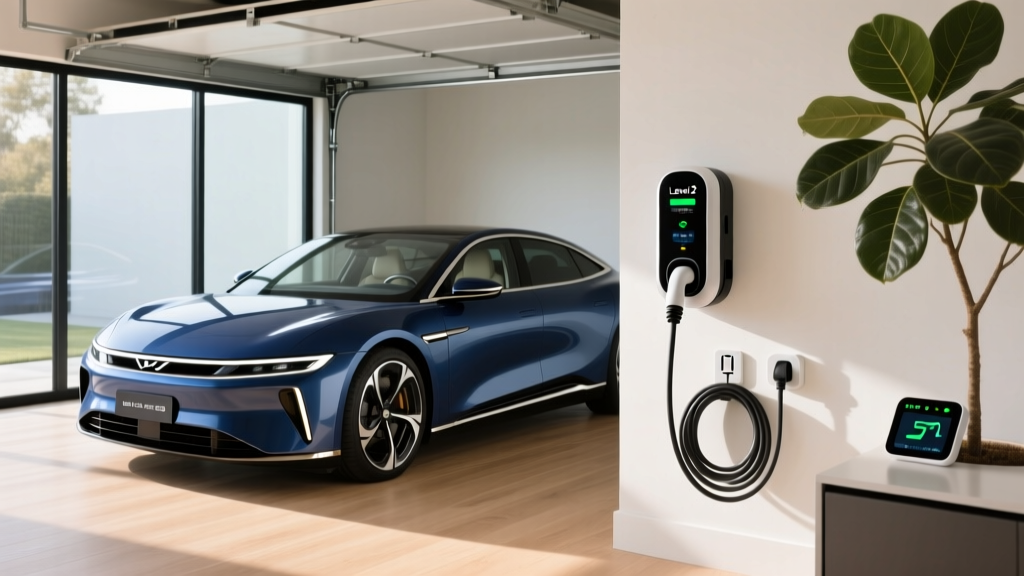
| Level 2 (Home / Workplace) | 240V / 40–80A | 9.6–19.2 kW | 25–55 mi/hr | ~4.5 hrs (at 9.6 kW) / ~2.5 hrs (at 19.2 kW) |
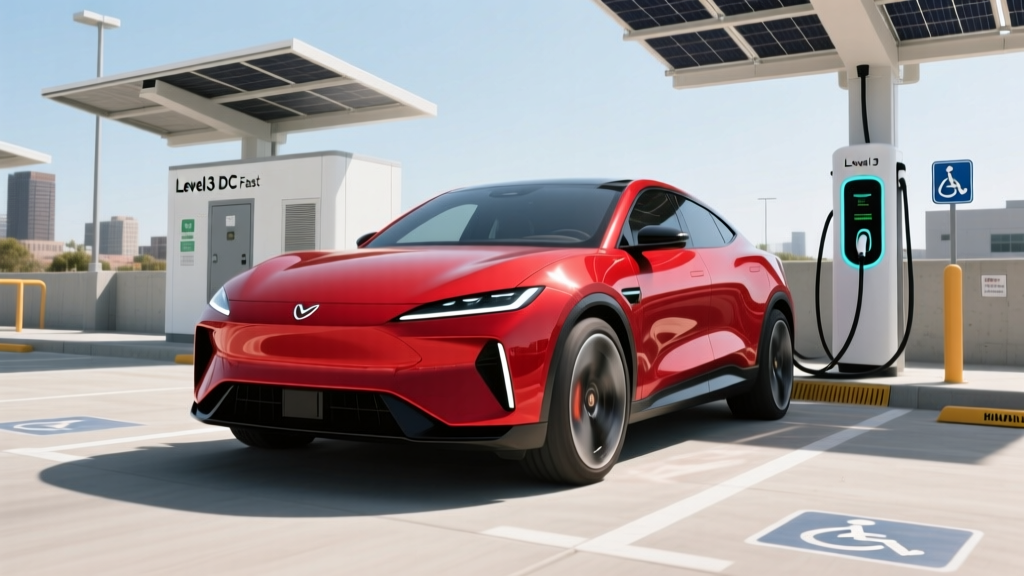
| DC Fast Charging | 400–900V DC | Up to 250+ kW | 200–400+ mi/hr | ~15–20 minutes (10–80%) |
The Lucid Air Pure supports DC fast charging at up to approximately 250 kW via its CCS1 port. On a 350 kW-capable station, the Air Pure can add roughly 300 miles of range in about 20 minutes under ideal conditions. However, charging speed follows a curve: peak kW is sustained only between roughly 10–50% State of Charge (SoC), then tapers significantly above 80% to protect battery longevity. This is normal for all lithium-ion batteries.
Home Charger Installation: Electrical Requirements and Cost Breakdown
Installing a Level 2 home charger for a Lucid Air Pure is not a simple plug-and-play affair — particularly if you want to take advantage of the car's 19.2 kW onboard charger. Here's what the installation involves and what it costs.
Electrical Requirements
For a standard 48-amp Level 2 charger (delivering 11.5 kW, or roughly 30 miles of range per hour to the Air Pure), you need a dedicated 60-amp circuit at 240V. The National Electrical Code (NEC) requires that continuous loads not exceed 80% of a circuit's rated capacity, so a 48A charger needs a 60A breaker.
To fully utilize the Air Pure's 19.2 kW onboard charger, you would need a hardwired 80-amp charger on a dedicated 100-amp circuit — a significant electrical undertaking that most residential panels cannot support without an upgrade.
Panel Upgrade Considerations
Most US homes built before 2010 have 100-amp or 150-amp main electrical panels. Adding a 60-amp EV circuit to a 100-amp panel already serving central air, an electric dryer, and an electric stove may exceed the panel's capacity. A licensed electrician will perform a load calculation per NEC Article 220 to determine if your panel can handle the additional draw.
If an upgrade is needed, expect to move to a 200-amp panel. This is one of the largest variables in home charging cost and can add $1,500–$4,000 to the project. Homes with 200-amp panels already installed typically have sufficient headroom for a 60-amp EV circuit.
| Component | Typical Cost Range | Notes |
|---|---|---|
| Level 2 Charger Equipment (48A) | $500 – $800 | Hardwired units (e.g., ChargePoint Home Flex, Wallbox Pulsar Plus) |
| Electrician Labor (standard install) | $600 – $2,000 | Varies by run length from panel to garage; longer runs cost more |
| Electrical Permit | $50 – $300 | Required in most jurisdictions; varies by municipality |
| Panel Upgrade (if needed) | $1,500 – $4,000 | 100A → 200A service upgrade; not always required |
| Total (no panel upgrade) | $1,150 – $3,100 | Most common scenario for modern homes |
| Total (with panel upgrade) | $2,650 – $7,100 | Older homes or high-load panels |
Federal incentive note: The IRS §30C Alternative Fuel Vehicle Refueling Property Credit can cover up to 30% of home charger equipment and installation costs (capped at $1,000 for residential property), subject to income and census-tract eligibility. Consult IRS guidance on §30C or a tax professional before claiming.
Connector Compatibility: NACS, CCS1, and Adapter Requirements
The 2023 Lucid Air Pure ships with a CCS1 (Combined Charging System) inlet for both Level 2 AC charging and DC fast charging. As of 2026, the North American EV charging landscape is in transition: Tesla's NACS (North American Charging Standard) connector has been adopted by most major automakers for future models, but the CCS1 standard remains widely available at public stations.
| Connector Type | Compatibility | Notes |
|---|---|---|
| CCS1 (native) | ✅ Direct — no adapter needed | Works at Electrify America, EVgo, ChargePoint DC stations, and most non-Tesla networks |
| NACS / Tesla Supercharger | ⚠️ Adapter required | Lucid offers a NACS adapter (sold separately); enables access to Tesla Supercharger network (17,000+ stalls in North America) |
| CHAdeMO | ❌ Not compatible | Legacy DC standard; no adapter available for Lucid. CHAdeMO infrastructure is declining. |
| J1772 (Level 2 AC) | ✅ Direct — no adapter needed | CCS1 inlet includes J1772 pins for AC charging; works with all Level 2 public stations |
Practical recommendation: Purchase the Lucid-approved NACS adapter (approximately $225) to unlock the Tesla Supercharger network, which remains the most reliable DC fast-charging network in the US based on uptime and availability data. This dramatically expands your road-trip charging options, particularly in rural corridors where CCS1 coverage is thinner.
Recommended Home Charging Equipment for the Lucid Air Pure
Given the Air Pure's 19.2 kW onboard charger, you have flexibility in choosing a home charger. Most owners opt for a 48-amp unit on a 60-amp circuit, which delivers 11.5 kW — sufficient to fully recharge the 88 kWh battery overnight (roughly 7.5 hours from 10–100%). If your electrical panel supports it, an 80-amp hardwired unit delivers the full 19.2 kW and cuts that time to about 4.5 hours.
ChargePoint Home Flex (up to 50A)
- Power Output: Up to 12 kW (50A at 240V)
- Connector: J1772 (CCS1 compatible for AC)
- Cable Length: 23 feet
- Smart Features: Wi-Fi, app scheduling, energy tracking, Alexa integration
- Installation: Hardwired or NEMA 14-50 plug
- Price: ~$699
Best for: Most Air Pure owners. Reliable, well-supported app, and 50A provides ~30 miles of range per hour.
Wallbox Pulsar Plus (up to 48A)
- Power Output: Up to 11.5 kW (48A at 240V)
- Connector: J1772 (CCS1 compatible for AC)
- Cable Length: 25 feet
- Smart Features: Wi-Fi + Bluetooth, app control, Power Sharing for multi-charger setups
- Installation: Hardwired or NEMA 14-50 plug
- Price: ~$649
Best for: Budget-conscious buyers who want a compact, well-reviewed unit with good cable reach.
Grizzl-E Smart (up to 48A)
- Power Output: Up to 11.5 kW (48A at 240V)
- Connector: J1772 (CCS1 compatible for AC)
- Cable Length: 24 feet
- Smart Features: Wi-Fi, OCPP protocol, adjustable amperage via DIP switches
- Installation: Hardwired or NEMA 14-50/6-50 plug options
- Price: ~$599
Best for: Canadian-built durability, outdoor-rated enclosure, and flexible amperage settings for older panels.
FLO Home X8 (up to 80A)
- Power Output: Up to 19.2 kW (80A at 240V)
- Connector: J1772 (CCS1 compatible for AC)
- Cable Length: 25 feet
- Smart Features: Wi-Fi, app scheduling, load management
- Installation: Hardwired only (requires 100A dedicated circuit)
- Price: ~$1,299
Best for: Air Pure owners with 200A+ panels who want to maximize the 19.2 kW onboard charger. Premium install cost.
Charging Cost Per Mile: Home vs. Public vs. Gas
One of the most compelling arguments for home charging is cost. The Lucid Air Pure achieves approximately 146 MPGe combined (per EPA data on fueleconomy.gov), translating to roughly 23 kWh per 100 miles of driving. Using that efficiency figure, here's how costs compare across scenarios:
| Charging / Fueling Scenario | Rate | Cost Per 100 Miles | Cost Per Mile |
|---|---|---|---|
| Home Level 2 (national avg. electricity) | $0.17/kWh | $3.91 | $0.039 |
| Home Level 2 (off-peak utility rate) | $0.09/kWh | $2.07 | $0.021 |
| Public Level 2 (network average) | $0.30/kWh | $6.90 | $0.069 |
| DC Fast Charging (Electrify America) | $0.48/kWh | $11.04 | $0.110 |
| DC Fast Charging (Tesla Supercharger avg.) | $0.35/kWh | $8.05 | $0.081 |
| Gasoline sedan (30 MPG, $3.40/gal) | $3.40/gallon | $11.33 | $0.113 |
At home with off-peak utility rates, the Air Pure costs roughly 2 cents per mile to drive — about one-fifth the cost of a comparable gasoline sedan. Even at public DC fast chargers, the Air Pure's exceptional efficiency keeps costs competitive with or below gasoline. The key variable is your local electricity rate; check with your utility for time-of-use (TOU) plans that offer cheaper overnight charging.
Safety, Code Compliance, and Installation Best Practices
EV charging involves sustained high-current draw over many hours, making proper installation critical for safety. The NEC treats EV charging as a continuous load, which triggers specific requirements:
- Dedicated circuit: Your Level 2 charger must have its own dedicated breaker — it cannot share a circuit with other appliances.
- 80% rule: The charger's maximum amperage cannot exceed 80% of the breaker rating (e.g., 48A charger → 60A breaker minimum).
- GFCI protection: NEC 2020 and later requires GFCI protection for outdoor receptacles used for EV charging. Hardwired installations may not require a GFCI breaker, but consult your local authority having jurisdiction (AHJ).
- Outdoor rating: If your charger is installed outdoors (e.g., on an exterior wall or in a carport), the unit must carry a NEMA 4 or IP65 weatherproof rating. All four chargers recommended above meet this standard.
- Permit and inspection: Most municipalities require an electrical permit for new 240V circuits. The work must pass inspection before use. Your electrician should pull this permit — unpermitted work can void homeowner's insurance claims in the event of an electrical fire.
Always hire a licensed electrician for Level 2 installations. While the equipment cost is straightforward, the wiring, conduit, breaker sizing, and load calculation require professional expertise. Ask your electrician for a load calculation before committing to an 80-amp charger installation.
Frequently Asked Questions
How much does it cost to install a home EV charger for a Lucid Air Pure?
Expect $1,150–$3,100 for a standard 48-amp Level 2 installation (equipment, labor, and permit) if your panel has sufficient capacity. If a 200-amp panel upgrade is required, total costs can reach $2,650–$7,100. The §30C federal tax credit may offset up to $1,000 of these costs for eligible taxpayers.
How fast will each charging level add range to the Air Pure?
Level 1 (120V) adds approximately 3–5 miles per hour — impractical for the Air Pure's large battery. Level 2 at 48A (11.5 kW) adds roughly 30 miles per hour. Level 2 at 80A (19.2 kW) adds about 50 miles per hour. DC fast charging at peak 250 kW can add over 300 miles in 20 minutes under ideal conditions.
Which connector and charger is compatible with my 2023 Lucid Air Pure?
The Air Pure uses a CCS1 inlet natively, compatible with all J1772 Level 2 chargers and CCS1 DC fast chargers. For Tesla Supercharger access, purchase the Lucid NACS adapter (~$225). CHAdeMO is not supported.
How much does charging cost per mile compared to gas?
Home charging at the national average electricity rate ($0.17/kWh) costs about 3.9 cents per mile. Off-peak rates can bring this below 2.5 cents per mile. A comparable gasoline sedan at 30 MPG and $3.40/gallon costs roughly 11.3 cents per mile — nearly three times more.
What electrical upgrades might I need for a Level 2 charger?
The most common upgrade is a 100A to 200A main panel service, needed when your existing panel cannot accommodate the additional 60A (or 100A) breaker for the charger circuit. Older homes, homes with electric heating, and homes already running multiple high-draw appliances are most likely to need this. A licensed electrician's load calculation will determine if an upgrade is required.
Can I use a NEMA 14-50 outlet instead of hardwiring?
Yes, a NEMA 14-50 outlet (50A, 240V) allows you to plug in a portable or wall-mounted charger rated up to 40A continuous. This gives you flexibility to take the charger with you if you move. However, hardwired installations support higher amperages (48A–80A) and eliminate the failure point of a plug connection under sustained heavy load. For the Air Pure's large battery, hardwired is preferred if you plan to stay in your home.