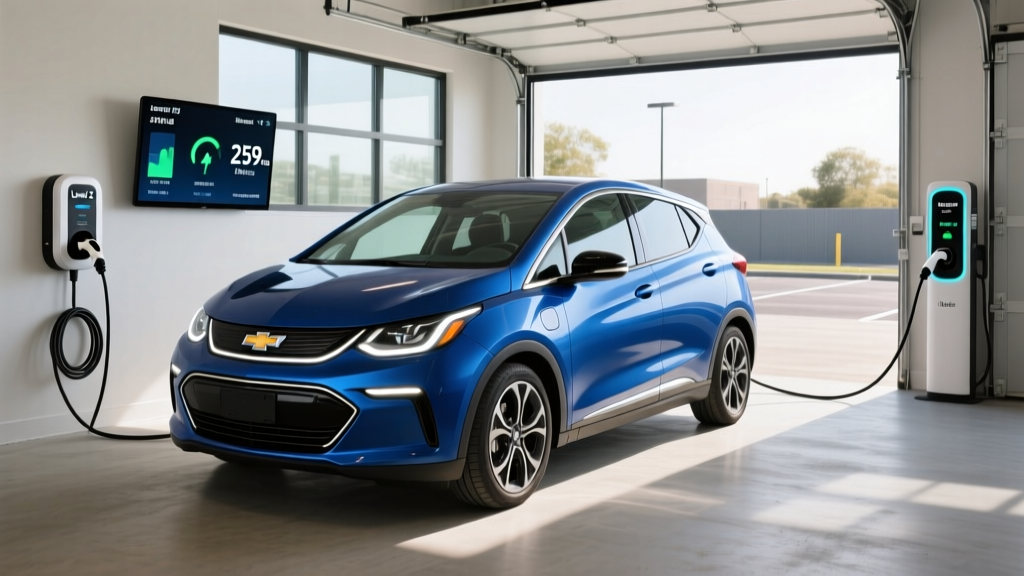
The 2023 Chevrolet Bolt EV and Bolt EUV remain two of the most value-dense electric vehicles on the used market. With an EPA-estimated 259 miles (Bolt EV) and 247 miles (Bolt EUV) of range, a 65 kWh usable lithium-ion NMC battery, and a starting MSRP that made it eligible for the full $7,500 federal tax credit at point of sale, the Bolt is a compelling daily driver. But range is only half the ownership equation — how you charge, how fast, and at what cost determines whether the Bolt fits your life.
This guide covers everything a current or prospective 2023 Chevy Bolt owner needs to know about charging at home, on the road, and the real dollars-per-mile math compared to a gas car. We'll walk through electrical requirements, installation costs, connector compatibility, and specific charger equipment recommendations.
2023 Chevy Bolt Range and Battery Specs at a Glance
Before we get into charging hardware, let's establish what you're working with. The 2023 Bolt EV and EUV share the same battery pack and powertrain, differing mainly in body size and wheelbase.
| Spec | Bolt EV | Bolt EUV |
|---|---|---|
| EPA Range | 259 miles | 247 miles |
| Battery (usable) | 65 kWh (NMC) | 65 kWh (NMC) |
| Motor Output | 200 hp / 266 lb-ft | 200 hp / 266 lb-ft |
| 0–60 mph | ~6.5 sec | ~7.0 sec |
| MPGe (combined) | 120 MPGe | 115 MPGe |
| Max DC Fast Charge | 55 kW (CCS1) | 55 kW (CCS1) |
| Level 2 AC Charge Rate | 11.5 kW | 11.5 kW |
| Battery Warranty | 8 yr / 100,000 mi | 8 yr / 100,000 mi |
| Original MSRP (base) | $26,500 | $28,100 |
Charging Levels Explained: How Fast Will Each Level Add Range?
EV charging is measured in kilowatts (kW), which represents the rate of power delivery. The battery capacity is measured in kilowatt-hours (kWh), which represents the total energy stored. Think of kW as the width of the hose and kWh as the size of the bucket. The 2023 Bolt's bucket holds 65 kWh.
| Level | Power Source | Max kW | Miles of Range Added per Hour | Typical Use Case |
|---|---|---|---|---|
| Level 1 | 120V household outlet | ~1.2–1.4 kW | ~4–5 miles/hr | Overnight top-up, low daily mileage |
| Level 2 | 240V (dryer-style outlet or hardwired) | Up to 11.5 kW (Bolt's onboard limit) | ~35–39 miles/hr | Daily home charging, workplace charging |
| DC Fast Charge | 480V+ public station | 55 kW (Bolt's peak) | ~150–180 miles/hr (at peak) | Road trips, rapid top-up |
Level 1 (120V): Every Bolt ships with a dual-level charge cord that plugs into a standard 120V outlet. At roughly 1.4 kW, you'll recover about 4–5 miles of range per hour. A full 0–100% charge takes approximately 48+ hours. This works fine if your daily commute is under 30 miles round-trip and you can plug in overnight.
Level 2 (240V): This is where home charging becomes practical. The Bolt's onboard charger accepts up to 11.5 kW on Level 2 AC power. At that rate, a full charge from empty takes roughly 6.5 hours. For most owners, plugging in overnight at Level 2 means waking up to a full battery every morning. A 240V NEMA 14-50 outlet or a hardwired wall unit on a dedicated 40A or 50A circuit is the standard setup.
DC Fast Charging: Here's where the Bolt's most-discussed limitation appears. The 2023 Bolt maxes out at 55 kW on DC fast charging — significantly slower than competitors like the Hyundai Ioniq 5 (240 kW peak) or Tesla Model 3 (170 kW peak). On a 150+ kW station, the Bolt will only pull 55 kW at peak. A 10–80% charge takes approximately 45–55 minutes, with the curve tapering noticeably above 60% state of charge (SoC). For road trips, plan for longer stops — but for daily driving and overnight home charging, this limitation is largely irrelevant.
Home Charger Installation: Electrical Requirements and Costs
Installing a Level 2 home charger is the single most impactful upgrade for EV ownership. Here's what's involved for a 2023 Bolt owner.
Electrical Requirements
The Bolt can accept up to 11.5 kW on Level 2, which requires a 240V circuit rated for at least 48 amps (EV chargers are considered continuous loads under the National Electrical Code, so the circuit must be rated 125% above the charger's max draw — a 48A charger needs a 60A breaker). However, many owners opt for a 40A charger on a 50A breaker, which delivers 9.6 kW and still fully charges the Bolt overnight in about 7 hours.
- Minimum recommended: 240V / 40A circuit (NEMA 14-50 outlet or hardwired) — delivers 9.6 kW
- Optimal for Bolt: 240V / 48A–50A hardwired circuit — delivers 11.5 kW (maxes out the onboard charger)
- Wire gauge: 6 AWG copper for 50A; 4 AWG for 60A (your electrician will confirm)
- Dedicated circuit: Required. Do not share the circuit with other appliances.
Panel Upgrade Considerations
Many homes built before 2000 have 100A or 125A main electrical panels. Adding a 50A EV circuit may push total load close to the panel's capacity, especially if you have electric range, dryer, and HVAC. Your electrician will perform a load calculation per NEC Article 220. If your panel is at capacity, a service upgrade to 200A may be required — this is a significant added cost but increases your home's overall electrical flexibility.
Installation Cost Breakdown
| Item | Simple Install (panel nearby, no upgrade) | Complex Install (long wire run, panel upgrade) |
|---|---|---|
| Level 2 Charger Equipment | $350–$700 | $350–$700 |
| Electrical Permit | $50–$200 | $50–$200 |
| Electrician Labor (outlet install) | $300–$800 | $800–$2,000 |
| Panel Upgrade (if needed) | $0 | $1,500–$3,500 |
| Conduit / Wire (long runs) | $100–$300 | $400–$1,200 |
| Total Estimated Cost | $800–$2,000 | $3,100–$7,600 |
Many utility companies offer rebates of $250–$500 for Level 2 charger installation, and some states provide additional incentives. Check your local utility's EV program before scheduling work. The Alternative Fuels Data Center maintains a state-by-state incentive database.
Connector Compatibility: CCS1, NACS, and the Bolt's Future Access
The 2023 Chevy Bolt uses the CCS1 (Combined Charging System) connector for both Level 2 AC and DC fast charging. This is the standard shared by most non-Tesla EVs sold in North America through 2024.
| Connector | Description | 2023 Bolt Compatible? |
|---|---|---|
| J1772 | Level 2 AC (non-Tesla standard) | Yes — native |
| CCS1 | DC Fast (J1772 + 2 DC pins) | Yes — native |
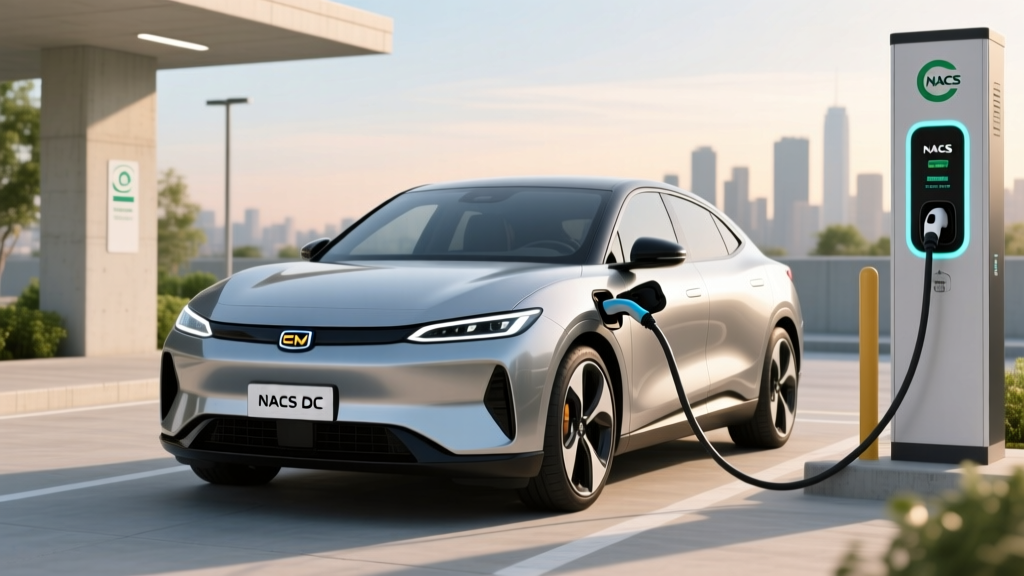
| NACS (Tesla) | Tesla's proprietary connector, now adopted industry-wide | Adapter required (GM-approved NACS-to-CCS adapter available) |
| CHAdeMO | Legacy DC standard (Nissan Leaf) | No |
Key development for Bolt owners: General Motors has transitioned to NACS for its newer models, and GM offers a NACS adapter that allows CCS1-equipped vehicles like the 2023 Bolt to access Tesla Supercharger stations. As of 2025, this adapter is available through Chevrolet dealers and gives Bolt owners access to over 20,000 Tesla Supercharger stalls nationwide — dramatically expanding the Bolt's road-trip charging network. The adapter typically costs $200–$400 depending on the source and promotions. Confirm adapter compatibility and availability with your local Chevrolet dealer or through Chevrolet's EV charging portal.
Cost to Charge: Home vs. Public vs. Gas Comparison
One of the strongest arguments for the Bolt is operating cost. Let's break down real charging costs per mile using the Bolt's efficiency of approximately 28–30 kWh per 100 miles (or roughly 3.4 miles per kWh).
| Charging Scenario | Cost per kWh | Cost per Mile (Bolt) | Gas Equivalent (30 MPG @ $3.40/gal) |
|---|---|---|---|
| Home — Off-Peak Utility Rate | $0.08–$0.12 | $0.023–$0.034 | $0.113 |
| Home — Standard Residential Rate | $0.14–$0.18 | $0.040–$0.051 | $0.113 |
| Public Level 2 (ChargePoint, etc.) | $0.25–$0.49 | $0.071–$0.140 | $0.113 |
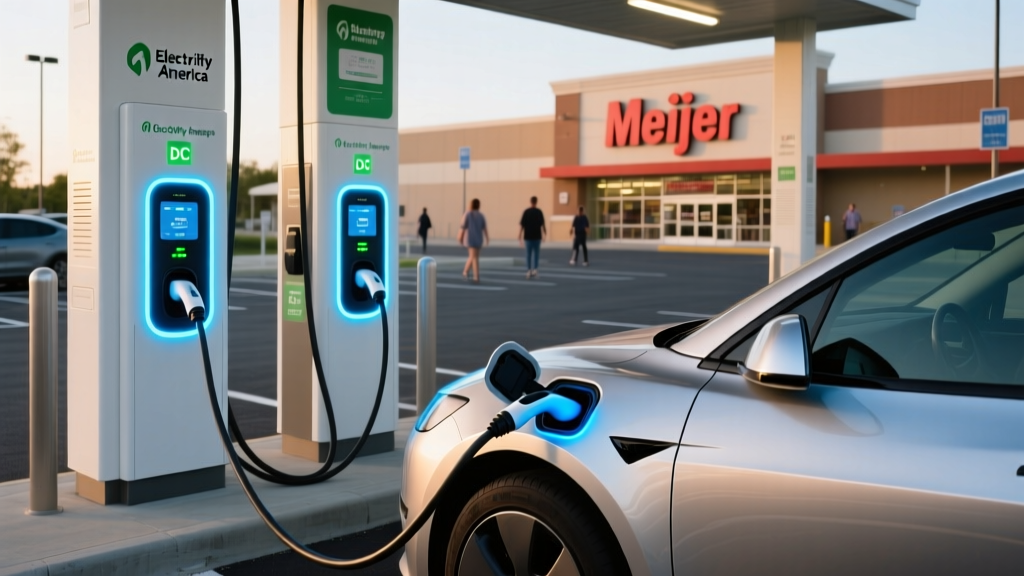
| DC Fast Charge (Electrify America, EVgo) | $0.35–$0.55 | $0.100–$0.157 | $0.113 |
The takeaway: If you charge primarily at home on off-peak or standard residential rates, the Bolt costs 2–5 cents per mile to "fuel" — roughly one-quarter to one-half the cost of a 30 MPG gas car at $3.40 per gallon. Even on public DC fast chargers, costs are competitive with gas. The savings compound: at 12,000 miles per year, home charging saves approximately $900–$1,100 annually compared to gasoline.
Many utilities offer time-of-use (TOU) plans that drop rates to $0.06–$0.10/kWh overnight. Programming the Bolt's built-in delayed charging feature (or your smart charger's schedule) to charge between midnight and 6 AM maximizes savings.
Recommended Level 2 Home Chargers for the Chevy Bolt
Given the Bolt's 11.5 kW onboard charger limit, you don't need the most powerful charger on the market — but you do want reliability, smart features, and the right connector. Here are top picks:
Emporia Level 2 EV Charger
- Power Output: 48A / 11.5 kW (hardwired) or 40A / 9.6 kW (plug-in)
- Connector: J1772 (native for Bolt)
- Cable Length: 24 ft
- Smart Features: Wi-Fi, app scheduling, energy monitoring, solar integration
- Price: ~$399 (hardwired) / ~$349 (plug-in)
- Best For: Budget-conscious Bolt owners who want full smart features and energy tracking
ChargePoint Home Flex
- Power Output: Up to 50A / 12 kW (adjustable via DIP switch)
- Connector: J1772
- Cable Length: 23 ft
- Smart Features: Wi-Fi, app, Alexa integration, flexible amperage
- Price: ~$699
- Best For: Owners who want adjustable amperage to match their panel capacity
Grizzl-E Smart
- Power Output: 40A / 9.6 kW
- Connector: J1772
- Cable Length: 24 ft
- Smart Features: Wi-Fi, app, OCPP-compatible, extreme cold rated (-40°F)
- Price: ~$449
- Best For: Cold-climate Bolt owners and outdoor installations
For Bolt owners planning to eventually add a NACS-equipped vehicle (or who want Supercharger access now with an adapter), some manufacturers like Lectron and Tesla (Universal Wall Connector) offer chargers with both J1772 and NACS connectors built in, though at a higher price point ($500–$800).
Safety, Permits, and Code Requirements
EV charger installation is electrical work that must comply with the National Electrical Code (NEC) and your local jurisdiction. Skipping permits or using undersized wiring creates fire risk and may void your homeowner's insurance coverage.
- Dedicated circuit: Your Level 2 charger must have its own breaker — not shared with HVAC, dryer, or other loads.
- GFCI protection: NEC 2020 and later requires GFCI protection for receptacles used for EV charging in garages. Hardwired installations typically do not require a separate GFCI breaker (the charger has built-in ground-fault protection).
- Outdoor rating: If installing outdoors, the charger must carry a NEMA 4 (or IP65+) weather-resistance rating. All three chargers recommended above meet outdoor-use standards.
- Permit required: Virtually all jurisdictions require an electrical permit for EV charger installation. Your electrician should pull this. Typical cost: $50–$200.
- Inspection: After installation, a city or county inspector will verify code compliance. Don't skip this step.
Charging Time Examples: What to Expect with the 2023 Bolt
Here are realistic charging times for the Bolt's 65 kWh battery under common scenarios:
| Scenario | Starting SoC | Charger Type | Estimated Time |
|---|---|---|---|
| Overnight home (Level 1, 120V) | 40% → 100% | 1.4 kW | ~28 hours (not practical for full charge) |
| Overnight home (Level 2, 40A) | 20% → 100% | 9.6 kW | ~5.5 hours |
| Overnight home (Level 2, 48A) | 20% → 100% | 11.5 kW | ~4.5 hours |
| Road trip DC fast | 10% → 80% | 55 kW peak | ~45–55 minutes |
| Quick top-up (DC fast) | 30% → 60% | 55 kW peak | ~20 minutes |
The Bolt's 55 kW DC fast charge limit means road-trip charging requires more patience than newer 800V-architecture vehicles. Plan stops around meals, restrooms, or stretching breaks. The charge curve is relatively flat from 10–50% SoC, then tapers progressively from 60% to 80% and drops sharply above 80%. For efficient road-tripping, charge to 80% and move on rather than waiting for 100%.
Frequently Asked Questions
How much does it cost to install a home EV charger for the Bolt?
A straightforward Level 2 installation with a nearby 200A panel typically costs $800–$2,000 including equipment, electrician labor, and permit. If your home needs a panel upgrade to 200A service, total costs can reach $3,100–$7,600. Get at least two quotes from licensed electricians, and check for utility rebates before scheduling.
How fast will each charging level add range to my Bolt?
Level 1 (120V) adds roughly 4–5 miles per hour. Level 2 (240V, 40A) adds about 31 miles per hour; at the Bolt's 11.5 kW max (48A), you'll see about 37–39 miles per hour. DC fast charging at 55 kW peak adds approximately 150–180 miles per hour at peak, tapering above 60% SoC.
Which connector does the 2023 Chevy Bolt use, and can I charge at Tesla Superchargers?
The 2023 Bolt uses the CCS1 connector natively. With a GM-approved NACS-to-CCS adapter, you can access Tesla Supercharger stations. The Bolt cannot use CHAdeMO connectors. For home Level 2 charging, the Bolt uses the J1772 connector, which is standard on virtually all non-Tesla Level 2 chargers.
How much does charging cost per mile compared to gas?
At home on a standard residential rate of $0.14/kWh, the Bolt costs roughly 4 cents per mile to charge. A comparable 30 MPG gas car at $3.40/gallon costs about 11 cents per mile. Annual savings for 12,000 miles of driving: approximately $800–$1,100. Off-peak utility rates can push Bolt charging costs below 3 cents per mile.
What electrical upgrades might I need for a Level 2 charger?
If your home has a 200A electrical panel with available capacity, you likely need only a new 50A or 60A breaker and a wire run to your garage or parking spot. Homes with 100A or 125A panels, or panels already near capacity, may require a service upgrade to 200A — adding $1,500–$3,500 to the project. A licensed electrician will perform a load calculation to determine your specific needs.
Is the 2023 Bolt's 55 kW DC fast charging a dealbreaker?
For daily driving and overnight home charging, the 55 kW limit is irrelevant — you'll always wake up fully charged. For road trips, it means 45–55 minute stops for a 10–80% charge instead of the 18–25 minutes that faster-charging EVs achieve. If you take frequent long road trips (300+ miles), the slower DC rate is a real inconvenience. If 95% of your driving is local with home charging, it won't matter. The addition of Tesla Supercharger access via adapter significantly improves the Bolt's road-trip practicality by expanding the available charging network, even if the charge speed itself remains limited.
Sources: U.S. EPA Fuel Economy Guide — 2023 Chevrolet Bolt EV, Chevrolet EV Charging Information, IRS §30D Clean Vehicle Credit