Understanding the 2022 Tesla Model Y Performance Range and Charging Needs
The 2022 Tesla Model Y Performance carries an EPA-estimated 303 miles of range from its 75 kWh (usable) battery pack. In real-world driving—particularly sustained highway speeds of 70-80 mph or cold-weather commutes below 32°F—expect between 240 and 270 miles before needing to plug in. The dual-motor all-wheel-drive powertrain produces 456 horsepower and a blistering 3.5-second 0-60 mph time, but that performance comes with energy consumption rated at 122 MPGe combined (roughly 28 kWh/100mi), according to fueleconomy.gov.
Whether you're optimizing daily commuting efficiency or planning road trips on the Supercharger network, understanding your charging options is critical. This guide covers every charging level, home installation requirements, connector compatibility, equipment picks, and the real cost to keep a Model Y Performance charged in 2026.
EPA Estimate: 303 miles
Highway (75 mph, moderate weather): ~260-275 miles
Cold Weather (below 32°F, mixed driving): ~210-240 miles
Aggressive/Performance Driving: ~200-220 miles
Range loss stems from aerodynamic drag at speed, battery chemistry limitations in cold, and the energy cost of rapid acceleration.
Charging Levels Explained: kW, Speed, and What Each Means for Your Model Y
A critical distinction every EV owner must internalize: kW (kilowatts) measures power—the rate at which energy flows into your battery. kWh (kilowatt-hours) measures energy—the total capacity stored. Think of kW as the width of a pipe and kWh as the size of the tank. A wider pipe (higher kW) fills the tank faster.
| Level | Power (kW) | Voltage/Amperage | Miles Added per Hour | Best Use Case |
|---|---|---|---|---|
| Level 1 (Standard Outlet) | 1.0-1.4 kW | 120V / 12A | 3-5 mi/hr | Emergency/trickle only |
| Level 2 (Home/Public AC) | 7.2-11.5 kW | 240V / 30-48A | 25-44 mi/hr | Daily home charging |
| DC Fast (Supercharger/CCS) | Up to 250 kW peak | 400-800V DC | Up to 1,000+ mi/hr (peak) | Road trips, rapid top-ups |
The 2022 Model Y Performance supports up to 11.5 kW on Level 2 AC charging (48A onboard charger) and peaks at approximately 250 kW on a V3 Tesla Supercharger. On a V3 Supercharger, expect a 10-80% charge in roughly 20-25 minutes. However, charging speed is not linear—above 50% state of charge (SoC), the charge curve tapers significantly to protect battery health, dropping from peak rates to under 100 kW past 60% and below 40 kW past 80%.
Home Charger Installation: Electrical Requirements, Costs, and Panel Upgrades
Installing a dedicated Level 2 home charger is the single most impactful upgrade for daily EV convenience. For the 2022 Model Y Performance to charge at its maximum 11.5 kW AC rate, you need a 240V circuit rated at 60 amps (which delivers a continuous 48A to the vehicle per NEC 80% continuous-load rules).
Electrical Requirements Breakdown
- Circuit: Dedicated 60A double-pole breaker
- Wiring: 6 AWG copper (or 4 AWG aluminum) in conduit
- Voltage: 240V split-phase (standard US residential)
- Outlet option: NEMA 14-60 receptacle (allows charger portability) or hardwired connection
- Permit: Required in most jurisdictions; inspection ensures code compliance
Will You Need a Panel Upgrade?
Homes with a 100A main service panel often cannot support a 60A EV circuit alongside existing loads (HVAC, electric oven, dryer). A licensed electrician will perform a load calculation per NEC Article 220. If your panel is at capacity, a service upgrade to 200A typically costs $1,500-$3,000 before any charger work begins. Homes already on 200A panels with available breaker slots usually need no upgrade.
| Component | Low End | High End | Notes |
|---|---|---|---|
| Level 2 Charger Equipment | $400 | $750 | Tesla Wall Connector, ChargePoint, Emporia |
| Electrician Labor (standard install) | $600 | $1,500 | Varies by run length, conduit, drywall work |
| Permit & Inspection Fees | $50 | $250 | Depends on municipality |
| Panel Upgrade (if needed) | $1,500 | $3,000 | 100A to 200A service upgrade |
| Total (no panel upgrade) | $1,050 | $2,500 | Most common scenario |
| Total (with panel upgrade) | $2,550 | $5,500 | Older homes with 100A service |
The IRS residential clean energy credit (§25D) offers a 30% tax credit on charger equipment and installation costs (up to $1,000), though eligibility depends on your tax liability and whether you itemize. Consult a tax professional before claiming.
Connector Compatibility: NACS, CCS, and Adapter Options for Tesla
The 2022 Model Y Performance uses Tesla's proprietary connector—now formally adopted as the North American Charging Standard (NACS). This is a significant advantage in 2026: Tesla Supercharger stalls are the most reliable and widespread DC fast-charging network in the US, with over 30,000 V3 and V4 stalls nationally.
| Connector Type | Native Support? | Adapter Needed? | Network Access |
|---|---|---|---|
| NACS (Tesla) | Yes — native | None | Tesla Superchargers, Destination Chargers |
| CCS1 (Non-Tesla DC Fast) | No | Tesla CCS Adapter (~$175) | Electrify America, EVgo, ChargePoint DC |
| CHAdeMO | No | Third-party adapter (limited availability) | Largely legacy; avoid reliance |
| J1772 (Non-Tesla Level 2) | No | Tesla J1772 Adapter (included with vehicle) | Public Level 2, workplace chargers |
Every Tesla ships with a J1772-to-NACS adapter for public Level 2 stations. For DC fast charging on non-Tesla networks (Electrify America, EVgo), Tesla sells an official CCS1-to-NACS adapter. With the CCS adapter, the 2022 Model Y can charge at up to ~170 kW on compatible third-party stalls—slower than Supercharger peak but adequate for road trips through areas with limited Tesla coverage.
Cost to Charge: Home vs. Public vs. Gas Comparison
One of the most compelling ownership arguments for the Model Y Performance is fuel cost savings, though the gap narrows when relying heavily on DC fast charging. Here's how the numbers break down using 2026 electricity and fuel pricing.
| Scenario | Rate / Price | Cost per Mile | Full "Tank" Cost (75 kWh / ~280 mi) |
|---|---|---|---|
| Home (off-peak utility rate) | $0.13/kWh | $0.036 | $9.75 |
| Home (standard residential rate) | $0.17/kWh | $0.048 | $12.75 |
| Tesla Supercharger V3 | $0.32/kWh avg | $0.090 | $24.00 |
| Electrify America / EVgo DC | $0.42/kWh avg | $0.118 | $31.50 |
| Gas SUV (25 MPG combined, $3.40/gal) | $3.40/gallon | $0.136 | $38.08 (14 gal equivalent) |
At home off-peak rates, the Model Y Performance costs roughly one-quarter per mile what a comparable gas-powered performance SUV (like a BMW X3 M or Porsche Macan GTS) would cost. Even at Supercharger rates, you're saving ~34% per mile versus gasoline. The savings compound over ownership: at 12,000 miles/year and home charging, annual fuel cost is approximately $432 versus $1,632 for gas—a $1,200/year savings.
Recommended Home Charging Equipment for the Model Y Performance
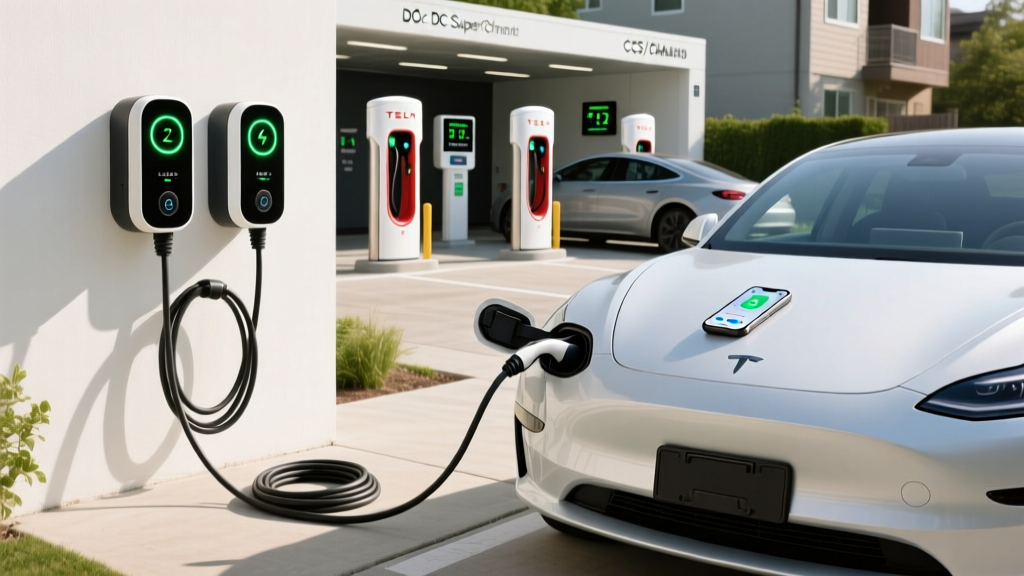
To take full advantage of the Model Y's 11.5 kW onboard charger, you need a Level 2 unit capable of delivering 48 amps continuous. Here are three proven options for 2026:
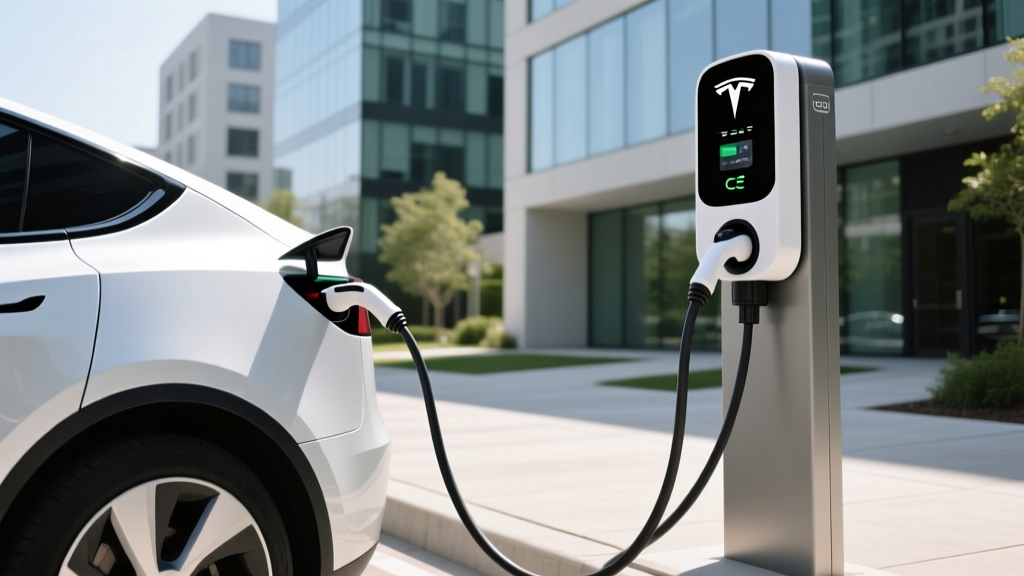
Tesla Wall Connector (Gen 3)
- Power Output: 11.5 kW (48A)
- Connector: NACS native (no adapter needed)
- Cable Length: 24 ft
- Smart Features: Wi-Fi OTA updates, load sharing with second unit, power-level adjustment
- Price: ~$475
- Verdict: Best seamless integration for Tesla-only households
Emporia Vue Level 2 Charger
- Power Output: 11.5 kW (48A)
- Connector: J1772 (use included Tesla adapter)
- Cable Length: 24 ft
- Smart Features: Energy monitoring, scheduled charging, solar integration, app control
- Price: ~$399
- Verdict: Best value with energy-tracking for solar-equipped homes
ChargePoint Home Flex
- Power Output: Up to 12 kW (50A circuit, 40A continuous default; adjustable)
- Connector: J1772 (use Tesla adapter) or NACS pigtail option
- Cable Length: 23 ft
- Smart Features: Alexa integration, scheduling, amperage configuration via app
- Price: ~$649
- Verdict: Most flexible for multi-EV households (Tesla + non-Tesla)
Pro tip: If your electrical panel is far from your parking spot, factor in conduit run costs. A 50-foot run through an unfinished garage is straightforward; running conduit underground 80 feet to a detached carport can double labor costs.
Safety, Code, and Best Practices
EV charging installations must comply with the National Electrical Code (NEC Article 625) and local amendments. Key safety requirements include:
- Dedicated circuit: Your EV charger must be on its own breaker—never shared with other appliances
- GFCI protection: Required for outdoor receptacles (NEMA 14-60); hardwired installations may use equipment-level ground fault protection instead
- Outdoor rating: If mounted outside, the charger must carry a NEMA 4 or NEMA 4X rating for weather resistance. All three units above carry outdoor ratings.
- Strain relief: Cable management hooks or retractors prevent cable damage and tripping hazards
- Permit and inspection: Skipping permits risks insurance claim denials and home-sale complications. Most jurisdictions charge $50-$250 and require a post-install inspection.
Always hire a licensed electrician experienced with EV charger installations. Request a load calculation before committing to a 60A circuit—if your panel can only support a 40A circuit (32A continuous), you'll still get ~30 miles of range per hour of Level 2 charging, which is more than adequate for overnight replenishment.
Frequently Asked Questions
How much does it cost to install a home EV charger for a 2022 Tesla Model Y Performance?
A standard installation with a 60A circuit, no panel upgrade, and a short conduit run typically costs $1,050-$2,500 (equipment + electrician + permit). If your home has a 100A panel requiring a 200A service upgrade, expect $2,550-$5,500 total. The federal §25D tax credit can offset 30% of equipment and installation costs up to $1,000.
How fast will each charging level add range to the Model Y Performance?
Level 1 (120V standard outlet) adds 3-5 miles per hour—only suitable for overnight trickle or emergencies. Level 2 (240V, 48A) adds approximately 44 miles per hour, fully replenishing the 75 kWh battery in about 8-9 hours. DC fast charging on a V3 Supercharger peaks at 250 kW, adding up to ~200 miles in 15 minutes before tapering above 50% SoC.
Which connectors and chargers are compatible with my 2022 Tesla Model Y?
The Model Y uses the NACS connector natively, giving direct access to Tesla Superchargers and Destination Chargers. For non-Tesla DC fast chargers (CCS1), purchase Tesla's official CCS adapter (~$175). For non-Tesla Level 2 stations (J1772), use the J1772 adapter included with your vehicle. CHAdeMO is effectively obsolete and not recommended.
How much does charging cost per mile compared to gasoline?
Charging at home on off-peak electricity ($0.13/kWh) costs roughly $0.036 per mile. Even at average Supercharger rates ($0.32/kWh), you're paying ~$0.09/mile. A comparable gas SUV at 25 MPG with $3.40/gallon fuel costs $0.136/mile. Over 12,000 annual miles, home charging saves approximately $1,200/year versus gasoline.
What electrical upgrades might I need for a home Level 2 charger?
If your home has a 200A main panel with available breaker spaces, you likely need no upgrade. Homes with 100A panels or panels near capacity will require a service upgrade to 200A ($1,500-$3,000). Your electrician will perform a NEC Article 220 load calculation to determine available capacity. In some cases, a smart panel or load-management device (like the Emporia Vue with automatic load shedding) can avoid a full panel upgrade by dynamically limiting charger draw when other loads spike.
Does DC fast charging degrade the Model Y battery faster?
Occasional DC fast charging has minimal long-term impact on battery health. Tesla's battery management system actively manages thermal loads and tapers charging speed above 50% SoC to protect cell longevity. Data from high-mileage Teslas shows approximately 8-12% total degradation over 150,000 miles with mixed charging habits. The battery warranty covers 8 years/120,000 miles with a minimum 70% capacity retention threshold. For daily use, Level 2 home charging at 80% SoC is optimal for long-term health.