Why Your 2022 Tesla Model 3 Range Depends on How You Charge
The 2022 Tesla Model 3 remains one of the most efficient EVs on the road, but the EPA sticker only tells half the story. Whether you own the Standard Range RWD (272 miles EPA), the Long Range AWD (358 miles EPA), or the Performance trim (315 miles EPA), your 2022 Tesla Model 3 range in daily driving hinges on charging habits, battery chemistry, and how you set up your home and road-charging routine.
This guide breaks down the exact charging speeds, home installation costs, connector standards, and per-mile economics that determine how far your Model 3 actually goes — and what it costs to keep it charged. We'll cover the three Model 3 variants sold in 2022, their usable battery capacities, and the real-world charging scenarios you'll encounter from daily commuting to cross-country road trips.
- RWD (Standard Range): 272 mi EPA / ~60 kWh usable LFP battery → Expect 230–250 mi real-world highway; ~200–220 mi in freezing weather
- Long Range AWD: 358 mi EPA / ~75 kWh usable NMC battery → Expect 300–325 mi real-world highway; ~260–280 mi in freezing weather
- Performance: 315 mi EPA / ~75 kWh usable NMC battery → Expect 265–290 mi real-world highway; ~230–250 mi in freezing weather
Source: fueleconomy.gov. Real-world estimates based on 70 mph highway driving, moderate climate control use, and typical LFP/NMC cold-weather loss patterns.
Understanding kW vs. kWh: The Foundation of EV Charging
Before we discuss charging speeds, let's eliminate the single most common confusion in EV ownership:
- kW (kilowatts) = power, or the rate at which energy flows into your battery. Think of it as the width of the hose filling a tank.
- kWh (kilowatt-hours) = energy, or the total capacity of your battery. Think of it as the size of the tank itself.
A 2022 Model 3 Long Range has roughly 75 kWh of usable battery capacity. If you charge at 11.5 kW (a typical Level 2 home charger), you're adding 11.5 kWh per hour — meaning a full 0–100% charge would take roughly 6.5 hours. On a 250 kW DC fast charger, the rate is vastly faster, but the battery won't sustain that peak rate for the entire session. We'll cover the charge curve in detail below.
Charging Levels Explained: Level 1, Level 2, and DC Fast Charging
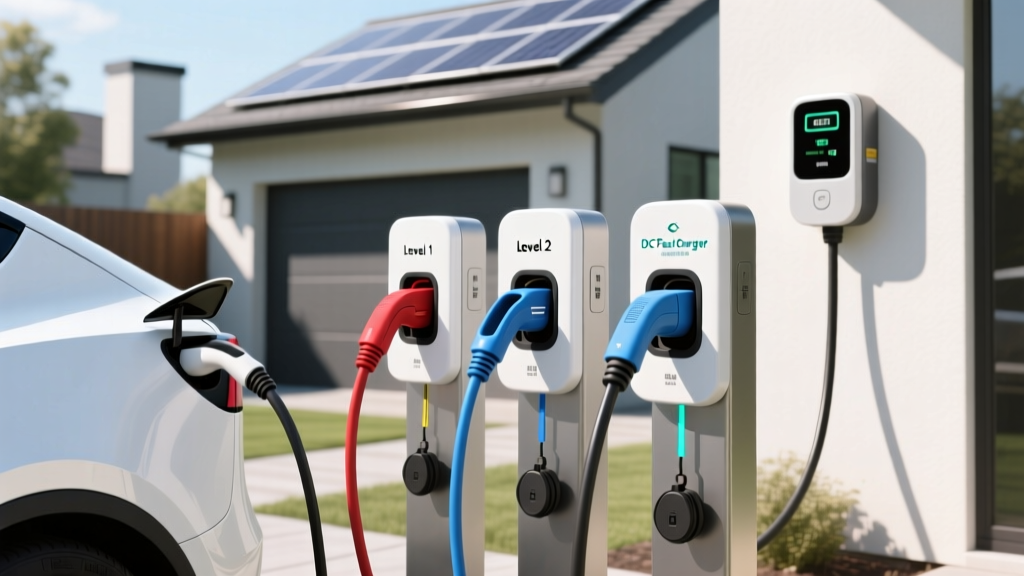
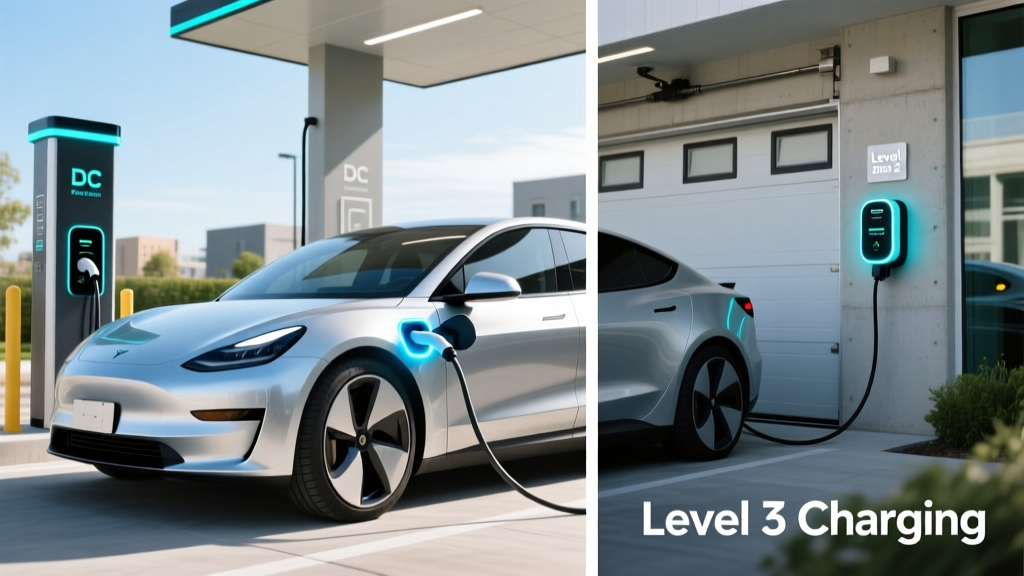
Every 2022 Model 3 can accept three tiers of charging. Here's what each delivers in practical terms:
| Level | Voltage / Amps | Max Power (kW) | Miles of Range Added Per Hour | Best Use Case |
|---|---|---|---|---|
| Level 1 (120V) | 120V / 12A | ~1.4 kW | 3–5 mi/hr | Overnight trickle; emergency top-up |
| Level 2 (240V) | 240V / 32–48A | 7.7–11.5 kW | 30–44 mi/hr | Daily home charging; workplace |
| DC Fast Charging | 400V+ DC | Up to 250 kW (V3 Supercharger) | Up to 1,000+ mi/hr (peak) | Road trips; rapid top-ups |
Key nuance for Model 3 owners: The onboard charger in the 2022 Model 3 accepts up to 11.5 kW on Level 2 (48A at 240V). If you install a 40A charger (9.6 kW), you'll see slightly slower Level 2 speeds — about 30–36 mi/hr instead of 37–44 mi/hr. Both are sufficient for overnight charging.
DC Fast Charging and the Charge Curve
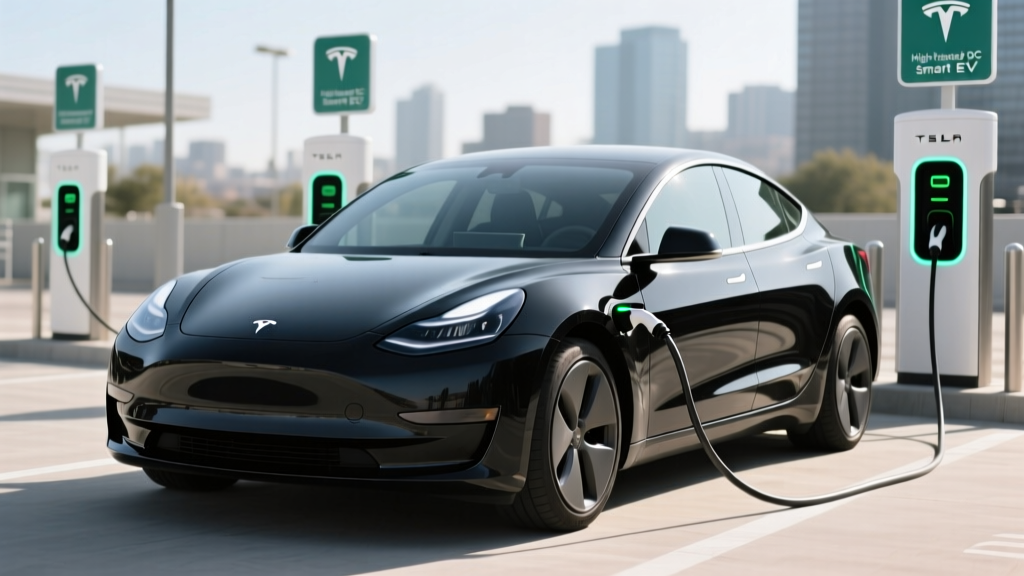
Tesla's V3 Superchargers deliver up to 250 kW peak. However, no EV sustains peak rate for the full session. The 2022 Model 3 Long Range follows a typical charge curve:
- 10–30% SoC: Peak ~250 kW (fastest segment)
- 30–60% SoC: Tapers to ~150–180 kW
- 60–80% SoC: Drops to ~75–100 kW
- 80–100% SoC: Slows to ~25–40 kW (battery protection)
Real-world 10–80% charging times at a V3 Supercharger:
- Model 3 RWD (LFP, ~60 kWh): ~25–30 minutes (LFP chemistry charges more linearly but peaks lower, around 170 kW)
- Model 3 Long Range (NMC, ~75 kWh): ~25–28 minutes
- Model 3 Performance (NMC, ~75 kWh): ~25–28 minutes
Preconditioning matters. If you navigate to a Supercharger using the car's built-in navigation, the Model 3 will automatically warm the battery to optimal temperature before you arrive. Skipping preconditioning in cold weather can add 5–10 minutes to your charging session and reduce peak kW significantly.
Home Charger Installation: Costs, Electrical Requirements, and What to Expect
Installing a Level 2 home charger is the single highest-impact upgrade for EV ownership. Here's a detailed breakdown of what's involved for a 2022 Model 3 owner.
Electrical Requirements
The Tesla Wall Connector (Gen 3) is the most popular home charger for Model 3 owners. It supports up to 48A / 11.5 kW on a 60A dedicated circuit (electrical code requires the circuit breaker to be rated 125% of the continuous load: 48A × 1.25 = 60A).
- Voltage: 240V (standard for EVSE; same as a dryer outlet)
- Amperage: 48A continuous draw requires a 60A breaker
- Wire gauge: Typically 6 AWG copper (or 4 AWG aluminum) for runs under 50 feet; thicker wire for longer runs
- Alternative: A 40A circuit with a 32A charger (e.g., Wall Connector set to 32A) is viable if your panel is constrained
Do You Need a Panel Upgrade?
This is the most overlooked cost in home EV charging. Most homes built after 1990 have a 200A main panel, which typically supports a 60A EV circuit without upgrade. However:
- Homes with 100A service (common in older builds) may need a panel upgrade to 200A — adding $1,500–$3,500 to your project
- If your panel is already near capacity (electric heating, hot tub, AC), a load calculation by a licensed electrician is mandatory
- Some utilities offer smart panel upgrades or load-management devices (like the Span smart panel or Emporia VUE) that avoid a full service upgrade
Installation Cost Breakdown
| Component | Cost Range | Notes |
|---|---|---|
| Level 2 Charger (equipment) | $400–$650 | Tesla Wall Connector ~$475; third-party options vary |
| Electrician labor (standard install) | $600–$1,800 | Depends on run length, wall type, conduit needs |
| Permit & inspection | $50–$250 | Varies by municipality; some jurisdictions waive for EVSE |
| Panel upgrade (if needed) | $1,500–$3,500 | Only for 100A→200A service upgrades |
| Total (no panel upgrade) | $1,050–$2,700 | Typical for most 200A-panel homes |
| Total (with panel upgrade) | $2,550–$6,200 | Older homes or high-load panels |
Federal incentive note: The Residential Clean Energy Credit (IRS §25D) does not cover EV chargers for most taxpayers after 2022. However, the Alternative Fuel Vehicle Refueling Property Credit (§30C) was revived under the Inflation Reduction Act and can cover up to 30% of charger + installation costs (max $1,000) for homeowners in eligible census tracts. Consult a tax professional and verify eligibility at irs.gov.
Which Connectors and Chargers Are Compatible with the 2022 Model 3?
The 2022 Model 3 was built with Tesla's proprietary connector (now standardized as NACS — North American Charging Standard). This means:
- Home charging: Uses the Tesla Wall Connector or any NACS-equipped Level 2 charger natively — no adapter needed
- Tesla Superchargers: Plug directly into V2 (150 kW) and V3 (250 kW) Supercharger stalls
- Non-Tesla DC fast chargers (CCS1): Require a Tesla CCS Adapter (sold by Tesla for ~$250); enables access to Electrify America, EVgo, and other CCS networks at up to ~150 kW
- CHAdeMO: Not supported; no adapter exists for Tesla vehicles. CHAdeMO is largely a legacy standard in the US
- J1772 (public Level 2): Tesla includes a J1772-to-NACS adapter in the glovebox of every Model 3; works for all public Level 2 stations
| Connector Standard | 2022 Model 3 Compatibility | Adapter Needed? | Max Charge Rate |
|---|---|---|---|
| NACS (Tesla) | Native | No | 11.5 kW (L2) / 250 kW (DC) |
| CCS1 | Via adapter | Yes — Tesla CCS Adapter (~$250) | ~150 kW (DC) |
| CHAdeMO | Not supported | N/A | N/A |
| J1772 (Level 2) | Via included adapter | No (included with car) | Up to 11.5 kW |
2026 context: As of 2025–2026, most major automakers (Ford, GM, Rivian, Volvo, and others) have adopted NACS for their new EVs. This means Tesla Supercharger stations are increasingly shared with non-Tesla vehicles, which can increase wait times at popular corridors. The CCS adapter remains valuable as a backup for non-Tesla DC networks.
Cost to Charge: Home vs. Public vs. Gas — What You'll Actually Pay Per Mile
One of the strongest ownership arguments for the 2022 Model 3 is fuel cost. But the savings depend heavily on where and when you charge.
| Charging Scenario | Avg. Cost ($/kWh) | Model 3 LR Efficiency | Cost Per Mile | Annual Cost (12,000 mi) |
|---|---|---|---|---|
| Home — off-peak utility rate | $0.08–$0.13 | 25 kWh/100 mi | $0.020–$0.033 | $240–$396 |
| Home — standard residential rate | $0.14–$0.18 | 25 kWh/100 mi | $0.035–$0.045 | $420–$540 |
| Public Level 2 (ChargePoint, etc.) | $0.20–$0.35 | 25 kWh/100 mi | $0.050–$0.088 | $600–$1,056 |
| Tesla Supercharger (V3) | $0.28–$0.40 | 25 kWh/100 mi | $0.070–$0.100 | $840–$1,200 |
| Gasoline car (28 MPG, $3.50/gal) | $3.50/gallon | 28 MPG | $0.125 | $1,500 |
Bottom line: A 2022 Model 3 Long Range charged primarily at home on off-peak rates costs roughly $0.03/mile — about 75% cheaper than a comparable gas sedan at $3.50/gallon. Even exclusive Supercharger use ($0.08–0.10/mile) remains cheaper than gasoline.
The Model 3 Long Range achieves 134 MPGe combined per the EPA (fueleconomy.gov), making it one of the most efficient vehicles in its class. The RWD variant is rated at 132 MPGe combined, and the Performance at 113 MPGe combined.
Recommended Home Chargers for the 2022 Tesla Model 3
Here are three chargers well-suited to the Model 3's 11.5 kW onboard charger, with specs that matter:
Tesla Wall Connector (Gen 3)
- Power Output: Up to 11.5 kW (48A)
- Connector: NACS (native Tesla)
- Cable Length: 24 ft
- Smart Features: Wi-Fi for OTA updates, power-sharing between multiple units, access control
- Price: ~$475
- Best For: Model 3 owners who want seamless integration and Tesla app monitoring
Emporia Vue Level 2 Charger
- Power Output: Up to 11.5 kW (48A)
- Connector: J1772 (use included Tesla adapter) or NACS version available
- Cable Length: 24 ft
- Smart Features: Energy monitoring, solar integration, scheduled charging, load management
- Price: ~$399
- Best For: Solar-panel owners and those wanting detailed energy tracking
ChargePoint Home Flex
- Power Output: Up to 12 kW (50A) — Model 3 caps at 11.5 kW
- Connector: J1772 (use included Tesla adapter) or NACS version
- Cable Length: 23 ft
- Smart Features: Alexa integration, scheduling, amperage configurable via app, works with all EVs
- Price: ~$649
- Best For: Multi-EV households or those planning to own non-Tesla EVs in the future
Safety and Electrical Code Considerations
A safe, code-compliant installation protects your home, your car, and your insurance coverage. Key requirements for a 2022 Model 3 home charger install:
- Dedicated circuit: Your EV charger must have its own dedicated breaker — never share a circuit with other appliances
- GFCI protection: NEC 2020 and later require GFCI protection for all outdoor receptacles and EVSE. Most hardwired chargers (like the Wall Connector) handle this internally; plug-in units require a GFCI breaker
- Outdoor rating: If mounting outdoors, ensure the charger carries a NEMA 4 or NEMA 4X rating (weatherproof). The Tesla Wall Connector is rated NEMA 3R (suitable for outdoor use but not fully watertight against driving rain — install under an eave if possible)
- Permit and inspection: Most jurisdictions require an electrical permit for EVSE installation. Skipping this can void insurance claims and create liability in the event of a fire
- Wire sizing: Undersized wire is a fire hazard. Your electrician should follow NEC Table 310.16 for ampacity ratings, accounting for ambient temperature and conduit fill
Always hire a licensed electrician familiar with EVSE installs. Tesla maintains a directory of certified installers on their website, and many utilities offer vetted contractor lists.
Frequently Asked Questions
How much does it cost to install a home EV charger for a 2022 Tesla Model 3?
A typical Level 2 installation with a 200A panel costs $1,050–$2,700 total (charger + electrician + permit). If your home has a 100A panel that needs upgrading, add $1,500–$3,500. The Tesla Wall Connector itself is ~$475.
How fast will each charging level add range to my Model 3?
Level 1 (120V) adds 3–5 miles per hour. Level 2 (240V, 48A) adds 37–44 miles per hour. DC fast charging at a V3 Supercharger can add up to 175 miles in 15 minutes at peak rate, though the charge curve tapers significantly above 60% SoC.
Which connector and charger is compatible with my 2022 Model 3?
The 2022 Model 3 uses the NACS (Tesla) connector natively. For CCS1 DC fast chargers (Electrify America, EVgo), you need the Tesla CCS Adapter (~$250). For public J1772 Level 2 chargers, use the J1772-to-NACS adapter included with your car.
How much does charging cost per mile compared to gas?
Home charging at off-peak rates costs roughly $0.02–$0.03/mile. Supercharging costs $0.07–$0.10/mile. A comparable gas car at 28 MPG and $3.50/gallon costs $0.125/mile. Home charging saves 75–80% on fuel.
What electrical upgrades might I need for a home charger?
If you have a 200A panel with available capacity, you likely need only a new 60A breaker and wiring run. Homes with 100A service, or panels near capacity, may need a full service upgrade ($1,500–$3,500). A load-management device is a lower-cost alternative in some cases.
Does the 2022 Model 3 RWD have an LFP battery? How does that affect charging?
Yes, the 2022 RWD variant uses an LFP (lithium iron phosphate) battery (~60 kWh usable). LFP batteries can be safely charged to 100% daily (Tesla recommends this), unlike NMC batteries in the Long Range and Performance trims, which benefit from an 80% daily charge limit. LFP also has a flatter charge curve, meaning DC fast charging is more consistent but peaks lower (~170 kW vs. 250 kW for NMC).
What is the real-world highway range of the 2022 Model 3 Long Range?
The EPA rates it at 358 miles, but sustained 70–75 mph highway driving typically yields 300–325 miles in mild weather. In freezing temperatures (below 32°F), expect 260–280 miles due to battery resistance and cabin heating load. Using seat heaters instead of cabin heat can recover 10–15 miles of range.